
When you pair a canary with figs, you are combining two of the oldest and richest symbols in human culture. The canary brings song, warning, joy, and the tension between captivity and freedom. The fig brings abundance, hidden knowledge, peace, and sacred gravity. Together, whether in a dream, a poem, a proverb, or a passing image, they tend to signal a moment of deceptive sweetness layered over something urgent, a beautiful life lived close to a warning sign, or a hard-won peace that is more fragile than it looks.
Canary Bird the Figs Meaning: Symbolism Decoded for Dreams & Folklore

Marcus Blackwell
14 Jul 2026
Why this pairing is worth decoding
Most people who arrive at this entry have encountered the phrase or image somewhere specific: in a piece of literature, a vivid dream, a song lyric, or an idiom they could not quite pin down. The canary alone is well-documented territory (you will find that covered in depth in the canary bird meaning entry on this site), but 'the figs' changes the picture. Fig symbolism runs through the Bible, the Quran, classical Greek and Roman literature, Buddhist iconography, and everyday Mediterranean folklore. When you place a canary inside that symbolic landscape, the combined image generates meanings that neither symbol produces alone. This article maps those meanings carefully, drawing on the real historical and cultural record rather than speculation.
Quick reference: what each symbol brings to the table
| Symbol | Core meanings | Tonal register |
|---|---|---|
| Canary (bird) | Song, joy, warning, vulnerability, captivity, informing, messenger, 'canary yellow' brightness | Warm but cautionary |
| Fig / fig tree (Ficus carica) | Abundance, prosperity, peace, hidden sweetness, knowledge, sexuality, sacred covenant | Rich, earthly, sometimes solemn |
| Canary + figs together | Sweet life under surveillance, fragile peace, joy as warning, abundance concealing danger, spiritual messenger in a fertile landscape | Layered, often bittersweet |
The canary as a cultural symbol
The domestic canary (Serinus canaria domestica) was selectively bred from wild Atlantic island canaries native to the Canary Islands, Madeira, and the Azores. Wild birds are greenish with brown streaks, not particularly striking. The familiar yellow 'canary' colour is entirely a product of centuries of European captive breeding, with genetic research pointing to mutations affecting melanin expression in the bird's plumage. By the 16th and 17th centuries, European breeders, particularly in Germany (for song) and Belgium and Britain (for colour and shape), had transformed the bird into a domestic companion chosen specifically for its voice and visual charm. That origin story matters symbolically: the canary is a creature that humanity reshaped to maximize beauty and song, which makes it a natural emblem of artifice, cultivation, and the complicated relationship between wildness and domestication.
Song and its double meanings
A canary's song is its most celebrated quality, and it carries at least two distinct symbolic registers. The first is straightforwardly joyful: the singing canary is an emblem of cheerfulness, melody, and the pleasure of small domestic things. The second is more loaded. The 20th-century slang phrase 'to sing like a canary', meaning to confess or inform to authorities, borrows the same vocal quality and turns it into a metaphor for dangerous disclosure. In this register, song is betrayal. A canary that sings too freely has given something away.
Warning, vulnerability, and the mine shaft
The idiom 'canary in a coal mine' derives from a documented historical practice. From the late 19th century onward, following physiological studies most closely associated with John Scott Haldane, canaries were used as sentinel animals in British coal mines because their physiology made them sensitive to toxic gases before humans could detect them. Historical analyses document that John Scott Haldane’s physiological research helped establish the systematic use of canaries as sensitive early-warning sentinels for toxic gases in coal mines, a practice that persisted into the 20th century before being replaced by electronic detectors John Scott Haldane's studies showed canaries were early indicators of toxic mine gases.. A canary that stopped singing, or fell unconscious, was a life-saving early warning. The UK phased out the practice around 1986 with the adoption of electronic detectors. The idiom has since migrated far beyond mining: today it is used in medicine, economics, and environmental science to describe any early-warning indicator of a larger systemic danger. The symbolic residue is powerful, a canary's silence means something has gone very wrong.
Captivity, freedom, and colour
Because canaries are almost always encountered as cage birds, they carry an inherent tension between domestication and freedom. A singing canary in a cage can read as contentment or as confinement, depending on the context of the work. 'Canary yellow' as a colour term entered European language directly through the bird's popularity in ornamental aviculture, and the colour itself carries connotations of brightness, visibility, and mild alarm (yellow is also the colour of caution signals in many Western contexts, which is worth noting for layered readings).
Fig and fig-tree symbolism across major traditions
Before getting to what canary and figs mean together, it helps to understand how deep the fig's symbolic roots run. Ficus carica, the common edible fig, has been cultivated across the Mediterranean and western Asia since antiquity. But it is not just a food plant, it is one of the most symbolically saturated plants in recorded human culture, and its meanings shift considerably depending on which tradition you are reading.
Biblical tradition
The fig appears in Genesis 3:7, where Adam and Eve sew fig leaves to cover themselves after eating the forbidden fruit. This is the fig's first Biblical appearance, and it immediately associates the tree with nakedness, knowledge, and the attempt to conceal shame. Later texts shift the register entirely: Micah 4:4 and 1 Kings 4:25 both use the image of sitting 'under his vine and under his fig tree' as the definitive image of domestic peace and security. In prophetic writing, a withered or barren fig tree signals divine displeasure and the collapse of social order. The fig tree in the New Testament appears in parables of readiness and judgment. In Biblical symbolism, the fig is simultaneously the tree of shame, the tree of peace, and the tree of reckoning.
Islamic tradition
Surah 95 of the Quran, Surat al-Tin, opens with the oath 'By the fig and the olive.' Classical Islamic scholars including Ibn Kathir have interpreted this oath in multiple ways: as references to literal trees sacred to specific holy places, as symbols of the Abrahamic prophetic line, and as signs of divine generosity. The fact that Allah swears by the fig at the opening of a surah dealing with human dignity and moral accountability gives the fruit significant theological weight in the Islamic symbolic tradition, whatever the precise exegesis.
Buddhist and South Asian tradition
Here it is important to make a botanical distinction: the Bodhi tree under which the Buddha attained enlightenment at Bodh Gaya is Ficus religiosa, the sacred fig or peepal tree, which is botanically distinct from the edible Ficus carica. See Bodhi tree, Encyclopaedia Britannica (Ficus religiosa and Buddhist significance) for authoritative coverage Bodhi tree — Encyclopaedia Britannica (Ficus religiosa and Buddhist significance). In South Asian symbolic systems, F. religiosa carries meanings of enlightenment, awakening, eternal wisdom, and the axis between earth and the divine. The banyan (Ficus benghalensis) adds its own symbolic weight as an emblem of immortality and cosmic expansion. If you encounter 'canary and figs' in a South Asian or Buddhist context, the fig may be pointing toward Ficus religiosa rather than the Mediterranean fruit-tree, which shifts the meaning considerably toward spiritual awakening rather than earthly abundance.
Greco-Roman classical tradition
In classical antiquity, the fig was a staple of material and symbolic culture simultaneously. Theophrastus, Dioscorides, Pliny the Elder, and Virgil all wrote about figs, as agriculture, as medicine, and as cultural object. Dioscorides devoted multiple chapters to fig uses in his De Materia Medica, cataloguing medicinal applications from poultices to laxatives. Pliny documented caprification (the ancient technique for fertilising figs using wild fig wasps) and the fig's central role in Roman agrarian life. In Greco-Roman literature, the fig tree is earthy, fecund, and slightly transgressive, associated with Dionysus, with fertility, and with the raw, sweet pleasures of the material world.
How to read paired symbols: five principles
Whenever two symbols appear together, whether in a dream, a poem, or an idiom, the combined meaning is not simply the sum of their parts. Here are the interpretive principles I find most useful when working with paired symbols like a canary and figs.
- Context determines register: A canary and figs in a quiet domestic still-life painting reads differently from the same pairing in a nightmare or a satirical novel. Always establish the medium and emotional tone first.
- Look for tension: The most symbolically productive pairings are those where the two symbols pull against each other. The canary's association with warning and the fig's association with peace creates productive friction — and that friction is where meaning lives.
- Note which aspect of each symbol is active: The canary has at least four symbolic faces (joyful singer, warning sentinel, caged captive, informer). The fig has at least three (peace and prosperity, hidden knowledge and shame, sacred covenant). Identify which face is facing you in your specific context.
- Consider accompanying symbols: A canary and figs alongside a cage suggests confinement in paradise. The same pairing beside an open window suggests escape from abundance toward freedom. Secondary symbols steer the reading.
- Respect cultural specificity: A fig in a Quranic context is doing different work than a fig in a Dionysian context. If the work or dream has a strong cultural grounding, that tradition's fig symbolism takes precedence over a generic reading.
A canary among the figs: what the literal scene signals
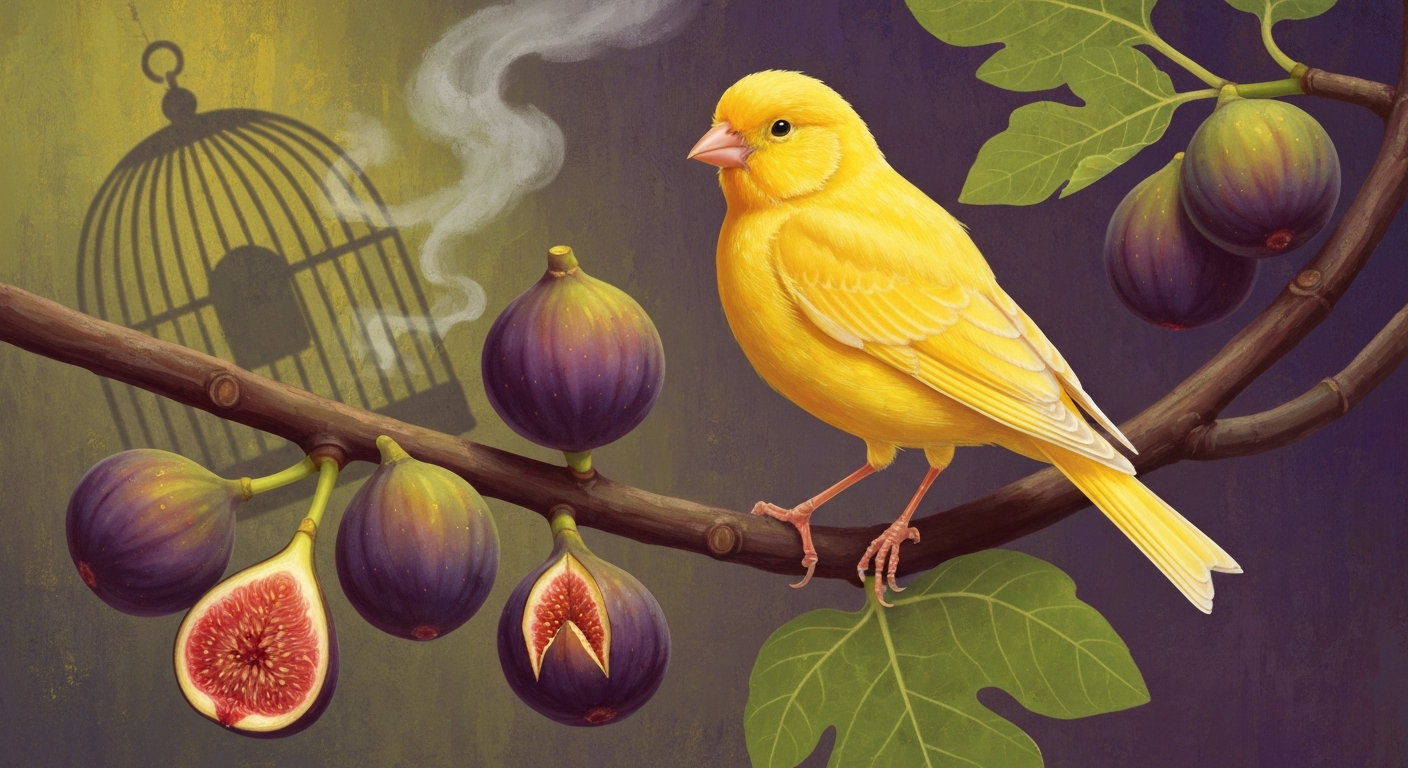
At the purely observational level, a canary perched in or near a fig tree or beside a basket of figs is an image of abundant domesticity. The canary is a cultivated bird; the fig is a cultivated fruit. Both are the products of human selection and care over millennia. A scene that places them together is essentially doubling down on the idea of cultivated, domestic sweetness, a garden in its fullest sense. In narrative terms, this scene almost always establishes comfort, home, and prosperity. It can also establish a kind of comfortable obliviousness: both the bird and the fruit are beautiful, both are perishable, and neither is warning the viewer of anything obvious. Writers who use this scene in naturalistic fiction are often using it to signal a moment of false security or peak happiness before a disruption.
Metaphorical readings: what the pairing means in speech and literature
When the canary-and-figs image moves into metaphor, several distinct readings become available depending on which symbolic registers of each image are being activated.
- Joy in a dangerous place: The canary's warning role combined with the fig's association with peace produces an image of sweetness at the edge of disaster — the mine canary singing beautifully in what is about to become a gas-filled shaft, or a person enjoying prosperity without seeing the systemic warnings around them.
- Hidden knowledge breaking open: The fig's association with concealed knowledge (the Garden of Eden reading) paired with the canary's 'singing like a canary' idiom produces a reading about secrets coming out. The canary sings; the fig splits open. Both symbols are about revelation, whether welcome or catastrophic.
- Fragile abundance: Both canaries and ripe figs are fragile, perishable things. A canary dies quickly in bad air; a fig bruises and rots in hours. The pairing can function as a metaphor for anything precious and short-lived.
- Sacred messenger in a fertile world: In more spiritual or allegorical registers, the canary as a small, bright messenger-bird placed in the fig tree's sacred symbolism (particularly in Near Eastern or Quranic contexts) suggests divine communication arriving in the midst of earthly abundance — grace landing lightly on a world that could receive it or ignore it.
Dream interpretation: canary, figs, and what your sleeping mind is doing
Dreams that feature both a canary and figs are relatively specific in their emotional texture, and a few common motifs keep recurring in the reports and accounts I have come across.
The singing canary in a fig tree
This is the most commonly reported variant and it tends to carry a warm, slightly melancholic tone. The dreamer often feels a sense of beautiful contentment alongside a background awareness that the moment is temporary. Dream interpreters working in Western psychological traditions tend to read this as the dreamer's awareness of their own good fortune combined with anxiety about its loss. In Jungian terms, the canary sings in the fertile fig tree because the unconscious is marking a moment of wholeness, and simultaneously warning that wholeness is always provisional.
A canary that will not sing beside figs
A silent canary in an otherwise abundant scene is classically anxious dream imagery. The figs suggest that resources and comfort are present; the canary's silence signals that something in the environment is wrong at a level the dreamer has not yet consciously identified. This is the mine-shaft reading in dream form: abundance is present, but the warning bell has already stopped ringing. Pay attention to what felt wrong in the dream beyond the bird's silence.
Eating figs while a canary watches
When the canary observes the dreamer consuming figs, the bird shifts into a witness or recorder role. Given the 'sing like a canary' idiom, there is a suggestion here of guilt or disclosure anxiety, the sense that one's pleasures are being watched and may be reported. This dream variant is more common during periods of real-life guilt, professional scrutiny, or secret-keeping.
A freed canary flying toward a fig tree
This is generally the most optimistic variant. A canary escaping confinement and moving toward abundance (the fig tree as a symbol of peace and prosperity) reads as a liberation dream: the dreamer is moving from constraint toward flourishing, or expects to. The fig tree here is the promised land in miniature.
Idiom and poetic use: writing with canaries and figs
The canary-and-figs pairing has not yet hardened into a fixed idiom in English, which is actually an advantage for writers: it is available as a fresh image rather than a worn-out one. A few observations on how it functions and how to use it well.
In poetic tradition, placing a small, bright, domesticated bird in a sacred or ancient tree is a classic contrast move: the fragile modern creature in the ancient symbolic landscape. Think of Keats's nightingale or Yeats's golden bird, birds in trees are where lyric poetry goes when it wants to ask questions about mortality, beauty, and whether song outlasts the singer. The canary in the fig tree is a more domestic and earthy version of that move, with less tragedy and more ambiguity about whether the abundance on offer is trustworthy.
For prose writers, 'canary and figs' works well as a scene-setting image that embeds symbolic foreshadowing without announcing itself. A character who keeps a canary and grows figs is being quietly coded as someone living a cultivated, pleasant, possibly fragile life. If the canary falls silent or the figs rot on the branch, the reader will feel it before they can explain why.
As an idiom-in-formation, 'the canary among the figs' could plausibly function as a way of describing a warning signal going unheeded in the midst of prosperity, close in meaning to 'canary in a coal mine' but with richer cultural resonance. If you use it in your own writing, the biblical and Quranic weight of fig symbolism will do work underneath the surface for readers who carry those traditions.
How canary symbolism compares with related finch-family birds
The canary belongs to the broader family of small seed-eating birds that includes several other species with their own distinct symbolic profiles. For more on related species and their symbolism, see the entry on the meaning of finch bird. The table below maps the key differences, which may be useful if you are working with the canary-and-figs image and want to understand why a canary specifically (rather than, say, a goldfinch or house finch) generates the meanings it does. See the entry on house finch bird meaning for how a closely related species' symbolism differs. Each of these birds has its own entry on this site, particularly the goldfinch, house finch, green finch, bunting, and the more folkloric entries for fitcher's bird and the bowerbird, and the differences in their symbolic registers are significant. For more on this contrast, see the entry on the bowerbird (the bower bird meaning), which emphasizes performance and courtship rather than domestic warning. For a closer look at related folklore, see the entry on fitcher's bird meaning. See the entry on green finch and linnet bird meaning for how those species' symbolism differs from the canary. See the entry on bunting bird meaning for a fuller account of that species' symbolic profile.
| Bird | Primary symbolic meanings | Warning/sentinel role? | Associated with song? | Key cultural register |
|---|---|---|---|---|
| Canary | Joy, warning, captivity vs freedom, informing, 'canary yellow' | Yes — strongly (coal mine idiom) | Yes — defining trait | Domestic, Western European, modern idiom |
| Goldfinch | Passion, sacrifice, Christ's Passion in Christian art, beauty, good luck | No | Yes — sweet song | Sacred art, Christian symbolism, medieval Europe |
| House Finch | Adaptability, community, domestic comfort, resilience in ordinary settings | No | Yes — cheerful song | North American folk and everyday naturalist tradition |
| Green Finch (and Linnet) | Rural life, seasonal change, courtship, folk tradition | No | Yes — folk song heritage | British pastoral, folk ballad tradition |
| Bunting | National pride (some species), summer arrival, celebration, festivity | No | Yes | Seasonal and civic symbolism |
| Fitcher's Bird | Disguise, survival through transformation, feminine agency in danger | Indirectly — as a survival tool | No — song not central | Grimm fairy-tale / folkloric tradition |
| Bowerbird | Artistry, seduction, performance of beauty, creative intelligence | No | Display rather than song | Australian / Melanesian natural history and culture |
The table makes clear why the canary is the right bird for the figs pairing when the intended meaning is 'beautiful life with a hidden warning.' A goldfinch in the fig tree would tip the image toward Christian sacrifice symbolism. A bowerbird would shift it toward performance and seduction. Only the canary brings that specific combination of cultivated sweetness and early-warning fragility that makes the fig pairing so resonant.
Putting it all together: practical takeaways
Whether you are trying to decode a phrase you have read, interpret a dream, or use the image in your own writing, the canary-and-figs combination almost always rewards a layered reading rather than a single fixed meaning. Here is a quick framework for working with it in practice.
- Identify the emotional tone first: Is the canary singing or silent? Are the figs ripe and plentiful or shrivelled and scattered? The condition of each symbol narrows the interpretation significantly.
- Determine the cultural context: A Quranic or Near Eastern context brings sacred covenant readings to the fig. A Western European or literary context brings the peace-and-prosperity and knowledge-and-shame readings. A modern idiomatic context activates the warning register of the canary.
- Look for the tension: The most meaningful readings emerge from what the canary and fig are doing to each other symbolically. Sweetness plus warning, abundance plus fragility, joy plus disclosure.
- In dreams, note your emotional response rather than just the image: The canary-and-figs dream is rarely about birds or fruit. It is almost always about the quality of your current abundance and whether you trust it.
- In writing, use the pairing for foreshadowing rather than statement: Let readers feel the combination before they understand it. The symbols are old enough and resonant enough to do that work without explanation.
The canary and the fig have been keeping human company for a very long time, each in their own way. The bird has been singing in European homes since the 1500s; the tree has been growing in Mediterranean gardens since before recorded history. When they appear together, they are asking the same question that every beautiful, perishable thing asks: how long does this last, and are you paying attention while it does?
FAQ
What does a canary mean literally and culturally?
Literal: the domestic canary (derived from the Atlantic/island canary, Serinus canaria) is a small passerine kept for colour and song; wild forms are greenish-brown while many captive strains are yellow. Cultural/figurative: common associations include song and musicality, cheerfulness or bright colour ("canary yellow"), smallness/delicacy, domestication/captivity, and vulnerability or sentinel function (the historical use of canaries as toxic‑gas detectors in mines). English idioms build on these traits (e.g., "canary in a coal mine," "sing like a canary"). These meanings are grounded in historical, biological and usage evidence rather than folklore invention.
What are the main symbolic meanings of fig(s)/fig tree(s) across traditions?
Figs (broadly Ficus species) carry layered meanings: • Mediterranean/ancient Near Eastern: prosperity, domestic security, fertility and staple food. • Abrahamic scriptures: fig leaves as coverings (Genesis) and fig/tree imagery as peace and well‑being ("sit under your fig tree"). • Islamic reference: the Qur'anic oath "By the fig" gives the fruit symbolic weight and inspires varied exegesis. • South and Southeast Asia: other Ficus species (e.g., sacred/bodhi fig, F. religiosa) signify enlightenment, shelter and sacred space in Buddhist and Hindu contexts. Ethnobotanical records also show medicinal and ritual uses. Note: different Ficus species carry distinct cultural profiles; not every "fig" reference points to the same species or meaning.
How should I read a literal scene that shows a canary and figs together (e.g., an image or painting)?
Start with the literal: a domesticated caged or free canary near fig fruit or a fig tree. Interpretable layers: • Domestic tableau: suggests household comfort and care (canary as pet, fig as garden/food). • Sensory juxtaposition: song (canary) + abundance/sweetness (fig) can signal conviviality or sensual pleasure. • Vulnerability contrast: a delicate captive bird beside heavy fruit may hint at fragility within plenty, or the tension between domestication and natural abundance. Context (setting, cage/open, time of day, wear on objects) guides which reading fits best.
What figurative meanings arise when a canary is paired with "the figs" in literature, idiom or speech?
Plausible figurative readings depend on emphasis but include: • Comfort and domestic prosperity: canary (household pet) + fig (symbol of home abundance) → peace and simple well‑being. • Warning within plenty: referencing the canary’s sentinel role yields an image of danger or vulnerability hidden amid prosperity ("the canary among the figs" as an uneasy element in a safe setting). • Joyful expression of sensual life: song (canary) paired with fruit (fig) for pleasure, fertility and celebration. • Moral or spiritual contrast: the fig’s scriptural associations (covering/shame; peace) combined with the canary’s captivity can frame themes of concealment, innocence, or lost freedom.
How might a dream featuring a canary and figs be interpreted?
Dream interpretation is context‑sensitive, but reasoned possibilities: • Personal welfare and domestic comfort: fig → nourishment/home; canary → cheerfulness or small, cherished parts of self. • Anxiety about vulnerability in safety: canary as sentinel suggests worry about unseen threats in otherwise secure circumstances. • Creative or communicative impulse nourished: song + fruit → desire to express or to be fruitful in work/relationships. Use the dreamer’s feelings, recent life events and cultural background to select meanings; avoid definitive claims without context.
What are historically or culturally notable examples where canaries and figs appear (separately or together)?
Separate notable references: • Canaries: long history in European aviculture from the 16th–17th centuries; scientific and cultural roles (song breeding, model species in neurobiology, miners' sentinels) that inform modern metaphors. • Figs: biblical appearances (Genesis, prophetic literature), Qur'anic oath (Sūrat al‑Tīn), and ancient Greco‑Roman agronomic and literary references (Dioscorides, Pliny). Joint appearances are rarer; when authors pair them, they typically draw on canary motifs (song, captivity, sentinel) and fig motifs (home, abundance, sacredness) to create contrasts or reinforce domestic imagery.
Next Articles
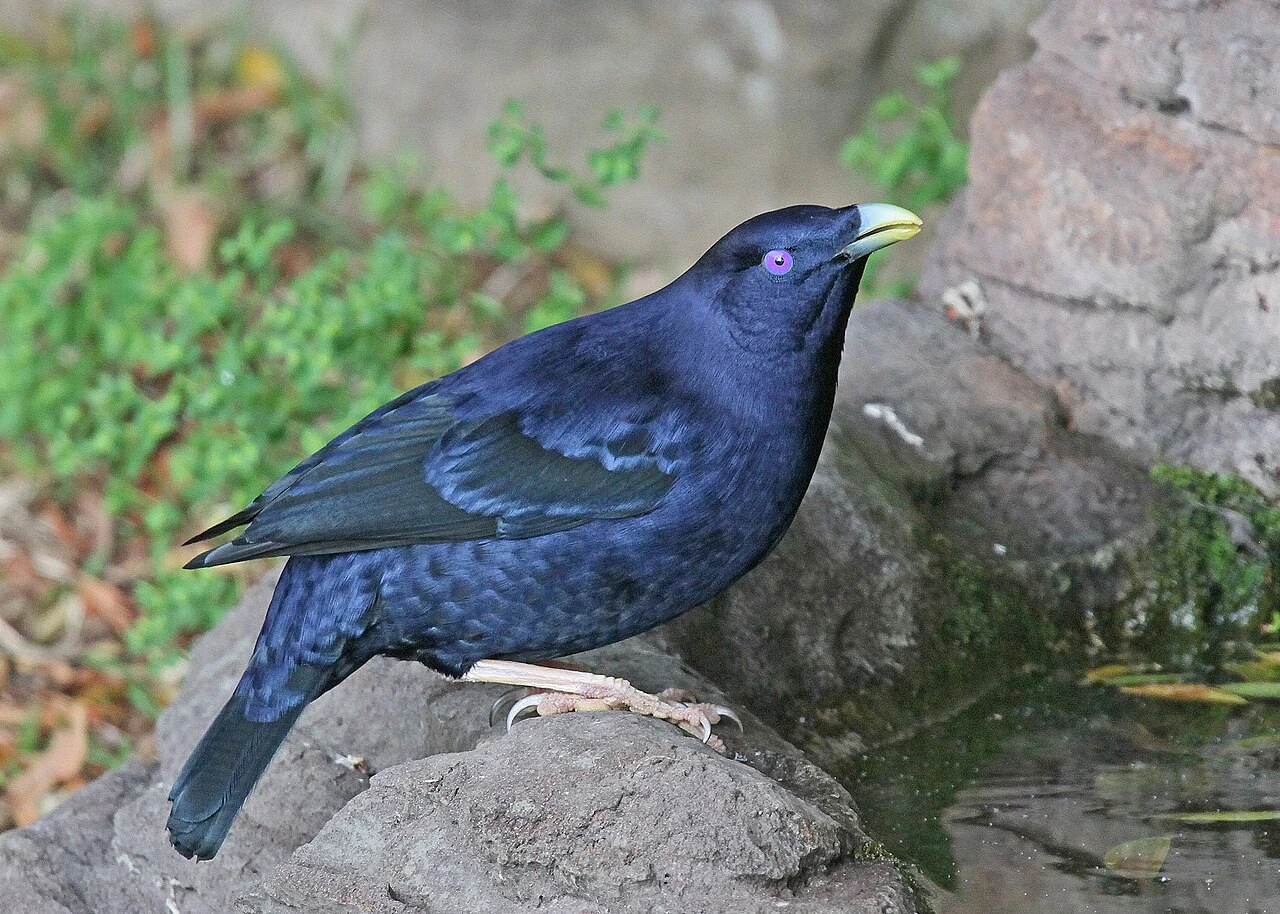
The Bower Bird Meaning: Literal Behavior and Symbolism
Learn the bower bird meaning: courtship bower building plus love, artistry and status symbolism in stories and poetry.
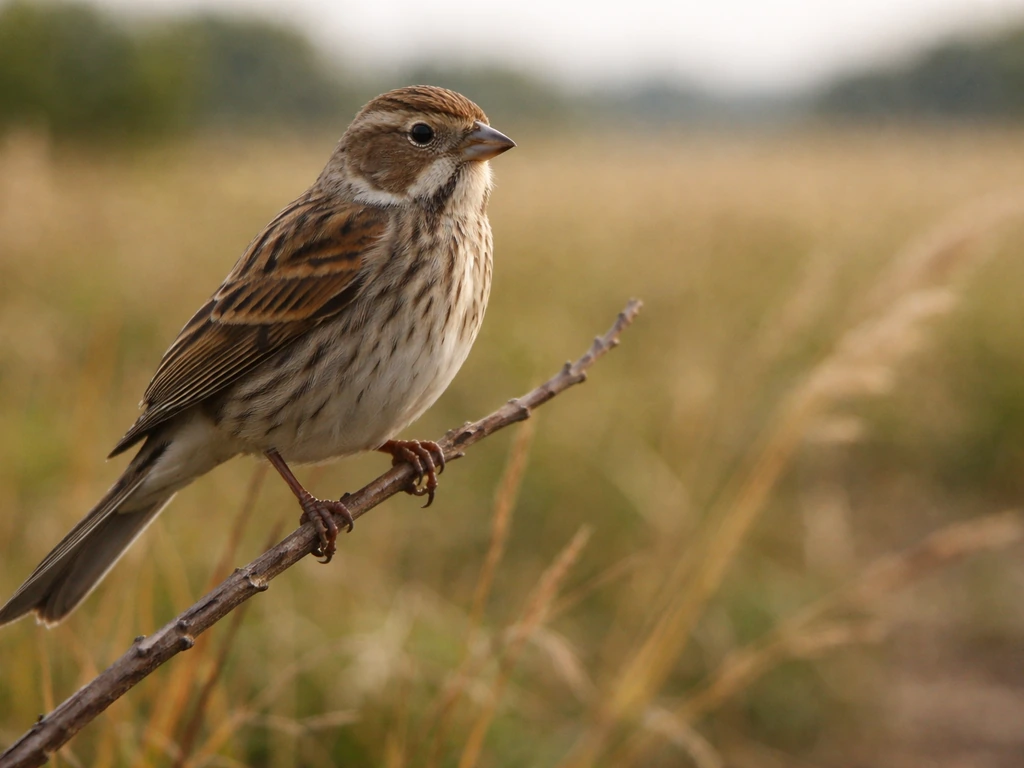
Bunting Bird Meaning: Species vs Decorative Bunting
Bunting bird meaning explained: identify real buntings vs decorative bunting, plus symbolism, slang, and common mix-ups.
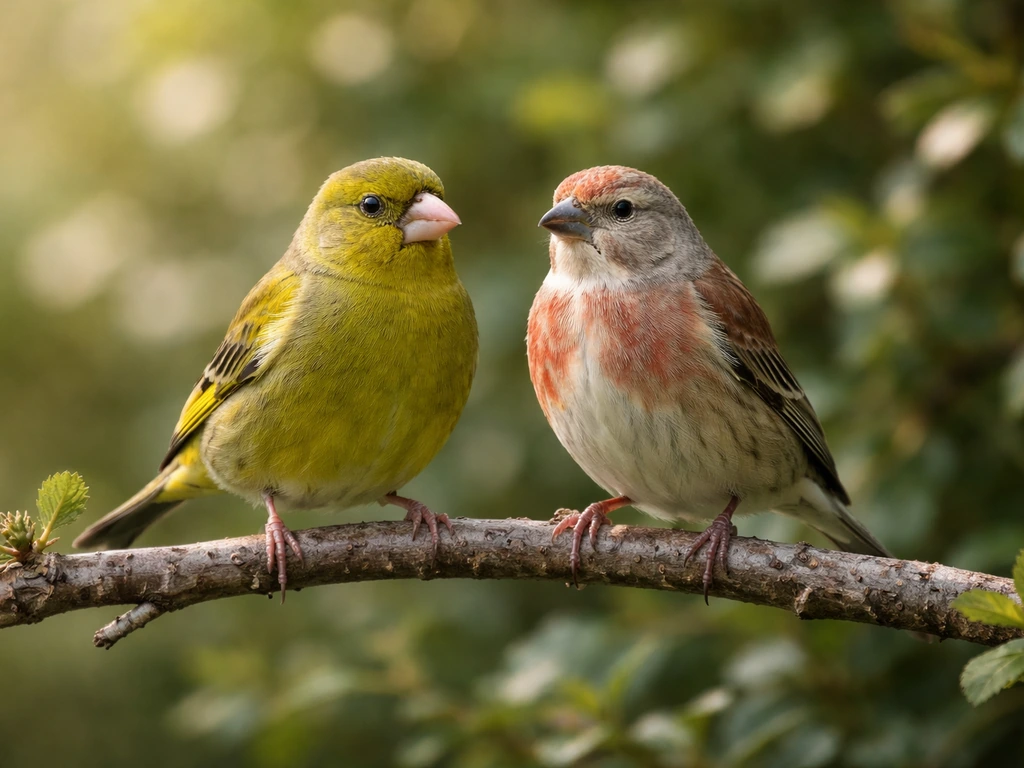
Green Finch and Linnet Bird Meaning: Symbolism Guide
Meaning of green finch vs linnet: symbolism, folklore, and how to interpret sightings, dreams, and signs accurately.