A canary bird symbolizes joy, hope, communication, and early warning. Which of those meanings applies depends almost entirely on the context you encountered the word. If someone said 'he sang like a canary,' that's about exceptional vocal ability or informing on others. If they said 'she was the canary in the coal mine,' that's a warning signal. If you dreamed of a canary singing, most symbolic traditions read that as a sign of self-expression and expanding social connection. Once you know which context you're in, the meaning snaps into focus immediately.
Canary Bird Meaning: Symbolism, Song, and Sounds Explained

Marcus Blackwell
26 Apr 2026
Canary bird: literal identity vs symbolic meaning
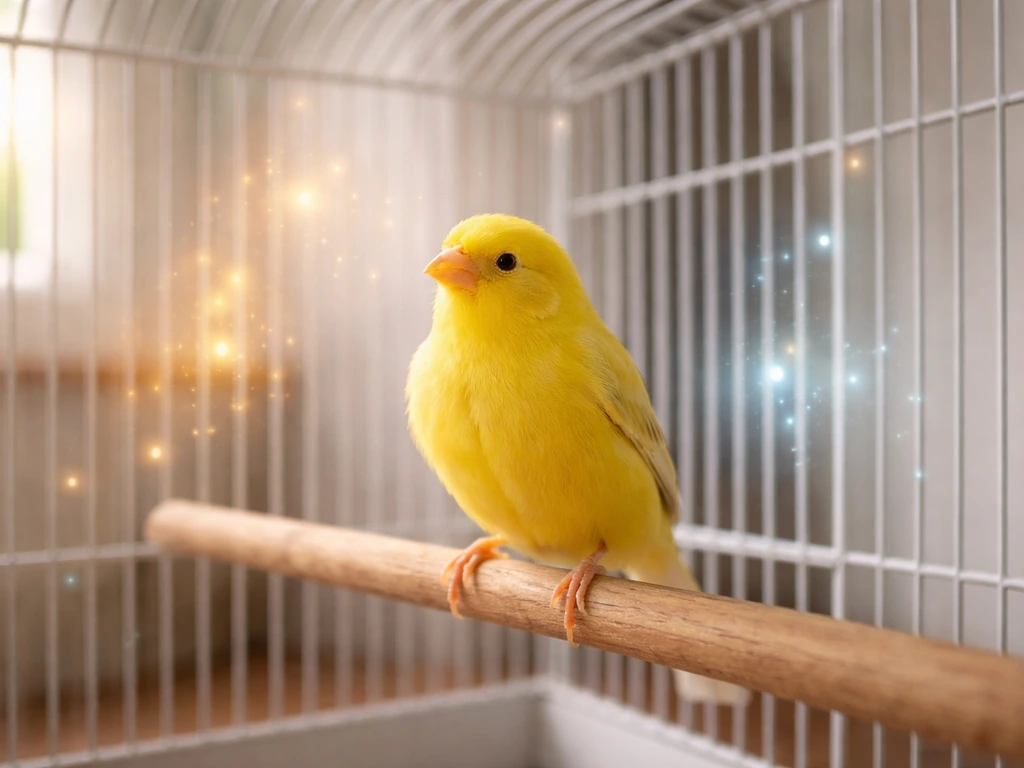
Let's start with the literal bird so the symbolism makes more sense. The domestic canary (Serinus canaria forma domestica) is a small songbird bred from the wild Atlantic canary, a finch-family bird native to the Canary Islands, Madeira, and the Azores.
The meaning of finch bird symbolism often overlaps with canary themes like joy and communication, while still having its own distinct associations finch-family bird. That puts it squarely in finch territory, which explains why canary symbolism shares some ground with related birds like the goldfinch or house finch. Because a house finch bird meaning often emphasizes warm color, everyday song, and communication, it can add another layer to your interpretation when you encounter “finch” symbolism.
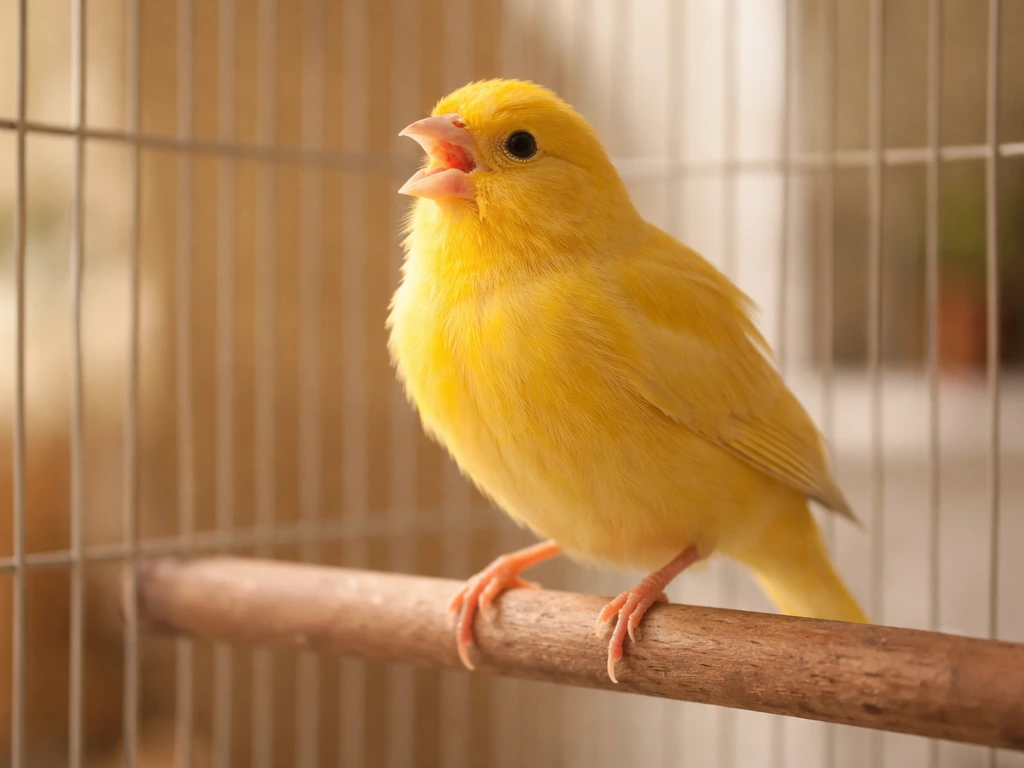
The canary was domesticated specifically because it sings, and centuries of selective breeding have made its vocal range one of the most complex of any cage bird. Its song isn't just pleasant background noise either: it serves real biological functions including territorial signaling, courtship, and pair-bond maintenance.
That biological backstory matters because almost every symbolic meaning attached to the canary traces back to one of two things: its extraordinary singing voice, or its physiological sensitivity to toxic gases. Both of those real-world traits got lifted out of natural history and turned into cultural metaphors. When you see 'canary' used symbolically, you're almost always dealing with one of those two source points.
Core cultural and symbolic meanings of a canary bird
Across folklore, spiritual traditions, and general cultural usage, the canary clusters around a handful of consistent symbolic themes. Joy and cheerfulness come first. A canary in a cage, singing freely, became a domestic image of contentment and light, which is why spirit-animal style guides consistently assign it meanings of hope, playfulness, and personal happiness. In Victorian households, keeping a singing canary was a deliberate choice to bring warmth and sound into a home, and that association stuck culturally.
The second major symbolic thread is early warning and protection. This comes directly from the historical coal-mining practice of bringing canaries underground to detect carbon monoxide and other toxic gases before miners were affected. Because canaries are more physiologically sensitive to those gases, a distressed or silent canary was a life-saving signal. That historical use gave the canary a lasting symbolic identity as a sentinel, an indicator, and a protector, even in contexts far removed from mining.
A third theme is voice and self-expression. Because the canary is so specifically identified with singing, it carries symbolic weight around communication, creativity, and speaking one's truth. In spiritual and dream symbolism, a canary often represents someone who has something important to say or who is being called to express themselves more openly. In many cases, the bunting bird meaning also centers on communication and social signaling, so context matters just as it does for canary symbolism.
| Symbolic Theme | Root Source | Common Contexts |
|---|---|---|
| Joy / Hope / Cheerfulness | Domestic singing behavior | Spirit animal guides, folklore, personal symbolism |
| Early Warning / Sentinel | Coal-mine gas detection history | Idioms, modern tech/legal usage, literature |
| Voice / Self-Expression / Communication | Complex vocal repertoire | Dream symbolism, tattoo meaning, poetry |
| Informing / Revealing Secrets | Slang extension of 'singing' | Crime slang, legal contexts, colloquial speech |
Canary bird song meaning in idioms and symbolism
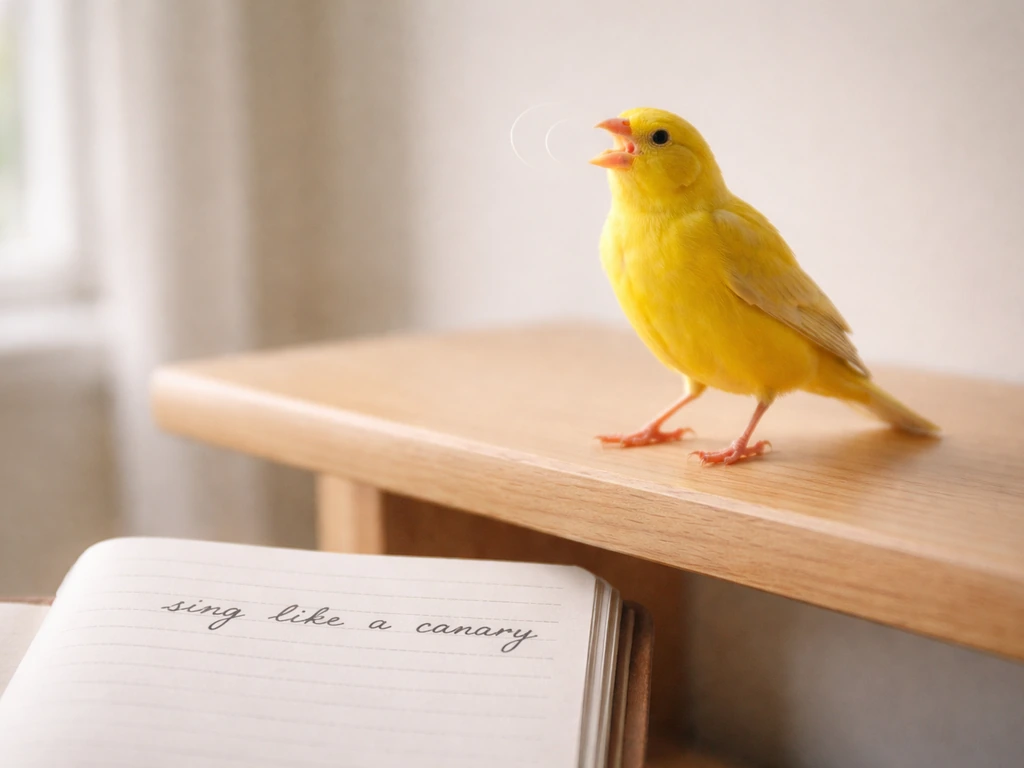
The canary's song is specific enough in cultural perception that it generates its own symbolic layer, separate from what the bird itself represents. The most direct idiom is 'sing like a canary,' which Cambridge defines as singing very well, but the phrase has a second, sharper meaning in slang: to inform on others, to confess, to tell everything. Both senses hinge on the same image of the canary as a creature that produces abundant, irrepressible sound.
In dream symbolism, the distinction between 'a canary' and 'a singing canary' is treated as meaningful. Dream guides specifically note that a canary that is singing in a dream points more directly toward self-expression, communication, and social expansion, particularly toward widening your circle of friends or relationships, while a canary that is silent or caged without singing shifts the interpretation toward restraint, unexpressed feelings, or missed opportunity. The singing is the active element that tips the meaning.
In a more metaphorical literary sense, a canary's song can also represent something beautiful and fragile that persists in difficult conditions. A canary kept by a miner or a prisoner sings anyway, and that resilience of voice in confined circumstances has been used in poetry and literature to symbolize hope maintained under pressure. That's a more layered reading, but it comes up often enough in literary analysis to be worth noting.
Canary bird sounds meaning: calls, chirps, and whistles
Not everything a canary produces is a 'song,' and the distinction matters symbolically. Ornithologically, bird vocalizations break into two main categories: songs (longer, more complex, typically linked to territory and courtship) and calls (shorter, more functional sounds that serve specific purposes like alarm, contact, or begging). Canaries use both, and their symbolic readings differ.
The canary's full melodious song, the long flowing phrase it produces when relaxed and secure, maps most naturally onto joy, self-expression, and creative communication. That's what people are invoking when they use the canary as a symbol of happiness or voice.
The female canary's trilling mating call, a shorter, more insistent trill accompanied by wing-flapping, is courtship-specific. Biologically it signals sexual readiness. Symbolically, if you're reading canary sounds and this kind of urgent trill is what's being described, the interpretation leans toward attraction, desire, or a call for connection rather than general joy.
Alarm calls are sharper, more abrupt, and repeated. These are the vocalizations that map onto the canary's warning-sentinel symbolism. A canary making harsh, insistent sounds rather than flowing song is doing something functionally different, and symbolically that aligns with the coal-mine meaning: pay attention, something is wrong, take this seriously. The contrast between a canary's melodious song and its alarm calls is actually baked into the coal-mine metaphor: when the canary stopped singing and started acting distressed, that was the signal. Silence or alarm in a canary is as meaningful as its song.
- Long, melodious song: joy, self-expression, creativity, peace
- Trilling mating call: courtship, desire, a call for connection
- Short alarm chirps (sharp, repeated): warning, danger nearby, pay attention
- Silence (no vocalization): restraint, unexpressed feelings, or a warning that something is wrong
How to apply the meaning to your specific situation
The context you encountered the canary in is your best guide to which meaning applies. Here's how to work through the most common scenarios quickly.
In a phrase or idiom
If the phrase is 'canary in a coal mine' or any close variation, the meaning is: early warning indicator of danger or failure. It's not about music, joy, or color. Cambridge is unambiguous here: something that gives an early warning of danger or failure. If someone called a person or situation 'the canary,' they're saying that person or thing is showing signs of a larger problem that others haven't noticed yet. Look for what the 'toxic gas' is in the situation being described.
If the phrase is 'sang like a canary,' context decides between two meanings. In a performance context, it's a compliment about vocal skill. In a crime or legal context, it means the person confessed or informed on others to authorities.
In a dream
Ask first: was the canary singing? If yes, the dominant interpretation in dream symbolism is self-expression, communication, and social connection. Some guides specifically link a singing canary dream to expanding your circle or finding your voice. If the canary was silent, caged, or distressed, the interpretation shifts toward something unexpressed or a warning you should pay attention to. The canary's behavior in the dream is the variable that steers the meaning.
In spiritual or spirit-animal contexts
If you're reading about canary as a spirit animal or totem, most sources blend joy, personal expression, and protective awareness. The practical takeaway is usually: lean into your voice and creativity, but stay alert to early warning signs in your environment. The canary as a spirit symbol asks you to both sing and listen.
In a tattoo or literary reference
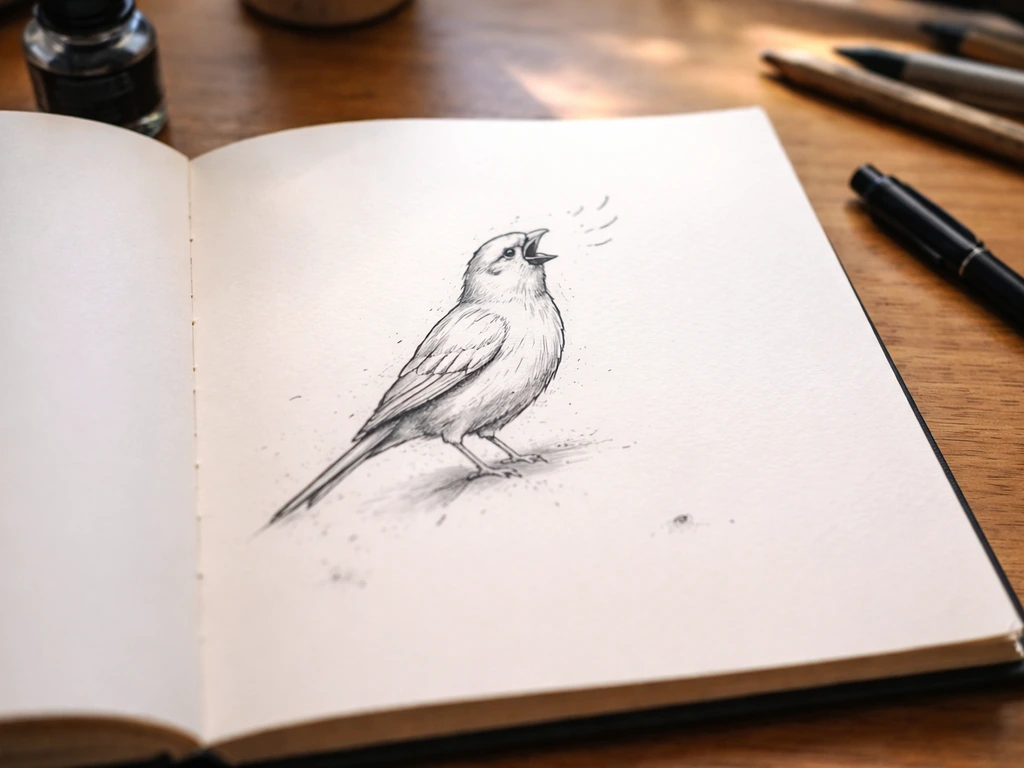
Canary tattoos and literary canary imagery most commonly emphasize resilience, hope, and voice. A caged canary that still sings is one of the more enduring images of maintaining spirit under constraint. If someone is using a canary in a creative context, that's almost always the emotional register they're working in, unless they've explicitly invoked the coal-mine frame.
Common confusions and what 'canary' can actually refer to
The word 'canary' carries several distinct meanings in modern English that are easy to conflate. Being clear about which one you're dealing with saves a lot of interpretive confusion. To understand why, it helps to know the bower bird meaning and how it differs from canary symbolism.
- The literal bird: Serinus canaria, a domesticated songbird kept for its singing. Most references to 'canary bird' in a natural or casual context mean this.
- Canary yellow: a color term meaning a bright, light yellow. Merriam-Webster has a full entry for it. If someone describes a dress or car as 'canary,' they mean the color, not a bird symbol.
- Canary in a coal mine (idiom): an early warning indicator of danger or failure. This is the most widely recognized figurative use in modern English and has nothing to do with music or joy.
- Sing like a canary (idiom): either 'to sing very well' (performance context) or 'to inform/confess' (crime/legal slang context). Two meanings that share a phrase.
- Warrant canary / canary trap: modern technical and legal uses where 'canary' means an indicator mechanism, a signal whose absence (rather than presence) conveys information. These are fully metaphorical and have no bird symbolism involved.
- Canary as slang for informer: from the same 'singing' root as the idiom above, but used as a noun in legal or criminal slang to describe someone who tells authorities what they know.
The simplest disambiguation rule: if the canary is doing something (singing, sitting, appearing in a dream, acting as a spirit guide), you're in symbolic territory. In fitcher’s bird meaning, the focus is on that warning-signal idea rather than literal canary behavior. If 'canary' is being used as a modifier or descriptor (canary yellow, canary in a coal mine as a metaphor for a situation), you're in idiomatic territory. And if 'canary' is a noun describing a person, you're almost certainly in slang territory meaning an informer or confessor. These three tracks rarely overlap, and once you identify which track you're on, the meaning is usually clear.
It's also worth noting that the canary sits within a broader family of finch-related symbolism. If you're exploring the symbolic meanings of small songbirds more broadly, the finch family, including birds like the goldfinch and the greenfinch, carries some overlapping themes of joy and communication, though each has its own distinct symbolic history.
If you are also exploring the green finch and linnet bird meaning, these finch-family themes of joy and communication can help you interpret the context more precisely. Because the goldfinch is also a finch-family bird, its symbolic meanings often overlap with joy and communication while keeping its own finch-specific nuance. The canary is unusual within that group specifically because of the coal-mine association, which gives it a warning and sentinel dimension that most of its relatives don't share.
FAQ
Is the meaning different if the phrase says “a canary” versus “a singing canary”?
Yes. In idioms, “canary” alone often signals the early-warning or informer idea, but when the wording specifies the bird’s action, it shifts. For example, “caged canary” tends to emphasize restraint or trapped feelings, while “silent canary” points more toward unspoken issues than generic hope.
How do I tell if a canary reference is warning-related or joy-related?
Look for whether the scene highlights danger or gas exposure. In the coal-mine frame, the canary’s distress or silence is the signal, so the message is usually “something is wrong before others notice.” If the scene is domestic or musical, the same bird imagery is more likely about cheer, comfort, and self-expression.
What does “canary yellow” mean symbolically, does it connect to canary bird meaning?
“Canary yellow” is usually a literal color descriptor or design term, not a symbolic message. The color can still trigger cultural associations of brightness, but the strong, consistent “canary meaning” themes (warning sentinel, voice, informing) are tied to the bird, singing, or the coal-mine idiom.
When someone says “sing like a canary,” how can I avoid mixing up the compliment and the slang meaning?
In most everyday interpretations, “sing like a canary” is read as exceptional singing, unless the surrounding context involves confession, leaks, or authorities. If the passage mentions a crime, investigation, or testimony, lean toward the slang meaning of informing or confessing rather than vocal talent.
Does canary symbolism change if the sound is described as an alarm or a mating call instead of song?
Treat “call” and “alarm” sounds as different from the long melodic “song.” If the description is urgent, repeated, harsh, or clearly an alert, it is more consistent with the warning/protection thread than with joy or creativity. If it’s described as relaxed and musical, it maps more to self-expression and happiness.
In dreams, what’s the practical difference between a canary that sings and one that is silent?
If the dream focuses on connection, conversation, or the canary actively singing to an audience, it often points toward speaking up and expanding relationships. If the dream shows the canary withdrawn, silent, or visibly distressed, the emphasis shifts toward what you are holding back or a need to pay attention to risk in waking life.
Can “the canary” mean both an informer and an early-warning sign in the same sentence?
Yes, but only if the source text clearly frames it as “the informer” or “the early warning.” People sometimes use “the canary” as a vague metaphor, which can blur meanings. A quick check is to ask, “Is the story about a person exposing others, or about catching danger early?”
If canary is used as a spirit animal, what should I do with the meaning in real life?
A helpful way to interpret canary-to-totem guidance is to treat it as a two-part instruction: express yourself (voice and communication) while staying alert for early signals you might otherwise ignore. If you cannot identify any “warning” in your current situation, the message likely leans more toward creativity and opening up.
Do canary tattoos and literary canary imagery follow the same rules as the idioms?
Watch for the surrounding imagery. If you see darkness, mines, trapped spaces, or toxic danger themes, the coal-mine warning dimension becomes dominant. If you see home, light, song, or social warmth, joy and communication themes dominate.
What’s the quickest method to disambiguate canary bird meaning when the context is unclear?
Common mistake is treating the word as one fixed meaning. The better approach is to label the usage track: (1) literal or bird-related, (2) idiom or descriptor (including the coal-mine metaphor), or (3) slang for an informer or confessor. Once you know the track, the meaning usually becomes consistent.