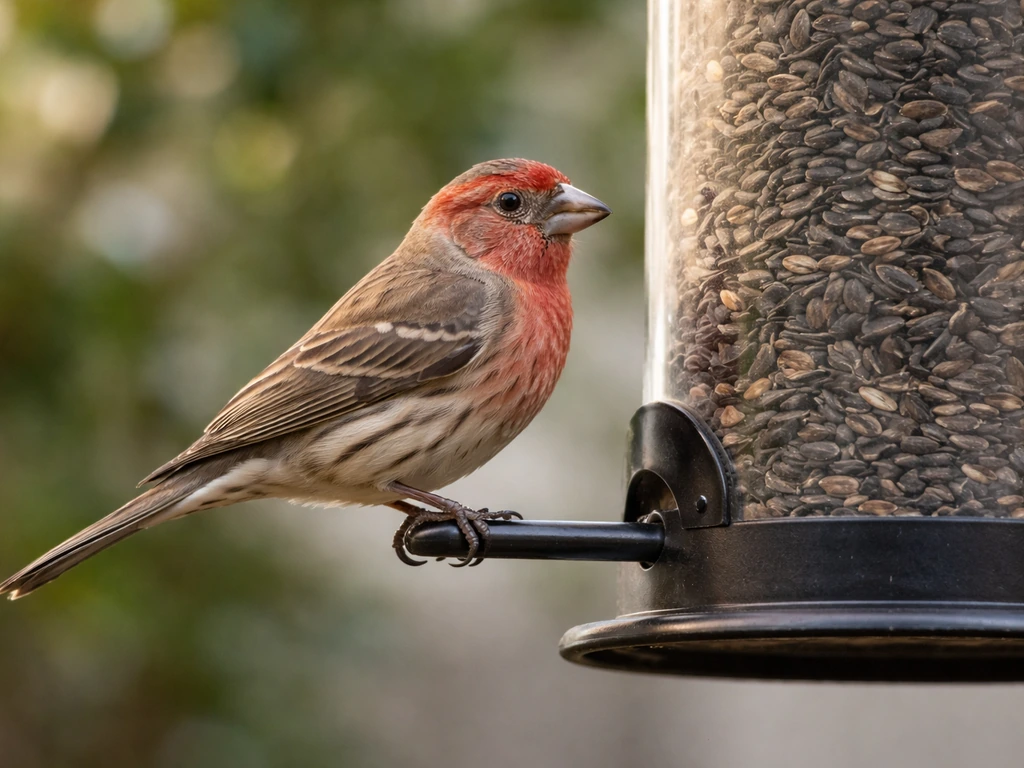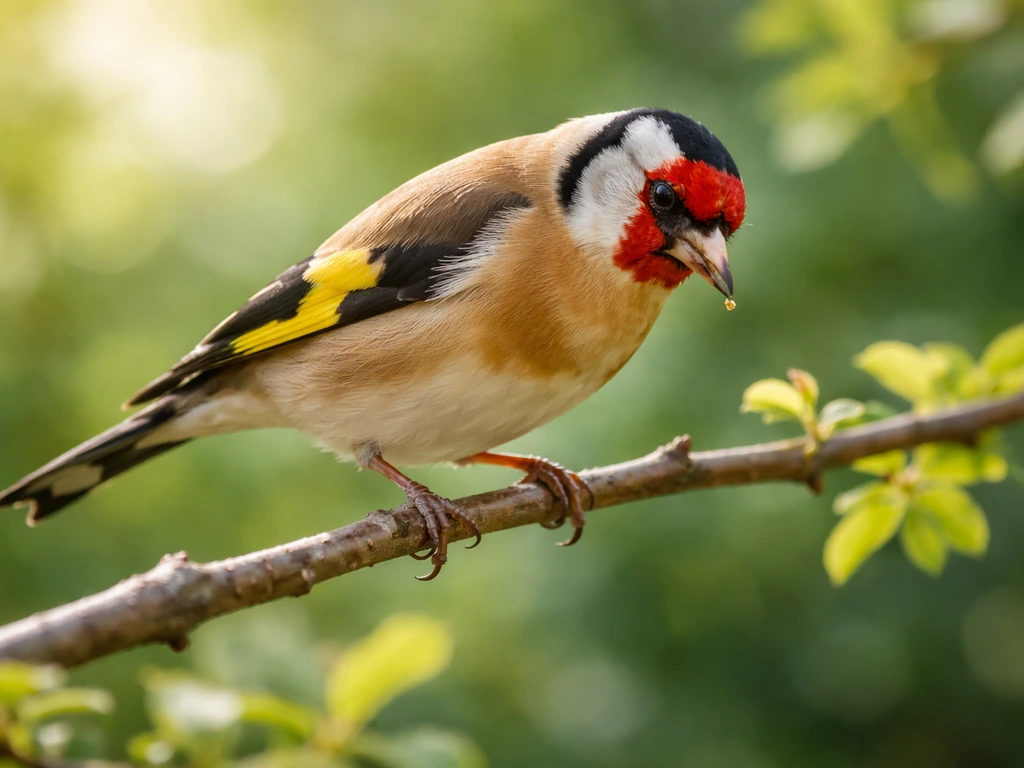
The greenfinch and linnet are both small British and European finches, but they carry quite different symbolic weight. If you are looking for the meaning of finch bird in general, this pairing can give you a helpful place to start. The greenfinch is broadly associated with joy, vitality, and renewal, while the linnet has a longer literary and folkloric tradition tied to freedom, voice, and emotional sensitivity. When people ask about them together, it usually points toward a combined message about finding your voice and embracing a more joyful, liberated way of living. But before you apply any meaning, it is worth spending two minutes confirming which bird you actually saw, because both get misidentified fairly often.
Green Finch and Linnet Bird Meaning: Symbolism Guide

Marcus Blackwell
16 Jun 2026
First, confirm which bird you actually saw
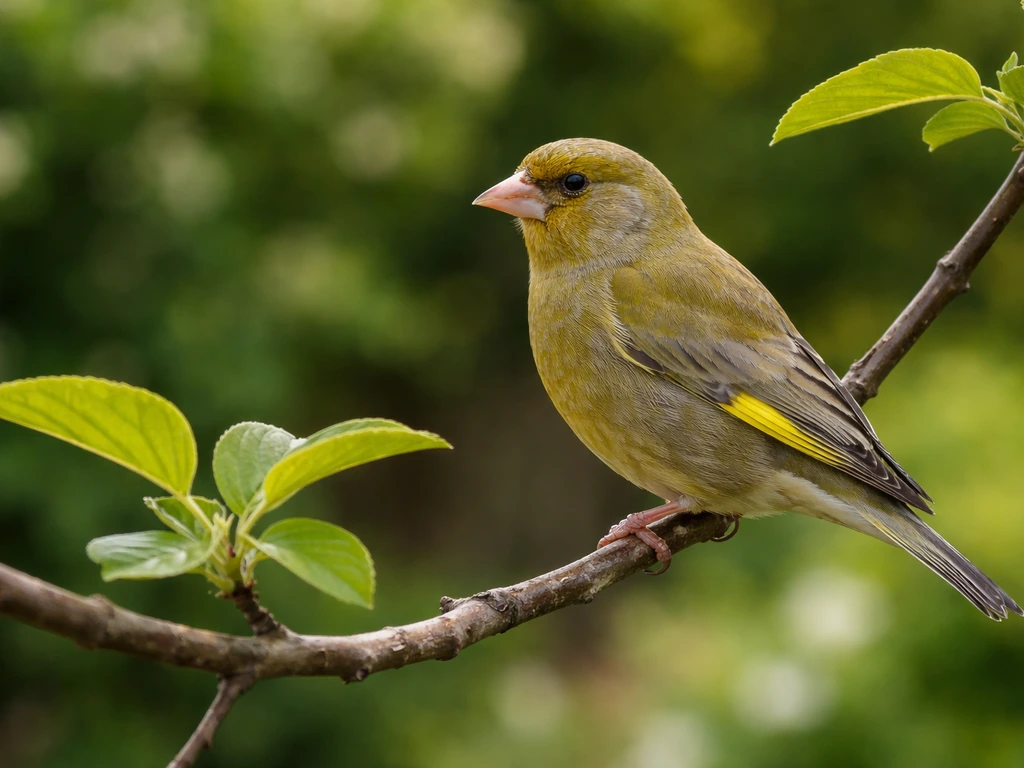
These two species look nothing alike once you know what to look for, but in a quick garden sighting they can both register as 'small brownish-greenish bird.' Getting the ID right matters if you want the symbolism to land accurately.
Identifying the greenfinch
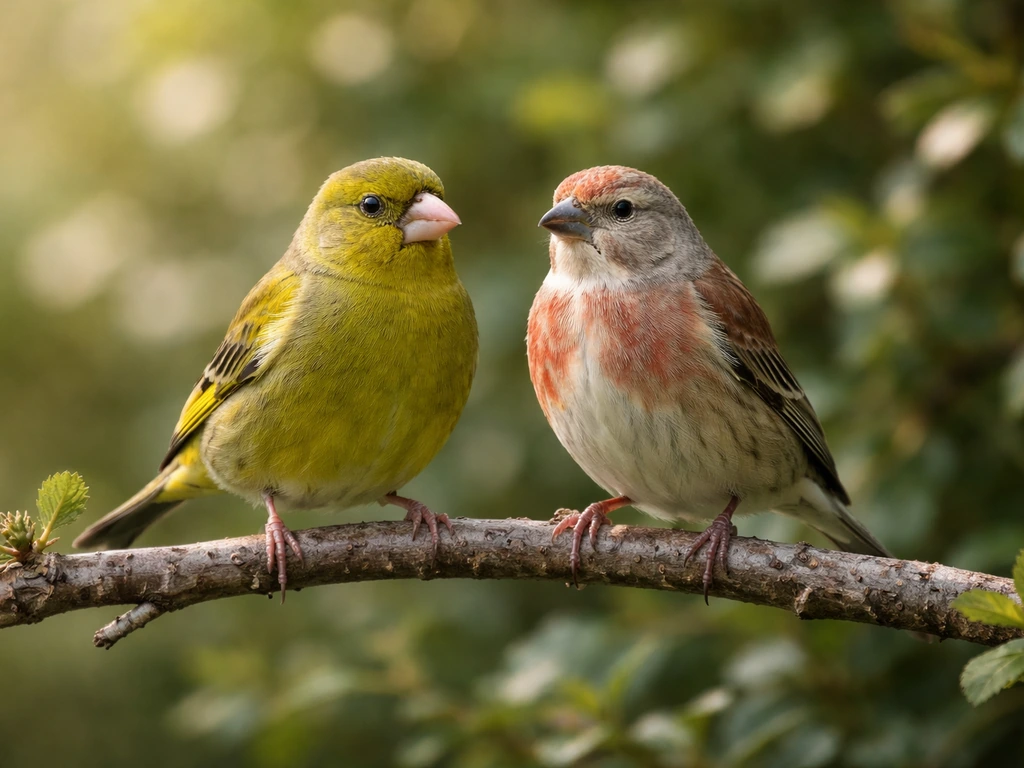
The male greenfinch is one of the easier garden birds to pin down. Look for an olive-green head and body, a stout horn-coloured conical bill (much thicker than a sparrow's), and vivid yellow flashes on the wings and at the base of the tail. In flight, those yellow patches are the giveaway. The call is a wheezing, drawn-out 'dzhweee' along with a repeating 'pew pew' that sounds almost lazy compared to the brisk songs of other finches. One older common name was 'green linnet,' which is exactly the kind of thing that causes confusion, but the two birds are genuinely distinct species.
Identifying the linnet
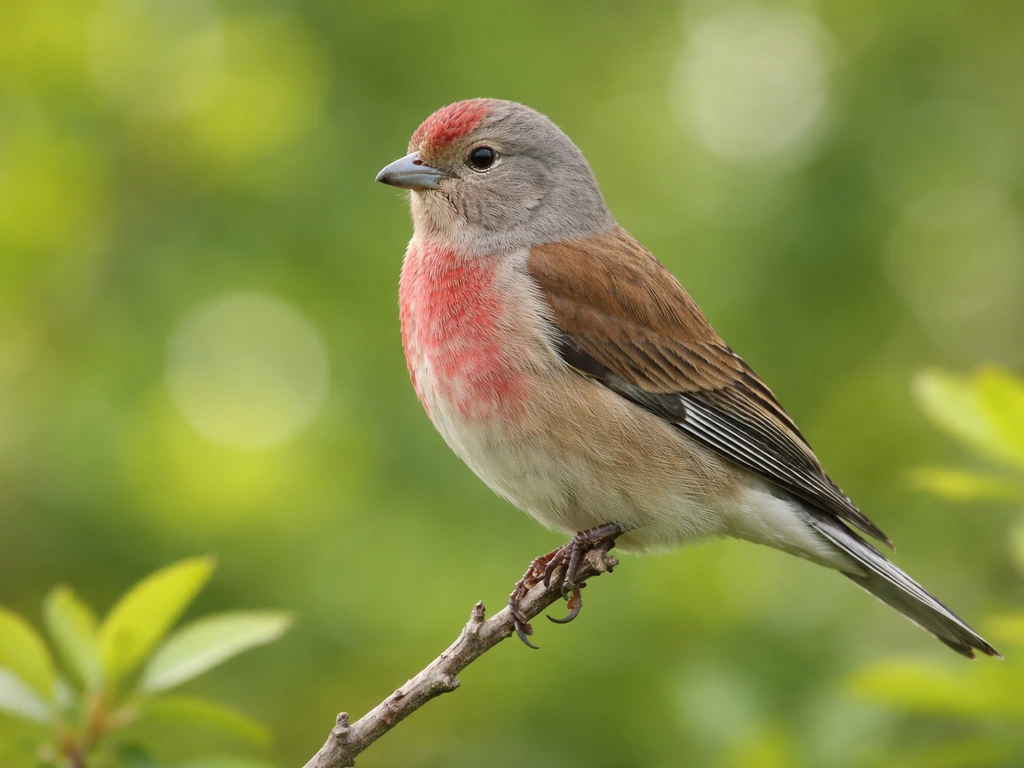
The linnet is slimmer and more delicate-looking than the greenfinch. In spring and summer, the male is hard to miss: brown back, grey head, and a [striking reddish-pink forehead and chest](https://www. rspb. org.
uk/birds-and-wildlife/linnet). In flight, look for white flashes on the wings and a noticeably forked tail with pale edges. Females are paler and heavily streaked, lacking the pink patches entirely. The Wildlife Trusts also summarizes this linnet sexual dimorphism, noting that males show brown backs, grey heads, and pink foreheads and chests while females are paler and heavily streaked and lack the pink patches [male and female linnet plumage](https://www.
wildlifetrusts. org/wildlife-explorer/birds/finches-and-buntings/linnet). One common source of confusion is the Twite, which shares a similar size and shape but lacks the red forehead and breast, instead showing streaked buff-whitish underparts and a pink rump. If you saw red on the head or chest, it was a linnet.
If there was no red at all, reconsider.
Quick comparison for the field
| Feature | Greenfinch | Linnet |
|---|---|---|
| Body colour | Olive-green overall | Brown back, grey head (male) |
| Standout marking | Yellow wing and tail flashes | Red forehead and chest (breeding male) |
| Bill | Stout, conical, horn-coloured | Small, neat, grey |
| Tail | Grey with yellow base | Forked, pale-edged |
| Call character | Wheezing, drawn-out 'dzhweee' | Bright twittering, musical |
| Build | Chunky, heavy-billed | Slim, lighter |
If you are still unsure, the Merlin Bird ID app from Cornell Lab is a practical shortcut. You can upload a photo, record the call, or browse likely species by location, and it covers both birds well for UK and European observers. That said, treat its suggestions as a starting point rather than a verdict, especially for females or birds seen briefly.
What the greenfinch symbolises
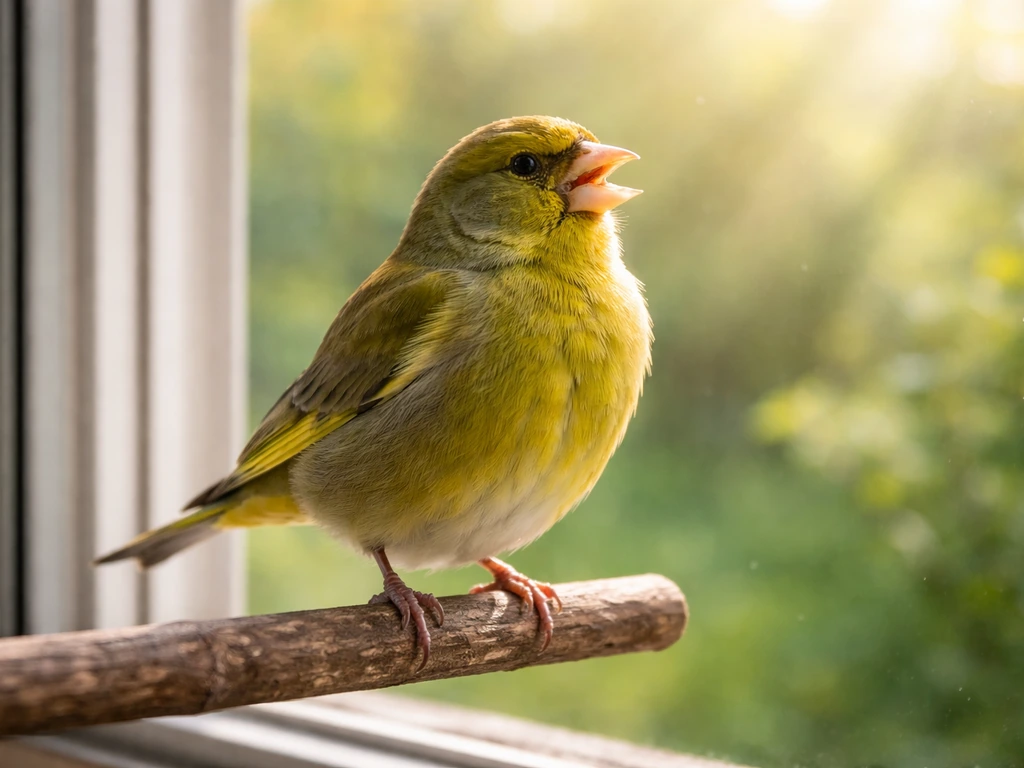
The greenfinch does not have the deep mythological backstory of a raven or owl, but it has accumulated a consistent cluster of meanings in folk and spiritual traditions, particularly in Christian Europe and in modern nature-based symbolism.
Core symbolic traits
- Joy and cheerfulness: the greenfinch's song, even with its wheezing quality, was historically associated with contentment and simple pleasures. It was a garden bird, a domestic bird, a symbol of everyday happiness rather than grand drama.
- Renewal and vitality: the olive-green plumage connects it to spring, growth, and the return of life after winter. Green as a colour carries that association across most European folk traditions.
- Resilience: greenfinches are hardy birds that stay visible through winter at garden feeders, which earned them a reputation as symbols of persistence and endurance rather than delicate fair-weather visitors.
- Hope: modern spirituality sites frequently pair finches with hope and positive outcomes, and while this is more interpretive than documented folklore, it aligns with the bird's garden presence and cheerful song.
In Christian folk symbolism, green birds were sometimes associated with the Holy Spirit or with divine blessing, though this is regional and not uniform. The more grounded read is that the greenfinch represents accessible joy: the kind that shows up at your bird feeder rather than arriving on a dramatic spiritual wind. Related finch symbolism, such as that of the goldfinch and house finch, tends to reinforce this cluster of traits, with each species adding its own colour-specific layer to the broader finch family meaning. If you want to broaden the finch cluster, looking at goldfinch bird meaning can help you compare how joy themes shift by species and color.
Greenfinch in dreams
Dream interpretation sites typically frame the greenfinch as a positive omen, specifically linking its song in a dream to good news, creative expression, or a period of growth coming your way. The colour green in dreams is frequently read as permission to go ahead with something, and the finch's small, unassuming nature is interpreted as a reminder that joy does not have to be grand to be real. These readings are modern and interpretive rather than rooted in ancient dream manuals, but they are coherent and widely shared.
What the linnet symbolises
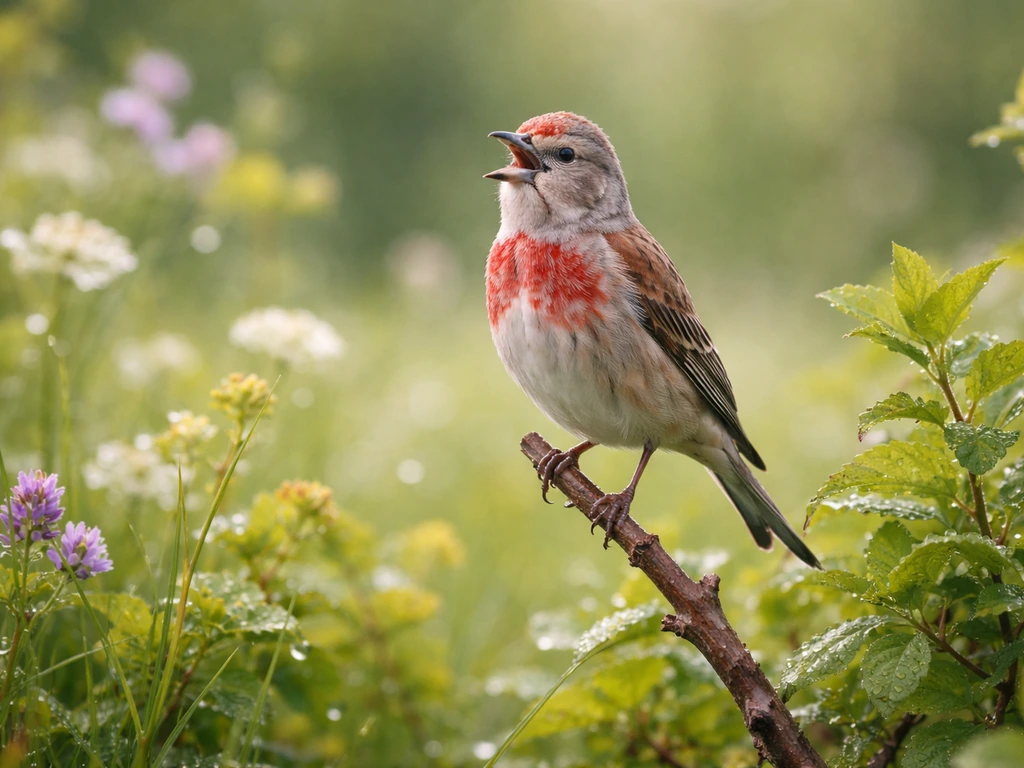
The linnet has a richer literary and cultural history than the greenfinch. Its song was so highly regarded that caged linnets were a popular feature of Victorian homes and inns, and the bird appears in poetry and folk song across Britain, Ireland, and continental Europe as a symbol of voice, freedom, and the bittersweet nature of beauty.
Core symbolic traits
- Voice and song: the linnet was specifically valued for its musical call, which made it a symbol of eloquence, poetic expression, and the gift of communication. To 'sing like a linnet' was a genuine compliment.
- Freedom and wildness: partly because linnets were so often kept in cages, they became powerful symbols of the desire for freedom, natural living, and the cost of confinement. The caged linnet in poetry almost always signals something vital being suppressed.
- Emotional sensitivity: linnets were associated with tender feeling, love, and vulnerability, particularly in Irish and British folk traditions where they appear in laments and love songs.
- Simplicity and nature: like the greenfinch, the linnet connects to fields, heathland, and open countryside, giving it an association with uncomplicated natural living and a life close to the land.
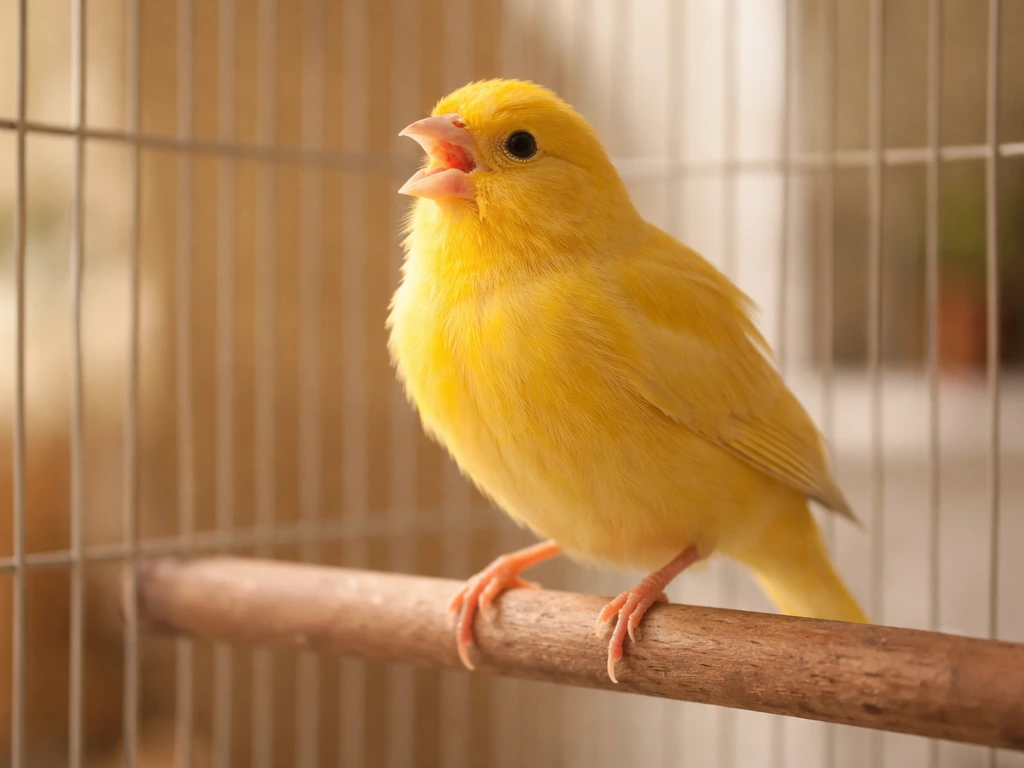
The linnet's literary appearances are numerous. W.B. Yeats referenced the linnet in 'The Lake Isle of Innisfree,' writing of 'bee-loud glades' and a 'linnet's wings' as emblems of a longed-for peaceful life. In folk tradition, particularly across Celtic cultures, the linnet frequently appeared in songs about lost love, exile, and the longing for home. This gives it a slightly melancholy edge that the cheerful greenfinch does not share. The canary carries some of this same 'caged voice' symbolism, but the linnet's wild, field-dwelling associations make it feel rawer and less domesticated even in captivity narratives. Some people also ask about the canary bird the figs meaning, especially when they encounter the phrase alongside ideas about voice and hidden messages.
Linnet in dreams
Dreaming of a linnet is commonly interpreted as a sign related to communication, particularly around something you have been holding back. If the bird is singing freely in the dream, the reading tends toward encouragement to express yourself or share something you have been keeping private. A caged or silent linnet in a dream is read almost universally as a symbol of suppressed creativity or unfulfilled longing. The forked tail and pink markings of the breeding male also connect it symbolically to passion and emotional vibrancy.
What it means when you see both together
Seeing a greenfinch and a linnet together, whether in waking life or in a dream, creates an interesting symbolic combination. If you have also come across the phrase "Fitcher's bird" in symbolism circles, its meaning can add another layer to how people read finch sightings fitcher's bird meaning. Bunting bird meaning is often sought when people want reassurance or inspiration from a distinctive bird encounter, so it can help to compare interpretations across species.
The greenfinch brings the energy of joy, renewal, and everyday contentment, while the linnet brings voice, emotional depth, and the push toward freedom. If you have come across a canary bird and are wondering about its meaning, its symbolism often follows a similar theme of voice and personal expression canary bird meaning. Together, they are fairly consistently interpreted as a prompt to express your authentic self from a place of genuine happiness rather than performance or suppression.
The bower bird meaning is a helpful comparison when you are trying to understand symbolism tied to courtship, building, and display. The combination says: you have something worth saying, and the conditions for saying it are good.
There is also a practical ecological angle worth noting. Greenfinches and linnets do occasionally share habitat, particularly in farmland edges, scrubby gardens, and rough heathland. Seeing them together is not as rare as it might seem, which is part of why the pairing appears in folk observation. In British rural tradition, a garden or hedgerow that attracted multiple finch species was considered a sign of healthy, abundant land, which fed into broader associations with prosperity and good fortune for whoever tended that land.
If you are approaching this from a spiritual or intuitive angle, the combined appearance is almost uniformly read as positive. The dual sighting is not typically associated with warning or caution in any tradition I have found. It leans toward affirmation: something creative or emotionally meaningful is ready to grow.
Dreams, omens, and repeated sightings: how people typically use these meanings
Most people searching for the symbolic meaning of birds fall into one of a few categories: they saw a bird unexpectedly and felt it meant something, they dreamed about one vividly, or they keep encountering a particular species and wonder if there is a pattern. All of these are valid starting points, but it helps to understand how meaning-making actually works here.
Dreams involving birds tend to be interpreted through the emotional context of the dream rather than strict symbol dictionaries. A greenfinch that appears while you are feeling anxious in a dream carries a different weight than one appearing in a calm, sunny setting, and any honest dream-meaning site will acknowledge this.
The scientific view is that dream content reflects cognitive and emotional processing, and while mainstream researchers do not support the idea that dreams predict specific future events, they do tend to agree that recurring dream imagery often connects to something your waking mind is actively working through. So the question to ask is not 'what is this bird telling me? ' but 'what does this bird's meaning resonate with in my current life? '
For waking omens and repeated sightings, confirmation bias is worth keeping in mind. People naturally remember the times a 'meaningful' bird appeared before a significant event and forget the many times the same bird appeared without consequence. This does not invalidate personal experience, but it does mean that a single unusual sighting is probably better read as an invitation to reflect than as a firm prediction. Across Reddit bird symbolism discussions and personal accounts, the most consistent pattern is that the meaning people find tends to match what they were already grappling with internally, which suggests these encounters work best as mirrors rather than messages.
How to interpret these birds practically and without over-reading
Here is a simple framework that works whether you are interpreting a dream, a garden sighting, or a recurring encounter with either of these birds.
- Confirm the bird first. Use the field marks above or Merlin Bird ID before you commit to a specific symbolism. A linnet and a greenfinch mean different things, and misidentifying a twite as a linnet, or a siskin as a greenfinch, will send your interpretation in the wrong direction entirely.
- Note the context of the sighting or dream. Was the bird singing or silent? Free or confined? Alone or in company? These details matter more than the species alone when applying meaning to your specific situation.
- Identify what resonates. Read the core meanings for the relevant bird and notice which elements connect to something you are currently experiencing, considering, or struggling with. The resonance itself is informative.
- Reflect on the combined message if both birds were present. Ask yourself where in your life joy and authentic expression belong together right now. Is there something you want to communicate from a genuinely happy rather than anxious place?
- Act on the reflection, not the omen. The practical value of bird symbolism is not in following a sign blindly but in using the encounter as a prompt for genuine self-reflection. Write down what comes up. Talk to someone. Start the project. The bird does not make the decision, but it can nudge you toward clarity.
- Keep a loose record. If you keep seeing either bird in unusual circumstances, note the date and context. After a few entries, patterns in your own life become clearer than any single 'sign' could deliver.
The greenfinch and linnet have been companions in the British countryside and in its poetry and song for centuries. The meaning people have built around them is not arbitrary: it grew from careful observation of how these birds actually live, sound, and move. That grounding in the real bird is what makes the symbolism worth engaging with. Start with what you actually saw, sit with what it stirs in you, and let that be enough.
FAQ
What if I saw a “green linnet” and now I’m worried I misread the greenfinch or linnet?
Treat “green linnet” as a naming mix-up rather than a separate symbol. Use the physical cues first, greenfinch olive body with yellow wing and tail flashes, linnet pink-red forehead and chest in breeding males. If the bird was a female or the view was brief, prioritize the presence or absence of red on the head or chest, then use call notes to confirm.
Do green finch and linnet bird meaning change if it was a female (no pink) instead of a male?
Yes in practice, because the “voice and emotional vibrancy” symbolism often gets tied to the breeding male’s clear markings and freely sung presence. With females, people typically interpret the encounter more subtly, as an invitation to nurture a feeling or allow communication to develop rather than immediately “speak out.”
What should I do if I heard one but couldn’t clearly see whether it was greenfinch or linnet?
Use call and song as the tiebreaker. Greenfinch is described as a wheezing, drawn-out call with a repeating “pew pew” pattern. Linnet identification is more about spring male song and the contrast between its more melodic field-song reputation and the greenfinch’s distinctive wheeze-like call.
If the two birds showed up on the same day, does that mean a specific timing message?
Not automatically. In symbolism circles, paired sightings are usually read as encouragement rather than a fixed deadline. A safer next step is to note what you were already working through that day, since bird symbolism interpretations tend to mirror current emotional themes more than predict specific events.
How do I interpret the meaning if I felt anxious during the dream or avoided speaking in real life?
Shift from “what will happen” to “what emotion is being processed.” A linnet in a dream is often read through communication, so anxiety or avoidance suggests the dream may be highlighting hesitation, fear of judgment, or unspoken needs, rather than simply offering good news.
Does a caged linnet in a dream always indicate bad news?
Usually it points to suppression rather than doom. Many people read it as a sign to restore agency, for example by setting aside time to practice a skill, share a small truth, or express boundaries. If the dream felt heavy, the action is often “create safer conditions to speak,” not “force confession.”
What if I keep seeing them repeatedly at the same feeder or garden spot?
That often indicates habitat overlap and regular food availability, but you can still use symbolism productively. Try tracking the context, what you were planning or avoiding in the week leading up to the repeat sightings. This turns the pattern into a reflection tool instead of a prediction tool.
Can green finch and linnet bird meaning differ by season?
Commonly yes. Spring and summer aligns linnet symbolism with voice, longing, and openness. Greenfinch is often treated more as accessible joy and renewal, so in winter or early spring it may be read as encouragement to re-start routines or reconnect with small comforts.
If I saw no red at all, should I automatically rule out a linnet?
Not automatically. If visibility was poor, lighting was flat, or the bird was a female, red may be absent or hard to detect. Re-check tail shape and overall look, and confirm with wing flashes, size feel, and any call you could recall before deciding on symbolism.
How can I avoid confirmation bias when using bird meaning for guidance?
Write down the date, your mood, what you were thinking about, and what you did next (even a small action). Then compare across weeks. If the “meaning” only matches after an outcome happens, you can reframe the experience as prompting reflection, not as evidence of inevitability.
Are there practical steps to connect waking sightings to action without overthinking?
Pick one simple, low-risk action that matches the dominant theme: for greenfinch energy, try a joy-supporting habit (walk, meet a friend, resume a small creative project). For linnet themes, send the message you have been postponing, voice a need, or set a time to talk about something important.