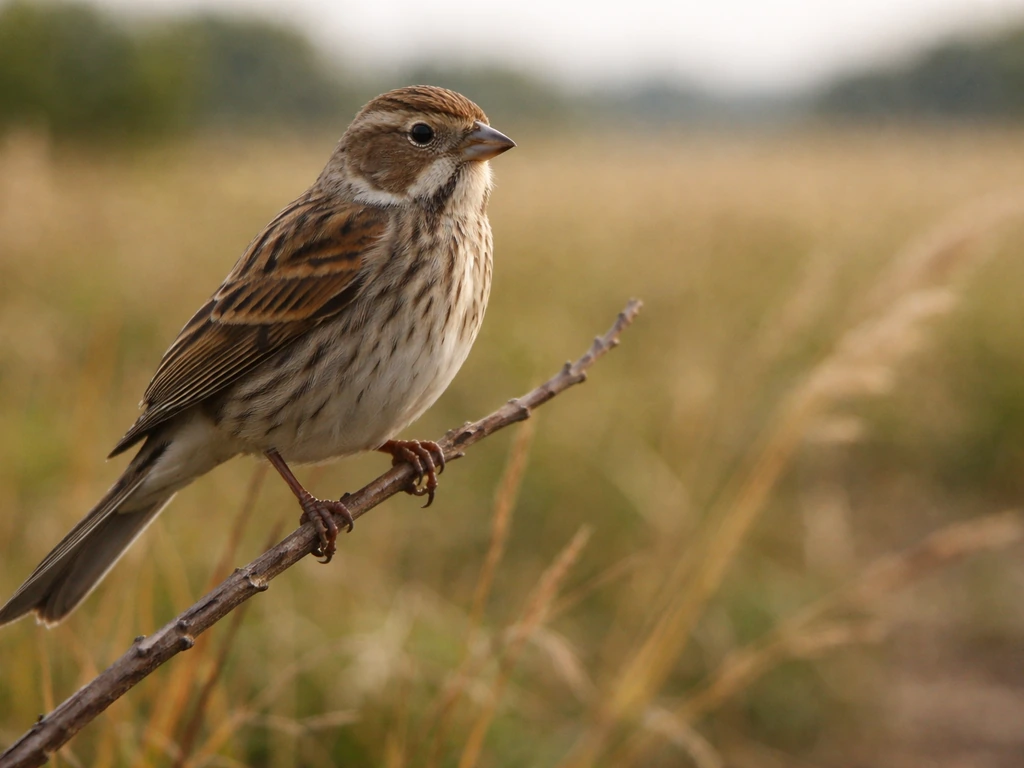
The bower bird meaning works on two levels. Literally, a bowerbird is a real bird (found mostly in Australia and New Guinea) whose blank" rel="noopener noreferrer">males build and decorate elaborate structures called bowers to attract females. Figuratively, the bower bird has become a rich symbol for courtship through creative display, the performance of desire, and the idea that beauty and effort are a form of power. If you've come across the phrase in a poem, a metaphor, or just want to understand what the bird represents culturally, both layers matter.
The Bower Bird Meaning: Literal Behavior and Symbolism

Marcus Blackwell
8 Jul 2026
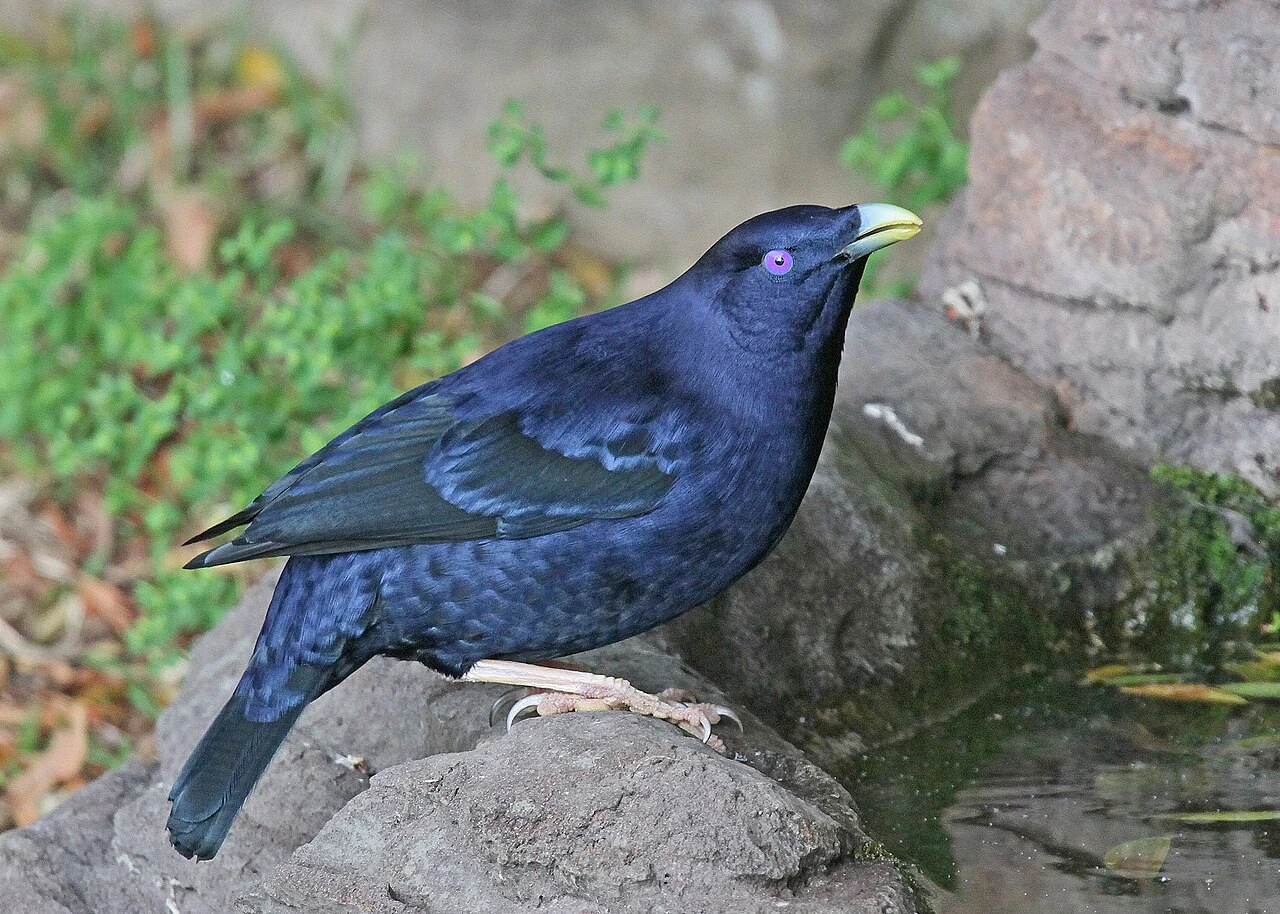
What a bower bird actually is (and what a bower is)
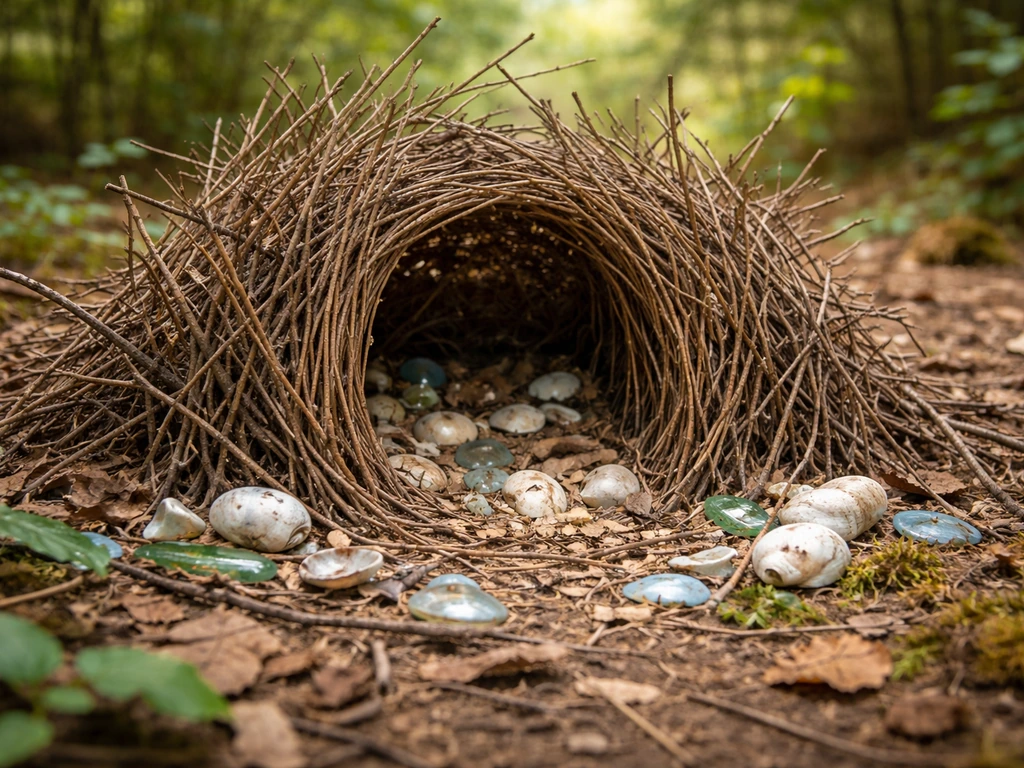
Bowerbirds literally take their name from the structures they build. The bower is not a nest. That distinction is important. A bower is an architecturally constructed courtship stage, built by the male solely to attract a mate. Once mating happens, the female leaves to build a separate nest on her own and raises the chicks without the male's involvement. The bower is pure theater.
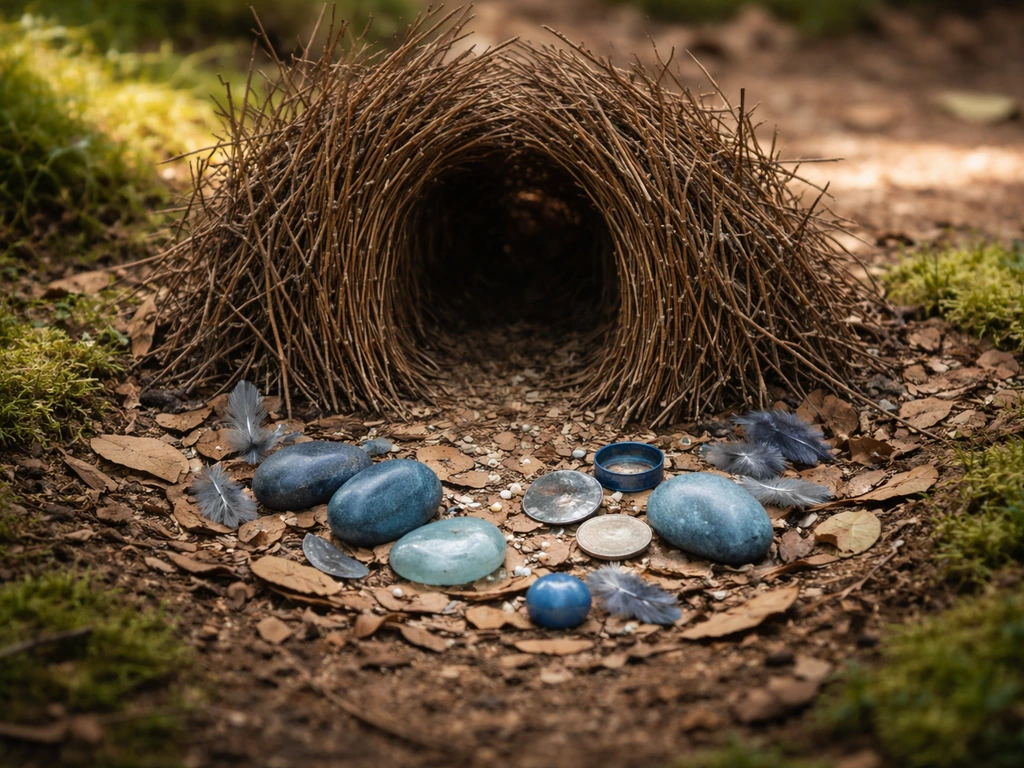
The great bowerbird (Ptilonorhynchus nuchalis) gives a good sense of how elaborate this gets. Its bower consists of two parallel walls of densely thatched sticks forming an avenue roughly a meter long. The male then decorates the court at the far end with objects: shells, pieces of metal, colorful berries, bones, and whatever else catches his eye or impresses. Crucially, he arranges these objects by size, placing larger items farther away from the female's viewpoint inside the avenue.
This creates a forced perspective illusion that makes the court look uniformly scaled when viewed from inside. The male is, in effect, engineering an optical illusion to make himself look better.
That's not a metaphor yet. That is literally what the bird does.
During the display itself, the male stands at the avenue entrance and picks up a decoration, waves or holds it toward the female watching from inside the avenue, then drops or tosses it and picks up another. It's a choreographed performance with props. The decorations aren't random either. Males compete fiercely for the best trinkets, and a male will steal desirable objects from rival bowers to upgrade his own collection.
Why they build bowers: the courtship logic
The bower exists entirely as a vehicle for sexual selection. Female bowerbirds choose mates based on the quality of the bower and the skill of the display. The male invests enormous energy in construction and decoration not because it shelters anyone or feeds anyone, but because it is a direct signal of genetic quality, intelligence, and resourcefulness. A male who can source rare colored objects, maintain a well-built structure, protect it from rivals, and execute a polished performance in front of a skeptical female is advertising something real: he is capable, competitive, and creative.
This is why bowerbirds get raised in discussions about animal aesthetics. Researchers have seriously debated whether bowerbirds have something like an aesthetic sense. The forced-perspective geometry in great bowerbird bowers suggests the male is calibrating visual experience, not just piling up shiny things. Whether you call it art or instinct, the behavior sits in genuinely interesting territory.
The symbolic meaning of the bower bird
Symbolically, the bower bird clusters around a handful of strong themes. These come through consistently in how writers, poets, and cultural commentators use the image.
- Courtship through artistry: The bower bird is the definitive symbol of winning love through creative effort rather than brute strength. It's about seduction via beauty and skill.
- Performance and display: The bird stages a show. It picks up objects, arranges them, choreographs the encounter. The symbolism speaks to the performative side of attraction, the way people dress, curate their spaces, and present themselves when they want to impress.
- Collector's obsession: Because male bowerbirds obsessively gather and curate objects, the bird also symbolizes the collector personality: someone driven to accumulate beautiful or interesting things, sometimes competitively.
- Illusion in love: The forced perspective angle is particularly rich for writers. The bower bird literally engineers a visual illusion to appear more attractive. This maps onto human behaviors around presentation, status signaling, and the gap between image and reality.
- Effort as devotion: Unlike birds that simply sing or flash bright plumage, the bowerbird builds. There's labor involved. The symbolism can carry a sense of devotion expressed through doing, making, creating, not just being.
- Status competition: Rival males steal each other's decorations. This brings in themes of rivalry, one-upmanship, and the social competition underlying romantic pursuit.
Compared to other bird symbols on this site, the bower bird occupies a distinctive niche. Birds like the canary tend to symbolize joy, freedom, or warning. Finches often carry meanings around adaptability and community. The goldfinch carries spiritual connotations in European traditions. The bower bird's symbolism is more specifically about romantic pursuit, performance, and the aesthetics of desire. It's less about the bird in flight and more about what the bird builds on the ground.
Cultural and folklore references
The bower bird is most embedded in Australian and Pacific Islander cultural contexts, which makes sense given its geographic range. In Australian Aboriginal traditions, animals are often figures in stories that explain natural law and social conduct. The bowerbird's behavior, a male who builds an elaborate stage to win a female's attention, fits naturally into storytelling frameworks about courtship, vanity, and the lengths desire drives individuals to.
If you have also heard the canary bird the figs meaning phrase, it is a separate idiom that can show how people use birds as shorthand for cultural ideas courtsip. While documented versions of specific bower bird folklore vary by community and are not universally recorded, the bird's behavior pattern has made it a recurring figure in contemporary Australian poetry and literature as an emblem of elaborate, almost obsessive romantic effort.
In broader Western literary and naturalist writing, the bowerbird started appearing prominently once 19th-century naturalists brought detailed accounts back from Australia. The combination of architecture, decoration, and display made the bird irresistible as a symbol for anyone writing about aesthetics, creativity, and nature. By the 20th century it had become a reliable shorthand in essays and criticism for the idea of elaborate artifice deployed in the service of desire.
In modern usage, the term "bower bird" has also become a casual, slightly affectionate label for people who collect and hoard interesting objects, especially those who arrange their collections with curatorial care. Interior design writers and lifestyle journalists use it this way fairly regularly, which has layered a domestic, aesthetic-collector meaning onto the original courtship symbolism.
Idioms, phrases, and "bower" as a standalone word
One source of confusion worth clearing up: the word "bower" on its own has a separate history that predates the bowerbird entirely. In older English, a bower was a shaded, leafy enclosure, a garden arbor or private retreat, often associated with romance and shelter. You find it in Spenser, Shakespeare, and medieval poetry. "Bower" in that sense suggests intimacy, shelter, and a garden-enclosed privacy. The bowerbird's name borrowed this resonance, but the two usages don't mean the same thing.
If you encounter "bower" in a piece of 16th or 17th-century poetry, it almost certainly refers to the garden enclosure, not the bird. If you encounter "bower bird" or "bowerbird" as a compound in modern writing, it's almost always invoking the bird's courtship symbolism or the collector personality.
There isn't a widely established idiomatic phrase like "bower bird behavior" with a fixed dictionary definition, but the term is used figuratively in a fairly consistent way in contemporary writing. Calling someone a bower bird, or comparing their behavior to a bower bird's, reliably signals one or more of these ideas: obsessive curation of beautiful objects, elaborate preparation to impress someone romantically, or competitive one-upmanship in presentation. The context usually makes clear which aspect is primary. You can apply the same idea when interpreting a house finch, too, by looking up its house finch bird meaning in the specific context you are reading.
How to use bower bird meaning in writing or interpret it in a text

If you're reading a passage that references a bower bird, here's a quick way to work out what the writer intends. Ask three things: Is this about romantic pursuit or attraction? Is the emphasis on the effort of building or collecting? And is there any irony around performance versus reality? Those three angles cover the vast majority of bower bird references in literary and symbolic contexts. Green finch and linnet bird meaning is a different symbolism system, often discussed in folklore and poetry alongside broader bird-meaning traditions bower bird references.
- Romantic pursuit angle: The bower bird is being used to say someone is going to elaborate lengths to attract a partner. The connotation is usually admiring but can carry a note of obsession or even futility depending on the tone.
- Collector or curator angle: The reference is about someone who accumulates beautiful or interesting things, often with care and selectivity. This is the "bower bird personality" usage, and it's usually warm and affectionate in tone.
- Performance versus reality angle: The writer is invoking the forced-perspective illusion element, the idea that the display creates a misleading impression. This is a more critical or ironic use, implying artifice, image management, or the gap between the curated self and the real one.
- Status competition angle: The stealing of decorations and rivalry between males may be the focus. This applies in passages about competitive social environments where people jockey for status through visible displays of taste or acquisition.
If you're writing and want to use bower bird symbolism, be specific about which layer you're activating. A character described as "building a bower" for someone they love reads as devoted and creative. A character described as a bower bird who arranges their apartment to impress a date reads as slightly comic and self-aware. A character whose bower bird display is revealed to be illusion carries darker, more critical weight. The bird's symbolism is flexible enough to carry all three, but only if the writer signals clearly. You can use similar symbolism frameworks when exploring the goldfinch bird meaning, since bird imagery often carries cultural and emotional themes bird's symbolism.
| Symbolic angle | What it suggests | Best used when... |
|---|---|---|
| Courtship through artistry | Love expressed through creative effort and beauty | Character works hard to impress someone romantically |
| Collector personality | Obsessive, affectionate curation of beautiful things | Character is a gatherer, decorator, or taste-maker |
| Illusion and performance | The display creates a false or idealized impression | There's irony or critique of image vs. reality |
| Status competition | Rivalry, one-upmanship, competitive display | Social competition underlies the romantic or professional pursuit |
The bower bird is one of those symbols that rewards precision. Used loosely, it just means "someone who likes collecting stuff." Used carefully, it can carry a whole argument about desire, performance, and the strange relationship between beauty and truth. If you're decoding it in someone else's writing, look at what the bower bird is doing in the scene: building, displaying, stealing, or being observed. That action will tell you which layer the writer is working in.
FAQ
Is “bower bird meaning” always about romance, or can it be used negatively?
It can be both. In positive readings it suggests dedicated, creative courtship, but in critical readings it can imply vanity, obsessive performance, or manipulation (for example, when the display is revealed as deceptive or when the speaker emphasizes one-upmanship and stealing).
What’s the difference between a “bowerbird” (the animal) and “bower” in older English poetry?
A “bower” in older English usually means a shaded garden enclosure or private retreat. The bird name is a modern compound that borrows that romance-and-intimacy flavor, but the reference in a 16th or 17th century text is typically the garden enclosure, not the bird.
If someone says “he’s a bower bird,” what does that usually communicate?
Most often it points to object curation done to impress someone, and it can carry a mild affectionate tone. If the context includes competition, hoarding, or too much effort spent on appearances, it can shift into criticism.
How can I tell whether a text means the bird literally or metaphorically?
Look for concrete behavior cues. Mentions of building an avenue-like structure, specific decoration items, or forced-perspective details suggest the literal animal. If the writing focuses on artifice, collecting, or trying to win attention, it is almost certainly metaphorical.
Does “bower bird” always imply someone is trying to attract a romantic partner?
Not always. The default symbolic sense is courtship and desire, but writers sometimes use it more broadly for status signaling or aesthetic obsession, especially when the scene is about impressing an audience, gaining approval, or curating identity.
Can “bower bird” be used for kids, pets, or non-human characters without losing meaning?
Yes, but the metaphor changes depending on the behavior the author highlights. If the character is “decorating a stage” to influence attention, it still fits. If the description turns purely into “collects shiny things” without the display-and-observation dynamic, the courtship element becomes less central.
Is there a common mistake when interpreting bower bird references in literature?
The common mistake is treating it as simply “collecting items.” The richer signal is the combination of construction plus performance, including being watched or evaluated, and sometimes the competitive element of improving the display over rivals.
What should I watch for if the passage has irony?
Irony often shows up when the character is trying hard to create a perfect image, but the narrative frames it as misguided, artificial, or self-deceiving. Clues include language that undermines sincerity, reveals a flaw in the display, or contrasts appearance with reality.
Does “bower bird” symbolism include deception, or is it just about beauty?
It can include deception depending on the framing. The bird’s forced-perspective effect is a built illusion in the natural behavior, and writers sometimes extend that idea to human contexts to imply image-making that may not reflect “truth” beneath the surface.
Next Article
Bunting Bird Meaning: Species vs Decorative Bunting
Bunting bird meaning explained: identify real buntings vs decorative bunting, plus symbolism, slang, and common mix-ups.