
If you've searched 'curlew bird Aboriginal meaning,' here's the honest, direct answer: the curlew most Australians are actually asking about is the bush stone-curlew (Burhinus grallarius), and across many Aboriginal Nations it carries a strong association with death, the spirit world, and messages from the deceased. But that one-sentence answer needs some unpacking, because 'curlew' can refer to more than one bird, Aboriginal Australia is made up of hundreds of distinct Nations, and some of the deeper meanings around this bird are restricted knowledge that belongs to specific communities. This guide will walk you through everything you need to know to interpret curlew symbolism responsibly.
Curlew Bird Aboriginal Meaning: Stories, Symbolism, and Respectful Next Steps

Marcus Blackwell
23 Mar 2026
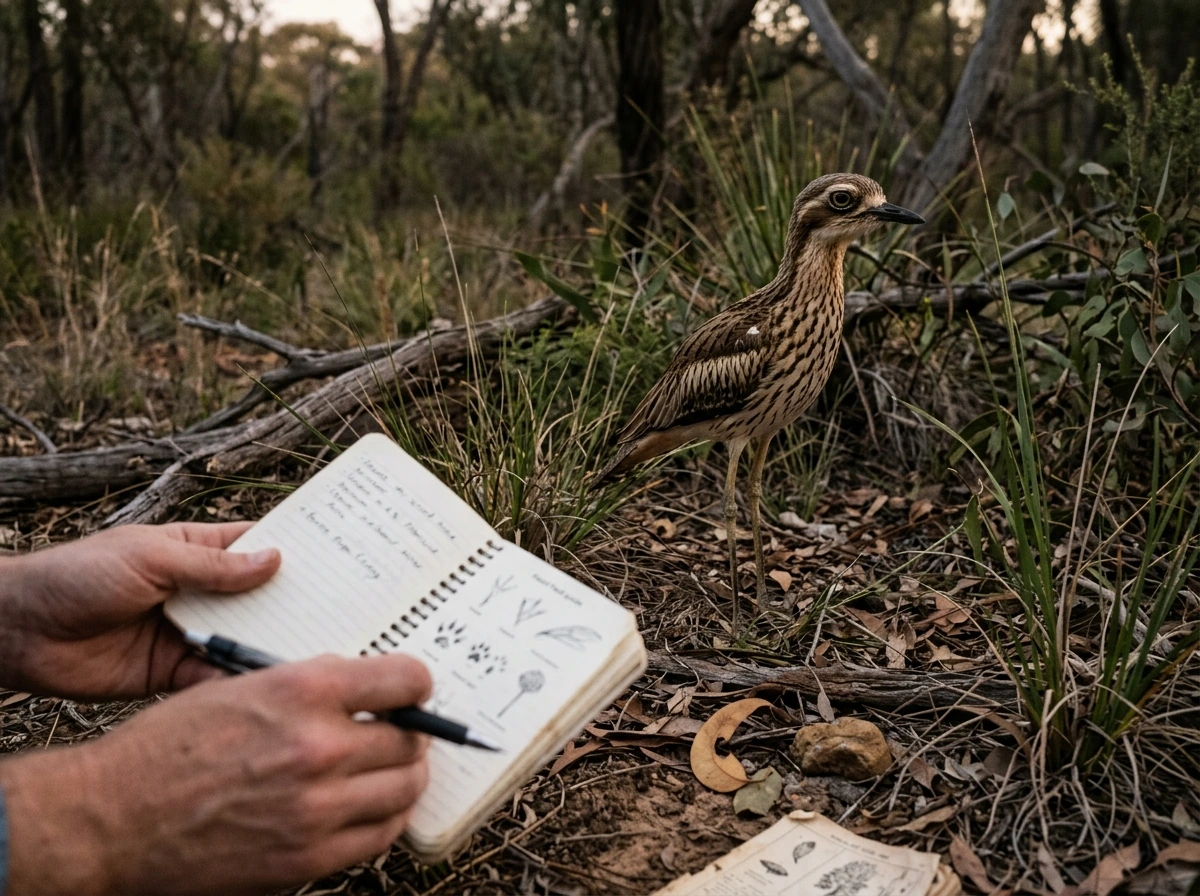
What exactly is a curlew? Getting the species right first
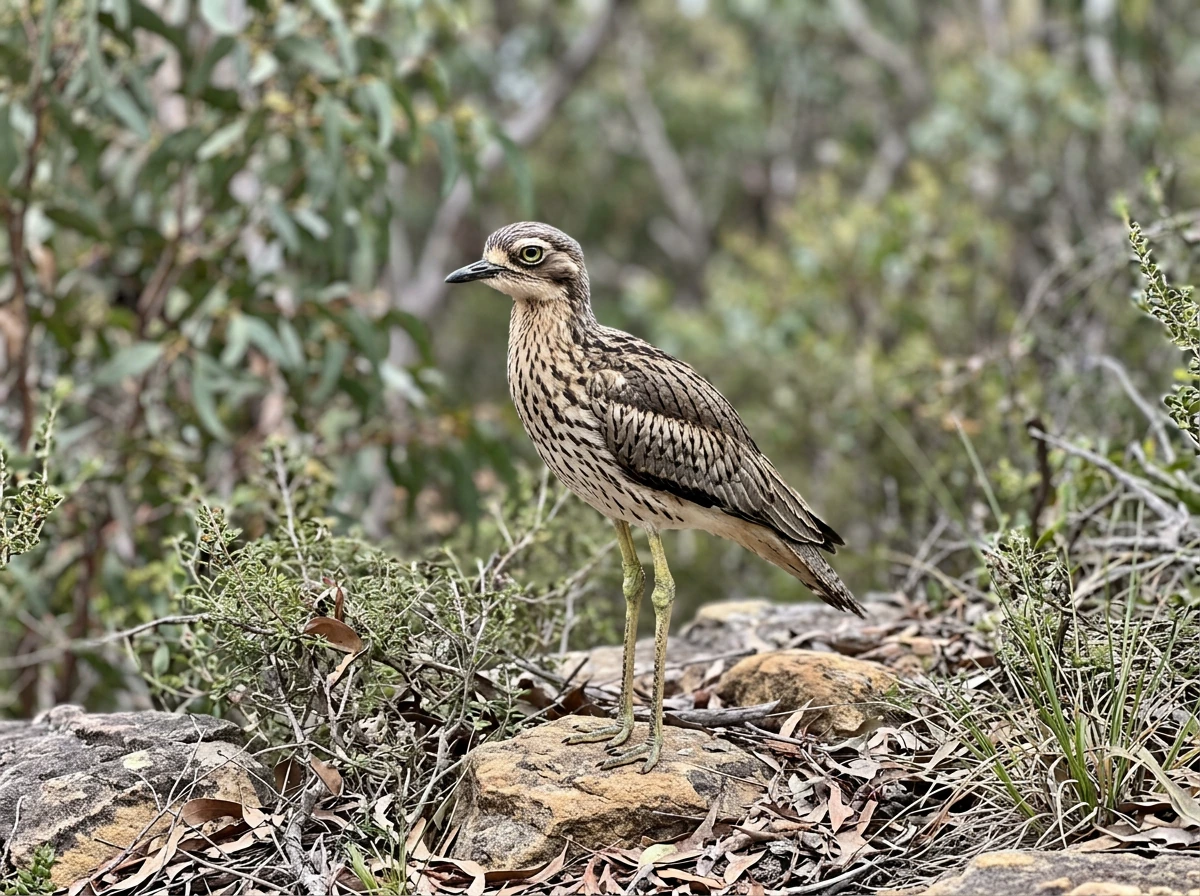
In Australian everyday speech, 'curlew' almost always means the bush stone-curlew, scientific name Burhinus grallarius. It's also called the bush thick-knee. The Australian Museum describes it as a grey-brown, ground-dwelling bird streaked with black and rufous, with long legs and a plumage pattern so cryptic it practically disappears in dry leaf litter. It ranges throughout mainland Australia and is far more often heard than seen, especially at night when its wailing call carries a long way.
Here's where the naming gets a little tricky. Biologically, the bush stone-curlew is not a true curlew at all. True curlews belong to the family Scolopacidae and the genus Numenius. Two of those do appear in Australia: the eastern curlew (Numenius madagascariensis), which is a listed priority migratory species, and the Eurasian curlew (Numenius arquata), which turns up as a rare wader on Queensland and northern coasts. If someone is a birder asking about a 'curlew' at a coastal mudflat, they almost certainly mean one of those Numenius species. But in cultural and spiritual conversation, the default Australian reference is nearly always Burhinus grallarius, the nocturnal screamer of the bush.
Why does species clarity matter for Aboriginal meaning? Because traditional knowledge is tied to specific animals in specific Country. Conflating a migratory wader with a resident ground-bird could lead you to entirely the wrong cultural context.
Aboriginal meanings are not universal: why Nation and region matter
There is no single 'Aboriginal meaning' for the curlew, or for any other bird. Aboriginal Australia encompasses hundreds of distinct language groups, Nations, and clan groups, each with their own stories, lore, and relationships with the animals on their Country. A meaning held by a Ngunnawal community in the ACT region is not automatically shared by a Yolŋu community in Arnhem Land, or by a Diyari community in the Lake Eyre Basin.
You can see this diversity directly in the names different groups use for the bush stone-curlew. The Tweed Regional Museum documents the name 'Buruwagan' in the context of that region's Aboriginal cultures. A Ngunnawal-Gundungurra language source uses 'Warabin' as the curlew label. Arnhem Land language research records terms including 'kurrubirla' and 'kuwirluk,' specifically noted alongside the bird's loud nocturnal calls. In the Diyari language of the Lake Eyre region, the stone-curlew is known as 'Wilaru.' Each name sits inside its own linguistic and cultural ecosystem. Treating any one of these as the universal Aboriginal word for curlew would be a mistake.
This is worth sitting with for a moment, especially if you arrived at this article looking for a quick symbolic 'meaning' you can apply broadly. The diversity of Aboriginal knowledge systems is a feature, not a complication. It reflects thousands of years of distinct relationships between specific peoples and specific places.
What the curlew actually represents across Aboriginal cultures
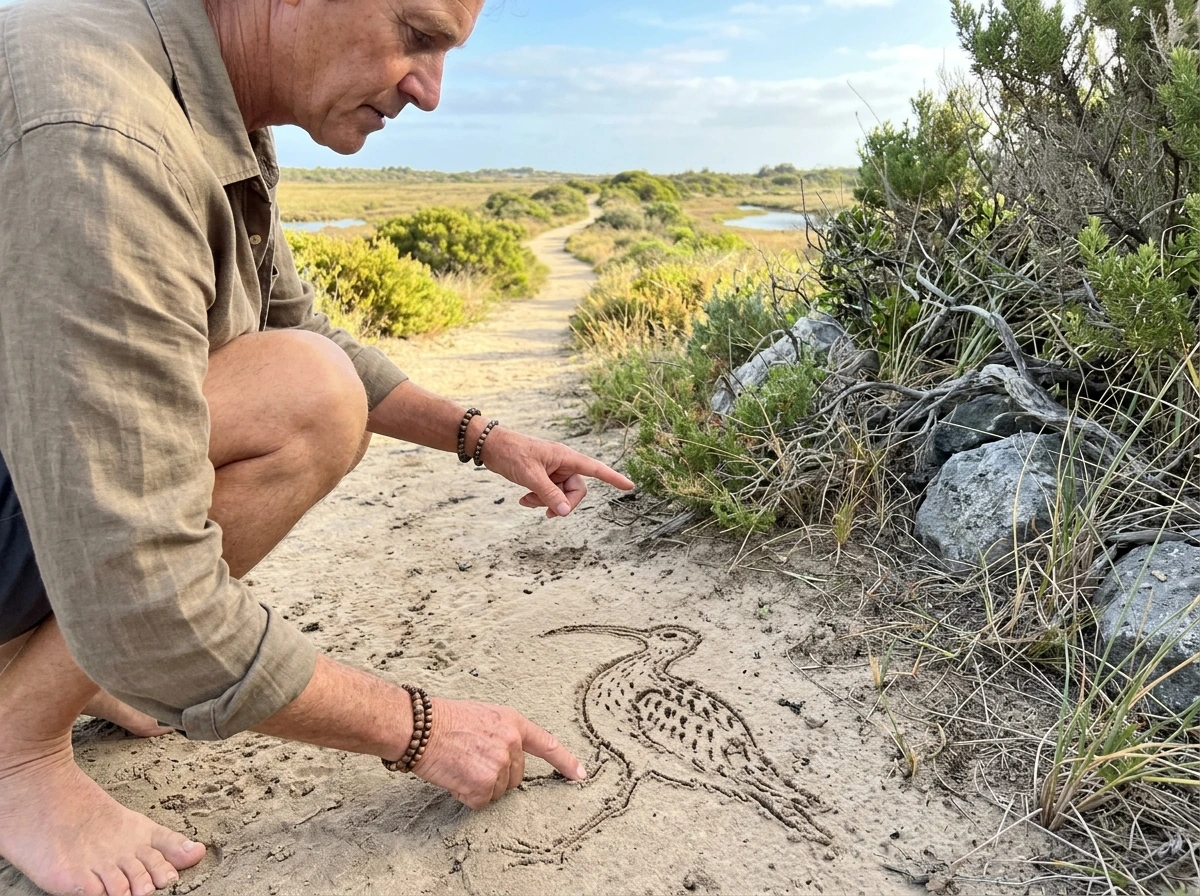
With that diversity acknowledged, there are some widely documented themes that appear across multiple communities and regions. The most consistent one is an association with death, grief, and the spirit world. The Tweed Regional Museum states plainly that in many Aboriginal cultures, the bush stone-curlew is closely associated with death and appears in Aboriginal stories across Australia. For a deeper look at the curlew bird meaning across Aboriginal Australia, focus on the specific Nation or region involved.
If you're mainly after the direct takeaway, the detailed breakdown in the guide to clay bird meaning offers a useful related comparison point for how bird symbolism is interpreted in different contexts. Conservation researchers working with First Nations communities have similarly noted the bird's standing as a messenger linked to death or grief in multiple communities.
That association makes intuitive sense when you spend any time around the bird. The bush stone-curlew is largely nocturnal, nearly invisible during the day, and produces a haunting, wailing call that once heard is not easily forgotten. For communities living close to the land, a sudden piercing cry in the dark of night is exactly the kind of experience that gets woven into cosmological storytelling. The bird's ability to vanish into its surroundings and then produce an unearthly sound likely contributed to its role as a liminal creature, one that bridges the world of the living and the world of the dead.
Beyond death symbolism, the curlew appears in Aboriginal stories in ways that reflect its observed behaviours: its stillness and cryptic camouflage, its faithfulness to a territory, its role as a ground-nesting bird vulnerable to disturbance. Queensland Government notes that bush stone-curlews are ground-nesting birds and provides core natural-history details including their habitat in open forest and woodland areas and the incubation period [ground-nesting birds vulnerable to disturbance](https://www. qld. gov.
au/environment/plants-animals/animals/discovering-wildlife/birds/bush-stone-curlew). In Arnhem Land contexts, specific language terms for the bird are part of a broader traditional ecological knowledge framework, meaning the bird carries meaning not just spiritually but practically, as part of how communities understand and manage Country. The bird's call times, movement patterns, and presence or absence can all be ecologically meaningful in this framework.
The curlew as a spiritual sign or omen: what's solid vs what's speculative
A lot of what circulates online about the curlew as a spiritual omen sits in a grey zone between documented cultural knowledge and general 'spirit animal' content that's been aggregated, repackaged, or invented by non-Indigenous sources. It's worth being able to tell the difference.
What is well-supported: the association between the bush stone-curlew's call and death or impending loss is documented across multiple First Nations contexts and corroborated by regional museums, academic research, and language records. If someone from a community that holds this belief hears a curlew crying near their house at night, they may interpret it as a sign that someone is going to die or has just died. This is not superstition to be explained away; it's a living cultural belief held in many communities.
What is less verifiable: generic claims that the curlew 'represents transformation,' 'signals new beginnings,' or 'is your spirit guide calling you to awareness' are not documented in any Nation-specific source I've encountered. These kinds of phrases tend to originate in non-Indigenous spiritual content that borrows bird symbolism from multiple traditions and blends it into something palatable and positive. They don't reflect the more sobering, serious relationship many Aboriginal communities have with this bird. Be skeptical of curlew symbolism content that sounds uniformly uplifting. claw bird meaning
There is also a category of knowledge that may exist but is restricted: sacred or ceremonial meanings that belong to specific groups and are not shared publicly. AIATSIS, the Australian Institute of Aboriginal and Torres Strait Islander Studies, is explicit that some cultural knowledge is restricted by protocol and access conditions. The National Museum of Australia similarly acknowledges that some Aboriginal and Torres Strait Islander cultural materials are secret, sacred, sensitive, or private, and are not for general publication or viewing. This means there may be deeper or more specific curlew meanings held by particular communities that are simply not available to the general public, and that's appropriate.
Curlew symbolism in modern language and bird-meaning conversations
Outside of specifically Aboriginal cultural contexts, you'll encounter the curlew in a few other places when people talk about bird meanings. In general Australian folklore and settler storytelling, Outside of specifically Aboriginal cultural contexts, you'll encounter the curlew in a few other places when people talk about bird meanings.
In general Australian folklore and settler storytelling, the crow was picked up much of the same death-omen reputation it carries in Indigenous contexts, which is one reason the two threads can get confused in online articles. If you are also comparing other bird omens, you may find it helpful to check the crow bird meaning alongside this curlew bird meaning.
When people around a campfire say 'the curlew was crying last night,' the implication is usually ominous regardless of whether the speaker is Aboriginal or not. When people around a campfire say 'the curlew was crying last night,' the implication is usually ominous regardless of whether the speaker is Aboriginal or not.
In a broader bird-symbolism context (of the kind this site covers across many species, from crows to swallows), the curlew fits into a consistent pattern: nocturnal or liminal birds tend to accumulate death-related meaning across cultures worldwide. The crow and raven carry similar weight in European and North American traditions, for example. What makes the Aboriginal curlew meaning distinctive is that it's rooted in lived, land-based knowledge rather than literary tradition, and it continues to be actively maintained by communities rather than being purely historical.
If you hear someone use 'curlew' figuratively in conversation, or read it used symbolically in Australian literature or artwork, the most likely intended meaning is a dark omen, a harbinger of grief, or a connection to death and the spirit world. That's the interpretive frame that makes the most sense given both Aboriginal teachings and broader Australian cultural usage.
How to find the right source and ask the right questions

If you want to go deeper than what any general article can responsibly offer, the single most important step is to identify the specific Country you're asking about and then look for knowledge holders or institutions connected to that Country. Here's a practical sequence for doing that respectfully.
- Start with AIATSIS (aiatsis.gov.au). Their catalogue holds language materials, cultural records, and research outputs from across Australia. You can search by language group or Nation name. Be aware that some records have restricted access, which is itself a signal that the knowledge is sensitive.
- Check state and territory language centres. Each state has Aboriginal language centres or trusts (for example, ACLCA in South Australia, or First Languages Australia as a national body) that can often point you toward the right community or publication.
- Look for regional museums with explicit First Nations content. The Tweed Regional Museum's 'Buruwagan' entry is a good example of what a responsible regional institution looks like: it names the bird in language, gives cultural context, and is clear about its source.
- Contact the local Land Council or Native Title body for the region you're asking about. They can direct you to appropriate cultural authorities or community members who can speak to curlew meanings on that Country.
- When approaching communities or knowledge holders directly, be honest about why you're asking, be prepared to hear 'that's not something we share publicly,' and do not push back if that's the answer you get. Some meanings are restricted, and respecting that restriction is part of engaging correctly with this material.
- Do not rely on general 'spirit animal' websites, aggregated symbolism lists, or social media posts as sources for Aboriginal curlew meaning. Cross-check anything you read against named, Nation-specific, or institutionally backed sources.
One practical question worth asking before you go looking: which curlew are you actually asking about, and on whose Country? If you saw a bird, describe it accurately. If you're asking because you heard a call at night, note where you were. If you're doing research, name the Nation or region you're focusing on. These specifics will make any inquiry dramatically more productive and show the knowledge holder that you've done your homework.
A quick reference: curlew species most likely meant in each context
| Context | Most likely curlew species | Notes |
|---|---|---|
| Aboriginal cultural/spiritual meaning (general Australia) | Bush stone-curlew (Burhinus grallarius) | Ground-dwelling, nocturnal, widespread; the species documented in most cultural and language records |
| Coastal birdwatching, migratory shorebirds | Eastern curlew (Numenius madagascariensis) | Listed migratory species; found on tidal mudflats; rarely discussed in cultural symbolism contexts |
| Rare vagrant sighting, northern/eastern coasts | Eurasian curlew (Numenius arquata) | Very rare in Australia; not documented in Aboriginal cultural meaning contexts |
| Language records from Ngunnawal-Gundungurra region | Bush stone-curlew (likely), named 'Warabin' | Language-specific; check against current Ngunnawal language resources |
| Language records from Lake Eyre/Diyari region | Stone-curlew type, named 'Wilaru' | Diyari language context; may refer to bush stone-curlew or related species on that Country |
| Arnhem Land language and ecological knowledge | Bush stone-curlew, named 'kurrubirla' or 'kuwirluk' | Documented in traditional ecological knowledge research; region-specific |
The curlew is one of those birds that rewards careful attention, both in the field and in cultural conversation. Its meaning in Aboriginal Australia is real, documented, and deeply felt in many communities. Treating it with the seriousness it deserves means being specific about species, being honest about what you don't know, and being willing to follow the guidance of the communities whose knowledge it is. That's not a barrier to understanding; it's the understanding. If you find an injured bush stone-curlew, Tweed Regional Council advises using their practical conservation guidance and the region’s conservation hotline for the respectful next steps follow the guidance of the communities whose knowledge it is.
FAQ
How can I tell whether “curlew” in my area means bush stone-curlew or a true curlew (Numenius)?
In most everyday Australian conversations, “curlew” means bush stone-curlew (Burhinus grallarius). If you are near a coastal mudflat or dealing with a wader call, you should double-check whether the bird is actually a Numenius species (for example eastern curlew). Species confusion can change the cultural frame completely, so it is worth confirming with photos, a field description, or local birder input before asking about meaning.
Is all curlew symbolism openly shareable, or are there restricted parts of the story?
Yes, some details are better left unshared publicly even when the bird is widely discussed in general terms. Treat any community-specific sacred or ceremonial associations as restricted unless you are given permission through the correct protocol. A practical rule, ask first, and assume “restricted until told otherwise,” especially for anything beyond the broad themes like grief or the spirit world.
What are red flags that a curlew meaning online is not grounded in Aboriginal cultural knowledge?
If someone tells you “curlew means good luck,” “transformation,” or “new beginnings” in a uniformly upbeat way, that is a common warning sign that the message has been blended from generic “spirit animal” content. For more reliable guidance, look for Nation or region context, language terms, and descriptions tied to real behaviours (like night calls and ground-nesting habits) rather than universal feel-good interpretations.
If a bush stone-curlew calls near my home, does Aboriginal meaning mean “someone will die” for me personally?
If you heard a bush stone-curlew call at night, the culturally documented interpretation in many communities can be connected to death or impending loss. You should still be careful not to treat that belief as a personal prediction, because you do not know the meaning held by the specific Country or family whose perspectives apply. A respectful next step is to speak with local knowledge holders or community members, or at minimum stay mindful and avoid turning the experience into a certainty for yourself or others.
Can I use the same Aboriginal curlew story across different parts of Australia (or for any Aboriginal group)?
Avoid using one Nation’s word or story as a blanket “Aboriginal meaning.” Instead, narrow the scope to the Country you are on, then ask about the relevant language term and story context for that region. If you cannot identify the Nation, focus on publicly available, widely documented themes and do not claim certainty about more specific meanings.
What should I prepare before asking a knowledge holder or cultural institution about curlew meaning?
When inquiring, it helps to bring specifics: the bird you saw (or heard), the exact location and Country, time of day and weather, and whether you are asking as a visitor, researcher, or student. Also be clear about your goal (learning broadly, writing a general article, interpreting a local artwork, etc.) because protocol and what can be shared can vary depending on purpose.
How should I handle species uncertainty when I am writing or posting about curlew meaning?
If your text mentions “curlew” but does not clarify which species, you can accidentally imply the wrong cultural setting. For writing or sharing, include a short species clarification (bush stone-curlew versus a coastal wader) and avoid turning it into a single universal lesson. When uncertain, say what you know (for example, you heard a night call) and what you are still trying to identify.
How do I avoid mixing Indigenous curlew meanings with general global “bird omen” symbolism?
Yes. The article explains that generic bird-meaning content often merges Indigenous and non-Indigenous symbolism. If you are trying to understand Aboriginal meanings, keep separate the “Aboriginal context” explanations from broader international bird symbolism, and do not rely on cross-cultural “spirit guide” narratives as your main source of meaning.
Next Articles
Clay Bird Meaning: Literal vs Symbolic Interpretations
Get the clay bird meaning fast: whether it refers to a crafted ornament or to bird symbolism like peace, love, or transf
Crow Bird Meaning: Literal Facts, Symbolism, and Language Uses
Learn what crow bird meaning means literally, symbolically, and in English phrases so you interpret the right context.
Crawl Bird Meaning: Literal vs Figurative Uses and Symbolism
Disambiguate crawl bird meaning: literal bird crawling vs figurative slang, nicknames, or symbolism using context clues.