
When you search 'cat bird meaning,' you're probably asking one of three very different questions: What is a catbird as a bird species? What does the catbird symbolize spiritually or in literature? Or did you mean 'catbird seat,' the idiom? The answer you need depends entirely on where you encountered the word. This guide walks through all three, helps you figure out which one applies to you, and gives you concrete ways to verify it.
Cat Bird Meaning: Species ID, Symbolism, and Phrases

Marcus Blackwell
23 Mar 2026
First: Is 'Cat Bird' the Bird Species or a Phrase?
The short answer is: it can be both, and people genuinely mix them up. 'Catbird' (often written as one word) is a real bird species with a scientific name and field marks you can verify. 'Catbird seat' is a completely separate idiom from a 1942 short story. And 'catbird' as spiritual symbolism is a third layer that online communities have built on top of the species' behavior. Before diving into any of these, it helps to know which one you actually encountered.
Ask yourself: Did you see the word in a sentence about nature, a bird call, or a wildlife description? You're dealing with the species. Did you see it in a phrase like 'sitting in the catbird seat'? That's the idiom. Did you find it on a dream-meaning or spirit-animal site? That's the symbolic layer. Each has a completely different origin and meaning, and the rest of this guide breaks all three down.
The Catbird as a Real Bird: Identity, Range, and Why It's Called That
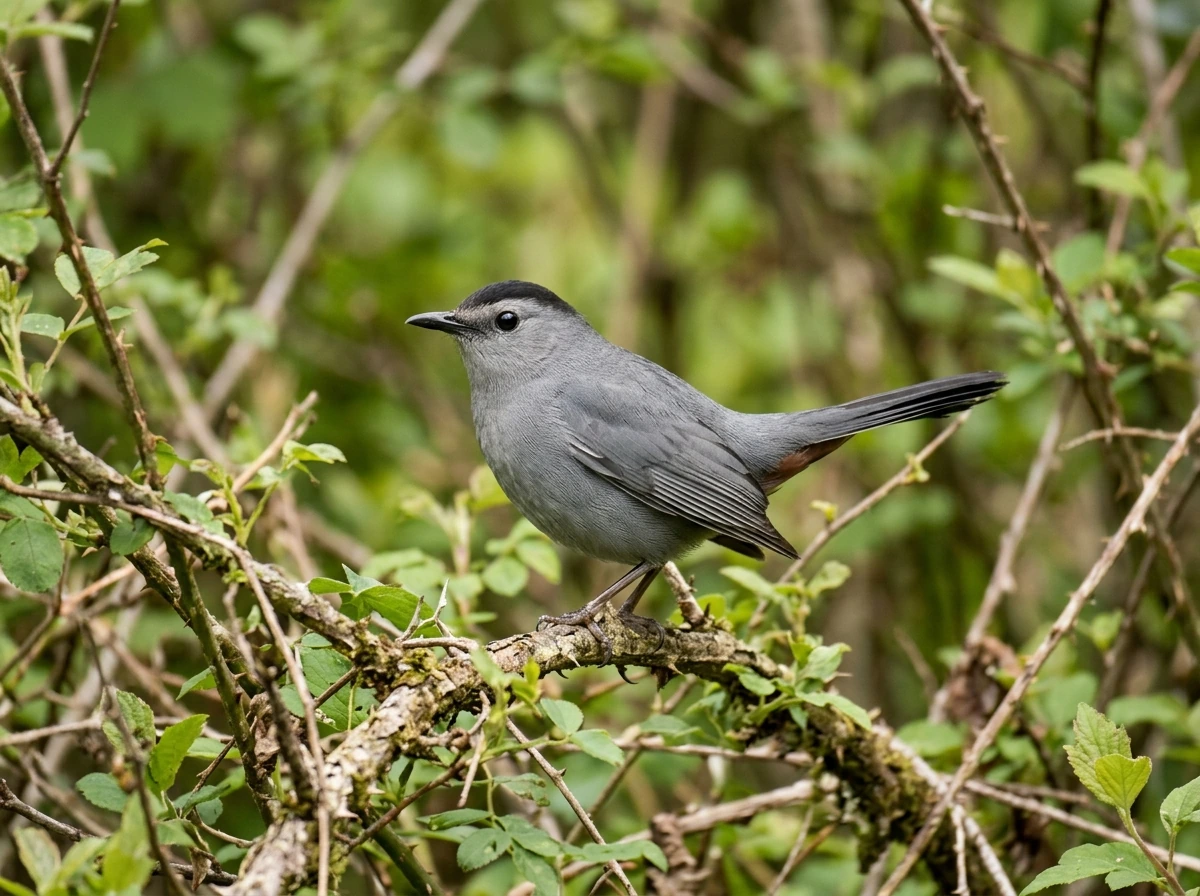
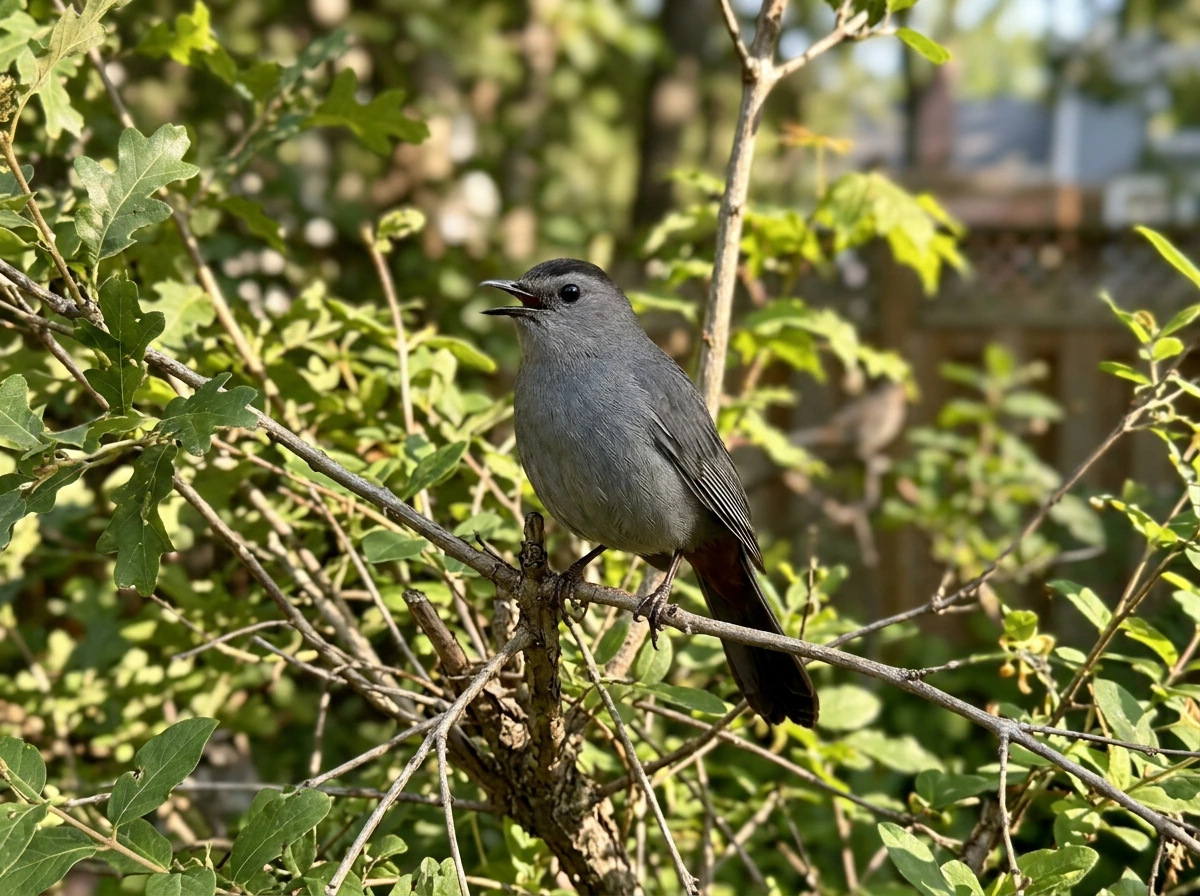
The catbird most people in North America are referring to is the Gray Catbird, scientific name Dumetella carolinensis. It's a medium-sized, slender songbird with smooth gray plumage, a distinctive black cap, and a long, rounded black tail. The one field mark most casual observers miss is the cinnamon or rust-colored patch on the undertail coverts, which becomes visible when the bird lifts its tail. It's not a flashy bird at first glance, which is part of why the call matters so much for identification.
The name 'catbird' comes directly from its most recognizable call: a raspy, nasal mew that genuinely sounds like a house cat. This isn't a poetic stretch. Multiple independent sources, from the Pennsylvania Game Commission to the Illinois Extension's wildlife podcast, make the same point: the gray catbird got its name because its call is reminiscent of a cat's meow. The bird uses this call in addition to its longer, more complex song, and the mewing is often what alerts people to the bird's presence before they see it.
Geographically, the gray catbird breeds across most of the eastern and central United States and into southern Canada. In winter, it moves to the southeastern U.S., parts of Mexico, Central America, and the Caribbean. So if you're hearing a cat-like mew from dense shrubs in the eastern U.S. between spring and fall, there's a reasonable chance you've found one.
It's also worth knowing that 'catbird' isn't limited to just this one North American species. Wikipedia's catbird disambiguation page notes that 'catbird' is applied to several unrelated songbird species across the world, including species in New Guinea, all named for the same reason: their cat-like calls. Britannica confirms this, describing catbirds broadly as songbirds named for their mewing or wailing calls. So if you're reading about a 'catbird' in an Australian or Papua New Guinean context, it's a different bird entirely.
How to Tell a Gray Catbird Apart from Similar Birds
The gray catbird's closest look-alike confusion is with the Northern Mockingbird. Both are gray, both are mimics, and both hang around shrubby areas. The key visual difference is the wingbars: mockingbirds have two bold white wingbars on each wing, while the catbird lacks obvious white wingbars. The catbird also has a solid black cap and that rust patch underneath the tail, neither of which the mockingbird has. If you're trying to confirm a sighting, those three field marks, black cap, no white wingbars, cinnamon undertail, will settle it.
| Feature | Gray Catbird | Northern Mockingbird |
|---|---|---|
| Overall color | Smooth gray | Gray-brown |
| Cap | Solid black cap | No distinct cap |
| White wingbars | Absent | Two bold white wingbars |
| Undertail coverts | Cinnamon/rust patch | White or pale |
| Tail | Long, rounded, black | Long with white outer feathers |
| Cat-like call | Yes, a raspy mew | Not typically |
What People Notice About Catbirds in Nature and Culture
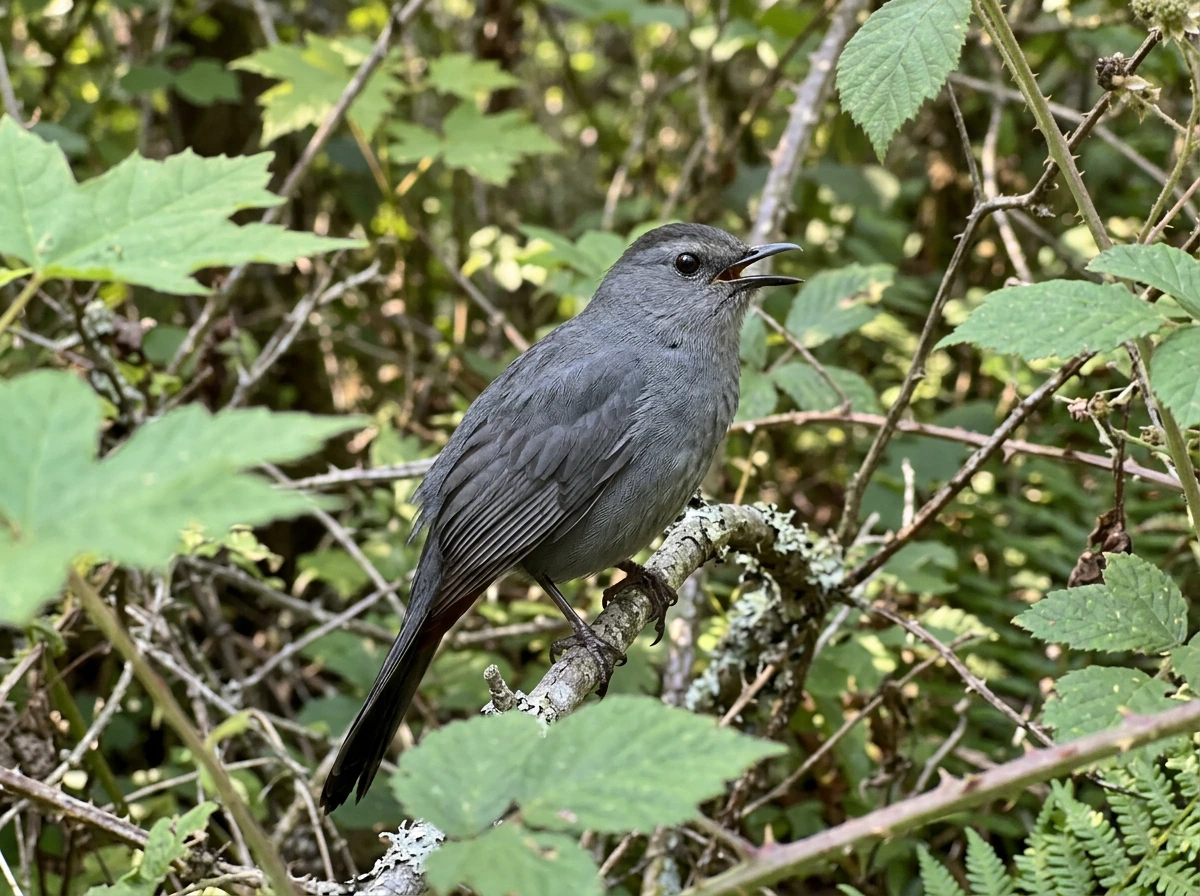
Beyond the call, the catbird is known as a skilled mimic. It can imitate the songs of dozens of other species, weaving them into long, improvised sequences. All About Birds (Cornell Lab of Ornithology) similarly notes that the Gray Catbird has a distinctive mew call and can copy sounds from other species, combining them into its own song blank" rel="noopener noreferrer">The Gray Catbird (Dumetella carolinensis) is known for a distinctive “mew” call and also for copying sounds from other species and stringing them into its own song.. This mimicry is different from the mockingbird's habit of repeating phrases in sets; the catbird tends to run through imitations without the repetition. Historical literature catches this too: a Project Gutenberg text describing 'cat-bird' behavior references the bird's 'mewing and screaming,' treating its vocal range as a defining characteristic rather than just a curiosity.
An archival Audubon text goes further, linking the catbird's mewing call and mimicry to how people historically viewed the bird: sometimes with affection, sometimes with suspicion, and occasionally with frustration over its agricultural impact. That ambivalence has followed the catbird into its symbolic life as well.
The Symbolic and Spiritual Meaning of the Catbird
If you found 'catbird' on a spirit-animal or dream-meaning site, what you're reading is a symbolic interpretation built on the bird's real behavior. If you want another example of how bird symbolism works across species, look up crow bird meaning as a comparison point. If you're also looking for crow bird meaning, compare how different birds draw from different symbolic roots. The two behaviors that drive almost all catbird symbolism are the cat-like call and the mimicry. Different communities interpret these in different directions. clay bird meaning. crawl bird meaning
The cat-like mew gets tied to themes of self-expression, authenticity, and finding your own voice. The logic being: a bird that sounds like another animal entirely is navigating a complicated relationship with its own identity. Some spiritual writers use this as a prompt to ask whether you're speaking honestly or performing a role. Others lean into the 'feline traits' angle, connecting the catbird to intuition and independence, qualities traditionally associated with cats in symbolic traditions.
The mimicry angle tends to generate a different set of interpretations. Some spirit-animal frameworks treat mimicry as a symbol of adaptability and communication, the ability to speak different 'languages' depending on the situation. Others take a more cautious view, framing mimicry as a warning about deception or illusion, either in yourself or in someone around you. Dream-meaning content often picks up on this, treating a catbird in a dream as an indicator to examine whether something in your life is what it appears to be.
None of these symbolic meanings come from a single established folklore tradition the way crow or raven symbolism does. Crow birds are often interpreted through older folklore, which is why crow bird meaning can feel more traditional than catbird symbolism. If you're researching crow bird meaning or curlew bird meaning, for instance, you'll find much deeper roots in specific mythological systems. If you are researching curlew bird meaning, you can look for symbolism that develops from the curlew’s calls and folklore in different regions. Catbird symbolism, by contrast, is largely a modern construction built from the bird's behavior. Catbird symbolism, by contrast, is largely a modern construction built from the bird's behavior. That doesn't make it meaningless, but it's worth knowing the distinction: this is interpretive symbolism, not ancient mythology.
The 'Catbird Seat' Idiom and Common Mix-Ups

A significant portion of people searching 'cat bird meaning' are actually trying to remember the phrase 'catbird seat.' This is one of the more common search-to-phrase mix-ups because the expression is memorable but the exact wording is slippery.
'Sitting in the catbird seat' means being in an enviable, advantageous position, essentially sitting pretty. The phrase entered mainstream American English through James Thurber's 1942 short story 'The Catbird Seat,' published in The New Yorker. Thurber's story frames the phrase as a baseball analogy: a batter with three balls and no strikes is in a position of strength, and that's the 'catbird seat.' Baseball commentator Red Barber is also credited with popularizing the expression around the same period. Merriam-Webster's definition of 'catbird seat' traces directly to Thurber's 1942 story as the key textual anchor.
So if you read something like 'she was sitting in the catbird seat after the merger,' it has nothing to do with birds, calls, or spirit animals. It means she was in an advantageous position. The bird is just the origin of the metaphor, not the point of it.
Other 'Cat + Bird' Searches Worth Clarifying
- 'Catbird' (one word): almost always refers to the gray catbird species or the idiom
- 'Cat bird' (two words): same meaning, just inconsistent spelling; not a separate term
- 'Catbird seat': the 1942 Thurber idiom meaning an advantageous position
- 'Cat-bird' (hyphenated): an older spelling of the same species, common in 19th-century texts
- 'Catbird call': refers to the raspy mew of Dumetella carolinensis
How to Figure Out Which Meaning You're Actually Looking For
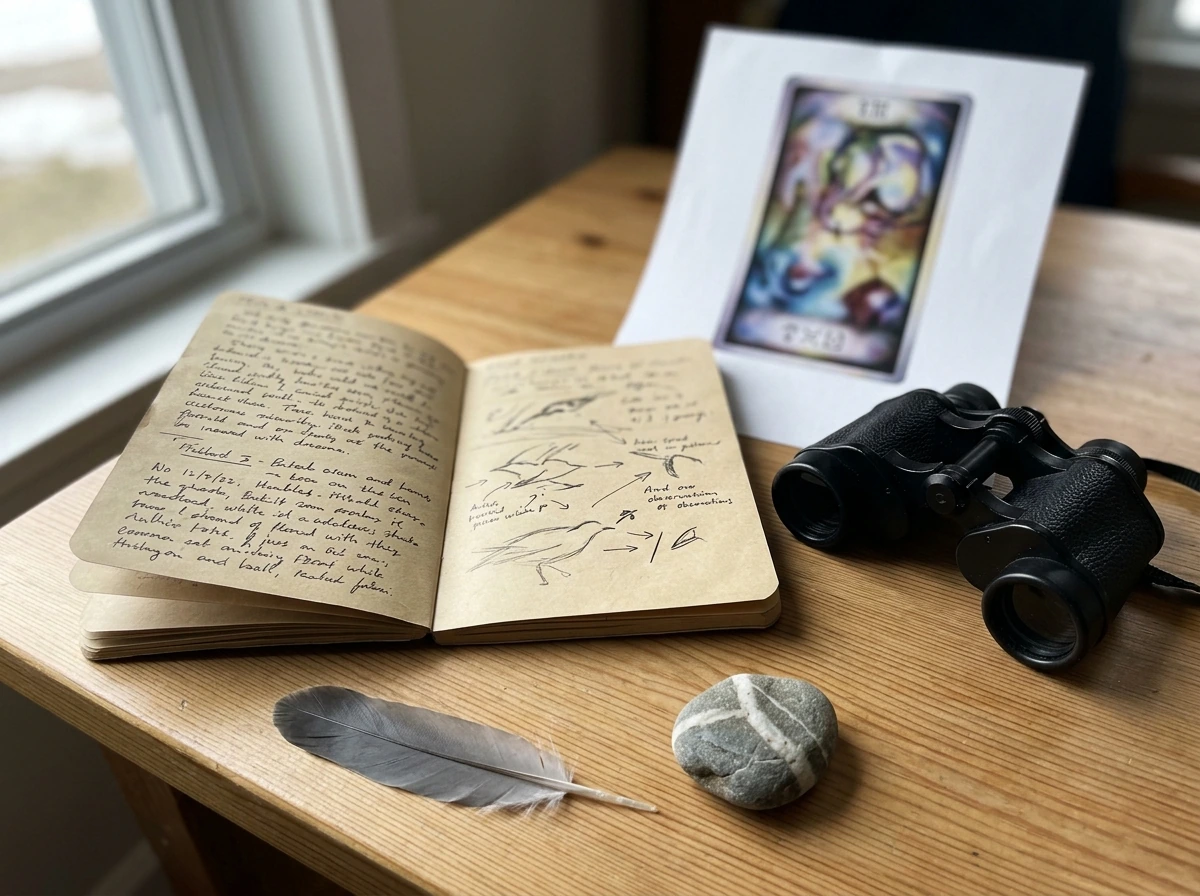
If you encountered 'catbird' in a nature guide, field notes, a wildlife podcast, or someone describing a bird in their yard, you're dealing with the species. Look up the gray catbird on Cornell's All About Birds, listen to the mew call recording, and compare the field marks: smooth gray, black cap, no white wingbars, rust undertail. That's your verification path.
If you encountered it in a sentence with words like 'position,' 'advantage,' 'sitting pretty,' or any kind of power dynamic language, you're dealing with the Thurber idiom. The meaning is straightforward: the person or thing described is in a strong, favorable position. No bird biology required.
If you found it on a spirit-animal, dream-meaning, or symbolic interpretation site, you're in the third lane: modern spiritual symbolism. If you meant claw bird meaning instead, you can apply the same “which lane is it” approach to pin down the exact interpretation you’re looking for. The themes of self-expression, mimicry, communication, and adaptability are the ones you'll encounter most consistently. These interpretations are personal and culturally constructed rather than rooted in a single tradition, so the 'meaning' is really a prompt for reflection rather than a fixed symbol.
If you're reading older literature and saw 'cat-bird' used in a narrative context, it's almost certainly the real species, probably referenced for its distinctive call. Historical texts going back to Audubon's era treated the catbird as a familiar, if sometimes vexing, presence in American gardens and thickets.
Quick Verification Checklist and Next Steps
Use this checklist to pin down exactly which 'catbird meaning' you need:
- Where did you see the word? Nature writing or wildlife context = species. Power/position language = idiom. Spirit-animal or dream site = modern symbolism.
- If you think it's the species: look for the field marks. Smooth gray body, solid black cap, no white wingbars, cinnamon patch under the tail. Listen to the mew call on All About Birds or similar resources to confirm.
- If you think it's the idiom: the phrase is 'sitting in the catbird seat,' meaning an advantageous position. Trace it to James Thurber's 1942 New Yorker story if you need a source.
- If you're reading older literature: 'cat-bird' with a hyphen is the historic spelling of the same species; it's probably describing the bird's calls or behavior, not a metaphor.
- If you're exploring spiritual symbolism: focus on two core themes, self-expression (tied to the cat-like call) and adaptability (tied to mimicry). These are the most consistent interpretations across spirit-animal communities.
- Still unsure? Check the scientific name. If the text mentions Dumetella carolinensis anywhere nearby, it's definitively about the bird species, not the phrase or symbolism.
The catbird is one of those words that sounds simple until you realize it's carrying three different conversations at once. Whether you needed the bird, the phrase, or the symbol, you now have enough to identify which one fits your situation and follow it where it leads.
FAQ
How can I tell in seconds whether “catbird” in a text is the bird or the idiom?
Look for context words. If the sentence includes positions and advantage language (for example, “sitting,” “in a strong spot,” “after the deal”), it is almost certainly “catbird seat.” If it includes nature cues (for example, “mew,” “shrubs,” “wingbars,” “call”), it is the gray catbird or a related “catbird” species.
Can “catbird seat” ever be written or used in a different way than “catbird seat”?
Yes, people often shorten or alter it in everyday speech, but the meaning stays tied to advantage. Even if the wording slips (such as “in the catbird spot”), the intended sense is “in a favorable position,” not anything biological or spiritual.
If I hear a cat-like mew, what’s the most common bird I’ll confuse with a gray catbird?
Northern mockingbird is the most frequent confusion in gray, mimic-capable birds. Use the field marks the article highlights: catbird has no obvious white wingbars, a solid black cap, and a rust-colored patch under the tail that mockingbirds lack.
What if I see a “catbird” outside North America, is it still the gray catbird?
Not necessarily. “Catbird” can refer to several unrelated species worldwide that share cat-like calling behavior, so location and local bird guides matter. Treat it as “catbird” by call style, then verify the exact species with region-specific identification resources.
Is catbird mimicry closer to mockingbird mimicry, or is it something different?
It’s different in how it tends to flow. Mockingbirds often repeat phrases in recognizable sets, while catbirds more often weave imitations into longer improvised sequences without the same repetition pattern, which can help you decide which bird you are hearing or seeing.
Do dream or spirit-animal sites agree on one single “catbird meaning” I should follow?
Usually no. Most symbolic readings are modern, personal frameworks built from two behaviors, the cat-like call and mimicry. Treat the “meaning” as a reflection prompt, and decide which theme fits your situation (authentic self-expression versus adaptability or caution about appearances).
What’s a good reality check if a symbolic “catbird meaning” feels too vague or overly certain?
Cross-check it against the two behavior drivers. If the interpretation focuses on voice, honesty, or identity, it is likely leaning on the cat-like mew. If it emphasizes communication, versatility, or illusion, it is likely leaning on mimicry. If a site covers themes unrelated to those, it may be stretching beyond the bird’s core traits.
If I’m writing or quoting “catbird seat,” what’s the safest way to use it correctly?
Use it to mean someone is in a favorable, enviable position. Avoid mixing it with bird imagery or symbolism, because the phrase’s origin and mainstream meaning are metaphorical and tied to advantage, not the catbird species.
Is “catbird” as symbolism considered ancient folklore like raven or crow symbolism?
Generally no. The article frames catbird symbolism as largely a modern construction derived from observed behavior rather than a single long-standing myth system. That does not make it useless, but it means you should expect more variability between creators and cultures.
Next Articles
Munster Bird Meaning: Folklore, Symbolism, and How to Verify
Meaning of Munster bird searches: folklore, symbolism, idioms, spelling variants, and quick ways to verify the reference
Martin Bird Meaning: Symbolism, Folklore, and Signs
Learn martin bird meaning with symbolism, folklore, and how to identify the right species for omens and dreams.
Soaring Bird Meaning: Freedom, Hope, and Spiritual Symbolism
Decode soaring bird meaning in dreams, sightings, art, and everyday speech, with species-specific symbolism and grounded