
When someone searches 'venus definition bird' or 'venus bird meaning,' they almost never mean a literal bird species called Venus. What they're almost always looking for is the symbolic connection between the goddess Venus and specific sacred birds, particularly the dove. That said, 'Venus' is a genuinely multi-domain word, so let's clear up the possible interpretations first before getting into the meaning itself.
Venus Definition Bird Meaning: What Venus Refers to

Marcus Blackwell
23 Mar 2026

What 'Venus' could mean in this context
The word 'Venus' shows up in several very different places, and that's exactly what makes this search a little tricky to interpret. Here are the main possibilities someone might have in mind:
- The Roman goddess Venus, associated with love, beauty, and desire, and her traditional sacred birds in mythology and folklore
- A folkloric or story label, as in the folktale variant titled 'A Vénus madara' ('The Bird Venus') from Hungarian tradition, and the Dutch 'Vogel Venus' or 'Vogel Vinus', where 'Venus' functions as an attributive name for a bird in a narrative rather than a species name
- A botanical or horticultural cultivar named 'Venus' (such as Calycanthus 'Venus'), which sometimes contaminates search results when people search 'Venus' alongside words like 'definition' or 'meaning'
- An esoteric or astronomical connection, where historical scholarship has linked 'Venus' to the ancient Benu-bird concept in astrology texts, though this is a specialist usage far outside everyday bird-meaning searches
- A brand or product name using 'Venus' as a label, which again can redirect searches away from actual bird symbolism
The clearest signal for which interpretation someone means usually comes from the surrounding search context. If results mention doves, swans, sparrows, or love symbolism, you're in goddess-and-sacred-bird territory. If results are about plants or horticulture, the search has wandered into cultivar naming. If the results read like mythology or folklore, you're likely in the folktale 'Bird Venus' space.
The short answer: what people actually mean by 'Venus bird'
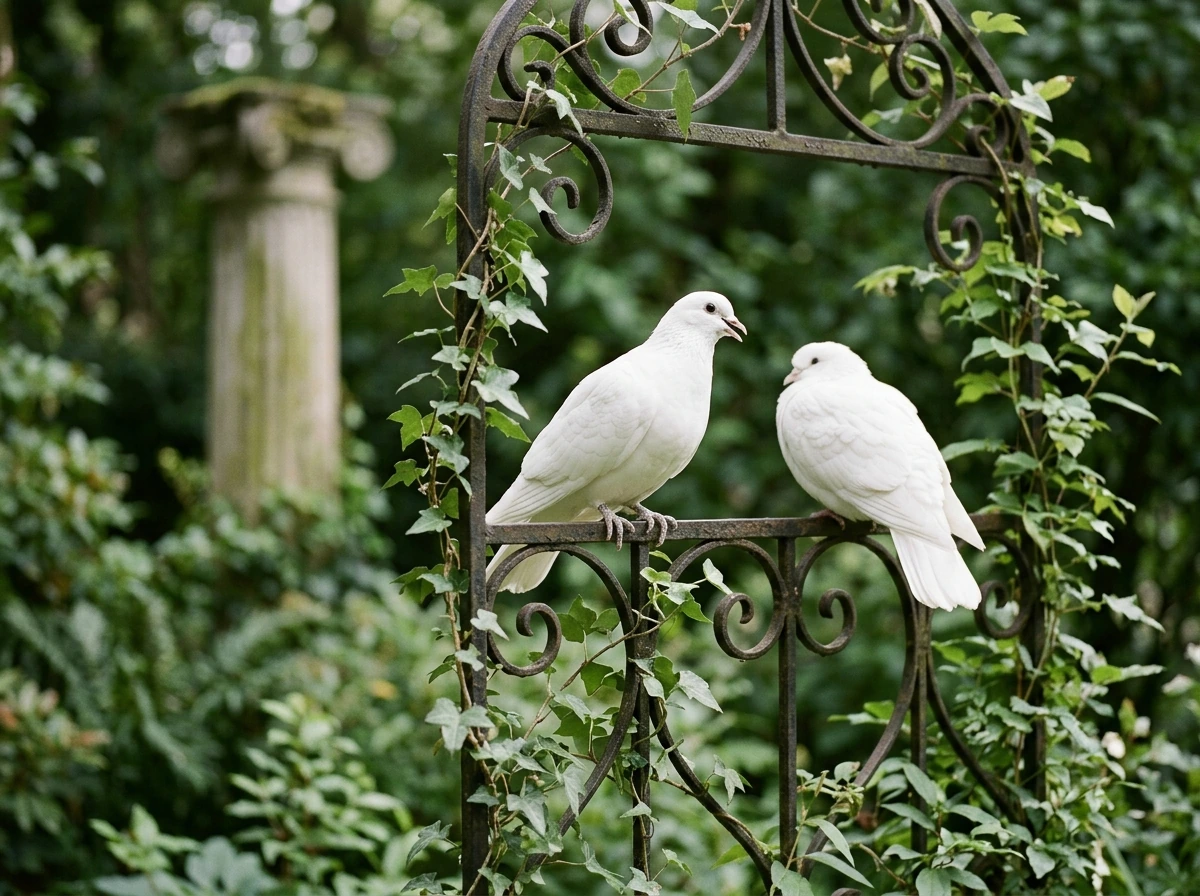
In everyday use, 'Venus bird' almost always refers to the birds that are sacred to or symbolically associated with the goddess Venus, the Roman counterpart of the Greek Aphrodite. The dove is by far the most commonly cited Venus bird. You'll see this framed in modern spirituality and bird-meaning content as: Venus is the goddess of love and beauty, the dove is her sacred bird, therefore the dove carries meanings of love, peace, and harmony. That chain of association is what most people are trying to access when they type this phrase into a search bar.
Venus in culture: love, beauty, and desire as symbolic anchors
Venus, as the Roman goddess of love, beauty, fertility, and desire, is one of the most symbolically loaded figures in Western mythology. Her Greek equivalent, Aphrodite, carries the same core associations and is often treated interchangeably in bird-symbolism discussions. The goddess herself didn't just represent romantic love in a greeting-card sense; she embodied attraction, desire, creative force, and the power of beauty to move people and events. These are heavy symbolic weights, and they transfer directly onto the birds associated with her.
Venus imagery in classical art almost always includes birds. The painting 'Venus, Adonis and Cupid' is a well-known example where blank" rel="noopener noreferrer">a dove appears in direct compositional connection with Venus, reinforcing the visual shorthand that has made the Venus-bird pairing so durable across centuries of Western art and literature. When you see a dove near a figure of Venus in a painting, it isn't decorative filler; it's a deliberate symbolic statement about love and beauty.
Which birds actually belong to Venus, and what they mean
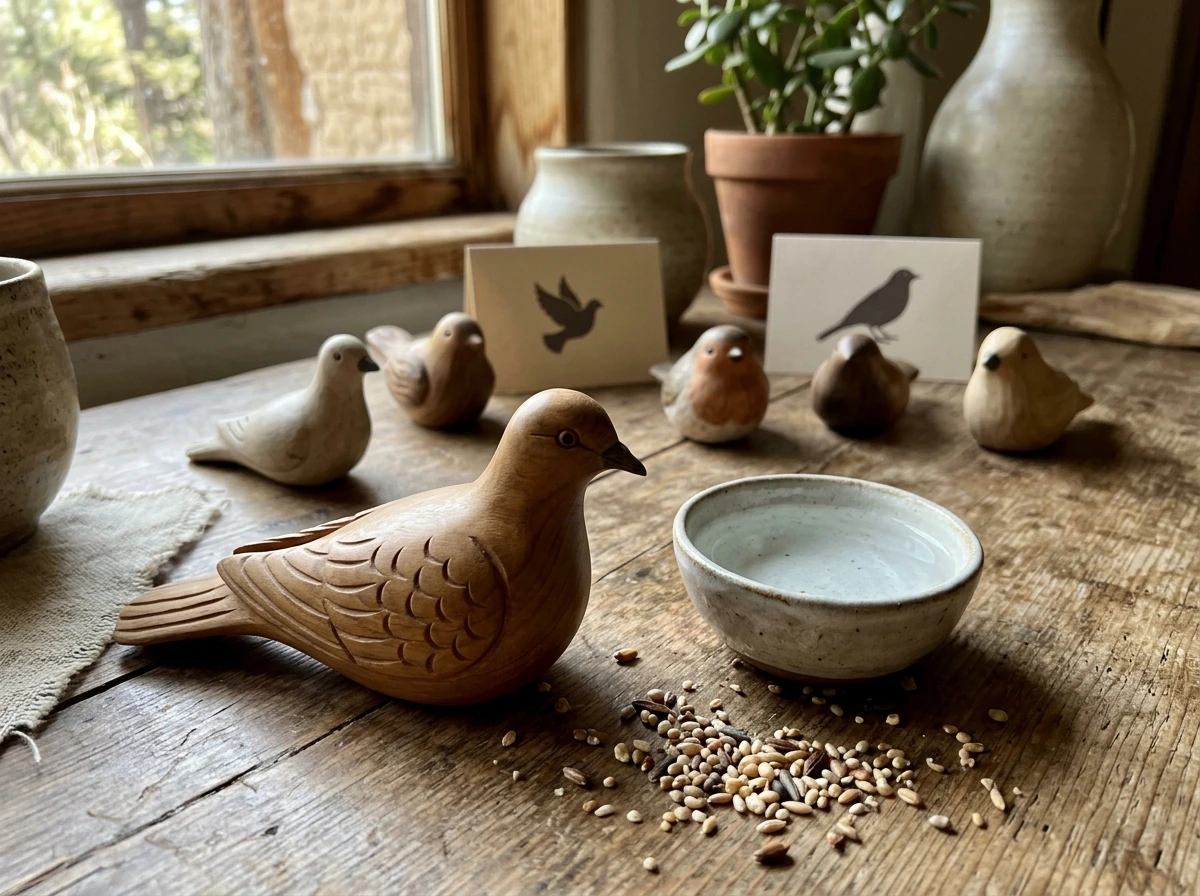
The classical sources are quite specific about which birds were sacred to Aphrodite (and by extension, Venus). Ancient Greek references list multiple sacred birds, not just one. Here's how each maps onto the love-and-beauty symbolism:
| Bird | Connection to Venus/Aphrodite | Symbolic meaning carried |
|---|---|---|
| Dove | Primary sacred bird; myth says Aphrodite adopted the dove and made it her own; also tied back through Mesopotamian goddess Inanna/Ishtar | Love, peace, harmony, gentleness, romantic devotion |
| Swan | Associated with Aphrodite as a chariot-puller and messenger; strongly linked to beauty and grace | Beauty, romance, elegance, transformation |
| Sparrow | Named among Aphrodite's sacred birds in classical sources | Playful love, desire, lightheartedness |
| Swallow | Listed among sacred birds; swallows were tied to seasonal return and longing | Fidelity, longing, the return of love |
| Iynx (wryneck) | A specific bird associated with love magic in Greek tradition, connected to Aphrodite's sphere | Enchantment, desire, love spells |
The dove dominates modern interpretations simply because the Venus-dove association has been repeated so consistently across centuries that it's become the default shorthand. But if you're reading an older text, a mythological source, or a richer symbolic analysis, you'll encounter the full range of birds above. The swan, in particular, shows up frequently in beauty and romance symbolism in a way that clearly echoes Venus's domain, even when her name isn't explicitly mentioned.
The folktale angle: 'The Bird Venus' as a named story
There's also a genuinely interesting folkloric usage worth knowing about. In this same folklore setting, you may also come across the idea of calling a bird of prey from the east meaning within regional traditions and story symbolism. The folktale sometimes called 'A Vénus madara' in Hungarian (literally 'The Bird Venus' or 'The Bird of Venus') and referred to as 'Vogel Venus' or 'Vogel Vinus' in Dutch collections represents a case where 'Venus' functions not as a goddess label but as an attributive name for a specific story's central bird character. This is closer to how 'Venus' works as a proper noun attached to an animal in a narrative context, like a named golden bird with special powers, rather than a literal species or a goddess reference. If someone has encountered this folktale and is searching for its meaning, they're in a different interpretive lane entirely, though the underlying symbolism (a magical, desirable bird) still echoes Venus's sphere of beauty and longing.
How to confirm which 'Venus bird' meaning you're actually after

Here's a practical checklist for narrowing down the meaning you need, because the confirmation step matters more than people realize with an ambiguous phrase like this.
- Check whether your source mentions 'sacred to Aphrodite' or 'sacred to Venus': if it does, you're in symbolic goddess-bird territory, and the dove is almost certainly the primary bird being referenced
- Look for a chain of association: Inanna/Ishtar (Mesopotamia) → Aphrodite (Greece) → Venus (Rome) → dove. If results trace that lineage, the interpretation is cultural symbolism, not taxonomy
- Check whether the word 'cultivar,' 'hybrid,' or 'plant' appears anywhere near 'Venus' in your results: if so, you've drifted into horticulture (like Calycanthus 'Venus') and can safely discard those results
- If the result mentions a story, tale, or folk narrative with a bird character named Venus or described as 'the bird Venus,' you're in folklore territory rather than mythology or ornithology
- If results mention ESA, space missions, or planetary science, the search has routed toward the planet Venus; add 'bird' and 'mythology' or 'symbolism' to refocus
- If results discuss 'Benu bird' or astronomical star-lore, you're in a specialist esoteric or Egyptological lane that is real but very niche
What the Venus bird meaning tells you in practice
Once you've confirmed you're in goddess-symbolism territory (which is by far the most common case), Venus bird meaning gives you a consistent symbolic vocabulary to work with.
If you're reading a poem where a dove appears near a figure of feminine beauty or love, or a painting where swans accompany a goddess-like figure, the Venus bird framework is doing the interpretive work in the background. The same applies to spiritual or dream-interpretation contexts, where a dove appearing in connection with love themes is almost always drawing on this same ancient well of Venus-bird symbolism, even if the writer doesn't say so explicitly. In that same spirit, the bird raven meaning is usually discussed as a separate symbol cluster rather than as a direct Venus-associated bird.
Where to go from here
If the dove-as-Venus-bird connection is what you were after, the next useful step is exploring the full range of bird symbolism in love, beauty, and desire traditions. The swan's role in beauty symbolism deserves its own deep look, as does the sparrow's surprisingly rich history as a love-related bird in classical sources. If your interest is more in birds tied to darker or more complex symbolic associations, <bird of prey meaning> birds of prey carry a very different symbolic register, and scavenger birds like vultures represent yet another layer of meaning entirely. scavenger bird meaning The Venus bird meaning sits at one end of a wide symbolic spectrum, representing beauty, love, and harmony at their most idealized. If you’re curious how darker scavenger symbolism contrasts with the Venus bird meaning, the vulture bird meaning is a good next comparison.
The short version: when someone asks about the The short version: when someone asks about the Venus bird definition, they almost certainly mean the dove (and sometimes the swan or sparrow) as sacred birds of the goddess Venus, symbolizing love, beauty, and desire. Confirm by checking for goddess-bird association language in your source, and you'll have a clear, well-grounded interpretation to work with., they almost certainly mean the dove (and sometimes the swan or sparrow) as sacred birds of the goddess Venus, symbolizing love, beauty, and desire. In the cult context, people used the word peristera for doves or pigeons, and scholars note that ancient distinctions between doves and pigeons were not always clear. Confirm by checking for goddess-bird association language in your source, and you'll have a clear, well-grounded interpretation to work with.
FAQ
Is “Venus definition bird” asking for a real bird species called Venus?
No. In most modern “Venus bird” searches, “Venus” is acting as a symbol for love and beauty, so the bird being sought is typically the dove, rather than an actual species literally named Venus.
How can I tell whether my “Venus bird” meaning is symbolic (goddess) or something else (names, plants, etc.)?
Treat it like a context check. If your source pairs the bird with themes like love, beauty, desire, romance, or the goddess Venus/Aphrodite, it is almost certainly the sacred-bird symbolism lane. If the source is about horticulture or a plant cultivar, you are likely dealing with a naming coincidence, not a goddess reference.
Does the dove always mean the same thing in “Venus bird” symbolism?
If the bird is a dove but the text emphasizes courtship, peace, or harmony, that typically aligns with the conventional “Venus-dove shorthand.” If the dove is used in a more cautionary or tragic way, the author may be drawing on broader bird symbolism too, so don’t assume the meaning is always the same in every work.
Why do some interpretations mention swans or sparrows instead of only doves?
Yes, but it shifts by tradition and author. The dove dominates modern summaries, while swans and sparrows appear in older or more expansive symbolic readings tied to Aphrodite/Venus themes. When interpreting, look for which bird is named or shown, and match the themes your specific source highlights.
In art or literature, how should I confirm a “Venus bird” reading instead of treating it as generic bird symbolism?
If you are reading an artwork or poem, focus on what the bird is doing and where it appears relative to the goddess figure. A dove placed near Venus (or a Venus-like figure) is usually a deliberate iconographic statement, while a distant or incidental mention may be borrowing the bird’s general symbolic associations rather than “Venus bird” specifically.
Can I use “Venus bird” meaning for dream interpretation, and what should I watch out for?
Some people use “Venus bird” in dream or spiritual contexts, but the safest method is to combine symbolism with your situation. If your dream contains love-related concerns, reconciliation themes, or beauty/attraction imagery, a Venus-linked interpretation fits best. If the dream is dominated by conflict or fear, the same bird could be functioning in a different symbolic register.
Does “Venus bird” automatically connect to Aphrodite too, or does it depend on whether Greek sources are being used?
Usually, yes. If the piece is clearly invoking Greek or Roman love mythology, Venus and Aphrodite are treated as equivalent for symbolism purposes, so the bird associations generally carry over. If the text is explicitly distinguishing between Greek and Roman framing, use the author’s stated goddess name to stay consistent.
What if I’m looking at the “Bird Venus” folktale (Hungarian/Dutch collections), not the goddess symbolism?
Not necessarily. The “Bird Venus” folktale usage treats “Venus” more like a proper noun attached to a central bird character. If your source reads like a named story about a magical bird, interpret it as narrative proper-name usage rather than the goddess-associated symbolism model.
What’s the most common mistake people make when interpreting “Venus bird meaning”?
A common mistake is treating “Venus bird meaning” as a single fixed dictionary answer. Better approach: identify (1) which bird is present, (2) which themes the source emphasizes, and (3) whether the text explicitly references Venus/Aphrodite or just uses love-related imagery. That three-part check prevents overgeneralizing.
What search wording should I use to get the correct interpretation for “venus definition bird”?
Try “Venus + dove” or “Venus + sacred bird” for the goddess-symbolic lane, or “Bird Venus” with the language/region tag if you suspect the folktale. Adding words like “Aphrodite,” “iconography,” or “art” can also help you surface the correct interpretive tradition faster.