When someone calls a bird a 'velcro bird,' they almost certainly mean one specific thing: a bird (usually a cockatoo) that is so intensely bonded to a person that it physically refuses to be separated from them. It's a behavioral nickname, not a species name, and it has nothing to do with folklore symbolism or spiritual bird traditions. The term is well-established in pet bird communities, going back to at least 2001, and it shows up everywhere from avian care guides to viral social media videos. If you ran into it in a caption, a meme, a forum post, or a pet story, the meaning is almost always about clinginess and attachment, not mythology.
Velcro Bird Meaning: Literal and Symbolic Uses Explained

Marcus Blackwell
23 Mar 2026
What 'velcro bird' actually means in everyday use
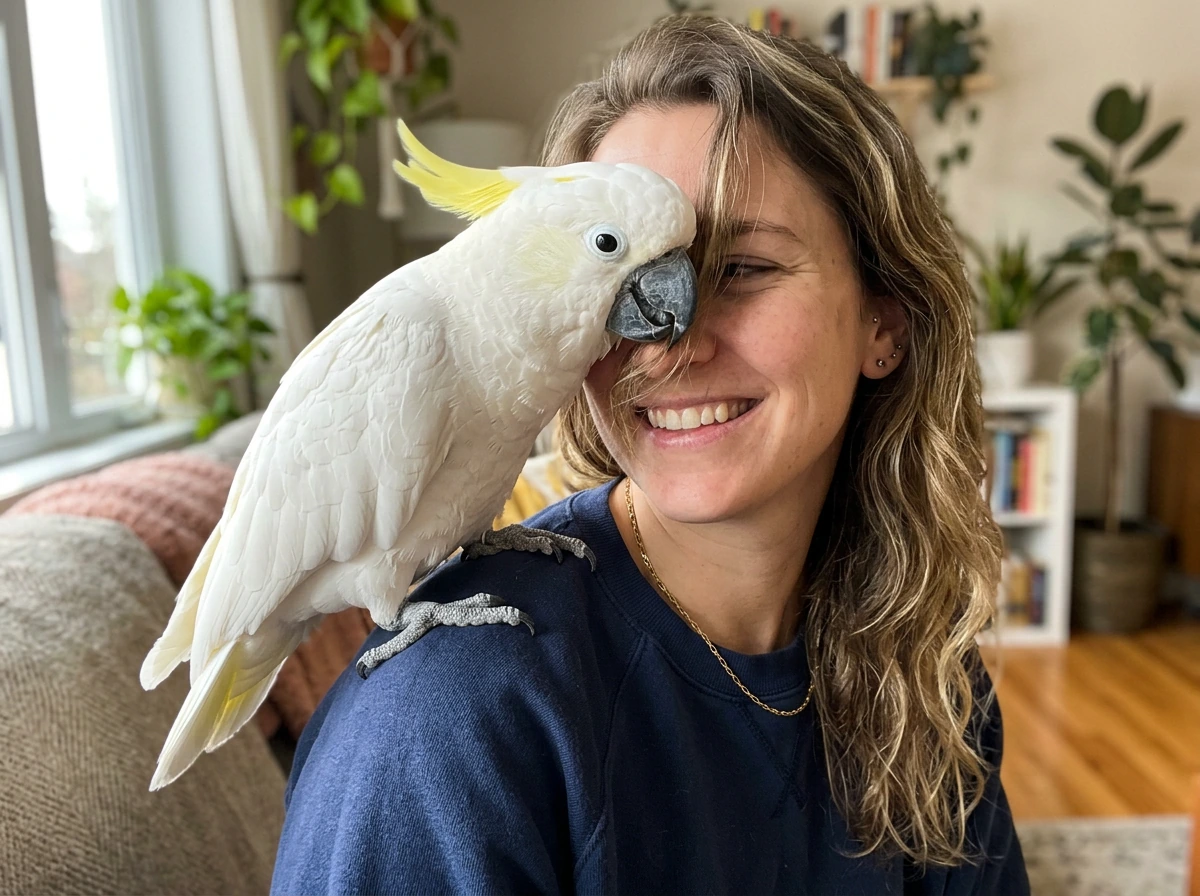
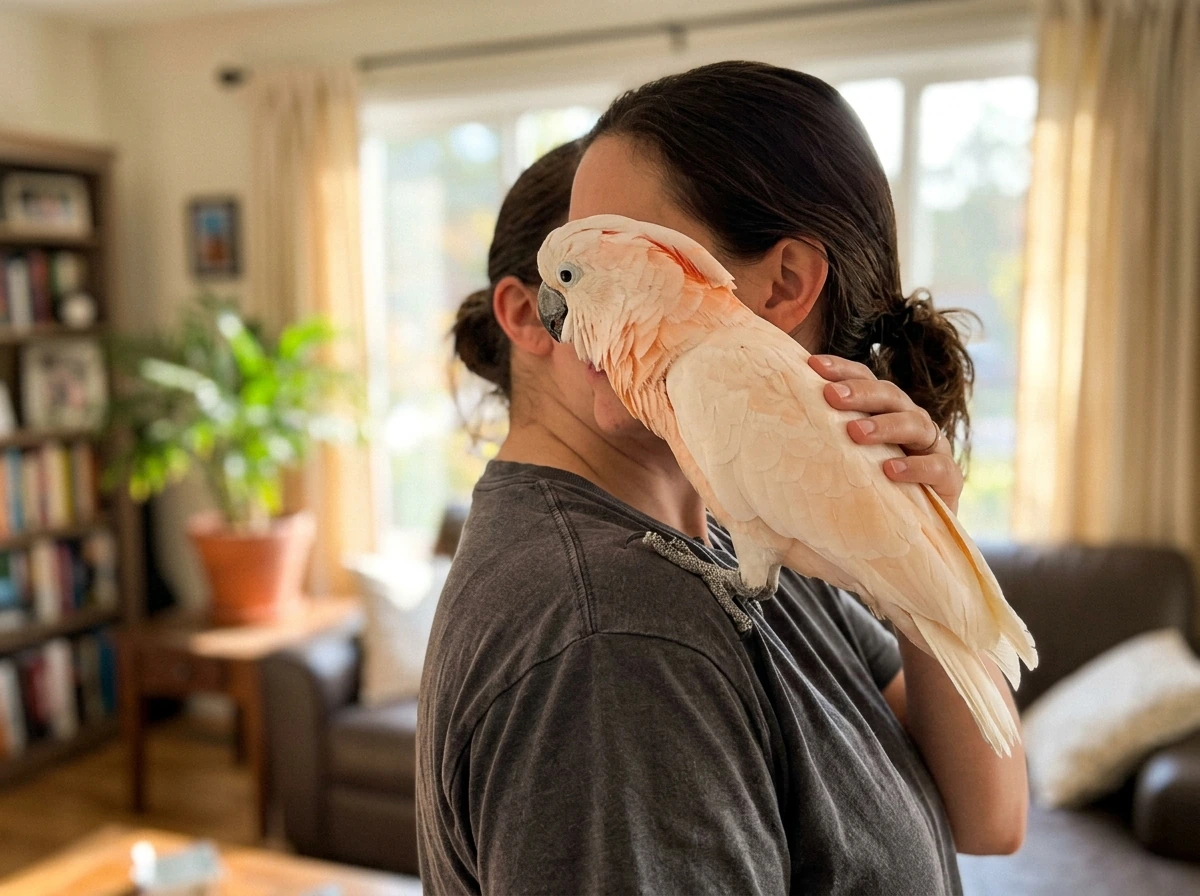
In plain everyday language, a 'velcro bird' is a pet bird, overwhelmingly a cockatoo, that acts like it's physically attached to its favorite human at all times. The velcro metaphor is doing exactly what you'd expect: just like velcro locks two surfaces together, this bird locks itself to you. It wants to be on your shoulder, on your hand, on your face if it can manage it. The moment you move away, it notices. The moment you leave the room, it cares deeply about that fact.
One of the clearest early definitions of the phrase puts it this way: the bird 'latches onto people, craving and needing human companionship.' That two-part formula, latching behavior plus a genuine emotional need for companionship, captures exactly what the nickname means. It's not just that the bird sits near you. It's that the bird appears to require your proximity the way other animals require food or water.
The term carries a warm connotation most of the time. Bird owners who use it are usually describing something they find endearing, even if exhausting. That said, the connotation can tip toward frustration when the bird's attachment leads to screaming every time you leave the room, So 'velcro bird' can be used affectionately ('my cockatoo is such a velcro bird') or with exasperation ('I have the definition of a velcro bird and I'm struggling with it'), depending on context, and that note matters even if you originally came in via raven bird meaning symbolism. ravens bird meaning So 'velcro bird' can be used affectionately ('my cockatoo is such a velcro bird') or with exasperation ('I have the definition of a velcro bird and I'm struggling with it'), depending on context.
Where the phrase came from and how it spread
The term appears in print as far back as 2001, when a bird owner described her cockatoo as her 'velcro-bird' in a local newspaper piece. By 2007, avian clubs were using it as an established nickname in their bird-of-the-month features. A 2011 bird owner blog formalized it further, describing 'velcro birds' as what 'many bird owners' call cockatoos specifically, treating the phrase as settled community shorthand rather than a creative coinage.
The phrase spread organically through pet bird communities, care guides, and eventually social media. Viral pet videos, particularly ones showing cockatoos grooming their owners' faces or refusing to step off a shoulder, often get captioned with the 'velcro bird' label. The physical comedy of a bird plastered to someone's cheek or doing an intense grooming session maps perfectly onto the velcro metaphor, which is probably why the phrase travels so well in short-form video captions.
Care guides for cockatoo species, especially umbrella cockatoos, now routinely include 'velcro bird' as a defining characteristic of the species rather than an individual quirk. One cockatoo species guide calls them 'the velcro birds of the parrot world,' suggesting the term has graduated from nickname to near-official descriptor in avian care circles.
The symbolic layer: what the 'attached bird' represents
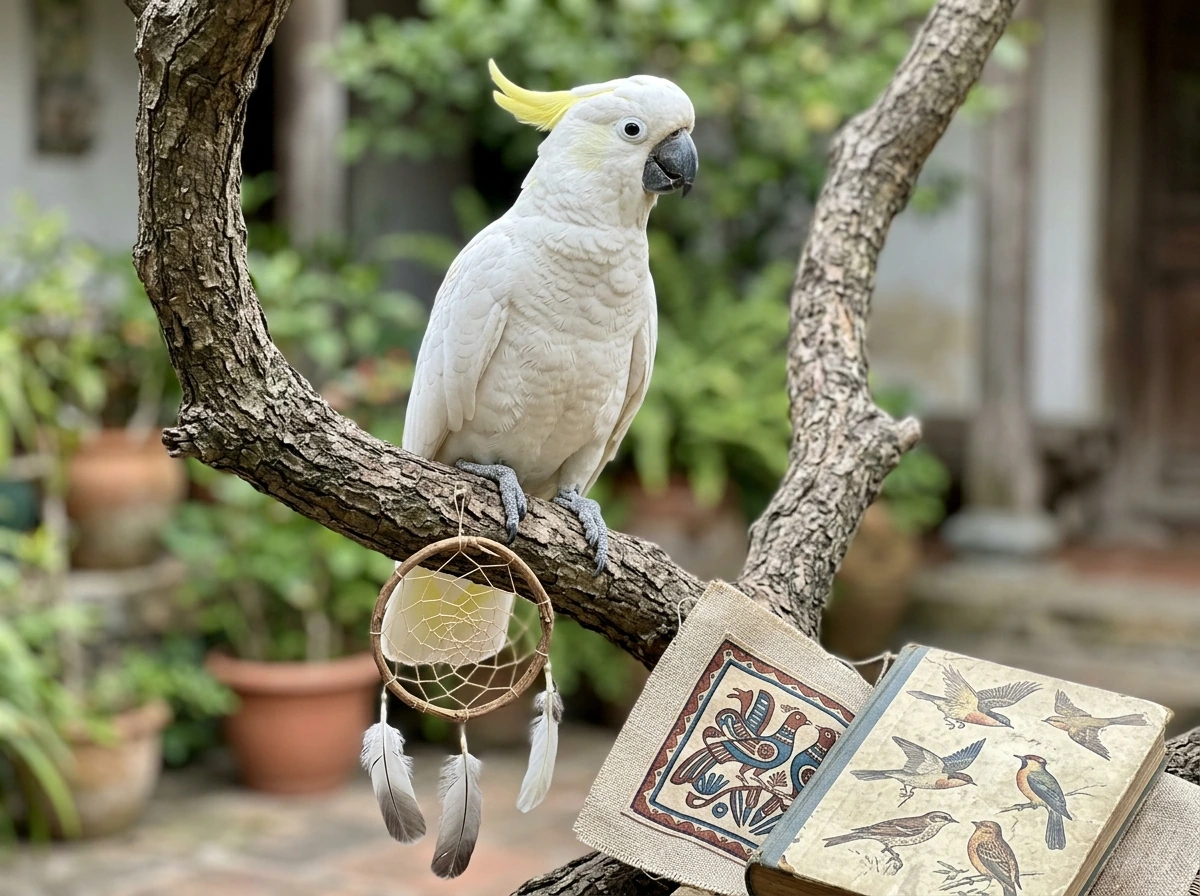
Even though 'velcro bird' is primarily a behavioral nickname, it does carry symbolic weight when you think about it in the context of bird meaning traditions. Even though 'velcro bird' is primarily a behavioral nickname, it does carry symbolic weight when you think about it in the context of bird meaning traditions. Birds in general symbolize freedom, independence, and the ability to leave at will. calling a bird a 'velcro bird' is a symbolic statement as much as a behavioral one. It says this creature has chosen you. A bird that refuses to leave, that bonds so completely to a human that it mirrors the behavior of an attached companion rather than a wild creature, inverts that symbolism in an interesting way.
The cockatoo, the bird most associated with the velcro label, tends to represent emotional expressiveness, social intelligence, and deep relational bonding in the cultural narratives that have built up around it. Unlike birds of prey, which symbolize solitary power and sharp independence (you can explore that angle in discussions of bird of prey meaning), or scavenger birds that carry associations with transformation and detachment from social bonds, the cockatoo's symbolic profile is essentially the opposite: warmth, need, and mutual attachment.
In that sense, calling a bird a 'velcro bird' is a symbolic statement as much as a behavioral one. It says this creature has chosen you. It has traded its instinct for independence for proximity to a specific human. That's not a trivial thing in the grammar of bird symbolism, where flight almost always equals freedom and landing means something.
Easy to confuse with these similar-sounding terms
A few related phrases get mixed up with 'velcro bird,' and it's worth knowing how they differ so you're not chasing the wrong meaning.
- 'Clingy bird' or 'attached bird': These are plain-language synonyms for velcro bird. They describe the same behavior without the specific metaphor. If you see these phrases, they almost always mean the same thing.
- 'Shadow bird': Some bird owners use this to describe a bird that follows them from room to room, which overlaps heavily with velcro bird behavior. The distinction, if there is one, is that shadow bird emphasizes following movement while velcro bird emphasizes physical contact and sticking.
- 'Bonded bird': This is a broader term. A bonded bird is deeply attached to a person, but not necessarily clingy in the velcro sense. A bonded bird might sit contentedly near you without needing to be on you. Velcro bird implies the physical-contact component.
- 'Separation anxiety bird': This is where velcro bird can bleed into a more clinical or negative framing. Some bird owners and avian behaviorists use 'velcro bird' and 'separation anxiety' almost interchangeably, but they're not exactly the same. Velcro bird describes the attachment behavior; separation anxiety describes the distress that can result when the attachment is disrupted. A bird can be a velcro bird without having full-blown separation anxiety, though the risk is higher.
- 'Sticky bird' or 'glue bird': Occasional variants that appear in user-generated content. Same meaning, less common phrasing.
None of these phrases are mythological or symbolic bird terms in the traditional sense. They're all rooted in the behavioral/pet care world. This is worth flagging because if you came to 'velcro bird meaning' from a context involving folklore, literature, or spiritual symbolism, you're likely dealing with a different kind of bird reference entirely, and checking articles on specific birds like the raven or examining broader symbolic traditions will serve you better. This is worth flagging because if you came to 'velcro bird meaning' from a context involving folklore, literature, or spiritual symbolism, you're likely dealing with a different kind of bird reference entirely, and checking articles on specific birds like the raven or examining broader symbolic traditions will serve you better.
How to figure out what someone means when they use it
The fastest way to decode 'velcro bird' in any specific context is to look at what surrounds it. Here's a simple method that works in almost every case.
- Check for a species reference. If the text mentions a cockatoo, cockatiel, parrot, or any pet bird, you're almost certainly in behavioral territory. The term in this context means the bird is extremely attached to a person.
- Look for contact or proximity language. Words like 'won't leave my shoulder,' 'follows me everywhere,' 'climbs on my face,' 'screams when I leave,' or descriptions of grooming behavior (scritches, preening, facial contact) all point to the cling/attachment meaning.
- Check whether it's a caption, a care guide, or a personal anecdote. Viral pet videos, bird care articles, and personal owner stories all use 'velcro bird' to mean clingy attached behavior. This is by far the most common context.
- Ask whether the tone is affectionate, exasperated, or both. If the writer sounds charmed or amused, the velcro label is being used fondly. If they sound tired or concerned, they may be edging toward the separation-anxiety reading, but the core meaning is still behavioral attachment.
- Check whether a wild or mythological bird is described. If the surrounding text mentions ravens, eagles, owls, or birds in a spiritual or literary context with no mention of a pet, 'velcro bird' would be unusual slang in that setting and you should look for a different explanation or ask the speaker directly.
| Context clue | Most likely meaning | What to watch for |
|---|---|---|
| Pet bird mentioned (cockatoo, parrot, cockatiel) | Clingy/attached bird behavior | Words like 'follows,' 'won't leave,' 'on my shoulder' |
| Video caption with physical contact | Affectionate attachment nickname | Grooming, face contact, clinging to owner |
| Bird care or species guide | Official-ish nickname for cockatoos | Phrased as a known trait of the species |
| Reddit/forum post with frustration | Attachment bordering on separation anxiety | Mentions screaming, stress, can't leave the room |
| Literary or spiritual/folklore context | Unlikely to mean velcro bird, check other meaning | No pet bird mentioned, symbolic bird species named |
What to do with this information right now
If you encountered 'velcro bird' in a pet video, a bird care article, or a personal story about a cockatoo, you have your answer for 'veery bird meaning': it means an intensely bonded, physically clingy bird that doesn't want to be separated from its favorite person. For context, the vulture bird meaning is different because vulture symbolism generally focuses on death, renewal, and transformation. No deeper symbolism required, no mythological tradition to research. It's a behavioral nickname that's been in use for over two decades in avian communities.
If you're trying to interpret it in a cultural or literary context, the phrase itself doesn't have roots in folklore or bird symbolism traditions the way terms like 'raven,' 'dove,' or 'bird of prey' do. It's modern, colloquial, and pet-care-specific. If the context is symbolic, the author is almost certainly borrowing the velcro metaphor to describe human emotional attachment rather than referencing a specific bird tradition.
If you're living with a velcro bird yourself and trying to figure out whether the behavior is healthy bonding or something that needs addressing, the key question to ask is: does the bird distress when separated, or does it simply prefer to be near you? Preference for proximity is normal bonding. Distress responses like screaming, feather destruction, or inability to self-soothe when alone can tip into separation anxiety territory, and that's worth discussing with an avian vet or behaviorist.
And if you came here because someone used the phrase and you couldn't tell if they meant it warmly or as a complaint, look at the surrounding tone again. A velcro bird is almost always described with a mixture of affection and mild exasperation, the way you'd describe a very devoted but high-maintenance friend. That emotional register is usually the clearest signal of what the speaker means.
FAQ
Does “velcro bird meaning” refer to one specific species, or is it just a nickname?
It is not a species name. In most posts and care guides, it describes a behavior pattern, usually seen in cockatoos, where the bird strongly prefers staying with one person and may refuse to be separated. If the context names a species but the behavior is the focus, it is still using the nickname as shorthand for attachment.
How can I tell if a “velcro bird” is just very attached versus showing separation anxiety?
Look for impairment, not just closeness. Preference to be near you is normal bonding, but separation anxiety is more likely if the bird escalates when you leave (prolonged screaming, inability to settle, feather damage, or refusal to eat until you return). If several of these happen consistently, consider consulting an avian vet or behavior specialist.
What are common mistakes people make when interpreting “velcro bird” online?
The biggest mistake is assuming it is folklore or a spiritual tradition term. Another common error is taking the label as a guarantee of temperament, even though individual birds differ. Treat it as a descriptive caption about attachment behavior, then judge the specifics from the video, story, or care context.
Why do “velcro bird” captions often mention grooming or refusing to step off a shoulder?
Those behaviors fit the “latched to you” idea. Grooming face-to-face is a bonding and trust signal, while shoulder or hand attachment shows high proximity seeking. When captions emphasize these moments, the writer is usually highlighting attachment strength and interaction style, not symbolism.
Can the phrase be used negatively, and how do I interpret the tone correctly?
Yes. Some people say it affectionately, meaning endearing devotion. Others use it with frustration when the attachment causes distress or disruption, such as screaming during departures. The surrounding sentences and emotional tone (joking, exasperated, worried) are the best clue to which meaning the author intends.
If someone says “my bird is a velcro bird,” does that always mean it will scream when you leave?
Not always. Many birds prefer closeness but can calm down on their own for short periods. Screaming or self-harm is a separate issue that suggests difficulty settling or separation-related distress. Duration, intensity, and frequency are what matter more than the label.
What should I do if my bird seems “velcro” and I want to help it cope with separation?
Start by reducing sudden departures and practicing short, predictable separations while rewarding calm behavior. Build up time gradually, provide a comforting routine, and make sure the bird has appropriate enrichment while you are away. If the bird cannot self-soothe or shows escalating distress, get guidance from an avian professional rather than trying to “train through” severe reactions.
Is there confusion between “velcro bird” and other “bird meaning” phrases like ravens or doves?
Yes, especially when readers come from symbolic or folklore content. “Velcro bird” is primarily modern pet-community language using a metaphor. If the author is talking about symbolism in a cultural or spiritual sense, it is more likely they are using “velcro” only to describe emotional attachment rather than referencing a specific traditional meaning.