If you saw a raven today and felt like it meant something, you are not alone and you are not being irrational. Ravens are large, jet-black birds that eat carrion, solve complex problems, mimic human speech, and show up reliably near death and conflict. When an animal behaves like that, humans notice. The symbolic weight ravens carry is earned. What that symbolism means for you specifically depends heavily on context, and this guide will walk you through both the big picture and the practical interpretation.
Ravens Bird Meaning: Omens, Symbolism, and What to Do

Marcus Blackwell
23 Mar 2026
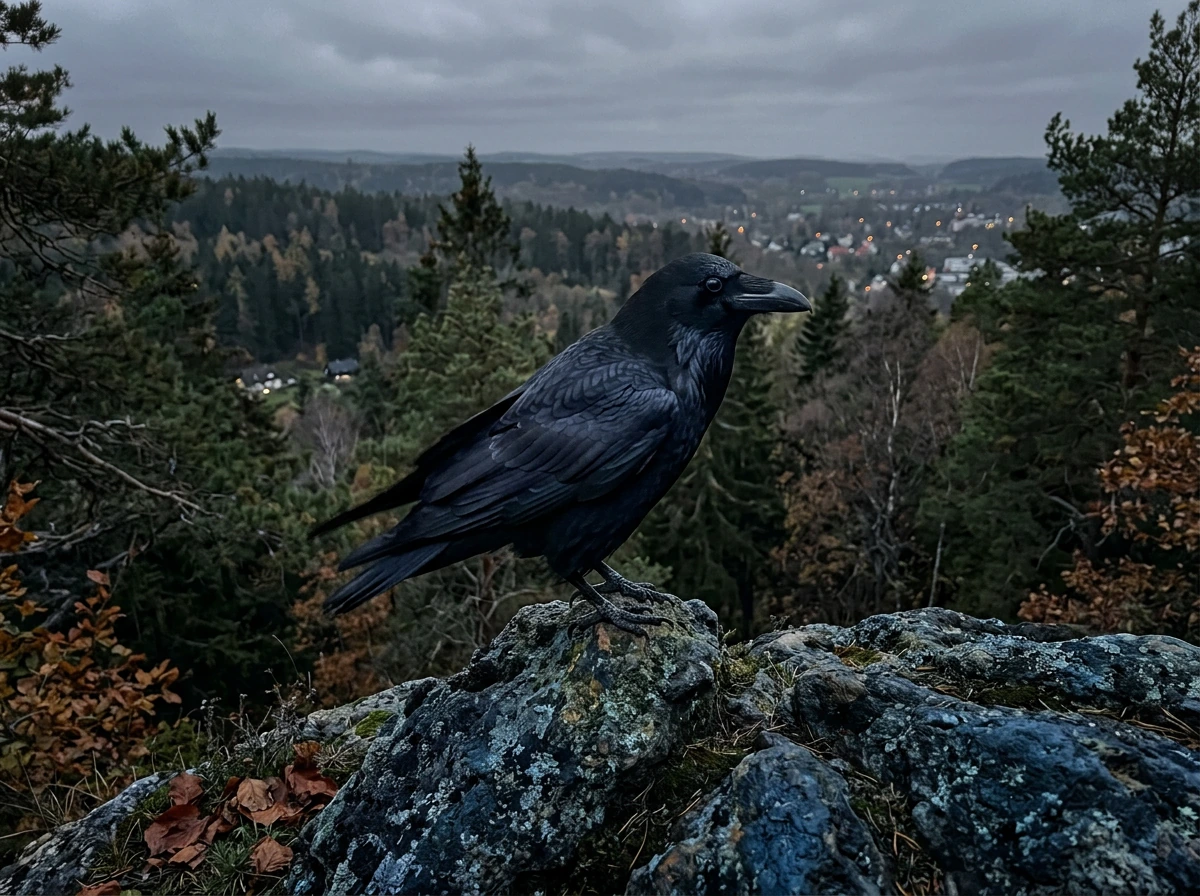
Why ravens carry so much symbolic weight
The symbolism is not arbitrary. Ravens are genuinely unusual animals, and their behavior gives people something concrete to work with. National Geographic has documented ravens solving multi-step problems like unlatching trash cans, and BBC Earth has reported research showing ravens can rival adult great apes on certain cognitive tasks. BMC Ecology and Evolution describes corvids broadly as animals capable of flexible behavior, problem-solving, and social learning. That is the real biological foundation under every 'wise raven' trope in folklore.
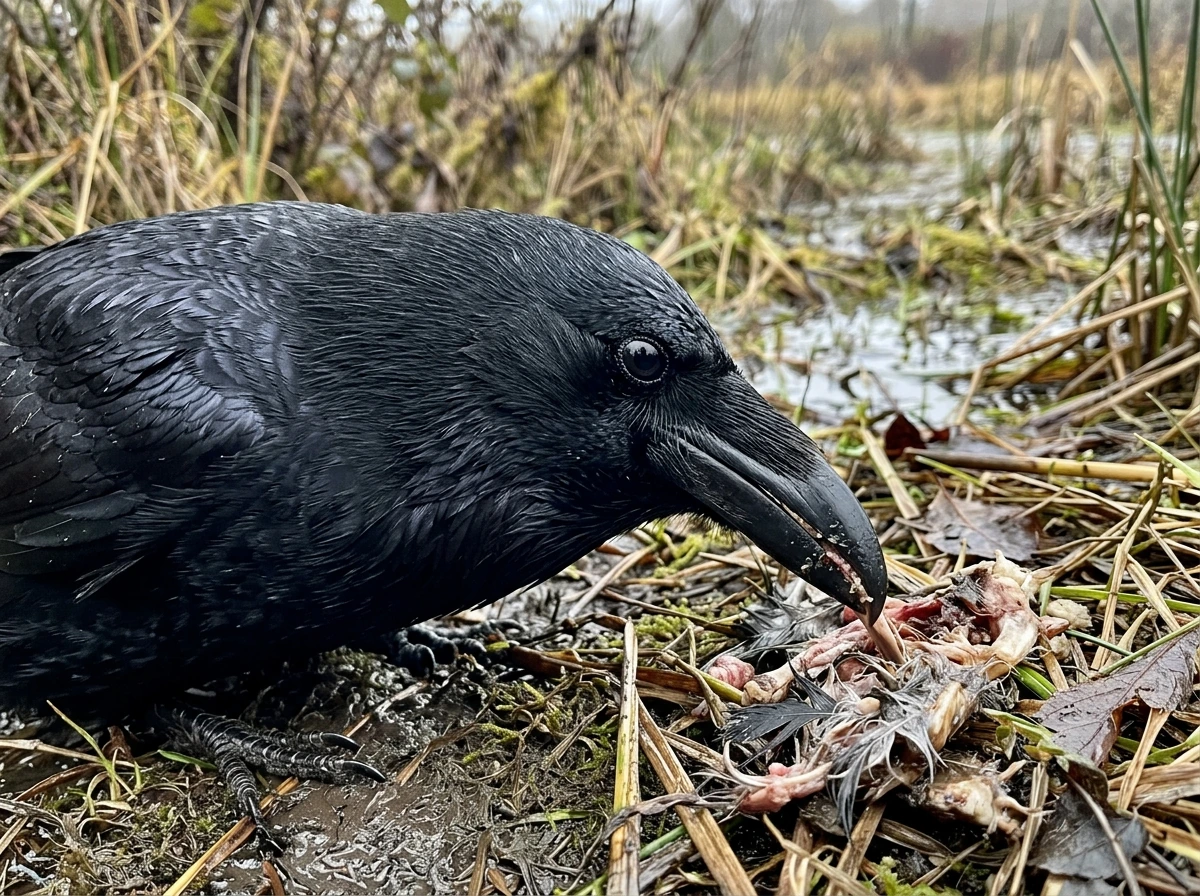
Add to that their ecological role. Scientific Reports has documented how scavenging birds like corvids play a key role in ecosystem functioning by processing carrion. Ravens have been showing up at battlefields, at animal kills, and near the dying for as long as humans have been watching them. That is not ominous mythology invented from nothing. It is observation of a real pattern. Their black plumage and deep, croaking call amplify the effect visually and audibly. When people across dozens of unconnected cultures independently land on 'death, prophecy, and intelligence' as the core raven themes, it is because those themes reflect something true about the bird.
Ravens can also mimic human speech, which Wikipedia's overview of talking birds notes is well-documented in corvids. A bird that seems to speak back to you is going to end up in the mythology. All of this combined makes the raven one of the most symbolically loaded birds on earth, right alongside owls.
If you are curious about how other large, dark birds of prey carry their own symbolic weight, If you are curious about how other large, dark birds of prey carry their own symbolic weight, the site also explores velcro bird meaning and vulture bird meaning as close relatives in the symbolic landscape. It also includes vulture bird meaning for when you encounter another carrion-linked bird in folklore.
calling a bird of prey from the east meaning velcro bird meaning
The core symbolic themes, broken down
Ravens do not have a single meaning. They carry a cluster of overlapping themes, and which one dominates depends on the tradition or context you are drawing from. Here are the five you will encounter most often.
Omens and prophecy
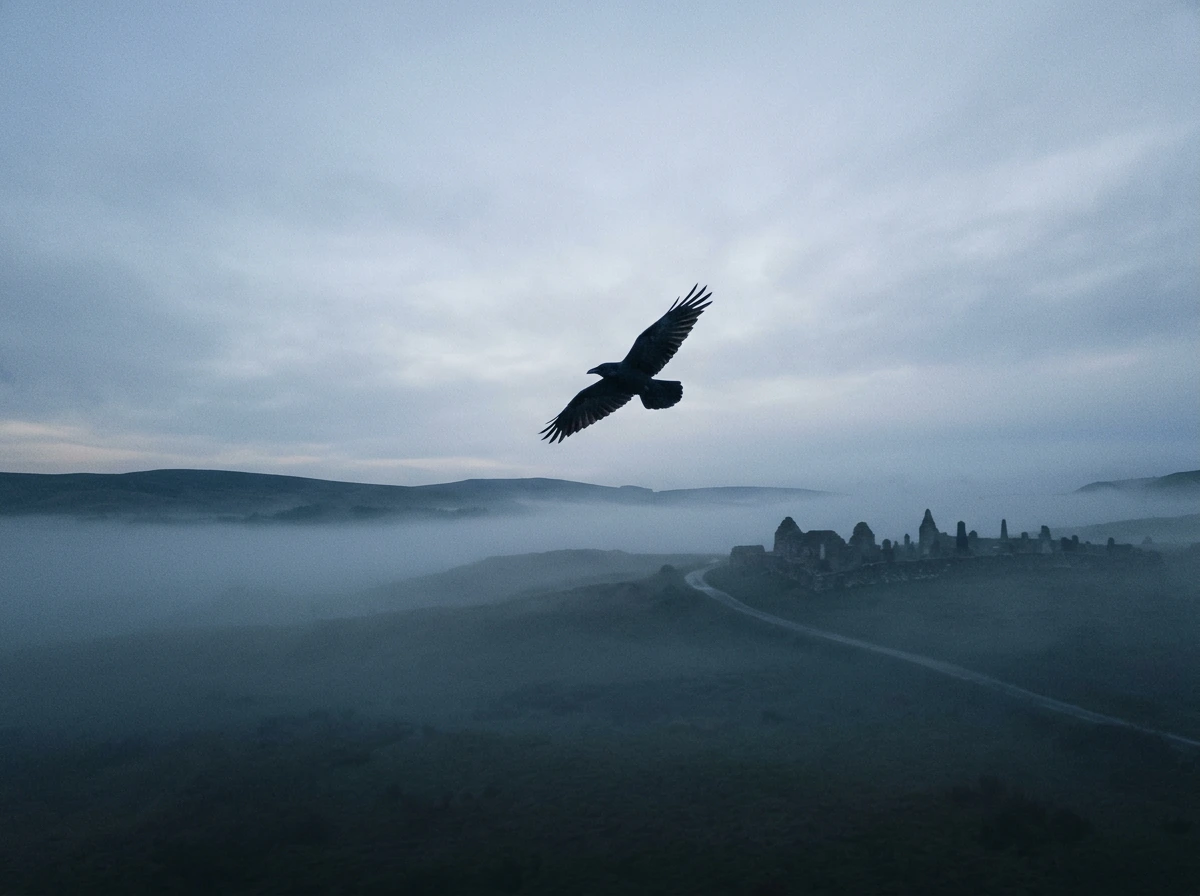
This is the meaning most people reach for first, and it is the oldest. Ravens were seen as messengers between the human world and something beyond it, partly because they actually do seem to anticipate death (by tracking sick or injured animals) and partly because their intelligence makes their behavior look purposeful. In many traditions, a raven sighting signals that something significant is coming, not necessarily something bad, but something worth paying attention to.
Death and the afterlife
This is the most misunderstood theme. Ravens are associated with death in many cultures, but that does not make them symbols of doom. In plenty of traditions, their connection to death is more about transition, the passage between one state and another, than about catastrophe. They were present at the threshold. Wikipedia's cultural overview of ravens specifically notes this connection comes from observable traits: the black plumage, the carrion diet, the croaking call. It is ecological reality turned into symbol.
Intelligence and wisdom
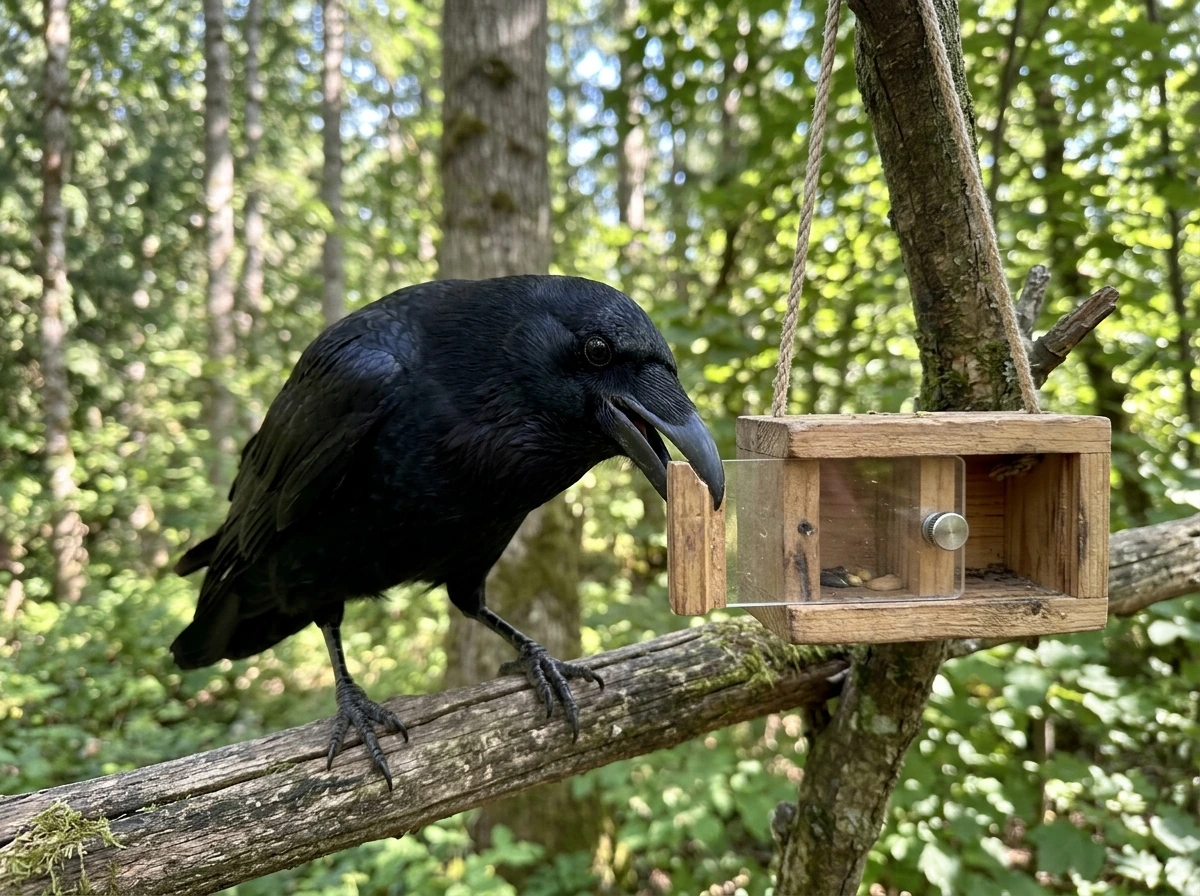
Across Northern Europe, Indigenous North American traditions, and East Asian symbolism, the raven is treated as a knowing creature, one that sees more than it lets on. This maps directly onto the documented cognitive abilities. A bird that can solve novel problems, learn from watching others, and remember individual human faces (as corvids demonstrably can) reasonably earns the label of 'wise.' In symbolic terms, a raven sighting is sometimes read as a prompt to look closer, think harder, or trust your own intelligence about a situation.
Mystery and liminality
Ravens occupy in-between spaces: forests and towns, day and dusk, the living world and what lies past it. In mythology they are often messengers or scouts, creatures that move between realms. This gives them a 'liminal' quality, meaning they belong at thresholds. Symbolically, encountering a raven is sometimes associated with being at a crossroads in your own life, a moment of transition or decision.
The trickster
This one is easy to miss if you only know the Western gothic tradition. In many Indigenous North American traditions, Raven is a trickster figure, a creator and a chaos agent, someone who bends rules to make things happen. Trickster energy in mythology is not evil. It is disruptive in ways that ultimately serve growth or revelation. A raven as trickster symbol means: do not take things at face value, something is being shifted around, pay attention to what is not said.
Context changes everything
If you are trying to interpret a raven sighting you had today, context matters more than any general meaning. Here is a practical framework for reading the situation.
| Context Factor | Possible Symbolic Slant | Practical Note |
|---|---|---|
| Single raven | Personal message, individual insight, solitary transformation | Most common sighting; often linked to prophecy or personal guidance themes |
| Group of ravens (an 'unkindness') | Community, collective intelligence, or amplified omen significance | Groups suggest social/collective themes rather than personal ones |
| Raven at your home or window | Threshold symbolism, something crossing into your personal space | Many cultures treat this as a significant event worth journaling |
| Raven in the wild, passing through | Liminal/transitional energy, a moment noticed and released | Often read as a general sign rather than a personal message |
| Calm, curious behavior | Invitation to pay attention, wisdom offered freely | A raven that lingers without alarm is traditionally a gentler omen |
| Aggressive or alarmed behavior | Warning, boundary being crossed, something off-balance nearby | Check what is around you, not just the bird itself |
| Daytime sighting | Active, clear-eyed insight; conscious awareness | Less tied to mystery/death themes than dusk or nighttime |
| Dusk or dawn sighting | Liminal timing amplifies liminal bird symbolism | Threshold time plus threshold animal: pay close attention |
| Raven calling loudly | Message or warning in many traditions; speech and communication themes | Connects to the mimicry/messenger role in folklore |
One thing worth saying clearly: a raven sighting is not automatically bad. The 'bad omen' reading is one cultural tradition among many, and it is largely a Western European import. Do not let one framework overwrite a more nuanced interpretation that might fit your situation better.
Ravens across cultures: mythology and folklore
The raven appears in more distinct cultural mythologies than almost any other bird. Here is where the major traditions land, and they do not all agree.
Norse mythology
This is probably the most influential tradition in Western symbolism. Odin, the Allfather, kept two ravens named Huginn (thought) and Muninn (memory). Wikipedia describes Huginn and Muninn as Odin’s ravens in Norse mythology, associated with thought and memory, and acting as messengers kept two ravens named Huginn (thought) and Muninn (memory).. They flew across the world each day and returned to whisper what they had seen into his ears. Ravens here are intelligence made manifest, loyal scouts of a god associated with war, wisdom, and death. The pairing of thought and memory as ravens is not subtle: it tells you exactly what the Norse believed ravens represented.
Indigenous North American traditions
In many Pacific Northwest and Alaska Native traditions (Haida, Tlingit, and others), Raven is a creator figure and trickster who brought light to the world by stealing the sun. Raven is cunning, unpredictable, often selfish, but ultimately a force of creation and revelation. This is a radically different reading than the Western 'death omen' framing, and it is just as ancient and valid. If your cultural background connects to these traditions, your raven encounter carries a fundamentally different weight.
Celtic and British traditions
In Celtic mythology, ravens were associated with blank" rel="noopener noreferrer">battle goddesses like the Morrigan, who could take the form of a raven and was seen over battlefields. Ravens here signal conflict, protection, and fate. The famous ravens of the Tower of London descend from this tradition: legend holds that if the ravens ever leave the Tower, the kingdom will fall. That is not superstition for its own sake. It is an institutionalized version of the Celtic association between ravens and the protection of a realm.
Biblical and Abrahamic traditions
In the Old Testament, Noah sends out a raven before a dove to check if the floodwaters had receded. The raven flies back and forth but does not return with a clear message, while the dove returns with an olive branch. Ravens in this tradition carry an ambiguous quality: not evil, but not fully trustworthy either. Elsewhere in the Bible, ravens are used by God to feed the prophet Elijah in the wilderness, suggesting provision and divine care. Again: not purely negative.
East Asian traditions
In Chinese and Japanese mythology, a three-legged raven (or crow, since the two are sometimes conflated in East Asian traditions) lives in the sun and represents solar energy, imperial power, and divine will. The Yatagarasu in Japanese mythology is a three-legged crow/raven that serves as a divine messenger and guide. This is about as far from 'bad omen' as it gets. The solar raven is a symbol of guidance and heavenly authority.
Spiritual interpretation vs superstition: where to draw the line
Here is the practical part that often gets skipped. There is a real difference between using raven symbolism as a reflective tool and treating a bird sighting as a binding prophecy about your future. The first is useful. The second can genuinely cause harm, especially if it triggers anxiety, changes important decisions, or feeds on existing fear.
A good rule of thumb: if a symbolic interpretation helps you think more clearly about something already on your mind, it is working as a tool. If it is telling you things you cannot verify and asking you to act on them, pump the brakes. Raven symbolism across cultures is remarkably consistent in pointing toward intelligence, attention, and transformation. None of those themes require you to believe a bird is sending you a coded message about next Tuesday.
The most grounded approach is to treat a raven encounter the way you would treat a vivid dream or a striking coincidence: notice it, sit with what it brings up for you, and use it as a prompt for reflection rather than a directive. What in your life right now connects to themes of transition, intelligence, or the unknown? That is the useful question. 'Is this a bad omen?' is usually not.
It is also worth separating cultural tradition from personal superstition. If you come from a tradition that has a specific raven belief, that belief has communal context and historical meaning. A private superstition invented on the spot based on anxiety is a different thing. One connects you to something larger; the other tends to loop inward.
Ravens in everyday language and literature
You do not have to see a live raven to encounter raven symbolism. It shows up constantly in literature, idiom, and everyday speech. Knowing where these references come from makes you a sharper reader of both language and culture.
Edgar Allan Poe's 'The Raven'
This 1845 poem is the single biggest reason Western popular culture defaults to 'raven equals doom.' The raven in Poe's poem says only 'Nevermore,' and does so in response to a grieving man's desperate questions about his lost love. The bird becomes a symbol of the irreversibility of loss, not an active agent of evil. If someone references a raven in a literary context, this is almost certainly the cultural touchstone they are drawing from.
Common raven phrases and references
- 'Raven-haired': a common adjective for very dark black hair, drawn directly from the bird's plumage. Purely descriptive, no ominous connotation.
- 'As black as a raven': an older simile for something intensely dark, used in literature from Shakespeare onward.
- 'Quoth the raven, nevermore': shorthand in everyday speech for something that will never happen or cannot be undone, directly from Poe.
- Ravens at the Tower of London: a cultural reference meaning that if a foundational institution loses its protections, everything collapses. Used metaphorically in political and cultural commentary.
- Huginn and Muninn: referenced in modern fantasy literature, tattoo culture, and neopagan practice as symbols of thought and memory operating together.
- Raven as a trickster: used in storytelling and character design to signal a character who is unpredictable, chaotic-good, or a catalyst for change rather than straightforward evil.
Ravens also show up frequently in names and heraldry. The raven appears on the flag of the Isle of Man historically, is embedded in Welsh mythology through the name Bran (which means 'raven' or 'crow'), and features in countless coats of arms across Northern Europe. If you are reading historical fiction or fantasy rooted in these traditions, raven imagery is almost never decorative. It is carrying one of the symbolic threads described above.
For deeper dives into how specific raven-related meanings work in language and folklore, the bird raven meaning article on this site goes further into the specific linguistic and folkloric nuances.
What to do right now, and when to go deeper
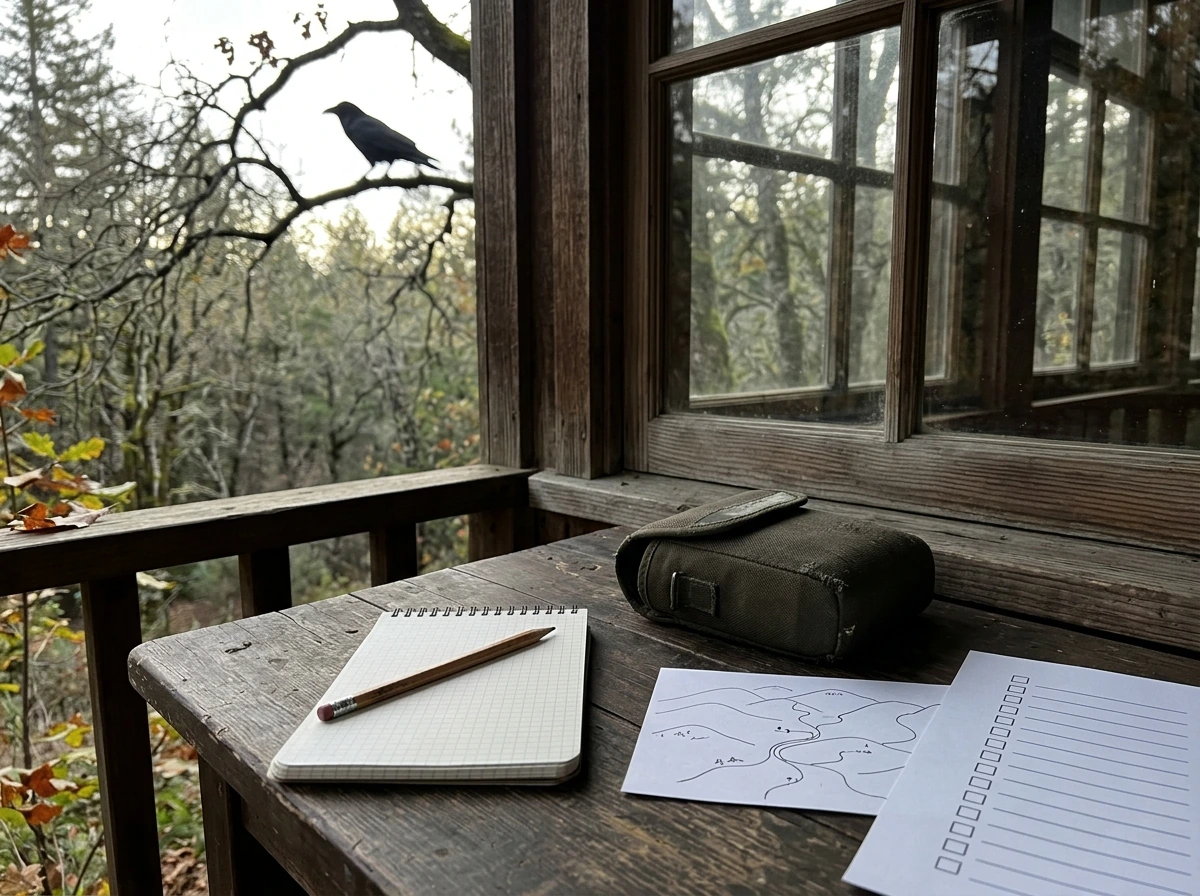
If you had a raven encounter today and want to do something useful with it, here is a practical checklist. And if you want to go further than a single sighting, there are natural next steps for that too.
Your immediate checklist
- Write down what you saw: where, when, how many ravens, what the bird was doing, and what your immediate gut reaction was. Details fade fast and they matter for interpretation.
- Note what was on your mind when it happened. Symbolism resonates when it connects to something already live in your inner world. What themes were you already sitting with?
- Check the context factors from the table above. Single or group? Calm or agitated? Home or wild? Daytime or dusk? This narrows the symbolic range meaningfully.
- Identify your cultural background and which tradition is most relevant to you. A Norse-heritage reader and a Pacific Northwest Indigenous reader are not working with the same raven.
- Ask the reflection question: where in my life right now are themes of transition, intelligence, or the unknown already active? Let the raven be a prompt, not a verdict.
- Avoid treating the sighting as a directive for any concrete decision. Symbolic interpretation is a lens, not a GPS.
- If the sighting triggered strong anxiety or fear, separate the feeling from the symbol. The anxiety is worth examining on its own terms, not through a bird's behavior.
When to go deeper
If a single sighting has your attention, that is fine and you have the framework above. Go deeper when ravens start appearing repeatedly in a short time span, in your dreams, or in imagery you encounter across different contexts (a book, a real sighting, a symbol in art). Recurring symbols are worth more sustained attention than one-off encounters.
Going deeper well means: reading your own cultural tradition's specific raven mythology rather than defaulting to a generic Western interpretation, talking to someone in a living spiritual tradition you trust if that is relevant to you, and cross-referencing what the raven symbol brings up against what is actually happening in your life. The symbol should illuminate something real, not replace thinking about it.
If you want to expand your symbolic vocabulary beyond ravens, the site covers If you want to expand your symbolic vocabulary beyond ravens, the site covers adjacent territory in scavenger bird meaning and bird of prey meaning, both of which share some symbolic overlap with ravens while carrying their own distinct cultural histories. Bird of prey meaning can add another layer by highlighting themes often linked with hunting, power, and focused attention.
Ravens are a good entry point into bird symbolism broadly because they are so well-documented across so many traditions. Once you understand why the raven means what it means, other bird symbols start to make a lot more sense. Ravens are a good entry point into bird symbolism broadly because they are so well-documented across so many traditions. Some people also ask what the “velcro bird meaning” is, and it usually comes from modern associations rather than an ancient raven tradition. Once you understand why the raven means what it means, other bird symbols start to make a lot more sense.
FAQ
If I saw a raven near my home, does that change the raven bird meaning compared with seeing one in nature?
Yes. A raven appearing in an everyday human setting usually points more strongly to “attention and intelligence” (your mind noticing something important) than to remote or mythic themes. If it’s close to pets, trash, or a specific doorway, treat it as a prompt to check what is changing in your immediate routines, not as a fixed prediction about fate.
What if the raven didn’t act “ominous,” it just landed, looked around, or flew away. Should I still read it as a sign of death or doom?
Don’t force a death-oriented interpretation. Ravens are common scavengers, so neutral behavior often fits the “observant and transformative” themes without implying catastrophe. Use the meaning that best matches your current concerns, and ignore frameworks that you cannot connect to anything verifiable in your life.
How do I interpret it if I saw multiple ravens, or I heard their calls repeatedly the same day?
Multiple appearances usually strengthen the “recurring symbol” pattern the article describes, but you still choose the dominant theme by context. If the sightings cluster around decision points, social dynamics, or a “think harder” issue you are actively facing, that is a cleaner match than reading it as random doom.
Is it important whether the raven looked healthy, injured, or was scavenging?
It can be. A raven tracking carrion or lingering around an area with illness or recent loss is where the death-and-transition association feels most grounded. If the raven looked robust and was simply foraging, lean toward “intelligence, curiosity, and problem-solving” rather than interpreting weakness or death as inevitable.
How do I tell the difference between cultural symbolism and anxiety-driven superstition in my own head?
Ask whether your interpretation helps you make clearer choices. If the thought loop pushes you into fear-based actions, avoidance, or compulsive checking, it’s more likely anxiety. If it increases awareness, encourages communication, or motivates practical problem-solving, it’s functioning as a reflective tool.
What should I do if a raven sighting makes me worry about someone else’s safety?
Treat it as an emotional signal, then switch to action you can actually take. For example, if you are worried about a specific person, send a check-in message, review any real safety concerns, and avoid treating the raven as proof. This keeps the symbolism from overriding reasonable care.
Does a raven being loud or vocal have a different meaning than a quiet sighting?
Often, yes, but only as an emphasis. Vocal ravens can intensify themes of “message” or “call to pay attention,” so they fit best with reflection, journaling, or reviewing a conversation you’ve been avoiding. Don’t treat the volume as evidence of a specific event happening on a timetable.
Can I interpret a raven bird meaning from dreams or images without seeing a live bird?
Yes. The article notes that symbolism appears in dreams and media, but the best approach is to map the dream imagery to your current lifecycle themes (transition, decision, uncertainty). Pay attention to your emotional reaction in the dream, because fear usually indicates “don’t overcommit” while curiosity often indicates “go closer and think.”
What if I’m not sure what cultural tradition my raven association comes from?
Use a “context-first” method. Start with the most general, non-catastrophic themes in the article (attention, intelligence, transition), then refine only if you notice a specific personal trigger, like a conflict, a learning moment, or a crossroads decision. Avoid adopting a Western “doom” frame just because it is common.
Is there a way to interpret raven symbolism without turning it into a rigid rule?
Use it like a decision aid, not a verdict. For instance, ask, “What would I do if my goal were to think more clearly and handle transition well?” Then make one practical step. If the raven “meaning” cannot be translated into an action or insight you can test, it’s not ready to guide decisions.
How long should I “take seriously” a raven sighting before moving on?
A useful rule is to keep it active for a short reflection window, then update. If the symbolism still maps to what is actually happening after a few days, revisit it. If it fades and your situation looks unchanged, treat it as a coincidence and stop feeding the loop.