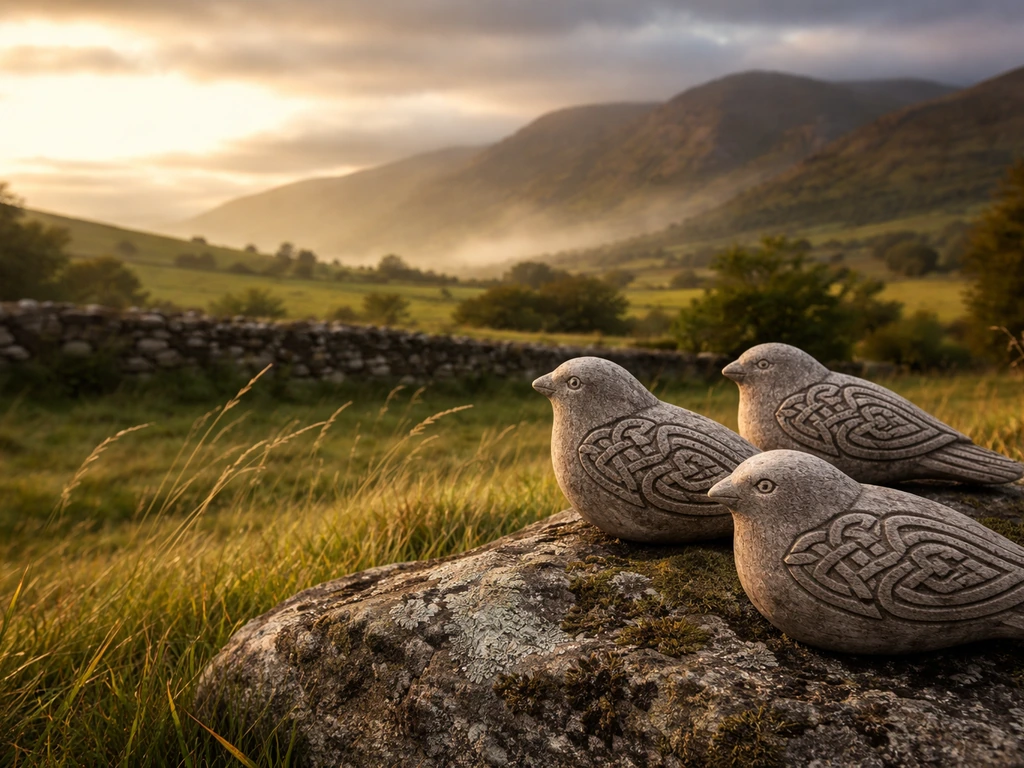
The raven means different things depending on where you look, but the core symbolic cluster is consistent: mystery, intelligence, transformation, and a connection to the threshold between life and death. In most Western traditions, the raven is first and foremost an omen bird, linked to death, grief, and the unknown. Ravens bird meaning is often tied to themes like death, mystery, and transformation, but the exact message depends on the tradition you’re drawing from.
Bird Raven Meaning: Symbol, Spiritual Signs, and Idioms

Marcus Blackwell
23 Mar 2026

But zoom out to Norse mythology or Pacific Northwest Indigenous traditions, and the same bird becomes a keeper of cosmic knowledge or an outright creator of the world. The meaning is not contradictory; it is layered. And once you understand why those layers exist, you can confidently interpret what a raven symbolizes in whatever context you actually care about.
That contrast is why it also helps to look up the bird of prey meaning when you are trying to interpret what you saw. If you want to explore the calling of a bird of prey from the east meaning, it helps to compare the regional symbolism behind raptor calls and direction-based traditions calling a bird of prey from the east meaning.
The core raven meaning, quickly
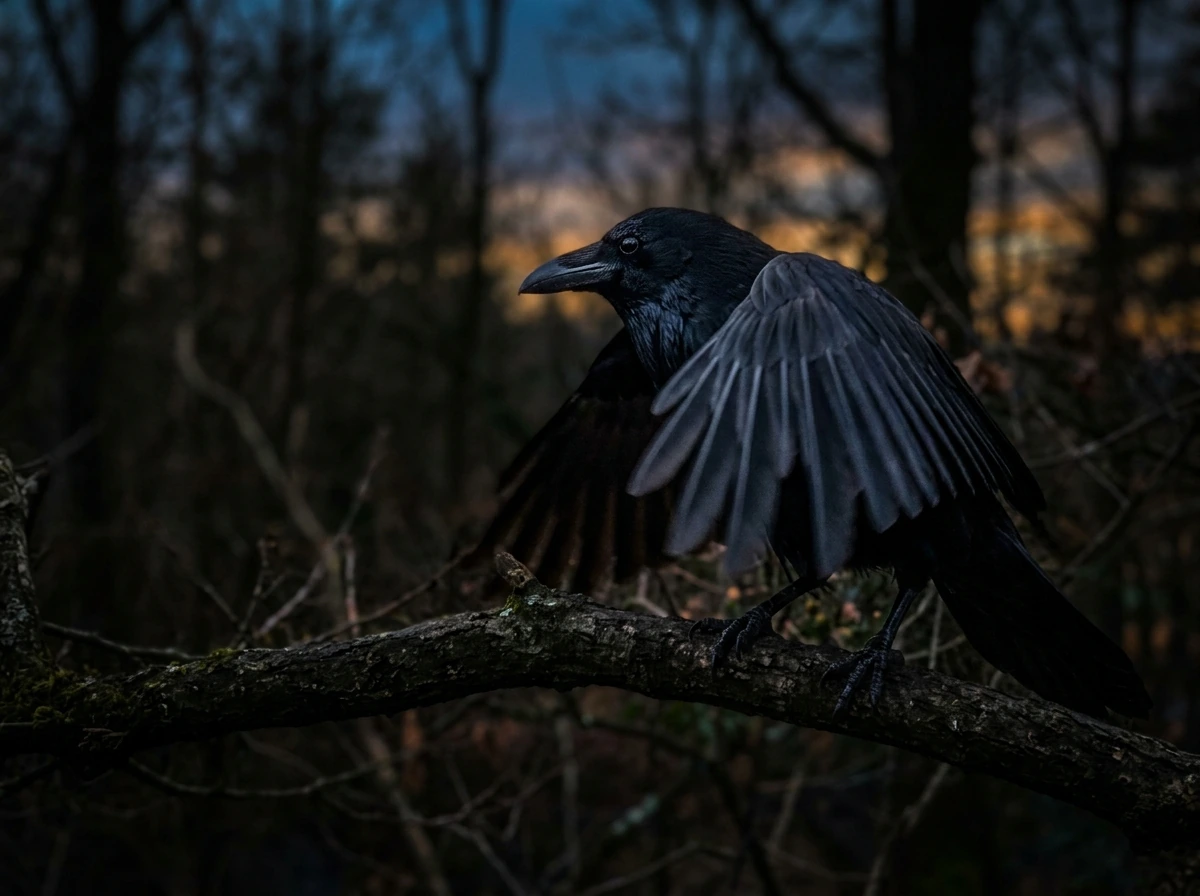
If you need a fast answer: the raven most commonly symbolizes mystery, death and transformation, intelligence, and the delivery of messages or hidden knowledge. “Vulture bird meaning” often comes up when you are looking at scavenger symbolism and what it might represent in your own situation. In everyday Western culture, the dominant association is with loss and ill omen, largely because of the raven's black plumage, its deep croaking call, and its habit of feeding on carrion.
Those three observable traits, color, sound, and diet, have been mapped onto symbolic meaning for centuries and continue to drive most casual raven interpretations today. But that is only half the picture. Ravens are also widely understood as exceptionally intelligent, even trickster-like, and many traditions read them as messengers, guides, or transformers rather than harbingers of doom.
What ravens mean across mythology, folklore, and spiritual traditions
Norse mythology: thought, memory, and divine intelligence
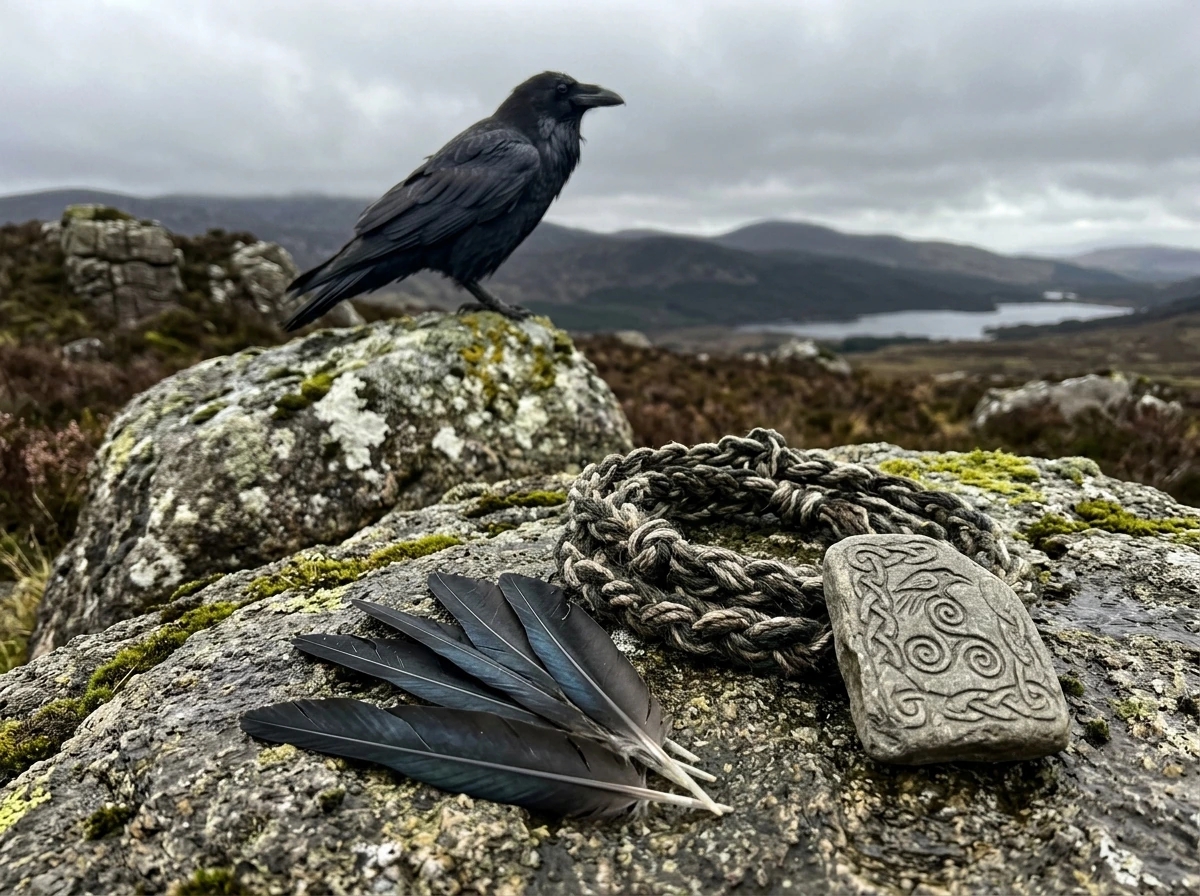
The most influential raven mythology in Western culture comes from Norse tradition. Odin, the Allfather, kept two ravens named Huginn and Muninn, whose names translate as "thought" and "memory" (or mind). In the Prose Edda's Gylfaginning, these ravens sit on Odin's shoulders and fly out across the world each day, returning to whisper everything they see and hear into his ears. They are explicitly informational: they deliver tidings. This is the direct origin of the modern idea that ravens carry messages and represent knowledge, awareness, and insight. The symbolic link between ravens and intelligence is not a modern invention; it is woven directly into one of the oldest surviving written mythologies.
Celtic tradition: war, fate, and the Morrigan
In Irish and broader Celtic mythology, ravens are tied to the Morrigan, a goddess of war, fate, and death. She frequently takes the form of a crow or raven, hovering over battlefields and prophecying outcomes. This association gives rise to the "battle raven" meaning: a connection not just to death as an endpoint, but to fate, prophecy, and the raw, transformative force of conflict. If you encounter raven symbolism in Celtic or Pagan contexts and it feels more about destiny than doom, this is likely the thread you are pulling.
Indigenous North American traditions: creator, trickster, and bringer of light
Across many Pacific Northwest and Alaskan Indigenous traditions, including Tlingit culture, Raven is not a death symbol at all. Raven is a creator and transformer, the being who stole the sun to bring light to a dark world, who shaped dry land, and who continues to reshape reality through cunning and an insatiable desire to act on the world. This is a trickster archetype in the fullest sense: not malicious, but relentlessly clever and driven.
The Raven here is powerful, creative, and morally complex, not simply good or evil. This reading could not be more different from the "ill omen" interpretation, and that contrast is exactly the point: the same bird carries opposite valences depending on which cultural tradition you are standing in.
General Western and funerary folklore
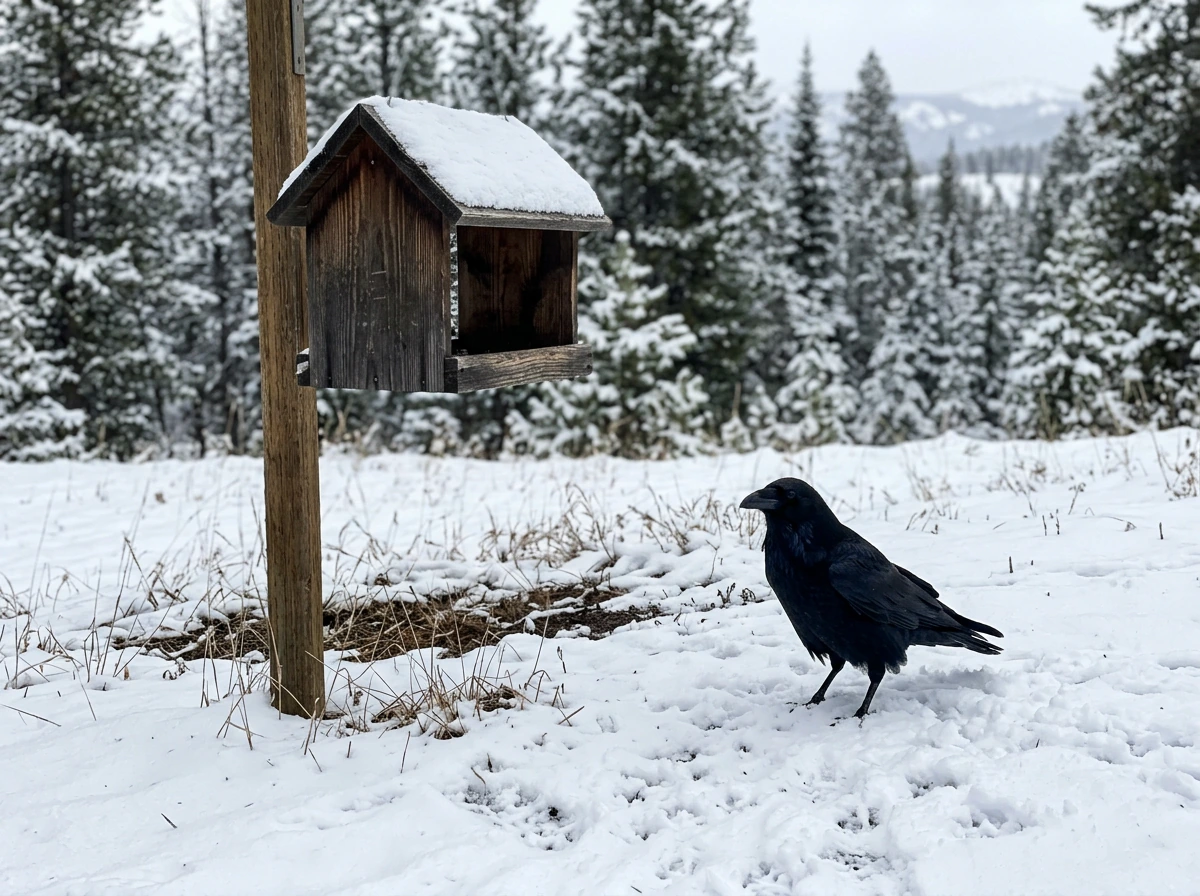
Outside of specific mythological systems, Western folklore has long treated ravens as funerary messengers, associated with death's arrival or its aftermath. In ancient Greece, the flight of a raven was read as a direct omen. Some traditions specifically frame ravens as a personification of death itself. This is where the "loss and ill omen" meaning lives most comfortably, and it feeds directly into modern casual interpretations of raven sightings.
Contemporary spiritual interpretations
In modern spirituality and shamanic-adjacent frameworks, the raven tends to be read as a symbol of transformation, the unveiling of hidden truths, and a guide through change. Seeing a raven in this context is often framed as an invitation, sometimes a warning, but more commonly a nudge toward self-examination or a signal that something is shifting. One useful corrective that shows up in thoughtful modern spiritual writing: the raven's black coloring does not inherently mean evil.
Black here is more accurately read as the unknown, the shadow, the parts of yourself or your situation that have not yet been brought into the light. That reframe tracks well with the Norse idea of ravens as carriers of insight rather than agents of destruction.
The traits that built the raven's reputation
You cannot fully understand raven symbolism without understanding the actual bird. Three physical and behavioral traits have driven almost every interpretation across cultures, and they are worth knowing because they explain why these meanings stuck.
- Black plumage: The raven is entirely black, which in most Western symbolic systems maps to death, the unknown, and the supernatural. This is the most obvious driver of omen associations.
- Croaking call: Ravens have a low, resonant, croaking voice that is distinctly different from a crow's sharp caw. That hoarse, deep call sounds ominous in the right setting, and folklore noticed. In some traditions, even specific call patterns or flight behaviors were watched closely as omen signals.
- Scavenging behavior: Ravens feed on carrion, visiting carcasses, dumps, and the aftermath of death. The common raven is both a scavenger and a capable predator, but it is the carrion-feeding that placed them at the symbolic intersection of death and the natural world. When a raven shows up at a battlefield or a carcass, it is not a coincidence people started reading that as a sign.
- Intelligence: Ravens are among the most cognitively capable birds on the planet. They are problem-solvers, capable mimics, and, in some cases, able to imitate human speech. That uncanny intelligence, the sense that they are watching and understanding you, feeds directly into 'messenger' and 'trickster' interpretations.
These traits form a package. Any culture that observed ravens regularly would have noticed all four, and different traditions chose to emphasize different ones, which is why you end up with such divergent meanings across the map.
Ravens in everyday language and idioms
The raven's biggest footprint in everyday English-language usage comes directly from Edgar Allan Poe's 1845 poem "The Raven. Britannica notes that Poe’s poem “The Raven” was first published in January 1845 in the New York Evening Mirror Edgar Allan Poe's 1845 poem "The Raven".
" In that poem, a raven functions as a messenger tied to death, grief, and the afterlife, famously repeating "Nevermore" in response to a narrator mourning a lost love. Poe reportedly chose the raven specifically because it was a bird considered capable of speech, reinforcing the messenger idea.
The poem has been so culturally dominant that when English speakers reach for a raven as a symbol today, they are almost always (consciously or not) drawing on Poe's framing: the raven as a dark, ominous presence that speaks of loss and finality.
Beyond Poe, ravens appear in everyday language in a few consistent patterns. The phrase "raven-haired" uses the bird's black plumage as a descriptor for very dark hair, which is a rare positive (or at least neutral) raven reference in common English. Ravens show up in expressions about bad omens and dark forecasts, often interchangeably with crows in casual speech, even though the two birds are distinct species with different calls and sizes. The Cherokee "Raven Mocker" is a specific folklore pattern where raven-like calls and flight are read as a direct omen of death, tying observed raven behavior to a specific linguistic and cultural warning system.
In broader figurative usage, calling something "raven-like" or comparing a situation to a raven's visit almost always implies foreboding, unavoidable change, or a message you would rather not receive. The trickster meaning is less common in everyday idiom but appears in literary and fantasy contexts, where a raven character is often cunning, unpredictable, and operating on its own agenda.
How to interpret a raven sighting in real life
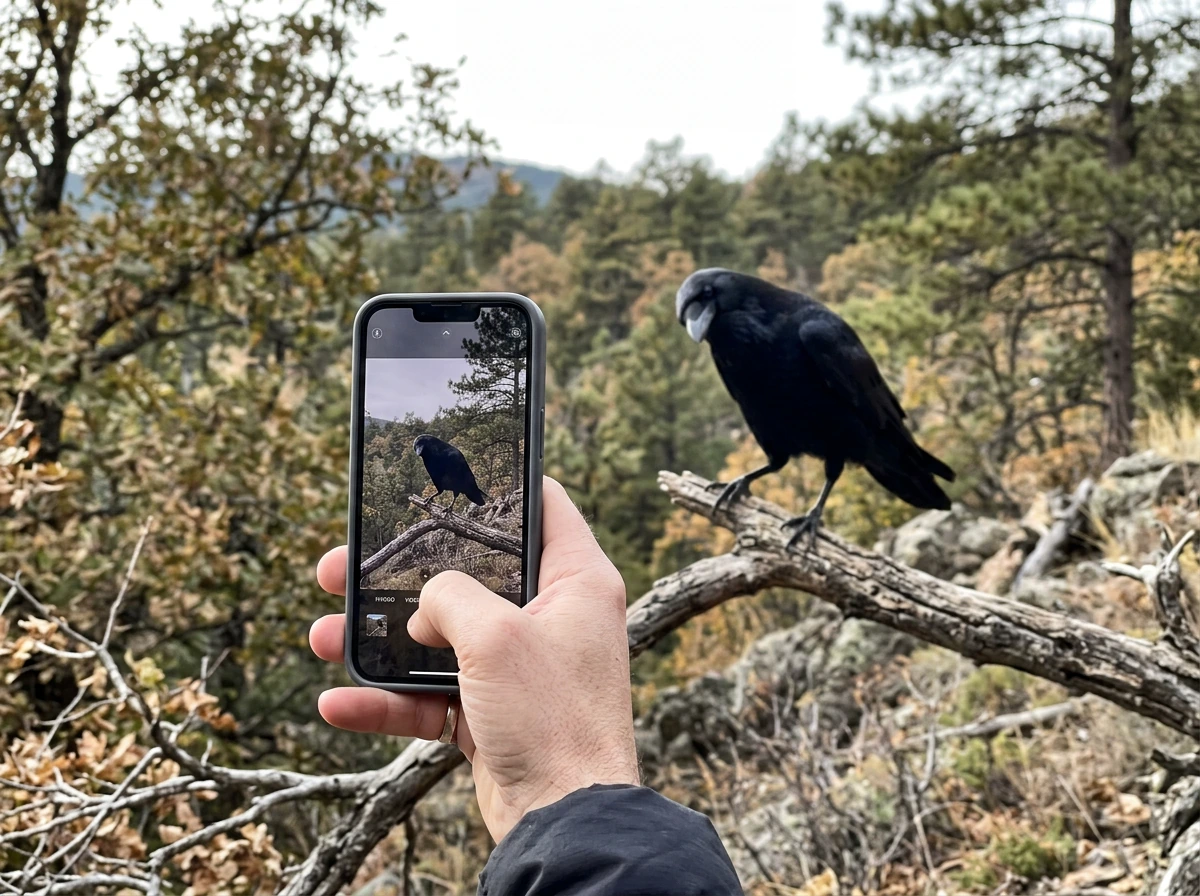
If you saw a raven and you are trying to interpret what it means, the honest answer is: it depends entirely on what meaning system you are working within. Here is a practical framework for reading the encounter instead of defaulting to generic "bad omen" panic.
- Notice the behavior, not just the presence. Historical folk practice specifically watched what the raven was doing: was it calling loudly, circling, chasing other birds, or sitting still? A raven calmly observing you reads differently from one vocalizing aggressively. The behavior carries as much symbolic weight as the sighting itself.
- Consider the context of your life right now. Most spiritual and symbolic traditions frame a raven encounter as a message relevant to what is already in motion for you. If you are at a crossroads, the transformation reading applies more than the death omen. If you are grieving, the Poe-adjacent messenger interpretation might resonate.
- Ask which tradition matters to you. If you follow a Norse or Heathen path, a raven sighting maps to Huginn and Muninn: awareness, information, something you need to pay attention to. If your frame is Celtic or Pagan, it likely connects to fate and transformation. If you have no particular tradition, a contemporary spiritual read (invitation to change, signal to look at what is hidden) is the most applicable.
- Do not over-assign negative meaning based on color alone. The raven being black does not automatically mean bad news. As some modern spiritual writers note, black here represents the unknown and the unconscious, not evil. Treating a raven sighting as only a death omen is a culturally narrow reading.
- Respect the actual animal. A shamanic or nature-based perspective worth keeping: the bird is a wild animal doing what ravens do. The meaning you assign is interpretive, and there is no obligation to read any wildlife encounter as supernatural.
Why raven meaning varies so much by culture and era
The same bird can be a death messenger in one tradition, a cosmic creator in another, and a divine spy in a third. That is not confusion or contradiction; it is a natural result of different cultures observing the same animal through completely different interpretive lenses. Here is a comparison of how major traditions read the raven:
| Tradition | Core Raven Meaning | Key Traits Emphasized |
|---|---|---|
| Norse mythology | Messenger of knowledge, thought, and memory | Intelligence, information-gathering, divine connection |
| Celtic / Irish mythology | War, fate, prophecy, transformation | Battleground presence, shape-shifting, the Morrigan |
| Pacific Northwest Indigenous (e.g., Tlingit) | Creator, trickster, bringer of light | Cunning, world-shaping, transformative power |
| Western folklore / general European | Death omen, ill omen, funerary messenger | Black plumage, carrion diet, eerie call |
| Modern Western spirituality | Transformation, hidden truth, invitation to change | Intelligence, mystery, shadow integration |
| English literary tradition (post-Poe) | Grief, loss, ominous finality | Speech, repetition, messenger of death |
The reason these meanings diverge so dramatically comes down to which traits each culture chose to foreground. Norse tradition focused on the raven's intelligence and loyalty to Odin. Pacific Northwest traditions focused on the raven's cunning and its role in shaping the world. Western European folklore focused on its color, its diet, and its presence near death.
None of these is wrong; they are all accurate observations of the same bird, filtered through very different worldviews. The Druid Fellowship organization (ADF) puts it well: raven symbolism can run in completely opposite directions, from harbinger of death to bringer of life, depending on the culture. That is why pinning down "the" meaning without cultural context is always going to give you an incomplete answer.
How to find the right raven meaning for your specific situation
The best way to nail down the interpretation you actually need is to work through three questions in order. First: what is the source context? If you are reading a novel, watching a film, or interpreting a piece of art, the tradition the creator is drawing on matters most. Poe-influenced work pulls from grief and loss. Fantasy drawing on Norse mythology pulls from wisdom and messengers. A Pacific Northwest Indigenous story pulls from creation and trickster energy. Identify the source before you interpret.
Second: what is your own cultural or spiritual framework? If you are actively working within a tradition (Heathenry, Celtic Paganism, a specific Indigenous cultural practice, mainstream spirituality), use that tradition's interpretation as your primary lens. Ravens mean something specific within those systems, and that specificity is more useful than a generic mashup. If you have no particular tradition, the contemporary spiritual read (transformation, hidden truth, paying attention) is the most broadly applicable starting point.
Third: what were the details of the encounter or reference? Sound, behavior, number of birds, location, and what was happening in your life at the time all refine the interpretation. A single raven sitting quietly reads differently from a group of ravens calling loudly near a known carcass site. The historical folk practice of noting specific raven behavior before drawing an omen conclusion is actually a sensible approach: more data points give you a more accurate read.
For research purposes, start with the cultural origin of whatever you are investigating. If it is Norse, look at Huginn and Muninn directly. If it is Celtic, look at the Morrigan's raven associations. If it is a literary reference, Poe's "The Raven" is almost certainly the anchor.
If it is a sighting you want to interpret spiritually, pick a tradition that resonates and apply its framework consistently rather than blending several at once, which tends to produce noise rather than clarity.
And if ravens as scavenger birds or velcro bird meaning come up in your research, those ecological and symbolic roles each carry their own meanings worth exploring separately from the raven's deeper mythological significance, including a quick Venus definition bird context if that’s what you’re researching, and a separate look at velcro bird meaning. velcro bird meaning
FAQ
Are ravens and crows basically the same when interpreting raven meaning?
Yes, but you should be careful. In everyday English, people often use “raven” and “crow” interchangeably, yet their symbolic weight differs in most traditions. If you want the “bird raven meaning” that the article describes, focus on unmistakable raven traits (larger size, thicker bill, different call, and the all-black sheen) rather than treating any dark corvid as the raven archetype.
If I saw a raven right after thinking of something, does that always mean a specific warning?
A sudden, close encounter can feel intense, but traditions that treat ravens as messengers typically interpret the “message” through context details. Note what the raven did (landed, stared, called, flew toward you or away, stayed or left quickly) and where you were (cemetery, battlefield-themed setting, home, a recent decision). Those specifics usually matter more than the timing alone.
Does the raven’s black color automatically mean something bad or evil?
Not necessarily. Many spiritual readings frame “shadow” and “unknown” as the core of black symbolism, but the same black imagery can be read as grief or finality depending on your tradition. If your interpretation would push you toward fear, check whether you are blending Western loss-oriented symbolism (Poe and ill-omen folklore) with a transformation-focused lens.
How can I interpret a raven spiritually without jumping to “someone will die” conclusions?
If your goal is personal guidance, use a “minimum claim” approach. Start with broadly compatible themes (change, hidden information, transformation, attention) and avoid declaring a literal death prediction. You can treat the encounter as a prompt to examine what is shifting in your life rather than a deterministic outcome.
Does “raven” in a story always mean the same thing as in real life?
Yes. In the modern idiom “raven-like” comparisons, the implication is often foreboding or an unwelcome message, but that does not require mythic belief. If you are analyzing a text or movie, you can map the tone to literary functions: messenger of grief (Poe style), prophetic fate (Celtic/Morrigan style), or trickster interference (Pacific Northwest fantasy style).
What should I pay attention to during a raven sighting to get a more accurate meaning?
Count and behavior are often the missing piece. A single raven resting quietly can be interpreted as a slow signal or observation, while multiple calls, a group arriving together, or repeated returns can be read as emphasis. Also note direction and proximity, for example whether it stayed near you, crossed your path, or circled an area.
Could my raven sighting be explained by scavenging or local nesting, rather than symbolism?
Often, yes, and it helps to separate “mythic raven” meaning from “ecology raven” meaning. If ravens are present because of carrion, trash, or nesting activity, the encounter may reflect habitat patterns rather than a supernatural message. Symbolic interpretation is most reliable when the raven’s behavior is unusual relative to the local baseline.
What’s the biggest mistake people make when interpreting raven meaning?
The most common mistake is mixing interpretive frameworks, for example treating a Norse messenger as if it is a Poe-style grief harbinger. Pick one consistent lens, then refine with the encounter details. If you are unsure of origin, default to the broadly applicable transformation and hidden-truth framing, not the strongest death-linked reading.
If raven meaning feels tied to fate or battle, what should that translate to in practical terms?
Yes, especially for “battle raven” or fate-related ideas. If you encounter raven symbolism connected to conflict, use it as a prompt to examine decisions, boundaries, and consequences rather than predicting a literal war or injury. The “fate” angle is usually about outcomes and timing, not guaranteeing catastrophe.
Next Article
Munster Bird Meaning: Folklore, Symbolism, and How to Verify
Meaning of Munster bird searches: folklore, symbolism, idioms, spelling variants, and quick ways to verify the reference