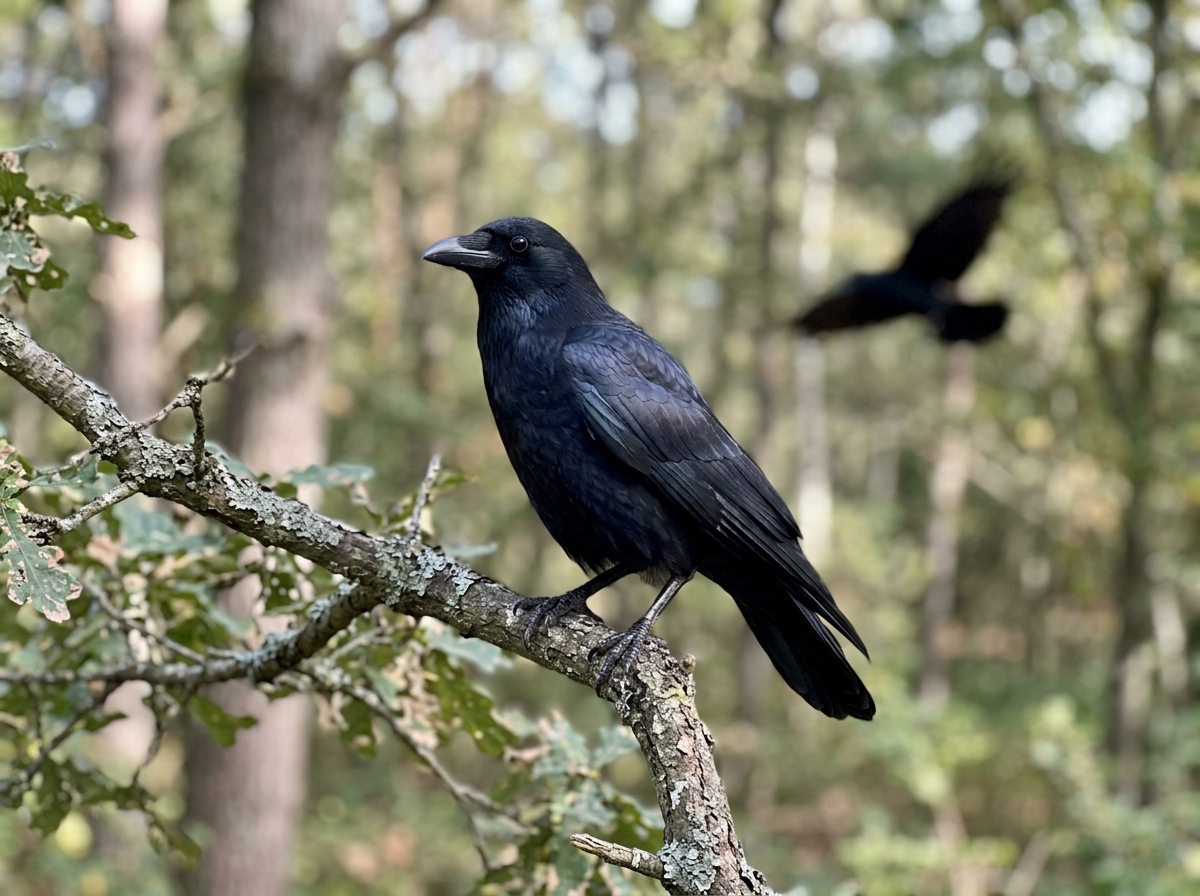
Here's a quick way to pin it down. If you just spotted a large black bird and want to know what it is, you want the literal facts section. If something happened, you saw a crow land somewhere unusual, and you're wondering if it means something, head to the folklore and omens sections. If you heard someone say 'crow' in a sentence and you're not sure whether they meant the bird or the verb, the idioms section has you covered. The guide is structured so you can jump straight to whichever one applies.
What a crow actually is (and why it stands out)
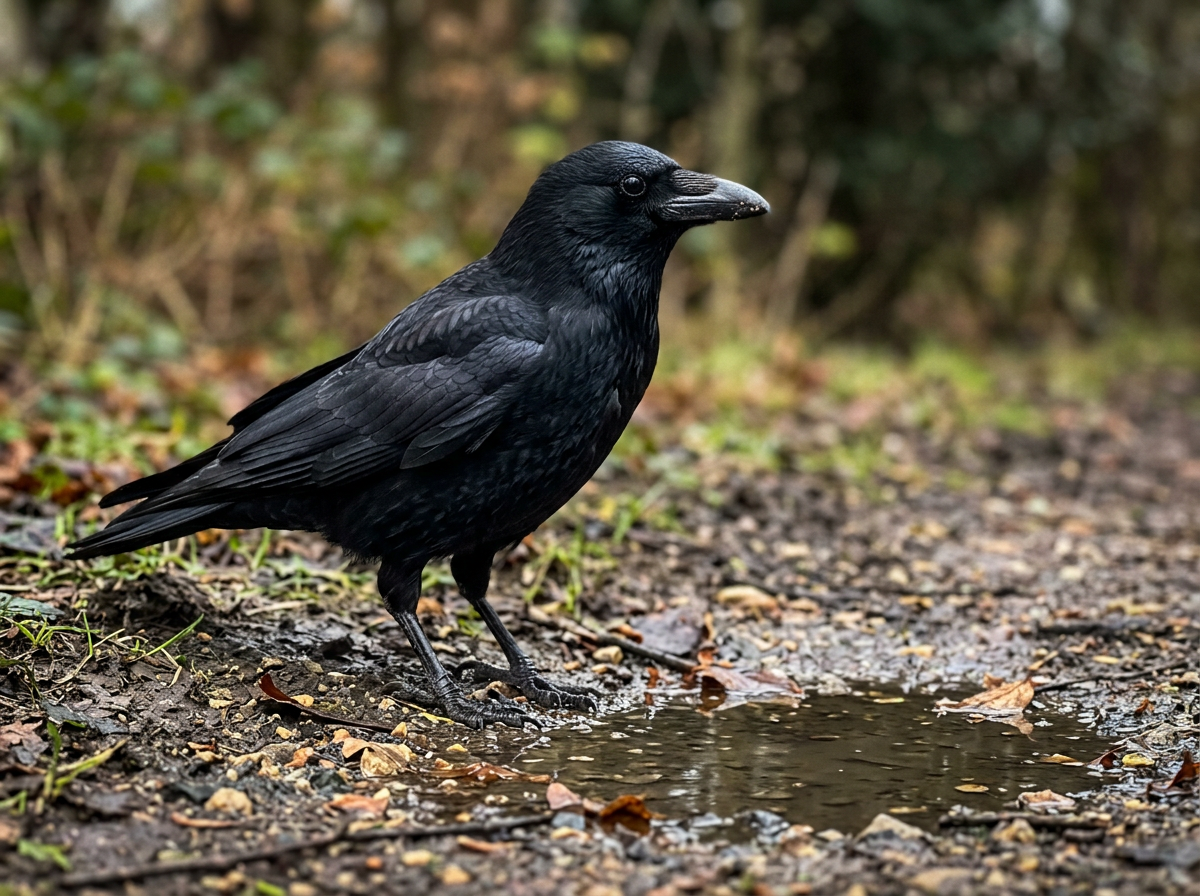
Crows belong to the genus Corvus, a group of glossy black birds found across most of the world. The American Crow is probably the most familiar species to North American readers, and Audubon's field guide describes them as among the most intelligent birds we know of. That's not a casual compliment. Crows use tools, recognize individual human faces, hold grudges, teach their young, and adapt to urban environments with almost unsettling ease. This real-world behavioral profile is a big part of why crow symbolism is so rich across cultures. People have been watching crows do uncanny things for thousands of years.
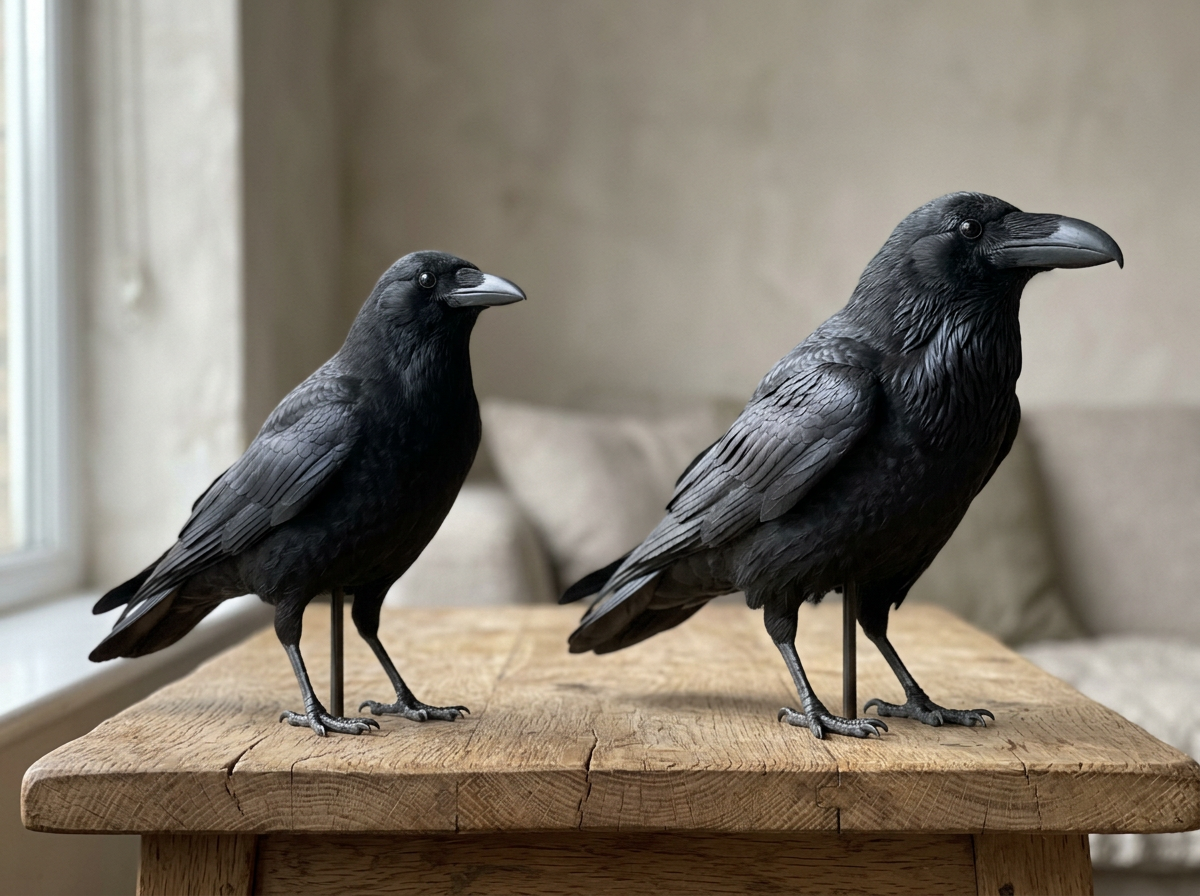
One thing worth flagging: the word 'crow' has sometimes been applied to unrelated bird species depending on the region, so context matters if you're trying to identify a specific bird. The more common confusion, though, is between crows and ravens. Ravens are noticeably larger, with heavier, curved beaks and a deep, rasping croak rather than the sharper 'caw' crows produce. In North America especially, this distinction matters because the two birds carry overlapping but distinct symbolic traditions. If the bird you saw was bigger than you expected and made a guttural sound rather than a classic 'caw,' it may well have been a raven, which is worth knowing before you look up what the encounter supposedly means.
Crows are also gregarious and loud, which contributes to their cultural reputation. They vocalize with several distinct call patterns, including warning calls that sound different depending on the type of threat nearby. Scientific research has shown that features of crow mob calls actually reflect the danger level of a particular predator. In other words, when you hear a group of crows going off in the yard, they're usually reacting to something real in their environment, not delivering a cosmic message. That's useful context before we talk about omens.
Crow symbolism across folklore and mythology
Across cultures and time periods, a handful of themes show up repeatedly in how people interpret crows: intelligence, mystery, liminality (existing between worlds), communication or messaging, and death or transformation. What varies enormously is whether these themes are framed positively or negatively. The bird is the same; the meaning is entirely shaped by the cultural lens applied to it.
European and Western folklore
In much of European tradition, crows and ravens tend to be cast as portents, often negative ones. The association comes from a combination of factors: black plumage, harsh calls, and the fact that corvids are carrion eaters, meaning they historically appeared near death and battlefields. English and American folklore has produced some specific examples of this. A single crow circling or landing on a house is sometimes treated as a bad omen, historically linked to death in the household. A dead crow found on a road, counterintuitively, has sometimes been treated as good luck in some US folk traditions. These are highly localized beliefs, not universal laws. Research drawing on USC's Digital Folklore Archives, for instance, shows that within a single family, a belief that 'a crow brings bad luck' might exist as a specific inherited superstition with no broader community agreement. Academic work on urban crow folklore has documented locale-specific beliefs, such as the Kraków tradition of cawing crows as a warning of death or misfortune. The pattern is real, but the detail is always regional.
Australian Aboriginal traditions
In Australian Aboriginal mythology, Crow functions as a trickster and culture hero, an ancestral being associated with cunning, intelligence, and deep knowledge. This is a dramatically different framing from the European doom-and-gloom version. The trickster archetype isn't necessarily malevolent; tricksters in many traditions are agents of change, disruption, and revelation. Crow in this context is a prescient, complex figure, not simply a bad omen. This is a good reminder that if you're looking up crow symbolism for a specific purpose, anchoring your research to a specific tradition rather than a generic 'crow symbolism' search will give you a much more accurate and respectful result.
North American Indigenous traditions
Across various North American Indigenous traditions, corvids, especially ravens but also crows, often appear as trickster figures with creation or transformational roles. It's worth being careful here. A lot of internet content packages this into 'spirit animal' interpretations, but using that framing outside of Indigenous cultural contexts is widely considered disrespectful and appropriative. Inclusive language guides and writers who have covered this topic directly describe 'spirit animal' as a sacred concept in specific Indigenous traditions that gets co-opted and watered down when applied generically to a symbolic reading. If you're genuinely interested in what crows mean in a specific Indigenous tradition, going to sources from that community directly is both more accurate and more respectful than relying on generalized online symbolism content.
How to interpret crow sightings without jumping to conclusions
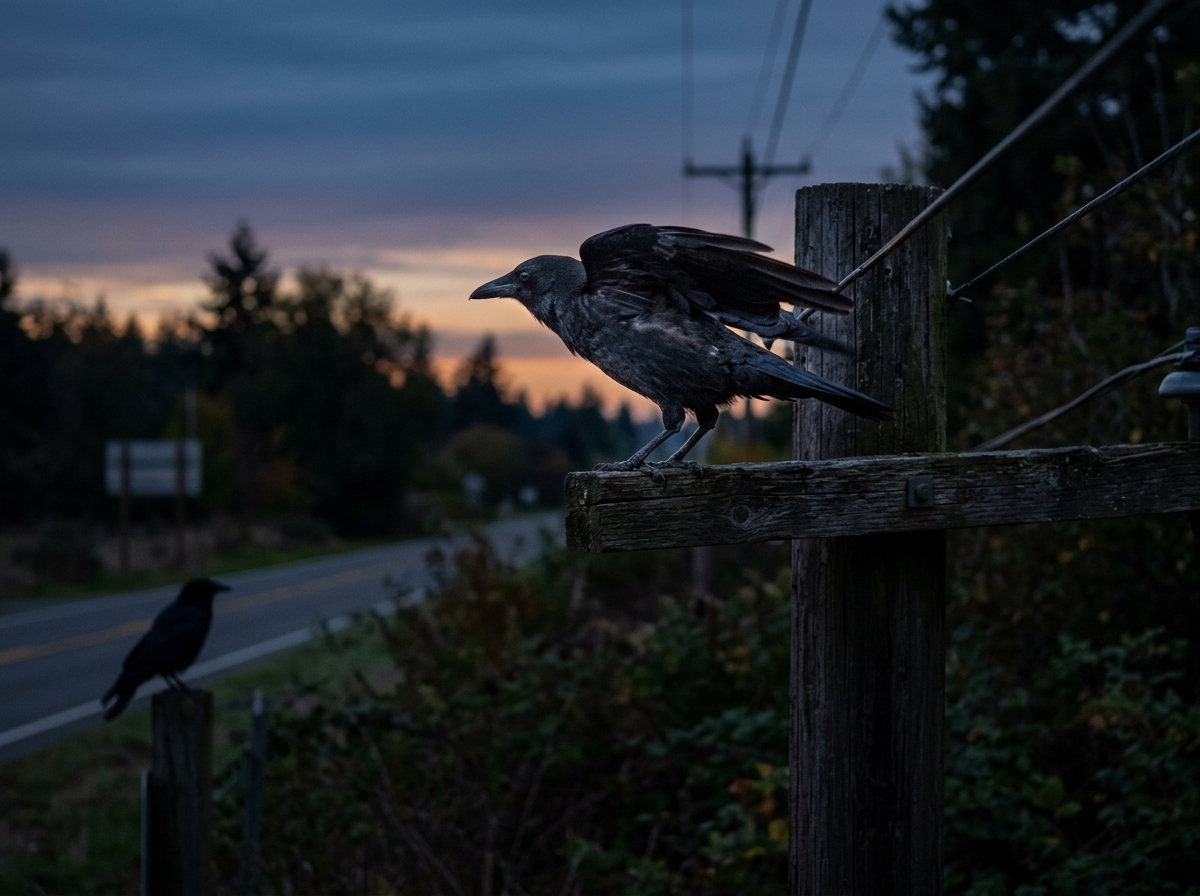
If something specific prompted your search, maybe a crow landed near you, one kept appearing in a recurring spot, or you had an unusual encounter, here's a practical way to think about it. First, consider the behavior. Crows are intelligent, adaptable birds that interact with human spaces constantly. A crow showing up on your fence is almost always a crow doing crow things, scoping for food, reacting to a nearby predator, or following a familiar route. Their mob calls, which can sound alarming, are specifically triggered by perceived threats and reflect real environmental information rather than arbitrary omens.
Second, if you're drawn to the symbolic dimension, treat it as a cultural layer you can choose to engage with rather than a fixed message being delivered to you. Omen traditions are exactly that: traditions. They reflect how specific communities, across specific histories, have made meaning out of natural events. A crow landing near you 'means' something different in Kraków folklore, in Australian Aboriginal mythology, and in contemporary Western pop culture. None of those meanings is objectively correct, and the best approach is to pick the framework that resonates with your own background and intention, then apply it consciously rather than taking a single internet interpretation as authoritative.
Third, don't assume worst-case. The death-and-doom association is the loudest version of Western crow symbolism, but it's not the only one even within European traditions, and it competes with equally old themes of intelligence, transformation, and communication. If you want a symbol of intellectual curiosity, adaptability, or navigating liminal spaces, the crow fits that just as well.
Crow in idioms and everyday language
Sometimes 'crow meaning' is less about the bird and more about a phrase, like [claw bird meaning](/bird-idiom-meanings/claw-bird-meaning). Here are the most common ones worth knowing.
As the crow flies
This is probably the most widely used crow idiom in English. 'As the crow flies' means the most direct route between two points, a straight line regardless of roads, rivers, or terrain. It appears constantly in distance measurements: 'the town is twelve miles away as the crow flies.' The Cambridge English Dictionary defines it plainly as traveling or measuring by the most direct path. The phrase doesn't literally mean crows always fly in straight lines (they don't), but it captures the idea of directness. If someone uses it in conversation, they're simply contrasting the practical, winding route you'd actually drive with the theoretical shortest distance.
Crow's nest

A crow's nest is most famously the lookout platform near the top of a ship's mast, used by a sailor to spot land or other vessels. Merriam-Webster includes entries for this term as a standalone noun. It's also used more loosely for any high observation platform. If you encounter it in a nautical or historical context, that's the reference. It has nothing to do with crow symbolism directly.
To crow (the verb)
In English, 'to crow' can function as a verb meaning to boast, to proclaim loudly, or to call out triumphantly. 'He was crowing about his promotion all afternoon.' This comes from the sound a rooster makes, not from the corvid. Collins Dictionary captures it in the phrase 'to crow about/over something,' meaning to brag or gloat. This is a surprisingly common source of search confusion: someone searches 'crow meaning' because they heard someone 'crow about' something, and they end up in bird symbolism territory when they actually just needed a quick vocabulary check.
Quick idiom reference
| Phrase | What it means | Context |
|---|
| As the crow flies | The most direct route between two points | Distance measurement, navigation, everyday speech |
| Crow's nest | A high lookout platform, originally on a ship's mast | Nautical history, architecture, general use |
| To crow (verb) | To boast or proclaim loudly and triumphantly | Everyday speech; rooster-derived, not corvid-derived |
| Eating crow | Admitting you were wrong and accepting humiliation for it | Idiom for forced humility, common in US English |
Where to go next depending on what you need
If you're trying to identify the bird you saw, Audubon's American Crow field guide is a reliable starting point for physical description and behavioral details. For raven versus crow distinctions, HowStuffWorks has a clear comparison based on size, beak shape, and vocalization differences that most field beginners find useful.
If you're researching crow symbolism for a specific cultural tradition, start by naming the tradition first, then search within it. Wikipedia's pages on '[Crow (Australian Aboriginal mythology)](/bird-idiom-meanings/curlew-bird-aboriginal-meaning)' and 'Ravens in Native American mythology' are reasonable entry points, but they're starting points, not endpoints. For deeper or more accurate information about any Indigenous tradition specifically, look for content produced by members of that community. For European folk belief patterns, folklore archives like the USC Digital Folklore Archives organize content by region and community, which is more reliable than generalized 'crow symbolism' lists.
If you're interested in how omen-reading from birds works as a belief system more broadly, researching ornithomancy gives you the framework that underlies most bird-as-omen traditions across different cultures and time periods. That context helps you evaluate any specific crow belief you encounter much more accurately than taking it at face value.
If the idiom was what you were after, the table above covers the main ones. For 'to crow about something,' any standard English dictionary entry will confirm the usage and origin quickly.
And if you're exploring bird symbolism more broadly, this site covers related territory across a wide range of species. The symbolic dimensions of birds from catbirds to [curlews](/bird-idiom-meanings/curlew-bird-meaning) each carry their own distinct cultural histories, and the same framework you'd use to research crow meaning applies across all of them: start with the literal identification, anchor the symbolism to a specific tradition, and treat omen beliefs as meaningful cultural data rather than fixed cosmic rules.