There is no single bird species commonly called the "aurora" or "winter bird aurora," so the phrase is almost always a symbolic or poetic compound rather than a field-guide entry. What it does carry is a rich layering of meanings: birds as messengers and seasonal markers, winter as a time of dormancy and inner transformation, and aurora as either the Roman goddess of dawn or the aurora borealis of circumpolar skies. Together, these three threads produce a motif that speaks to renewal arriving in the coldest, darkest moment, which is exactly why it appears so often in tattoo design, baby names, dream symbolism, and literary imagery.
Winter Bird Aurora Meaning: Symbolism, Myths, Uses & Dreams

Marcus Blackwell
20 Jul 2026

Quick answer
"Winter bird aurora" is a composite symbolic phrase, not the name of a recognized species. It typically signals hope, transformation, and the promise of light returning during a period of difficulty or cold. The aurora element most commonly refers to dawn (or the northern lights), the bird element to freedom, soul, or transition, and winter to hardship, stillness, or introspection. Read together, the motif says: light and life persist even in the darkest season.
Is there actually a bird called "Aurora"?
The honest ornithological answer is: not in common English usage. The word aurora does appear in scientific bird names as a Latin epithet meaning "dawn" or "golden-red," but no widely recognized species uses Aurora as its standard English name. The clearest avian example is the Palawan Sunbird (Cinnyris aurora), a small passerine endemic to Palawan Island in the Philippines. Ornithological databases including Avibase and eBird list its scientific name with the aurora epithet, but field guides and checklists use "Palawan Sunbird" as the English name, not "Aurora Sunbird" or anything similar.
The epithet also turns up in the Daurian Redstart (Phoenicurus auroreus), whose scientific name derives from the same Latin root, signifying the brilliant red-orange plumage that recalls a dawn sky. And in paleontology, the fossil species Aurornis xui (described in 2013) was explicitly named from Latin aurora (dawn) plus Greek ornis (bird), meaning "dawn bird," to mark its position as one of the earliest known avian ancestors. The Guardian, ‘Early bird beat Archaeopteryx to worm by 10m years’ (reporting Aurornis xui; name etymology) notes that Aurornis xui was named from Latin aurora (“dawn”) + Greek ornis (“bird”) The Guardian — ‘Early bird beat Archaeopteryx to worm by 10m years’ (reporting Aurornis xui; name etymology). So aurora is genuinely embedded in bird taxonomy and nomenclature, just not as an everyday English common name you would use on a birdwatching checklist.
Could it mean a winter-visiting or seasonal bird?
When people search for "winter bird aurora," some are genuinely asking which birds visit during winter months, particularly in northern regions where the aurora borealis is visible. That connection is poetically strong: several species are unmistakably tied to winter and appear in the same high-latitude regions where auroras light up the sky.
The species most strongly associated with northern winters in ornithological sources include the Snowy Owl, Snow Bunting, Common Redpoll, Pine Grosbeak, Bohemian Waxwing, and Evening Grosbeak. These birds breed in Arctic or sub-Arctic zones and irrupt southward during cold months, making them genuine winter visitors across Canada, Scandinavia, and the northern United States. Cornell Lab of Ornithology and the National Audubon Society both document these species extensively through Christmas Bird Count data. Seeing a Snowy Owl or a flock of Snow Buntings in a field dusted with snow while the northern lights glow overhead is a genuinely iconic northern winter image, and it is no surprise that the compound phrase "winter bird aurora" has taken on symbolic weight.
- Snowy Owl: Arctic breeder, irregular winter visitor south of the boreal zone, strongly associated with wild, open, icy landscapes
- Snow Bunting: Nests on the Arctic tundra, winters in coastal fields and open plains, one of the world's most northerly breeding songbirds
- Common Redpoll: A small finch of the boreal forest that irrupts southward in large numbers during cold winters
- Pine Grosbeak: The largest of the North American winter finches, associated with coniferous forest and irruptive movements
- Bohemian Waxwing: A winter wanderer that arrives unpredictably in flocks, feeding on berries in cold months
What birds symbolize, especially in winter
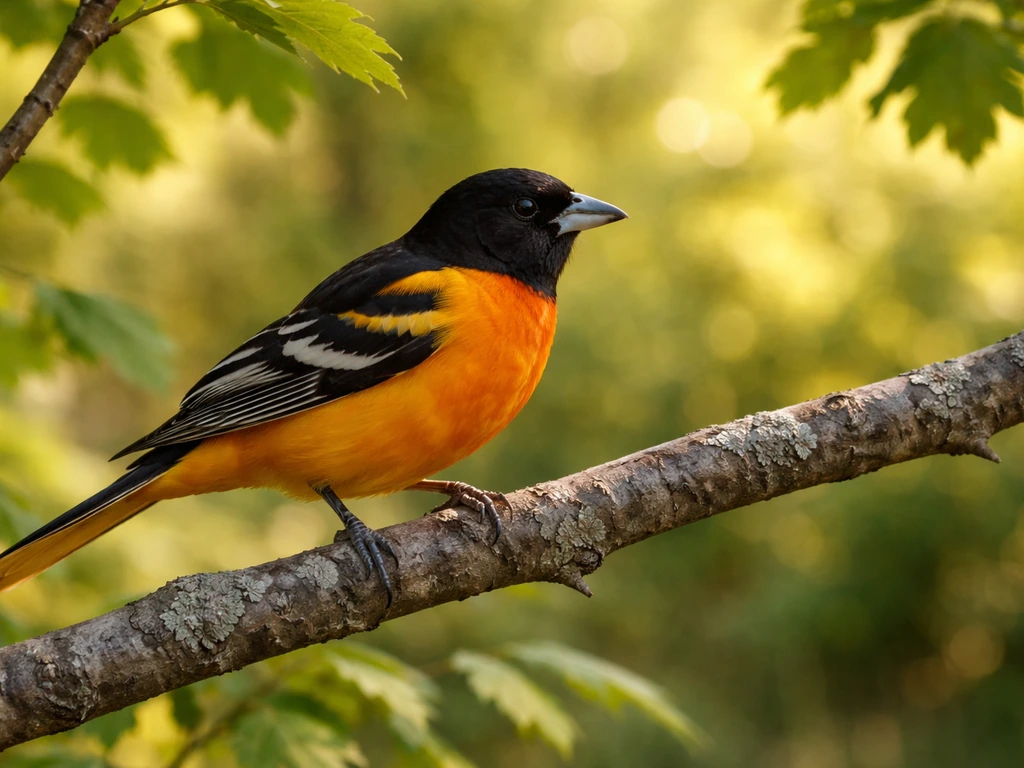
Across virtually every symbolic tradition, birds occupy a liminal position between earth and sky, body and spirit. See opm bird meaning for a concise glossary of bird symbolism and contemporary interpretations (internal reference cbb89ede-ae1e-431c-ae8c-7cb29d984da9). Scholars like Jeremy Mynott (Birds in the Ancient World, Oxford University Press) have documented how ancient cultures read birds as omens, messengers between the living and the dead, and reliable seasonal markers. Symbol dictionaries, including J. E. Cirlot's Dictionary of Symbols and Carl Jung's Man and His Symbols, consistently describe birds as archetypes of the soul, transcendence, and freedom from earthly weight. See the oozlum bird meaning for a folkloric example of a bird symbol carrying specific cultural connotations. See J. E. Cirlot, Dictionary of Symbols (symbol‑reference work) for a classic modern entry treating birds as archetypes of soul, transcendence, and liminality J. E. Cirlot — Dictionary of Symbols (symbol‑reference work). That symbolic vocabulary does not disappear in winter; if anything, it sharpens. For an example of how a specific species carries distinct symbolic associations, see Baltimore oriole bird meaning which explains the cultural and symbolic roles tied to that species.
A bird sighted in winter carries particular force precisely because its presence contradicts the apparent barrenness of the season. In many folk traditions, a bird singing or appearing near a window during winter months is read as a message from a deceased loved one or a sign of coming good fortune. The Snowy Owl in particular carries associations with wisdom and watchfulness, appearing as a spirit guide in various Indigenous North American traditions. The robin, one of the few songbirds that continues singing through winter in temperate climates, is treated across British folk culture as a symbol of hope and continuity.
What winter itself symbolizes
Winter is almost universally the symbolic season of endings, dormancy, and inward turning. It maps onto death, old age, grief, isolation, and the stripping away of what is not essential. But the same traditions that give winter those meanings also give it a counterweight: winter is the necessary precondition for spring. It purifies and clears. It demands patience and stillness rather than action. In Norse cosmology, the cold dark season was as sacred as summer. In many Christian and pre-Christian European traditions, midwinter festivals were explicitly about affirming light and life in the teeth of darkness, which is why the solstice moment (the turning of the year) carries so much symbolic charge.
When winter appears as a symbolic context for a bird, it usually intensifies the bird's meaning. A bird in winter is not just a creature of the air and spirit; it is a creature of the air and spirit surviving where nothing is supposed to survive. That resilience is exactly what makes the winter bird a powerful personal symbol for people navigating grief, illness, or transition.
Aurora the dawn goddess: her mythology and what it adds
In Roman mythology, Aurora is the goddess of the dawn, equivalent to the Greek Eos. She drives her chariot across the sky each morning to open the gates of day, and her attributes are consistently rosy fingers, saffron robes, and the scattering of stars before the sun. The Theoi Project's compilation of classical sources preserves the Homeric descriptions of Eos that Latin poets later adapted into Aurora. She is a figure of beauty and inevitability: dawn will come regardless of what happened the night before.
Her mythology also has a melancholy undercurrent. Her love for the mortal Tithonus (who was granted immortality but not eternal youth) is the subject of some of Western literature's most enduring meditations on time, aging, and loss. Alfred Tennyson's 1860 poem "Tithonus" gives Aurora's mythic role its fullest English literary expression, presenting dawn as recurring and unstoppable while the mortal lover slowly withers. That tension (between the eternal return of light and the irreversibility of mortal time) is part of what the aurora symbol carries into modern usage.
Applied to birds, the Aurora association is very direct. The dawn chorus, in which songbirds concentrate their singing in the hour before and around sunrise, is one of the most studied phenomena in ornithology. Research published in peer-reviewed journals identifies the European robin, common blackbird, great tit, and various thrushes as species that reliably begin singing before first light. The dawn bird, the bird whose voice heralds aurora, is therefore both a literal and deeply symbolic figure: it announces the return of light before light is visible.
Aurora borealis: what the northern lights mean across cultures
The aurora borealis, or northern lights, carries a completely different and culturally richer symbolic load than the classical goddess, though both involve light in darkness. Ethnographic surveys and folklore syntheses document a wide range of interpretations across circumpolar peoples. The Sami people of Scandinavia know the aurora as guovssahas, sometimes glossed as "the light you can hear," and treat it with reverence and caution. Finnish tradition calls it revontulet, "fox fires," after a mythical arctic fox whose tail sweeps sparks across the sky. In some Inuit traditions, the lights represent spirits of the dead playing ball games, and making noise during an aurora display is said to summon them closer.
John Holzworth's survey of auroral folklore (published in Eos, the journal of the American Geophysical Union) documents the consistent pattern across Arctic cultures: the aurora is understood as a liminal phenomenon, something that exists at the boundary between the human world and another realm, whether ancestral, spiritual, or dangerous. Several Indigenous traditions include taboos around viewing or responding to auroras, particularly for pregnant women, reflecting the sense that this is a powerful force not to be approached lightly.
What is notable for our purposes is that the aurora borealis is, in multiple traditions, explicitly associated with animals. The Finnish fox, the Inuit ball-game spirits (sometimes depicted as walruses or seals), and various other animal-spirit interpretations mean that pairing bird symbolism with the aurora borealis is not a modern invention. The association between luminous sky phenomena and spiritual animal presences has ancient, cross-cultural roots.
Putting it all together: what "winter bird aurora" actually means
When you combine these three symbolic registers, the phrase "winter bird aurora" produces a coherent and powerful meaning: it describes a moment of luminous hope or spiritual transition arriving in a period of darkness, cold, and difficulty. The bird carries the message (soul, freedom, communication between worlds). Winter provides the context of hardship or stripping away. Aurora provides the light, whether understood as the dawn that always returns, or the shimmering other-world lights of the northern sky.
This is why the phrase and the imagery it evokes appear in tattoo culture (often featuring a bird in flight silhouetted against northern lights or a dawn sky), as a baby name combination (Aurora being one of the most popular given names in the English-speaking world right now, sometimes paired with bird-related middle names or imagery), in dream interpretation guides, and in poetry. The Slavic paradise birds Alkonost and Sirin offer a direct folkloric parallel: these mythical birds were associated with dawn, joy, sorrow, and seasonal turning points including midwinter, blending bird and light symbolism in exactly the way our compound phrase does.
In a personal or spiritual context, encountering a bird during winter while the sky displays unusual light (a sunrise, moonrise, or actual aurora) is often read as a particularly charged omen. Different traditions would name that charge differently: a message from an ancestor, a sign of coming renewal, a call to pay attention to a transition in your own life. The specific species of the bird matters in this reading, just as it matters in any bird-symbolism interpretation. A Snowy Owl against the aurora points toward wisdom and watchful guidance. A Snow Bunting suggests joy, resilience, and the surprising vitality of small things in harsh conditions.
Interpretations at a glance
| Element | Literal meaning | Symbolic meaning | Common contexts |
|---|---|---|---|
| Bird (general) | Any avian species observed in winter | Soul, freedom, spiritual messenger, liminality | Omens, dream interpretation, tattoos, poetry |
| Winter | Cold season, reduced daylight, dormancy | Hardship, introspection, grief, necessary darkness before renewal | Personal narrative, seasonal ritual, metaphor |
| Aurora (goddess) | Roman personification of dawn | Inevitable return of light, renewal, bittersweet persistence | Literature, classical allusion, baby names |
| Aurora borealis | Atmospheric light display in Arctic skies | Ancestral presence, spiritual boundary, animal spirits | Indigenous tradition, northern folklore, spiritual practice |
| Snowy Owl + aurora | Arctic owl visible in winter at auroral latitudes | Wisdom, watchfulness, spiritual guidance from the beyond | Symbolic sightings, spirit animal traditions |
| Dawn chorus bird | Songbird singing before sunrise | Herald of hope, voice of renewal in darkness | Poetry, metaphor, literary bird imagery |
| Aurornis xui (fossil) | Earliest-known bird ancestor, named "dawn bird" | Origin, primal nature of the bird-dawn connection | Scientific etymology, symbolic naming |
| Alkonost / Sirin | Slavic paradise birds linked to dawn and midwinter | Joy, sorrow, seasonal transformation, divine message | Slavic folklore, comparative mythology |
How this phrase is used in practice
Tattoos and visual art
The winter bird aurora combination is a popular tattoo concept precisely because it layers meaning efficiently. A single image, typically a bird in silhouette or detailed feather against a background of aurora light or a winter dawn sky, can carry personal narratives about grief and hope, survival through a hard season, or a memorial for someone who has died. The visual grammar is intuitive: dark bird, luminous sky, cold palette. Tattoo artists and clients often describe the symbolism in exactly the terms this article has laid out, even without knowing the classical or folkloric sources.
Baby names
Aurora consistently ranks in the top 50 given names for girls in the United States and several European countries as of 2026, and parents who choose it often combine it with nature-themed middle names. Bird names (Robin, Wren, Jay, Lark) pair frequently with Aurora in name-combination guides and parenting forums. Orioles, with their bright golden plumage and associations with joy and renewal, are another commonly paired bird name, see orioles bird meaning for their symbolic associations. The underlying symbolism is the same: light, nature, grace, and the hope embedded in a new beginning.
Dream interpretation
In dream symbolism guides, birds and light phenomena are among the most commonly reported dream images. A bird appearing in a winter landscape in a dream is generally interpreted as a message about resilience or an imminent shift in circumstances. When aurora light is part of the dream setting, interpreters typically read it as a sign that the message is coming from a source beyond ordinary waking life, whether understood spiritually, psychologically (in the Jungian sense of the unconscious), or simply as the dreaming mind processing a major transition.
Which birds best embody the winter-aurora combination
If you are looking for the single species that most completely embodies the winter-bird-aurora symbolism as a whole, the Snowy Owl is the strongest candidate in North American and northern European contexts. It is a genuine winter visitor at high latitudes, visually striking against snow and northern sky, associated with wisdom and otherworldly watchfulness in multiple traditions, and unmistakably an Arctic creature that shares its environment with the aurora. The Snow Bunting is a close second for its sheer improbability: a tiny songbird surviving blizzard conditions, whose scientific name Plectrophenax nivalis means "snow guardian," a creature of pure resilient joy in the harshest setting.
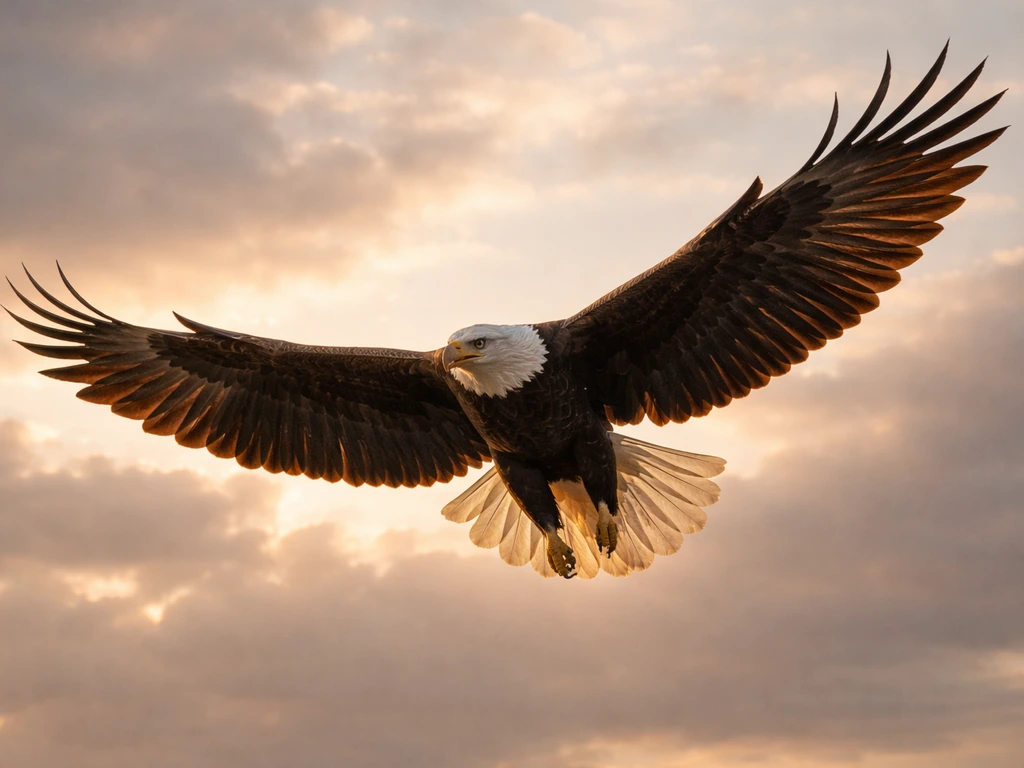
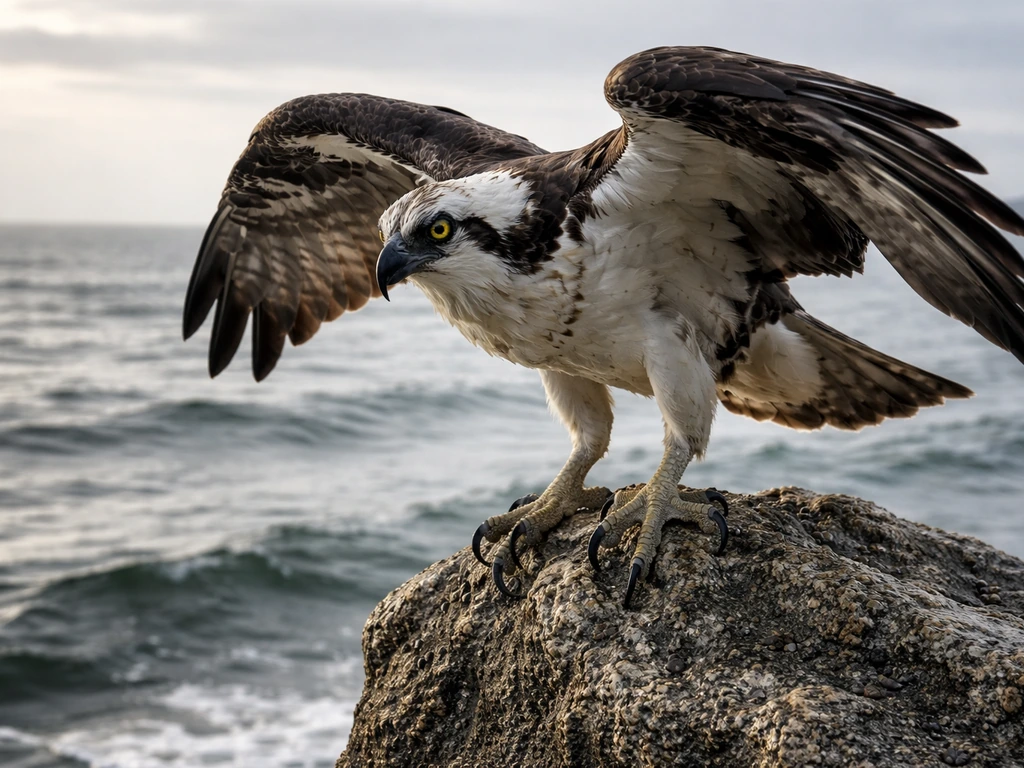
For those drawn to the dawn-goddess interpretation of aurora rather than the northern-lights version, the robin and the blackbird are the birds most grounded in evidence. Both are documented leaders of the dawn chorus, both have deep folkloric associations with seasonal turning points, and both occupy the symbolic role of the first voice of the new day. Each species entry in a bird-meaning reference, from eagles and ospreys with their solar associations to smaller passerines, adds a different facet to how birds carry the weight of light symbolism across cultures. See the osprey bird meaning for more on its solar associations and cultural symbolism. See eagle bird meaning for a focused discussion of eagle symbolism and its solar and sovereign associations. For an example of how a specific species carries layered symbolism across cultures and seasons, see oriole bird meaning.
FAQ
What does the phrase “winter bird aurora” literally mean — could it be the name of a real bird species?
Literally, it can be read two ways: (1) as a compound noun — a bird associated with winter and the dawn/aurora; or (2) as a proper name. In modern ornithological usage “Aurora” appears primarily in scientific names (e.g., Cinnyris aurora, the Palawan Sunbird) or older/coined genus names (Aurornis = “dawn bird”), not as a standard English common name for a living, widely recognized species. Authoritative checklists (IOC, Clements, Avibase, GBIF) show ‘aurora’ used as a specific epithet rather than an independent English name; if you mean a particular taxon, cite the scientific name and regional checklist (e.g., Palawan Sunbird — Cinnyris aurora).
How should I distinguish between “aurora” meaning the dawn goddess and “aurora” meaning the northern lights (aurora borealis)?
Treat them separately: classical/poetic ‘Aurora’ (Roman) = dawn personified (compare Greek Eos) with literary attributes like ‘rosy-fingered’ and renewal; ‘aurora’ as natural phenomenon commonly refers to aurora borealis (northern lights), which in many northern cultures carries spirit/ancestral/omen meanings. For symbolic interpretation, state clearly whether you invoke classical dawn symbolism (literary, temporal renewal, chorus/dawn singing) or aurora borealis symbolism (celestial lights, northern/Arctic cultural traditions). Cite classical sources (Ovid, Theoi) for the goddess and ethnographic/folklore surveys (e.g., Holzworth, Sami/Finnish examples) for auroral lore.
What symbolic layers should an evidence‑based article explore for the motif “winter bird aurora”?
Include three stacked symbolic layers with sources: (1) bird symbolism — birds as liminal messengers, souls, rebirth (symbol dictionaries, Jungian texts, academic syntheses of avian symbolism); (2) winter symbolism — scarcity, death/hibernation, endurance, inwardness, liminal threshold to spring (folklore and cultural surveys); (3) aurora symbolism — (a) dawn goddess: renewal, beginnings, aging/mortality in classical literature (Theoi, Ovid, Tennyson); (b) northern lights: ancestral spirits, animal‑spirits, portents in circumpolar traditions (Holzworth, Sami/Finnish ethnographies). Use peer‑reviewed, museum and reputable folklore sources to avoid unsupported claims.
Which bird species make good concrete examples when illustrating the ‘winter bird’ part of the motif?
Use regionally‑appropriate, well-documented winter visitors or species strongly associated with winter: Common Redpoll, Snow Bunting, Snowy Owl, Bohemian/Evening Grosbeak, Pine Grosbeak (Cornell Lab All About Birds, Audubon, Christmas Bird Count/BBS datasets). When giving examples, specify geographic context (North America/Europe/Arctic) because ‘winter bird’ differs by region, and cite species accounts or CBC/BBS data for winter status.
How does avian behavior link to ‘aurora’ (dawn) in an evidence‑based reading?
Scientific studies of the dawn chorus show many passerines concentrate vocal activity at dawn (robins, blackbirds, titmice, thrushes). The term aurora/dawn therefore has a literal behavioral anchor: birds that sing at first light have historically been associated with dawn and new beginnings. Cite peer‑reviewed research on dawn chorus timing and light pollution effects to support this behavioral-symbolic link.
What cultural or mythological examples combine bird and dawn/winter/aurora motifs I can cite?
Useful, citable examples: (1) Classical Eos/Aurora myths — lovers like Tithonus and Cephalus and poetic imagery (Ovid, later poets like Tennyson); (2) Slavic paradise‑birds — Alkonost and Sirin, motifs linking birds with joy/sorrow and seasonal change; (3) Circumpolar auroral animal and spirit narratives (Sami guovssahas, Finnish revontulet) where lights are linked to animals/ancestral beings. Use primary classical texts or reputable translations and ethnographic/folklore surveys for each.