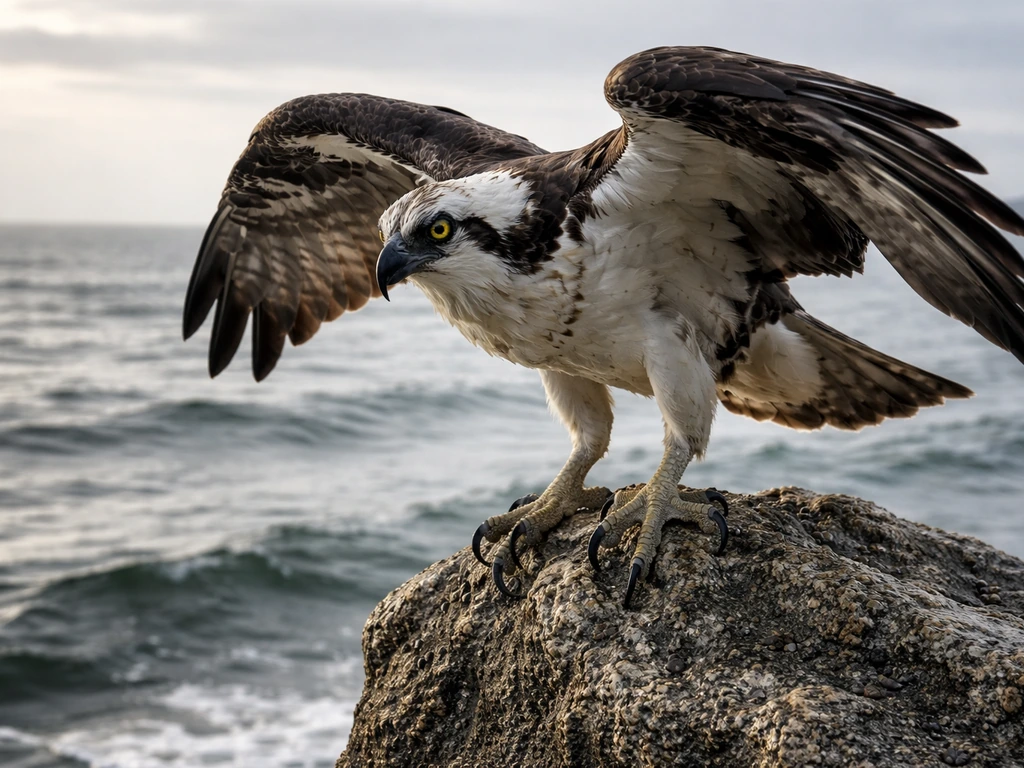
The eagle is one of the most loaded symbols in human history: it stands for power, freedom, divine vision, and sovereignty depending on where you encounter it. In spiritual contexts it signals higher consciousness and protection. In mythology it carries messages between gods and mortals. On flags and seals it represents national authority. In everyday language it shows up in idioms about rising above difficulty, and in golf it means finishing a hole two strokes under par. Which meaning applies to you depends entirely on the context where you saw or heard the word.
Eagle Bird Meaning: Symbolism, Myths, Idioms, and Clues

Marcus Blackwell
6 May 2026
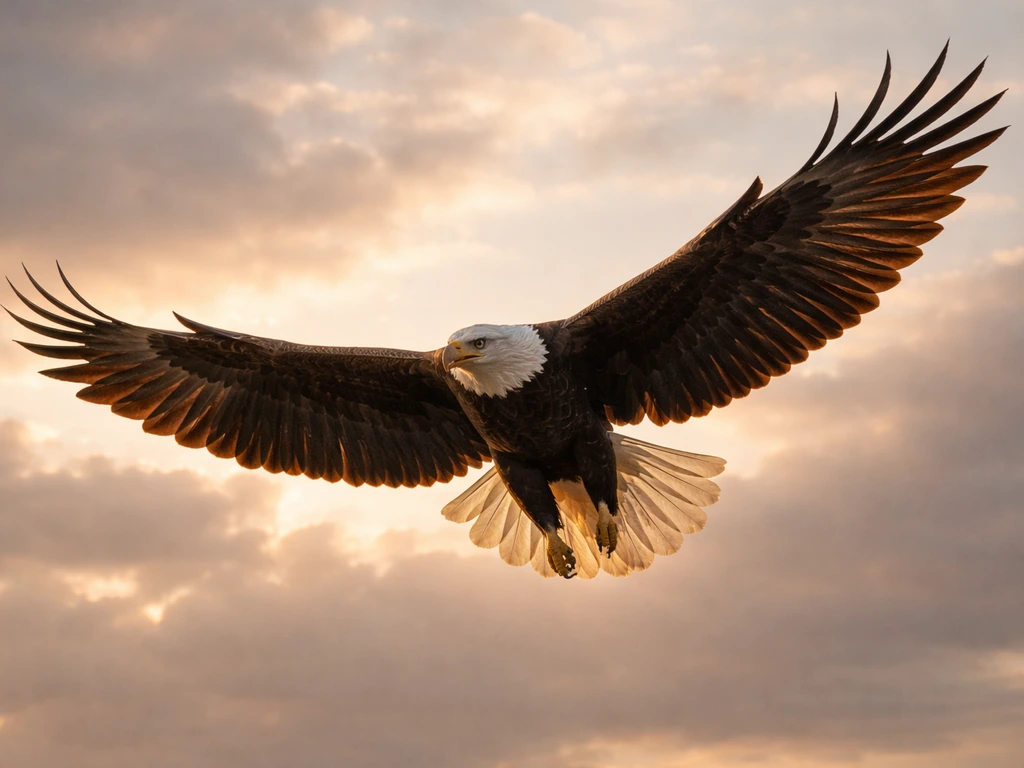
What the Eagle Actually Is as a Bird
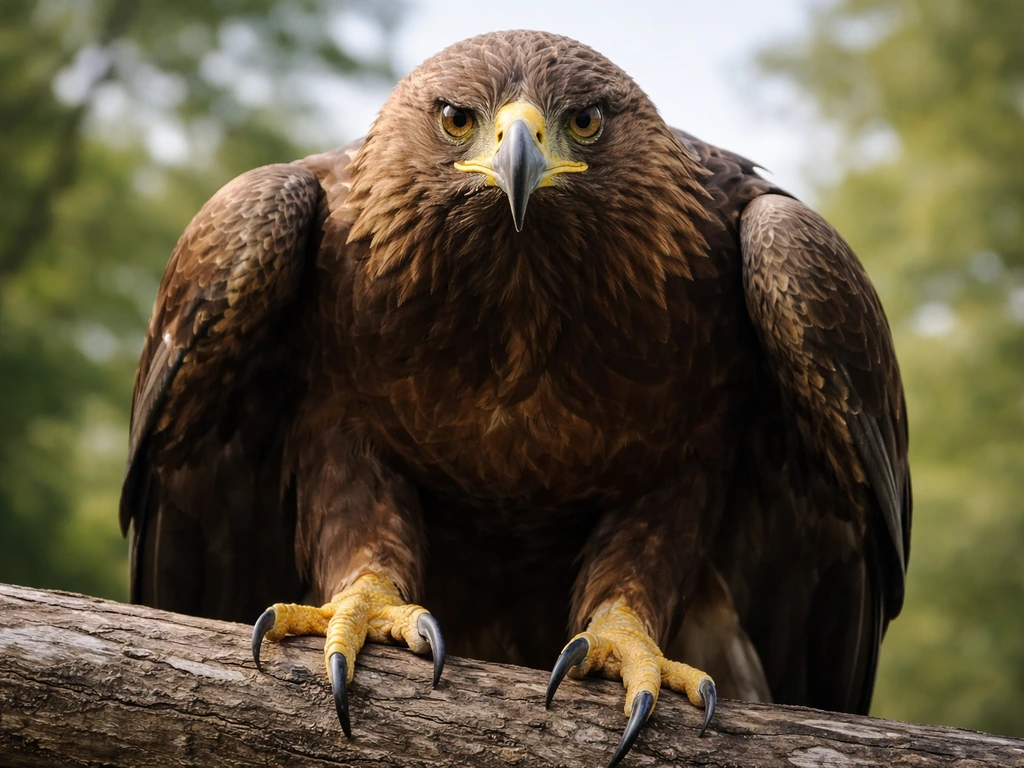
The word eagle comes from Old French aigle, which traces back to Latin aquila, the classical Roman word for the bird. Aquila's own origin is uncertain, but the word has been anchored to large birds of prey for well over two thousand years. Eagles are apex predators with exceptional eyesight, broad wingspans, and a habit of soaring at high altitudes, which is exactly why virtually every culture that encountered them read extraordinary meaning into their presence. The bald eagle (Haliaeetus leucocephalus) is the most symbolically prominent species in North America and is officially designated the national bird of the United States under 36 U.S. Code § 306.
Worth noting: the word eagle also carries a completely separate meaning in golf, where it refers to scoring two under par on a single hole. If you bumped into the word in a sports context, that is almost certainly what it means and has nothing to do with bird symbolism or spirituality. The rest of this article focuses on the symbolic and figurative meanings. The oriole bird meaning is another way people try to decode a bird sighting for personal symbolism and insight. The osprey bird meaning is often tied to keen observation, protection, and a focus on home and family.
Spiritual and Religious Eagle Symbolism
Across spiritual traditions the eagle consistently represents a connection between the earthly and the divine. Its ability to soar above the clouds made it a natural stand-in for transcendence, higher perspective, and direct access to spiritual truth.
Eagles in Christian Scripture and Iconography
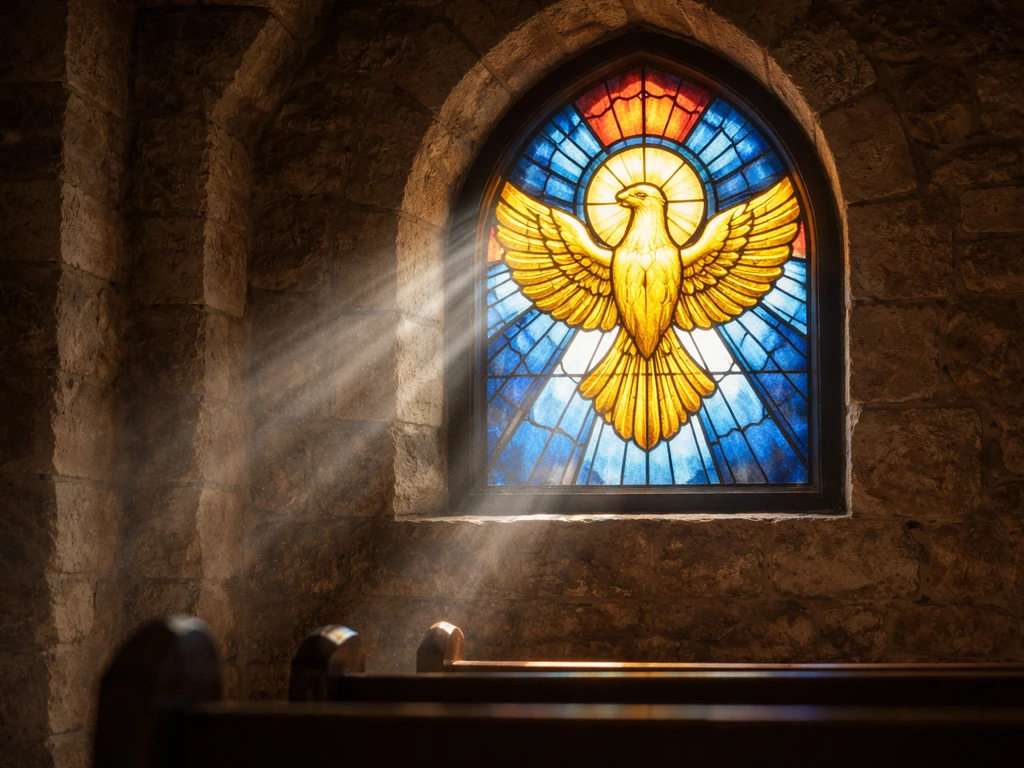
One of the most recognizable eagle references in the Bible is Isaiah 40:31, which promises that those who trust in God "will soar on wings like eagles." The imagery is explicitly about renewed strength and endurance, not speed or aggression. Similarly, the eagle is one of the four living creatures described in Revelation 4:7. A Biblical Archaeology Society library article notes that this “flying eagle” image is linked in Western Christian iconography to Christian symbolism of the evangelists, including the tradition that John the Evangelist is depicted as an eagle four living creatures described in Revelation 4:7. In Christian iconography, the eagle became the traditional symbol for John the Evangelist, associated with the lofty, sky-reaching quality of his Gospel and the theological idea of gazing directly toward the divine light. You see this in countless medieval church carvings, illuminated manuscripts, and lecterns shaped like eagles holding the Bible.
Eagle Symbolism in Dreams
Dream interpretation guides almost universally connect eagle dreams to vision, strength, and higher consciousness. If you dreamed of an eagle soaring, the common reading is clarity of purpose, rising above obstacles, or a call toward a broader spiritual perspective. An eagle diving or attacking in a dream shifts toward themes of decisiveness or confronting something directly. These interpretations are cultural and intuitive rather than academically fixed, so treat them as starting points for reflection rather than definitive answers.
Mythology and Folklore: How Cultures Cast the Eagle
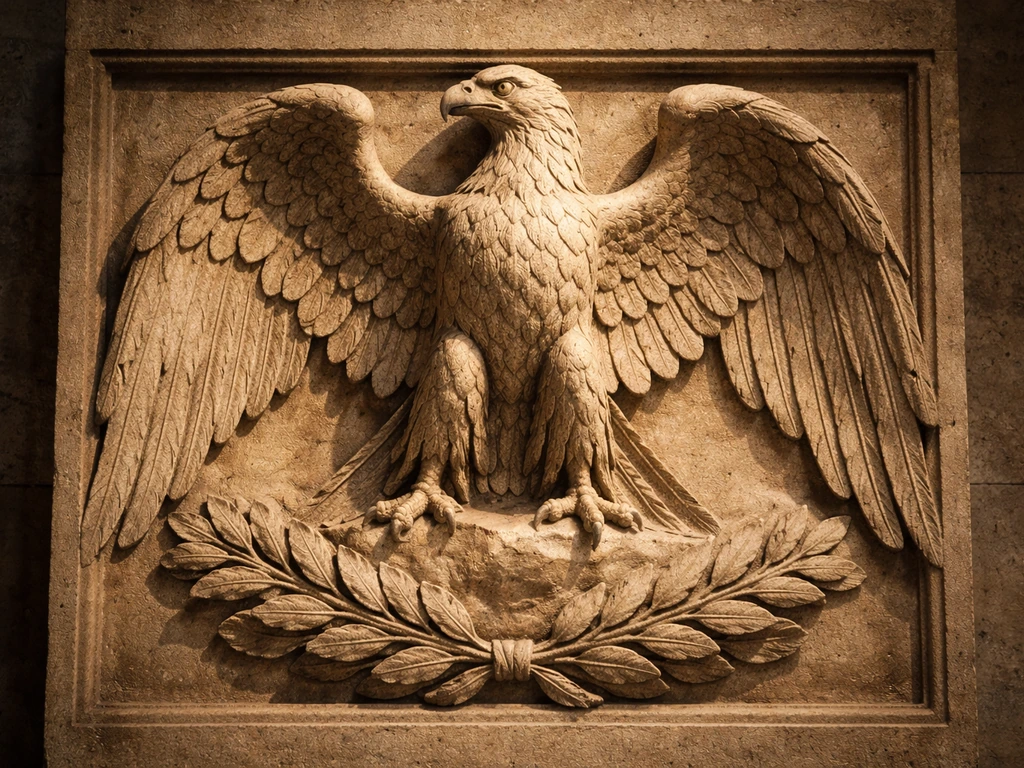
The eagle's mythological role is remarkably consistent across unconnected cultures: it is always positioned near the top of the cosmic hierarchy, usually as a messenger or companion to the most powerful deity, or as a symbol of sovereignty itself.
Greek and Roman Traditions
In Greek mythology the eagle was sacred to Zeus, king of the gods. The Roman equivalent, Jupiter, maintained the same connection. The Roman military formalized this symbolism through the aquila, the bronze or silver eagle standard carried at the head of each legion. Losing your eagle in battle was a catastrophic disgrace; recovering it was a matter of national pride. The eagle meant divine mandate for military power, and the Romans leaned into that completely.
The Double-Headed Eagle in Byzantine and Imperial Heraldry
By the medieval period, the double-headed eagle had become a signature emblem of the Byzantine Empire, where its two heads represented imperial authority in both secular and religious domains. This symbol was then adopted across European heraldry, including the Holy Roman Empire. The double-headed eagle essentially said: this ruler commands both the temporal world and the spiritual one. That is an enormous amount of weight to put on a bird, but the eagle carried it convincingly for centuries.
Eagles in Indigenous and Global Folklore
Many Indigenous North American traditions regard the eagle as a sacred messenger that carries prayers to the Creator. Eagle feathers are used in ceremony precisely because of this intermediary role. In Norse mythology, a great eagle perches at the top of Yggdrasil, the world tree, in ongoing conflict with the serpent at the roots, representing the tension between sky wisdom and earthly chaos. Similar sky-bird symbolism shows up in Aztec, Persian, and South Asian traditions, making the eagle one of the most cross-culturally consistent symbols in human history.
Eagles in Art, Flags, and National Identity
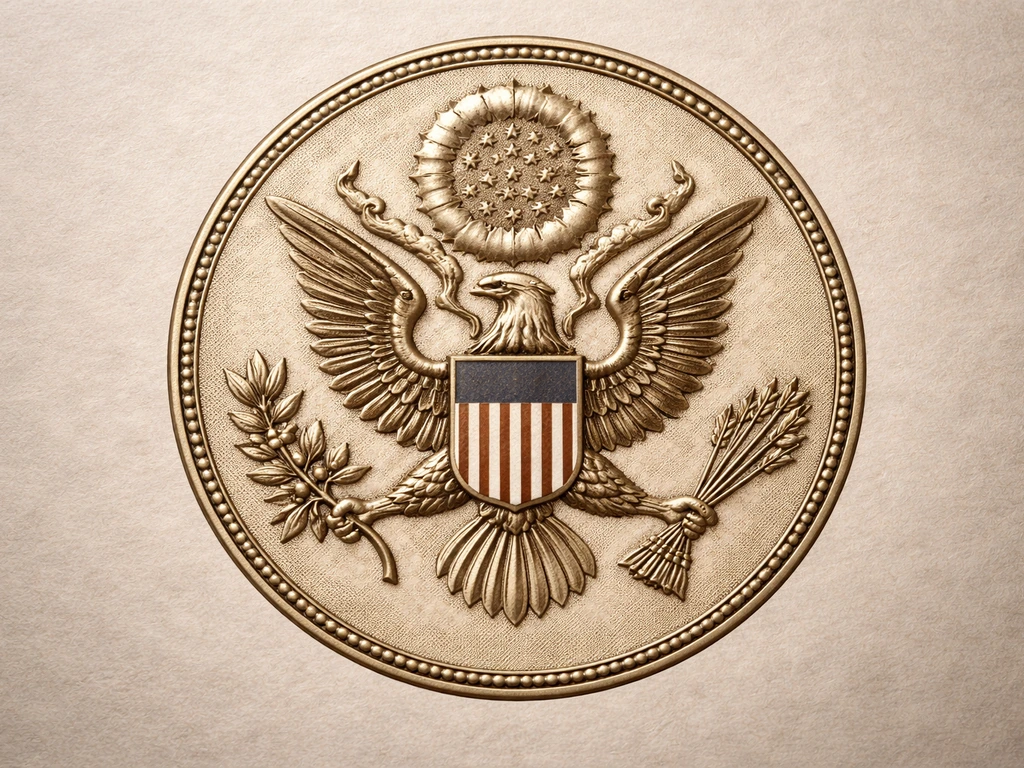
The bald eagle is the central figure in the Great Seal of the United States, a design finalized in 1782. The eagle faces the olive branch (representing peace) in one talon and a bundle of thirteen arrows (representing military readiness) in the other. The shield on its chest, the motto scroll in its beak, and the constellation of stars above its head all carry specific heraldic meanings: the azure blue of the chief represents vigilance and justice, for example. This seal appears on official government documents, the dollar bill, and federal buildings, making the eagle essentially inescapable in American civic life.
The U.S. Fish and Wildlife Service and the National Park Service both frame the bald eagle as a symbol of independence, strength, and freedom, which is the shorthand most Americans carry. But eagles appear on national emblems far beyond the United States. Germany, Mexico, Poland, Russia, Albania, and dozens of other nations use eagle imagery in their state symbols, almost always invoking the same cluster of meanings: sovereignty, strength, and a claim to something higher than ordinary politics.
In literature, the eagle tends to fill the role of the noble predator: commanding, solitary, and above ordinary concerns. Tennyson's short poem "The Eagle" (1851) captures this precisely, describing the bird clasping a crag with "crooked hands" and watching the world from a height before falling like a thunderbolt. That image of elevated solitude followed by swift, decisive action shows up again and again whenever writers want to signal a character or idea that operates above normal human scale.
Common Eagle Idioms and Phrases
Several English expressions use the eagle as a vehicle for ideas about vision, authority, and high achievement. Here are the ones you are most likely to encounter:
- Eagle eye / eagle-eyed: having exceptionally sharp vision or keen attention to detail. "She had an eagle eye for errors in the report" means she caught everything.
- Soar like an eagle: to rise gracefully, achieve at a high level, or transcend difficulties. This phrase pulls directly from both Isaiah 40:31 and the bird's literal flight behavior.
- Wings like eagles (or eagle wings): primarily a biblical reference to renewed strength and endurance, but used more broadly in motivational language to mean rising above hardship.
- Legal eagle: informal term for a sharp, aggressive lawyer. It plays on the eagle's predatory reputation and the word play with 'legal.'
- Eagle Scout: in the Boy Scouts of America, the highest rank achievable. The eagle's connotations of excellence and achievement made it the natural choice for the top tier.
How People Use 'Eagle' Figuratively Today
Outside of formal idioms, eagle gets used as shorthand for a certain kind of person or quality: someone with commanding presence, sharp judgment, and a tendency to operate at a level above the fray. Calling someone "an eagle" in casual speech usually means they see things others miss or that they carry themselves with authority. You also see it in brand names, sports team names (the Philadelphia Eagles, for instance), and tattoo symbolism where the eagle most commonly represents freedom, patriotism, or personal strength.
In tattoo culture specifically, eagle imagery often signals American patriotism, military service, or personal freedom, though the exact meaning is highly personal. A bald eagle with wings spread tends to read as patriotic or nationalistic. An eagle in flight with no specific national markers reads more as a personal freedom or ambition symbol. An eagle with thunderbolts or Roman-style imagery tilts toward power and legacy. Context and execution make a real difference.
How to Tell Which Eagle Meaning Applies to Your Situation
Because the eagle symbol shows up in so many different contexts, the fastest way to decode it is to identify where you encountered it. Use this as a quick guide: If you are asking about the Baltimore Oriole bird meaning, the symbolism shifts from eagle themes to the oriole’s own associations with music, renewal, and vivid life in nature.
| Context | Most Likely Meaning | Next Step |
|---|---|---|
| A dream | Vision, strength, higher consciousness, or a call to rise above a problem | Reflect on what the eagle was doing and what was happening in your life at the time |
| A tattoo | Freedom, patriotism, personal strength, or military service | Ask the wearer or look at the surrounding design elements for clues |
| A government seal, flag, or emblem | National sovereignty, authority, independence, and strength | Look up the specific emblem (U.S., Germany, Mexico, etc.) for precise heraldic meaning |
| A Bible verse or religious text | Divine strength, spiritual renewal, God's protection, or the Gospel of John | Read the surrounding verses for context; Isaiah 40:31 is about endurance, Revelation 4:7 is about divine completeness |
| An idiom or everyday phrase | Sharp vision (eagle eye), high achievement (Eagle Scout), or rising above difficulty (soar like an eagle) | Identify the specific phrase and look at the surrounding sentence |
| A golf scorecard or sports context | Two strokes under par on a single hole | No symbolic meaning involved; purely a scoring term |
If you are still unsure after placing the eagle in its context, the safest default interpretation across cultures is: power, vision, and elevation above the ordinary. That core cluster covers the vast majority of eagle symbolism you will encounter, whether in a spiritual tradition, a national emblem, or a motivational quote. The eagle almost never means something small or ordinary. That is kind of the point of the symbol.
For comparison, bird symbols with similarly wide cultural footprints include the osprey, which shares some of the eagle's hunting symbolism but carries a more regional significance, and birds like the oriole, which lean much more heavily on themes of joy and seasonal change rather than power and sovereignty. The eagle stands apart precisely because it has been adopted as a formal symbol of authority by so many independent civilizations, which is what gives it such consistent meaning across contexts.
FAQ
When “eagle” comes up in golf, how can I be sure it is the scoring meaning and not a bird reference?
If you saw “eagle” on a sports scorecard or scoreboard, it almost always means two strokes under par on a single hole (par-3 to par-1, or par-4 to par-2, etc.). In casual conversation, people may say “eagle” even when they mean the event outcome for that hole, not a general description of the whole round.
In eagle dream interpretation, what details change the meaning most?
An eagle in a dream is usually read as a message about perspective and clarity, but the most useful discriminator is the eagle’s behavior and your emotional response. If you felt calm or inspired while watching, it commonly points to readiness and insight, while fear or being chased commonly points to confronting a threat or decision you have been avoiding.
Does the meaning change if the eagle image looks like an official seal or national emblem?
Legally and culturally, “eagle” imagery in the U.S. can carry official or governmental weight even when used decoratively. If the eagle is the Great Seal style (olive branch, arrows, specific shield arrangement), it is often signaling national authority or civic identity, not just general freedom symbolism.
What does a double-headed eagle typically mean compared with a single-headed eagle?
Double-headed eagles usually signal claims to authority spanning multiple domains, commonly secular and spiritual leadership. If you notice two heads facing opposite directions, that specific configuration is a strong clue the intent is about unified rule or dual jurisdiction, not ordinary “strength” alone.
How can I tell whether an eagle image is about vision or about power being used?
If the eagle is shown perched above clouds, on a mountaintop, or holding a staff, the emphasis tends to shift toward higher perspective and governance. If it is shown diving or attacking, the emphasis tends to shift toward decisive action, confrontation, or power being actively used rather than passively represented.
What visual details should I check first when decoding an eagle in an emblem or coat of arms?
In heraldry and emblem design, color and posture can change the intent. For example, a forward-facing eagle is often read as watchfulness and authority, while a downward-facing or stooping stance can suggest action and force. If you can identify the eagle’s direction and any paired objects (laurel, arrows, lightning), you can narrow the meaning quickly.
If “eagle” is used as a nickname for a person, what does it usually imply?
If someone calls a person “an eagle,” the most common meaning is commanding presence, sharp judgment, and independence, but you should also check whether the tone is admiration or criticism. In a negative tone, it can imply intensity, dominance, or impatience with slower group dynamics.
When I am unsure, what is the best quick way to choose between the bird, symbolic, and other meanings?
As a general fallback, the article’s safe core cluster is power plus vision plus elevation above the ordinary. However, if the surrounding context is clearly sports, the golf meaning overrides symbolism. If the context is an official government document, the symbolism tends to be civic authority and sovereignty.
Next Article
Osprey Bird Meaning: Literal Facts and Symbolic Message
Osprey bird meaning explained: identification, habitat, fishing behavior, and symbolism like focus, leadership, and prot