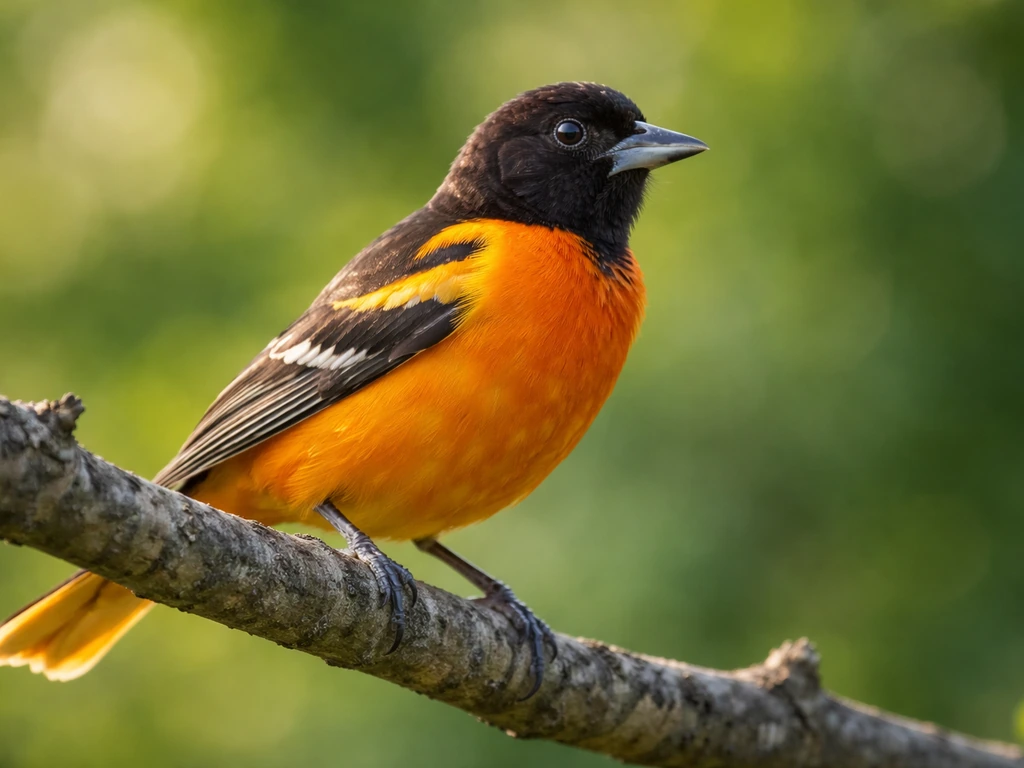
When people search for oriole bird meaning, they are almost always looking for one of two things: what an oriole sighting or dream might be telling them symbolically, or what the bird represents in a story, song, or cultural reference <a data-article-id="DE3812B0-5A69-4C08-A13D-FBFBAE51F656">Baltimore Oriole bird meaning (sighting and symbolism) under “oriole bird meaning” queries could also mean what the Baltimore Oriole itself represents in cultural context, not just general oriole symbolism.
Baltimore Oriole bird meaning (sighting and symbolism) under “oriole bird meaning” queries could also mean what the Baltimore Oriole itself represents in cultural context, not just general oriole symbolism <a data-article-id="CBB89EDE-AE1E-431C-AE8C-7CB29D984DA9">opm bird meaning (related check) for adjacent bird-symbol context during research, similar to oriole meaning queries is often useful to compare meanings across bird types, even when the symbolism angle differs slightly.
If you are exploring adjacent symbolism across different bird types, the opm bird meaning page is a related option you can use for comparison opm bird meaning (comparison). If you are looking at OPM in a broader bird context, the term can connect to how people interpret bird omens and symbolism in the same way as other meaning queries OPM bird meaning (related check). (link: opm bird meaning). .
If you are actually researching an oozlum bird meaning instead of oriole bird meaning, the same symbolism method can help you compare sighting, dream, and cultural context. If you came here because you want to understand the oozlum bird meaning specifically, apply the same approach: look at the sighting, the dream details, and the cultural context around the symbol. The short answer is that orioles are consistently associated with joy, creative energy, optimism, and the reward that follows sustained effort. Across popular symbolism, spiritual traditions, and dream interpretation, the oriole almost never appears as a warning or dark omen.
If you spotted one this morning and felt compelled to look it up, the consensus reading is positive: something about self-expression, vitality, or incoming good news is being emphasized for you right now.
The basics that shape what orioles represent
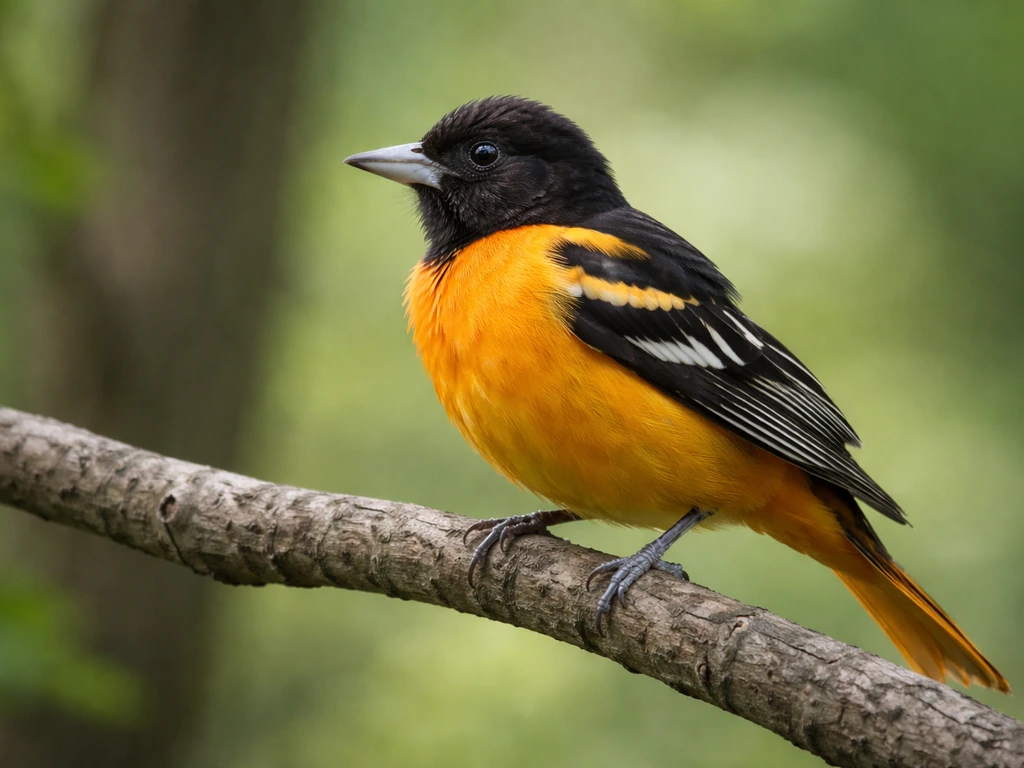
You cannot fully separate an oriole's symbolism from what the bird actually looks like and does, because most of the meaning flows directly from those physical and behavioral facts. The male Baltimore Oriole is flame-orange and black, with a solid black head and a white wing bar. Females and immatures are yellow-orange on the breast with a grayish head and back.
eBird’s Baltimore Oriole species page includes identification notes and also mentions hybrids, noting how tricky it can be to distinguish female Baltimore Orioles from Bullock’s Orioles eBird’s Baltimore Oriole species page includes identification notes and mentions hybrids. That contrast, vivid orange against darker tones, is genuinely striking.
It is the kind of color that stops you mid-sentence when you see it in a tree, which is exactly why the bird got drafted into symbolism as a stand-in for vitality and radiance.
Behaviorally, the Baltimore Oriole builds one of the most architecturally impressive nests in North American birding: a hanging woven pouch, constructed by the female anchoring and weaving plant fibers over a branch until they form a pendant basket. That level of craft and patience is hard to ignore, and it feeds directly into the symbolism of creative skill and the payoff of careful work. The male, for his part, courts with a full display: hopping, bowing, spreading his wings to flash the orange on his back. It is unambiguous communication, which is probably why 'self-expression' keeps appearing in oriole symbolism frameworks.
Timing matters too. Baltimore Orioles arrive in the eastern United States during spring migration and spend a relatively short breeding season, roughly late May through late July according to eBird Status and Trends data, before heading south again. Many individuals leave their nesting grounds before August. That seasonal window makes the oriole a creature of peak summer vitality: bright, brief, and full of energy. Sightings in Texas during both spring and fall migration mean the bird carries dual timing associations: arrival and renewal in spring, transition and change in fall.
Spiritual and folklore symbolism linked to orioles
Bird symbolism as a formal practice has deep roots. Ornithomancy, the reading of omens from birds' flight patterns, calls, and behavior, was practiced across ancient cultures and forms the historical backbone of why people still instinctively treat a striking bird sighting as meaningful. Within that broader tradition, orioles have landed in the positive column: their song, color, and behavior patterns carry the kind of energy that interpreters read as encouraging rather than cautionary.
In contemporary spiritual symbolism frameworks, the oriole is treated as a spirit animal or totem connected to joy, play, and creative inspiration. The core themes that come up repeatedly are self-expression, uplift, and the idea that your pursuit of something joyful or meaningful is on the right track. World Birds notes that oriole encounters are often interpreted as a signal that you are close to reaping rewards from hard work, which lines up neatly with the nest-building behavior: patient, skilled effort followed by a flourishing result. Michael J. Lincoln's psycho-symbolic index includes the oriole as a meaningful figure in its own right, treating it as a legitimate interpretive symbol rather than a decorative detail.
It is also worth noting that the oriole does not carry the heavy mythological weight that ravens, owls, or eagles do in Western tradition. That lighter footprint in classical mythology is actually useful information: when you encounter an oriole in a symbolic context, it is rarely pointing to fate, death, or divine intervention. Its register is warmer and more personal. Think less 'cosmic message' and more 'reminder to let yourself enjoy things.'
How to read the meaning based on your specific context
Context changes everything in bird symbolism. A sighting outdoors, a dream, a line in a poem, and a team mascot all carry the same animal but point in different interpretive directions. Here is how to work through each one practically.
You saw one in real life
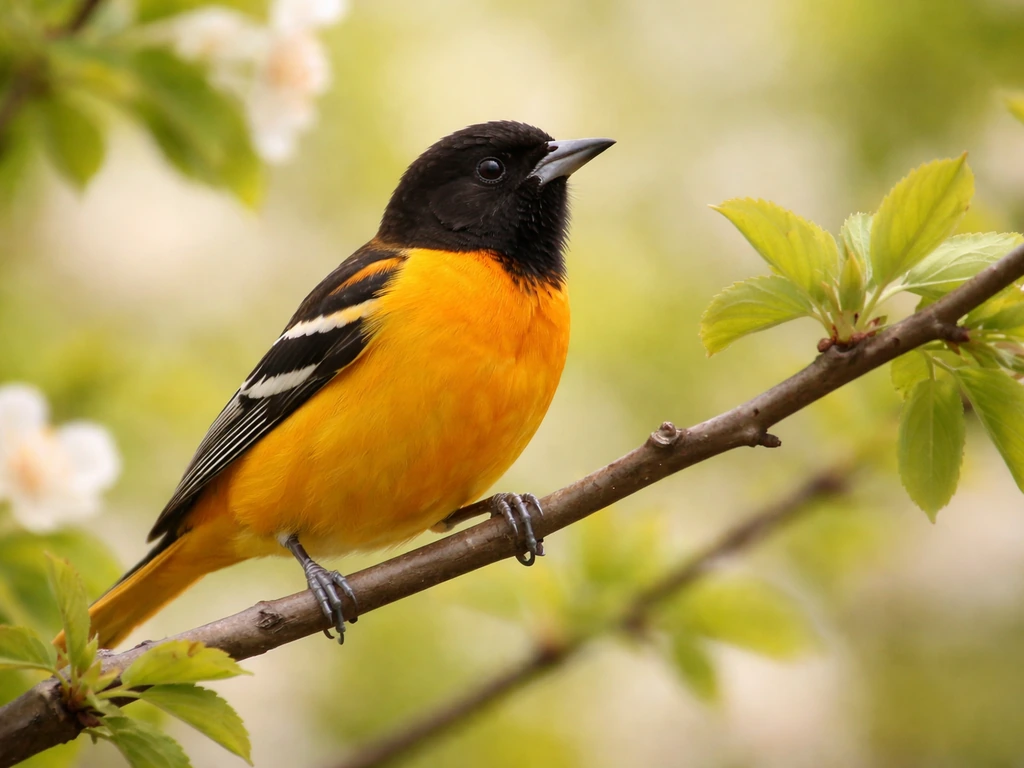
Start with what was on your mind before the bird caught your attention. Ornithomancy has always prioritized the observer's inner state as part of the reading. If you were thinking about a project, a creative decision, or a situation where you have been putting in long effort, the oriole's symbolic associations with reward and creative vitality are directly relevant.
This is why the oriole bird meaning is so often tied to joy, creative vitality, and good news arriving after effort orioles bird meaning. In winter, people often look for winter bird aurora meaning to understand how cold-season sky lights and symbols connect. If you saw it during spring migration (roughly April through May), the seasonal layer adds themes of renewal and beginning.
A late-summer sighting carries more of a 'enjoy this while it lasts, something is shifting' quality. The male's display behavior, those wing-spreading, bowing courtship moves, also adds a communication layer: if you saw a bird actively performing, the nudge toward self-expression or clearer communication with someone is worth sitting with.
You dreamed about one
Dream symbolism for orioles clusters around happiness, fulfillment, and creative inspiration. MyDreamMeanings frames an oriole dream as recognition that your pursuit of happiness is on the right path and likely to be rewarded. PersonalityNFT's dream dictionary reads it as a prompt to seek more vibrancy or inspiration in your waking life. Jungian approaches would push you to work with the image rather than just look it up: what did the oriole do in the dream?
Was it singing, flying, sitting still, or building? Each action shifts the reading. A singing oriole in a dream leans heavily toward communication and expression. A still or caged one might point to suppressed creative energy.
Your emotional state during the dream also matters: Paranormaldergi notes that fear, calm, or joy felt during a bird dream are key interpretive data, not background noise.
You encountered it in a story, poem, or song
When an oriole appears in literature or music, it is almost always being used as a brightness metaphor: something vivid, seasonal, and emotionally charged set against a more muted backdrop. The 1942 song 'Baltimore Oriole' uses the bird as a love-story stand-in, a creature that went somewhere warmer and more attractive. In visual art, including the Amon Carter Museum collection's Baltimore Oriole works, the bird tends to represent natural beauty and peak-of-season energy. When you spot an oriole in a narrative, ask what emotional quality the writer is trying to inject into that scene. Nine times out of ten it is warmth, brightness, or bittersweet transience.
Cultural and idiomatic connections: where oriole symbolism shows up in everyday language
The Baltimore Oriole is the state bird of Maryland, which makes it a genuine regional identity symbol, the kind of bird that ends up on welcome signs, restaurant logos, and school murals. The Maryland Manual identifies the Baltimore Oriole as Maryland’s state bird and notes male plumage as black and golden orange while females are dull orange and brownish-olive [state bird of Maryland](https://2020mdmanual. msa. maryland.
gov/msa/mdmanual/01glance/html/symbols/bird. html). More famously, it is the namesake of the Baltimore Orioles baseball team, and the MLB franchise uses the bird actively in its branding. The 'Birdland Murals' commissioned by the team depict an oriole swinging and cheering, translating the bird's energy and color into team spirit and competitive vibrancy.
That is not deep mythology, but it is a real cultural-symbol pathway: when someone in Baltimore says 'orioles,' they are almost certainly invoking civic pride and seasonal anticipation, both of which map cleanly onto the bird's broader symbolic themes.
The bird also appears in American folk song and popular music as a metaphor for something bright and free that may not stay. That transience angle is worth noting because it mirrors the bird's actual biology: the oriole really does pass through briefly, spend a short brilliant season, and leave.
In idiomatic or literary usage, an oriole reference often carries that 'vivid but fleeting' quality, which is emotionally distinct from, say, an eagle (power, permanence) or an osprey (singular focus and precision). In the wider discussion of eagle bird meaning, people often look for themes of power, permanence, and directive guidance.
If you are exploring related bird meanings, the eagle and osprey carry weightier, more directive symbolism, while the oriole stays in the register of joy, creativity, and seasonal fullness.
A side-by-side look at the core oriole meanings

| Context | Primary Meaning | Secondary Layer |
|---|
| Real-life spring sighting | Renewal, new creative energy beginning | Pay attention to what you are starting |
| Real-life summer sighting | Peak vitality, reward for sustained effort | Are you actually enjoying your work right now? |
| Real-life fall sighting (migration) | Transition, making the most of what's here | Something is shifting; acknowledge it |
| Dream with singing oriole | Communication, self-expression needed | Say the thing you have been holding back |
| Dream with oriole in flight | Happiness pursued or incoming | You are on the right path toward fulfillment |
| Literary/musical reference | Vivid, fleeting beauty or emotional brightness | Transience; value what is here now |
| Sports/cultural symbol (Baltimore) | Civic pride, team spirit, seasonal energy | Community and shared identity |
Practical next steps and reflection prompts
If you had an oriole encounter that felt significant, the most useful thing you can do is sit with a few targeted questions rather than just accepting a generic 'joy and creativity' label. Symbolism lands differently depending on what is already alive in your life, and the oriole's consistent themes give you a clear set of prompts to work with.
- Recall what you were thinking or feeling in the moment just before you noticed the bird (or woke from the dream). That content is your interpretive frame, not an afterthought.
- Ask whether the oriole was active or still, singing or silent, alone or with others. Each variation shifts the emphasis: active and singing pushes toward communication and expression; quiet and solitary pulls toward inner creative work.
- Consider the season. A sighting in late April or May (peak arrival) reads differently than one in July (full nesting season) or October (rare straggler, likely pointing to something out of its usual time).
- If the encounter was in a dream, write down the specific actions before you do anything else. Did you feel joy, urgency, or longing? That emotional texture matters more than a dictionary definition.
- If you encountered the oriole in a text or song, identify the contrast the author placed it against. The bird's brightness is almost always being used to illuminate something duller or more difficult nearby.
- Revisit the experience a week later. Symbolic encounters often clarify in hindsight once you see what unfolded in your life shortly after.
If you want to go deeper into the bird-symbolism framework that surrounds the oriole, the Baltimore Oriole specifically carries its own rich layer of state-bird and cultural identity meaning that is worth exploring separately. It also helps to interpret the Baltimore Oriole bird meaning specifically, since the state-bird context can shift what a sighting or dream is meant to communicate. And if you find yourself drawn to compare the oriole's lighter, joyful register against more commanding birds, the eagle and osprey make for an instructive contrast: both carry symbolism that is sharper and more authority-driven, where the oriole stays firmly in the territory of warmth, creativity, and personal flourishing.