
If you searched 'fakta bird meaning in english,' here is what you are most likely looking for: 'fakta' is an Indonesian and Malay word that directly translates to 'fact' in English. If you are asking specifically for the kada bird in English meaning, you can use the word “bird” here as a general term and then look at the sentence context to identify the exact type or intended figurative sense.
Fakta Bird Meaning in English: Translation and Idioms Guide

Marcus Blackwell
25 Jun 2026
So 'fakta burung' (burung = bird) means 'bird facts' or 'facts about birds. ' The phrase you encountered is almost certainly pointing you toward verified, real information about birds, not a special English idiom or a symbolic term. That said, the word 'bird' in English carries a huge range of meanings beyond the literal animal, and this guide covers all of it so you can pick the right interpretation for whatever context brought you here.
What 'bird' means in English
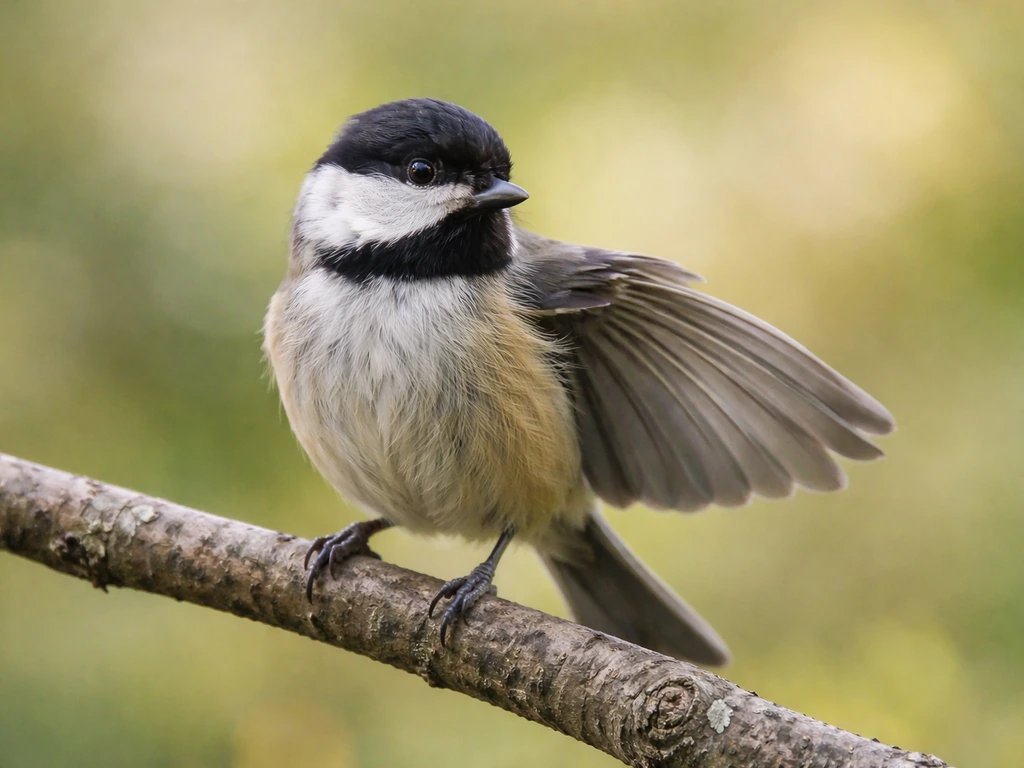
At its most basic, a bird is a feathered, winged, warm-blooded vertebrate that lays eggs. That is the definition you will find in Merriam-Webster, the Cambridge Dictionary, and virtually every other English reference. The category covers roughly 10,000 living species, from sparrows to ostriches to penguins. When English speakers say 'bird' without any extra context, they almost always mean the animal.
But 'bird' also shows up in dozens of idioms, proverbs, and figurative expressions where it has nothing to do with the feathered creature at all. For example, the phrase “hud hud” is often explained as a bird name in English contexts, and its meaning depends on where it is used. It also carries deep symbolic weight in mythology, religion, and folklore across cultures. So the literal definition is just the starting point. The meaning you need depends entirely on where you saw or heard the word.
What 'fakta' means and how it connects to 'bird'
In Indonesian and Malay, 'fakta' comes directly from the same Latin root as the English word 'fact.' The Kamus Besar Bahasa Indonesia (KBBI), which is the authoritative Indonesian dictionary, defines 'fakta' as something that can be verified as true or real, as opposed to opinion or speculation. Cambridge Dictionary's own English-to-Indonesian section maps 'fact' to 'fakta' as a direct one-to-one translation.
Indonesian media routinely uses the structure '7 Fakta Burung...' or 'Fakta Burung Kenari' as headlines, meaning '7 Bird Facts...' or 'Facts About Canaries.' This is a very common content format in Indonesian-language articles and social media posts: a numbered list of verified or surprising true information about a bird species. If you saw 'fakta bird' written somewhere, it is almost certainly using that Indonesian framing, and the English equivalent is simply 'bird facts' or 'facts about birds.'
| Indonesian/Malay term | Direct English translation | Meaning in practice |
|---|---|---|
| fakta | fact | Verified, true information (not opinion) |
| burung | bird | The animal; any species of bird |
| fakta burung | bird facts / facts about birds | Real, science-backed information about birds |
| fakta burung yang unik | unique bird facts | Surprising or unusual true information about birds |
| 7 fakta burung | 7 bird facts | A listicle of seven true things about a bird species |
Common bird idioms and phrases in English

Once you move past literal bird facts, English is packed with bird idioms. Some of the most widely used ones have very specific figurative meanings that have nothing to do with actual birds. Knowing the difference matters a lot if you are reading or writing in English. Merriam-Webster notes that the idiom “free as a bird” means being very free or without restraints (figurative, not literal bird freedom) FREE AS A BIRD definition - Merriam-Webster.
Proverbs and idioms you will actually encounter
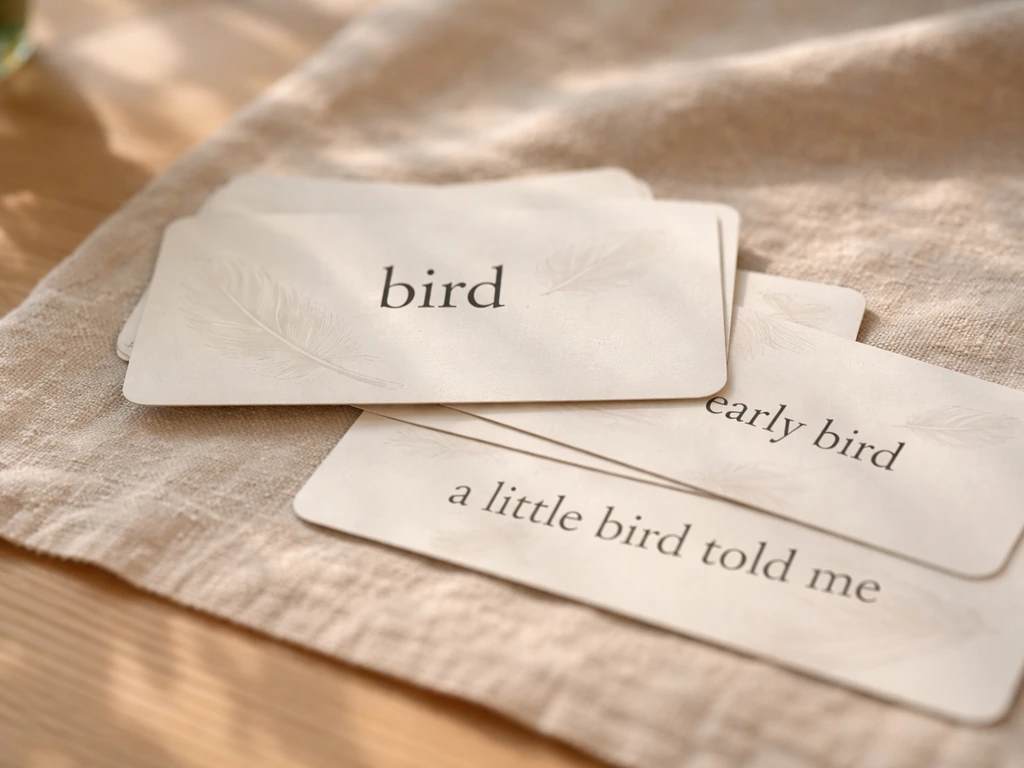
- Early bird catches the worm (or 'the early bird gets the worm'): A person who starts early or acts promptly will gain an advantage over others. Used constantly in business and motivational contexts.
- A bird in the hand is worth two in the bush: What you already have is more valuable than uncertain potential gains. It is a caution against greed or recklessness.
- A little bird told me: The speaker heard something (often a rumour or secret) but will not reveal who told them. It is a playful way to avoid naming your source.
- Free as a bird: Completely free, with no restrictions or responsibilities. Used to describe someone who has left a stressful job, relationship, or situation.
- Birds of a feather (flock together): People with similar personalities, interests, or habits tend to associate with each other.
- The birds and the bees: A colloquial, parent-friendly way to refer to explaining human reproduction and sexuality to children. Nothing to do with birds or bees literally.
- Birdbrain: An informal, mildly insulting term for someone considered foolish or scatterbrained.
There is also a less obvious one worth noting: in British slang, 'bird' can mean a prison sentence (e.g., 'doing bird' means serving time in jail). This is rare outside British English and very specific to that register, but it is a good reminder that 'bird' can mean something completely unexpected depending on context. hank meaning bird bird meaning in slang. If you ever see 'bird' used in a sentence that clearly has nothing to do with animals or the common idioms above, it is worth checking whether a regional slang meaning is at play.
What birds symbolise across mythology, religion, and folklore
Birds have carried symbolic meanings in human culture for thousands of years, across almost every major tradition. The reason is pretty intuitive: birds can fly, which made them natural messengers between the earthly world and whatever lies above it. Their calls were treated as omens. Their arrival or departure marked seasons, war, peace, and death. This cross-cultural pattern is well-documented in ethnological and linguistic research, which shows birds functioning as signs and omens in dozens of unrelated societies.
Religious and spiritual symbolism

In Christianity, the dove is probably the most loaded bird symbol in any religion. The Bible describes the Holy Spirit descending on Jesus at his baptism in the form of a dove, and Christian art has used the dove to represent the Holy Spirit ever since. The dove also appears in the Old Testament as the bird Noah sends out from the ark, returning with an olive branch as a sign of peace and restored land. That peace association has spread far beyond Christianity into secular use.
Ravens and crows appear in Norse mythology as Odin's companions Huginn (Thought) and Muninn (Memory), flying the world and reporting back to him. In many Indigenous North American traditions, Raven is a trickster and creator figure. Owls are associated with wisdom in Greek mythology (as the companion of Athena) but signal death or bad omens in several other cultures, including parts of South and Southeast Asia. The phoenix, technically a mythological bird, represents rebirth and immortality across Greco-Roman, Egyptian, and Chinese traditions.
Birds as omens and cultural signs
Beyond fixed religious symbols, birds have been read as omens in everyday folk belief across cultures. A rooster crowing at an unusual time, a bird flying into a house, or hearing a specific bird call before a journey all carried interpretive weight in traditional societies. Researchers studying ethnolinguistics and folk ornithology have found that this kind of bird-as-sign thinking is genuinely cross-cultural, not limited to one region or religion. The exact meaning of a given species shifts by tradition, which is why the same bird (an owl, for example) can mean wisdom in one culture and death in another.
This site explores several of these species-specific meanings in depth. If you are curious about specific birds that carry strong symbolic weight in different traditions, topics like the hud hud bird (the hoopoe, which appears in the Quran and Islamic tradition), the hans bird (associated with the hamsa or swan in Hindu and Buddhist symbolism), and the gidh bird (vulture) each carry their own distinct histories worth knowing. If you are trying to understand the hans bird meaning in English, it helps to know that it is linked with the hamsa or swan in Hindu and Buddhist symbolism.
Bird expressions in everyday English conversation
Beyond the classic proverbs, birds turn up in everyday English in ways that can be easy to miss. 'Birding' or 'birdwatching' refers to the hobby of observing birds in the wild, a pastime with millions of followers worldwide. 'Bird's-eye view' means a view from high above, as if seen from a flying bird, and is used both literally (for aerial photography or drone footage) and figuratively (meaning a broad, overview-level perspective on something). 'Bird's-eye' also appears as a descriptor for a type of fabric pattern.
'Fledgling' comes from the word for a young bird that has just grown its flight feathers, and in English it means someone or something that is new and still developing (a fledgling business, a fledgling career). 'Spread your wings' means to take on new challenges or become more independent, borrowed directly from the image of a bird learning to fly. These kinds of bird-rooted metaphors are everywhere in English, often used by people who do not consciously register their origin.
Picking the right meaning for your situation
The most useful thing you can do with any 'bird' phrase is look at the surrounding context before deciding what it means. If you are wondering about the meaning of the phrase "gid bird" in English, context is the first clue to how it is being used gid bird meaning in english. Here is a quick way to think through it:
- If the text is Indonesian or Malay and uses 'fakta burung' or 'fakta + [bird name],' it means 'bird facts' or 'facts about [species].' Translate directly: fakta = fact, burung = bird.
- If the sentence is in English and uses a phrase like 'early bird,' 'bird in hand,' 'a little bird told me,' or 'birds of a feather,' it is an idiom with a figurative meaning. Look up the specific phrase to get its correct meaning.
- If the text is clearly about mythology, religion, literature, or symbolism and mentions a specific species (dove, raven, owl, phoenix), it is using the bird as a cultural symbol. The meaning depends on which tradition the text is drawing from.
- If the text seems to use 'bird' in a way that fits none of the above, check for British slang or a very specific regional usage. Context clues like 'doing bird' or 'take the bird with me' signal non-standard registers.
- If you are writing in English and want to express what 'fakta burung' means, use 'bird facts,' 'facts about birds,' or 'interesting facts about [species name].' These are natural, everyday English equivalents.
To put this into practice: if a friend shares an Indonesian article titled '5 Fakta Burung Hantu yang Mengejutkan,' that translates to '5 Surprising Facts About Owls. ' If an English-speaking colleague says 'the early bird gets the worm, so let us start at 7am,' they mean that starting early gives you an advantage, not that literal birds are involved.
Cambridge Dictionary records the proverb idiom “(the) early bird catches the worm” as meaning that starting early leads to success or an opportunity the early bird gets the worm. And if a poem describes a dove settling on someone's shoulder, it is almost certainly drawing on the dove's deep symbolic associations with peace, the divine, or the Holy Spirit, depending on the poem's tradition.
The word 'bird' is genuinely one of those words that does a lot of work in English, from the factual to the figurative to the deeply symbolic. Once you know which layer you are dealing with, the meaning clicks into place immediately.
FAQ
If I see “fakta burung” in Indonesian, does it always mean “bird facts” in English?
Usually yes. In Indonesian and Malay, “fakta burung” is typically a headline style meaning “bird facts” (often presented as a verified or surprising list). The extra words (like the species name) determine what kind of facts you will get.
Are there situations where “fakta” should not be translated as “fact” literally?
Not always. “Fakta” is “fact” in the sense of something verifiable, but in English “fact” can also be used more loosely in argument or writing (for example, “as a matter of fact”). If your phrase includes opinion-like wording in Indonesian (e.g., “katanya,” meaning “they say”), then “fakta” may not translate cleanly as “fact.”
How can I tell whether “bird” in a sentence is literal, idiomatic, or slang?
Check whether “bird” is being used as a noun describing an animal, or as part of a fixed expression. If it sits inside a proverb (“early bird”), a common metaphor (“spread your wings”), or a specific slang pattern (“doing bird” in British contexts), then it is figurative. If it is followed by a species or location (“owl,” “at the park”), it is usually literal.
Is “bird” slang for prison time understood everywhere in English?
“Bird” can have different meanings by region and audience. For example, the prison-sentence usage is primarily British slang and may sound wrong or confusing in American or international settings. If you are writing, avoid using “bird” this way unless you are sure your audience expects British slang.
What is the best English wording for “fakta burung,” title-style, for example “facts about owls” vs “bird trivia”?
English has multiple related terms, and translations can shift the tone. “Bird facts” is the most direct for “fakta burung,” but “facts about birds” sounds more natural for a title, while “bird trivia” implies entertaining or fun facts rather than strictly verified information.
What if someone writes “fakta bird” in English mixed with Indonesian, is it still meaningful?
Sometimes. If “fakta bird” appears in informal writing, it may be a mixed-language or SEO-style phrase rather than a standard English expression. In that case, the most accurate fix is to translate the Indonesian structure into natural English (“bird facts,” “facts about [species]”).
When translating “fakta burung [species],” do I need to verify the bird species name first?
Yes, because species names and transliterations often cause confusion. If you are trying to map “fakta burung kenari,” you should confirm what “kenari” refers to (typically canary) before translating the title, since different spellings or local names can refer to different birds.
What nearby clues help me decode the meaning of an unfamiliar bird phrase faster?
For any “bird” expression you do not recognize, look for nearby keywords that signal the register. Time-related words (early, late) often indicate a proverb, legal or punishment vocabulary (sentence, jail) may indicate slang, and religious or symbolism context (peace, Holy Spirit) often indicates cultural meaning rather than a literal bird.
If a text describes birds as omens, should I translate “meaning” as a literal definition?
If the text is about omens or symbolism, “meaning” is usually cultural, not literal. The same bird can shift from positive to negative across traditions, so the safest translation is to include the context in English (for example, “In X tradition, the owl symbolizes…”).
Any common formatting mistakes when translating bird-related phrases into English (like “bird’s-eye” or “birdwatching”)?
Yes. In English, “bird” related phrases often hide in form. For example, “bird’s-eye view” is hyphenated and capitalized in a specific way, and “birdwatching” is one word. If your translation keeps the Indonesian word spacing, it may still be understandable, but it will look unnatural.
Next Articles
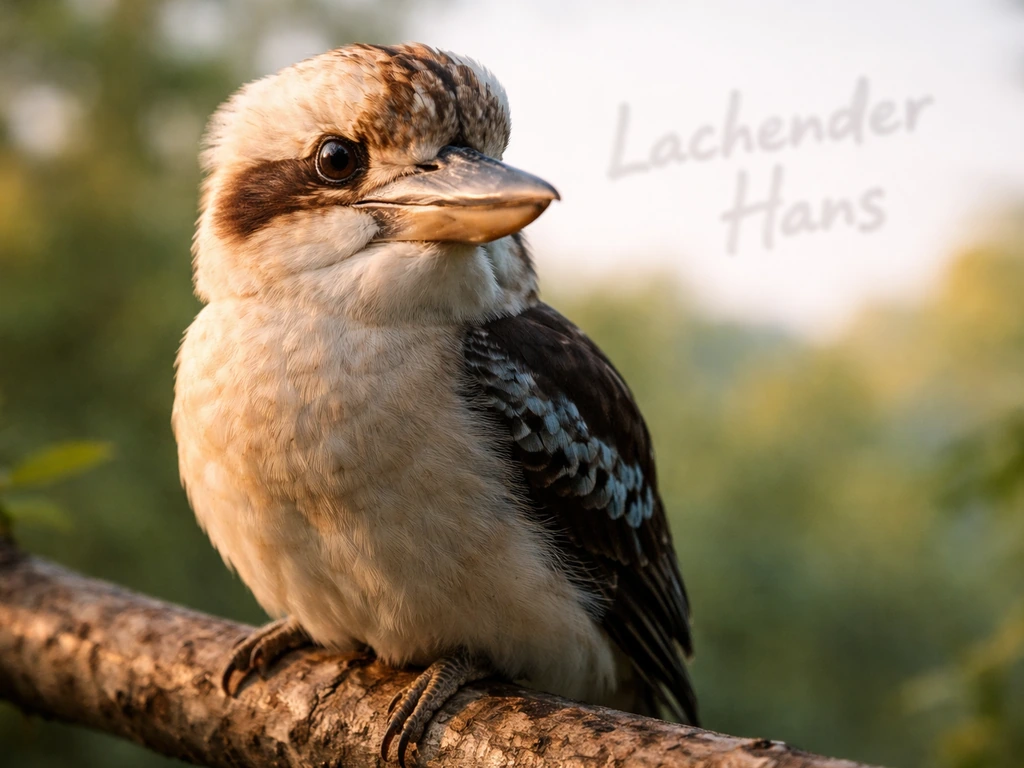
Hans Bird Meaning in English: What It Refers To
Learn the Hans bird meaning in English, including name vs species uses and cultural symbolism context.

Munster Bird Meaning: Folklore, Symbolism, and How to Verify
Meaning of Munster bird searches: folklore, symbolism, idioms, spelling variants, and quick ways to verify the reference
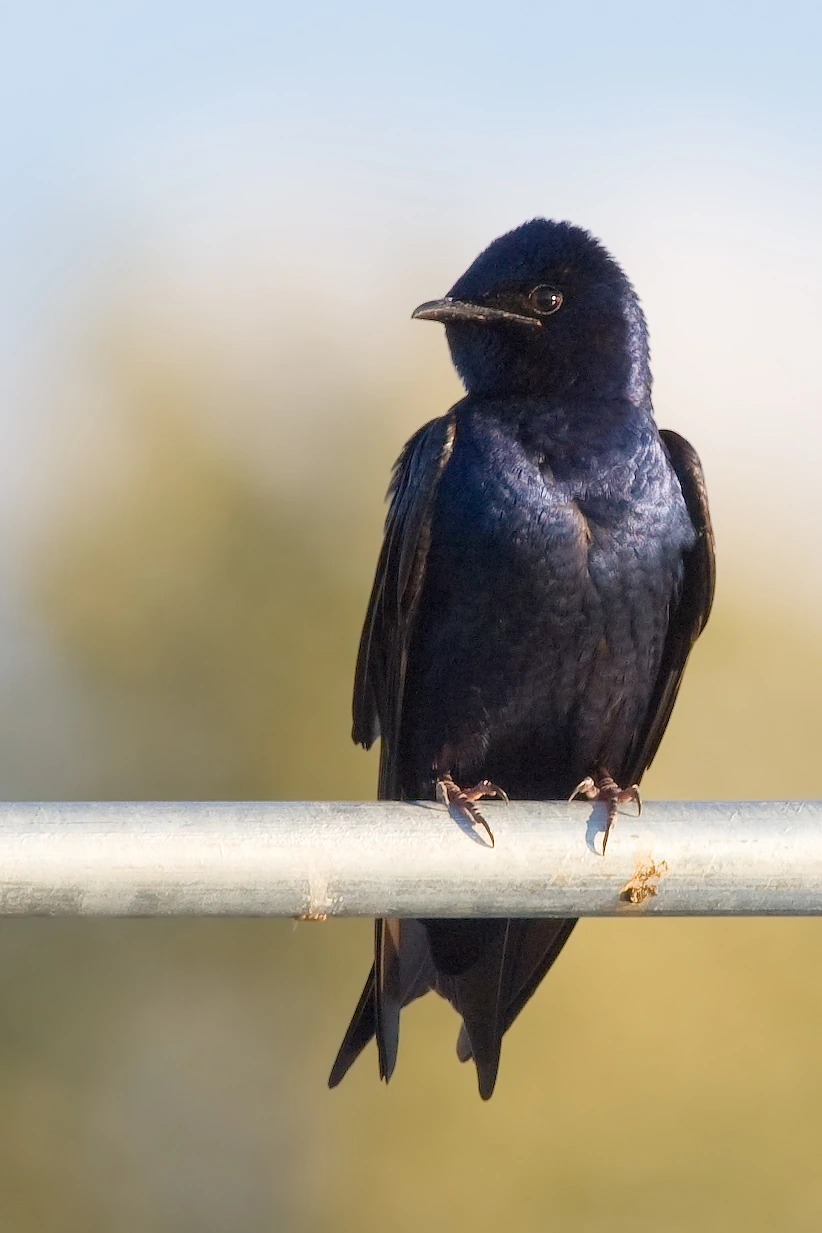
Martin Bird Meaning: Symbolism, Folklore, and Signs
Learn martin bird meaning with symbolism, folklore, and how to identify the right species for omens and dreams.