
If you searched 'hans bird meaning in english,' the most likely answer is that 'Hans' here refers to the German common name 'Lachender Hans,' which translates directly to 'Laughing Hans' and is one of the established German names for the Laughing Kookaburra (Dacelo novaeguineae). In plain English, the bird you're looking for is the kookaburra. Beyond that specific bird connection, 'Hans' is also simply a Germanic personal name meaning 'YHWH is gracious' (the same root as 'John' in English), and it shows up in bird-adjacent folklore in ways that are easy to misread. This guide untangles all of it.
Hans Bird Meaning in English: What It Refers To

Marcus Blackwell
22 Jun 2026
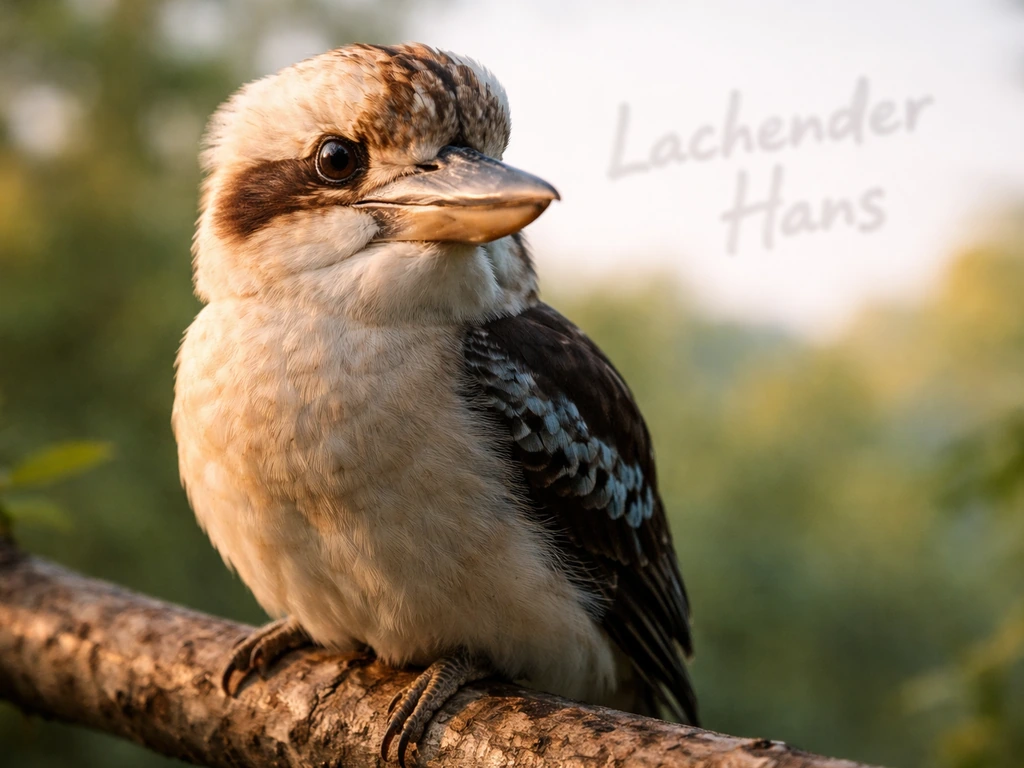
What 'Hans bird' could actually mean
The phrase 'Hans bird' doesn't have a single locked-in meaning, which is why it generates so much search confusion. If you meant the bird nickname itself, a quick check of the fakta bird meaning in english can help confirm you are looking at the right “Hans” usage. There are three realistic interpretations you could be working with, and knowing which one applies to your context saves a lot of time.
- A German common-name element: 'Lachender Hans' (Laughing Hans) is a recognized German nickname for the Laughing Kookaburra. Here 'Hans' isn't a specific person but a personified name given to the bird because of its call.
- A personal name attached to a bird: Someone named Hans who is associated with a bird in a story, joke, or cultural reference. This is common in German fairy tales where Hans is a stock everyman character (think Hans in Luck, Hans My Hedgehog).
- A direct translation search: The reader may simply be trying to find out what the word 'Hans' means in English as a standalone name, then apply that meaning to a bird context they've encountered.
The most useful starting point is the kookaburra connection, because it's the one case where 'Hans' is genuinely embedded in a bird's common name rather than just sitting next to one.
The best English translation: what to actually call it
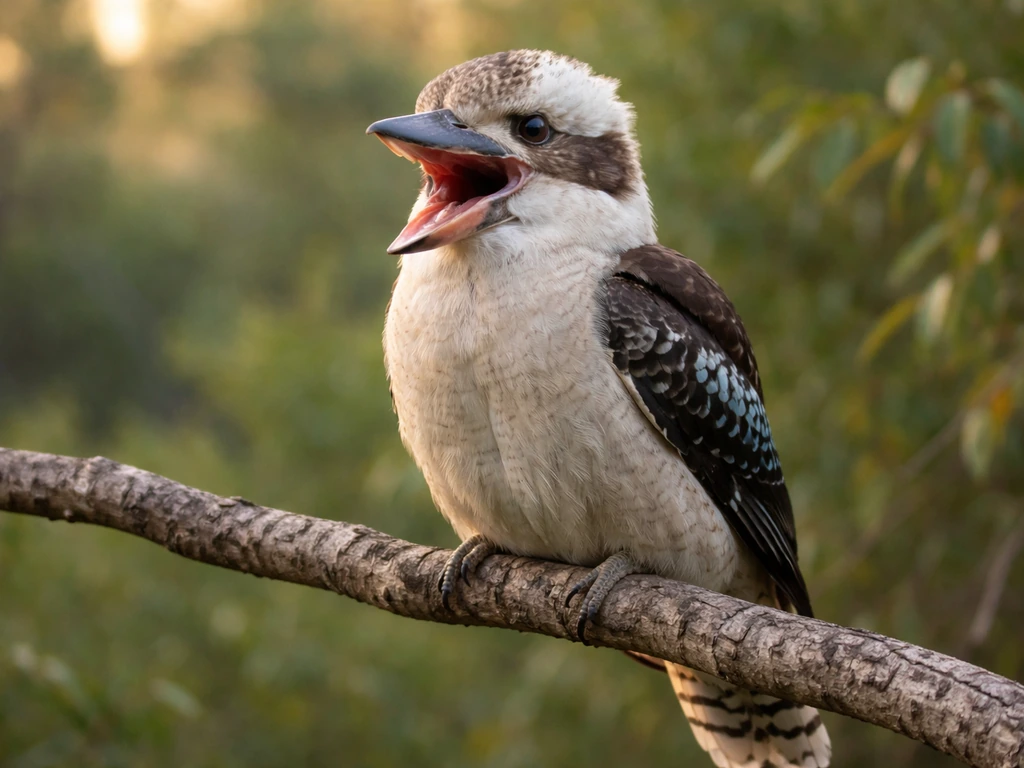
If someone tells you the bird is called 'Lachender Hans' in German, the correct English equivalent is the Laughing Kookaburra. German zoo species references like Erlebnis-Zoo Hannover also note that the Laughing Kookaburra is called “Lachender Hans” (“Kookaburra” and “Lachender Hans”), and that the name comes from its distinctive call that sounds like laughter. 'Lachender' means laughing, and 'Hans' functions here the way a nickname does, as a personified name that makes the bird feel like a familiar character rather than a clinical species label. German zoo and wildlife references, including the Erlebnis-Zoo Hannover and the Zootier Lexikon, explicitly map 'Lachender Hans' to the Laughing Kookaburra (Dacelo novaeguineae). If you strip away the personification, 'Lachender Hans' simply means 'the Laughing Hans,' and the English world knows that bird by its Australian name, kookaburra.
The Laughing Kookaburra is native to Australia and gets its name from a territorial call that genuinely sounds like raucous human laughter. The German nickname leans into exactly that quality, giving the bird a human name to match its very human-sounding voice. It's a charming bit of folk naming, and it's also why 'hans bird' can puzzle English speakers who haven't encountered the German common-name tradition.
What 'Hans' means as a name, and why it matters for birds
Hans is a medieval Germanic short form of Johannes, itself a Latin rendering of the Hebrew name Yohanan, meaning 'YHWH is gracious' or 'Jah is gracious.' The chain runs: Yohanan (Hebrew) to Johannes (Latin) to Johan/Johann/Hans (German/Dutch) to John (English). Wiktionary and Etymonline both confirm this lineage directly. So at its root, 'Hans' means exactly what 'John' means in English: a name carrying a sense of divine grace or favor.
That equivalence matters for bird context because it explains the naming logic behind 'Lachender Hans.' Giving the Laughing Kookaburra a human name like Hans is the Germanic version of what English speakers sometimes do by anthropomorphizing animals with common names like 'Robin' or 'Martin' (the martin being a bird named after Saint Martin). It's a cultural habit of treating a distinctive, personality-filled bird as if it were a familiar person. Hans, being one of the most generic and everyday German names (the rough equivalent of 'John' or 'Joe' in English), was a natural fit for a bird known for its boisterous, almost social call.
In German fairy tale tradition, Hans is the quintessential everyman. You see this in stories like 'Hans in Luck' (Hans im Glück) and 'Hans My Hedgehog,' where Hans is an ordinary fellow navigating an extraordinary world. The English equivalent of this archetype is basically 'John' or 'Jack,' as in 'Jack and the Beanstalk.' When you understand that Hans plays the same cultural role as John or Jack in English folklore, the naming of the 'Lachender Hans' kookaburra makes more sense: it's giving the bird an affectionate, everyman identity.
How the symbolism works in English (myth, folklore, and what the kookaburra actually represents)

In English-language bird symbolism, the Laughing Kookaburra carries a cluster of meanings tied directly to its call: joy, laughter, community, and the start of a new day. In Australian Aboriginal traditions, the kookaburra's laugh at dawn signals the sky people to light the sun, making it a symbol of the beginning, of transition from dark to light. That's a surprisingly weighty set of associations for a bird that sounds like it's telling a joke.
The 'Hans' layer adds a Germanic folkloric warmth to this. If you're encountering 'Lachender Hans' in a German-language text, story, or zoo guide and translating it into English symbolic terms, you're essentially dealing with a bird that represents laughter, the social spirit, and a kind of unself-conscious joy. The 'Hans' part doesn't add new symbolism so much as it humanizes the bird, framing it as a character rather than a creature. That personification is itself meaningful: in folk traditions across cultures, giving a bird a human name usually signals affection and a sense that the bird has personality or wisdom to offer.
For readers exploring broader bird symbolism, this is part of a wider pattern of bird names that embed cultural identity. The hud hud bird (the hoopoe) carries prophetic and royal symbolism in Islamic tradition, and the gidh (vulture) carries very different connotations across South Asian cultures. The gidh bird meaning in English is generally connected to vulture imagery, but the exact sense depends on the specific South Asian language and tradition gidh (vulture). The 'Hans' naming tradition is specifically Germanic and specifically tied to anthropomorphization through a personal name, which sets it apart from those more spiritually loaded bird designations.
Common confusions and how to sort them out fast
The biggest confusion is assuming 'Hans' is a standalone bird species name, like a taxon or a vernacular bird name in its own right. In English, the phrase gid bird meaning in english is usually pointing to the same kookaburra name connection discussed for “Lachender Hans.” Hans is a standalone bird species name. It isn't. 'Hans' on its own doesn't refer to any bird. It only becomes a bird reference inside the compound 'Lachender Hans.' If you've seen just 'Hans bird' without the 'Lachender' qualifier, someone has likely shorthand-dropped the adjective, or you're dealing with a personal name (someone called Hans who owned or was associated with a bird).
A second confusion comes from German fairy tales. 'Hans My Hedgehog' (Hans mein Igel) is a Grimm story featuring a character who is half-boy, half-hedgehog, not a bird at all. If you've run across a reference to Hans in a folklore context and assumed it was bird-related, it's worth double-checking whether the original source actually mentions a bird or whether you're dealing with a different Hans story entirely. If you've run across a reference to Hans in a folklore context and assumed it was bird-related like hank meaning bird, it's worth double-checking whether the original source actually mentions a bird or whether you're dealing with a different Hans story entirely.
A third point of confusion: some people conflate 'Hans' with 'Hank,' which is a separate English nickname derived from John/Johannes through a different path. Hank as a bird reference is its own distinct topic and doesn't overlap with the kookaburra connection. Similarly, searches for the kada bird, the gid bird, or the fakta bird in English are completely unrelated name-translation questions from other language traditions, not variants of the 'Hans' question. If you meant the kada bird in English meaning, that is a different translation question and not connected to the Lachender Hans kookaburra.
| Search term / phrase | What it actually refers to | Correct English label |
|---|---|---|
| Lachender Hans | German common name for the Laughing Kookaburra | Laughing Kookaburra |
| Hans (as a name) | Germanic short form of Johannes / John | John (English equivalent) |
| Hans bird (no context) | Ambiguous: likely the kookaburra or a fairy-tale character | Clarify with source context |
| Hans My Hedgehog | Grimm fairy-tale character, half-boy half-hedgehog | Not a bird reference |
| Eisenhans / Iron Hans | Grimm fairy-tale hero, rendered in English as 'Iron John' | Not a bird reference |
How to verify which 'Hans bird' you actually mean

Start with where you first saw the phrase. If it appeared in a German-language zoo guide, a wildlife article, or a nature documentary subtitle, you're almost certainly dealing with 'Lachender Hans' and the kookaburra. If it appeared in a story, a fairy tale, or a name discussion, you're in personal-name territory and the bird connection may be incidental or nonexistent.
- Search 'Lachender Hans' (with the adjective) to confirm the kookaburra connection directly. Every reliable German wildlife source will map this to Dacelo novaeguineae.
- Check whether your source uses 'Hans' as part of a compound name or as a standalone word. Compound (Lachender Hans) means bird. Standalone (just Hans) means personal name.
- If you saw 'Hans bird' in an English text, look for surrounding context: is the word 'laughing' nearby? That confirms the kookaburra reading.
- If the context is folklore or literature, search the full title or phrase with 'Grimm' or 'fairy tale' to see whether you're dealing with a Hans character story rather than a bird name.
- If you're still unsure, search the scientific name Dacelo novaeguineae alongside 'German name' to see 'Lachender Hans' confirmed in authoritative sources.
Quick cheat sheet
| Context you saw 'Hans bird' | Most likely meaning | English phrase to use |
|---|---|---|
| German wildlife or zoo text | Laughing Kookaburra (Lachender Hans) | Laughing Kookaburra |
| Fairy tale or children's story | Germanic everyman character named Hans | John / Hans (keep as-is in titles) |
| Name etymology question | Short form of Johannes | John (or 'Jah is gracious') |
| Australian bird discussion | Kookaburra, personified in German as Hans | Laughing Kookaburra |
| General bird symbolism search | Joy, laughter, dawn, community (kookaburra symbolism) | Laughing Kookaburra symbolism |
The practical takeaway: if someone asks you what 'Hans bird' means in English, the safest and most accurate answer is 'the Laughing Kookaburra,' with the note that 'Hans' in this context is a personified German nickname built on the bird's distinctive laughing call. The name itself means 'Jah is gracious' at its etymological root, but in everyday usage it functions as a familiar, affectionate handle for one of the world's most recognizable bird voices.
FAQ
Does “Hans bird” always mean the Laughing Kookaburra?
Not reliably. In English, "Hans" by itself is just a personal name, so you should look for the missing qualifier "Lachender" (Laughing). If the text you saw did not include "Lachender Hans," the kookaburra link may be a misunderstanding or a shorthand someone wrote.
What should I do if the German text shows “Hans” but not “Lachender”?
Because “Lachender Hans” is German, the word-order matters. If a German source omits “Lachender” and you only see “Hans,” the safest approach is to treat it as either (1) a person named Hans connected to a bird, or (2) an edited fragment. Re-check the surrounding sentence for “Lachender” or an explicit kookaburra reference.
How can I tell whether a “Hans” reference in a fairy tale is not about a bird?
In that case, treat it as personal-name context first. “Hans My Hedgehog” is a character title, not an actual bird species. If your “Hans” appears in a Grimm-style story or character list, verify whether the original mention includes a bird species at all before translating it as a bird meaning.
Is “Hans bird” connected to “Hank meaning bird”?
No. “Hank” is an English nickname route from the same general “John” family, but it does not create the German “Lachender Hans” kookaburra nickname. If your search results mix “Hans bird” with “Hank meaning bird,” you are likely looking at a different topic and should separate the two.
How do I confirm the translation in a zoo or wildlife context?
If “Hans bird” appears in a zoo or wildlife guide, check whether the entry is specifically German and whether it provides the Latin species name Dacelo novaeguineae, or it explicitly says “Lachender Hans.” Those cross-checks confirm you have the kookaburra mapping rather than a general folkloric “Hans” reference.
Could “Hans” be used as an example of anthropomorphism rather than a species name?
Sometimes “Hans” shows up as a generic name in discussions about birds with humanlike nicknames, for example, comparing German personified names to English nicknames like “Robin.” In those cases, “Hans” may be used as an example of anthropomorphism, not as a direct label for a specific species in your source text.
What quick checks can I run to decide which “Hans” meaning is intended?
Use your source language and the surrounding keywords. If you saw “Lachender,” “kookaburra,” or dawn/laugh-call symbolism in a German paragraph, the meaning is almost certainly the Laughing Kookaburra. If you saw only “Hans” next to unrelated terms (characters, hedgehog, family name talk), the bird meaning likely does not apply.