
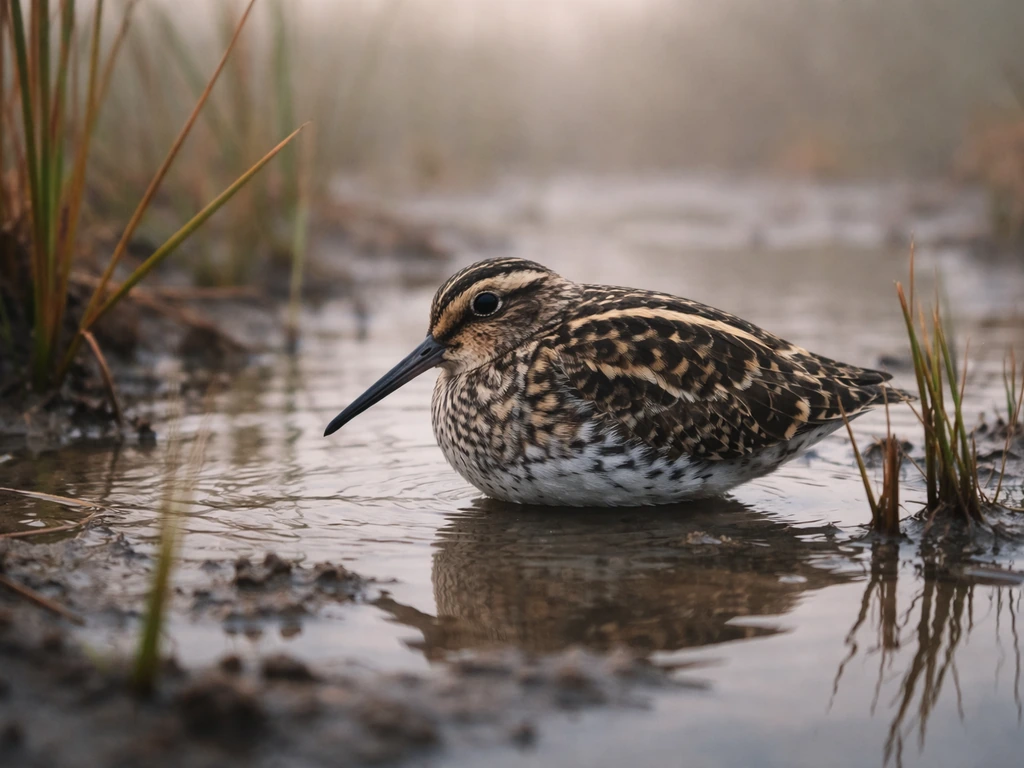
If you saw 'GID bird' somewhere and went looking for what it means in English, the most likely answer is this: 'Gid' is an old, rarely used English vernacular name for the Jack Snipe, a small wading bird. That connection comes from historical British ornithological dictionaries, where 'Gid' appears as a cross-reference pointing straight to 'Snipe, Jack.' Outside that narrow historical use, 'GID' is almost certainly an acronym, an abbreviation, or a misspelling of something else entirely, and the bird connection only becomes relevant once you've ruled those out.
GID bird meaning in English: What GID likely means

Marcus Blackwell
9 Jul 2026
What 'GID' actually stands for (and why it's confusing)

The string 'GID' carries an enormous amount of baggage across completely different fields, which is why searching for 'GID bird meaning in English' can feel like chasing ghosts. Here are the most common uses of 'GID' that have nothing to do with birds at all:
- Group IDentification (computing and Unix systems, where GID is a group identifier number assigned to user accounts)
- Gender Identity Disorder (a now largely retired clinical term still widely cited in older medical and academic writing)
- Get It Done / Getting It Done (Urban Dictionary slang, used as a motivational shorthand in informal writing and social media)
- General Improvement District (a local government administrative designation used in the United States)
- Generic Interface Definition (software architecture term)
- Governance role IDentifier (used in UK school and charity governance records as an internal code)
- Graph-based Intrusion Detection (academic and cybersecurity research papers)
None of those are birds. So before you go deep on ornithology, it's worth asking whether the 'GID' you encountered was even meant to refer to a bird at all. The context almost always tells you.
One more source of confusion worth naming: the name 'Gidh' (spelled with an h) appears in South Asian baby-name databases as meaning 'vulture' or 'name of a bird.' That is a completely separate word from 'GID,' rooted in Urdu or Hindi, not English ornithology. If you're researching the bird name 'Gidh,' that's a different path, and it connects to vulture symbolism rather than the Jack Snipe. Similarly, the related search term 'gidh bird meaning in english' points in that vulture direction, so it's worth keeping the two spellings distinct.
Is 'GID bird' a literal species name or a symbolic label?
This is the right question to ask, and the answer depends almost entirely on where you saw the phrase. In general English usage today, 'GID bird' is not a recognized species name. You won't find it in modern field guides, bird databases, or birding apps. The historical ornithological dictionaries from the British naturalist tradition (the kind produced in the Montagu and Yarrell era) do record 'Gid' as a local vernacular synonym for the Jack Snipe, but that usage is archaic. Modern bird databases like WorldBirdNames.com preserve those historical synonyms as reference notes, not active common names.
On the symbolic side, 'GID bird' does not appear as an established figurative label or idiom in English. If someone is using it symbolically, they're either coining a personal metaphor, referring to the Jack Snipe's known associations, or they're using 'GID' as a community-specific shorthand that you'd need the surrounding context to decode.
How to figure out which meaning applies to what you saw
Run through this short checklist. Each question narrows the field fast:
- Where did you see it? A birding forum, field guide, or nature blog strongly suggests the Jack Snipe connection. A tech article, school document, or government record means 'GID' is almost certainly an acronym with no bird meaning at all.
- What words are near it? If you see 'wading bird,' 'marshland,' 'snipe,' or a scientific name nearby, you're in ornithological territory. If you see 'Unix,' 'user permissions,' 'school governance,' or 'medical diagnosis,' you're not.
- What country or region is the source from? 'Gid' as a bird name is specifically British in origin. If the source is American, South Asian, or from a technical context, the bird interpretation is unlikely.
- Is 'GID' capitalized throughout or treated like a code? All-caps GID almost always signals an acronym. Lowercase 'gid' in a historical or natural history text is where the bird connection lives.
- Is there a definition or cross-reference nearby? Historical bird dictionaries that use 'Gid' always include a cross-reference like 'See Snipe, Jack,' so if there's no such pointer, the bird angle may not be the right one.
The most common interpretations, ranked by likelihood

| Interpretation | What it means in English | Likely context |
|---|---|---|
| Gid = Jack Snipe (archaic bird name) | A small, secretive wading bird (Lymnocryptes minimus) native to northern Europe and Asia | Historical British ornithology texts, old dictionaries, heritage bird databases |
| GID = Group Identifier (computing) | A numeric ID assigned to a user group in Unix/Linux operating systems | Tech documentation, software, server administration |
| GID = Get It Done (slang) | A motivational expression meaning to take action or complete a task | Social media, informal writing, Urban Dictionary entries |
| GID = Gender Identity Disorder (clinical) | A former psychiatric term, largely replaced by 'gender dysphoria' in modern usage | Older medical or academic writing |
| GID = General Improvement District | A local government administrative zone for managing public services | US government and civic documents |
| Gidh = Vulture (Urdu/Hindi name) | A large carrion-eating bird; the word means vulture in South Asian languages | South Asian name databases, regional folklore contexts |
The Jack Snipe: what it looks like and why it matters
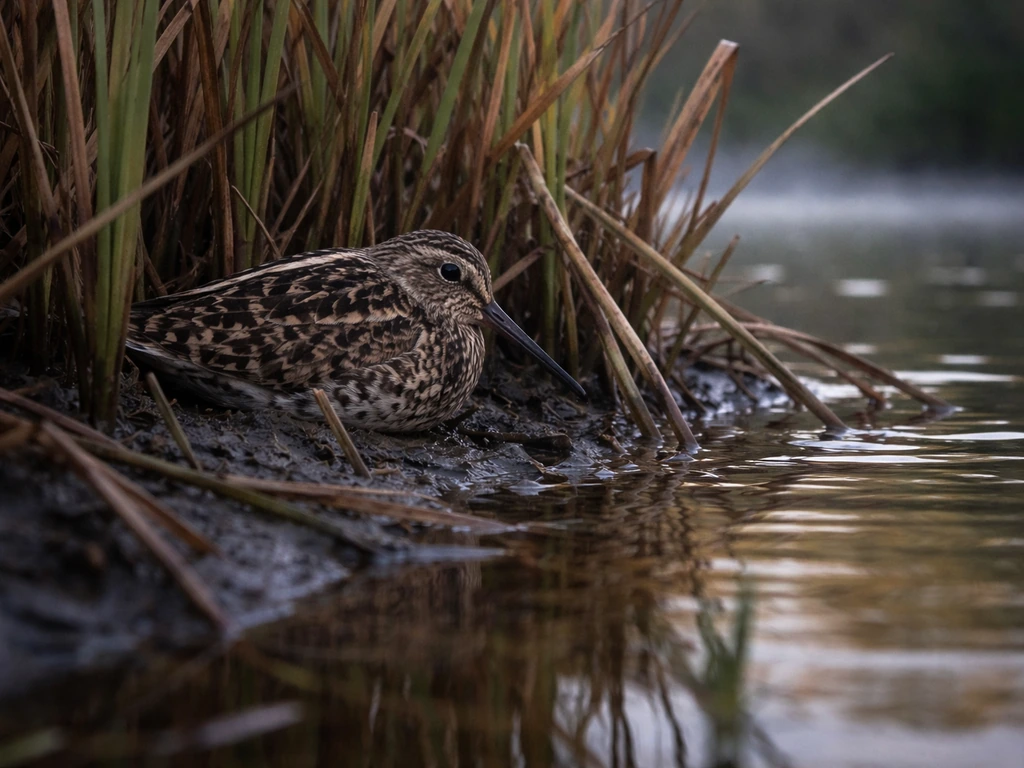
If the historical bird meaning is what you're after, the Jack Snipe (Lymnocryptes minimus) is a compact, secretive wader found across wetlands, bogs, and marshy grasslands. The hank meaning bird angle can be confusing because similar-sounding names and abbreviations often get mixed together. It's noticeably smaller than the common snipe and has a distinctive bobbing, spring-like movement when it feeds. The bird is famously hard to spot: it sits tight, relying on camouflage until the very last second before flushing. That behavior, staying invisible until forced to move, has always made it an interesting bird symbolically, even if it never attracted the mythological weight of ravens or owls.
Symbolic meaning: what the Jack Snipe represents
The Jack Snipe doesn't carry a heavy load of formal mythology in the way that, say, a raven or a heron does. But in British and northern European folk traditions, small wading birds like the snipe have long been associated with concealment, patience, and the hidden world of marshlands. The snipe's evasiveness made it a challenging quarry for hunters, and from that reputation came idioms around misdirection, the word 'sniper' itself, and the phrase 'snipe hunt' (a wild-goose chase involving an imaginary or very elusive quarry).
In a broader folk sense, birds that hide in plain sight, that blend into reeds and mud rather than calling attention to themselves, tend to symbolize hidden truths, patience, or the value of quiet persistence. The Jack Snipe fits that archetype well. If someone uses 'Gid bird' in a poetic or metaphorical context, this is the symbolic thread most likely being pulled.
For comparison, if you're researching similar bird-meaning searches like 'hud hud bird meaning in English' or 'hans bird meaning in English,' you'll find those birds carry far richer mythological and spiritual traditions. The hoopoe (hud hud) appears in the Quran and in Persian poetry as a messenger bird with royal symbolism. The jack snipe sits in quieter cultural territory, but it's no less real a piece of the English ornithological vocabulary.
Common mix-ups to watch for
A few near-spellings create genuine confusion and send people down the wrong path:
- Gidh vs. Gid: 'Gidh' (with an h) is a South Asian bird name meaning vulture, used in Urdu and Hindi. 'Gid' without the h is the British ornithological abbreviation for Jack Snipe. These are different words, different birds, and different cultural traditions entirely.
- GID vs. Gid: All-caps GID is almost universally an acronym in modern usage. Lowercase 'gid' in a natural history context is where the bird meaning lives. Capitalization is your first filter.
- Gid vs. other snipe-related names: 'Jack Snipe,' 'Common Snipe,' and 'Great Snipe' are related but distinct species. 'Gid' refers specifically to the Jack Snipe, not the common snipe (Gallinago gallinago), which has its own set of vernacular names.
- Gid vs. Grid: In handwritten or poorly formatted text, 'Gid' can be misread as 'Grid,' which has no bird connection whatsoever.
How to verify the meaning quickly right now
If you want to cross-check rather than take my word for it, here's how to do it efficiently today:
- Search for exactly: "gid" bird snipe, with quotes around gid. This filters out the acronym noise and pulls up the ornithological dictionary references fast.
- Check WorldBirdNames.com and search for Jack Snipe. Look in the synonym or historical name section to find 'Gid' listed there.
- For the acronym meanings, go to Abbreviations.com or Wiktionary and search 'GID.' You'll see the full list of expansions and can match whichever one fits your context.
- If you think the 'Gidh' vulture meaning might be what you're after, search 'gidh bird meaning' separately. That will pull up South Asian name databases and confirm the vulture interpretation.
- If you encountered 'GID bird' in a technical or institutional document, search the exact phrase in quotes alongside the document's domain (computing, governance, medical) to find the acronym expansion used in that specific field.
The short version: lowercase 'gid' in a British natural history context equals Jack Snipe. If you are trying to understand the fakta bird meaning in English, the key is identifying whether you are seeing the Jack Snipe reference or an acronym. All-caps GID in almost any other context equals an acronym with no bird meaning. arXiv uses “blank" rel="noopener noreferrer">GID” as an acronym in technical titles, illustrating that “GID” can have unrelated meanings depending on context. Once you know which one you're dealing with, the rest of the research becomes straightforward.
FAQ
Is “GID” ever used as the name of a modern bird species in English field guides?
In modern English bird lists and apps, “GID” is not used as a current species name. If you see it, it is usually a historical synonym recorded in older British ornithology, or it is an acronym from a non-bird context.
What should I check if the phrase is written as “Gid bird” (with a lowercase d) instead of “GID bird”?
Lowercase “gid” in a historical British natural history context points toward “Jack Snipe.” The casing matters, but do not rely on casing alone, confirm by looking for nearby clues like “snipe,” “wader,” “wetlands,” or the spelling “Gid” rather than “GID.”
Could “GID bird meaning in English” be referring to the word “gidh” instead?
Yes, that is a common mix-up. “Gidh” (with an h) is used in South Asian name databases with meanings like “vulture” or “bird,” which is unrelated to the English “Gid” historical synonym for Jack Snipe. If the source looks like a baby-name page or uses Urdu/Hindi explanations, treat it as a different word.
How can I tell whether “GID” is an acronym rather than a bird reference?
Look at surrounding text. If “GID” appears in all caps alongside technical terms (organization names, certifications, device models, medicine, or computing), it is almost certainly an acronym. If it appears near birding terms, the word “Gid” is more likely the archaic vernacular name.
I saw “GID” in a social media post. Is there a quick way to verify the bird claim?
Search within the same post for additional tags or keywords like “Jack Snipe,” “snipe,” “wader,” “marsh,” or region-specific bird names. If those are missing and the post is not from a birding community, treat the “GID bird” explanation as likely symbolic or mistaken.
If “Gid” means Jack Snipe, how should I avoid confusion with other snipe or similar birds?
Jack Snipe is smaller and more secretive than many other snipe-type birds, and its key behavior is staying hidden until flush, then giving brief views. If the description emphasizes a larger bird size or a different habitat, it may be a different species entirely.
Is “GID bird” ever used symbolically, and how do I interpret it?
It can be symbolic if the author is clearly writing metaphorically, but there is no widely established English idiom that fixes the meaning. The most reasonable interpretation is the Jack Snipe thread (hiddenness, camouflage, patience), unless the surrounding context ties it to an acronym, a local nickname, or “gidh”.
What is the fastest checklist to decide what “GID bird meaning in English” means for my exact case?
(1) Check spelling, is it “GID” or “Gid” or “gidh”?. (2) Check language of the source, English bird context favors Jack Snipe, name databases favor “gidh.” (3) Check whether it appears near ornithology terms, if not, assume acronym. (4) If it is symbolic, look for habitat or behavior clues that match Jack Snipe (concealment, marshlands).