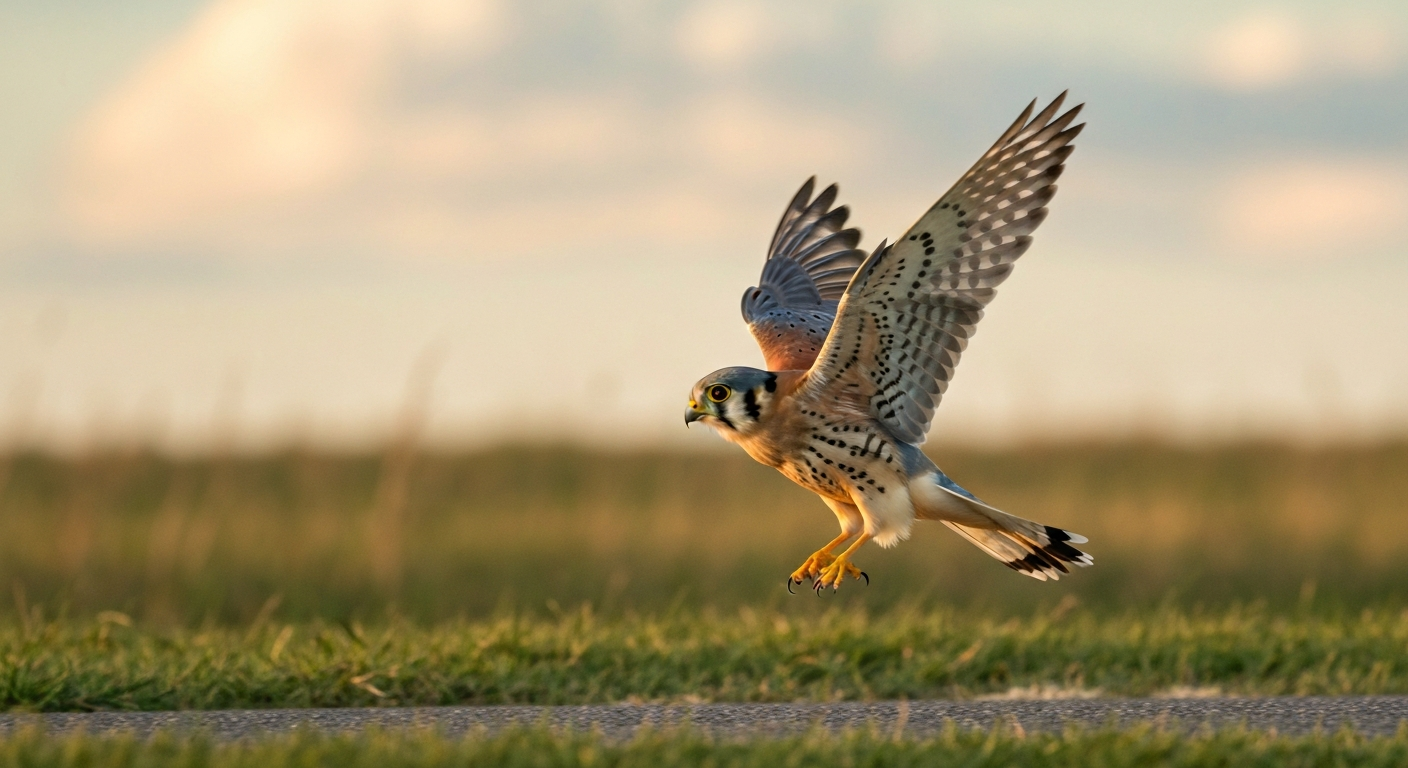
Martins are birds of homecoming, community, and seasonal return. When people talk about the "martin bird meaning," they're usually reaching for a symbol of loyalty to place, the promise of spring, and the warmth of communal life. The core associations are consistent across cultures: martins come back, they nest close to people, and their arrival signals renewal. The exact symbolism, though, depends heavily on which martin species you mean, and that's where things get interesting.
Martin Bird Meaning: Symbolism, Folklore, and Signs

Marcus Blackwell
10 Jun 2026
What "martin bird" actually means (quick definition)
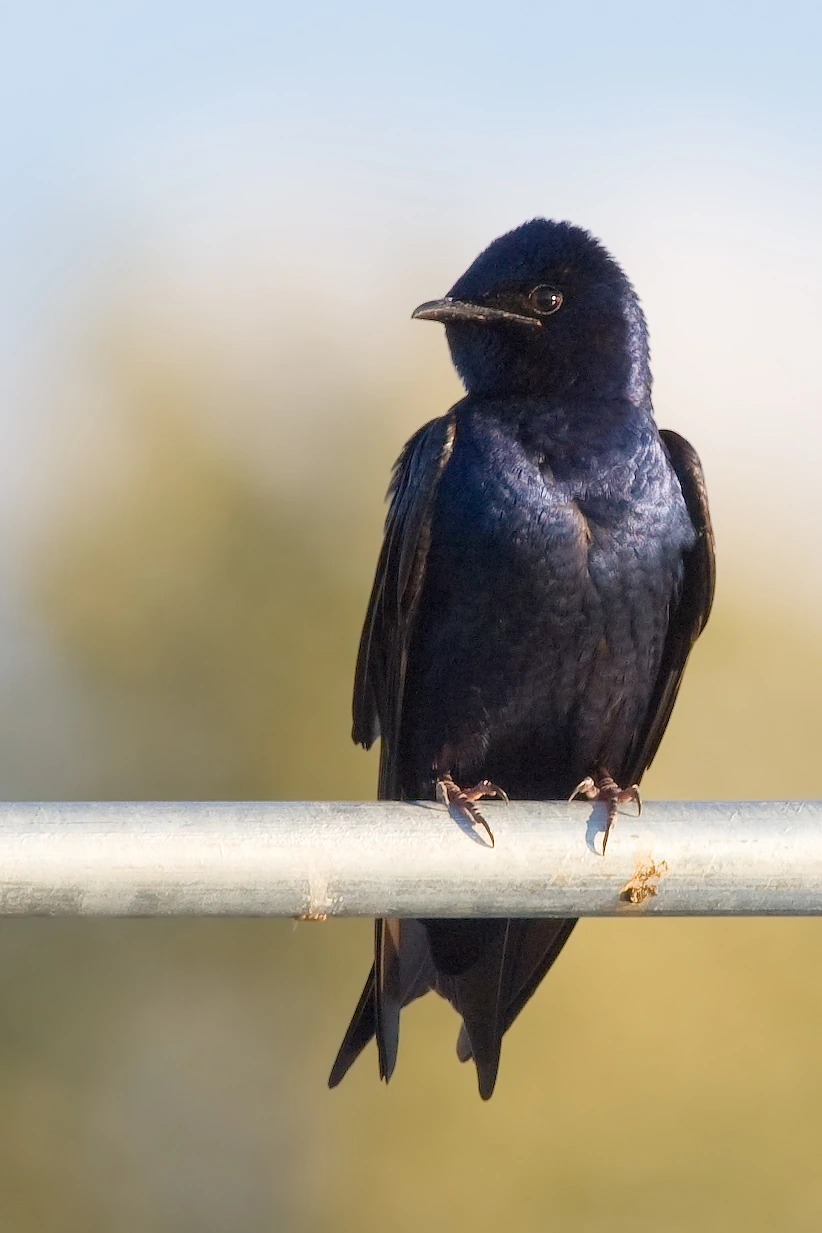
A martin is a type of swallow in the family Hirundinidae. If you're also looking at word-meaning details, the mart meaning bird definition aligns with the swallow-type usage explained above. The name is applied to several species across the world, but in North America the term almost always refers to the Purple Martin (Progne subis), the largest swallow on the continent.
In Europe and the UK, "martin" typically points to the House Martin (Delichon urbicum) or the Sand Martin (Riparia riparia). All of these birds share the same basic ecological profile: they're aerial insect hunters, seasonal migrants, and famously loyal to the nesting sites they choose. Symbolically, that behavioral profile maps directly onto themes of return, home, protection, and community. When someone says "the martin is back," they mean spring is here and things are falling into place.
Which martin species people usually mean
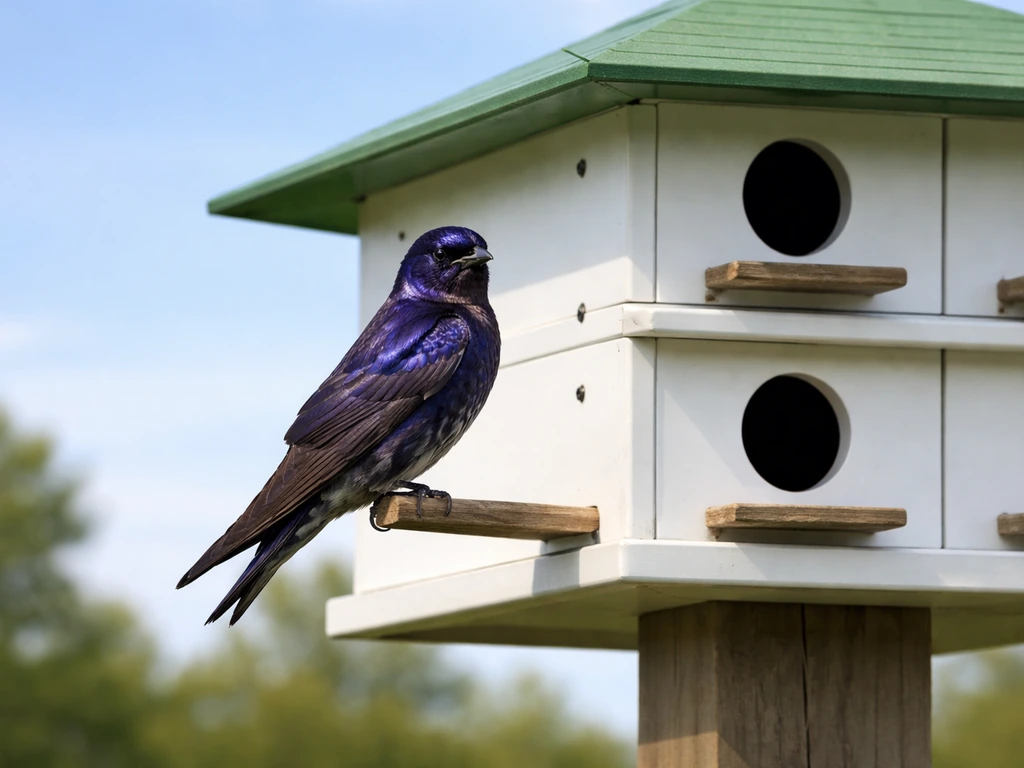
In North America, the default "martin" in almost every symbolic, folkloric, or casual cultural reference is the Purple Martin. You'll find them around multi-chamber martin houses and hollow gourd colonies across eastern North America throughout summer, then gone entirely by winter when they migrate to South America. In the western U.S., Purple Martins exist but are less associated with the classic martin-house setup and tend to nest in natural cavities instead.
People sometimes confuse martins with other swallows, especially the Tree Swallow and the blank" rel="noopener noreferrer">Northern Rough-winged Swallow, both of which share overlapping habitats and seasons. Tree Swallows arrive as early as mid-March to early April and form massive communal roosts numbering in the thousands. blank" rel="noopener noreferrer">Northern Rough-winged Swallows look brown and understated but follow similar seasonal rhythms. Neither carries the same cultural weight as the Purple Martin by name, but in practice they contribute to the same broad "swallow/martin" symbolism in regional folklore.
In a European or heraldic context, the word "martin" sometimes bleeds into "martlet," a stylized heraldic bird (more on that shortly). If you're reading a historical text, a coat of arms description, or an older English document, "martin" and "martlet" may be used interchangeably, which can genuinely muddy interpretation. The martlet, covered in more depth as its own topic, is technically a separate creature in heraldry, but its visual and linguistic roots trace directly back to the House Martin.
| Species | Region | Typical Context | Key Symbolic Association |
|---|---|---|---|
| Purple Martin (Progne subis) | North America | Martin houses, eastern U.S. suburbs and farmland | Return home, spring arrival, community nesting |
| House Martin (Delichon urbicum) | Europe, UK | Under eaves of buildings, villages | Luck, household protection, spring |
| Sand Martin (Riparia riparia) | Europe, North America (as Bank Swallow) | Riverbanks, sandy cliffs | Seasonal change, migratory passage |
| Martlet (heraldic) | European heraldry | Coats of arms, historical texts | Continuous effort, restlessness, noble lineage |
What martins symbolize across cultures
The martin's symbolism is built almost entirely on observable behavior, which is what makes it feel so grounded and consistent. These birds return to the exact same nesting location year after year when conditions are favorable. Cornell Lab and state wildlife agencies have documented this "site tenacity" repeatedly: a Purple Martin colony that successfully raises a brood will come back to that precise spot next season. For anyone watching that happen from their porch over decades, it's easy to see why martins became symbols of fidelity, continuity, and the dependability of natural cycles.
- Return and homecoming: Martins are one of the first birds back in spring, with southern arrivals in the U.S. as early as January or February and northern arrivals in April or May. Older birds lead the way, arriving first to reclaim territories.
- Community and social life: Purple Martins nest colonially and roost in enormous groups (sometimes thousands of birds) in late summer before migrating. That communal behavior anchors associations with togetherness and collective effort.
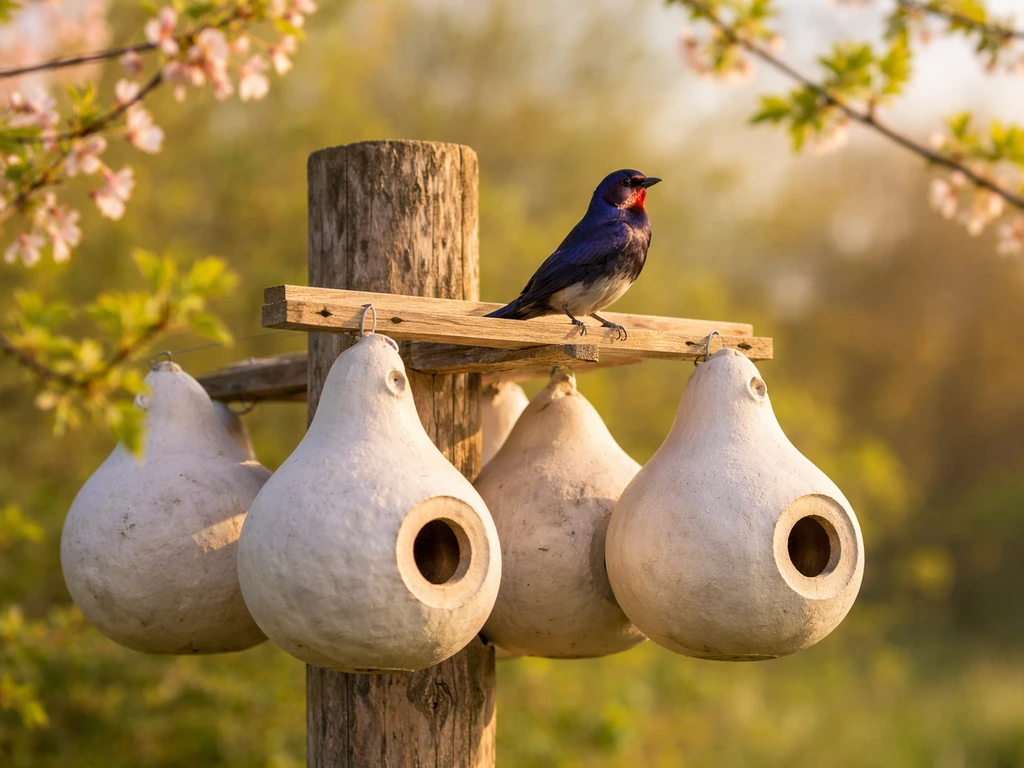
- Protection of the home: Some Native American tribes reportedly hung hollow gourds near villages specifically to attract Purple Martins, inviting the birds in as welcome neighbors. The relationship between martins and human dwellings runs deep.
- Spring renewal: Because martins arrive early and reliably, their appearance functions as a natural calendar marker. Their return signals warmth, growth, and the end of winter's pause.
- Loyalty to place: Site fidelity is the behavioral root of the martin's most consistent symbolic meaning. Returning to the same home, season after season, makes the martin a natural emblem of rootedness and belonging.
Folklore, mythology, and spiritual references
Martins and their close swallow relatives occupy a warm corner of European and Indigenous American folklore. In many European traditions, swallows and martins nesting on or near your house were considered good omens: the birds chose you, and that choice meant protection, prosperity, and luck for the household. Driving them away or destroying their nests was, in several folk traditions, a way of inviting misfortune. The logic is sympathetic magic at its most intuitive: a bird that returns faithfully and cares for its young nearby is obviously on your side.
The Native American connection to Purple Martins is particularly well-documented. The practice of erecting gourd colonies to attract martins predates European colonization in parts of eastern North America. This wasn't purely practical (though martins do consume enormous quantities of insects in flight). It reflected a relationship in which the birds were invited guests, their presence desirable and meaningful. That tradition continues today in the U.S. South and Midwest, where dedicated martin landlords maintain elaborate housing structures year-round.
In heraldic tradition, the martin's close cousin the martlet carries heavy symbolic freight. The heraldic martlet is depicted without feet, permanently airborne, never resting. It was used historically as a mark of cadency for fourth sons in English heraldry, suggesting someone who must make their own way in the world without an inheritance to land on. The "forever in flight" image maps onto themes of ambition, perseverance, and noble restlessness. While the martlet is technically distinct from the real martin (and worth exploring as its own subject), readers often encounter both in the same research, so it's worth knowing the distinction.
In Islamic dream interpretation traditions, swallow-type birds (which often include martins in regional usage) carry mixed but generally positive symbolism, sometimes representing news, travel, or a visitor from afar. The "return" element ties neatly into spiritual narratives about messengers and homecoming across multiple traditions.
Martins in idioms, slang, and everyday language
Martins don't generate the same volume of named idioms as ravens, owls, or even swallows, but they appear in everyday language in a few reliable ways. Most martin-specific idioms work by invoking the bird's behavior rather than its name as a standalone symbol.
- "The martins are back" functions regionally (especially in the U.S. South and Midwest) as a seasonal shorthand for the arrival of spring and warmer weather, similar to how other cultures use the first cuckoo or first swallow.
- "Martin house" in American English has a figurative extension: a place designed to welcome many guests at once, or a community structure built with hospitality as the primary goal.
- In older British English and some colonial American writing, "martin" could be used loosely to mean any small, fast-flying bird associated with a building or eave, making interpretation of historical texts slippery.
- The surname "Martin" and place names like "San Martin" or "St. Martin's" often have roots in the bird (via the French martinet) or in Saint Martin of Tours, whose feast day in November was historically linked to the departure of migratory birds in Europe.
The word "martinet," meaning a strict disciplinarian, shares a linguistic ancestor with the French word for martin (martinet). The bird connection is indirect here: the disciplinary meaning comes from a French military officer named Martinet, whose name happened to share a root with the bird name. It's a false friend symbolically, but worth knowing if you're tracing etymologies.
Interpreting martin symbolism in context

In dreams
Dreaming of a martin or swallow most commonly points to themes of return, renewal, and homecoming. If the bird in your dream is building a nest near or on your house, traditional interpretations across European and some Islamic frameworks read this as a sign of domestic protection and incoming good fortune. A martin flying away or departing is sometimes read as a warning about missing an opportunity or someone leaving. A large flock of martins in a dream often connects to community themes: support, belonging, or the need to engage more with your social circle.
As an omen or sign
Seeing your first martin of the season has historically been treated as a genuine seasonal marker and mild good omen in rural American and European traditions. If martins return to a specific location after years of absence, that's been interpreted as a sign of restored balance or improved conditions. Conversely, if martins abandon a nesting site they've used for years, it can be read as a warning that conditions have deteriorated, though wildlife biologists would tell you to check for predator activity or housing problems first.
In names and places
The name Martin, whether as a first name or surname, carries bird associations in some traditions but is more commonly traced to Saint Martin of Tours, a fourth-century Roman soldier turned bishop who became one of the most celebrated saints in medieval Europe. His feast day (November 11, Martinmas) coincided with the seasonal departure of migratory birds in Europe, cementing the name's connection to themes of transition, generosity, and seasonal change. Place names containing "Martin" often reference the saint rather than the bird directly, but the two associations blend in folk memory.
In personal symbolism
If a martin has shown up repeatedly as a personal symbol for you, whether through sightings, dreams, or a sense of identification with the bird, the most direct interpretive framework is the return/loyalty cluster: fidelity to home, the importance of community, and the courage it takes to migrate and come back. Martins don't wander randomly; they know where they belong and they go back there. That's a meaningful quality to sit with.
How to identify exactly which martin you mean

Because "martin" applies to multiple species, and because regional usage varies considerably, a little disambiguation goes a long way toward getting the right symbolic meaning rather than a generic one.
- Start with region: If you're in eastern North America and thinking of a martin around a birdhouse or gourd colony, you almost certainly mean the Purple Martin. If you're in the UK or continental Europe, you probably mean the House Martin or Sand Martin.
- Check the habitat cue: Purple Martins in the east are heavily associated with human-made nest boxes and multi-chamber martin houses. In the western U.S., they use natural tree cavities and are less tied to human structures. This distinction matters for interpretation.
- Watch for spelling variants: "Martin" (the bird) versus "Martlet" (the heraldic bird) are related but distinct. If you're reading a medieval text, a coat of arms description, or a heraldic document, you're probably dealing with the martlet and its specific symbolism, not the living bird.
- Note the season: Purple Martins arrive in southern U.S. states as early as January or February, with northern arrivals in April or May. If your sighting or reference is in midsummer or late summer, you may be looking at a roosting colony gathering before fall migration, which carries its own community symbolism.
- Clarify pronunciation context: In some regional accents and older texts, "martin" and "marten" (a small mammal) can be confused in transcribed oral folklore. If something doesn't make sense ornithologically, it's worth checking whether the original source meant a bird or an animal.
- Distinguish from swallow references: Tree Swallows, Barn Swallows, and Rough-winged Swallows are often grouped with martins in popular culture, and their symbolic associations overlap heavily. If your source says "martin" but the behavior described sounds like a swallow, it may simply be regional naming convention rather than an error.
If you're researching martins in relation to heraldry, the martlet topic deserves its own deep read, since its symbolism (ceaseless flight, no resting place, ambition without inheritance) diverges meaningfully from the real bird's associations with home and return. Similarly, if you've encountered the word "mart" in an older ornithological or poetic context, that can be a shorthand form of martin worth tracing separately. And readers exploring adjacent bird symbolism in European traditions may find that the mars bird and marauder bird traditions occasionally intersect with swallow and martin lore in regional folklore collections. If you also want the harsher, action-oriented angle sometimes discussed under marauder bird meaning, it can help to compare how different folklore frames birds of motion and territorial behavior.
The martin is ultimately a bird about faithfulness: to a place, to a season, to a community. That consistency across cultures isn't coincidence. It's a direct reflection of what these birds actually do, returning year after year to the same spot, arriving reliably with spring, and nesting in the company of others. Whatever context brought you to look up the martin bird meaning, that's the thread running through all of it. In particular, the munster bird meaning is often discussed in the same folklore and symbolism conversations as other “martin” references.
FAQ
If I see a martin near my house, does the meaning always point to good luck?
Not always. In many traditions it is a favorable omen, but the practical reality matters too. If martins are repeatedly unsuccessful (no nesting activity, lots of abandoned attempts), the symbolism may be “conditions need attention” rather than purely “luck is coming.”
How can I tell whether the “martin bird meaning” I’m reading refers to Purple Martins or another species?
Use geography and habitat clues. In North America, “martin” in folklore and martin-house culture usually means Purple Martin. If you are in the UK or parts of Europe, “martin” more often points to House Martin or Sand Martin, and their behavior details (like nesting style and timing) can shift the interpretation toward “shelter” or “ground-area habitat” rather than “gourd colony return.”
What if martins arrive late, does that change the symbolic reading?
Often. Symbolic “return” is usually tied to reliable seasonal timing, so late arrival may be read as a delayed homecoming. If this lines up with local weather disruptions, the more grounded interpretation is “spring is delayed,” not a permanent change in your circumstances.
Are there common mistakes people make when interpreting martin symbolism from a single sighting?
Yes, overgeneralizing from one moment. A single flyover is usually just a feeding or commuting behavior, while symbolism becomes more specific when you see nesting, courtship, or repeated return to the same spot over days or weeks.
What does it mean if a martin keeps choosing a different spot each year?
Traditional site-tenacity symbolism leans on return to the same nesting location, but changes can occur due to competition, predators, or human disturbances. In an interpretive sense, it can suggest adaptability, “home is where you prepare it,” rather than “the same place will always work.”
Do martin dreams always mean the same thing across cultures?
No. Even within broadly positive traditions, the bird’s action shifts the theme. Nest-building near the home leans toward domestic protection, while a martin leaving can be a prompt to address an ignored opportunity or relationship rather than a literal prediction.
If I dream of many martins, is it a sign I should reconnect socially?
Often, yes, because large numbers naturally cue community and collective movement. A useful decision aid is to ask whether you feel supported already. If you do not, the dream interpretation typically points to engagement, not isolation.
Does the “martin” in the name Martin (or place names) always refer to birds in symbolism?
Usually not. Many references to Martinmas and the saintly name Martin are primarily tied to Saint Martin of Tours, then only secondarily merged with bird-season imagery. If your context is medieval, religious, or place-name administrative history, prioritize the saint connection first.
Is “martinet” related to the bird meaning?
Only indirectly. The bird association is not the source of the word’s meaning as a strict disciplinarian. If you are tracing symbolism, treat “martinet” as an etymology curiosity, not as evidence of a bird-based theme.
How should I interpret martin symbolism in a heraldry context without mixing it up with the martlet?
Do not assume they mean the same thing. The heraldic martlet is “forever in flight” and lacks feet, which pushes meanings toward restless ambition and cadency. If your text is about a coat of arms, the safer approach is to check whether it explicitly describes the martlet, feet, or groundedness.
Next Article
Hovering Bird Meaning: Literal, Symbolic and Practical Tips.
Hovering bird meaning: quick answers, species ID, symbolism, safety tips and how to record sightings.