
The huelga bird is the black Aztec eagle at the center of the United Farm Workers (UFW) flag, blank" rel="noopener noreferrer">designed by Richard Chavez in 1962. "Huelga" is the Spanish word for strike, and the phrase "huelga bird" is the common nickname for this eagle symbol, which originally stood for the struggle and dignity of farm workers in California. Over time, that same image was adopted by Norteño street gangs, which is why you may be seeing the term in a very different context than its labor-movement origins.
What Does the Huelga Bird Mean? Symbolism and Meaning

Marcus Blackwell
13 Jun 2026
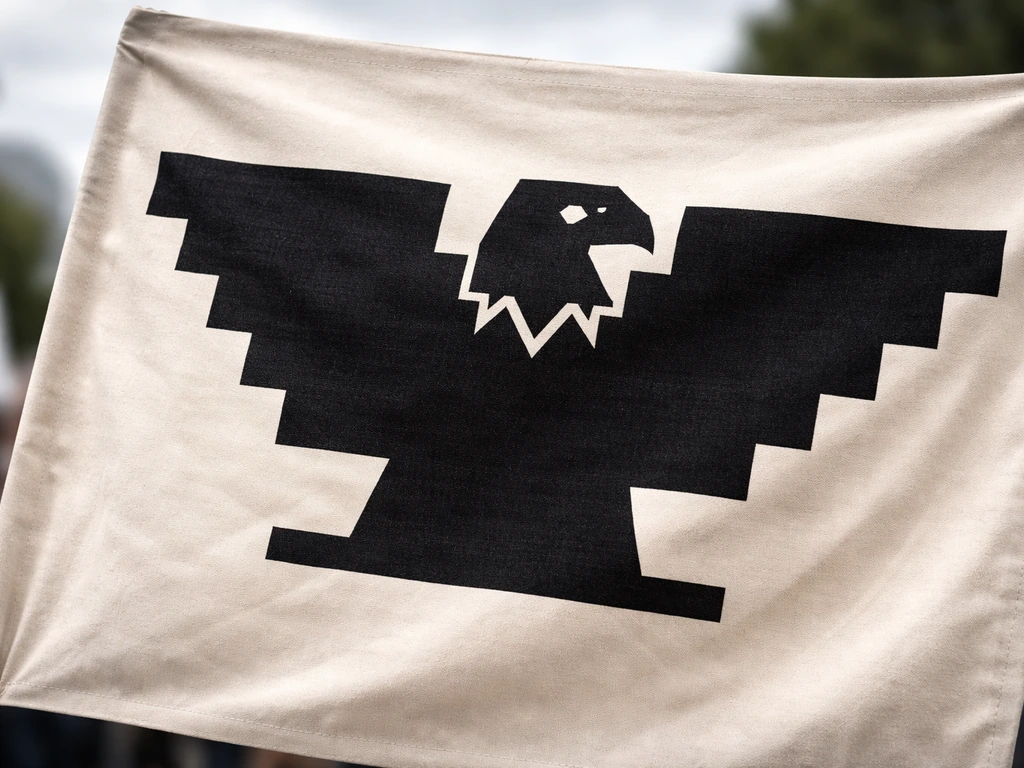
So, what exactly is the "huelga bird"?
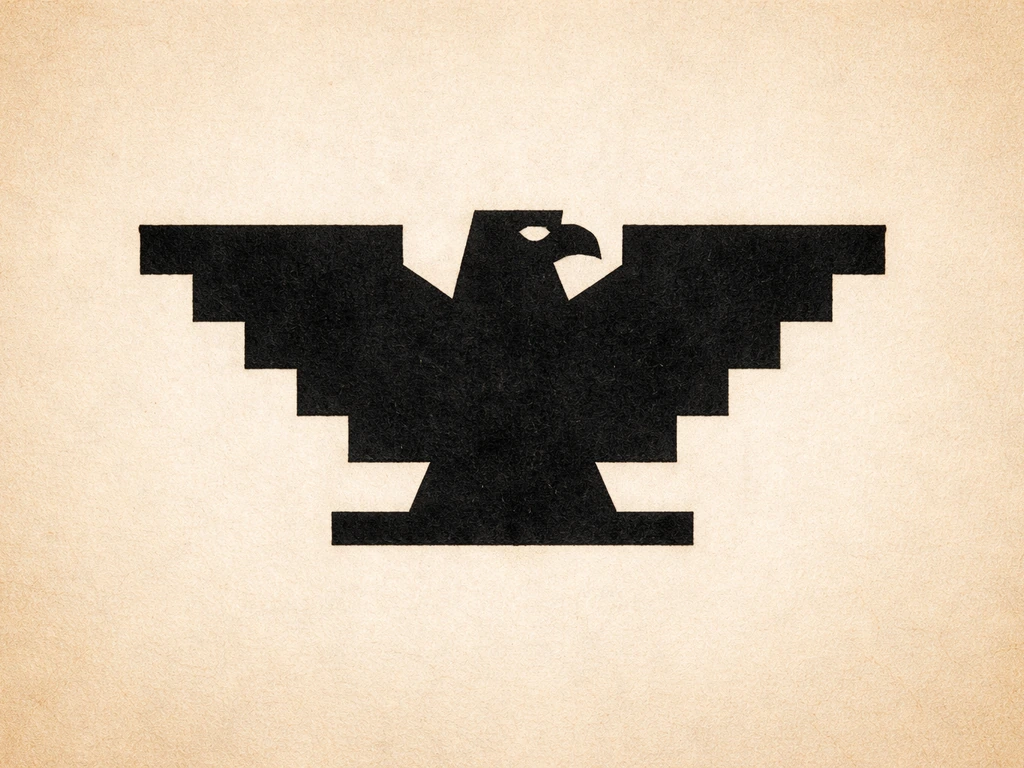
The huelga bird is not a species of bird. It is a specific graphic symbol: a stylized black eagle with geometric, angular wings, drawn in a pre-Columbian Aztec style. Richard Chavez designed the image in 1962 for the National Farm Workers Association, which later became the United Farm Workers. The eagle was deliberately made bold and simple so it could be painted on cardboard signs by hand and still look sharp from a distance. It was unveiled on September 30, 1962, and almost immediately became one of the most recognizable labor symbols in American history.
The word "huelga" became attached to the eagle because the UFW's most famous campaigns were strikes, and the eagle flag flew at picket lines, marches, and grape boycott demonstrations throughout the 1960s and 1970s. Workers and supporters started calling it the huelga bird as shorthand, and the nickname stuck. You will sometimes also see it called the "Aztec eagle" or simply the "UFW eagle," but huelga bird is the most common informal name.
What "huelga" actually means and why it matters
Huelga is a straightforward Spanish noun meaning "strike" or "work stoppage." It comes from the verb holgar, meaning to rest or cease work. In labor contexts across Latin America and Spain, going on huelga means walking off the job in collective protest. If you are looking for the hopping bird meaning, the key idea is still tied to what the word huelga signals, not to a real bird species huelga bird. When Cesar Chavez and Dolores Huerta organized farm workers in California's San Joaquin Valley, the word huelga became a rallying cry, shouted at picket lines and stitched into protest culture.
That etymology changes how you read the eagle symbol. On its own, an eagle in Aztec tradition represented power, the sun, and warrior courage. But the word huelga frames the same image inside a narrative of resistance, collective action, and working-class struggle. The combination is deliberate: it takes an ancient symbol of strength and points it directly at a specific injustice. That layering is exactly why the image has carried so much emotional weight for over sixty years.
What the huelga bird stands for
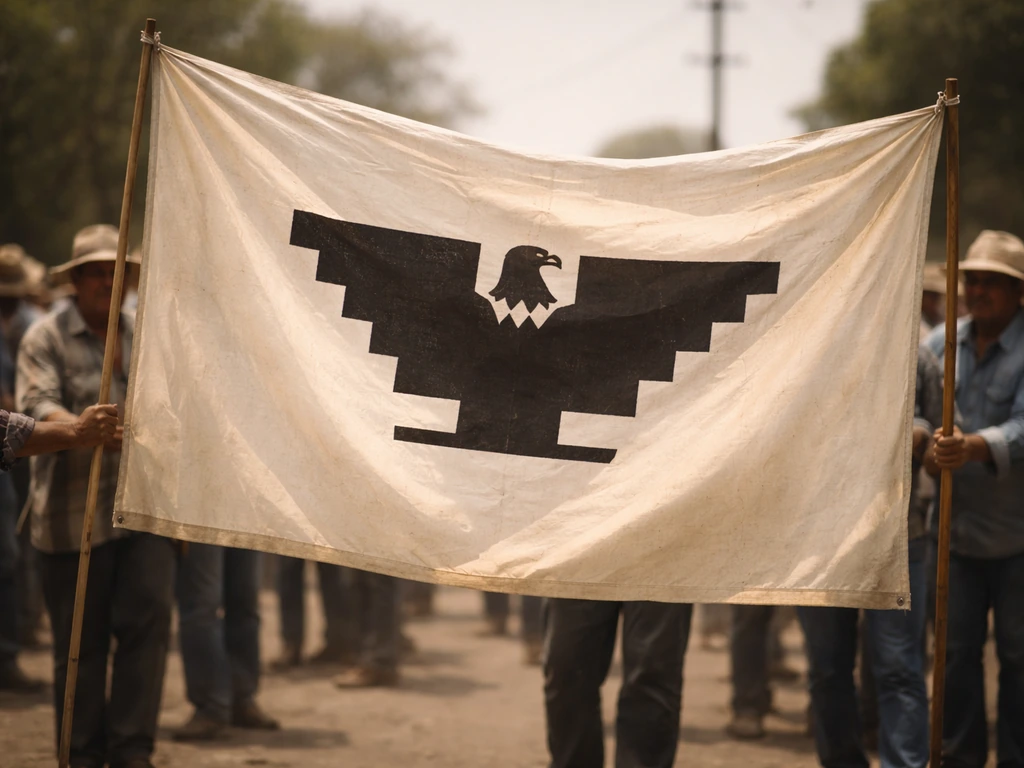
In its original context, the huelga bird stands for labor rights, farm worker dignity, and the broader Chicano civil rights movement. A 1962 UFW history document describes the black eagle as signifying the dark and difficult situation of farm workers, with the shape itself meant to evoke both ancient indigenous identity and modern solidarity. The color black was chosen not for menace but for visibility and contrast on signs.
More broadly, the symbol represents collective power against exploitation. It shows up in Chicano murals, political art, and activist spaces as a visual shorthand for the idea that ordinary workers can organize and win. In that cultural context, seeing the huelga bird means you are looking at something rooted in protest history, community pride, and Mexican-American identity all at once.
There is a second, very different symbolic layer that you need to know about. As reported by UPI citing the FBI in February 2005, California street gangs (particularly Norteño-affiliated groups) blank" rel="noopener noreferrer">began appropriating the huelga bird image to mark territory and communicate in prison settings. In that context, the symbol carries gang affiliation meaning and has been stripped of its original labor-movement significance. If you are also wondering how the term is used today, the norteno huelga bird meaning is the context you would check next. In the original labor context, the herring bird meaning is tied to protest culture and working-class struggle huelga bird. A mural in San Francisco's Mission District was vandalized in 2019 specifically because the huelga bird it featured was being read through that gang lens rather than its UFW origin. The two uses of the same image now exist side by side, and context determines everything about which meaning applies. If you are seeing a similar bird-style logo elsewhere, it can help to also check the specific Hollister logo bird meaning for that design.
Where you might encounter it and what context to check
The huelga bird shows up in several distinct settings, and the meaning shifts depending on where you see it.
| Where you see it | Likely meaning | Key context clue |
|---|---|---|
| UFW flags, signs, or official materials | Labor rights, farm worker solidarity | UFW branding, union context |
| Chicano murals, political art, activist spaces | Chicano identity, civil rights, community pride | Cultural or neighborhood context, mural subject matter |
| Tattoos, graffiti, prison or gang contexts | Norteño gang affiliation | Accompanying symbols, location, style of lettering |
| History books, documentaries, journalism | Historical labor movement symbol | Editorial framing around Cesar Chavez or UFW |
| Social media, slang, online forums | Either labor pride or gang reference depending on community | Who is posting, what subculture the account belongs to |
If you are researching the norteno huelga bird meaning specifically, you are almost certainly looking at the gang-appropriation context rather than the original UFW symbolism. That is a distinct cultural thread worth exploring separately, since the iconography has developed its own visual grammar inside that community.
How to verify which reference you have
Because the same image carries such different meanings in different contexts, a few quick checks will help you pin down exactly what you are dealing with.
- Check spelling and language: If you saw "huelga bird" written out, confirm the spelling is huelga (not hulga, whelga, or any phonetic variant). Misspellings sometimes point to an entirely different phrase or a regional oral tradition where the word was heard but not read.
- Look at what surrounds the image or phrase: UFW imagery usually appears with the red-and-black flag, union language, or farm worker references. Gang-context usage typically appears alongside other Norteño symbols or street-art conventions.
- Note the audience or community: An activist posting the huelga bird alongside United Farm Workers history is using it one way. A different community using it in a street context means something else entirely.
- Search for the specific visual style: The original UFW eagle has a very particular geometric, almost heraldic shape. Variations or stylized versions may signal appropriation or a different tradition.
- Consider the language context: If the phrase appeared in Spanish-language text, check whether huelga was used in a labor or political sense, which usually signals the original meaning.
Quick steps to interpret your specific example
- Write down exactly where you saw or heard "huelga bird": a mural, a tattoo, a social media post, a book, a news article, or somewhere else.
- Identify the surrounding context: who made it, who shared it, what other symbols or words appeared nearby.
- Search "huelga bird UFW" to see the original labor-movement meaning and compare the visual you have to the official UFW eagle design.
- If your example looks like graffiti, a tattoo, or appears in a law enforcement or gang-awareness context, search "huelga bird Norteño" to see whether that community's use matches what you found.
- If it appeared in a mural, look up the mural's artist and neighborhood: Chicano muralists typically use the huelga bird as a civil rights symbol, while defaced or appropriated murals may reflect contested meanings.
- Once you have identified the community of origin, read the symbol through that community's values: labor solidarity for the UFW context, gang territory or affiliation for the street context.
A note on related bird symbols
The huelga bird is unusual in the world of bird symbolism because its meaning is so tied to a specific historical moment and political movement rather than ancient mythology or natural observation. Most bird symbols on this site (think ravens, swallows, or herons) carry meaning accumulated over centuries across many cultures. The huelga bird's core symbolism was essentially created in 1962 and then bifurcated over the following decades into two very different cultural uses. That makes it one of the more interesting modern cases of a symbol being simultaneously claimed and contested, which is worth keeping in mind any time you see it. The image looks ancient, but its meaning as a "huelga bird" is decidedly modern.
FAQ
If I see a black Aztec-style eagle, does that automatically mean it is the huelga bird?
Not automatically. The huelga bird refers to a specific stylized eagle used on the UFW flag, usually with geometric, angular wings. Similar-looking Aztec eagle art can exist in murals and crafts, so check whether the design matches the UFW-style proportions and whether the surrounding context signals labor activism or street-gang usage.
How can I tell whether what I am seeing is the UFW labor symbol or the gang-appropriated version?
Look at the context and accompanying indicators. In labor contexts it appears around pickets, boycotts, or civil rights messaging. In gang contexts it may appear alongside other gang identifiers (colors, numbers, nicknames, or prison-related iconography). The same image can be read differently depending on the setting.
What does “huelga” mean if the phrase is used outside farm-labor conversations?
“Huelga” means a strike or work stoppage (a collective “walk off”). Even when people are not talking about farm workers, the word still carries the idea of coordinated protest and withholding labor.
Is the huelga bird a real bird species or a religious symbol?
No, it is not a species. It is a graphic symbol (a stylized eagle drawing) tied to a modern political movement. In Aztec tradition the eagle motif can represent power, but the “huelga bird” meaning comes from the UFW design and labor-strike framing.
Why is the eagle colored black in the original flag design?
The black color was chosen for visibility and strong contrast on hand-made signs. It was meant to stand out clearly from a distance, not as a shorthand for menace.
What is the most common mistake people make when interpreting the huelga bird?
Assuming the meaning is universal wherever the icon appears. Because the symbol has two major contemporary readings, you need to evaluate location, neighbors in the design (other symbols or text), and the surrounding intent of the display.
If someone says “norteno huelga bird,” does that mean the term is always gang-related?
In practice, yes, the phrase is used to signal the gang-appropriation context. The “huelga bird” nickname alone often points to labor history, so adding “norteno” is usually a deliberate narrowing to the different meaning and community usage.
What should I do if I am unsure whether an image is safe or appropriate to engage with?
Treat it as context-dependent. If the symbol appears in a setting that looks like it is part of gang communication (for example, tagged locations, repeated icon sets, or prison-style messaging), avoid escalating or photographing it prominently. If it is in an activism or museum-like setting, it is more likely being read through the UFW labor lens.
Does “huelga bird” have any connection to other “bird” symbols people mention online?
Only indirectly. Other “bird” logos or symbols with similar silhouettes can have different origins and meanings, so you should rely on the exact design and the surrounding text. Similar names online can be misleading if the artwork is not the UFW-style eagle.
Next Article
Herring Bird Meaning: Symbolism, Folklore, and How to Interpret
Discover herring bird meaning in symbolism and folklore, plus how to interpret it from dreams, quotes, or omens.