
If you searched 'herring bird meaning,' you're most likely looking at one of two things: a folk name for a real seabird (historically, certain gulls and related coastal birds were literally called 'herring-birds' in regional dialects), or a symbolic/idiomatic phrase where 'herring' and 'bird' imagery combine to suggest themes of the sea, abundance, seasonal change, or even deception. In most cases, context is everything, and this guide will walk you through how to figure out exactly which meaning applies to your situation.
Herring Bird Meaning: Symbolism, Folklore, and How to Interpret

Marcus Blackwell
21 May 2026

Is 'Herring Bird' a Real Bird or a Symbolic Term?
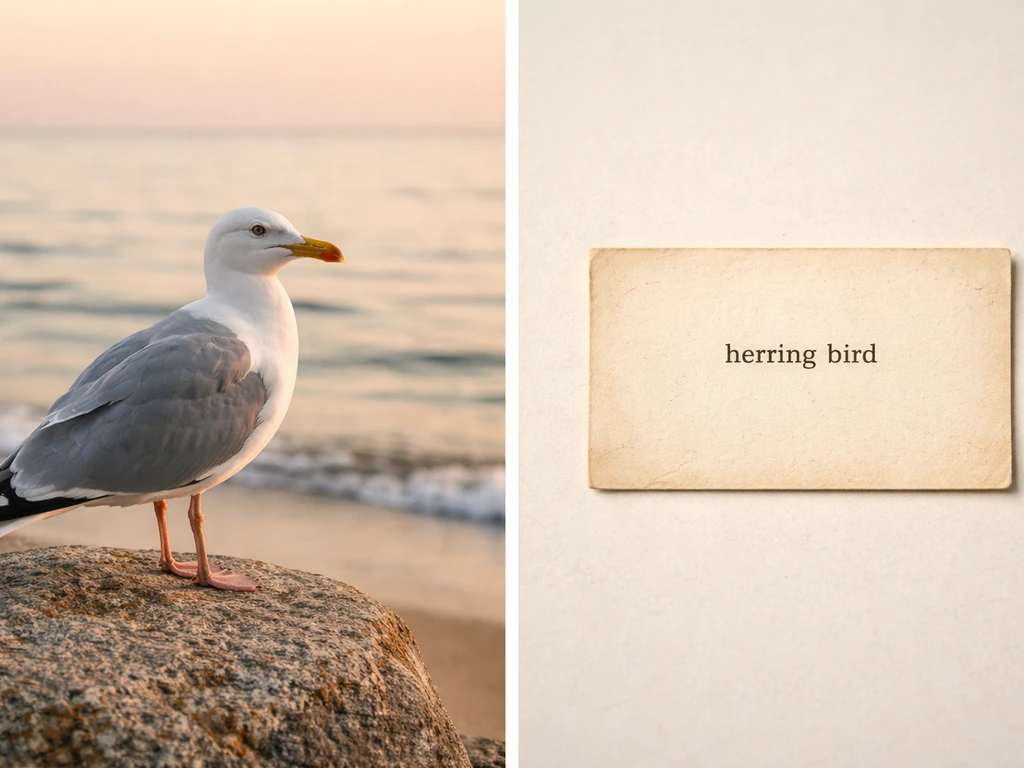
This is the first question to settle, because the answer changes everything. 'Herring bird' as a literal folk name does have documented historical roots. An 18th and 19th century dictionary of English and folk-names of British birds records the Gaelic phrase 'Eun an t'a Sgadan,' which translates directly to 'Herring-bird.' This was used in the Hebrides as a regional label for coastal birds closely associated with herring shoals, almost certainly referring to gulls or similar seabirds that followed fishing fleets. So if you've seen 'herring bird' in an old text, a Gaelic context, or a field guide annotation, there's a good chance it's this: a literal folk name for a real species.
The most well-known 'herring' bird in modern English is the herring gull (Larus argentatus), which Cornell's All About Birds and the British Trust for Ornithology both treat as a proper common name for a distinct gull species. The RSPB describes herring gulls as quintessentially coastal birds, found along shorelines and seaside towns, though they also turn up inland at landfill sites. The name 'herring gull' doesn't mean the bird eats only herring; it's an opportunistic omnivore. The name is more about ecological association than diet. If someone calls this bird a 'herring bird,' they're just using a shorthand folk label for the herring gull.
On the symbolic side, 'herring bird' doesn't appear as a fixed idiom in standard English the way 'red herring' does. Instead, it tends to surface as a poetic or figurative construction, combining the cultural weight of herring (abundance, the fishing trade, the sea's bounty, and sometimes deception via 'red herring') with generic bird symbolism (freedom, omens, messengers). If you saw it in a poem, a dream interpretation, or a tattoo caption, it's almost certainly being used symbolically rather than as a species name.
What Seabirds and Fish-Associated Birds Tend to Symbolize
Coastal and fish-associated birds carry a consistent symbolic vocabulary across many cultures. Whether you're looking at the herring gull specifically or seabirds generally, a cluster of meanings tends to recur.
- Abundance and the food cycle: Birds that follow fish shoals are inherently tied to the idea of natural plenty. In fishing communities, their appearance meant the herring were running, which was a direct signal of food and income. Symbolically, this translates to prosperity, harvest, and the reward of patience.
- Seasonal change and migration: Many coastal birds migrate or shift behavior with the seasons. Seeing them signals transition, the turn of a cycle, or an approaching change in circumstances.
- Freedom and the open sea: Seabirds live between worlds, between land and water, earth and sky. They've long been used in literature and folklore to represent independence, wanderlust, and the call of something beyond the horizon.
- Opportunism and adaptability: The herring gull in particular is known for being resourceful and opportunistic, not a creature of rigid habit. In symbolic readings, this can mean adaptability, survival instinct, or (less charitably) a tendency to scavenge.
- Warning and omen: Historically, fishermen read seabird behavior as weather prediction. A sudden influx or departure of coastal birds was treated as a sign of coming storms or fair weather, making them natural omen figures.
Where 'Herring Bird' Actually Shows Up
In Folklore and Historical Records
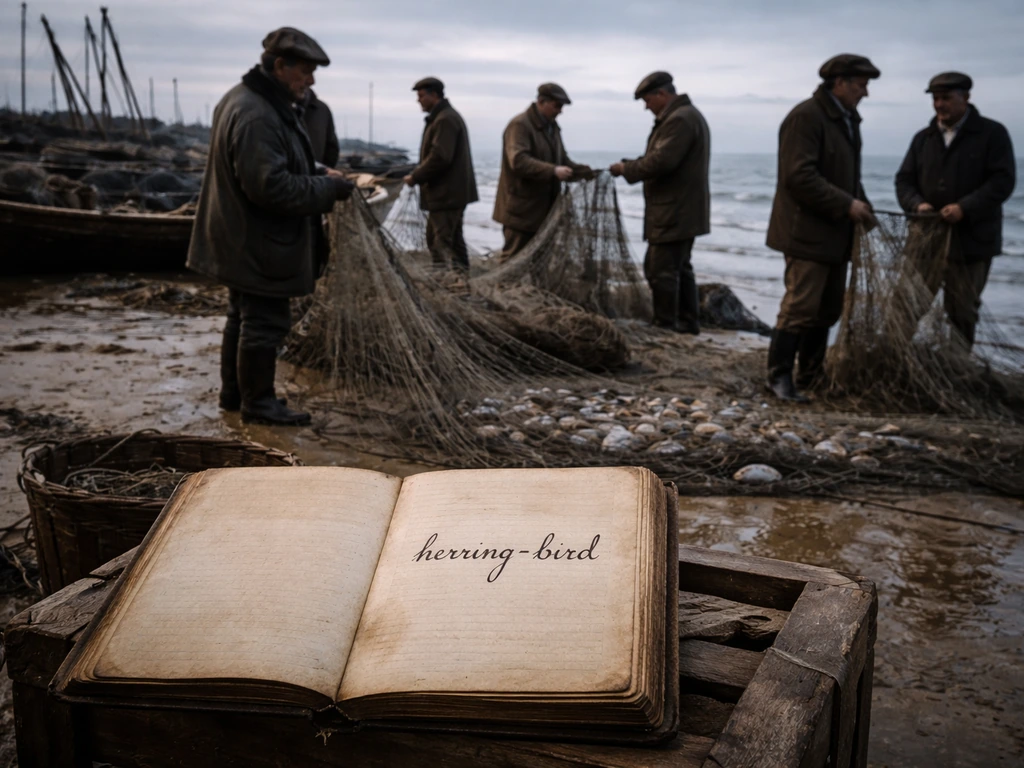
The most striking folkloric appearance of 'herring bird' logic comes from a 19th-century folk-lore account of northern England. Fishermen in coastal communities gave the name 'Herring Spear' or 'Herring Piece' to a specific sound: the rustling noise made by flocks of small birds (likely redwings) crossing the English Channel at night during autumn migration. The fishermen treated this sound as an omen, a signal tied to the season and the movement of fish. It's a perfect example of how birds and herring became fused in the popular imagination, not because of a direct biological link, but because both were seasonal, coastal, and economically significant.
In Gaelic-speaking communities of the Scottish Hebrides, the 'herring-bird' label (Eun an t'a Sgadan) was more straightforwardly practical: it named a bird that arrived when the herring did. This kind of folk naming is common in fishing cultures worldwide, where animals are categorized by their ecological relationship to the catch rather than by formal taxonomy.
In Literature and Poetry
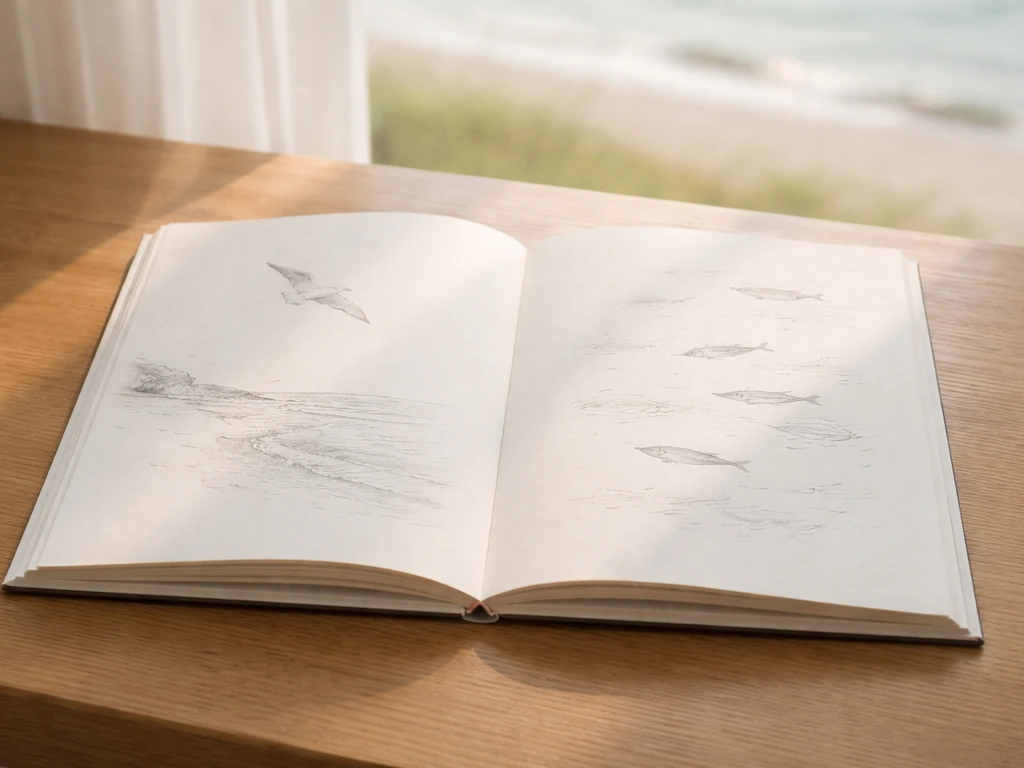
Herring and seabird imagery frequently co-occur in coastal poetry. Joseph P. Clancy's poem 'The Seagull' is one example where herring and bird imagery sit in the same scene, creating the kind of associative blur that leads readers to search for 'herring bird meaning' in the first place. If the poem also mentions a specific bird or fish, that detail often confirms what the phrase is pointing to herring bird meaning. When a poet puts a seagull shaking a herring in the same stanza, they're drawing on the same symbolic ecosystem: the sea, the catch, the wild freedom of a bird that takes what it needs and moves on. Reading these images together as a composite symbol of coastal life, natural abundance, or unrestrained freedom is a reasonable and defensible interpretation.
In Modern Usage
Today, 'herring bird' shows up most often in informal symbolic contexts: dream journals, tattoo discussions, spiritual readings, and occasional literary analysis. It rarely appears as a fixed phrase in mainstream idiom, which means when you do see it, someone has either constructed it deliberately for effect or is using a regional or translated term. In bilingual contexts, it's worth noting that the Spanish word for seagull is 'gaviota,' and translation errors or calques can sometimes produce phrases like 'herring bird' where a native speaker would just say 'seagull' or 'herring gull.'
Dreams, Omens, and Spiritual Readings

If you encountered 'herring bird' in a dream interpretation or a spiritual reading, the symbolic layers stack up quickly. Dream dictionaries typically treat seabirds as omens of travel, perspective, or emotional freedom. A seagull catching or carrying a fish in a dream is often interpreted as gaining clarity, seizing an opportunity, or receiving provision. The Neapolitan Smorfia tradition, for instance, assigns specific numbers and meanings to 'seagull taking fish' as a dream image, treating it as a distinct symbolic event rather than just background detail. A dream-interpretation site assigns specific meanings and Smorfia numbers to the image of “seagull taking fish,” treating it as a distinct dream event assigns specific numbers and meanings to 'seagull taking fish'.
The herring fish itself carries its own dream symbolism. In Islamic dream interpretation, seeing a herring in a dream is associated with difficult labor or effort that may not produce the expected reward, which is a notably different tone from the abundance symbolism the bird brings. When you combine both elements, a bird carrying or associated with herring, the reading becomes nuanced: the effort of the journey (herring) met with the freedom and perspective of flight (bird). In practical terms, this kind of dream image might be interpreted as a signal to reassess whether you're working hard in the right direction.
In omen traditions, a wounded bird seen near water or a large flock of seabirds suddenly departing has historically been read as a warning. Dream dictionaries from multiple traditions treat bird behavior in dreams as outcome-predictive: a bird flying freely signals good news, a bird trapped or injured signals delay or loss. Apply that framework to a 'herring bird' image and you get a reading shaped by both the bird's behavior and its fish-associated context.
Idioms and Related Expressions Worth Knowing
Understanding 'herring bird' gets easier once you know the idiom landscape around both words. 'Red herring' is the dominant herring idiom in English: it means a misleading clue or deliberate distraction, and it's so well-established that 'herring' carries a faint association with deception or misdirection even outside that phrase. When someone constructs a phrase like 'herring bird,' that shadow meaning can color the whole image, suggesting something that looks like one thing but points somewhere else.
Bird idioms, meanwhile, cover an enormous range. 'A bird in hand,' 'early bird gets the worm,' 'free as a bird,' 'rare bird' (meaning an unusual person), and 'bird of ill omen' are all in common circulation. Coastal bird expressions tend to cluster around freedom, travel, and weather reading. If 'herring bird' is being used idiomatically in your source, it's likely combining the sea-abundance meaning of herring with one of these standard bird-idiom frameworks.
| Expression | Core Meaning | Relevant to 'Herring Bird'? |
|---|---|---|
| Red herring | A misleading distraction | Yes, adds a deception layer to herring imagery |
| Bird of ill omen | A person or sign that brings bad news | Yes, if the herring bird appears as a warning figure |
| Free as a bird | Unrestrained freedom | Yes, common baseline meaning for any bird symbol |
| Rare bird (rara avis) | An unusual or exceptional person/thing | Possible, if used to describe someone unique |
| Early bird | Someone who acts promptly to gain advantage | Peripheral, but relevant to abundance/opportunity themes |
| Herring Spear / Herring Piece | Folk name for the sound of migrating birds | Direct: a documented 'herring + bird' folk expression |
How to Figure Out What It Means in Your Specific Context
The meaning of 'herring bird' shifts significantly depending on where you found it. Here's how to work through it systematically. If you want the specific answer, tell me where you saw the “huelga bird” (dream, tattoo, poem, or a real-world context) what does the huelga bird mean.
- Check the source type first. Is it a field guide, a poem, a dream journal entry, a tattoo description, or a folklore text? Field guides almost always mean the herring gull (literal species). Poems, dreams, and spiritual texts almost always mean something symbolic.
- Look at the date and region of the source. Old British texts, especially anything with Gaelic or Hebridean context, may be using 'herring-bird' as a genuine folk name. Modern English usage with no geographical qualifier is more likely figurative.
- Note what the herring bird is doing. In a symbolic or dream context, behavior is the meaning. A herring bird flying freely means something different from one that is caged, wounded, feeding, or departing. Apply standard bird-omen logic to the behavior, then layer in the herring (sea, abundance, or deception) association.
- Ask whether deception is part of the context. If the source is about misdirection, hidden meaning, or something that looks one way but is another, the 'red herring' shadow meaning may be intentional. The author may be using 'herring bird' to evoke something that misleads or distracts.
- Search for the exact phrase in the original source rather than in isolation. If you saw it in a book or poem, search the title and 'herring bird' together. You may find a scholarly annotation or translation note that resolves it immediately.
- If the source is a tattoo or personal artwork, ask the creator directly. Tattoo symbolism is highly personal, and what 'herring bird' means on someone's forearm may be tied to their family fishing history, a specific Hebridean ancestor, or a private piece of poetry. No general guide can outrun a direct conversation.
It's also worth knowing that 'herring bird' sits in a broader category of bird names and symbols that require disambiguation. Other bird symbols encountered in similar contexts, such as the huelga bird (with its labor movement associations) or hopping bird imagery (often tied to restlessness or transition), show how much the surrounding cultural context shapes what any given bird image means. The same disambiguation process applies: look at the source, the tradition, and the behavior of the bird in question.
Once you've worked through those steps, you'll almost always land on a clear answer. Either you're looking at a folk name for the herring gull, a Gaelic regional label with a practical fishing-community origin, or a constructed symbolic phrase using herring-plus-bird imagery to evoke the sea, abundance, freedom, or (with the 'red herring' shadow) misdirection. None of these are obscure or hard to work with once you know which one you're dealing with.
FAQ
How can I tell if “herring bird” is a real bird folk name or a purely symbolic phrase?
Start with the exact setting (old book margin note, field guide, tattoo/dream text, poem line). If it appears alongside coastline, Hebrides, or a named species, treat it as a folk label. If it appears as an image, caption, or symbolic event without a clear species name, treat it as constructed symbolism.
Do different actions of a “herring bird” in a dream or story change the meaning?
Yes, and it changes the reading. A seagull/herring gull carrying, shaking, or stealing fish typically points to “provision, opportunity, or clarity,” while a bird that is silent, distant, or only referenced as a backdrop often points more to atmosphere (season, coastal life) than a specific message.
Could “herring bird” be a mistranslation rather than an intentional symbol?
Watch for translation artifacts. In multilingual contexts, phrases can be calques (literal translations) where “seagull” or “herring gull” becomes something like “herring bird.” If the text also uses unrelated anglicized terms, that’s another hint the phrase is not an established idiom.
What nearby words should I look for to narrow the meaning quickly?
Clues are usually in the surrounding words. If “herring bird” is used near “migration,” “autumn,” or “fishing fleets,” it leans toward the folk-naming tradition tied to seasonal timing. If it’s used near themes like deception, disguise, or distraction, it can be colored by the established shadow of “red herring.”
Does “herring bird” always mean herring gull specifically?
In older dialect or glossary sources, the term may refer broadly to coastal seabirds associated with herring shoals, not a single guaranteed species. If you need certainty, look for any added descriptors (location, behavior, or a Latin/species name) rather than assuming it always means “herring gull.”
Can “herring bird” imply deception like “red herring,” and how do I know when it does?
Yes. If the dream or symbol already includes a “misleading clue” vibe, “herring bird” may function like a combined metaphor (something that looks like one thing but signals another). If the rest of the source is about travel or freedom, the deception reading usually weakens.
What’s a common interpretation mistake people make with “herring bird meaning”?
A common mistake is treating “herring bird” as a fixed idiom in mainstream English. The article explains it rarely appears as a standard phrase, so when it does show up, it’s often deliberate (poetic construction, localized term) or translation-driven rather than a commonly recognized saying.
What’s a reliable step-by-step method to interpret “herring bird” when it appears in a dream or spiritual reading?
If you want a practical reading, extract two pieces: the bird behavior (fly freely, trapped, carrying fish, departing) and the herring association (seasonal effort, fishing bounty, labor payoff). Then decide which one dominates the source. When both are present, the combined message is often “reassess your direction,” “take an opportunity,” or “expect a seasonal shift.”