When you see or hear a meadowlark, the core symbolic meaning is joy, hope, and the power of purposeful expression. The meadowlark's song is its defining trait in both nature and symbolism, and most cultural traditions that reference this bird treat that song as a signal: something good is coming, or the hard stretch you've been through is already starting to lift.
Meadowlark Bird Meaning: Joy, Hope, Song, and Signs

Marcus Blackwell
3 Jun 2026
What a meadowlark actually represents
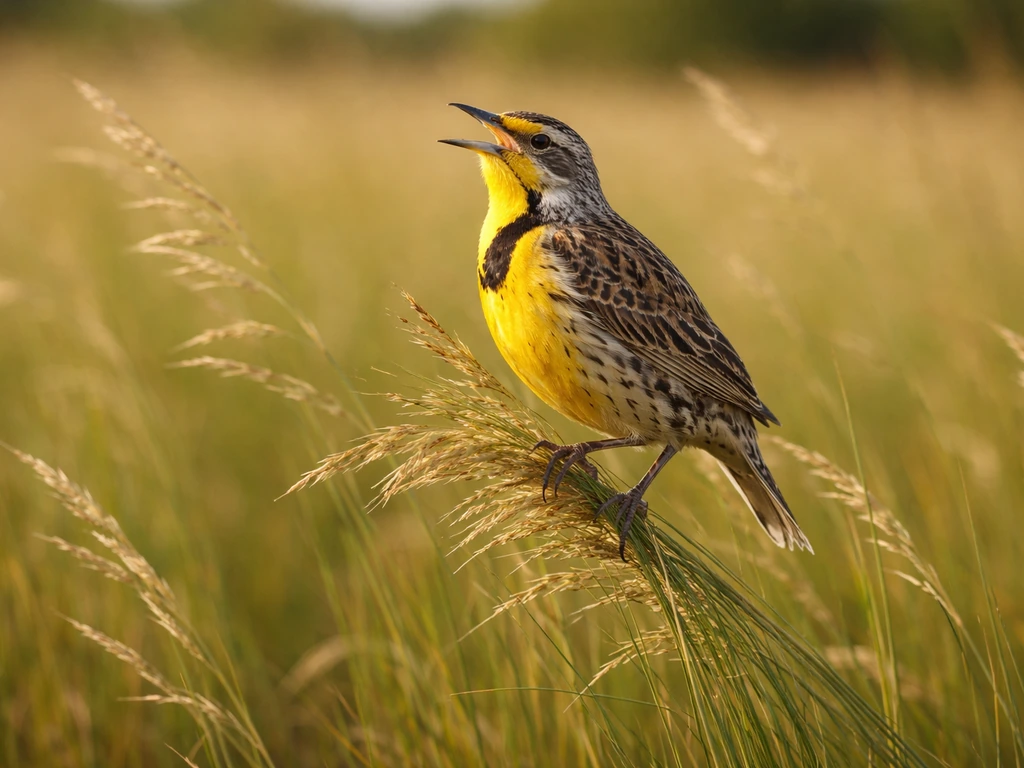
At its most basic, the meadowlark is a symbol of joyful communication and optimism. In “uplifting” symbolism categories, WorldBirds.com ties the meadowlark to themes of hope, optimism, and expression uplifting symbolism categories. Unlike ravens or owls, which carry weight and shadow in symbolic traditions, the meadowlark sits clearly on the positive side of the ledger. Its song is loud, fluid, and unmistakably cheerful, and that quality maps directly onto what it represents: speaking your truth with confidence, finding beauty in ordinary surroundings, and holding onto hope even when circumstances feel flat or difficult.
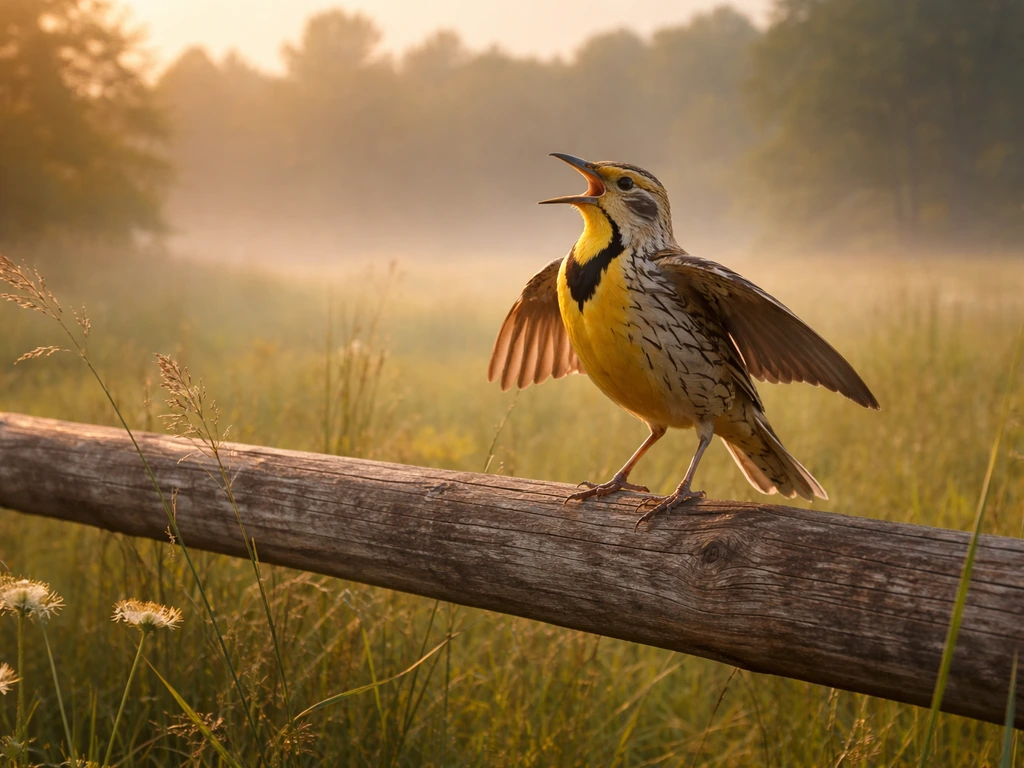
The bird is closely associated with open grasslands and prairies, which adds a layer of meaning around wide possibility and freedom. It doesn't hide in canopies or crevices. It perches on fence posts and sings loudly in open fields, which makes it a natural symbol for visibility, honesty, and unguarded self-expression.
- Joy and happiness, especially the kind that shows up unexpectedly
- Hope and optimism during periods of transition or difficulty
- Purposeful expression, using your voice with intention
- Freedom and the courage to be visible
- Connection to the natural world and open landscapes
Spiritual and folk symbolism: what the song is really saying
In spiritual and folk traditions, hearing a meadowlark is widely interpreted as a positive omen. The core belief, repeated across modern spiritual reference material and older regional folklore alike, is that a meadowlark's song signals that happiness is on its way, or that the worst of a hard period has already passed. If you've been in a stretch of uncertainty and a meadowlark suddenly catches your attention, the folk reading is consistent: take it as encouragement to keep going.
The meadowlark also carries strong associations with personal expression and finding your voice. In spirit animal traditions, connecting with the meadowlark is understood as a call to stop holding back what you want to say or create. The bird doesn't wait for the perfect conditions before it sings. That's the lesson. You're being nudged to speak, create, or put something out into the world that you've been sitting on.
There's also a subtler folk thread around guidance and renewal. Spring arrivals of meadowlarks were historically read as confirmation that the season had genuinely changed, not just on the calendar but in reality. For farming communities especially, the meadowlark's return meant survival was less precarious. That association with tangible renewal, not just wishful thinking, still runs through the bird's symbolic reputation today.
American meadowlark symbolism and regional meaning
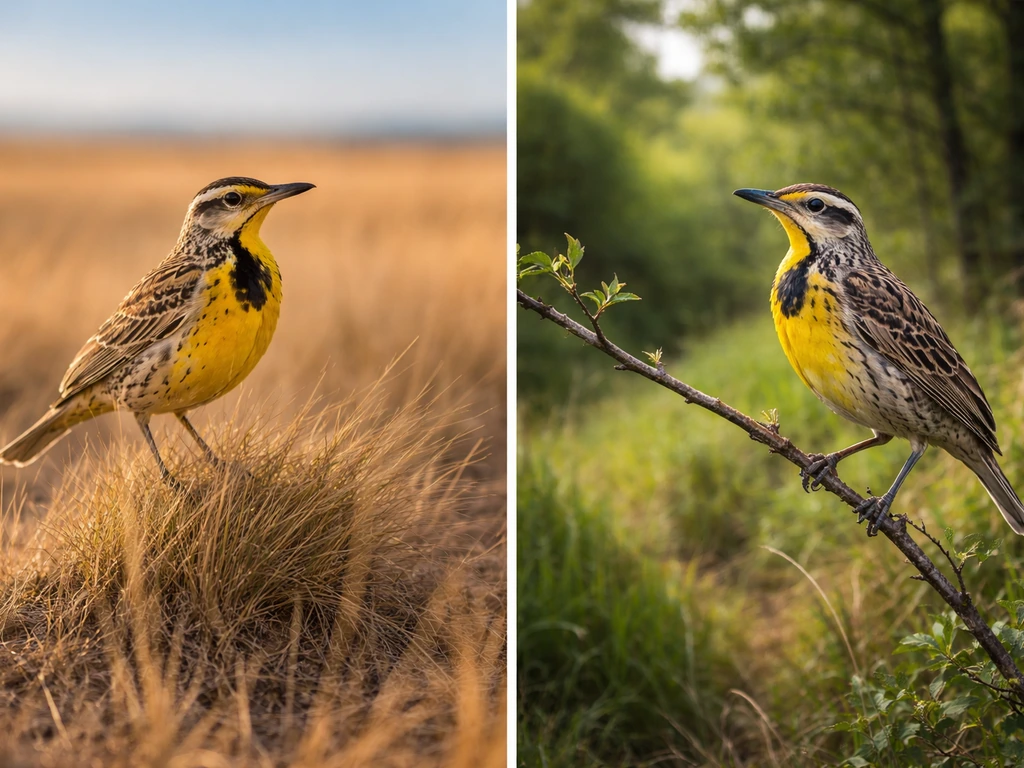
If you're searching from a North American context, the meadowlark carries a specific regional weight that goes beyond general bird symbolism. There are two main species: the Eastern Meadowlark and the Western Meadowlark, and while they look nearly identical, their songs differ. The Western Meadowlark in particular has a more complex, flute-like call that made it a cultural standout in the American West and Great Plains.
The Western Meadowlark is the official state bird of six U.S. states: Kansas, Montana, Nebraska, North Dakota, Oregon, and Wyoming. That's not a coincidence born of bureaucratic laziness. In each case, the bird was chosen because it genuinely represented something about the landscape and character of those places. Oregon's selection is a good example: schoolchildren voted for it in 1927, tying the meadowlark to democratic participation, community pride, and grassroots recognition of what mattered in their natural environment.
In Indigenous traditions of the Great Plains and surrounding regions, the meadowlark holds a more specific place. Several nations, including the Lakota and Cheyenne, have stories in which the meadowlark speaks human language or serves as a messenger. The bird's song was sometimes interpreted as literal communication, a warning or a greeting from the natural world directed at people who knew how to listen. This is a meaningful distinction from European-derived folklore, where birds tend to be omens rather than speakers.
| Context | Primary Meaning | Key Emphasis |
|---|---|---|
| General Western symbolism | Joy, hope, optimism | Positive omen, encouragement |
| American Great Plains / folk tradition | Renewal, seasonal return | Tangible hope, survival turning point |
| Indigenous Plains traditions | Messenger, communication | Literal voice, warning or greeting |
| State bird symbolism (6 U.S. states) | Community pride, natural identity | Belonging, regional character |
| Modern spiritual / spirit animal framing | Personal expression, finding your voice | Inner guidance, creative confidence |
Meadowlarks in idioms and everyday expressions
Honest answer: there isn't a well-established set of meadowlark-specific idioms the way there are for, say, ravens or doves. You won't find 'singing like a meadowlark' embedded in everyday English the way 'a little bird told me' or 'bird in hand' are. The meadowlark tends to show up in literature and regional expression rather than in portable, widely-used phrases.
That said, the meadowlark participates in the broader symbolic language around birdsong and cheerfulness. Phrases like 'caroling at dawn' or references to a clear, bright morning voice draw on the same symbolic reservoir the meadowlark belongs to. When writers or poets reach for an image of unselfconscious, joyful singing in an open landscape, the meadowlark is one of the first birds they pull from that shelf. In that sense, it operates as a culturally recognized shorthand for natural eloquence, even if it hasn't crystallized into a single quotable phrase.
The lark more broadly (including the skylark and the meadowlark's name-cousin, the lark) has a much richer idiomatic history, with expressions around larking about, rising with the lark, and the dawn-song tradition in Romantic poetry. The meadowlark inherits some of that cultural warmth, particularly in American contexts where the lark itself isn't native but the meadowlark is the closest equivalent.
Mythology, folklore, and literature

In Indigenous storytelling of the Plains nations, the meadowlark is one of the birds most consistently credited with speaking human language. Lakota oral tradition includes stories of the meadowlark warning hunters, advising travelers, or communicating messages from the spirit world in intelligible words. This is unusual in bird folklore globally. Most traditions treat birds as signs to be interpreted, not speakers to be understood. The meadowlark's clear, articulate-sounding song made it a natural candidate for this storytelling role.
In American literature, Walt Whitman referenced the hermit thrush more than the meadowlark, but Great Plains writers returned to the meadowlark repeatedly as a marker of place and emotional tone. Willa Cather, writing about Nebraska and the prairie landscape, used birdsong, including the meadowlark's, as a kind of emotional punctuation. When her characters are at peace with their surroundings, the birds are singing. When they're alienated or struggling, the landscape goes quiet. The meadowlark's presence in that literary tradition signals belonging and harmony with the land.
There's also a thread of morning symbolism tied to the meadowlark's early-singing habit. Like the skylark in European poetry, the meadowlark sings at or near dawn, which plugs it into a long tradition connecting early birdsong with spiritual awakening, new beginnings, and the promise of a day not yet compromised by what came before. Some people also look up skylark bird meaning, but it can carry different cultural associations than the meadowlark. Shelley's skylark and Keats's nightingale might be the famous literary birds, but in American pastoral writing, the meadowlark fills a similar emotional slot: the bird whose song reminds you that beauty is real and renewable.
Common misconceptions and how to read the meaning for yourself
The biggest misconception is that meadowlark symbolism is interchangeable with generic 'lark' symbolism. It isn't, entirely. The lark in European tradition (and in related content about lark bird meaning or skylark bird meaning) carries its own distinct literary and cultural history rooted in British and continental folklore. The meadowlark is specifically a New World bird with its own lineage of meaning, particularly in Indigenous traditions and American regional identity.
If you're curious how “limbless prey for a bird” is used to describe this kind of symbol, it often points to the idea of being exposed or vulnerable through a messenger sign limbless prey for a bird meaning. Borrowing lark symbolism wholesale and applying it to meadowlarks flattens a real distinction.
The second misconception is that a meadowlark sighting must mean something dramatic or prophetic. Most folk and spiritual traditions are subtler than that. Seeing a meadowlark doesn't predict a specific event. It functions more like a nudge, a tonal cue to your current emotional and situational state. If you are comparing bird symbols, it can also help to review the meaning of linnet bird so you can tell different traditions apart. The practical question to ask isn't 'what is about to happen?' but 'what does hope feel like in my life right now, and what would it look like to act on it?'
A third misconception is that the Eastern and Western Meadowlark carry identical meanings. In symbolic terms they're close, but the Western Meadowlark has the more culturally prominent song and the stronger state-symbol tradition. If you're in the Great Plains or Pacific Northwest and you encounter meadowlark imagery, it's almost certainly the Western species driving those cultural associations.
How to interpret a meadowlark encounter personally

When you spot or hear a meadowlark and want to make sense of it for your own situation, here's a practical way to approach it:
- Notice where you are emotionally right now. The meadowlark's core message is hope and renewal, so ask whether you've been in a contracted or discouraged state. If yes, the encounter is a traditional signal to expect a shift.
- Pay attention to whether you heard the song or just saw the bird. In folk tradition, hearing the song is the stronger signal. A singing meadowlark is specifically associated with communication and expression, while a silent one may simply be calling attention to the landscape and your place in it.
- Ask what you've been holding back. The spirit animal tradition around meadowlarks is particularly consistent about expression and voice. If there's something you've been avoiding saying, creating, or putting forward, that's the specific area the meadowlark tends to point at.
- Consider your regional context. If you're in the American West or Great Plains, the Western Meadowlark carries the added weight of community, belonging, and natural heritage. That context can deepen a personal interpretation.
- Don't over-systematize it. Meadowlark symbolism is consistently warm and positive across traditions. If the encounter lifted your mood even slightly, trust that response. The symbolic traditions around this bird are essentially pointing at the same thing your gut already noticed.
FAQ
If I see a meadowlark during a stressful time, does it mean something bad is turning into good, or is it just encouragement?
Yes, but it is most often read as an emotional indicator rather than a fixed prediction. A better question is what “hope” would look like in your next small action (a conversation, a draft, a decision), since meadowlark symbolism tends to function as a nudge to express rather than a guarantee about an outcome.
What if I spot the bird but it does not sing, does the meadowlark bird meaning change?
In many traditions, the meaning stays positive even if the moment is messy. Treat silence or absence differently, if it happens repeatedly, because repeated “no song” can reflect your current environment or seasonal stage, not a spiritual reversal.
Does hearing a meadowlark at dawn have a different meaning than hearing it later in the day?
A dawn or morning sighting is often interpreted as fresh beginnings and renewed motivation. If you notice the bird at dawn while you feel stuck, the symbol usually points to starting something early or “first draft” behavior, rather than waiting for full certainty.
How can I tell whether I’m dealing with Eastern vs Western Meadowlark symbolism when I’m using the meaning for guidance?
Differentiate by species when possible. In the U.S. Great Plains and nearby regions, Western Meadowlark imagery and call style are more likely to be the cultural driver behind “clear, flute-like song” associations, while Eastern Meadowlark references may feel more local and less state-symbol prominent.
Is meadowlark symbolism the same as “lark” symbolism from European poetry and sayings?
Yes, and it is a common mistake. “Lark” in European or British literature often carries separate literary history (especially themes of play, dawn-bird tradition, or specific poetic archetypes). Meadowlark meaning is more tied to prairie openness, North American place identity, and in some stories, unusually clear-sounding communication.
How do I figure out what the meadowlark is “asking” of me, self-expression, patience, or something else?
Often, the “right” interpretation depends on your listening mode. If you feel urged to speak, the bird’s lesson is usually self-expression with timing. If you feel reassured, it can be read as confirmation that you are already moving out of a hard stretch, so gratitude and follow-through match the symbol.
If I keep noticing meadowlarks over several days, does that mean a bigger message than a one-time omen?
If a meadowlark shows up repeatedly, many people read it as an intensifier, not a new meaning. The practical move is to track what was on your mind each time and choose the smallest honest step that aligns with that theme, since the symbolism is less about drama and more about consistency of emotional direction.
What is a concrete way to apply meadowlark meaning if I’m not into spiritual interpretation?
No single phrase fits everyone, but a useful “translation” is to treat the song as a signal to speak your truth in a clear, low-drama way. Write down the thing you have been postponing, then schedule one concrete outlet (message, proposal, performance, publication draft).
Can meadowlark bird meaning be used as a journaling prompt, and if so what would I ask myself?
If you want to use it for self-work, treat it like a tonal check. Ask whether your current communication is guarded, whether you are hiding beauty in “ordinary surroundings,” and whether your hope has turned into inaction. Meadowlark meaning usually points back to visibility and honest voice, not perfect conditions.
How should the meadowlark meaning differ when using it through Indigenous storytelling themes?
In Indigenous Plains storytelling, meadowlark song is sometimes portrayed as intelligible speech or messenger communication, so the symbol is more literal in that context. If you want to honor that distinction, avoid treating it as the same as generic “birds as signs,” and instead focus on attentive listening and respect for messages rather than assuming a modern prophecy.
Next Article
Limbless Prey for a Bird Meaning: What It Really Means
What limbless prey for a bird means, when it’s literal snake prey vs symbolic predator mindset, plus how to verify.