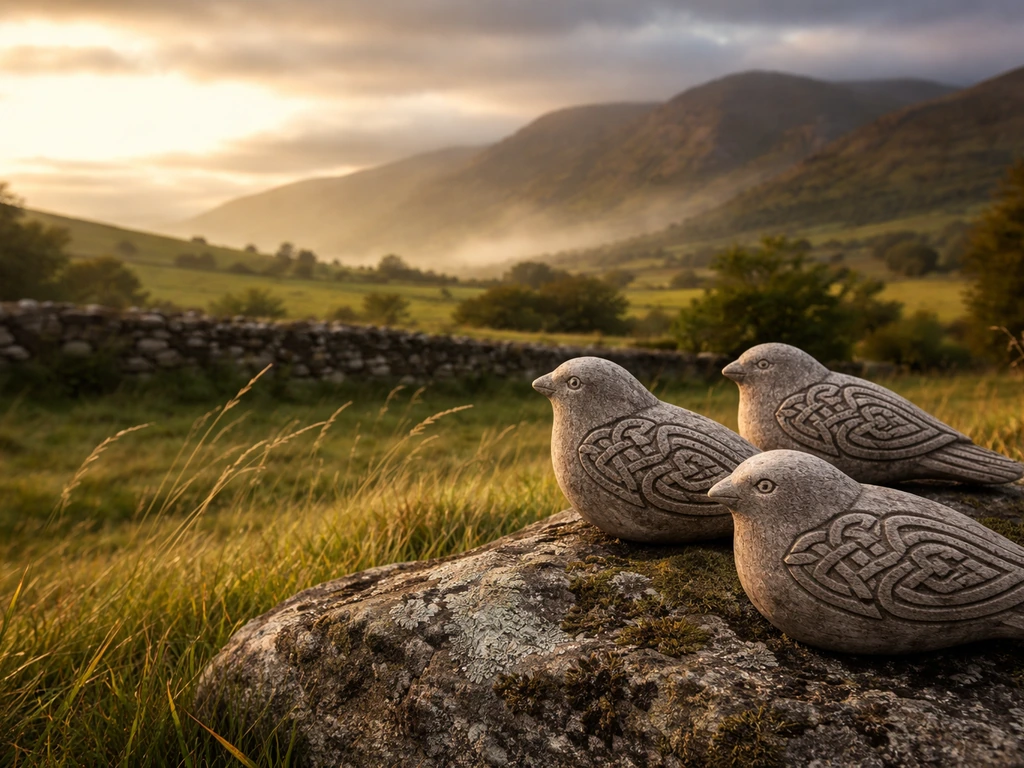
When someone searches 'lark bird meaning,' they're usually asking one of three different questions: what does the lark symbolize (joy, hope, dawn), what does the word 'lark' mean as an idiom (a playful adventure), or how should they interpret a lark in a specific context like a dream, a tattoo, or a line of poetry. The answers are genuinely different, and mixing them up leads to confusion. This guide walks through all three, clearly and in order, so you can find the meaning that actually applies to your situation.
Lark Bird Meaning: Symbolism, Idioms, Omens, and More

Marcus Blackwell
19 Apr 2026
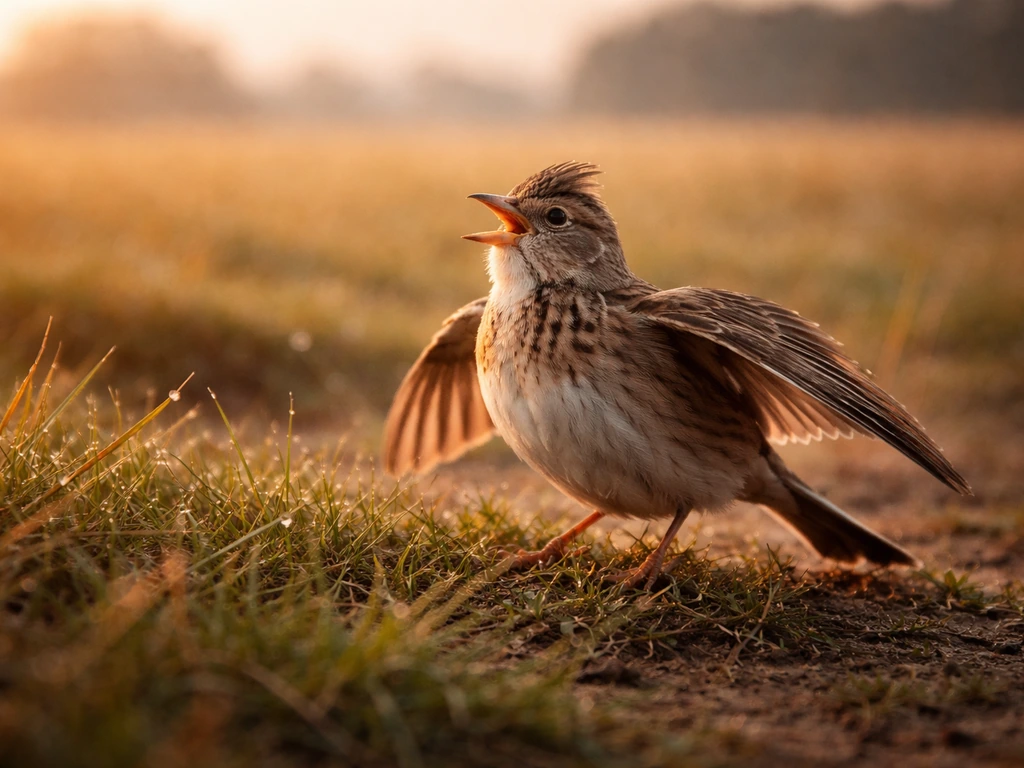
What is a lark, exactly?
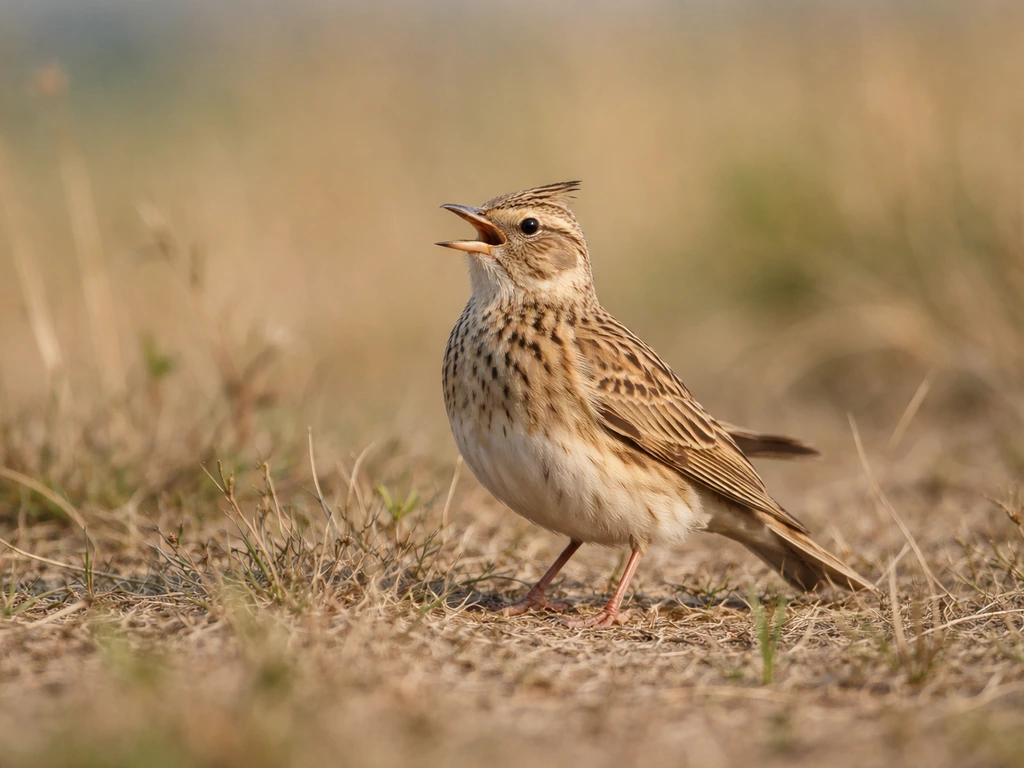
A lark is a bird belonging to the family Alaudidae, a group of mostly Old World ground-dwelling songbirds. Merriam-Webster's definition covers the whole family but singles out the skylark as the most representative species, which tracks with how the word is used in everyday English and literature. When someone says 'a lark' without any qualifier, they almost always mean the Eurasian skylark (Alauda arvensis), a small brown bird known for its remarkable ability to hover high in the air while delivering a rich, sustained song.
The word itself comes from Old English 'lāwerce,' with related forms in Middle English like 'laveroc' and 'laverke. ' That lineage runs deep through Germanic languages. The spelling has been stable for centuries, but one common confusion worth flagging: when people hear about 'larks,' they sometimes conflate species. The skylark and the meadowlark (Sturnella neglecta), for example, are very different birds.
The meadowlark bird meaning is different from the lark symbolism most people mean, so context matters. The meadowlark is a North American grassland species that isn't even in the same family as true larks, despite the name. For symbolism and literary purposes, nearly every reference you'll encounter is pointing to skylark-type birds, not meadowlarks.
If you're reading a Shakespeare play or a Romantic poem and the word 'lark' appears, picture the Eurasian skylark: small, soaring high, singing its heart out.
What the lark symbolizes: joy, song, hope, and renewal
The lark's symbolic meaning is closely tied to one physical behavior: it sings as it rises. The bird climbs almost vertically from the ground, ascending higher and higher while producing a complex, sustained song, then descends in silence. That image, movement upward paired with joyful sound, made the lark one of the most loaded symbols in Western culture. The core meanings that have held up across centuries include:
- Joy and lightness: the lark's song is associated with unselfconscious happiness, the kind that doesn't need an audience
- Hope and renewal: the ascending flight is read as rising above difficulty or sorrow
- Dawn and awakening: larks sing early, often before sunrise, which tied them firmly to the idea of a new day beginning
- Inspiration: particularly in Romantic literature, the lark's song came to represent pure creative expression, music for its own sake
- Freedom: the combination of height and song made the lark a natural emblem of the soul or spirit moving freely
These aren't arbitrary associations. They grew directly from what the bird actually does: it sings while climbing, it appears at dawn, and its song is genuinely remarkable in complexity. The symbolism is grounded in observation, which is probably why it has stayed consistent across so many different traditions and time periods.
The lark in literature and folklore
The lark's literary history is long and remarkably consistent. Wikipedia's summary puts it plainly: 'The lark in mythology and literature stands for daybreak.' That tradition runs from Chaucer through Shakespeare and into the Romantics, and the central image barely changes.
Chaucer and the medieval tradition

Chaucer called the lark 'the bisy larke, messager of day,' which is about as direct as symbolism gets. In medieval literature, the lark's dawn association was already a fixed motif. It was the bird that announced the morning, not in an ominous way like some bird omens, but cheerfully and reliably. That messenger-of-day role shaped how later writers used the bird.
Shakespeare's lark
Shakespeare returned to the lark repeatedly. The most often quoted example is Sonnet 29, where the speaker describes his mood lifting: 'Like to the lark at break of day arising / From sullen earth, sings hymns at heaven's gate.' The lark here is doing exactly what the symbolism calls for: it rises from something low and heavy toward something bright and expansive, and it does it through song. That image of rebirth and renewed hope at dawn has made this one of the most recognized lark references in the English language.
The Romantics: Shelley and Meredith
Percy Bysshe Shelley's 'To a Skylark,' published in 1820, pushed the lark's symbolic meaning further than anyone before him. Shelley was less interested in the bird as a dawn-herald and more captivated by the song itself as something almost supernatural, a kind of pure expression that human art could only approximate. George Meredith's 1881 poem 'The Lark Ascending' covers similar ground, treating the skylark's song as an expression of joy and uplift that transcends ordinary experience. Both works reinforced the lark as an emblem of inspiration, freedom, and hope. Ralph Vaughan Williams later set Meredith's poem to music, which is why 'The Lark Ascending' remains one of the most recognized pieces of English classical music today.
Folk tradition

The English folk song 'The Lark in the Morning' keeps the dawn motif alive in popular tradition. Larks also appear in Christian symbolic frameworks, where the ascending bird was sometimes used as a spiritual emblem of the soul rising toward God. George Herbert's poem 'Easter Wings,' often cited in this context, uses rising imagery (wings, ascent) tied to spiritual renewal, a tradition the lark fitted neatly into. The expression 'up with the lark,' meaning to rise very early, reflects the same dawn-singing observation that fed the literary tradition.
When 'lark' is an idiom, not a bird
Here is where the meanings split, and it matters. In everyday English, 'lark' has a completely separate sense that has nothing to do with bird symbolism. Oxford Learner’s Dictionaries also records this informal sense of lark as meaning doing something for fun or a joke [In everyday English, 'lark' has a completely separate sense that has nothing to do with bird symbolism. ](https://www.
oxfordlearnersdictionaries. com/us/definition/english/lark_1). Cambridge Dictionary defines 'for a lark' as doing something you don't take seriously, something playful or silly. Merriam-Webster defines “for a lark” as an idiom meaning you do something playfully or not seriously ['for a lark'](https://www.
merriam-webster. com/dictionary/for%20a%20lark). Collins English Dictionary similarly records 'on a lark' as its own entry, treating it as a distinct word sense. So when someone says 'we did it for a lark' or 'we went on a lark,' they mean they did something lighthearted and spontaneous, without a serious purpose.
No birds involved.
The origin of this idiom sense is debated. One theory connects it to a dialect word 'lake' or 'lake' meaning to play, which may have shifted into 'lark' over time. Oxford Learner's Dictionaries notes the 'lark' idiom's ultimate origin is unclear. What's not unclear is how it's used: it's casual, friendly, and refers to fun rather than anything winged. If you heard someone use 'lark' in conversation and you're trying to figure out what they meant, this is almost certainly the sense they were using.
| Usage | Meaning | Example |
|---|---|---|
| Lark (bird) | A songbird, especially the skylark; also its symbolic meaning (joy, dawn, hope) | "The lark ascending over the meadow" |
| For a lark / on a lark (idiom) | Doing something lighthearted, playful, or without serious purpose | "We signed up for the race on a lark" |
| Lark in literature/poetry | Symbol of daybreak, renewal, inspiration, or spiritual ascent | "Like to the lark at break of day arising" (Shakespeare) |
| Up with the lark (expression) | Waking very early, at dawn | "She was up with the lark every morning" |
Cultural and spiritual associations across traditions
The lark's symbolic meaning is most developed in Western European tradition, but a few consistent threads run through its cultural appearances broadly. The dawn and song association is the most stable. In Christian symbolism, the upward flight of the lark connected naturally to themes of resurrection and the soul's ascent, which is why it appears in Easter-related religious poetry. In English folk culture, the lark was a positive omen, a bird of good weather and good fortune, partly because its singing was associated with fair conditions.
In contrast to birds like ravens or owls, which carry ambiguous or dark connotations in many traditions, the lark is almost universally positive in the cultures where it appears. It doesn't show up as a bad omen in any major tradition I'm aware of. The closest thing to a negative association is the bittersweet quality in Romantic poetry, where the lark's perfect joy is something the human speaker can hear but never fully achieve. That's more wistful than dark.
If you're comparing the lark's cultural weight to a bird like the skylark (which is essentially the same bird) or the meadowlark, the lark carries more literary and spiritual baggage, simply because it has been written about and symbolized for longer in European tradition.
What people mean in everyday conversation: slang and casual usage
In modern casual speech, 'lark' as a standalone noun most often means the idiomatic sense: something fun and spontaneous, a bit of a joke or a light adventure. 'That was a bit of a lark' means 'that was fun in a low-stakes way.' This usage is more common in British English than American English, but it shows up in both. Americans are more likely to say 'on a lark' while British speakers might say 'for a lark' or just 'a bit of a lark.'
If someone says 'lark' and means the bird, they usually make that clear by context, for example describing something they saw outdoors or referencing a specific species. Outside of birdwatching, poetry, or nature conversations, the idiom sense is the default interpretation most listeners will reach for first. This is worth knowing if you're trying to decode something you heard or read: ask whether the context is about nature/symbolism or about behavior/attitude. That question usually resolves the ambiguity immediately.
How to interpret a lark in your specific context
The right interpretation depends almost entirely on context. Here's how to approach the most common situations where someone might be searching for 'lark bird meaning.'
In a book, poem, or song lyric

If you're reading older literature (anything from Chaucer through the early 20th century) and a lark appears, it's almost certainly carrying the dawn, hope, or renewal symbolism. Ask what the lark is doing in the scene: is it singing? Rising? Appearing at daybreak? Those details will confirm the symbolic reading. If the lark appears at a moment of grief or despair, it's probably being used contrastively, the joyful bird as a foil for the character's suffering, which is a classic literary move. Shelley and Shakespeare both use the lark this way at different points.
In a dream
Popular dream dictionary sites tend to assign larks meanings like joy, hope, and freedom, which aligns with the bird's literary symbolism. That's not unreasonable as a starting point, but it's worth knowing that these interpretations aren't clinically validated. Some dream dictionaries also claim the term “limbless prey for a bird meaning,” but those sources are not reliable for firm interpretations.
Psychoanalytic frameworks, going back to Freud's foundational work on dream interpretation, emphasize that dream symbols don't have fixed universal meanings. What a lark means in your dream depends heavily on your personal associations with the bird, the emotional tone of the dream, and what was happening in your life at the time. If larks mean nothing to you personally, the cultural symbolism (dawn, renewal, uplift) is a reasonable lens to apply.
But treat it as a prompt for reflection, not a firm diagnosis.
As an omen or a sighting
In folk tradition, seeing or hearing a lark, especially in the morning, was generally read as a positive sign. The dawn-song association made the lark a good-weather bird and a symbol of fortune beginning to turn. If you saw a lark and felt moved to look up what it might mean, the traditional reading is optimistic: new beginnings, lightness ahead, a signal to take heart. There's no strong negative omen tradition attached to larks in European folklore, which sets them apart from more ambiguous birds.
As a tattoo
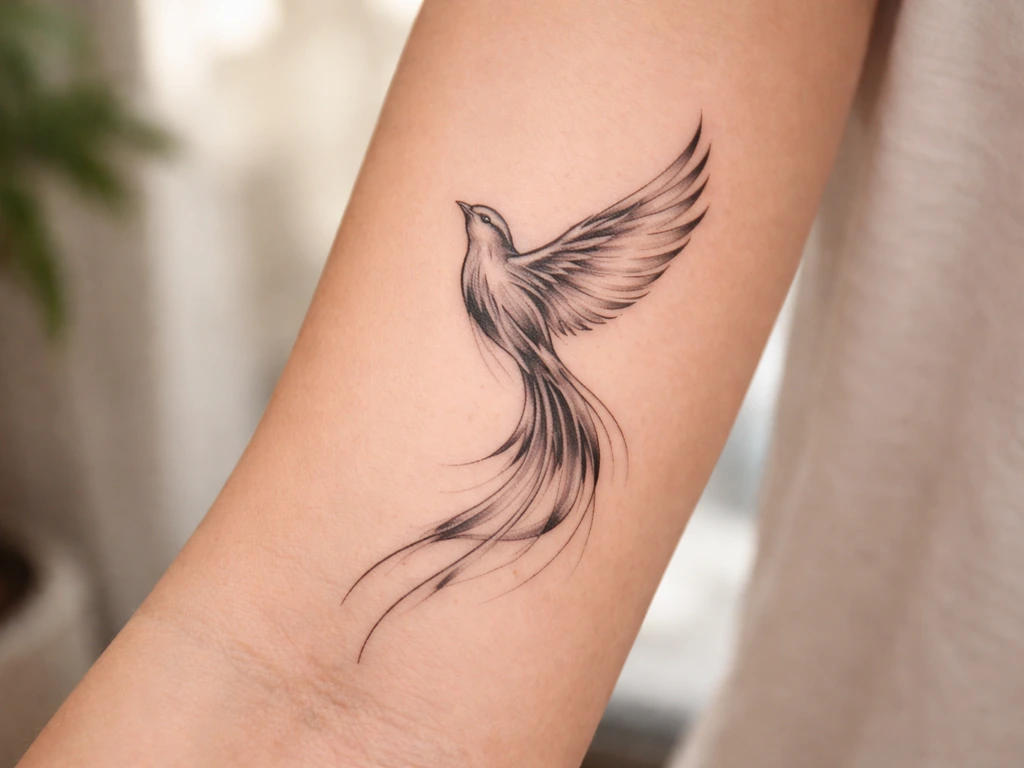
A lark tattoo almost always draws on the symbolic tradition: joy, song, freedom, a new beginning, or personal renewal. The ascending-bird image pairs naturally with tattoo design, and the symbolism is positive and legible to most viewers familiar with Western literary tradition. If you're choosing a lark tattoo for a specific reason (marking a turning point, honoring a love of music, representing optimism), the bird's established meaning lines up well with those intentions. It's worth noting that the skylark species, the one Shelley and Shakespeare were writing about, is the most symbolically loaded choice if historical resonance matters to you.
In a phrase someone said to you
If someone used the word 'lark' in conversation and you're trying to work out what they meant, start with the idiom: 'for a lark' or 'on a lark' means a lighthearted, not-very-serious activity. Unless they were clearly talking about birds or nature, that's the most likely meaning. If you want to explore the bird's symbolism further, the skylark meaning connects to related birds like the meadowlark and the linnet, which share some (but not all) of the same associations with song and natural beauty, though none quite carry the same literary weight as the lark. The meaning of linnet bird is also shaped by its song and its place in everyday nature, with symbolism that overlaps but is not identical to the lark.
Putting it together: which meaning applies to you?
- If you're reading a literary work: the lark is a symbol of dawn, hope, renewal, or joyful song. Look at what the bird is doing and what emotional moment it appears in.
- If you heard or read 'for a lark' or 'on a lark' in casual speech: it's an idiom meaning a playful, lighthearted activity. No bird symbolism intended.
- If you're interpreting a dream or personal sighting: use the traditional symbolic meaning (joy, new beginning, renewal) as a starting framework, but weight your own personal associations heavily.
- If you're choosing a tattoo or creative symbol: the lark is a strong, positive choice with deep literary roots, most commonly representing freedom, song, and personal renewal.
- If you're confused about which species: for symbolic purposes, the lark almost always means the Eurasian skylark. Meadowlarks and other 'lark'-named birds carry different (often regional) associations.
The lark is one of those rare symbols that has stayed remarkably consistent over a long time. The meanings people attach to it today, joy, song, hope, a new day starting, are the same ones Chaucer and Shakespeare were working with. That's worth something. Whether you're decoding a poem, interpreting a dream, or just trying to figure out what your friend meant when they said something was 'a bit of a lark,' the answer is usually simpler than it first appears, once you know which question you're actually asking.
FAQ
If someone says “on a lark” what does it mean, and how do I know they are not talking about the bird?
In most ordinary conversation, the idiom reading wins. If the sentence sounds like a plan or weekend activity (for example, “Let’s do it on a lark,” “We went out for a lark”), it means a playful, low-stakes choice. You can confirm it by checking whether any bird-related details appear, like “skylark,” “singing,” “at dawn,” or “in the field.”
Does “lark bird meaning” always refer to the same species, or can it change?
“Lark” alone is commonly the Eurasian skylark in symbol-heavy contexts, especially British and older English literature. “Meadowlark” is different, North American, and not in the same family as true larks, so its symbolism and cultural baggage do not automatically match “lark bird meaning.” If the text mentions North America, grasslands, or a specific species name, treat that as a sign to switch interpretations.
How should I interpret a lark in a dream if dream meanings are not universal?
For dreams, avoid treating a lark as a fixed “prediction.” A practical way to use it is to map the dream’s emotion and setting to the lark themes described in literature (hope, uplift, renewal). If the dream tone is anxious or detached, the lark may be your mind referencing “a lighter perspective” rather than a literal joyful omen.
Why does a lark sometimes show up in sad scenes, and does that mean a bad omen?
If a lark appears during grief or hardship in a poem, it often works as contrast, not comfort-by-magic. The common literary move is that the speaker recognizes the bird’s effortless joy, which highlights what the human cannot easily access in that moment. In those cases, the lark can underline longing or the desire for renewal rather than guaranteeing immediate happiness.
What wording cues tell me whether “lark” is an idiom or a bird symbol?
Choose the idiom only when the speaker’s focus is attitude or intent. “For a lark” and “on a lark” point to doing something not very seriously, often impulsively or as a joke. If the wording centers on timing and nature (for example, “at break of day” or “from the ground”), it is usually the symbolic bird image, not the idiom.
What does “up with the lark” mean, and is it connected to bird symbolism?
Yes, the phrase “up with the lark” and similar expressions mean getting up early, but they are grounded in the dawn-singing observation. The bird is part of the metaphor for early rising, so the practical meaning is about routine. If you see a direct reference to rising while singing, that often points back to the skylark-style symbolism.
How can I choose a lark tattoo design that matches the meaning I actually want?
For tattoos, the biggest decision aid is your intent. If you want “renewal” or “hope through a turning point,” the rising-and-singing concept from the skylark tradition will match well. If you want something specifically musical, look for design choices that emphasize vertical ascent or a visible song posture, not just a generic bird silhouette. Also, if historical resonance matters to you, use stylization that matches a skylark-like upward flight rather than a meadowlark shape.
Is it reasonable to treat a lark sighting as a sign of good luck, or should I be cautious?
When folklore sources claim “good weather” or “fortune” from hearing or seeing a lark, treat it as a cultural lens, not a guaranteed outcome. A helpful approach is to combine it with your actual context: if you saw or heard it during a stressful week, you might be reading “light ahead” as encouragement. If you need decisions, use the omen as motivation, not as evidence.
Next Article
Munster Bird Meaning: Folklore, Symbolism, and How to Verify
Meaning of Munster bird searches: folklore, symbolism, idioms, spelling variants, and quick ways to verify the reference