
The skylark is one of the most symbolically loaded birds in Western tradition, and its meaning comes down to three things it does better than almost any other bird: it sings continuously, it flies almost straight up into the sky, and it does both at the same time. Because of that, skylark symbolism clusters around joy, freedom, hope, optimism, and the idea of music descending from a place you can barely see. When you encounter a skylark in a poem, a dream, a piece of folklore, or a field, those are the associations you are working with.
Skylark Bird Meaning: Song, Symbolism, and Hope

Marcus Blackwell
6 Jun 2026
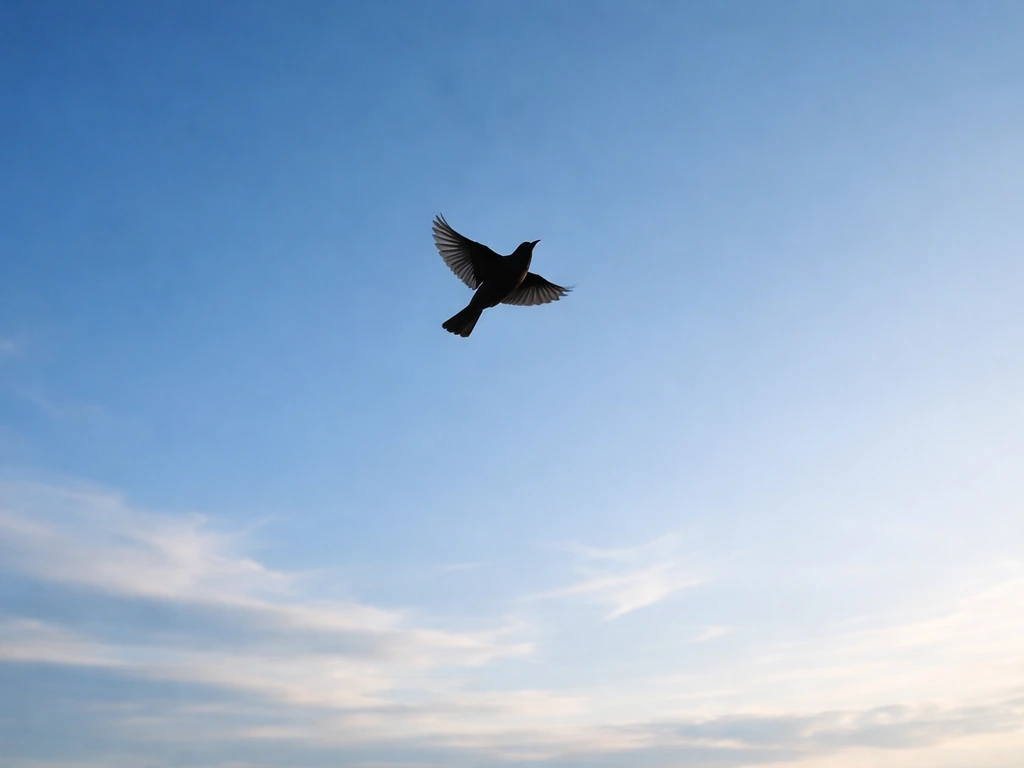
What the Skylark Actually Is
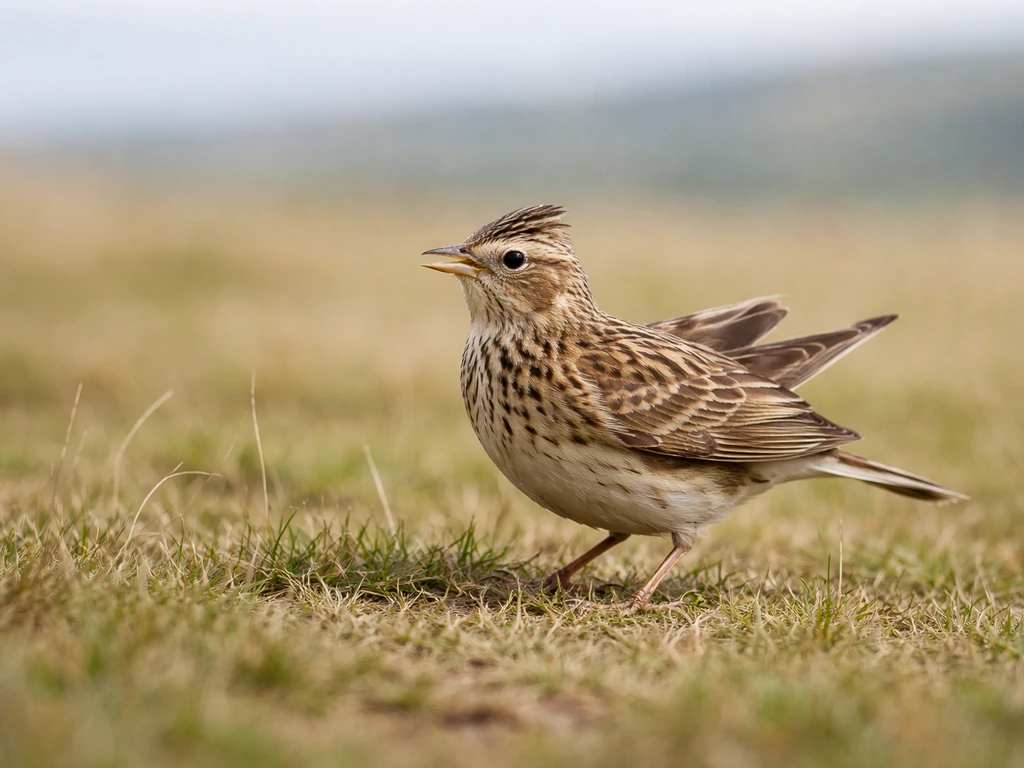
The skylark most people are referring to, in any symbolic or literary context, is the Eurasian Skylark (Alauda arvensis). It is a small, streaky brown bird native to Europe and parts of Asia, and at first glance it is genuinely unremarkable looking. That plainness is part of its story. The bird is not beautiful to look at, but its behavior is extraordinary.
What people notice immediately is the song flight. The male launches from open ground, rises almost vertically on rapid wingbeats, and keeps climbing until it is hovering somewhere between 50 and 100 meters up, often so high overhead it appears as little more than a speck against the sky. The whole time it is up there, it is singing continuously: a melodic, cascading flood of whistles, chirrups, and warbles that seems to pour down from empty air. It will hold that position, singing without pause, before finally descending. The RSPB describes it as a display flight that goes "vertically up in the air," and blank" rel="noopener noreferrer">Cornell Lab of Ornithology notes the bird can hover at that height before coming back down. These song flights happen from late winter all the way through midsummer, so across much of Europe the skylark is the background soundtrack to open countryside for months on end.
One thing worth noting early: in English, "lark" used without any qualifier almost always meant the skylark historically. The 1911 Encyclopaedia Britannica put it plainly: "the word lark, used without qualification, almost invariably means the skylark." That convention has loosened in modern usage, but it explains why so much of the folklore and idiom around larks is really about skylarks specifically. When in doubt, assume the lark in an old English text is a skylark.
Why the Skylark Matters Symbolically
Every culture builds its bird symbolism from observed behavior, and the skylark's behavior practically writes the symbolism for you. The combination of upward flight and continuous song is unusual. Most birds sing from a perch. The skylark sings from the sky itself, and the further it rises, the more its song seems to fall toward you like something gifted from above. That is not a poetic invention: it is the literal acoustic experience of standing in a field while one is overhead.
This generates a cluster of symbolic meanings that have stayed remarkably stable across centuries. The bird rises toward heaven while producing music, which made it a natural symbol of the soul, of aspiration, and of joy that comes from above ordinary experience. The timing matters too: skylarks sing from late winter onward, meaning the song arrives precisely when the land is coming back to life. In agricultural communities that lived closely with seasonal rhythms, a skylark overhead in February or March was not just pleasant, it was a reliable signal that things were improving.
Core Skylark Meanings in Symbolism and Folklore
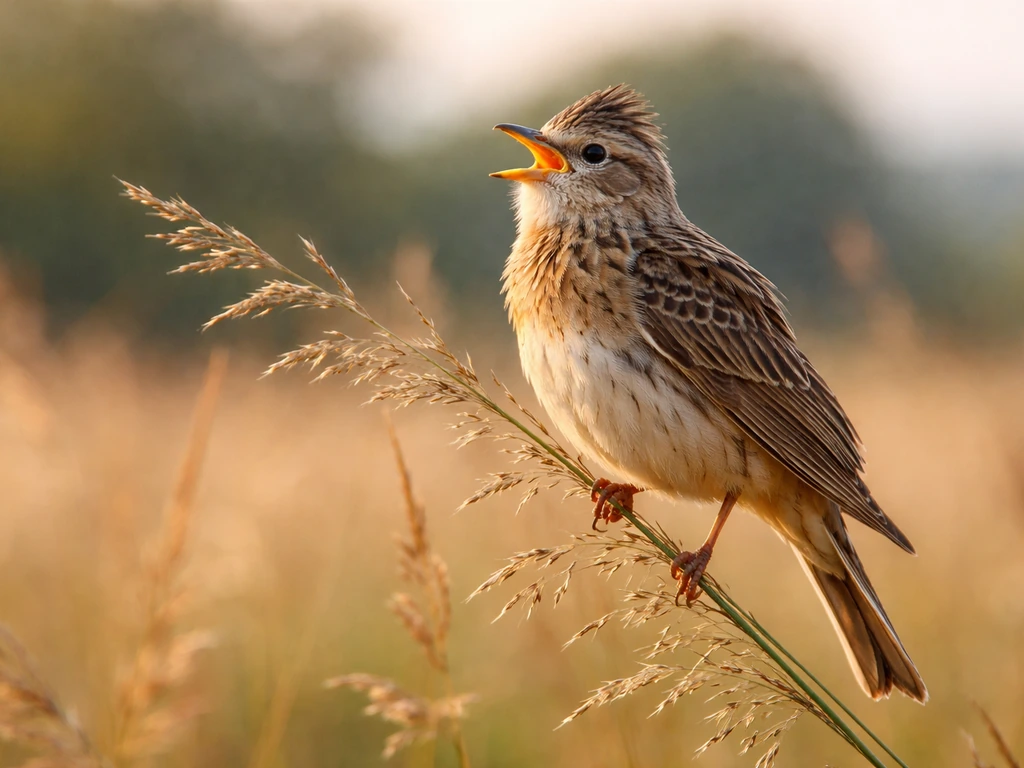
These are the main symbolic readings, and most of them are interlocking rather than separate. You rarely encounter just one.
- Joy and exuberance: The sheer volume and continuousness of the song is the dominant impression. The skylark does not sing cautiously. It pours everything out, loudly, at height. This has made it a cross-cultural emblem of uninhibited joy.
- Freedom: The upward flight into open sky, with nothing limiting it, maps cleanly onto ideas of liberation and freedom from earthly constraints. The higher it goes, the more untethered it appears.
- Hope and optimism: Because the song flights begin in late winter and early spring, the skylark has long been read as a herald of better times. Hearing it signals that winter is ending and the year is turning toward abundance.
- Spiritual elevation: In Christian and pre-Christian European traditions, the bird rising toward heaven while singing was interpreted as the soul in prayer or in ecstatic communion with the divine. The song coming from an invisible source above adds a mystical quality.
- Inspiration and creativity: For poets especially, the skylark became a figure for the artist: someone who rises above ordinary life and sends beauty back down to those still on the ground.
- Morning and early rising: Because the skylark begins its song flights at dawn, it is embedded in the folk consciousness as a morning bird, linked to industriousness, fresh starts, and the virtues of waking early.
In British and Irish folklore, the skylark was generally treated as a lucky bird, one to be respected and not disturbed. Destroying a skylark's nest was considered to invite misfortune. In some regional traditions, the skylark's song was thought to carry prayers upward, which is why harming one felt like interfering with something sacred. These are not universal rules, and specific regional variations exist, but the overall folkloric tone around the skylark in Northwestern Europe is protective and reverent.
The Skylark in Literature and Poetry
No other small bird has attracted quite as much serious literary attention in the English tradition. The skylark's symbolic richness made it irresistible to Romantic poets in particular, who saw in it a perfect image of inspiration and spiritual longing.
Percy Bysshe Shelley's "To a Skylark" (1820) is the defining text. Shelley addresses the bird directly as a "blithe spirit" and argues it is not really a bird at all but something closer to pure joy given form. The poem explicitly works with the tension between the bird's invisibility (too high to see clearly) and the overwhelming presence of its song. That gap, between the unseen source and the felt effect, is what Shelley uses to explore the nature of inspiration. For Shelley, the skylark embodies what human art and poetry aspire to but can never fully achieve: effortless, unself-conscious beauty.
John Keats, George Meredith, and later Ted Hughes all wrote poems engaging with the skylark, each bringing a different angle. Meredith's "The Lark Ascending" (1881) inspired Ralph Vaughan Williams to write his famous violin piece of the same name, which has become one of the most beloved pieces of British classical music. The musical reference is direct: Vaughan Williams was trying to translate the bird's song flight into orchestral sound, which is itself a statement about what the skylark represents in British cultural life.
In Shakespeare, larks (almost certainly meaning skylarks in context) appear multiple times as signals of dawn, joy, and the turning of night into day. In "Romeo and Juliet," the debate over whether the bird outside is a nightingale or a lark is not just a lovers' quarrel; it is a symbolic argument between hope (staying together in night) and reality (morning, separation, consequences). The lark in that scene represents the harsh, bright truth that dawn brings.
Idioms and Expressions: Lark vs Skylark
Here is where things get layered, because "lark" has two distinct tracks in English idiom, and they are not always related to the bird.
The clearest bird-based idiom is "up with the lark," which the Cambridge Dictionary defines as being up very early in the morning. This one traces directly to the skylark's dawn singing habit. If you are up with the lark, you are awake at first light, and the reference is to the bird's famously early start to its song flights. This idiom is common in British English and carries positive connotations of industriousness and energy.
Then there is the other "lark," meaning a bit of harmless fun or a prank, as in "we did it for a lark" or "what a lark." This usage has a separate etymology and is not directly related to the bird, though the two meanings have influenced each other over time. Etymonline notes that the word history of "skylark" is layered, with a separate nautical slang sense of the verb "to skylark" (meaning to frolic or play around) that developed alongside the bird name. Sailors apparently used "skylark" to describe the kind of climbing and horsing around done in the rigging, and that sense of playful, carefree activity blended with the bird's associations with carefree joy.
The practical distinction: if someone says "up with the larks," the bird meaning is intended. If someone says "it was just a lark" or "what a lark," they mean harmless fun, which may or may not have bird origins depending on the specific usage and context. In symbolic and spiritual readings, always default to the bird meaning unless the context is clearly conversational and casual.
How to Interpret a Skylark in Real Life

If you are trying to figure out what a skylark encounter means for you, the key is context. If you are trying to pin down the meaning of linnet bird, look first at how this smaller finch has been portrayed in local folklore and symbolism. The bird's symbolism is consistent, but what aspect of it lands depends on where you are in your life when you encounter it.
Hearing or Seeing One in Person
If you hear a skylark overhead in an open field, the traditional reading is straightforwardly positive: joy, hope, something opening up. In a spiritual context, particularly in Christian or Celtic traditions, you might read it as a sign of elevation, of being reminded to look up and beyond immediate circumstances. If you are at a turning point or have been feeling stuck, the skylark's upward trajectory is a fairly direct symbolic prompt. Note whether you can see the bird or only hear it, because the "music from an invisible source" quality is a meaningful part of the experience. In the same way, some people search for the meaning of limbless prey for a bird, which comes up in dark wordplay and should be read in context limbless prey for a bird meaning. Hearing without seeing is often interpreted as a reminder that the source of inspiration or joy is not always visible or rational.
Skylarks in Dreams
A skylark in a dream is generally read as a positive omen in most Western and folk traditions. A rising skylark suggests aspiration, freedom, and things going well. A skylark that is falling or silent may prompt reflection on suppressed joy or creativity. A skylark singing loudly, even if you cannot see it, often represents guidance or inspiration coming from somewhere beyond your current field of vision. If you are working through a creative project or a major life decision, the singing-but-invisible skylark is a recurring dream image for the sense that the answer is there but not yet fully visible.
Skylarks in Texts and Stories
When you encounter a skylark in a poem, novel, or cultural reference, check what the bird is doing. Rising and singing: the writer is working with joy, inspiration, or spiritual aspiration. Falling or silent: expect a thematic note of loss, suppressed potential, or grief for something that once soared. Dawn context: the author is flagging a new beginning, a moment of clarity, or the end of a period of darkness. The Romeo and Juliet lark is a perfect case study because the bird's ordinary dawn behavior becomes a symbol of unavoidable reality piercing romantic fantasy.
Skylark vs Other Larks: How to Avoid Confusion
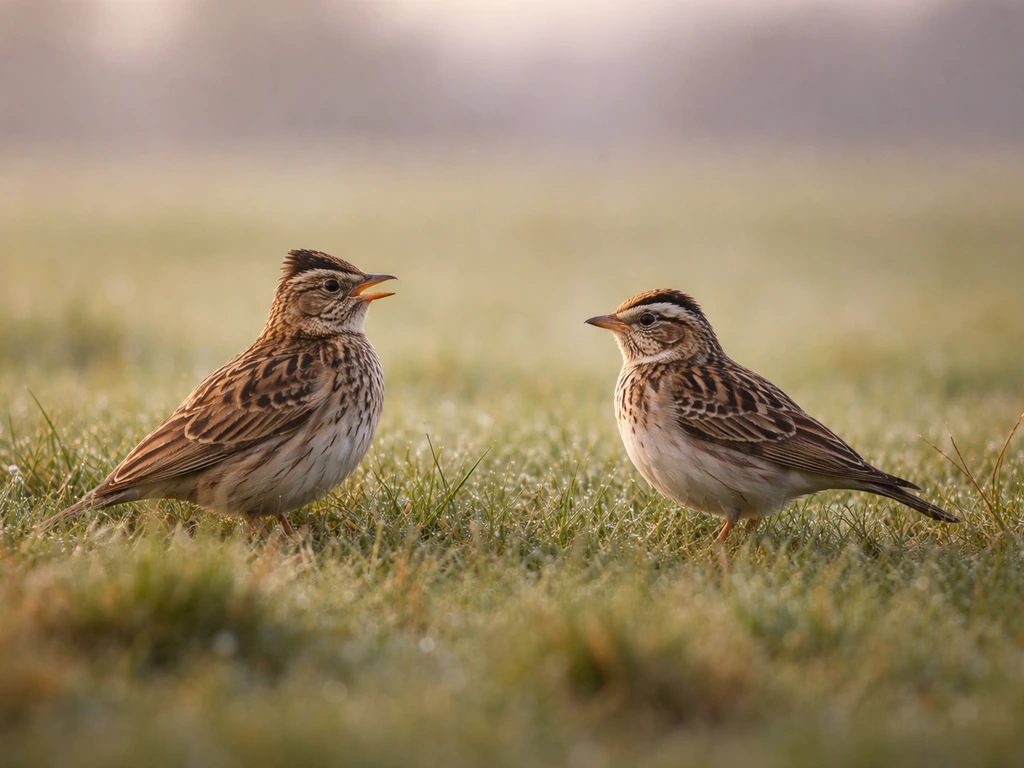
The skylark is part of a larger lark family, and this is where readers sometimes get tangled. Not all larks mean the same thing, and not all uses of the word "lark" in older texts refer to the same species.
| Bird | Key Trait | Primary Symbolic Emphasis |
|---|---|---|
| Skylark (Alauda arvensis) | Vertical song flight, sings while rising to great height | Joy, freedom, spiritual aspiration, inspiration from above |
| Lark (general/unspecified) | Dawn singing, early rising | Industriousness, morning, new beginnings, 'up with the lark' idiom |
| Woodlark | Circular song flights lower than skylark, rich sustained song | Similar joy/song themes but less 'upward' emphasis, more earthbound |
| Meadowlark (North American) | Bright yellow breast, rich song from fence posts and ground | Hope, spring, prairie/open land, but lacks the vertical flight symbolism |
| Horned Lark / Shore Lark | Ground-dwelling, less dramatic song flight | Rarely carries the same elevated symbolic weight as skylark |
The disambiguation rule is simple: if the text or reference specifies "skylark," you are working with the full upward-flight-and-song symbolism. If it just says "lark" in a British or Irish context, historically you can assume skylark. If it says "lark" in a North American context, or in a modern context that specifies a different species, the meaning may shift. The meadowlark, for instance, carries its own rich symbolism in Native American traditions and American folk culture that is distinct from the Eurasian Skylark's European associations. Do not conflate them.
It is also worth knowing that the lark family is large and the prefix in the name matters, as the 1911 Encyclopaedia Britannica noted: specific meanings are "signified by a prefix," so skylark, woodlark, and titlark are all distinct birds with distinct behaviors. The skylark is the one that gave the whole family most of its symbolic prestige in European tradition, and it earns that status through the song flight specifically.
Deciding Which Skylark Meaning Applies to You
If you are standing in a field in Britain or Europe and one is overhead, you are in the territory of the original, unambiguous experience. Let the sound do the work: the continuous, cascading song from an invisible point in the sky is the symbolic event, and joy and aspiration are the right readings.
If you are interpreting a skylark in a dream, look at what the bird is doing. Rising and singing is positive and expansive. Falling or silent shifts toward loss or unexpressed potential.
If you are reading a poem or literary text, identify what the skylark is contrasted with. Shelley contrasts it with human sadness and limitation. Shakespeare contrasts it with the nightingale (reality vs comfort). Meredith uses it as pure aspiration. The contrast reveals which facet of the symbolism the author is pulling on.
If you are exploring idioms and the phrase uses "lark" without "sky" in front of it, check whether the context is early-morning-activity (bird origin, clear) or playful fun (possibly bird-adjacent, possibly separate etymology). The Cambridge Dictionary definition of "up with the lark" is the clean bird-based one. "Having a lark" and similar fun-idioms are related but not identical.
For deeper confirmation of which meaning fits your context, return to the primary texts: Shelley's "To a Skylark" for the spiritual and inspirational reading, Meredith's "The Lark Ascending" for the pure joy and beauty reading, and Shakespeare's dawn scenes for the hope-as-hard-truth reading. Those three cover the full range of what the skylark has been asked to represent, and one of them will almost certainly match your situation.
FAQ
If a text says “lark” but not “skylark,” how do I know which bird it means?
In English, “lark” in an older British setting most often points to the skylark, but not always. If the passage names a different place or species-specific behavior (for example, something about a specific North American bird), treat it as a different “lark” rather than assuming the skylark meaning automatically.
Does a skylark’s behavior (singing, silence, rising, descending) change the meaning?
The sharpest symbolic clue is whether the bird’s song is continuous and upward. A skylark that keeps singing high overhead typically reads as steady hope and inspiration, while a silent or abruptly disappearing skylark is more often used for lost momentum, blocked creativity, or joy that is not being expressed.
How can I tell whether “lark” in an idiom refers to the bird or just means “fun”?
Yes. If the reference is about “up with the lark,” the early-morning meaning is usually intended. If it is “what a lark” or “for a lark,” the speaker is usually signaling harmless fun, even though bird associations can influence the tone.
What if my dream about a skylark feels good, but it still could mean something negative?
In dream interpretations, context usually beats symbolism alone. If you wake from the dream feeling energized or ready to act, “rising and singing” tends to function like a call to move forward. If you feel unsettled or heavy, the same image may be pointing to unrealized potential that needs a concrete step, not just hope.
What does it mean if I hear a skylark but never see it in real life or in a story?
Often, but only in a qualified way. The skylark’s “invisible source” theme matters, so the meaning can apply even when you cannot see the bird. However, if the dream or scene explicitly focuses on darkness, fog, or confusion, then “invisible music” may also be about uncertainty, not guaranteed clarity.
Does the meaning change if the skylark appears in a different season than expected?
The symbolism can shift depending on the season. Late winter and early spring skylark singing commonly reads as restoration and improvement, while references out of season (for example, deep winter in a story) often signal an interruption of the natural cycle, which can color the message toward surprise or longing.
When should I read skylark symbolism as spiritual versus purely emotional (hope and joy)?
If your interpretation is tied to “soul” or “prayer,” check whether the surrounding text uses religious language or sacred imagery. Without that framing, skylark meaning usually stays more general (joy, aspiration, hope) rather than becoming strictly spiritual.
Can I apply skylark symbolism to meadowlarks or other lark species?
Avoid conflating skylark with other “larks,” especially meadowlark and woodlark. Those birds have distinct cultural and folkloric associations, so if the article or scene points to a specific region or species, treat the meaning as species-specific rather than “lark = the same symbol.”
What’s the quickest way to interpret a skylark in a poem or novel?
The skylark symbolism in English literature is easiest to interpret by checking contrasts. If the text contrasts the skylark with night, separation, or human limitation, the meaning typically leans toward dawn, reality, and hope that endures. If it contrasts with grief or confinement, it usually emphasizes spiritual aspiration and release.
Next Articles
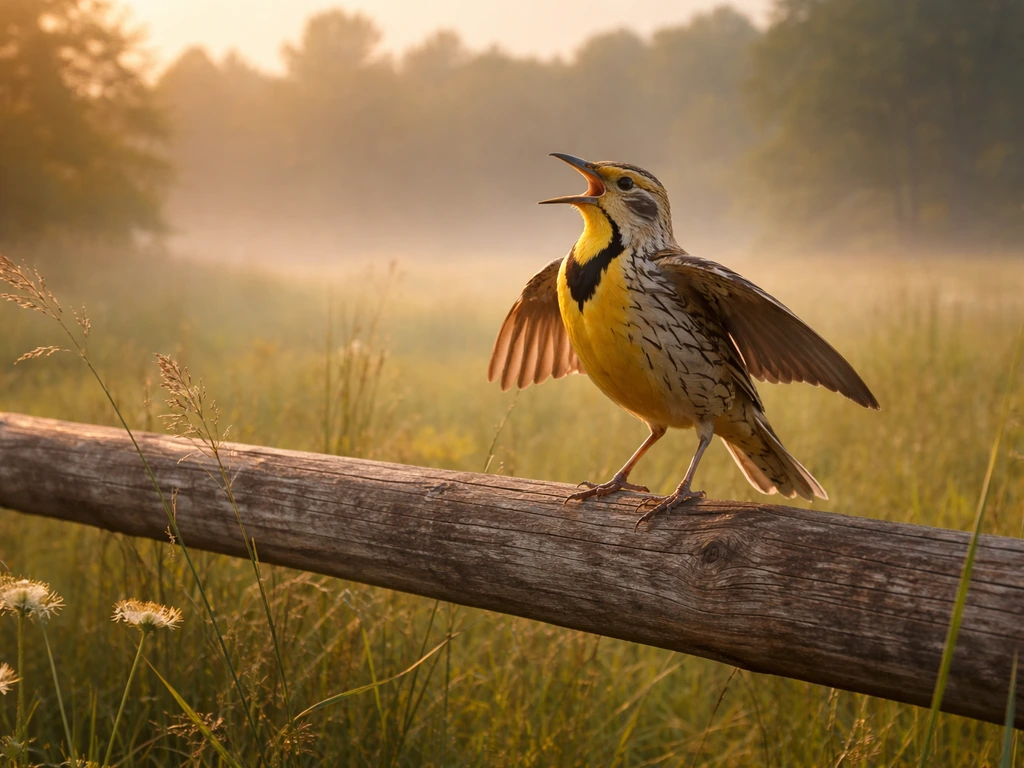
Meadowlark Bird Meaning: Joy, Hope, Song, and Signs
Decode meadowlark bird meaning: joy, hope, purposeful song, spiritual signs, regional context, and a self-check guide.
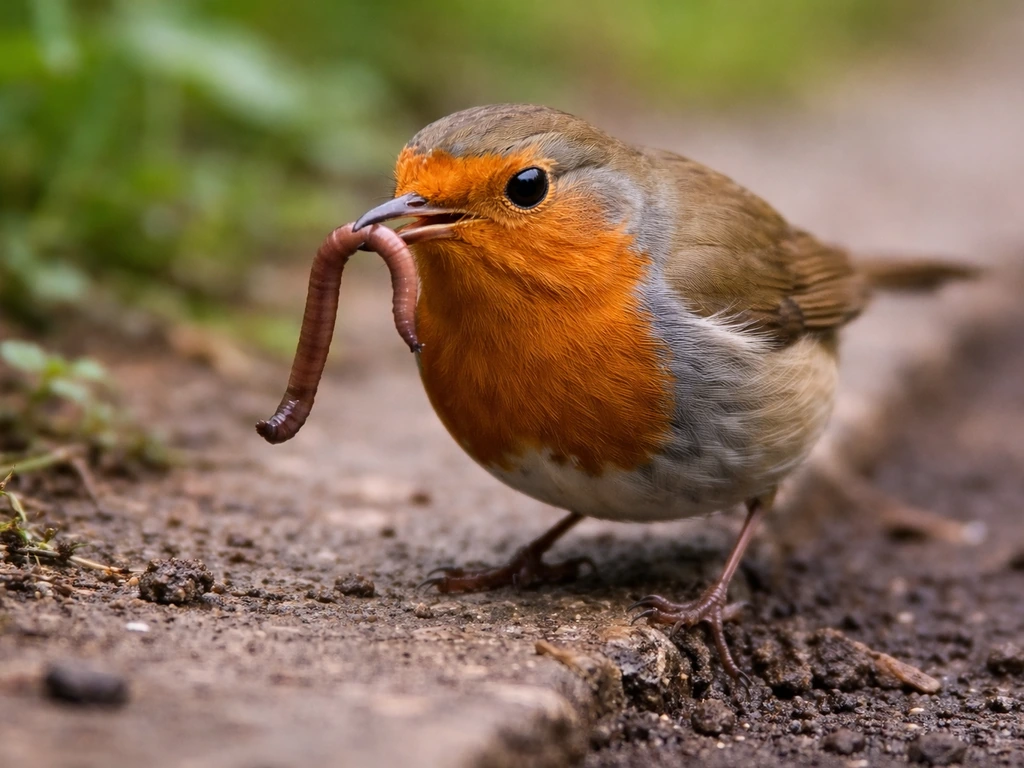
Limbless Prey for a Bird Meaning: What It Really Means
What limbless prey for a bird means, when it’s literal snake prey vs symbolic predator mindset, plus how to verify.
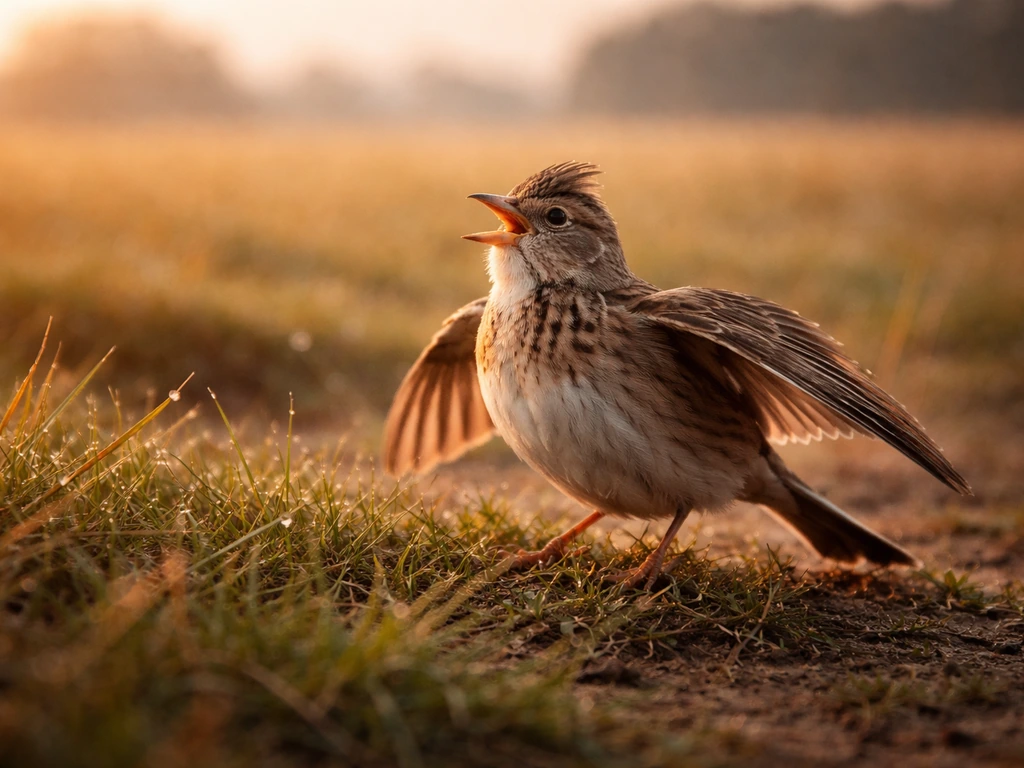
Lark Bird Meaning: Symbolism, Idioms, Omens, and More
Understand lark bird meaning, symbolism, idioms, omens, and dream or tattoo interpretations, with clear usage confusion