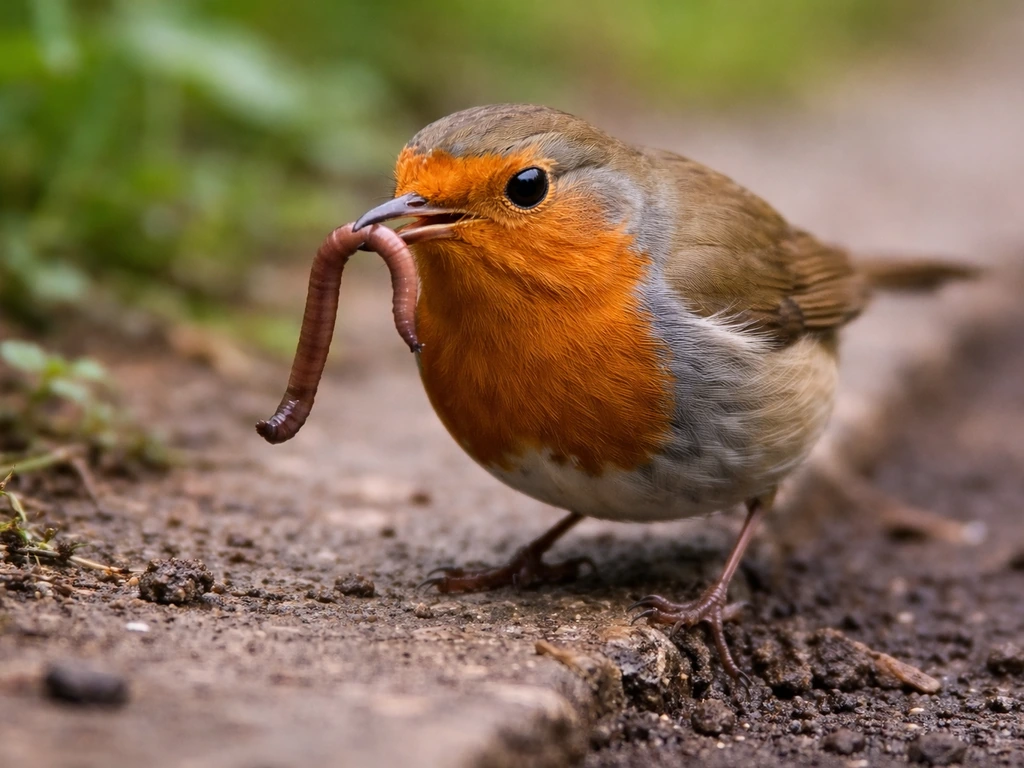
The answer is WORM. Whether you're staring at a crossword clue, unpacking a riddle, or trying to figure out what a phrase like 'limbless prey for a bird' is pointing at, that four-letter word is almost certainly what you need. It fits the literal description perfectly: a worm has no limbs, and birds eat them constantly. The phrase is doing exactly what it says.
Limbless Prey for a Bird Meaning: What It Really Means

Marcus Blackwell
29 May 2026
Why the clue points so clearly to one word
The wording 'limbless prey for a bird' is a tight logical description. Break it down: 'limbless' rules out most animals immediately. Snakes are limbless, yes, but they're prey for specific raptors rather than birds in general. Worms, on the other hand, are the universal limbless prey item associated with birds across virtually every culture, idiom, and piece of everyday language you can think of.
The phrase is also calibrated for a short answer, four letters, clean and common, no ambiguity. Crossword clue databases confirm this consistently, with 'WORM' as the standard resolution for both 'limbless prey of a bird' and 'limbless prey for a bird. Crosswordsolver. com resolves the clue [“limbless prey of a bird” as WORM](https://www.
crosswordsolver. com/clue/LIMBLESS-PREY-OF-A-BIRD) (4 letters). Another crossword-clue solver likewise returns WORM for the exact wording “limbless prey for a bird. ” [Crossword clue databases confirm this consistently](https://scanmath.
com/crossword-solver/clue/limbless%20prey%20for%20a%20bird). ' The phrasing is a classic example of a descriptive clue that circles around a familiar word without naming it.
If you saw this in a puzzle or riddle context, trust the most ordinary interpretation. Puzzles favor the expected answer, not the exotic one. A worm is the expected answer here.
Literal meaning vs. figurative meaning, and how to tell them apart
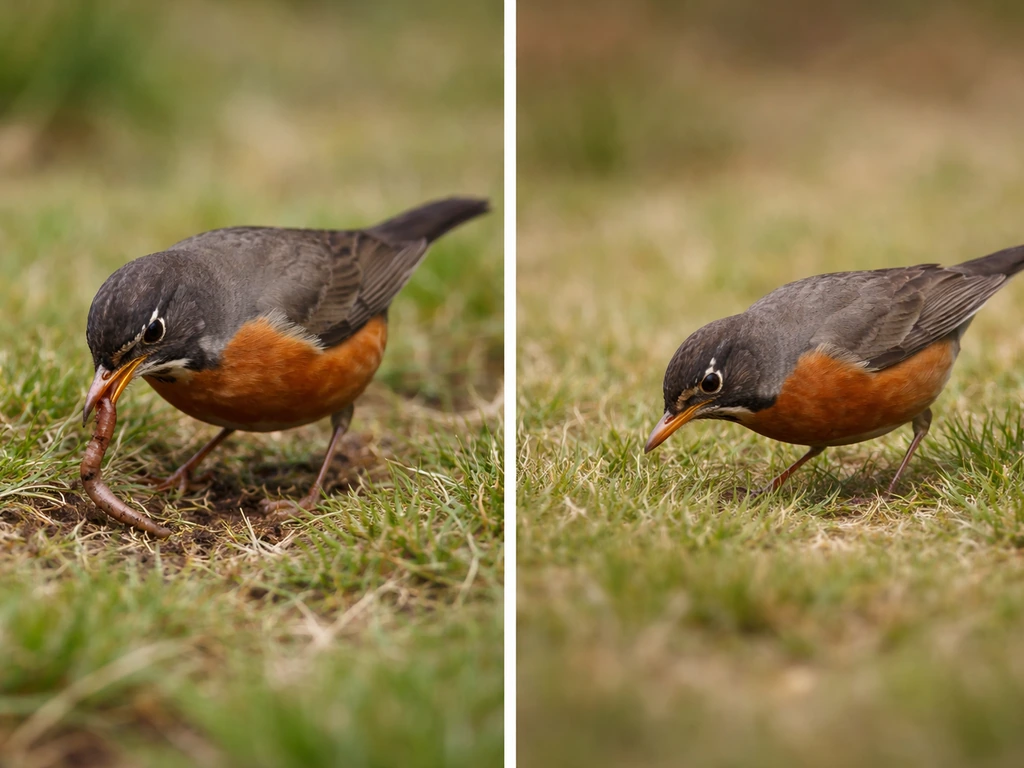
Literally, 'limbless prey for a bird' describes the feeding relationship between a bird and a worm (or, less commonly, a snake). Birds eat worms as a staple food source, robins, thrushes, starlings, and many ground-feeding species hunt them actively. That's the zoological fact underneath the phrase.
Figuratively, the image of a bird hunting something limbless carries a lot of symbolic weight, especially when the 'limbless prey' shifts from a worm to a snake. In that figurative register, the phrase stops being about breakfast and starts being about conquest, vigilance, and the eternal struggle between good and evil. Context is everything here. If you're reading a poem, a piece of mythology, or a proverb and the bird is swooping down on something serpentine, the meaning has almost certainly gone symbolic. If you're solving a crossword and the clue gives you four letter spaces, it's purely literal, go with WORM.
| Context | Limbless prey refers to | Meaning layer |
|---|---|---|
| Crossword or word puzzle | Worm (4 letters) | Literal / definitional |
| Riddle or brain teaser | Worm (most common) | Literal with wordplay |
| Proverb or idiom | Worm (as in 'early bird') | Figurative / moral |
| Mythology or folklore | Snake or serpent | Symbolic / spiritual |
| Poetry or literature | Snake or worm (context-dependent) | Figurative / allegorical |
Bird idioms and imagery involving worms and limbless prey
The most famous bird-and-worm expression in English is 'the early bird catches the worm,' a proverb that has been in use since at least the 17th century. It uses the bird-hunting-worm image as a straightforward metaphor for the reward of early effort. The worm here is entirely literal in origin but entirely figurative in use, nobody is actually talking about birds or worms when they say it.
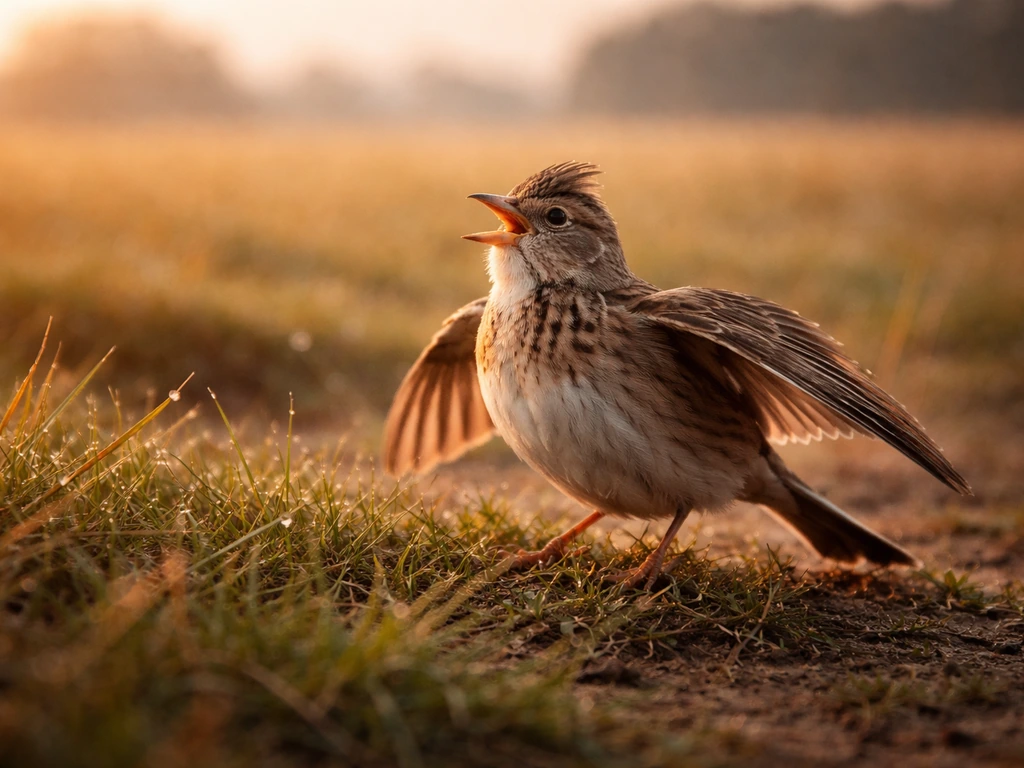
Beyond that proverb, the 'can of worms' idiom touches adjacent territory, though it has drifted away from bird imagery entirely. More interesting for this site's focus is how specific birds get paired with specific prey in folk sayings. The robin and the worm, for example, is a cultural pairing so ingrained that it appears in nursery rhymes, garden lore, and children's literature worldwide. The meadowlark bird meaning is often linked to optimism, fresh beginnings, and finding your voice through song The robin and the worm. The image of a robin pulling a worm from the earth is practically a shorthand for spring, renewal, and reward for persistence.
Songbirds like the lark and the linnet are more associated with flight and music than with hunting prey, which is part of what makes them symbolically distinct from ground-feeding birds in the worm-hunting tradition. To understand the meaning of linnet bird, look at how this small songbird is described in language and symbolism. The skylark bird meaning is often linked with its song and symbolism of joy, hope, and renewal. Some people also search for the lark bird meaning, which is a different kind of symbolism than the wordplay clue discussed here. When you move into raptor territory, hawks, eagles, and falcons, the prey imagery shifts from worms to snakes, and the symbolism shifts accordingly.
What it means when the prey is a snake: myth, folklore, and symbolism
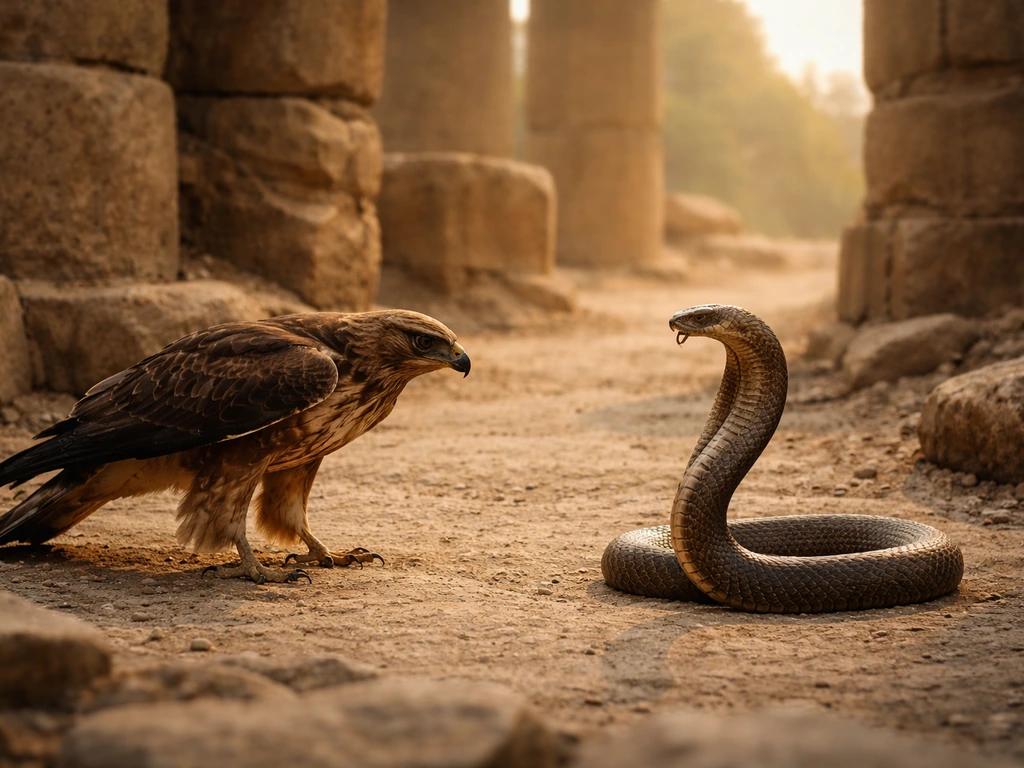
The image of a bird hunting or killing a snake is one of the oldest and most widespread symbols in human culture. It carries a meaning far beyond a simple predator-prey relationship. In Hindu mythology, the eternal conflict between Garuda (the divine eagle) and the Nagas (serpents) represents the cosmic opposition between sky and earth, light and darkness, divine order and chaos. Garuda's role as Vishnu's mount cements the bird-over-serpent image as a symbol of divine power overcoming evil.
In Aztec tradition, the founding myth of Tenochtitlan was signaled by an eagle devouring a serpent on a cactus, an image so culturally powerful that it still appears on the Mexican flag today. The symbolism is clear: the bird represents the sun, the heavens, and warrior strength; the snake represents the earth, water, and forces that must be subdued. The same archetypal opposition appears in ancient Egyptian imagery, where the sun god Ra, often depicted as a falcon, battles the serpent Apep (or Apophis) each night to ensure the sun rises again.
In European heraldry and medieval Christian symbolism, a bird (frequently an eagle) killing a serpent was used to represent the triumph of good over evil, or Christ's victory over Satan. The snake's limblessness in these contexts isn't incidental, it connects to the biblical curse in Genesis, where the serpent is condemned to crawl on its belly, and the bird above it becomes a symbol of elevation and spiritual authority.
In everyday folklore across Asia, Africa, and the Americas, the secretary bird, the roadrunner, and the serpent eagle all carry cultural reputations as snake hunters, lending them a protective, almost heroic status in local traditions. The theme is remarkably consistent: the bird wins, order is restored, and the world is safe for another day.
How to confirm which meaning you actually need
The fastest way to confirm your answer is to check the format or source of the phrase you encountered. Here's how to approach it based on where you found it:
- Crossword puzzle: Count the letter spaces. Four letters means WORM, full stop. If you have five or more spaces, consider SNAKE, but that's far less common for this exact phrasing.
- Riddle or brain teaser: Ask whether the answer is meant to be funny or surprising. Worm fits a gentle, family-friendly riddle. Snake is possible if the tone is more dramatic.
- Proverb or saying: Look for the moral. If the phrase is advising you to act early or be diligent, it's the early-bird-catches-the-worm tradition — your answer is worm.
- Mythology or literature: Check whether the bird is described as a predator or a hero figure (eagle, hawk, falcon). If so, the limbless prey is likely a snake, and the meaning is symbolic.
- Casual conversation or pop culture: If someone uses the phrase offhandedly, they almost certainly mean worm and are riffing on the early-bird proverb, consciously or not.
One more quick check: if the phrase includes the word 'serpent' or 'snake' anywhere nearby, the symbolism has explicitly shifted into mythological territory. If it's plain 'limbless prey for a bird' with no extra context, WORM is your answer and it's almost certainly correct.
FAQ
Could “limbless prey for a bird” ever mean something other than worm?
It usually means WORM, but if you are seeing it in a rebus, poem, or art description where the “limbless prey” is explicitly compared to serpents, the intended meaning may shift to SNAKE. A quick tell is whether the surrounding text mentions “serpent,” “snake,” “coil,” or “hiss.”
How should I answer it in a crossword if the letter count doesn’t match perfectly?
For crossword clues, go with the literal definition that matches the word count. If the clue has 4 letters (or the entry has only 4 slots), that strongly points to WORM, since SNAKE is 5 letters and often fits different clue formats.
What if I only see the phrase by itself, no riddle or poem context?
If you only have the phrase with no surrounding lines, treat it as a descriptive clue and choose WORM. Symbolic readings generally need extra context, such as myth names, moral language (good versus evil), or explicit serpent imagery.
How do I decide between worm and snake when the riddle is vague?
In riddles, the “limbless” part is the filter. Many limbless animals exist, but birds commonly feed on worms and garden lore often uses that image, which makes WORM the default solution unless the riddle points to snakes with additional hints.
Does the meaning change depending on which bird is mentioned?
Don’t assume “bird” means any specific species. The clue is general, and everyday English uses the bird and worm pairing as a standard image, so the answer does not require identifying a particular bird.
If it’s in a poem or proverb, how can I tell whether it’s symbolic or literal?
The phrase can have a symbolic layer, especially when the prey is swapped toward serpentine imagery, but you should confirm that symbolism is supported by nearby words. Without a reference to snakes or mythic conflict themes, default to literal feeding, WORM.
What are the most common mistakes people make when solving this clue?
A common mistake is overthinking “limbless” and trying rarer animals. For typical English wordplay, the standardized short answer that fits limbless prey for a bird is WORM, not more exotic prey items.
What quick checks can I do before I finalize my answer?
If you need to sanity-check your guess, look at how the clue is formatted. If it reads like a direct definition (“limbless prey for a bird”), it favors WORM. If it reads like an allegory (“eternal struggle,” “light vs darkness”), it may be steering toward snake symbolism.