
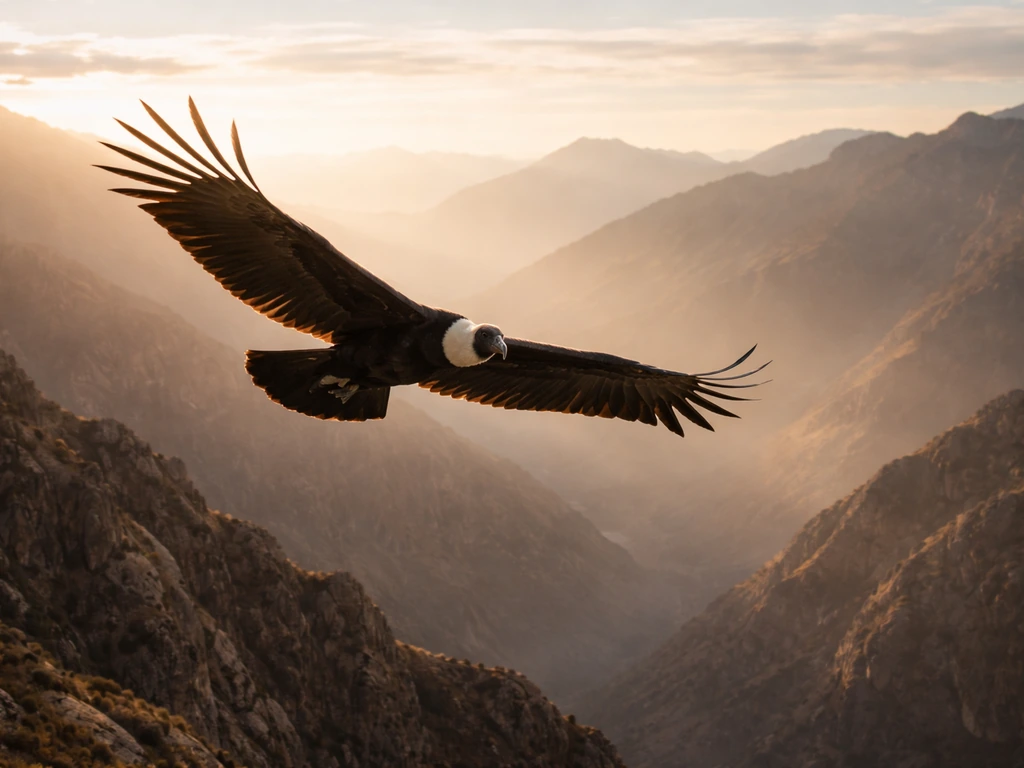
The condor bird meaning most commonly refers to the Andean condor (Vultur gryphus) as a symbol of power, spiritual ascent, and the bridge between earthly and heavenly realms, especially in Andean and South American indigenous traditions where the condor has been a sacred figure for over 4,500 years. For a quick, bird-focused answer, you can also look up the conclave bird meaning and how it differs from the condor symbolism covered here. If you're trying to decode what a condor represents in a dream, a tattoo, a piece of art, or a cultural reference, that's almost certainly the thread you want to follow. But because "Condor" also names an airline, an armored vehicle, a TV series, a video game, and several other things, a quick check to confirm you mean the bird is worth doing before you go deep. In the same way, the term "Condor" can also refer to the Boeing Condor unmanned aerial vehicle (UAV) test-bed, not just the bird or cultural symbol Condor" can refer to the Boeing Condor unmanned aerial vehicle (UAV) test-bed..
Condor Bird Meaning: Symbol, Culture, and Practical Guide

Are you actually looking for the bird? A quick disambiguation
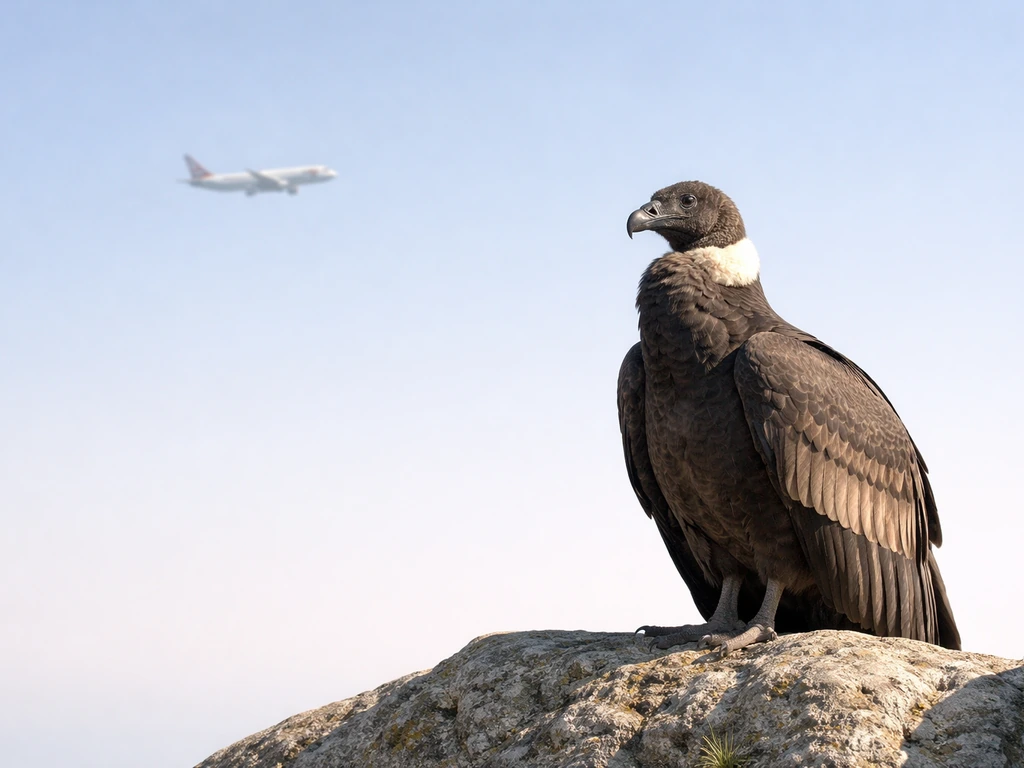
"Condor" is one of those words that shows up in a surprising number of unrelated places. Before diving into symbolism, it's worth ruling out these common alternatives:
- Condor (airline): A German leisure airline operating Airbus A330neo and Boeing 767-300ER aircraft on long-haul routes. If you saw "Condor" in a travel context, this is likely what you mean.
- Condor APC: A Rheinmetall MAN armored personnel carrier used in military roles including anti-tank, command, ambulance, and reconnaissance configurations.
- Boeing Condor: An unmanned aerial vehicle (UAV) test-bed developed by Boeing.
- Condor (TV series): A spy/thriller drama that aired on AT&T Audience Network.
- Condor (video game): A 4-player cooperative PvE multiplayer spin-off of Remedy's "Control," announced by Remedy and 505 Games.
- Condor (places and other uses): Several locations including El Cóndor in Jujuy, Argentina, a Condor A350 motorcycle, and police helicopter fleets branded "Condor Group."
If none of those match what you were searching for, you're in the right place. Merriam-Webster defines "condor" primarily as the bird, specifically the California condor or the Andean condor, and that's exactly the symbolic territory we're covering here.
What the condor typically symbolizes
At its core, the condor is a symbol of immense scope: sky dominance, freedom, longevity, spiritual power, and the connection between the living world and whatever lies beyond it. These themes aren't arbitrary. The Andean condor has a wingspan of up to 10.5 feet, soars at altitudes where almost nothing else can fly, and lives for decades. Ancient observers weren't projecting meaning onto a random bird, they were responding to something genuinely extraordinary.
Across many symbol traditions, the most recurring meanings assigned to the condor include:
- Freedom and power: The condor's effortless, high-altitude flight reads as total liberation from earthly constraints.
- Spiritual ascent: Its ability to soar between the earth below and the heavens above makes it a natural symbol for the passage between worlds.
- The bridge between earth and sky: One of the most repeated framings is that the condor "ties earth and heaven together" — a mediating force rather than simply a sky creature.
- Renewal and death/afterlife: As a vulture, the condor consumes the dead and participates in the cycle of decay and return. Many traditions frame this not as morbid but as sacred — the condor presides over transformation.
- Protection and guardianship: In several traditions, the condor watches over both communities and the spirits of the deceased.
It's worth noting that some of these meanings, particularly the more generic "freedom and strength" framings, appear heavily on modern spirituality websites and aren't always rooted in a specific cultural canon. They're not wrong exactly, but they're generalized. If you want accuracy, cultural context matters a lot, which leads to the next section.
Andean and indigenous significance: where the deepest meaning lives
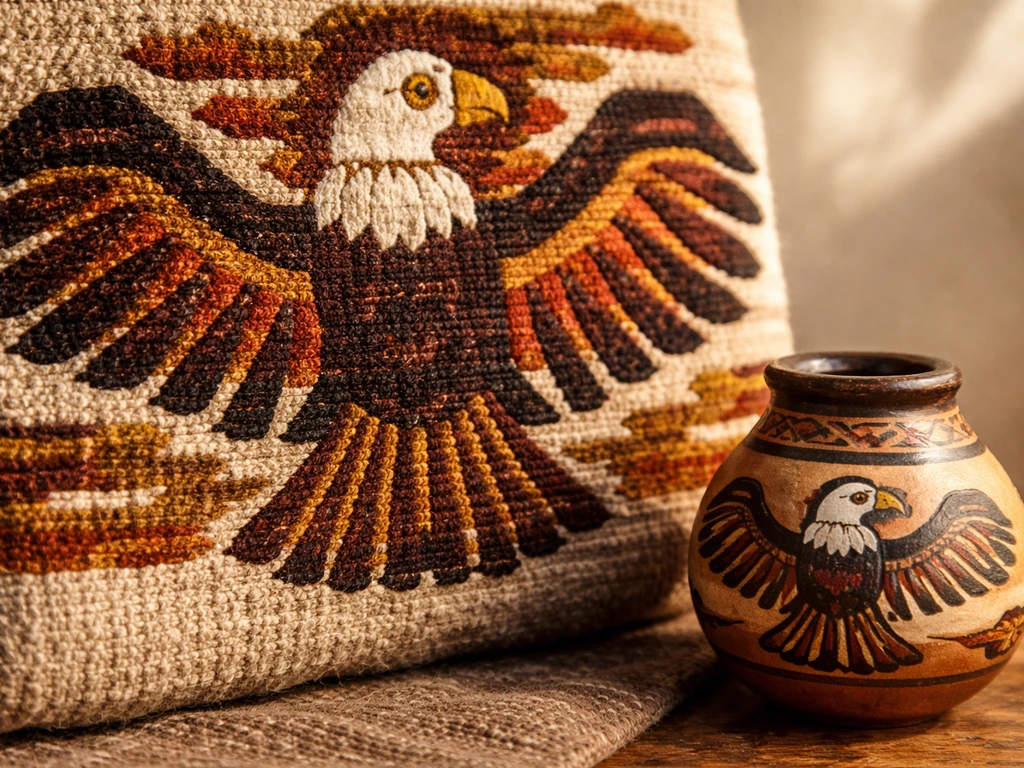
The Andean condor's symbolic weight in South American indigenous cultures is not a modern invention. The Wildlife Conservation Society documents condor imagery in Andean art dating back to 2500 B.C. The word "condor" itself comes from the Quechua word kuntur, the language of the Inca Empire, which tells you something about how central this bird was to Andean civilization. Today, the condor is a national symbol of Bolivia, Chile, Colombia, Ecuador, and Peru, and Bolivia's national crest features the Andean condor as the only wildlife species included.
In Andean cosmology, the condor rules the Kai Paccha, the upper world, the realm of sky and spirit. It is strongly associated with the sun deity, placing it at the very top of the sacred order. Researchers from the Peregrine Fund have described the Andean condor as a "biocultural keystone species," meaning its importance runs through language, myth, art, and ritual simultaneously. It's not just a symbol in the abstract sense, it's embedded in the fabric of how Andean communities understand the cosmos.
One of the most striking cultural expressions involving the condor is the Yawar Fiesta, a traditional Andean festival in Peru. In some versions of the festival, a condor is tied to a bull, the condor representing the indigenous Andean world, the bull representing Spanish colonial power. The symbolic stakes are hard to overstate: this is a living ritual that uses the condor as a stand-in for an entire people's struggle and identity.
One important caution: Andean symbolism is not monolithic. Meanings can differ between communities in Peru, Bolivia, Ecuador, Colombia, and Chile. Treating the condor as having one fixed indigenous meaning flattens centuries of regional variation. If you're researching a specific cultural context, say, for academic work, a tattoo with specific cultural roots, or a community project, it's worth tracing which Andean tradition you're drawing from.
Spiritual interpretations: dreams, signs, tattoos, and personal encounters
If you're here because you had a dream about a condor, saw one unexpectedly, or you're thinking about condor symbolism for a tattoo or piece of art, the practical question is: what does this mean for you specifically? Here's how to think through it.
Condor in dreams
Dream-interpretation sources commonly associate a condor with themes of emotional freedom, the urge to rise above a difficult situation, or transitions in life, particularly ones involving endings and new beginnings. Given the condor's role as a creature of both death and renewal, a dream condor often signals that something is completing its cycle. Whether that's a relationship, a phase of life, or a way of thinking, the condor showing up can be a prompt to ask what you're ready to let go of and what you're ascending toward. These interpretations are modern and psychological rather than tied to any single indigenous tradition, so treat them as personal reflection tools rather than fixed meanings.
Condor as a sign or encounter in nature
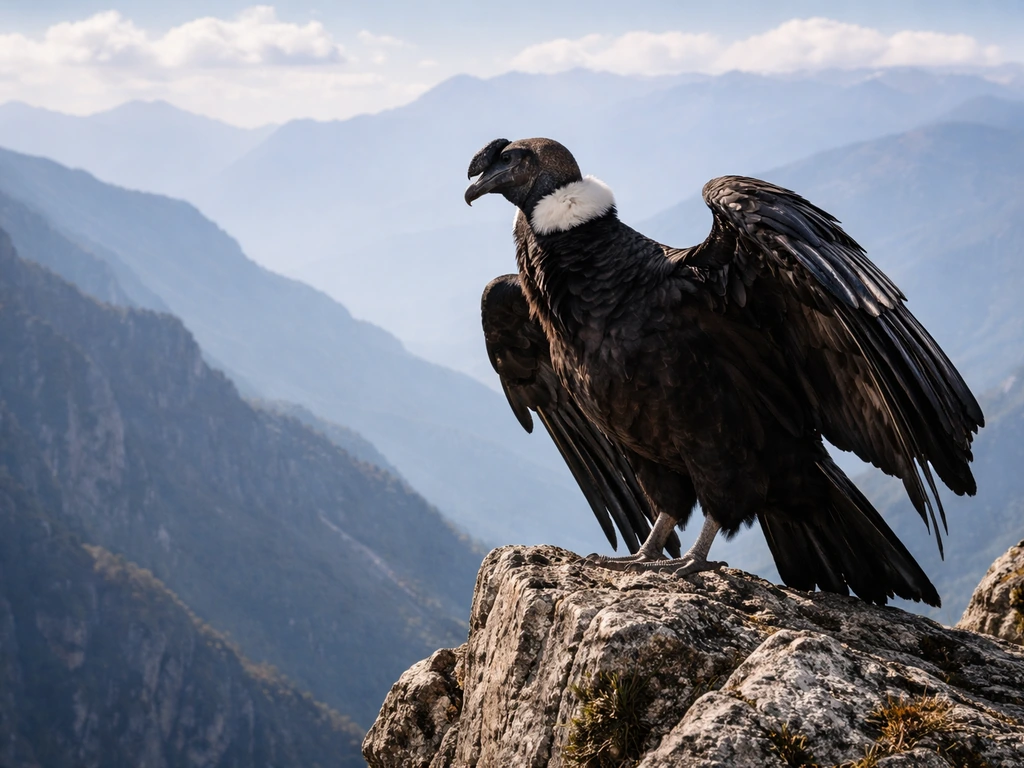
Seeing a wild condor is genuinely rare, the Andean condor's range spans the Andes from Venezuela to Tierra del Fuego, and the California condor is critically endangered with a population that was once as low as 27 individuals. If you're lucky enough to see one in the wild, many people in spiritual traditions (especially those influenced by Andean or indigenous North American frameworks) would read it as a moment of significance: a reminder of the bigger picture, a connection to ancestral energy, or a call toward a wider perspective. The U.S. National Park Service does caution against conflating symbolic beliefs about condors with factual claims about the animal itself, a useful reminder that the bird's spiritual meaning and its biology are two different conversations.
Condor in tattoos and art
A condor tattoo most commonly draws on the sky-power and freedom symbolism, or the Andean tradition of the condor as a ruler of the upper world and protector. If the design incorporates Andean iconographic elements, geometric patterns, solar imagery, traditional Quechua-inspired motifs, it's leaning into the cultural heritage of the bird. If it's a more naturalistic or flight-focused design, it's more likely expressing personal themes of freedom, strength, or the bridge between worlds. Either works, but knowing which tradition your design draws from helps you own it with more intention.
Condor in literature, pop culture, and everyday language
The condor doesn't have as dense an idiomatic footprint in everyday English as, say, an eagle or a raven, but it shows up in culturally significant ways. In Latin American literature and politics, the condor carries enormous metaphorical weight as a symbol of Andean identity, sovereignty, and resistance. José María Arguedas' "Yawar Fiesta" (1941) is probably the most famous literary use, placing the condor at the center of a story about indigenous cultural survival under colonial pressure.
In modern pop culture, "Condor" tends to be used as a name or codename to evoke power, surveillance, or freedom of movement, which tracks with the bird's core symbolic resonance. The TV thriller series "Condor" uses the name to suggest a high-flying intelligence operative (freedom of movement, strategic overview), while the video game spin-off "Condor" leans into the cooperative, sky-level perspective the name implies. None of these are direct references to Andean symbolism, but they borrow the bird's symbolic gravity whether they intend to or not.
In Spanish-language contexts, particularly across Andean countries, "cóndor" appears in national anthems, place names, political movements, and cultural organizations. It functions almost as a shorthand for Andean indigenous identity and continental pride, much the way the eagle functions as national shorthand in North American contexts. If you encounter "condor" in a Latin American political or cultural text, that Andean resonance is almost always intentional.
How to interpret condor meaning without getting it wrong
The biggest trap when researching condor symbolism is treating it as a single universal meaning. The condor means something specific in Quechua cosmology, something somewhat different in a dream-psychology framework, something different again in a tattoo context, and something entirely unrelated in a brand or game context. Here's a practical framework for getting the interpretation right:
- Ask where the reference comes from. Is it a dream, a cultural text, a piece of art with Andean roots, a modern spiritual source, or a brand/product name? Each requires a different lens.
- Identify which tradition is being invoked. Andean indigenous symbolism is the most historically grounded and specific. Modern spiritual websites often blend multiple traditions into a generalized "spirit animal" framework — useful for personal reflection, but not a substitute for cultural accuracy.
- Check whether the meaning is descriptive or prescriptive. A condor appearing in Andean mythology as ruler of the upper world is a documented cultural fact. A website telling you a condor dream means you'll have financial freedom is a modern interpretive claim — worth considering, but not the same kind of evidence.
- Be specific about region and community when citing indigenous meaning. "Andean" covers six countries and hundreds of communities. If a specific tradition matters to you, go deeper than the general category.
- Don't conflate the symbol with the animal. The condor as a living bird has a biology, a conservation status, and a behavioral reality that doesn't have to align with its symbolic meaning. The NPS's condor myths-and-facts page is a good reminder that the bird's symbolism and its natural history are parallel conversations.
If you're exploring related territory, it's worth knowing that the condor sits in good company as a powerful sky-and-spirit bird symbol. Similar themes of sky dominance and spiritual mediation show up in other culturally significant birds, the falcon, for instance, carries its own rich history of power symbolism across very different cultural traditions. If you're also looking for the falcon bird meaning, it can help to compare how different cultures frame the falcon as a symbol of power, speed, and spiritual insight. Soul bird concepts from various traditions also echo the condor's role as a creature that moves between worlds, and the broader category of celestial birds across world mythologies shares this sky-realm significance. If you’re looking for the specific Finnish soul bird meaning, this is a related but distinct idea from the condor’s symbolism Soul bird concepts. In some mythologies, a “celestial bird” is described as a messenger of the sky, so understanding the celestial bird meaning can help you interpret similar symbolism accurately. Soul bird meaning from other traditions often echoes the same idea of a creature bridging worlds, so it's worth comparing how each culture frames that symbolism Soul bird concepts.
The condor's meaning is genuinely layered, and that's what makes it worth understanding properly. It's one of the few bird symbols where the literal reality of the animal, its size, its altitude, its role as a scavenger in the ecological cycle, maps so directly onto its symbolic meaning that the two reinforce each other. Start with the cultural context, trace the tradition, and you'll end up with an interpretation that's actually useful rather than just decorative.
FAQ
Is the “condor bird meaning” the same in every country or culture?
Yes, but the meanings you see in everyday spirituality posts often blend traditions. For accuracy, decide whether you mean the Andean condor in Quechua cosmology, a modern dream interpretation framework, or a general “sky power” metaphor, then match your reading to that specific context.
If I see “Condor” in pop culture, does it refer to Andean symbolism?
A common mix-up is assuming “condor” in a modern brand, TV show, or game automatically points to Andean symbolism. In many cases it is just a codename chosen for the idea of high vantage, freedom of movement, or dominance, without cultural attribution.
How can I tell whether a “condor meaning” result is about the bird or a different “condor” reference?
To reduce confusion, check whether the source is talking about the animal (California or Andean), a cultural tradition, or a metaphorical use. If it does not name a bird, a tradition, or a specific setting, it is usually metaphorical rather than a true “bird meaning.”
What should I look at in my life when interpreting a condor dream?
In dream interpretations, it helps to treat the condor as a prompt tied to your current life phase rather than a fixed omen. Ask what you are trying to “release” (endings, a role, a belief) and what you are “rising into” (a new identity, perspective, or responsibility).
How do I avoid misrepresenting the condor meaning if I want a tattoo?
If you want to honor cultural roots, use design elements that correspond to the tradition you are referencing, such as solar motifs or iconography associated with the upper-world role. If you choose a more naturalistic flight design, frame it as personal symbolism rather than a direct claim of Andean meaning.
Does the meaning change if the condor appears with other symbols (for example, a bull)?
Meanings can shift when the condor appears with another powerful symbol, like a bull in festival contexts. If your artwork or reference pairs condor imagery with colonial or identity themes, the interpretation may point to conflict, resistance, and cultural survival rather than only “freedom.”
Does condor symbolism differ depending on whether it is the California condor or the Andean condor?
Yes. The California condor and the Andean condor are different species and their conservation realities differ. Spiritual or cultural readings may use “condor” as a single idea, but factual details about rarity, habitat, and ecology should be kept separate from symbolism.
What does “cóndor” usually imply in Latin American political or cultural writing?
If you are translating the word “cóndor,” consider the local context of the text, such as a national anthem, political organization, or place name. In many Spanish-language settings it functions as a shorthand for Andean identity and regional pride, not just a generic bird.
Why do some condor meanings online feel generic, and how do I get a more specific interpretation?
A good sanity check is to avoid treating “freedom and strength” style phrasing as the full meaning. Use it as a starting point, then refine by asking which tradition, timeframe, and purpose the interpretation is claiming (ritual, myth, personal psychology, or metaphor).
Can the pose or scenario in a drawing or story change the condor meaning?
If the condor is shown grounded, wounded, or tied down in an image, that can shift the reading toward constraint, transition pains, or an interrupted ascent. If the condor is soaring high, the emphasis tends to be on elevation, perspective, and spiritual or life-range expansion.