
The Finnish soul bird is called the sielulintu (a single compound word, no hyphen), and it refers to the soul itself taking the form of a bird. In Finnish folk belief, the soul can leave the human body as a bird, most visibly at the moment of death, and some accounts extend this to birth and even the vulnerable state of sleep. When you see the phrase "Finnish soul bird" in English, it is almost always a translation of sielulintu from Finnish or Karelian tradition. This is why “celestial bird meaning” searches often point back to sielulintu as a soul-bird belief rather than a literal winged angel.
Finnish Soul Bird Meaning: What It Symbolizes in Finland

Marcus Blackwell
29 Jun 2026

What sielulintu actually means
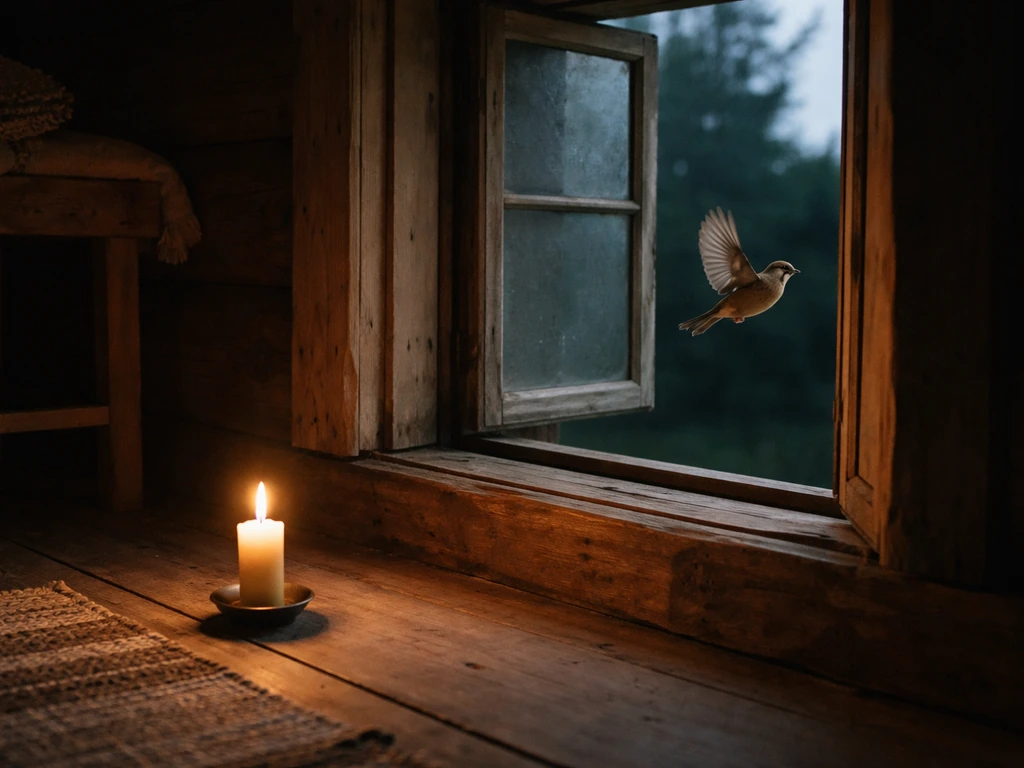
Break the word down and you get sielu (soul) plus lintu (bird). It is not a metaphor for a spiritual feeling or a poetic nickname. In Finnish folk belief, sielulintu describes the literal understood mechanism: the soul departs the body in the shape of a bird. A 2016 Finnish encyclopedic reference explicitly connects the sparrow (varpunen) to sielulintu as vainajan sielu, meaning the soul of a deceased person. The soul of the newly dead was thought to fly away in bird form, often represented by a small, common bird spotted near the home after a death.
Finnish cultural sources also describe sielulintu as operating at birth: a bird brings the soul in, and a bird takes it away at death. In the USC Digital Folklore Archives, the soul-bird motif is summarized as taking bird form and being linked with the transitions of birth and death a bird brings the soul in, and a bird takes it away at death. This arrival-and-departure framing makes the sielulintu something closer to a cosmic carrier than just a symbol. It is doing a job in the worldview, not just standing in for an abstract idea.
Why Finnish folklore chose a bird for the soul
Birds are the obvious candidates for soul-carriers across many traditions because they move between worlds effortlessly: they fly above the earth, they disappear into the sky, and they appear and vanish without warning. Finnish and Karelian folk belief worked within that same instinct, but developed it into a specific and documented motif. The key scholarly anchor here is Martti Haavio's study "Sielulintu: eräiden motiivien selvittelyä," published in Kalevalaseuran vuosikirja 30 (1950), pages 13-45. Haavio traced the motif through Finnish sources systematically, and his work remains the foundational reference.
The connection to sleep matters too. Finnish folk belief treated sleep as a moment of vulnerability because the soul could wander. The sielulintu concept appears in some accounts as a protective figure during that wandering state, a soul-bird that accompanies or guards the sleeper. This adds a layer beyond death and gives the motif a daily, intimate quality rather than only a funerary one.
There is also a material side to the belief. Some Finnish sources describe wooden bird carvings or sculptures placed near graves or at bedsides in connection with sielulintu. A physical object shaped like a bird served as a kind of anchor or tribute for the soul in transit. This detail matters because it shows sielulintu was not purely abstract: people made things in response to it.
What sielulintu symbolizes
The soul as a life force

Sielulintu is tied directly to the presence or absence of life itself. When the bird arrives (at birth), the person becomes animated; when the bird departs (at death), life ends. This makes it a symbol of the life force in its most concentrated form. In everyday use, the soul bird meaning usually comes down to sielulintu: a literal image of the soul leaving the body as a bird. It is not about personality or memory, but about the animating energy that makes a body alive.
The soul's fate and the afterlife
The sielulintu functions as a transition agent between the living world and whatever comes after. The soul in bird form is not stuck: it can move, and it moves away from the body at death. Finnish folk belief does not frame this as a terrifying haunting (though other spirits handle that role), but rather as a departure. The bird flies; the person is gone. There is something clean about that image, and it probably helped people make sense of death in a world without modern explanations.
Protection and omen
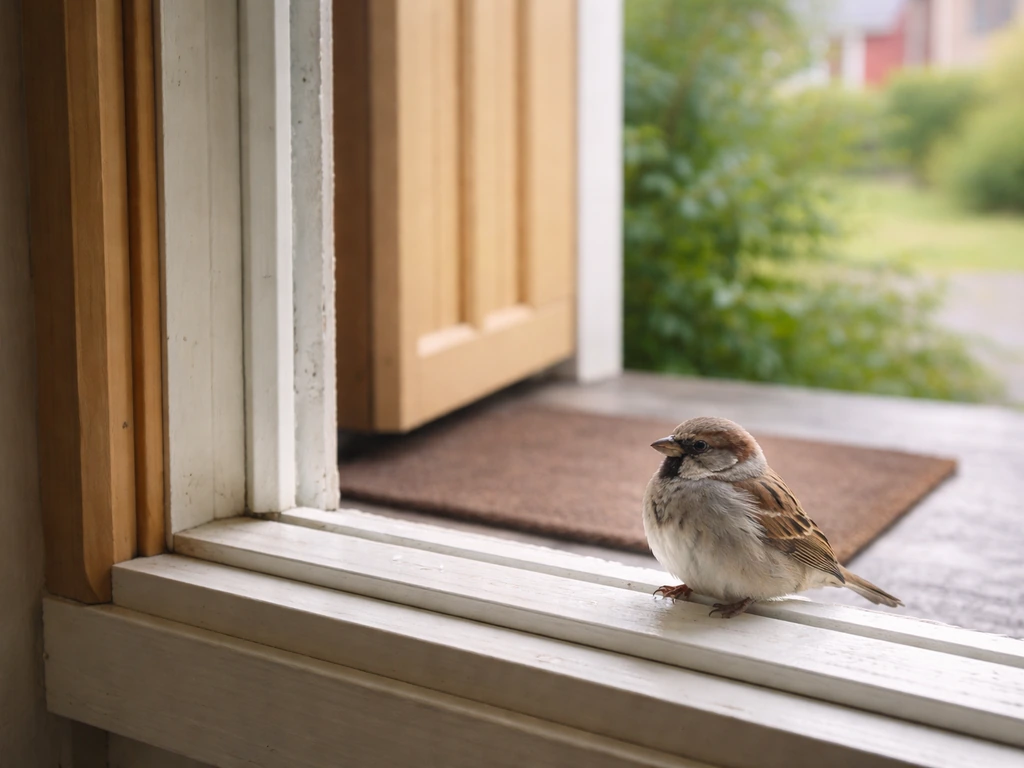
A bird appearing near a household, particularly a sparrow (varpunen) or a wagtail (västäräkki/väästäräkki), could be interpreted as the presence of a deceased relative's soul. This turns the sielulintu into an omen and a comfort simultaneously: a sign that someone who has died is near. Finnish library and media sources confirm this omen function, noting that birds near the home carry significance in death-belief contexts. The specific species matters depending on the account: the sparrow appears most often in connection with Christmas tradition (notably the Finnish song "Varpunen jouluaamuna"), while the wagtail appears in ethnographic accounts of soul-visitor experiences.
Common mix-ups: sielulintu is not the same as these
Several Finnish and Nordic folk-belief concepts cluster near sielulintu and get blended together, especially in casual online discussions. Here is how they differ.
| Term | What it actually means | How it differs from sielulintu |
|---|---|---|
| sielulintu | The soul in bird form; the bird-shaped soul carrier | This is the specific concept you are looking for |
| sielu | Soul in Finnish (the underlying concept) | sielu is the soul itself; sielulintu is the soul taking bird form |
| henki | Spirit, breath, or life-force in Finnish | henki is a broader spirit/breath concept, not specifically bird-formed |
| väki | Supernatural power or force present in things, places, people, and the dead | väki is an impersonal force distributed across the world, not a bird-shaped soul |
| ihtiriekko | Haunting spirit of an unbaptized or improperly buried child | ihtiriekko is a restless ghost figure, not a soul-carrier or soul-visitor |
| tonttu / haltija | Household or place spirit, guardian of a location | Protective but attached to a place, not a transitional soul-in-bird-form |
The ihtiriekko confusion is worth flagging specifically because modern Finnish blogs and forums sometimes lump sielulintu and ihtiriekko together when discussing death and the soul. They are genuinely different things: one is a soul departing naturally in bird form, the other is a ghost born from an unresolved burial situation. The Finnish blog post title "Sielulintu vai ihtiriekko?" (Soul Bird or Ihtiriekko?) exists precisely because people conflate them.
Nordic parallels are another common drift. Online content sometimes implies that sielulintu is part of a unified Norse or pan-Nordic soul-bird belief. Finnish scholarship is cautious here. The sielulintu motif is documented in Finnish and Karelian tradition and studied through Finnish archives. Comparative ethnologists do draw connections to broader soul-bird motifs across cultures, but a direct one-to-one mapping with specific Old Norse concepts is not well-supported in serious Finnish sources. When you see "Nordic soul bird" used interchangeably with sielulintu, treat it as an approximation, not a precise equivalence.
How to interpret sielulintu when you encounter it today
In modern Finnish texts, music, and cultural production, sielulintu has grown from a folk-belief term into a recognizable cultural symbol with layered meaning. Reetta Ranta's book "Sielulinnut" (SKS-Kirjat, 2025) is one recent example of the motif operating as a literary reference point. Music Finland documentation also treats it as a mythology motif covering birth and death roles. In these modern contexts, sielulintu works both as a reference to the original folk-belief and as a broader metaphor for the soul's fragility, the presence of the dead, or personal inner life.
When you encounter "soul bird" in a Finnish context, ask three questions: Is the author referring to the soul departing at death, to a bird as a protective companion during life or sleep, or to a bird appearing as an omen from a deceased person? The answer shapes the meaning significantly. Death-departure and omen-visit are the most historically grounded uses; the protective-companion framing appears more often in modern spirituality writing and personal blogs, where the concept has been reinterpreted through a contemporary lens.
In song and poetry, especially around Christmas in Finland, the sparrow carries sielulintu associations that most Finnish readers feel even if they cannot name the folklore behind it. The song "Varpunen jouluaamuna" (A Sparrow on Christmas Morning) draws on exactly this tradition. Knowing the sielulintu background adds a layer of meaning to that song that a surface reading misses entirely.
How sielulintu fits into broader bird symbolism
Birds function as messengers, soul-carriers, omens, and freedom symbols across an enormous range of traditions, and sielulintu sits firmly in that global pattern while being a distinctly Finnish expression of it. The soul bird concept connects naturally to other bird symbolism worth knowing about: the broader soul bird meaning found in cross-cultural folklore, celestial bird symbolism tied to divine messengers or cosmic birds in mythology, and the omen and messenger functions that birds carry in traditions ranging from Celtic to East Asian folklore. For a fuller sense of falcon bird meaning, compare how different cultures use birds as spiritual signs, messengers, and omens.
What makes sielulintu distinctive within that larger picture is its specificity. It is not a general association between birds and the spiritual world; it is a documented mechanism in which a particular culture believed the soul physically becomes a bird at the transitional moments of existence. The sparrow and the wagtail are humble, everyday birds, which is part of the point. The soul does not require a majestic eagle or a rare creature. It can occupy the small, common bird at your window, and that ordinariness makes the belief feel intimate rather than grand.
Compared to traditions where birds are messengers from gods (think of ravens in Norse mythology or doves in Abrahamic traditions), sielulintu positions the bird not as a messenger from a divine source but as the soul itself in motion. The distinction matters when you are reading texts or interpreting symbols: in one frame the bird delivers a message, in the Finnish frame the bird is the soul, full stop.
How to research this further
If you want to go deeper, start with the right Finnish-language search terms. The core keyword is sielulintu (one word). Related terms that will pull up relevant folklore material include:
- kalmalintu (death bird, a related Finnish motif tied to death omens)
- linnun hahmo (bird form, useful for finding texts about soul-transformation)
- vainajan sielu (soul of the deceased, which pairs with sielulintu in many sources)
- sielu + lintu as separate search terms when catalogs do not index the compound
For authoritative sources, the two most important institutional homes for this material are Suomalaisen Kirjallisuuden Seura (SKS, the Finnish Literature Society) and Kalevalaseura. Haavio's 1950 article in Kalevalaseuran vuosikirja 30 is the foundational scholarly text and is worth tracking down if you have access to Finnish academic libraries or the Finna discovery service. The reference work "Suomalaisen kansanuskon sanakirja" by Risto Pulkkinen and Stina Lindfors is another solid anchor: Finnish media (including Kirkko ja kaupunki) cite it directly when explaining sielulintu, so it functions as a reliable secondary check.
When you are evaluating any source on sielulintu, check three things before accepting its claims. First, is the Finnish term spelled correctly as sielulintu? Sources that use loose English paraphrases without naming the Finnish term are often working from secondhand interpretations. Second, does the source specify whether the bird function relates to birth, death, or sleep vulnerability? These are distinct claims and not all sources cover all three. Third, if a specific bird species is named, which one? The sparrow (varpunen) and the wagtail (västäräkki) appear in different accounts, and claiming one applies everywhere is an overgeneralization. Keeping these three checkpoints in mind will help you separate careful folklore writing from looser spiritual-lifestyle content that borrows the term.
FAQ
How do I tell when “Finnish soul bird meaning” is folk belief versus modern poetry or spirituality?
If the text uses sielulintu, it usually means a literal folk-belief idea (the soul leaving in bird form). If the text instead says “soul bird” as a standalone English phrase, it could be a broad poetic metaphor, so you should check whether the author mentions sielu and lintu or references specific roles like birth, death, or sleep.
Does sielulintu always mean the soul departing at death, or can it mean something else too?
Not necessarily. In historical accounts, the motif is tied to transitions (birth, death, and sometimes vulnerable sleep), but many modern retellings treat it as an emotional or protective symbol. A quick check is whether the source describes the soul physically as the bird, or only uses the bird as a figurative sign.
What’s the difference between sielulintu and ihtiriekko when people mix them up online?
Watch for conflations with ihtiriekko. Sielulintu is the soul as a bird during a natural transition, while ihtiriekko is typically framed as a ghost-like being linked to problematic burial or unresolved death situations. If a source pairs both terms or uses them interchangeably, treat it as less reliable.
Do different birds (like sparrow vs wagtail) change the meaning of Finnish soul bird?
Check whether the bird described is a sparrow (varpunen) or a wagtail (västäräkki/väästäräkki). The sparrow is commonly associated with Christmas song tradition, while the wagtail shows up more often in ethnographic “soul visitor” narratives. Don’t assume one species replaces the other across accounts.
If a source mentions a “bird near the home” but not which species, how should I interpret it?
The motif can work without specifying a species. Some accounts emphasize the mechanism (soul in bird shape) and the transition points, while species details appear in particular variants. If you only see “a bird near the home” with no species, interpret it as a general omen possibility rather than a precise identification.
Can I use sielulintu as a general symbol of grief or comfort without getting it “wrong”?
In modern symbolic usage, it can be read as “the life force leaving” or “the presence of the dead,” but that is an interpretive overlay. If you want the Finnish folk meaning, look for language that matches roles like birth arrival, death departure, or protection during sleep, not just general spiritual comfort.
Is Finnish soul bird the same as a Norse or pan-Nordic soul-bird belief?
If a source claims sielulintu is pan-Nordic or directly tied to a specific Old Norse figure, verify that it is actually referencing Finnish or Karelian documentation. Serious Finnish scholarship treats sielulintu as a distinct Finnish motif rather than a direct one-to-one import from elsewhere.
What are the quickest checks to evaluate whether a source really understands sielulintu?
When researching, ensure you have the Finnish term spelled correctly as sielulintu and not just a loose English translation. Also check whether the source specifies the context (birth, death, sleep) because accounts sometimes mix these roles. This avoids accidentally applying one context to another.
How does sielulintu show up in Finnish songs, like Christmas traditions, if the folklore isn’t spelled out?
Cultural references like the Christmas sparrow song often carry sielulintu associations indirectly. If you are interpreting the song or lyrics, treat the sparrow as triggering a folk-memory link to soul presence, rather than assuming the lyrics describe the whole folklore mechanism explicitly.
Were physical items like bird carvings required in belief, or only used in some places?
If you see wooden bird carvings near graves or bedsides, treat them as evidence of a ritual-material response to the belief, not as a universal requirement. Some families may have used physical items while others may have relied on the omen or the transition idea alone.
Next Article
Condor Bird Meaning: Symbol, Culture, and Practical Guide
Discover condor bird meaning in symbols, Andean culture, and everyday uses, plus a quick checklist to avoid wrong contex