
The falcon means speed, vision, power, and focused intention, and when the falcon is white, those meanings shift toward purity, spiritual clarity, and heightened omens. That's the short answer. But the longer answer is more interesting, because falcon symbolism runs through ancient Egypt, medieval European courts, Islamic dream traditions, Hungarian royal mythology, and modern spiritual practice, and each tradition layers on its own meaning. If you saw a falcon, dreamed about one, or keep encountering the word in a phrase or story, here's everything you need to interpret it accurately.
Falcon Bird Meaning: Symbolism and White Falcon Meaning

Marcus Blackwell
5 Apr 2026
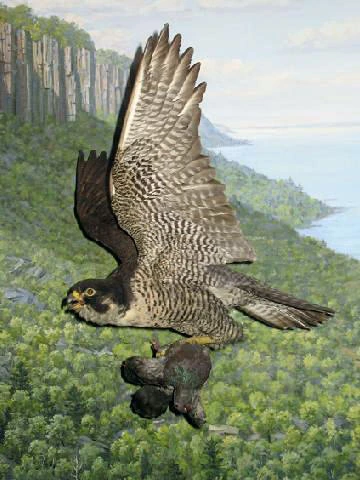
The actual bird, and why it matters for symbolism
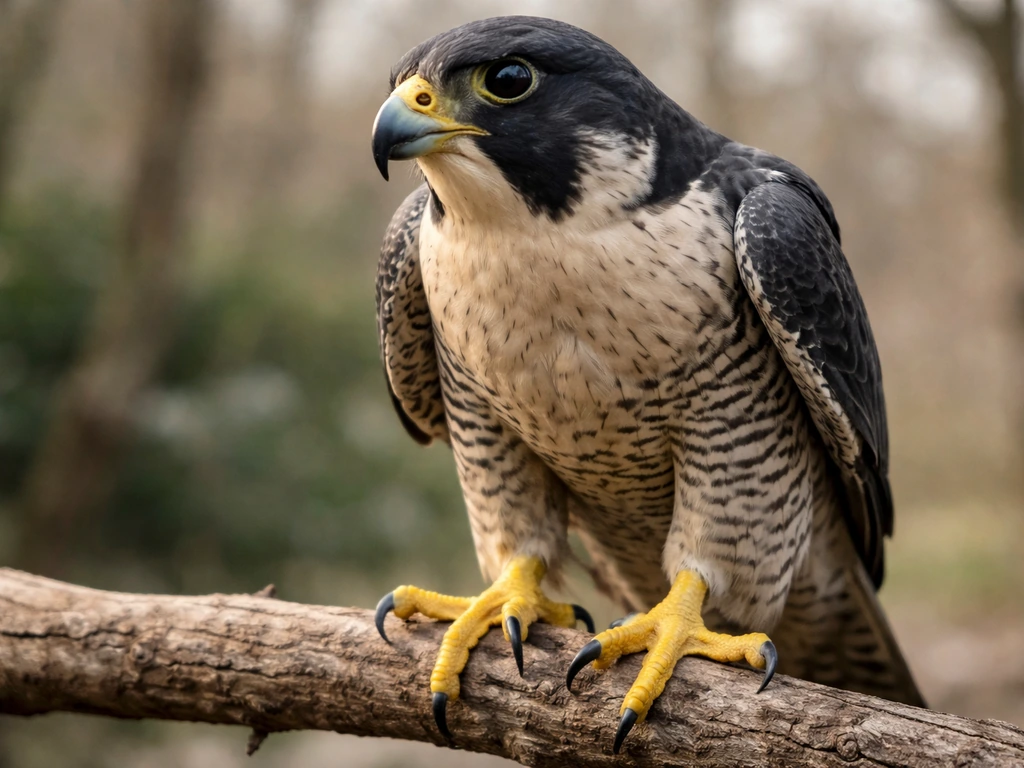
Understanding what a falcon actually is helps explain why humans have loaded it with so much symbolic weight. Falcons are raptors with hooked beaks built for tearing, taloned feet built for killing, and eyes that are genuinely extraordinary. Their visual system concentrates cells in ways that give them resolving power up to roughly eight times sharper than the human eye.
They see the world with a kind of binocular precision across about 35 to 50 degrees of arc, meaning they can lock onto a target from a height most animals can't even perceive. The peregrine falcon's signature move, called the stoop, is a near-vertical dive from great height at extreme speed.
That combination, telescopic vision, commanding elevation, sudden lethal precision, is exactly why cultures across history saw the falcon as a symbol of power, focus, and divine oversight rather than just another bird.
The word itself traces back through Old French (faucon) and Late Latin (falconem or falco), with one proposed etymology linking it to the Latin word falx, meaning curved blade or sickle, a nod to the shape of those talons and the hooked beak. That root tells you something about how people saw the bird from the beginning: a living blade, elegant and deadly. Worth noting: in historical falconry terminology, "falcon" technically referred to the female of the hunting bird, with the male called the tercel. That detail shows up in heraldic and literary contexts, so it's useful to know if you're reading older texts.
Core symbolism: what the falcon represents across cultures
Falcon symbolism clusters around a few consistent themes, even across very different cultural contexts. These aren't arbitrary, they come directly from the bird's observable behavior.
- Vision and perception: The falcon's extraordinary eyesight made it a natural symbol for insight, foresight, and the ability to see what others miss.
- Speed and decisiveness: The stoop is one of the fastest movements in the animal kingdom. Falcons became symbols of swift, decisive action.
- Power and conquest: Raptors that strike from above carry an inherent sense of dominance. Falcon imagery appears throughout royal and military iconography for this reason.
- Focus and intention: A falcon hunting from a perch is the picture of concentrated attention — which is why modern spiritual readers often interpret a falcon sighting as a prompt to sharpen your own focus.
- Liberty and victory: Compiled symbol references consistently associate falcons with liberty, freedom, and victory — fitting for a bird that can't be caged effectively.
- Protection: Especially in Egyptian tradition, the falcon as guardian appears repeatedly, watching from above with outstretched wings.
These themes aren't universal in the sense of being identical across every tradition. The falcon that signals victory in one culture might carry a message of spiritual awakening in another. Context matters a great deal, which is something any honest guide to bird symbolism will acknowledge upfront.
Mythology, folklore, and spiritual traditions: the big examples
Ancient Egypt: Horus and the Eye
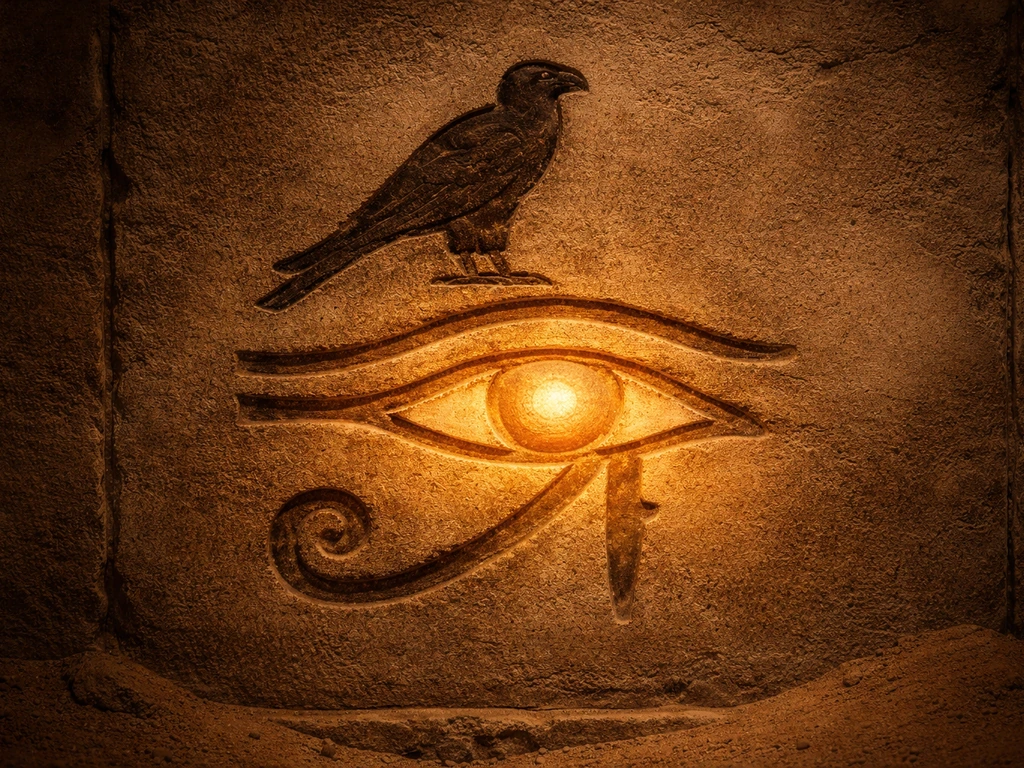
The most famous falcon in symbolic history is Horus, the Egyptian god depicted as a falcon or a falcon-headed human. Horus is associated with kingship, healing, protection, the sun, and the sky. The image of the Horus falcon hovering high with wings spread was used to represent omnipresence and royal power reaching outward over the land. The Eye of Horus, usually rendered as a stylized falcon eye, became one of history's most enduring protective symbols, associated with well-being, healing, and warding off harm. When you see falcon imagery on Egyptian artifacts, it's almost always doing one of two things: asserting royal authority or offering protection.
Medieval Europe: falconry and the social hierarchy
In medieval Western Europe, falconry was deeply embedded in noble culture, and the birds used for hunting were ranked almost as carefully as the humans who owned them. The peregrine falcon was formally associated with princes in the hierarchy of birds of prey, with the gyrfalcon sitting above it at the king's level. Owning and flying a falcon was a status symbol, which explains why falcon imagery spread through heraldry, literature, and court culture.
Heraldic white, incidentally, signifies silver, purity, nobility, and intellect in traditional heraldic systems, which is relevant background for understanding why a white falcon carries extra prestige in coat-of-arms and emblem contexts. The falcon also appears in medieval literary metaphor. W. B.
Yeats's famous line "The falcon cannot hear the falconer" uses the bird as a metaphor for social disintegration, the trained creature spiraling beyond control, the human connection severed.
Hungarian legend: the dream of Emese
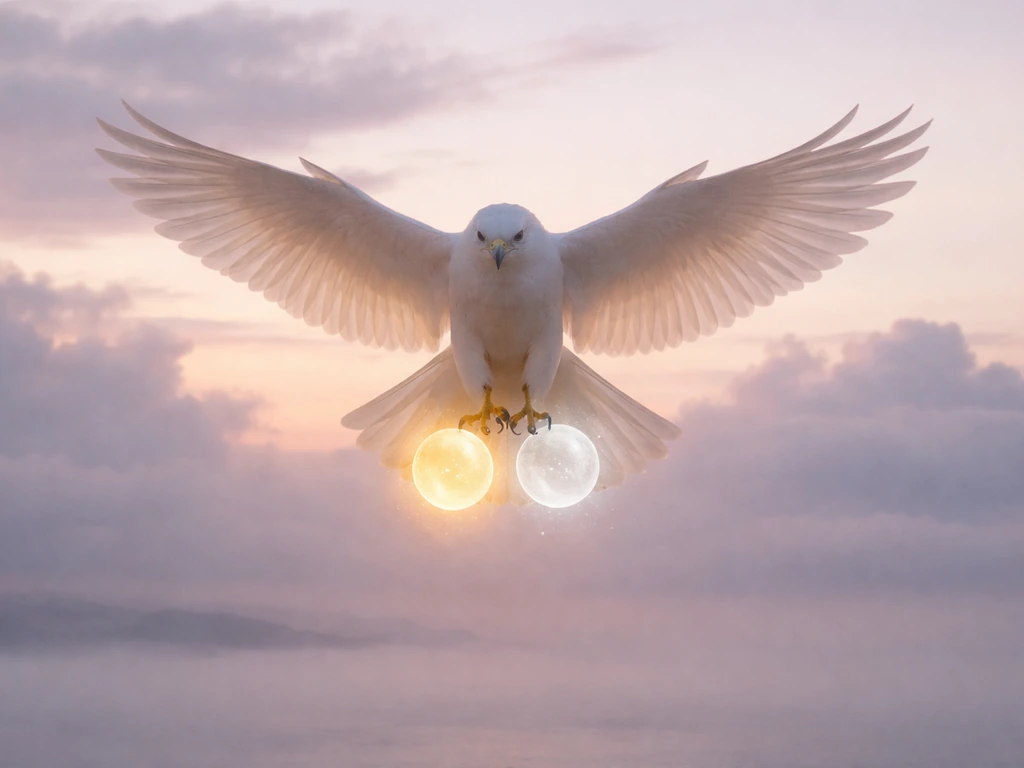
One of the most striking falcon myths comes from Hungarian tradition. The legend of Emese records a dream in which a white falcon descends holding the Sun and the Moon, a vision interpreted as a prophecy of royal and dynastic destiny. This is a concrete example of how color (white), behavior (descending, holding celestial objects), and context (a dream) combine to produce heightened meaning. The white falcon isn't just a falcon, it's a divine messenger announcing something of enormous significance. That layering of details is a model worth keeping in mind when you're trying to interpret your own encounter.
Islamic dream interpretation
In Islamic dream tradition, seeing a white falcon is specifically treated as a positive omen, associated with good things, abundance of livelihood, and the ability to overcome difficulties or crises. This is distinct from a general falcon dream, and the color distinction is deliberate. The tradition treats the white variant as its own interpretive category, which lines up with how the idea of a soul bird functions in various cultures, a messenger that carries meaning beyond what a physical bird would carry.
When the falcon is white: what changes
White as a symbolic color consistently adds a layer of purity, clarity, spiritual elevation, and heightened significance to whatever it modifies. A white falcon isn't just a falcon with different coloring, it's almost always treated as a more powerful version of the symbol, or a specifically spiritual version. Here's how the shift plays out across contexts.
| Context | Falcon (general) | White Falcon |
|---|---|---|
| Egyptian mythology | Kingship, protection, solar power | Not a common variant in this tradition |
| Medieval European heraldry | Noble rank, conquest, speed | Purity, intellect, elevated nobility (silver heraldic coding) |
| Hungarian legend (Emese) | Royal power | Divine messenger, celestial destiny |
| Islamic dream tradition | Power, focused intention | Good fortune, abundance, overcoming hardship |
| Modern spiritual/dream interpretation | Focus, vision, decisive action | Spiritual clarity, heightened message, depth of passion |
| Formal naming/identity contexts | Prestige, strength | Elevated symbolism (e.g., Order of the White Falcon) |
The pattern is consistent: white shifts the falcon from worldly power toward spiritual or divine significance. If you saw or dreamed of a white falcon specifically, treat it as the stronger version of the message, something that warrants closer attention than a standard falcon sighting.
It's also worth knowing that "White Falcon" functions as a formal symbolic label in real-world contexts. The Order of the White Falcon, for instance, shows how the phrase gets used as an identity marker, a name that borrows the bird's combined symbolism of purity and power for institutional prestige. That usage reinforces how consistently the white-falcon pairing signals elevated, deliberate significance.
Sightings, dreams, and modern interpretation
If you're here because you actually saw a falcon, dreamed about one, or encountered it repeatedly and want to know what it might mean, the honest answer is: it depends on your context, and no single interpretation is universally correct. Frameworks like spirit animals and animal omens are not universal concepts, they're culturally specific, and the meaning shifts depending on whose tradition you're drawing from. That said, there are some sensible ways to think about what you experienced.
Think about what the falcon was doing. A falcon stooping (diving fast toward a target) suggests urgency, decisive action, or a swift opportunity you need to move on. Studies of peregrine falcon diving flight report speeds over 320 km/h (about 200 mph) during stoops [peregrine falcon diving flight speeds over 320 km/h (about 200 mph)](https://pmc. ncbi.
nlm. nih. gov/articles/PMC3914994/). A falcon perched and watching suggests patience, sustained attention, or a period of observation before you act.
A falcon in flight without a visible target might represent freedom, expanded perspective, or movement away from constraint. In dream contexts, modern interpreters often frame a falcon encounter as a prompt to examine your own focus and ambition, what are you zeroing in on, and is it the right target?
One reading frames a white falcon dream as a metaphor for the depth of the dreamer's own passion, which shifts the message inward: the bird isn't just an omen, it's a mirror.
For anyone interested in how birds function as spiritual messengers more broadly, this intersects with what some traditions call the celestial bird meaning, birds understood as emissaries between earthly and divine realms. The falcon fits that framework well, given its literal position high above the ground and its association with solar deities like Horus.
Dream researchers and spiritual readers who work with falcon symbolism often point to a similar set of questions worth asking yourself: What was happening in the dream or encounter? What emotions did you feel? What decisions are you currently facing? Those details will tell you more than any generic symbol chart.
Falcon symbolism in idioms and everyday language
Falcon references in everyday language tend to cluster around two themes: sharp-eyed attention and elite, predatory skill. Phrases like "falcon-eyed" or describing someone as having "the focus of a falcon" draw directly on the bird's visual and hunting reputation. In political and military rhetoric, falcon imagery shows up as a shorthand for hawkish, aggressive, or strategically precise positions.
Yeats's "The falcon cannot hear the falconer" has become a widely cited literary touchstone for the idea of something trained and controlled spinning out of its handler's reach, used to describe everything from political movements to social media to artificial intelligence. The falcon in that metaphor isn't the villain; it's the thing that was meant to serve a purpose but has exceeded its bounds. That's a surprisingly nuanced use of the symbolism, and it shows up whenever writers want to describe productive forces becoming uncontrollable.
The surname Falcon carries its own symbolic weight, documented with a possible connection to Saint Falcón (died 1147), suggesting the name was used as a given name with aspirational or honorific connotations before becoming a family name. Names derived from bird symbolism often reflect the qualities the culture associated with those birds, and falcon was clearly a prestige choice.
For comparison, the condor bird meaning shares some of the falcon's associations with power and elevated perspective, but skews more toward death, renewal, and the sacred in Andean traditions, a useful contrast if you're trying to understand why different large birds of prey carry different symbolic freight despite seeming similar on the surface.
Nordic and Finnish traditions took a different approach to bird messengers altogether. The Finnish soul bird meaning tradition, for instance, treats certain birds as carriers or embodiments of the human soul, which is a fundamentally different framework than the falcon-as-royal-symbol model. And in contemporary spiritual circles, the broader conclave bird meaning concept explores how groups of birds together can carry collective symbolic significance, distinct from a single bird's meaning.
Your practical checklist: how to interpret what you saw or dreamed
Use these questions to narrow down what the falcon in your experience might mean for you specifically.
- What color was the falcon? White shifts meaning toward spiritual clarity, divine messages, and heightened significance. A standard brown/grey falcon leans more toward worldly themes: focus, power, decisive action.
- What was the falcon doing? Stooping or diving = urgency, swift opportunity, decisive moment. Perching and watching = patience, observation, strategic stillness. Flying freely = liberation, expanded perspective, movement.
- Where did you encounter it? A waking sighting carries different weight than a dream. In a text or phrase, the author's cultural context shapes the meaning.
- What tradition are you drawing from? Egyptian, Islamic, Hungarian, and European medieval traditions all have distinct frameworks. Don't blend them without acknowledging the difference.
- What's happening in your own life right now? Symbols function as mirrors. A falcon appearing when you're at a crossroads about a major decision reads differently than one appearing during a period of celebration.
- Was the falcon alone or interacting with something? The Emese legend is powerful because the falcon holds the Sun and Moon — the behavior and objects it interacts with multiply the meaning.
Falcon vs. white falcon: at a glance
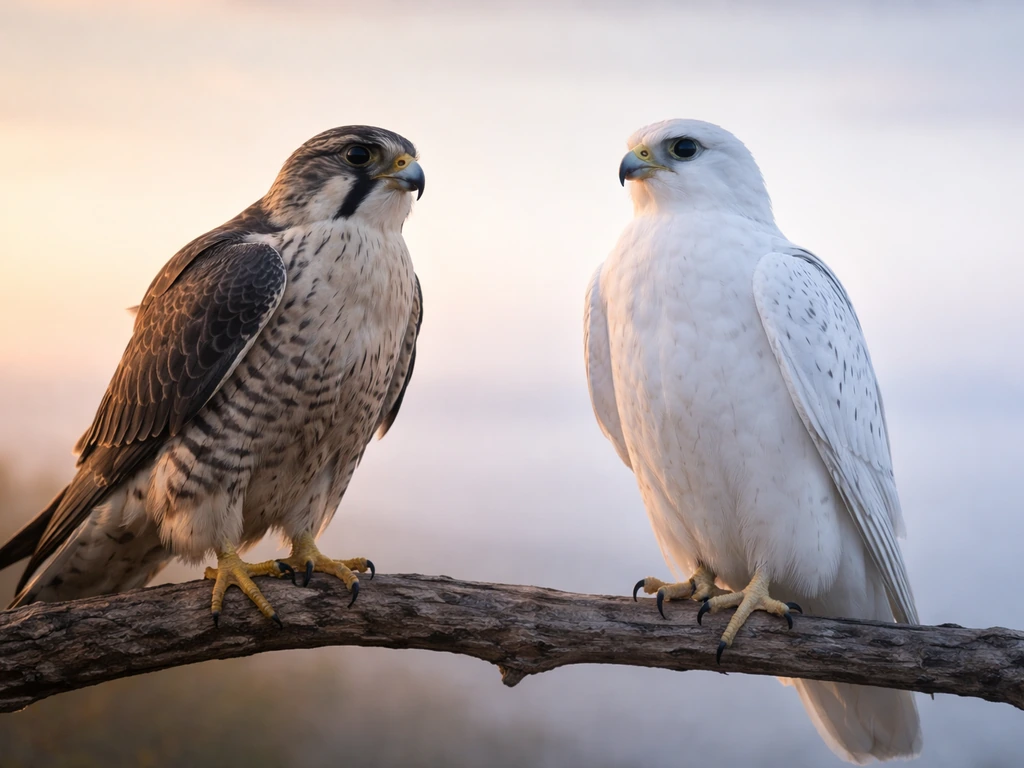
| Attribute | Falcon | White Falcon |
|---|---|---|
| Core themes | Vision, speed, power, focus, victory, protection | All falcon themes, plus purity, spiritual clarity, divine message |
| Cultural weight | Royal, military, noble, solar | Royal + sacred, celestial, prophetic |
| Dream meaning | Focus, ambition, decisive action, sharp attention | Heightened omen, spiritual awakening, depth of passion, good fortune |
| Omen tone | Neutral-to-positive, depends on behavior | Strongly positive in most traditions |
| Heraldic coding | Rank and conquest | Purity, intellect, nobility (silver) |
| Key traditions | Egyptian, medieval European, falconry culture | Hungarian legend, Islamic dream tradition, heraldry, modern spiritual practice |
The falcon is one of those symbols that earns its meaning honestly, every association comes from something the actual bird does, from the way it hunts to the height it reaches to the precision it brings to everything it does. If you want to go deeper into how birds carry meaning between worlds and traditions, exploring the broader landscape of soul bird symbolism is a natural next step, it puts the falcon's role as a messenger and spiritual signal into a wider framework that spans cultures from Egypt to northern Europe.
FAQ
If I saw a falcon but it wasn’t clearly white, does that change the meaning of falcon bird meaning?
Start by separating “falcon” from “white falcon.” If you only saw a normal falcon, the emphasis is usually on focus, speed, and clear perception. If it was explicitly white, treat the encounter as an added layer of purity or spiritual clarity, and check whether your situation involves conscience, intention, or a decision that feels morally charged, not just strategically important.
In a dream, does a white falcon mean the message is already “for me,” or could it be distant guidance?
Yes. In dreams, color can shift the interpretation even when the action is the same. A white falcon landing or approaching you often reads as “message delivered” or “higher truth made personal,” while a white falcon hovering far away can feel like guidance you must notice but are not ready to act on yet.
How do I interpret falcon bird meaning when the encounter happened in a specific real-life place?
The context around you matters. For example, encountering the bird near a hunting setting, a sports field, or a workplace competitive environment can push the reading toward ambition, decisive action, or performance pressure. Seeing it near water, homes, or quiet indoor spaces tends to steer interpretations toward emotional clarity, protection, and household well-being rather than pure achievement.
What if the falcon in my experience felt aggressive versus calm, does that change the interpretation?
If the falcon seemed aggressive, fixated, or intent on a target, many readers interpret it as urgency and a need to prioritize one goal. If it appeared calm, distant, or merely observing, it often points to patience and careful attention before acting. Since you cannot know the “target” for sure, look at your waking life for what currently feels most unavoidable or most worthy of your concentrated focus.
How should emotions factor into interpreting the falcon bird meaning or white falcon meaning?
Use the “first emotion wins” rule. The meaning becomes more accurate when you anchor to how you felt at the moment you noticed the bird, not after you started researching symbolism. If the feeling was awe or relief, white falcon readings tend toward spiritual clarity or protection; if it was fear or dread, revisit whether you are facing a situation that requires tighter boundaries or a course correction.
What does it mean if I keep seeing a falcon or a white falcon repeatedly?
Repeated appearances usually mean the theme is active in your life, not that the same symbol is giving a single static prediction. Try tracking what changed across the repetition, for instance a new responsibility, a recurring decision, or an argument. Then ask whether the symbol’s core message, focus and precision, matches the most immediate pattern you keep encountering.
I’m stuck. Should I interpret falcon bird meaning as a spirit animal omen or as a prompt to look at myself differently?
If you are doing a “spirit animal” style reading, consider switching to “mirror reading” when you feel stuck. For example, a falcon may reflect your ambition and attention, but a white falcon mirror may point to whether your intention is clean, honest, and aligned. If the symbol makes you question your motives, that is often the most useful practical takeaway.
How do I avoid getting a generic or wrong interpretation when falcon bird meaning varies by tradition?
Don’t force a single “universal” translation. Choose the interpretive framework that matches your cultural or personal lens (Egyptian protection and kingship, medieval court status imagery, Islamic dream category for white omens, or modern focus-and-ambition prompts). If you do not have a framework, use the action-and-emotion method (what it did, how you felt) to keep the reading grounded.
Is white falcon meaning ever taken as a literal prediction, or is it better used as guidance?
Be cautious with forecasting. Symbolic readings are usually best treated as guidance for decisions, attention, and mindset rather than literal predictions. A safer approach is to treat a white falcon as a “check your intentions and act with clarity” cue, especially if your current choices affect others or your integrity.
What if I’m not sure the falcon was truly white (lighting or distance issues)?
First, confirm what “white” actually means in your experience. Sometimes lighting, distance, or reflection can make a different bird or object look white. If you are unsure, keep the interpretation closer to general falcon symbolism (focus, vision, power), then add the spiritual “purity” layer only if your perception was consistent across moments or angles.