
To sing like a bird means either that someone has a beautiful, melodious singing voice, or that a person is freely revealing information (usually secrets) to authorities. The meaning of crane bird can refer to birds in the crane family and how the name is used in different contexts. Those two meanings live comfortably under the same phrase, and the context almost always tells you which one the speaker intends. A compliment about someone's voice at a recital? First meaning. A crime drama where a suspect spills everything to detectives? Second meaning.
Sing Like a Bird Meaning: Literal and Figurative Uses

Marcus Blackwell
24 May 2026
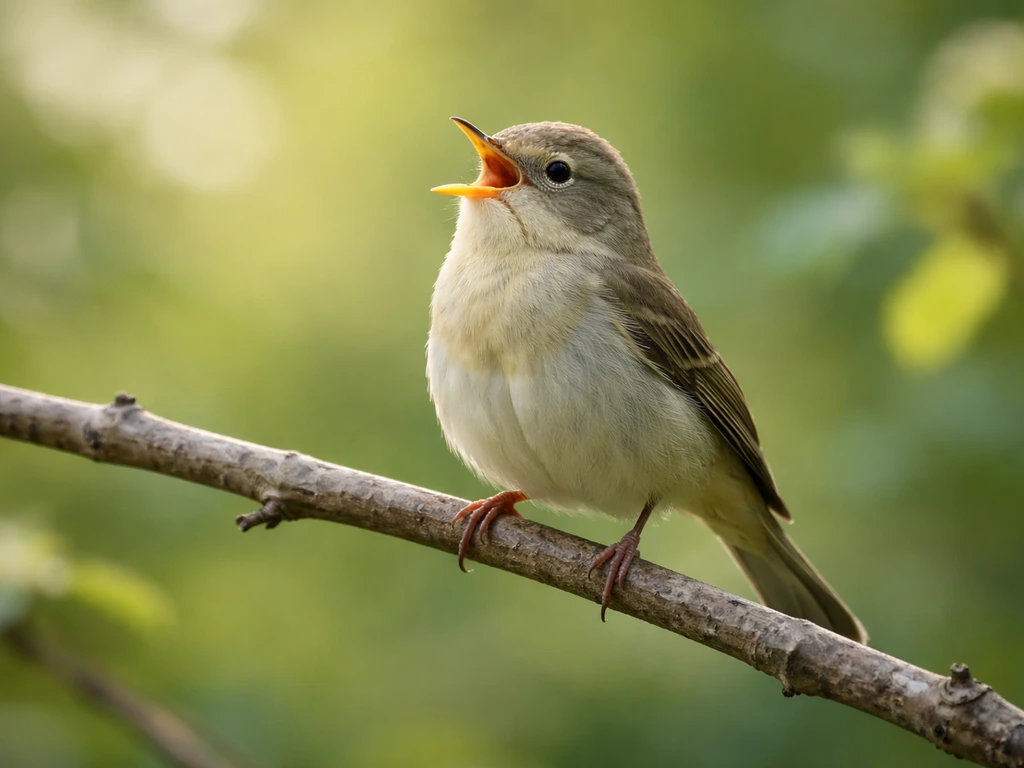
Literal vs. figurative: what's actually going on here
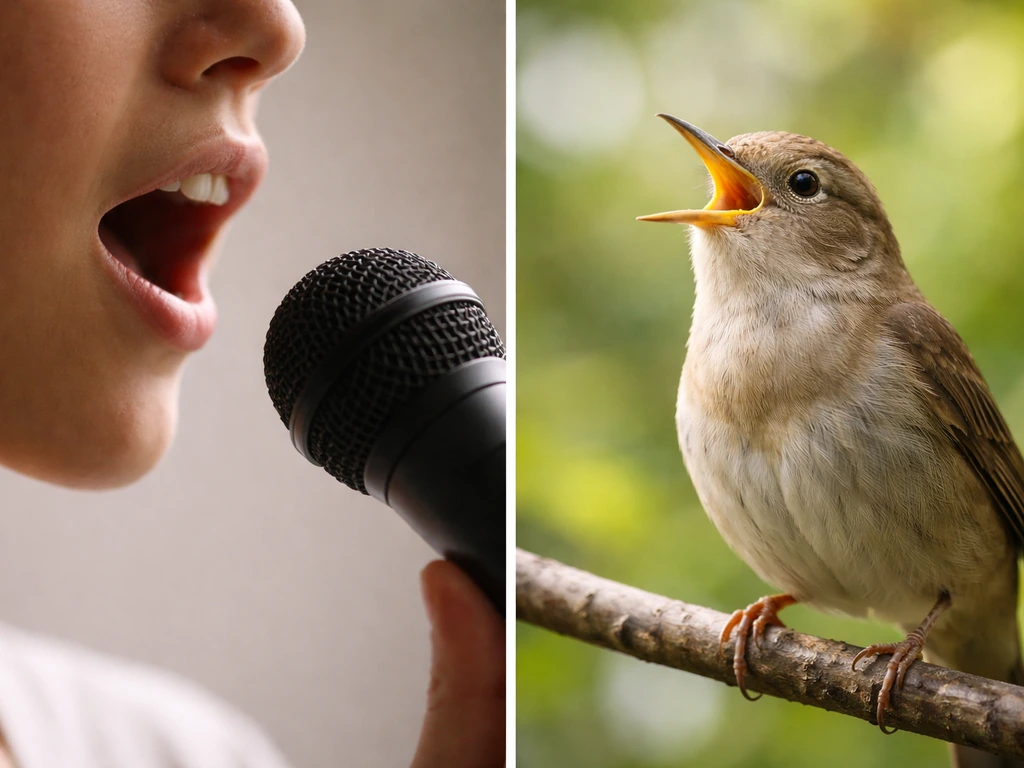
Nobody who says 'she sings like a bird' is making a biological observation. They're not comparing vocal cord anatomy to syrinx mechanics. The phrase is a simile, a figurative comparison, and it works because birds have occupied the cultural imagination as the gold standard of natural, effortless, beautiful sound for as long as people have been writing things down.
In its literal-sounding sense, the phrase praises a human voice by comparing it to birdsong, which carries connotations of sweetness, clarity, and ease. In its informing sense, the 'singing' is metaphorical in a different direction: 'to sing' has long been slang for telling, talking, confessing. Add 'like a bird' and you amplify the idea that the person is singing freely and at length, without much pressure needed. Neither sense is truly literal, both are figures of speech built on layered associations with birds and the act of singing.
When people actually use this phrase
In everyday conversation, the most common use is the compliment. You'll hear it said with genuine admiration after a performance, in a casual aside about someone's talent, or in storytelling about a person who surprised everyone with a great voice. A stand-up comic can toss it off as a quick shorthand: 'She's a great piano player, sings like a bird,' and every listener understands it immediately as a warm, offhand compliment. It's taught in ESL classrooms as a standard English simile for exactly that reason: it's both conventional and instantly clear.
The informing sense shows up more often in crime narratives, whether that's a film, a news story, or crime fiction. 'Joey Malone has been singing like a bird' means Joey is cooperating fully with investigators. The phrase implies he's talking without much coercion and at considerable length. The fact that it echoes the beauty-of-voice sense is part of the dark humor embedded in the slang: the suspect isn't performing, but he's certainly performing.
A good rule of thumb: if the surrounding context involves a performer, a choir, a talent show, or any appreciation of someone's voice, you're looking at the compliment sense. If the context involves legal trouble, interrogation, a reduced sentence, or betrayal, you're looking at the informing sense.
What the phrase usually implies: beauty, freedom, cheer, and more

When the phrase is used as a compliment, it carries a cluster of positive associations that go beyond just 'has a nice voice.' Birds in cultural tradition are linked to freedom, lightness, joy, and the turning of seasons. A person who sings like a bird isn't just technically skilled: they sound natural, unforced, and joyful. The comparison implies the singing comes easily, the way birdsong does, without straining or effort visible to the listener.
There's also a springtime and renewal undercurrent. Birdsong is one of the oldest cultural signals of spring arriving, of winter receding. Folklore around birds like the bluebird connects their song to optimism and the end of cold, hard times. When you call someone's voice birdlike, you're unconsciously tapping into that whole symbolic register: cheer, vitality, new beginnings.
In romantic and poetic contexts, 'sings like a bird' also carries a note of freedom and authenticity. The bird sings because it's its nature, not because it was trained or coerced. Applied to a person, the phrase suggests their singing feels genuine and expressive rather than mechanical. That's part of what makes it a compliment rather than just a technical observation.
How 'sing like a bird' fits alongside other bird idioms
Bird idioms in English cover a lot of ground, and it's worth knowing how 'sing like a bird' differs from its neighbors so you use each one correctly.
| Idiom | Core meaning | Tone |
|---|---|---|
| Sing like a bird | Beautiful voice OR revealing secrets | Admiring / neutral to ominous |
| The early bird gets the worm | Rewards go to those who act first | Motivational / proverbial |
| A bird in the hand is worth two in the bush | Certainty beats possibility | Cautionary / pragmatic |
| Free as a bird | Completely unrestrained or liberated | Positive / celebratory |
| Eat like a bird | Eat very little | Descriptive / sometimes teasing |
Notice that 'eat like a bird' (meaning to eat very little) and 'sing like a bird' both use the bird comparison but land in completely different territory. The eating phrase draws on the (somewhat inaccurate) folk perception that birds eat tiny amounts; the singing phrase draws on birds' reputation for beautiful, effortless vocalization. The expression “she eats like a bird” meaning is similar in that it often points to a modest, quick-eating style, though it depends on context The eating phrase. Two idioms, same template, opposite directions.
The verbs 'warble,' 'carol,' and 'chirp' live in the same semantic neighborhood. The Reverso English Dictionary includes bird-vocalization senses for “sing,” and lists related verbs such as “chirp” and “warble,” which matches the vocabulary neighborhood discussed here. Warble, in particular, means to sing in a melodious or quavering way that closely mirrors the birdlike quality 'sing like a bird' evokes. If you want a single verb instead of a simile, 'she warbled her way through the anthem' achieves something similar, though with a slightly more formal or literary feel.
Birds and song in culture and literature
The connection between birds and meaningful vocalization runs deep across literary and cultural traditions. Shelley's 'To a Skylark' treats the bird's song as a symbol of pure, transcendent joy, a quality of nature that human art can only approximate. Maya Angelou's most famous title, drawn from Paul Laurence Dunbar's poem, inverts this: the caged bird sings not from joy but from yearning, making birdsong a symbol of emotional and spiritual longing in the face of captivity. The title and excerpt from I Know Why the Caged Bird Sings link bird-song imagery with captivity and freedom, plus spiritual and emotional yearning. Both uses rest on the same foundation: that bird song carries weight, that it communicates something essential about the inner state of the creature singing.
Across folklore and literature more broadly, birds have consistently symbolized freedom, transcendence, hope, and transformation. That symbolic load is part of what gives 'sing like a bird' its resonance as a compliment. You're not just saying someone has a pleasant voice; you're invoking that whole tradition of birds as creatures that express something beyond ordinary speech.
In the informing sense, the phrase takes on a more cynical dimension. Here 'singing' connects to the idea of confession and revelation, and 'like a bird' amplifies the freedom and volume of that disclosure. People sometimes ask about the crawdad bird meaning, but it follows the same literal versus figurative logic: context determines what the phrase is really pointing to 'singing' connects to the idea of confession and revelation. It's not that birds are associated with betrayal in tradition; it's that the slang repurposes the 'free flowing' quality of birdsong to describe someone who can't stop talking to the authorities. The irony is baked into the expression.
Using the phrase correctly, with examples
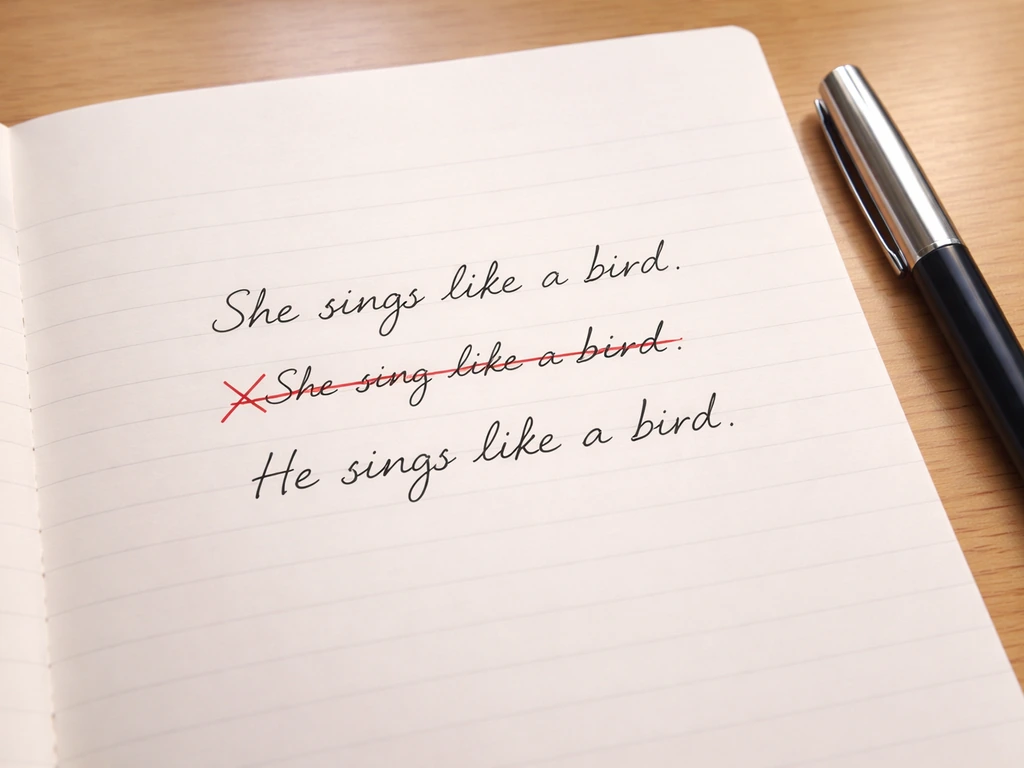
The phrase follows a consistent grammatical pattern: a subject plus a form of 'sing' plus 'like a bird.' You don't typically use it as a standalone noun phrase or adjective. Here are the main ways it appears in natural usage:
- Compliment, present: 'She sings like a bird, I had no idea she had that kind of voice.'
- Compliment, past: 'He sang like a bird at the school concert last night.'
- Compliment, third-party: 'Her grandmother apparently sang like a bird when she was young.'
- Informing, past: 'The suspect sang like a bird once they offered him a deal.'
- Informing, present progressive: 'Word is he's been singing like a bird to the investigators all week.'
- Poetic/creative: using the phrase as a song title or lyric to evoke joyful, effortless expression.
Tone matters. In the compliment sense, it's warm and admiring, not ironic. It works equally well in casual conversation and in more formal descriptive writing. In the informing sense, the tone is typically neutral-to-negative: the person 'singing' is usually seen as a betrayer from the perspective of their associates, even if the disclosure is legally or morally justified.
If you want variations that stay close to the compliment meaning, consider 'sings beautifully,' 'has a voice like a songbird,' or verb substitutions like 'warbles' or 'trills.' These near-synonyms let you vary your phrasing without losing the birdlike imagery. Some people also look for a deeper interpretation when they search for the Japanese crane bird meaning, connecting birds to symbolism and personality traits birdlike imagery. For the informing sense, phrases like 'spilled everything,' 'talked freely,' or 'cooperated fully' cover the same ground with no ambiguity, which can be useful if you want to avoid confusion.
The phrase has a long shelf life because it does double duty: simple enough to be a classroom simile exercise, layered enough to carry real symbolic weight in poetry and fiction. Whether you're decoding it in something you read or reaching for it in something you're writing, the context is almost always your clearest guide to which meaning is at play.
FAQ
Can I use “sings like a bird” or “singing like a bird,” or is the exact wording important?
Yes, but you will almost always get a clear reading from the verb’s form. “Sing like a bird” and “sings like a bird” both work, while “singing like a bird” is usually understood as descriptive (for example, “He was singing like a bird during the audition”).
What kind of singing or talking does the phrase usually imply, short bursts or sustained output?
Avoid using it for people who only make short vocal sounds, like “murmured” or “whispered.” The phrase implies a sustained, flowing output (either a performance or extended talking), so “she sang like a bird for the whole song” feels natural, but “she whispered like a bird” sounds off to many listeners.
Is “sing like a bird” appropriate in formal writing or professional settings?
In most real conversations it is informal and figurative. In serious legal or journalistic writing, people often prefer plainer wording such as “cooperated fully” or “gave investigators a detailed account,” because “sing like a bird” can sound like slang or dark humor depending on the audience.
Can the phrase be confusing if there is no context? How do I prevent misunderstandings?
Yes, if you do not add context. Outside of a performance setting or a police-interrogation setting, the phrase can feel ambiguous or even slightly jarring. If there’s any chance of misunderstanding, add a cue like “in her audition” (compliment) or “to the detectives” (informing sense).
Could using it in the wrong tone make it offensive or misunderstood?
It can, especially among listeners who know the slang from crime stories. If someone hears it as a compliment but actually intends the informing sense, it can land as mockery or a threat. The safest approach is to avoid it when discussing real-world accusations, and stick to neutral alternatives like “has a beautiful voice” or “is cooperating with authorities.”
Can I swap “like a bird” for another animal phrase and keep the same meaning?
Don’t treat “like a bird” as interchangeable with “like an animal” or “like wildlife.” The idiom is conventional, and swapping the comparison typically loses the specific cultural associations (effortless beauty for the compliment sense, free-flowing disclosure for the informing sense).
Are there safer alternatives if I want to keep it compliment-like but avoid the full idiom?
For the compliment meaning, “birdlike” is sometimes used, but it sounds more literary or poetic than the full idiom. For everyday speech, the idiom “sing like a bird” is the natural choice, while “warble” or “trill” can replace it if you want the musical tone without the figurative idiom.
In the informing sense, does the phrase imply the person is guilty or just that they are cooperating?
Yes. In the informing sense, “sing like a bird” can imply talking freely to investigators, but it does not specify whether the person is guilty or innocent. It describes the behavior (cooperating, confessing, giving details), so you should rely on surrounding facts if you are interpreting morality or legality.
Can I use it for sounds from non-human sources, like a ringtone or an instrument?
“Sing like a bird” is usually framed about a person’s own voice. It sounds different when applied to objects or technologies (for example, “the phone sang like a bird” is likely to be heard as playful metaphors for sound quality). If you mean it literally about a sound, using “chirp,” “warble,” or “ring” may be clearer.
What quick cues tell me which meaning is intended in a sentence?
A common mistake is to assume the meaning from the surface word “sing.” Use your cue words: performance terms (recital, anthem, audition, choir) point to the compliment, while law-and-confession terms (detectives, interrogation, confession, cooperating, reduced sentence) point to the informing sense.