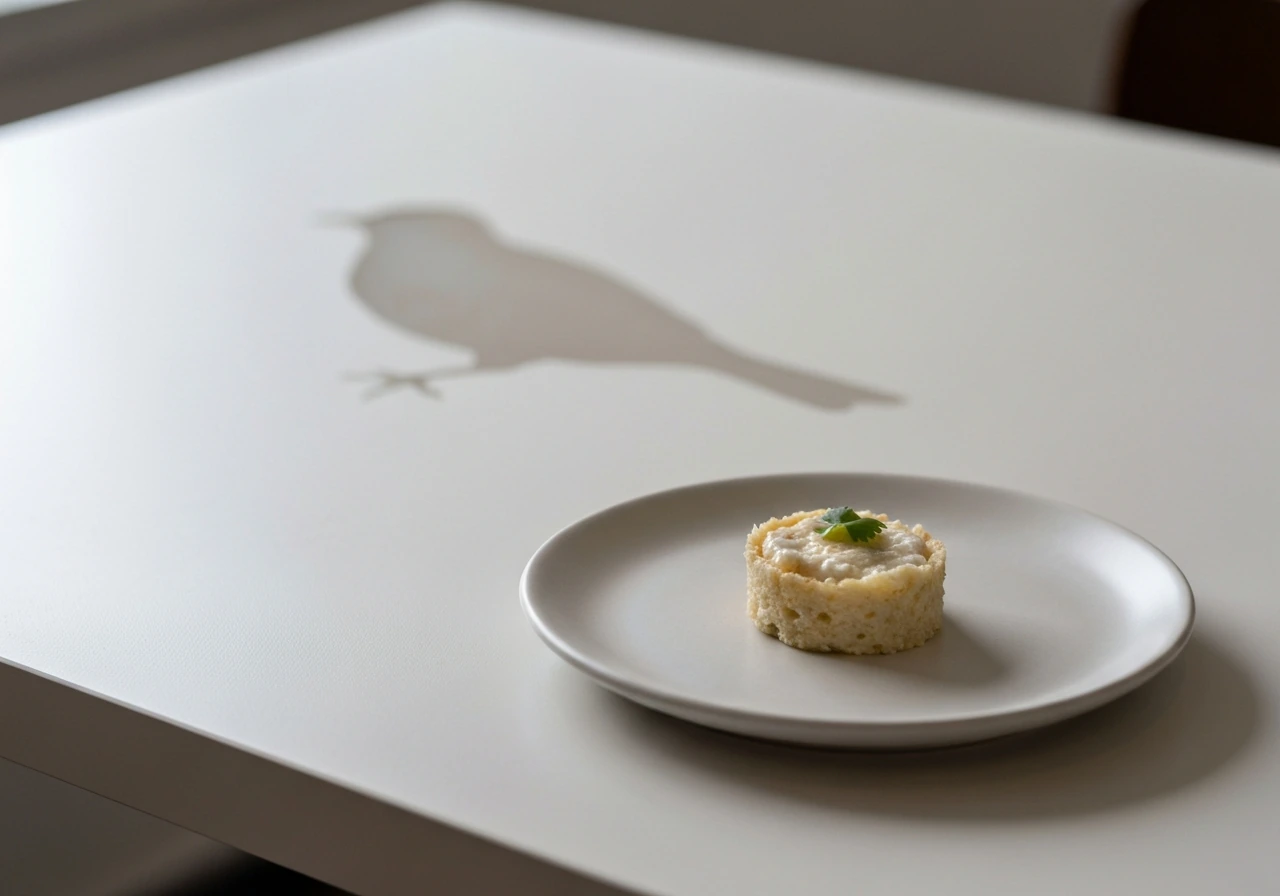
There's a small irony tucked into the metaphor. Real birds are actually voracious eaters relative to their body size. A songbird can consume up to a third of its body weight in food daily just to fuel its metabolism. But the idiom doesn't care about ornithology. It's built on the popular image of a bird pecking at crumbs or seeds, taking tiny bites, appearing to eat almost nothing. That visual impression, whether accurate or not, is exactly what the phrase borrows. She eats like a bird is one of the most common forms you'll encounter, and the meaning never wavers: small portions, light appetite, not much on the plate.
How the Idiom Works: Tone, Implication, and Everyday Use

Cambridge labels this idiom as "informal," which tells you a lot. You won't see it in a medical chart or a nutritionist's report. It belongs in conversation, the kind where someone watches a friend push food around a plate and says, "You eat like a bird. I don't know how you stay healthy." That example from Cambridge captures the tone well: it's observational, sometimes affectionate, occasionally a little pointed. The phrase can be a gentle tease, a compliment wrapped in concern, or a neutral description depending entirely on context and delivery.
One thing to get clear: the idiom is not about being picky. If someone turns down a dish because they hate mushrooms, that's not "eating like a bird. " The phrase is specifically about volume, how much a person eats, not about selectiveness or dietary restrictions. It also doesn't carry a built-in judgment about dieting.
Someone might say "I eat like a bird" as a casual self-description with zero connection to weight loss. That said, the phrase does drift into diet talk fairly often, especially in sentences like the 1992 Los Angeles Times example: "I eat like a bird, but I can't lose weight. " In that context, the speaker is using the idiom to claim they eat little while puzzling over why the scale doesn't agree.
Examples of 'Eat Like a Bird' in Everyday English
Seeing the phrase in real sentences is the fastest way to lock in the meaning. Here are several examples that reflect genuine conversational use across the different grammatical forms:
- "You eat like a bird. Are you sure you don't want more?" (2nd-person present, direct address, gentle concern)
- "She eats like a bird. I've never seen her finish a full plate." (3rd-person present, describing someone's general habit)
- "I eat like a bird, actually, so a small portion is perfect for me." (1st-person, self-description, used to explain a preference or reassure a host)
- "I like the grilled chicken salad, but that's because I eat like a bird." (1st-person, casual explanation of a food choice)
- "She's eating like a bird and barely touching her meals lately. I'm a little worried." (present participle, describing current behavior with concern)
- "Some people say they eat like a bird and still can't lose weight." (general statement, linking the phrase to diet discussions)
Notice how the idiom adapts cleanly across first, second, and third person without changing meaning at all. The grammatical form shifts, but the implication stays the same: this person eats very little. The present participle form, "eating like a bird," tends to describe a current or temporary behavior, while "eats like a bird" suggests a fixed, long-term habit. Both are equally natural and widely used.
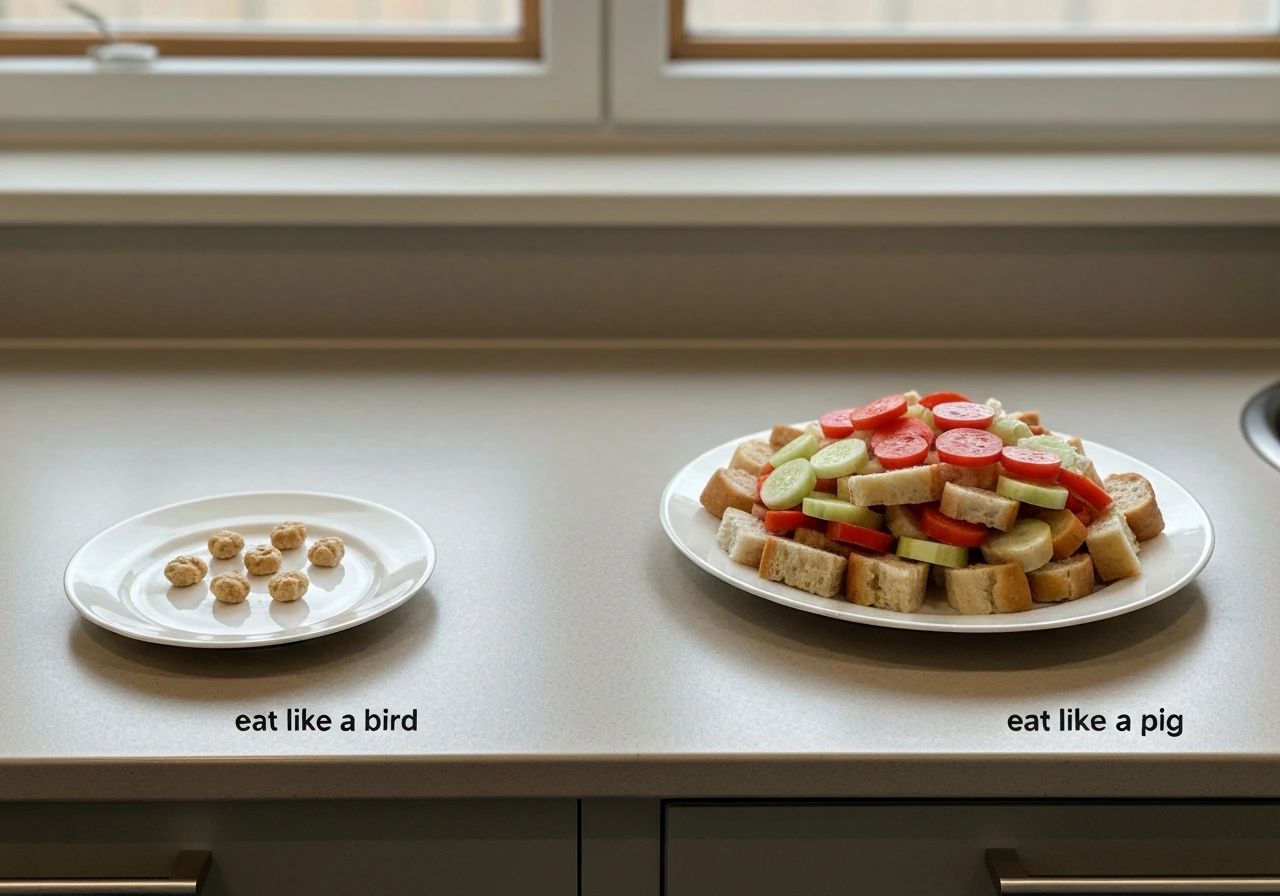
English has no shortage of bird-based expressions, and it helps to know which ones overlap with eating and which ones go somewhere else entirely. The closest contrast to "eat like a bird" is "eat like a horse," which means eating a great deal. Dictionary.com treats these as direct antonyms, and the pairing makes the meaning of each phrase sharper: one describes minimal intake, the other describes a massive appetite. If you hear both in the same conversation, the speaker is drawing a clear spectrum.
"Eat like a pig" is a third phrase in the same family, implying eating a lot and often messily or greedily. Daily Writing Tips places "eat like a bird" and "eat like a pig" at opposite ends of the appetite scale, which is a useful mental model. Neither of those comparisons flatters the subject particularly, but "eat like a bird" is by far the gentler of the two.
Then there are bird idioms that have nothing to do with appetite at all. "The early bird gets the worm" is about timing and initiative, not food consumption. It describes the advantage of acting early or arriving first. If you think about the image of a bird pulling a worm from the ground, the metaphor is about effort and timing, not about how much the bird eats. Similarly, "a bird in the hand is worth two in the bush" is about certainty versus risk, preferring a guaranteed outcome over a bigger but uncertain one. Neither of those phrases tells you anything about appetite.
Another expression that sounds food-adjacent but isn't: "sing like a bird" is about voice and expression, often used to describe someone who speaks freely or confesses everything, sometimes with a musical connotation. It shares the bird metaphor but belongs to a completely different figurative category. Knowing these distinctions keeps you from mixing up phrases that happen to share an animal.
| Idiom | Core Meaning | About Eating? |
|---|
| Eat like a bird | To eat very little; small appetite | Yes |
| Eat like a horse | To eat a great deal; large appetite | Yes |
| Eat like a pig | To eat a lot, often greedily or messily | Yes |
| The early bird gets the worm | Acting early gives you an advantage | No |
| A bird in the hand is worth two in the bush | Certainty is better than uncertain gain | No |
| Sing like a bird | To speak freely or with a beautiful voice | No |
Where the Phrase Comes From
Dictionary.com places the origin of "eat like a bird" in the first half of the 1900s, making it a relatively modern idiom compared to something like "eat like a horse," which dates back to the early 1700s. The phrase grew out of a widespread and persistent misconception: that birds, being small and delicate, must eat almost nothing. The image of a sparrow or finch pecking lightly at seeds reinforced this idea, even though the biology tells a different story entirely.
Birds are interesting metaphors throughout the English language precisely because they carry such strong visual associations. Delicacy, freedom, lightness, and fragility all cluster around bird imagery, which is why they work so well in idioms about small appetite. The crane, for example, carries entirely different symbolic weight across cultures. The meaning of the crane bird in many traditions is tied to grace, longevity, and wisdom, not to food at all. In Japan specifically, the Japanese crane carries meaning connected to fidelity and good fortune. The point is that English idiom-makers picked the small, pecking, seed-nibbling bird image when they wanted to express light eating, and the phrase stuck.
Bird phrases in English tend to function as fixed, set expressions rather than flexible comparisons you can modify freely. This is a pattern across many animal similes: "eat like a bird" is treated as a unit, not something you'd say as "nibble like a sparrow" and expect people to understand immediately. That fixed-phrase quality is part of what makes it an idiom rather than just a descriptive comparison. The crunch bird and the crawdad bird are examples of how bird names themselves can carry cultural and idiomatic weight beyond their literal meaning, showing just how deeply birds are embedded in figurative English.
How to Use It Correctly (and Avoid the Common Mix-ups)
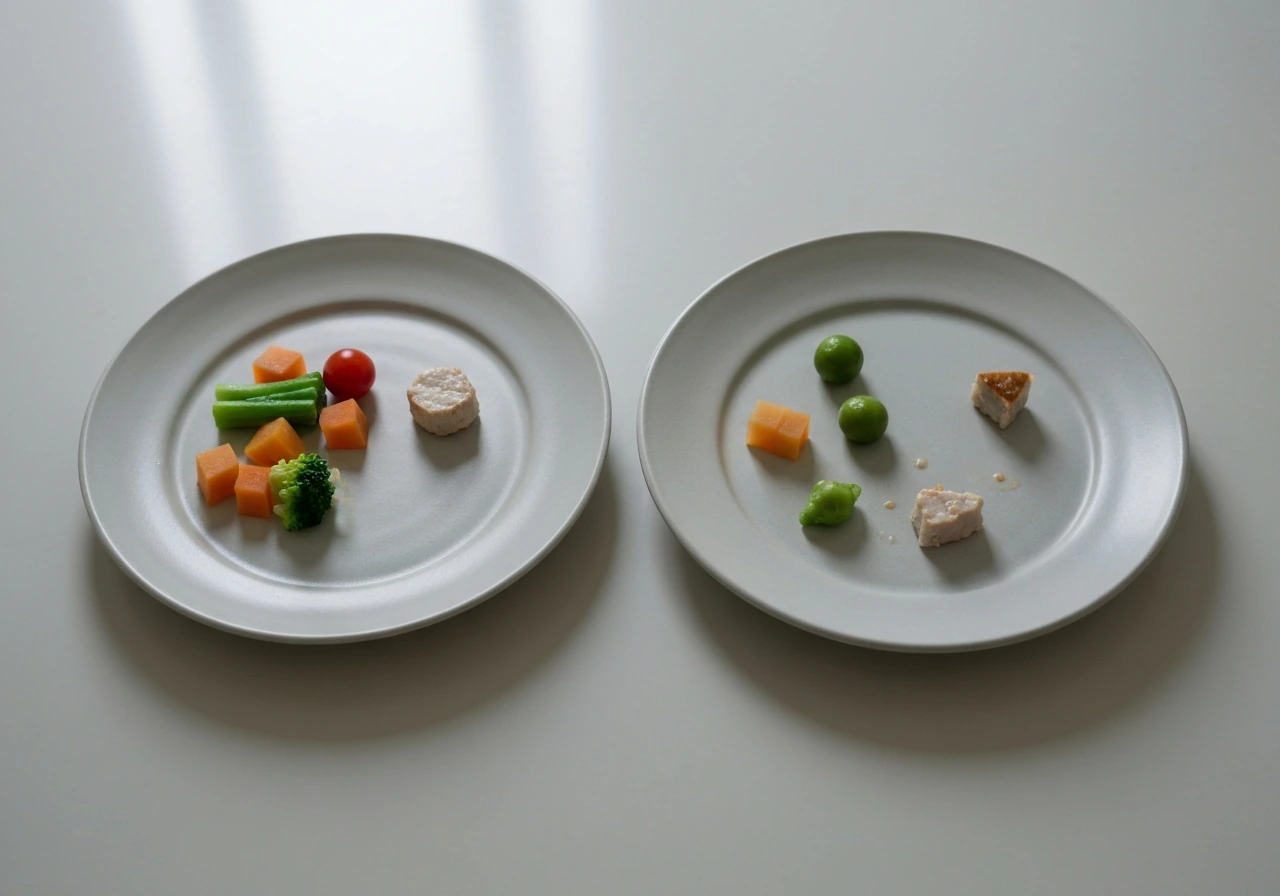
The most common misunderstanding is confusing "eating like a bird" with being picky. If you say "she eats like a bird" about someone who refuses most foods for taste reasons, you're using the phrase inaccurately. The idiom is about amount, not preference. Reserve it for situations where the relevant observation is how little someone eats, not what they choose to eat.
The second common slip is using it as a compliment about healthy eating or clean diets. "Eat like a bird" doesn't mean eating healthily or wisely. Cambridge's example actually captures a hint of worry: "I don't know how you stay healthy." The phrase can land as neutral or affectionate, but it doesn't imply admiration for someone's nutritional choices. It's about volume, full stop.
When using it in conversation, the idiom works best in informal settings. As a direct address ("You eat like a bird!"), it reads as observational and can be warm or teasing depending on your tone. As a self-description ("I eat like a bird, actually"), it's a useful way to explain a preference, warn a host not to pile your plate, or gently push back on someone's assumptions. Dictionary.com's example, "I eat like a bird, actually," has that slight corrective tone: it's the phrase you reach for when you want to clarify something about your habits without getting into a long explanation.
One last thing to keep straight: the idiom describes a general habit or a current pattern of behavior, not a single meal. Saying "I ate like a bird at lunch" is grammatically fine and understood, but the phrase is most natural when it describes something consistent about a person. "She eats like a bird" implies that's just how she is. "She ate like a bird at the party" works, but it sounds more like a one-time observation than a character note. If you're describing an ongoing trait, the simple present form ("eats like a bird" or "I eat like a bird") is the most natural choice.