
The Japanese crane symbolizes longevity, good fortune, fidelity, and peace. It is one of the most layered and consistently used bird symbols in all of East Asian culture, and if you have just encountered it on a tattoo, a wedding gift, a piece of fabric, or a folded-paper ornament, you are looking at something with roughly a thousand years of accumulated meaning behind it.
Japanese Crane Bird Meaning: Symbolism, Myths, and Usage

Marcus Blackwell
14 Apr 2026
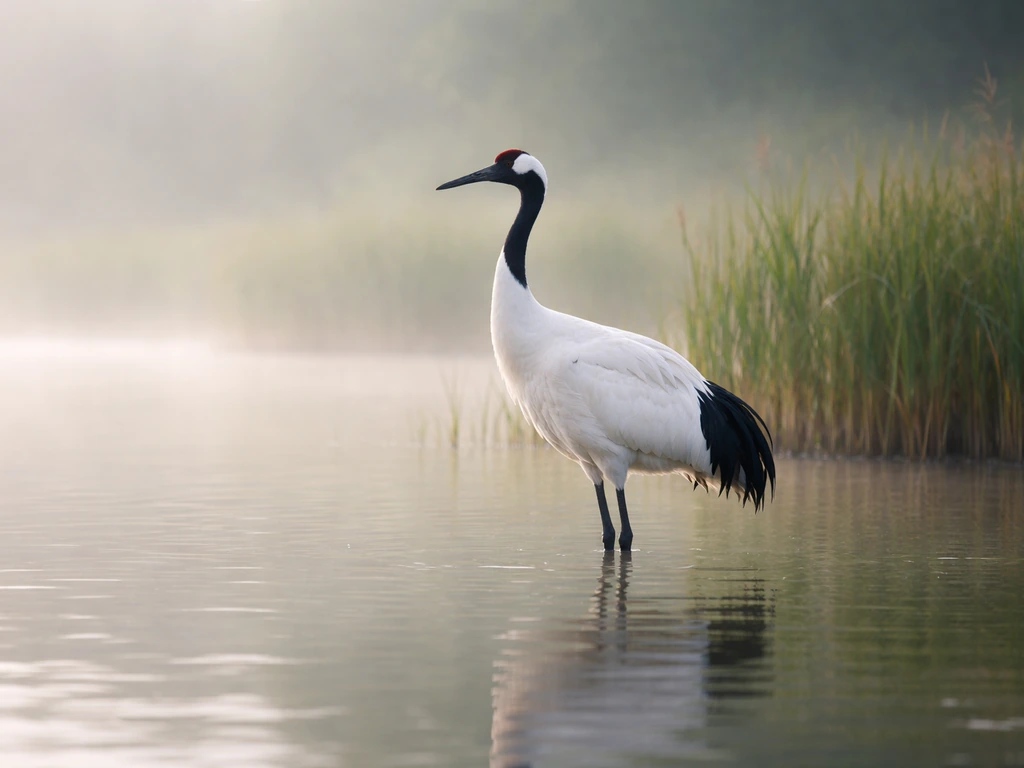
The Victoria and Albert Museum likewise notes that the crane is the most popular bird depicted on kimono, highlighting its prominence as a textile motif with layered meaning the crane is the most layered and consistently used bird symbols in all of East Asian culture.
This guide will walk you through exactly what that meaning is, how it shifts depending on context, and how to figure out which specific meaning applies to the crane you saw.
First, let's confirm what "Japanese crane" actually means
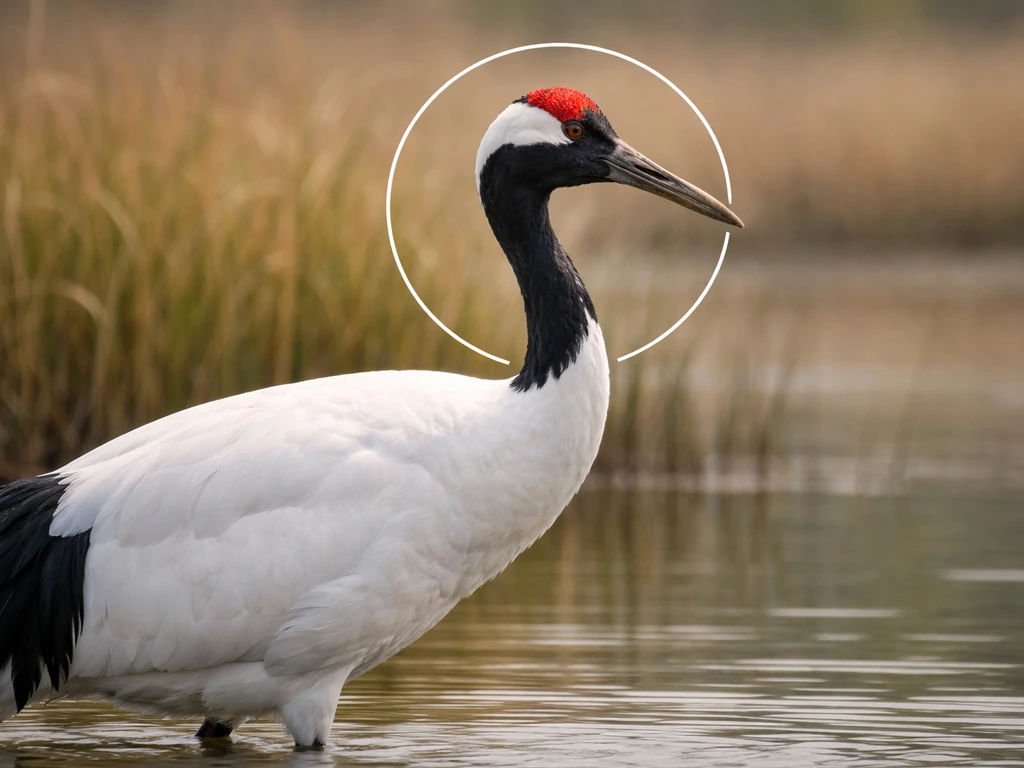
When people search "Japanese crane bird meaning," they almost always mean the red-crowned crane, known scientifically as Grus japonensis and sometimes called the Manchurian crane. It is a large, mostly white wading bird native to Northeast Asia, and it is visually distinctive enough that identification is rarely a problem once you know what to look for.
Adult red-crowned cranes have a white body, black secondaries (the wing feathers visible at rest), a black neck, and a bare scarlet crown on the forehead. That red patch is the defining feature. Younger birds look different: they lack the red crown entirely and instead show a light-brown neck and some brownish speckling on the wings. Juveniles gradually transition from that cinnamon-brown coloring to the clean white of adults. So if someone shows you a crane image and you are not sure of the species, look for the red crown first. If it is there, you are almost certainly looking at Grus japonensis.
The Japanese word for this bird is tsuru (鶴), and the species-specific name with its red crown is sometimes written as tancho (丹頂鶴). In symbolic or artistic contexts, Japanese writing rarely bothers with the species-level distinction because tsuru in cultural usage almost always refers to this particular crane. It is described by Japanese government cultural materials as both "a common motif in traditional Japanese art" and "a symbol of long life and happiness." Worth noting for disambiguation: if you are reading about the meaning of crane birds more broadly, many of those themes overlap, but the Japanese red-crowned crane carries a specific cultural weight that other crane species simply do not.
What the crane means in Japanese culture: the core ideas
There are four pillars of Japanese crane symbolism, and almost every specific context you encounter will connect back to at least one of them: longevity, good fortune, fidelity, and peace. These are not vague associations. They are deeply embedded in Japanese art, ceremony, language, and folklore, and they have remained stable across centuries.
Longevity and good fortune
The crane is probably the single most potent longevity symbol in Japanese visual culture. This comes directly from the belief that cranes live for a thousand years, which is expressed in one of the most recognizable Japanese proverbs: 鶴は千年、亀は万年 (Tsuru wa sennen, kame wa mannen), meaning "a crane lives for a thousand years, a tortoise for ten thousand years. " You will see this pairing everywhere once you know to look for it.
A sculpture featuring both a crane and a tortoise is a deliberate longevity symbol, not just decorative nature imagery. The crane represents the shorter of the two legendary lifespans, which is still a thousand years, so it gets associated with vitality, long life, and what you might call "the good fortune that comes with endurance. "
Art historian Okanobori Teiji is cited in Japanese pattern scholarship as identifying the crane motif as "probably the most widely used motif" in Japanese arts and crafts. That is a remarkable claim, and it holds up: you can find cranes on kimono fabric, lacquerware, ceramic patterns, family crests, roof tiles, and architectural ornamentation across centuries of Japanese material culture.
Fidelity and marriage
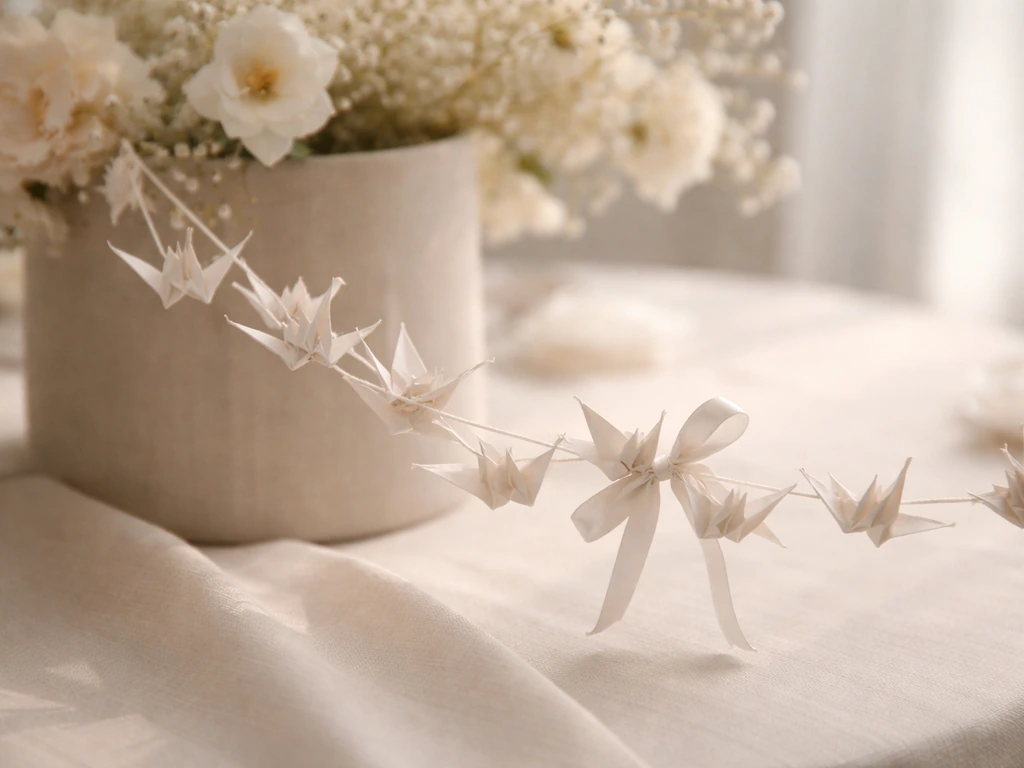
Cranes mate for life, and Japanese culture has recognized this and built symbolic meaning around it. The crane at a wedding is not there because it looks elegant (though it does). It is there because it signals lifelong partnership. A pair of cranes in wedding imagery is specifically a fidelity symbol, and the pairing matters: a single crane leans toward longevity or good luck, while a crane pair shifts the emphasis toward union and loyalty.
Peace and healing
The crane's association with peace and healing is more recent in its global form, though the underlying symbolism has older roots. In contemporary Japanese culture and internationally, the crane is understood as a symbol of peace, hope, and recovery, particularly since the mid-twentieth century story of Sadako Sasaki, which we will cover in detail below. The Portland Japanese Garden explicitly describes the crane as a symbol of "peace, hope, and healing during challenging times," which reflects how the symbol has evolved without abandoning its older meanings.
Longevity, luck, and peace: how these meanings work together
It is worth pausing on how these meaning themes relate to each other, because they are not separate buckets. They cluster together. In Japanese symbolic thinking, a long life is itself a form of good fortune, and peace is a precondition for both. The crane holds all three simultaneously. This is why it appears across such a wide variety of contexts: at birthdays (longevity), weddings (fortune and fidelity), temples (spiritual blessings), and memorial sites (peace and healing). A single crane motif can carry all of these meanings at once, and the setting is what tells you which aspect is most active.
The tsuru-kame (crane-tortoise) pairing makes this layering especially clear. Museum catalogue descriptions explicitly associate the pair with "happiness, good fortune, and longevity" together, not separately. When you see the proverb expressed in art, you are seeing a compressed wish: may you have a long, fortunate, and peaceful life. The crane is not one symbol among many; it is the anchor of an entire symbolic vocabulary about what a good human life looks like.
Mythology, folklore, and iconic art traditions
Tsuru no Ongaeshi: the crane wife story
The most important Japanese folklore piece involving cranes is Tsuru no Ongaeshi, which translates roughly as "The Gratitude of the Crane" or "The Crane's Return of a Favor." The core plot: a man rescues an injured crane, and the crane later returns in human form as a woman (often becoming his wife). She weaves beautiful cloth for him but forbids him from watching her work. He eventually looks, discovers her true nature, and she is forced to leave. The story is retold across Japan with regional variations, and it is considered by Japanese folklorist Seki Keigo to be one of the best-known Japanese tales about supernatural or enchanted spouses.
The Yuzuru no Sato Cultural Heritage Museum in Yamagata Prefecture preserves regional versions of this tradition as a local cultural heritage story. What does the tale mean symbolically? It connects cranes to gratitude, self-sacrifice, transformation, and the idea that certain things (the crane's true nature, or perhaps beauty itself) cannot be observed without being lost. If you encounter crane imagery in a narrative or literary context and the image feels tied to a woman, weaving, or hidden identity, Tsuru no Ongaeshi is almost certainly the reference.
Senbazuru and the paper crane tradition
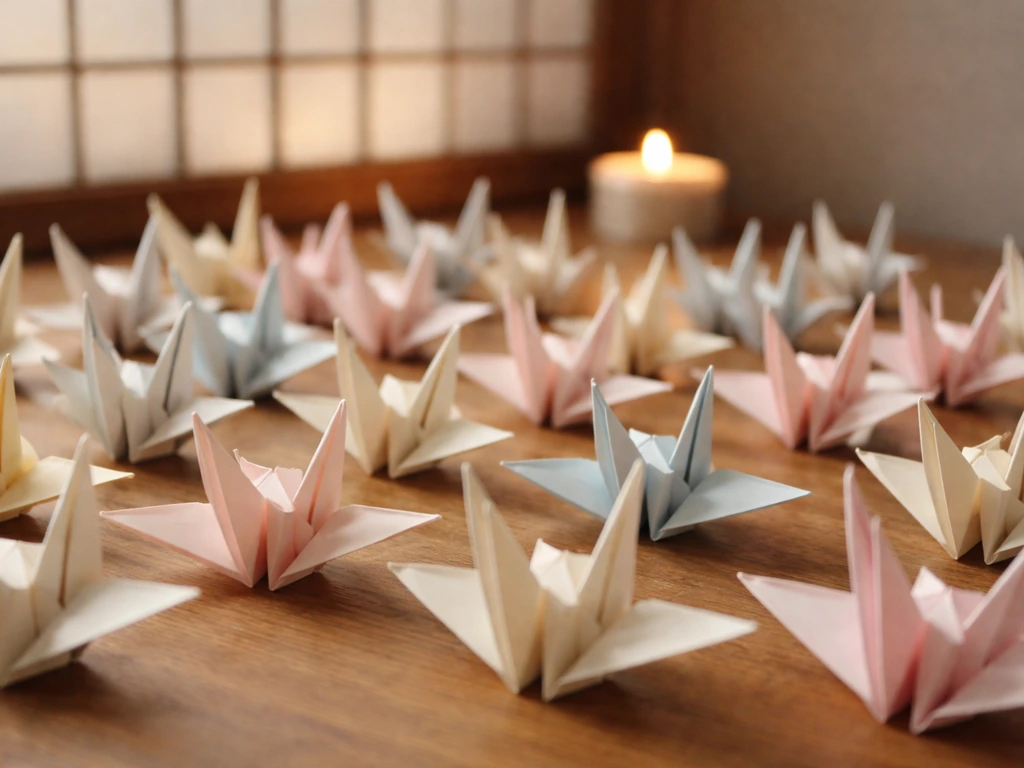
The origami crane (orizuru) is probably the most globally recognized form of the crane symbol today. Senbazuru (千羽鶴) refers specifically to folding one thousand paper cranes, linked together, as a way to earn a wish or blessing. The practice has historical roots going back to at least 1797, when the instructional book Sen Bazuru Orikake described techniques for folding connected chains of cranes. Paper cranes were historically offered at shrines and temples as requests for blessings, which gives the practice an older spiritual layer.
The modern global association with peace and healing comes from Sadako Sasaki, a girl who was exposed to radiation from the Hiroshima atomic bombing and developed leukemia as a teenager. Hiroshima Prefectural Office explains that Sadako Sasaki [continued folding paper cranes](https://www. pref. hiroshima.
lg. jp/site/hiroshimaforpeace-en/childrens-peace-monument. html) in her wish to get better and to continue living. She folded cranes during her hospitalization, aiming for the senbazuru milestone as a wish for her own recovery and, in some accounts, for a world without nuclear war.
She died before completing a thousand cranes by some accounts, and after her death, the Children's Peace Monument in Hiroshima's Peace Park was built in her memory. The monument cemented the crane's global identity as a symbol of peace. Today, clusters of origami cranes are a familiar sight at Hiroshima and at other memorial and shrine sites across Japan, and senbazuru is given as a gift to mark significant birthdays, major transitions, and wishes for someone's recovery from illness.
Cranes in Japanese visual art
The crane appears throughout the canon of Japanese visual art: ukiyo-e woodblock prints (including works connected to Hokusai), painted screens, lacquerwork, and textile design. A specific motif called "Crane's nest and rising sun" (Hinode sugomori no tsuru) pairs the crane with rising sun imagery, reading as a combined symbol of renewal and auspiciousness. This kind of pairing is characteristic of Japanese design: the crane rarely appears alone in formal art without an accompanying symbol that modifies or amplifies its meaning.
Real-world uses: what it means when you see a crane in context
Here is how the crane meaning plays out across the most common real-world contexts. Each setting activates slightly different aspects of the core symbolism.
| Context | Most likely meaning | Key details to check |
|---|---|---|
| Wedding gift or decor | Fidelity, longevity, happiness in marriage | Is it a pair? Pairs emphasize union; single cranes lean toward general fortune |
| Tattoo (single crane) | Longevity, good fortune, resilience, spiritual elevation | Style (traditional Japanese vs. modern), accompanying motifs like pine, tortoise, or rising sun |
| Tattoo (crane with tortoise) | Longevity, life stages, tsuru-kame proverb | Direct reference to the 1,000/10,000 years proverb |
| Senbazuru / 1,000 paper cranes | Wish fulfillment, recovery, peace, good luck | Number of cranes: exactly 1,000 linked cranes signals the formal tradition |
| Single origami crane (gift) | Good wishes, blessing, hope for recovery | Paper material shifts meaning toward wishes/blessings rather than natural-bird longevity |
| Kimono or fabric pattern | Auspiciousness, festivity, high-status occasion | Time of year and garment type (furisode vs. everyday wear) modifies tone |
| Memorial or shrine offering | Peace, healing, spiritual request | Location context (Hiroshima memorial vs. local shrine) shapes which peace layer is primary |
| Narrative or illustration showing crane-as-woman | Tsuru no Ongaeshi: gratitude, transformation, hidden nature | Look for weaving, a forbidden room or gaze, or a departing woman figure |
The senbazuru tradition has expanded well beyond Hiroshima. Today it is associated with wishing for recovery from illness, happiness and good luck in marriage, success in major pursuits, and world peace more generally. Charitable campaigns and awareness projects have also adopted senbazuru, so if you see a gift of a thousand paper cranes in a health or community context, it is carrying all of those meanings simultaneously: solidarity, healing, hope, and the very human act of making something repetitive and patient as a form of prayer.
Crane idioms and everyday language
The crane appears in Japanese idiomatic language most directly through the longevity proverb (Tsuru wa sennen, kame wa mannen), which you will encounter in toast contexts, celebratory speeches, and gift inscriptions. If someone writes that proverb on a card or gift, they are wishing you a very long and fortunate life. The crane half of the phrase tends to be invoked on its own in contexts where longevity and vitality are emphasized but a full-proverb reference would feel excessive.
In English idiom, the word "crane" shows up in a completely different and unrelated way: the verb "to crane your neck" means to stretch it forward to see better, a reference to the bird's long neck. That is about as far as the English crane idiom goes. Unlike some birds where idiomatic and symbolic meanings overlap, the Japanese crane's richness is almost entirely in its cultural and symbolic register rather than in English-language phrases. If you are reading about expressions like what it means to sing like a bird, you are in a different idiom tradition entirely, one rooted in European rather than East Asian bird symbolism.
There are also less obvious linguistic echoes. In Japanese poetry, particularly haiku and related forms, the crane (tsuru) is a seasonal word (kigo) associated with winter, and its appearance in a poem signals both the season and the full weight of its longevity symbolism. Some bird-related expressions in English work similarly: when someone is described as eating very little, the phrase "eat like a bird" invokes a completely different bird register based on perceived sparrow-like delicacy. The crane, by contrast, is never used to suggest smallness or delicacy; it is always associated with dignity, endurance, and size.
How to figure out the exact meaning of the crane you saw
If you encountered a crane image and want to nail down exactly what it means, work through these questions in order. The answers will narrow the field quickly.
- Is it a real bird or a stylized/folded/artistic crane? If it is origami or paper, the wishes-and-blessings layer (orizuru, senbazuru) is primary. If it is a painted or printed crane in a naturalistic style, longevity and good fortune are more likely the core meaning.
- How many cranes are there? A single crane suggests longevity or general good fortune. A pair leans toward fidelity and marriage. Exactly 1,000 linked paper cranes is the formal senbazuru tradition, tied to wishes, recovery, and peace.
- What is it paired with? A tortoise means you are looking at the tsuru-kame longevity motif directly. A rising sun suggests auspiciousness and renewal. Pine trees (another longevity symbol) reinforce the long-life reading. A woman figure or weaving loom points to Tsuru no Ongaeshi.
- What is the occasion or setting? Wedding context: fidelity and happiness. Birthday or milestone: longevity wish. Hospital or memorial: peace and healing. Shrine: spiritual blessing or request. Decorative home item: general good fortune.
- What style is it? Traditional Japanese designs (formal patterns, kimono, lacquerware) tend to carry the full ceremonial weight of the symbol. Modern minimalist crane tattoos may emphasize resilience or spirituality in a more personal way. Ask the artist or giver if the style feels ambiguous.
- Is there text or a proverb nearby? The phrase Tsuru wa sennen (or any version of the crane-tortoise proverb) is an explicit longevity wish. Memorial or Hiroshima references shift the reading to peace and healing.
If you are still unsure after working through those questions, look at the overall register of the piece. The Japanese crane is almost never used as a casual, throwaway image. If it appears on something made with care (a handcrafted gift, a formal garment, a deliberate tattoo), assume the full symbolic weight is intentional. The specific theme the giver or creator wanted to activate will usually be clear from the occasion.
One thing worth noting: because the crane is such a pervasive and positively valenced symbol, encountering it almost never means something ominous or cautionary. Other birds carry complex or negative associations in various traditions. You can explore how something like a crunch bird meaning or a crawdad bird meaning works through an entirely different register of symbolism. The Japanese crane, by contrast, is consistently and deliberately positive across every tradition it appears in.
The short version, for quick reference
The Japanese crane (tsuru, Grus japonensis) is identified by its white body, red crown, and black neck markings. It symbolizes longevity (the thousand-year belief), good fortune, fidelity (because cranes mate for life), and peace and healing (especially through the senbazuru/origami tradition). The meaning shifts based on how many cranes appear, what they are paired with, whether they are paper or painted, and the occasion.
In folklore, the crane-wife story (Tsuru no Ongaeshi) adds a layer of gratitude, transformation, and hidden identity. In proverbs, the crane appears alongside the tortoise as the anchor of the most common Japanese longevity wish.
If you want to go deeper on how crane symbolism compares across different bird traditions, some idioms travel in unexpectedly similar directions: the "crawls like a worm from a bird" expression, for example, shows how bird metaphors can capture the contrast between freedom and vulnerability in ways that rhyme with the crane's own symbolic tension between the mortal world and a thousand-year life.
The crane shows up in expressions about delicacy and appetite only obliquely; it is not a bird associated with eating behavior or smallness in any tradition. Its register is always elevated: long life, high virtue, enduring love. When you see it, that is what someone is wishing for you, or wishing to embody.
FAQ
If the picture doesn’t clearly show a red crown, does the Japanese crane bird meaning still apply?
Yes, but “crane” in Japanese symbolism usually means the red-crowned crane (tsuru, Grus japonensis). If the image shows a red forehead crown, black neck, and white body, you can treat it as the specific tsuru meaning. If those features are missing (for example, a generic gray crane, a bird without a red crown, or a stylized silhouette), the creator may be using the broader crane idea, which can reduce how strongly longevity and the tsuru proverb are intended.
How does the meaning change when there is one crane versus multiple cranes (pair, many, or a thousand)?
Count matters. A single crane often points most strongly toward longevity or a general good-luck wish, while a pair emphasizes fidelity and lifelong partnership. A cluster can behave like senbazuru-style symbolism, where repeated folding or many cranes signals hope, community support, and a collective wish.
Does the meaning differ between a painted crane, a carved crane, and an origami crane?
The material is a strong clue. Origami or paper cranes (orizuru, senbazuru) lean toward wishes, patient effort, and especially the peace and healing associations that became globally prominent through Hiroshima. Painted or carved cranes in formal art usually keep the older “auspicious longevity and good fortune” register, and the context elements (like a sun motif or paired animals) do the fine-tuning.
What does adding a tortoise (tsuru-kame) do to the crane bird meaning?
If you see tsuru combined with kame (tortoise), the intention is typically a compressed longevity wish, often expressed in the logic of “long life is good fortune.” If the tortoise is absent, the crane may still mean longevity, but the message can shift from “full proverb-level longevity blessing” to a more general “long life, endurance, and vitality.”
Why are cranes sometimes shown as a pair at weddings, and what does that imply?
In Japanese wedding contexts, a single crane can be read as longevity and good fortune for the couple, but a pair is the more direct fidelity signal because cranes are treated as mates for life. If the artwork includes additional marriage-specific cues (like wedding stationery motifs or a formal crest setting), the fidelity reading becomes even more likely.
Do the crane’s pose or the background elements (like a rising sun) change what the symbolism means?
Genitals and behavior details are usually not part of the symbolism, but posture and framing are. A crane rising or combined with a rising sun motif is read as renewal and auspiciousness, while a crane standing calmly in a natural or winter-poetic setting can keep the “season, longevity, and dignity” register rather than “healing after tragedy.”
How can I tell whether a crane image is meant as healing and peace versus general good luck or longevity?
Yes. The crane is generally positive, but what it “means” can still be different depending on whether the piece is memorial, celebratory, or decorative. In memorial settings, especially those connected to Hiroshima-type imagery, the peace and recovery associations become dominant. In birthdays or formal gift inscriptions, longevity and happiness tend to lead.
When crane imagery is tied to a woman, weaving, or a hidden identity, is Tsuru no Ongaeshi the likely reference?
Tsuru no Ongaeshi is the main folklore reference when the crane imagery is narrative and relational. The strongest indicators are a hidden or transformed identity, weaving or cloth making, and a plot that involves gratitude followed by a breach of a condition. If the crane appears alongside a woman in a weaving scene or a “do not look” setup, that story is likely the source.
Is the Japanese crane bird meaning connected to English phrases like “crane your neck”?
Correct. In Japanese idioms, the crane’s “meaning” is not used for smallness or appetite the way some English bird metaphors might be. If the phrase or inscription uses tsuru alongside longevity wording, the intention is typically elevated and wish-like. If you encounter an English phrase about cranes (like “crane your neck”), that’s unrelated to Japanese symbolism because it is based on the neck, not cultural meaning.
If I’m using crane imagery in a tattoo or custom design, how do I avoid accidentally choosing the wrong symbolism?
Be cautious with tattoos or custom art that mixes species or symbols. For example, a stylized “crane-like bird” that looks different from the red-crowned crane may be referencing general crane symbolism rather than the specific tsuru proverb and species-linked iconography. To keep the meaning clear, match the key visual markers (white body, black neck, red crown) and include the intended context (pairing, tortoise, sun motif, or paper form).
Next Articles
Eat Like a Bird Meaning: Idiom Definition and Examples
Meaning of eat like a bird: light eating in small portions, with examples, grammar, and common confusions clarified.

Meaning of Crane Bird: Symbolism and What to Do When You See One
What the crane bird symbolizes, how to interpret a sighting, and everyday meanings when you spot one.
Munster Bird Meaning: Folklore, Symbolism, and How to Verify
Meaning of Munster bird searches: folklore, symbolism, idioms, spelling variants, and quick ways to verify the reference