
The brown thrasher is widely read as a symbol of voice, creativity, and determined persistence. When people encounter one and go looking for meaning, the core message that keeps coming up is this: use your authentic voice, stay focused on your goals, and trust that your efforts will pay off. That's the plain-English bottom line. Everything else, the territorial confidence, the adaptation, the protective instinct, branches off from those central themes, and they're all grounded in how this bird actually lives and behaves.
Brown Thrasher Bird Meaning: Symbolism, Sighting Tips, and More

Marcus Blackwell
4 Jul 2026
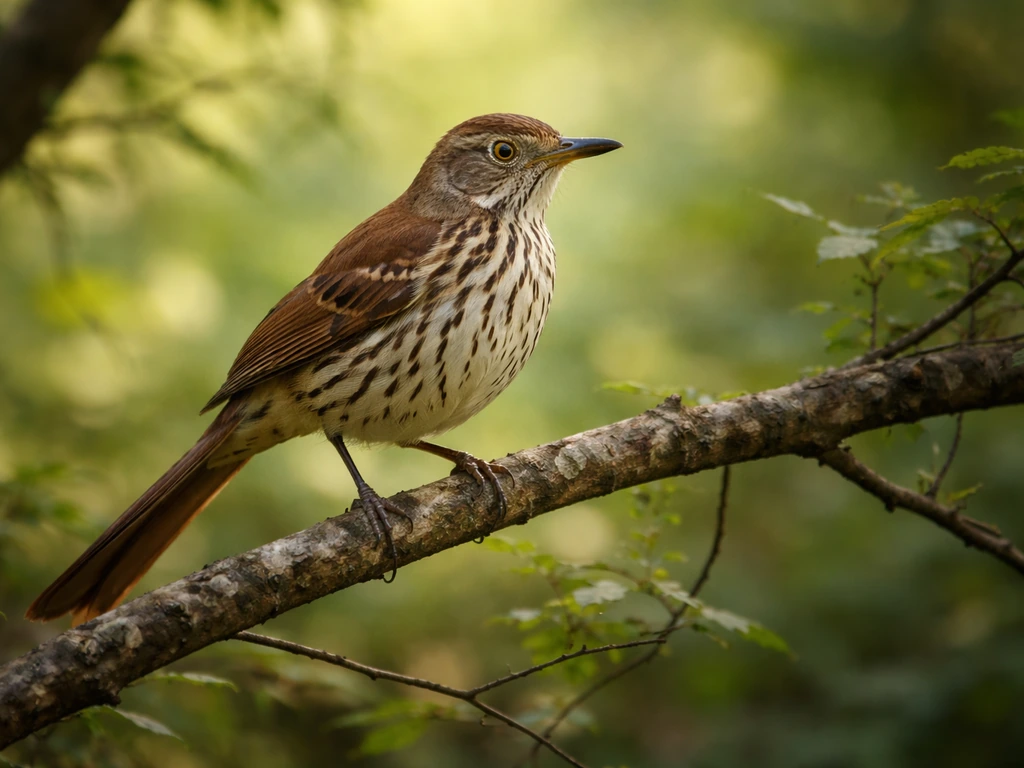
Quick ID: How to Know You're Actually Looking at a Brown Thrasher
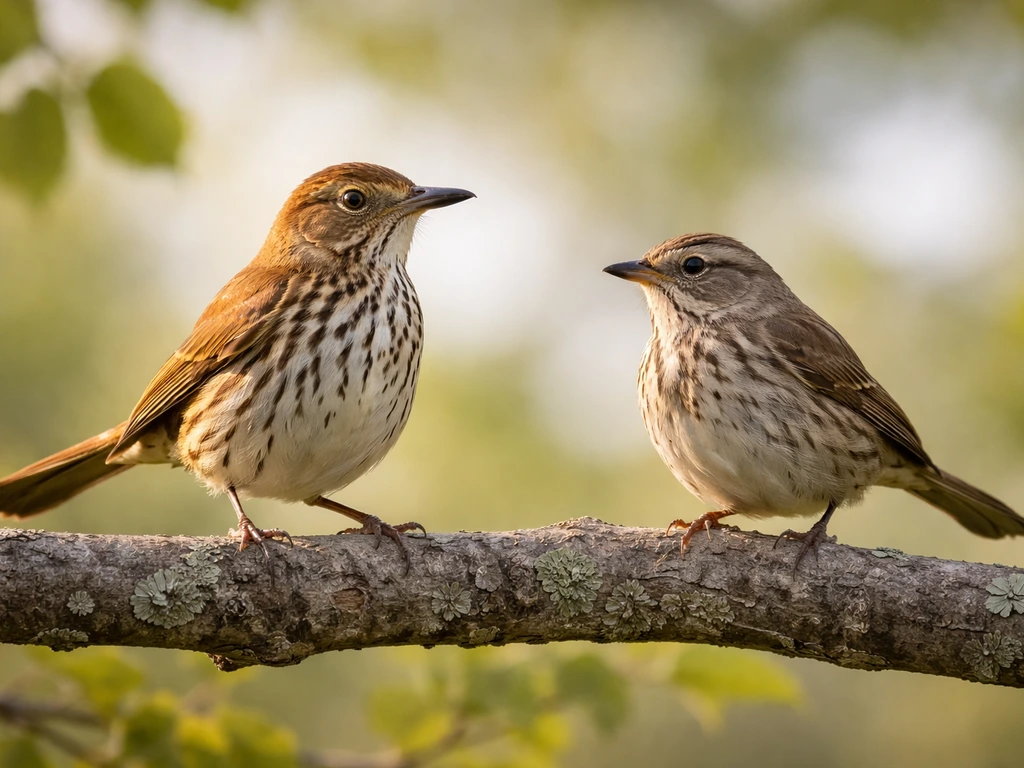
Before you apply any symbolism to a sighting, you need to be sure it's actually a brown thrasher. Misidentification is genuinely common with this species because it shares visual territory with several other reddish-brown birds, and a wrong ID means you're reading the wrong meaning into the moment. Here are the features that confirm it.
The brown thrasher (scientific name: Toxostoma rufum) is roughly robin-sized but built with noticeably longer proportions. The tail is longer than a robin's, the bill is long and slightly curves downward, and the legs are sturdy and built for ground work. The upperparts are a warm reddish-brown, the underparts are pale and heavily streaked, and the face is gray-brown. Two black-and-white wing bars are one of the most reliable visual markers, look for the black subterminal bar with white tips on the wing coverts. Wingspan runs about 11.4 to 12.6 inches.
Behaviorally, this bird is a ground forager. It sifts through dead leaves and soil with its bill, hunting for insects and seeds in an unmistakably deliberate way. If you see a dead thrush bird, the meaning people attach is often different from that of a living brown thrasher dead leaves. It tends to stay in dense thickets, hedgerows, and undergrowth, so you'll often catch a flash of movement in low cover rather than a clear perched view. The exception is the singing male, who will sometimes climb to the top of a tall tree to broadcast his song, making him briefly and conspicuously visible. That contrast between secretive ground life and dramatic elevated singing is one of the things that makes this bird so symbolically interesting.
What the song sounds like
The brown thrasher is a mimic, and its vocal repertoire is enormous. The song is a loud, complex series of phrases, with each phrase typically repeated two or three times before moving to the next, a pattern that Thoreau famously noticed and celebrated. Because the bird mimics other species, you can't reliably identify it by sound alone without also getting a visual. If you hear a long, elaborate song with paired or tripled phrases coming from dense brush, confirm the reddish-brown streaked body, long tail, and wing bars before you decide it's a brown thrasher.
The Core Symbolic Meaning, Plainly Stated
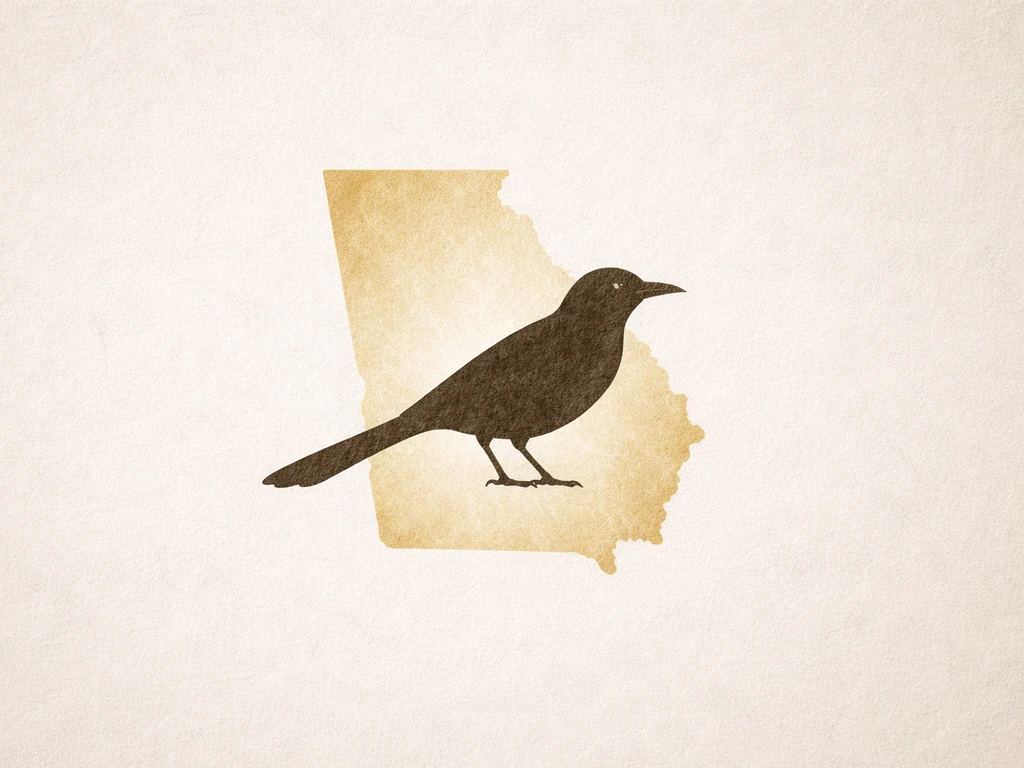
The brown thrasher is Georgia's official state bird, designated by governor's proclamation in 1935 and later recognized in state law, so it carries real civic weight in the American Southeast beyond just folklore. In the broader symbolic tradition, modern spirit-animal and totem guides consistently point to four overlapping themes: authentic self-expression, creative energy, persistent effort, and protective confidence. These aren't arbitrary assignments. They map directly onto observable behaviors: the bird's extraordinary vocal range supports voice and creativity symbolism; its territorial song defense supports confidence themes; its relentless ground foraging supports persistence; and its secretive thicket life supports adaptation and self-protection.
If you're looking for a one-sentence take: the brown thrasher is essentially a symbol of someone who works hard below the surface, speaks with power when it counts, and defends what matters to them.
The Themes That Come Up Again and Again
When you read across multiple sources, from spirit-animal guides to ornithological field notes, several specific themes cluster around brown thrasher symbolism. They're worth unpacking individually because they give you a richer toolkit for interpreting what a brown thrasher encounter might mean for your specific situation.
- Voice and communication: The brown thrasher's song is one of the most complex of any North American bird, and males use it actively to defend territory and attract mates. Symbolically, this translates to a prompt around using your own voice clearly and confidently — not mimicking others even though the bird is itself a mimic, but finding your own layered, authentic expression.
- Creativity: The sheer variety in the thrasher's repertoire points to creative abundance. Where the song never repeats the same way twice, the symbolism suggests openness to experimentation and the courage to keep generating new ideas.
- Persistence and hard work: Ground foraging is unglamorous, patient work. The brown thrasher does it day after day through leaf litter and soil. Modern symbolism consistently connects this to themes of sustained effort — keep digging, the reward is there.
- Territorial confidence and protection: The male's vocal territory defense is pronounced. Symbolism guides often read this as encouragement to protect what you've built — your relationships, your creative work, your personal boundaries — without apology.
- Adaptation and hiddenness: The thrasher's preference for dense thickets connects to symbolism around knowing when to stay hidden and when to step into the open. This is sometimes framed as spiritual discernment — knowing your moment.
- Divine guardianship and stability: Some spirit-animal sources specifically frame the brown thrasher as a symbol of protection and divine support, encouraging focus on clear goals and grounded stability.
What It Might Mean When You See One
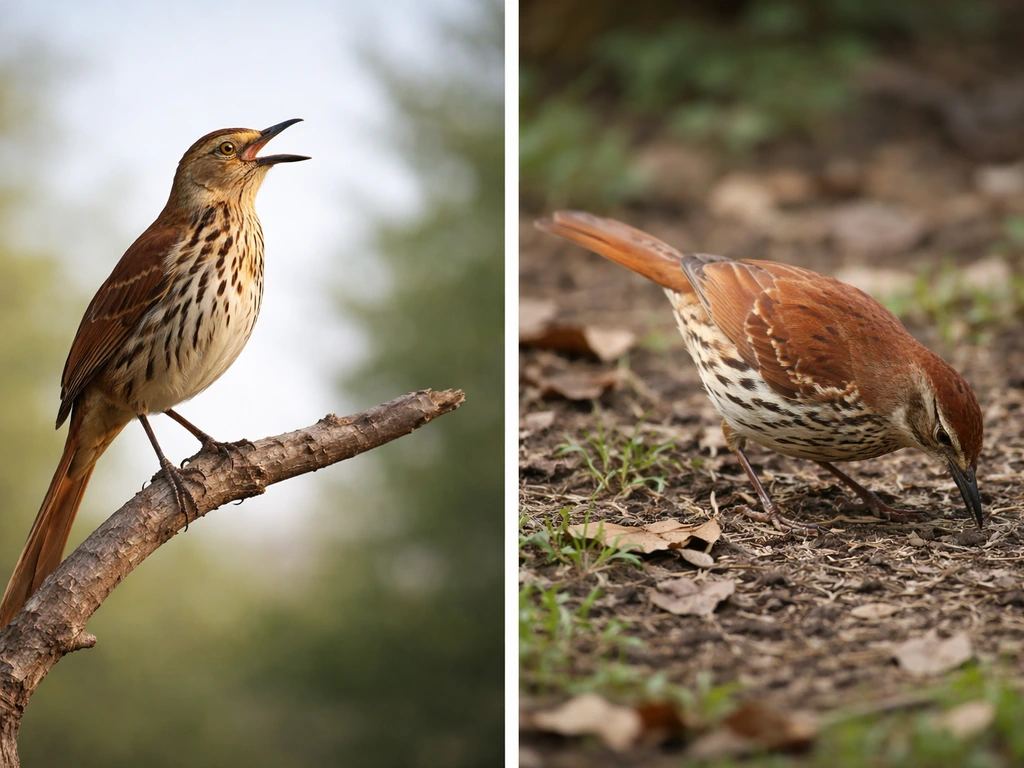
A single brown thrasher sighting in your yard or on a walk doesn't carry a fixed, universal message, and any honest symbolism framework will tell you that upfront. What these encounters do offer is a prompt for reflection, and the reflection works best when you connect the bird's behavior in the moment to what's happening in your own life right now. A SpiritualWithLiza guide to brown thrasher sightings similarly frames the encounter as a prompt for self-reflection, linking it to personal goals and growth rather than literal instruction prompt for reflection.
If the bird was singing from a high, exposed perch, the traditional read is about visibility and voice: is there something you've been holding back that needs to be said or expressed? If you spotted it foraging quietly on the ground, the more likely prompt is about patient work, are you in a phase that requires sustained effort without immediate recognition? If it flushed suddenly from dense cover, some interpret that as a reminder to know when to retreat and regroup rather than push forward exposed.
Repeated sightings carry more weight in most symbolic traditions. If you're seeing brown thrashers consistently over several days or weeks, it's worth noting the context each time: same location, same behavior, same time of day? Pattern recognition helps you decide whether this is a meaningful coincidence worth reflecting on or simply a nesting bird going about its business in your neighborhood, both of which are valid observations.
One practical step: before you read spiritual meaning into a sighting, confirm the ID using the wing bars, long tail, and streaked underparts. Reddit birding communities are full of posts where someone interpreted a sighting as a brown thrasher but was actually looking at a hermit thrush or wood thrush. The symbolism attached to those birds carries different weight, so getting the ID right is step one.
Brown Thrasher in Everyday Language and Culture
The brown thrasher doesn't have a rich tradition of dedicated idioms the way some birds do, you won't find 'thrasher'-specific proverbs in common circulation. But it shows up meaningfully in a few cultural contexts worth knowing about.
As Georgia's state bird, it carries regional cultural identity weight. Georgians use it as a symbol of Southern character, spirited, vocal, tenacious, and rooted in the landscape. You'll see it on state-related imagery and referenced in regional literature and nature writing that draws on Southern identity.
In nature writing and poetry, the bird's song has attracted serious literary attention. Thoreau wrote admiringly about the structure of the thrasher's song, describing its paired phrases as something like urgent speech. That literary association feeds into how contemporary writers use the bird as a metaphor for eloquence, depth of expression, and the relationship between wildness and language.
Beyond the bird itself, thrashers as a group (the Mimidae family, which also includes mockingbirds) carry a broader cultural shorthand around mimicry and voice, the idea of something that absorbs the sounds of its environment and transforms them into something uniquely its own. That resonates in discussions of artistic influence and originality.
Dreams, Signs, and How to Use Symbolism Responsibly
If a brown thrasher shows up in a dream, most symbolic frameworks treat it the way they treat bird dreams generally: as a positive indicator tied to transitions, growth, and movement toward goals. Specifically, brown thrasher dream imagery tends to cluster around themes of protection, personal guidance through change, and the need to express something that's been suppressed. Some sources also connect it to receiving support, the idea that you're not navigating a difficult stretch alone.
The responsible way to use any bird symbolism, in dreams or in waking sightings, is as a reflective tool, not a prediction. Treat the image as a question, not an answer: what in my current situation connects to voice, persistence, or protection? Where am I holding back? What am I working toward that requires patient effort? That's a much more useful frame than expecting the bird to deliver a literal forecast.
Different cultural traditions read bird encounters through their own lenses, and the brown thrasher doesn't have a single fixed meaning across all of them. Native American traditions that include the thrasher generally emphasize its role as a messenger connected to song and communication, though specific tribal interpretations vary and shouldn't be flattened into a single generic reading. Modern Western spirit-animal frameworks are more standardized but also more recent and less rooted in specific community practice. Knowing the source of an interpretation helps you decide how much weight to give it.
Clearing Up Confusion: Brown Thrasher vs. Lookalikes and Other Uses
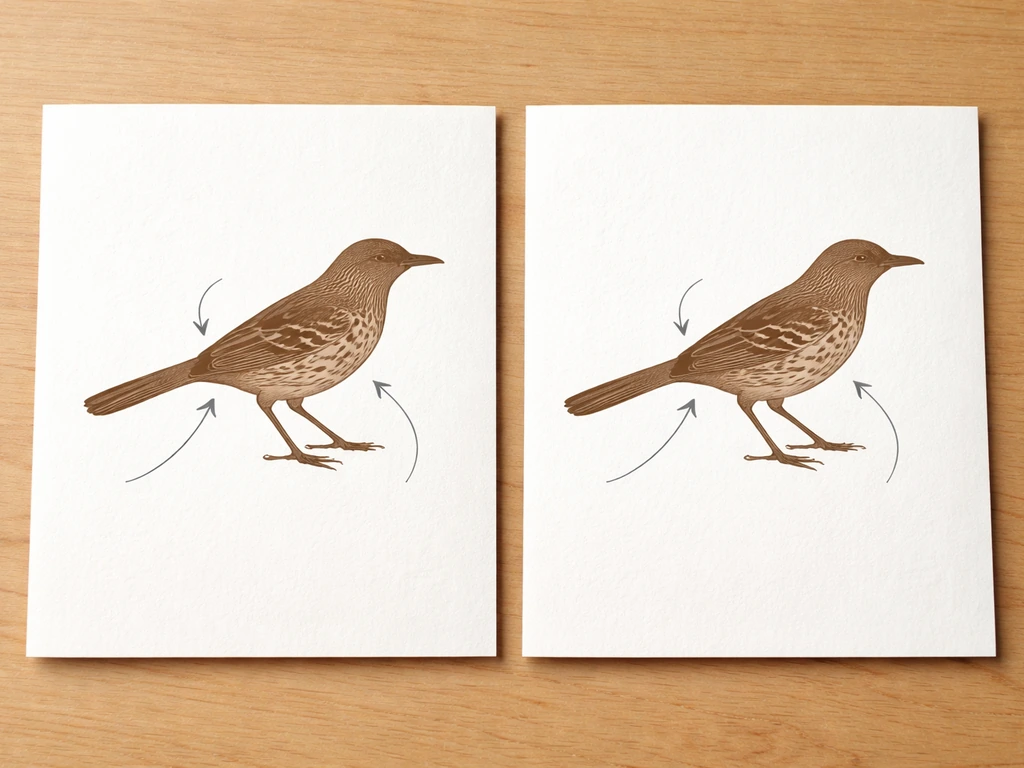
The biggest source of confusion when searching 'brown thrasher bird meaning' is actually not another bird, it's a magazine. Thrasher is a well-known skateboarding media brand founded in January 1981, and searches for 'thrasher meaning' or 'thrasher symbolism' frequently surface results about the skate culture brand rather than the bird. If you're here for the bird, you've already navigated that disambiguation correctly, but it's worth knowing the gap exists so you don't accidentally read clothing-brand lore as ornithological symbolism. If you’re also wondering about the thorn bird meaning, it’s a different symbol shaped by its own cultural and natural associations.
Within birds, the two most common lookalikes that cause ID problems are the hermit thrush and the wood thrush. Here's how to tell them apart quickly:
| Feature | Brown Thrasher | Hermit Thrush | Wood Thrush |
|---|---|---|---|
| Tail length | Very long, longer than a robin's | Shorter | Shorter |
| Bill | Long, slightly downcurved | Shorter, straight | Short, straight |
| Wing bars | Two distinct black-and-white wing bars | None | None |
| Breast pattern | Heavy dark streaking on pale background | Spotted | Bold dark spots on white |
| Upper color | Rich reddish-brown | Olive-brown with rusty tail | Bright reddish-brown on head/back |
| Size | Robin-sized with elongated proportions | Smaller | Robin-sized but chunkier |
The wing bars are your fastest field check. Hermit and wood thrushes don't have them, so if you see two clear white bars on the wing alongside a long reddish-brown tail and a streaked breast, you're looking at a brown thrasher. That confirmation matters before you apply any symbolism, because the thrush carries its own distinct symbolic tradition, one that's covered separately in pieces on thrush bird meaning and dead thrush bird meaning on this site, and which shouldn't be conflated with thrasher symbolism. Because a thrush has its own distinct symbolic profile, you can use this article to branch into the broader thrush bird meaning when you need the right framing.
One more disambiguation worth noting: the general 'thrasher bird meaning' (covering the broader Toxostoma genus) shares significant overlap with the brown thrasher specifically, since the brown thrasher is the most widely known member of that group in North America. But there are other thrasher species in the American Southwest and Mexico with their own regional folklore, so if your search led you here from a non-Eastern sighting, it's worth verifying the specific species before landing on the brown thrasher's symbolic profile.
FAQ
How can I confirm a brown thrasher when I only get a quick glimpse in low cover?
Use the “two-part check”: first, look for the long tail with a reddish-brown body and heavily streaked underparts. Second, if you can see the wings at all, confirm the two wing bars with clear white tips. If you cannot get either of those, it is safer to treat the sighting as unconfirmed rather than assigning meaning.
What does it mean if I hear what I think is a brown thrasher, but never see it?
Because the bird mimics other species and the song can be variable, you should avoid locking in the identity by sound alone. Wait for a visual confirmation, especially the wing bars and streaked breast, before interpreting the encounter as “voice and persistence” rather than a likely lookalike.
Are there seasonal patterns that change how I should interpret a sighting?
Yes. Spring and early summer sightings often align with singing and territory behavior, which makes the “speak up and defend your goals” reflection more fitting. Late summer and fall sightings can be more about foraging and daily persistence, so the reflection may center more on patient effort and steady work rather than dramatic expression.
If I see a brown thrasher around my property often, does that automatically mean it is “more significant” than a one-time sighting?
Repeated sightings matter most when the context is consistent (same location, similar behavior, similar time of day). If the pattern changes quickly, it may reflect typical wildlife movement or nesting nearby, so treat it as a prompt for observation rather than guaranteed spiritual emphasis.
What are the most common ID mistakes that lead people to the wrong “meaning”?
The biggest mistakes are confusing brown thrashers with hermit thrush and wood thrush, which lack the two white-tipped wing bars. A second common error is interpreting a flushed bird from dense brush as definitely a thrasher without checking the tail length and wing pattern when it reappears.
How should I interpret a sighting that involves aggression, chasing, or territorial behavior?
That behavior typically points to defense and “protect what matters,” so the reflective question is not only “speak your voice,” but also “what boundary or value am I neglecting.” If you notice the bird repeatedly around a specific spot, consider what in your life has become a focal point you are actively guarding.
Does a brown thrasher visiting during the day versus dawn or dusk change the symbolism focus?
It can. Dawn activity often overlaps with singing and territory signaling, which supports themes of visibility and voice. Midday or late-day ground foraging tends to emphasize effort and routine, so “patient persistence below the surface” is often the better fit when that is the behavior you actually observed.
What if my “brown thrasher meaning” search actually leads me to a brand page or unrelated results?
Disambiguate early by adding “bird” or “Toxostoma rufum” to your search. Otherwise, you may end up with skateboarding-media “thrasher” content, which will not match ornithology-based symbolism and can skew what you think the bird “means.”
Can I use dream interpretations the same way I use waking sightings?
They can be used similarly as a reflection prompt, but dream imagery is more personal and less tied to specific behaviors like foraging or wing patterns. In practice, treat dream messages as questions (what are you protecting, what are you expressing, what are you working toward) rather than a direct prediction of events.
If the bird is moving through dense thickets and I never see it clearly, should I skip symbolism entirely?
Not necessarily, but lower the certainty. You can still reflect on “adaptation and self-protection” when you have solid behavioral cues (secretive, ground-level movement, quick flashes). Reserve the strongest conclusions (like mimic-based “voice”) for moments when you can confirm the key physical markers.
Next Articles
Thrush Bird Meaning: Symbolism, Folklore, and What It Means Today
Discover thrush bird meaning: literal thrush species, folklore symbolism, spiritual themes, and how to apply it to your
Thorn Bird Meaning: Symbolism, Folklore, and Context Clues
Learn thorn bird meaning: symbolism of thorns, pain, protection and resilience, plus how to disambiguate myths, tattoos,
Munster Bird Meaning: Folklore, Symbolism, and How to Verify
Meaning of Munster bird searches: folklore, symbolism, idioms, spelling variants, and quick ways to verify the reference