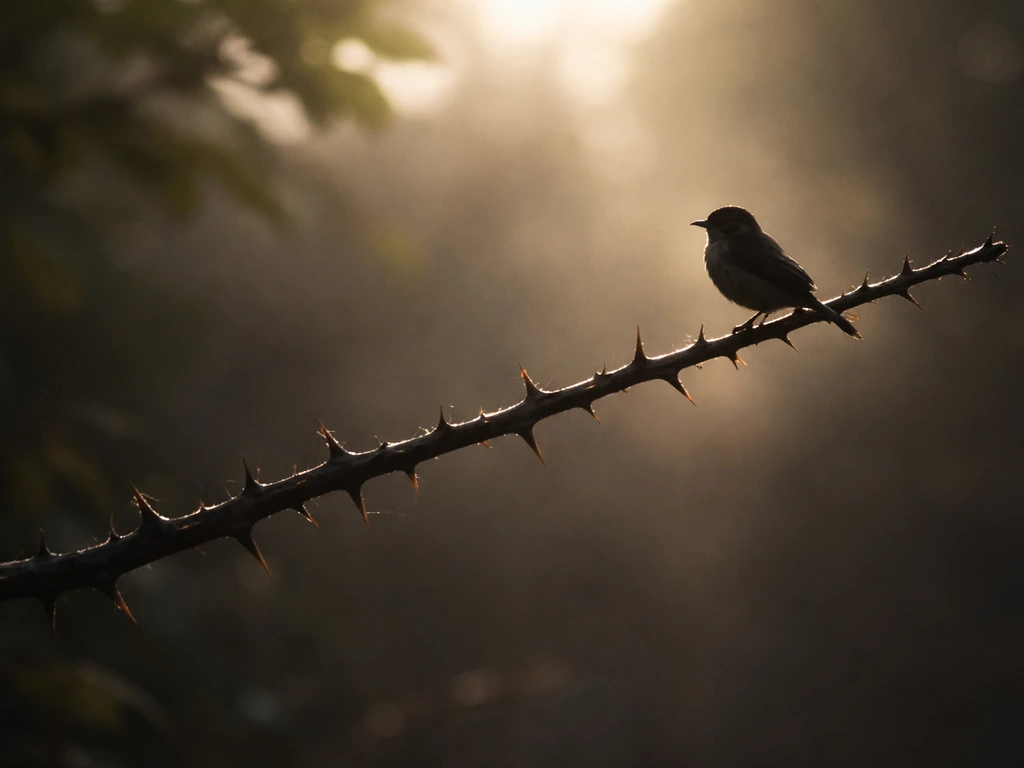
A thrush is a real, common songbird belonging to the family Turdidae, and when people search for its "meaning," they're usually looking for two things at once: what kind of bird it actually is, and what themes or messages it carries symbolically. The short version: thrushes are widely associated with joy, renewal, voice, and the courage to sing even in the dark. That's not arbitrary poetry, it comes directly from how the bird actually behaves. And if you're trying to apply that meaning to something happening in your life right now, this guide will walk you through exactly how to do that.
Thrush Bird Meaning: Symbolism, Folklore, and What It Means Today

Marcus Blackwell
11 May 2026
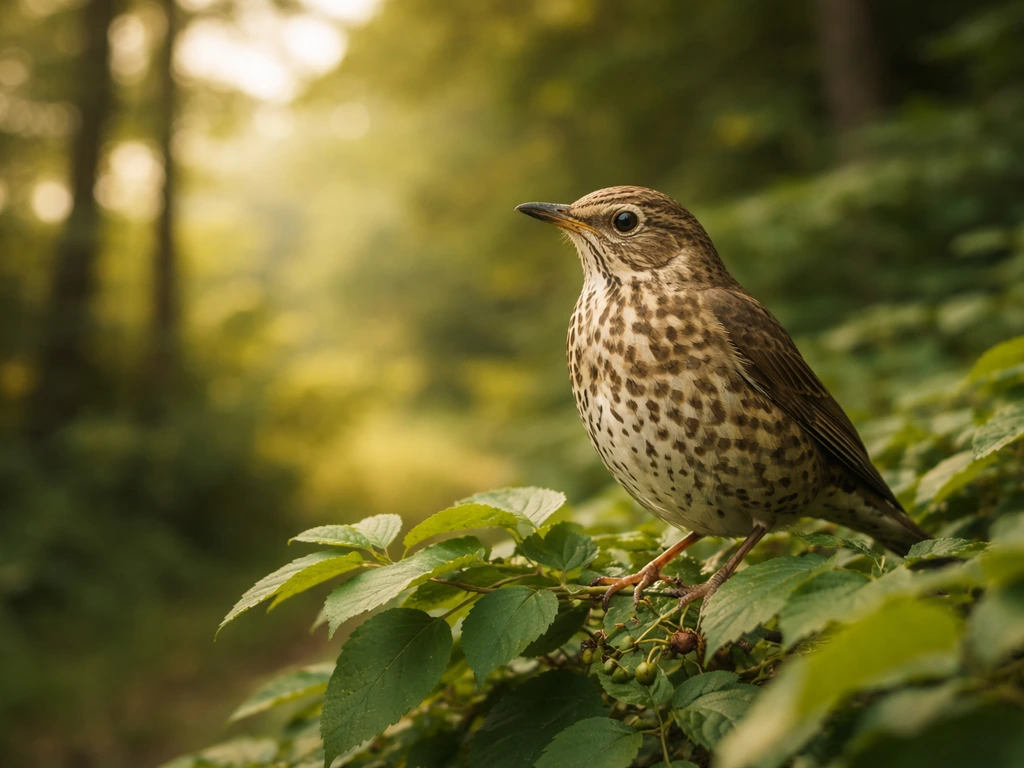
What Kind of Bird a Thrush Actually Is
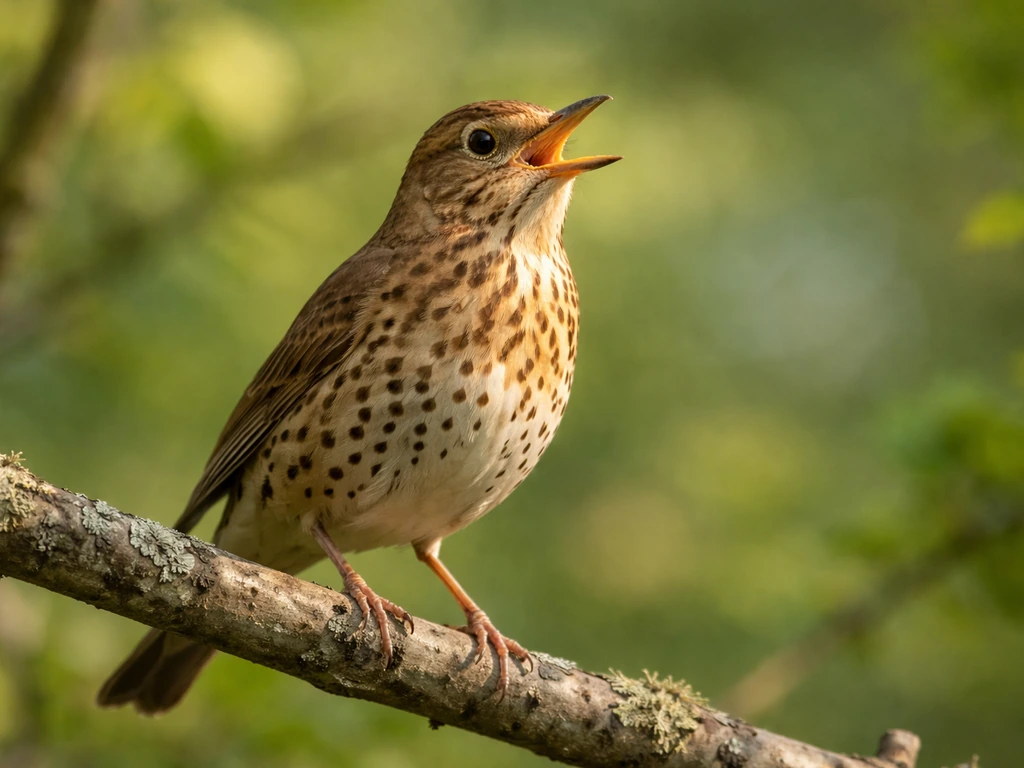
Thrushes belong to the order Passeriformes and the family Turdidae, which ornithologists sometimes call "true thrushes." There are more than 120 species in this family worldwide, so when someone says "thrush," they're pointing to a very large, diverse group rather than a single species. You've almost certainly encountered thrushes without knowing it: the American robin and the European blackbird are both members of Turdidae, as is the eastern bluebird. That NPS classification of bluebirds, robins, and thrushes under one family surprises a lot of people.
In everyday conversation, though, "thrush" most often refers to either the song thrush (Turdus philomelos) in the UK and Europe, or the wood thrush in North America. These birds are typically brown, blue, gray, or some earthy blend of those colors, modest-looking birds that don't announce themselves visually. What they announce is sound. The wood thrush, for instance, is one of the first songbirds heard in the morning and one of the last heard in the evening, which is a fact that feeds directly into the symbolic reading people attach to them.
In Pennsylvania alone, eight thrush species are regularly observed, and aside from the eastern bluebird and American robin, they're almost all forest birds. The song thrush of the UK is slightly smaller than a blackbird and turns up in parks, gardens, woodland edges, and scrubby hedgerows, it's a familiar, close-to-home bird. The Wildlife Trusts also describe the song thrush (Turdus philomelos), grounding the idea that “thrush” refers to a real bird species the song thrush of the UK. That ordinariness is actually part of the symbolism. Thrushes aren't rare or exotic. They show up where people live.
What Thrushes Have Meant in Folklore and Mythology
The mythological thread running through thrush symbolism is strongest in the song thrush's scientific name: Turdus philomelos. "Philomelos" links directly to Philomela, a figure from Greek mythology who was transformed into a singing bird. The myth frames her song as storytelling under suffering, voice as a form of truth-telling when other speech is silenced. That connection has made the song thrush a recurring stand-in for the idea that music and expression carry meaning deeper than words, especially in literature and classical education.
In British and European tradition, the thrush is strongly tied to the arrival of spring and the return of light after winter. It's a herald bird, one whose song signals that something harsh has passed. This is partly literal (thrushes are among the first birds to sing in early spring), but it became a cultural shorthand for hope and renewal well before anyone was consciously "symbolizing" anything.
The most famous literary thrush is probably from Thomas Hardy's poem "The Darkling Thrush," written at the turn of the 20th century. Hardy describes an aged, frail thrush launching into what he calls "a full-hearted evensong of joy illimited" against a bleak, wintry landscape. The contrast, a small, worn bird singing its heart out in desolation, became one of the defining images of thrush symbolism in English literature. The thrush doesn't wait for conditions to improve before it sings. That's the whole point.
There's also a journalistic overlap worth noting: in the early era of natural history writing, reports of "nightingale" song in the UK were frequently actual thrushes, because the two birds share some habitat and timing. The birds have been tangled together in popular imagination for centuries, both carrying the association of exceptional, emotionally resonant song.
Spiritual and Personal Interpretations of the Thrush

In contemporary spiritual and totem traditions, the thrush is read as a symbol of authentic self-expression, inner guidance, and the willingness to be heard. If you follow spirit animal frameworks, a thrush appearing in your life is often interpreted as a nudge to speak up, create something, or trust your own perception when you've been second-guessing it. The idea that someone with a thrush totem "cannot easily be deceived" appears in several modern interpretive traditions, connecting the bird's clear, distinctive voice to a kind of perceptual clarity.
In dream interpretation, particularly through a Jungian lens, a thrush showing up in a dream is sometimes read as an inner mediating figure, a part of the psyche inviting you to listen more carefully to something you've been glossing over. The practical approach to this isn't to hunt for a fixed dictionary meaning, but to ask: what was the thrush doing in the dream? Was it singing, silent, injured, flying? The behavior matters as much as the bird itself. Interpretation is a working hypothesis, not a verdict.
Across multiple traditions, the recurring themes you'll find attached to thrush symbolism are: joy that persists through difficulty, the power of voice and creative expression, spring-like renewal after a period of hardship, and an attunement to natural rhythms (the thrush as an early-morning and late-evening singer maps onto the threshold moments of each day). These aren't arbitrary assignments, they're rooted in the bird's actual habits, which is generally how animal symbolism works best. The British Trust for Ornithology (BTO) describes the song thrush as “a consummate singer,” which supports the idea that these themes are grounded in the bird’s real voice.
Sayings and Idioms Tied to the Thrush
The thrush doesn't have as many dedicated idioms as, say, the robin or the nightingale, but it shows up in a few recurring phrases and literary conventions worth knowing.
- "Singing like a thrush" is a common compliment in British English for a clear, melodious, effortless singing voice—used in both music contexts and casual speech when someone speaks beautifully.
- "The thrush sings before the storm" is an older rural saying suggesting that a thrush singing unusually loudly or late in the day signals coming rain—a piece of folk meteorology still referenced in British countryside traditions.
- In literary criticism and poetry, "the thrush" appears as a shorthand for the authentic natural voice set against artifice or despair, largely anchored by Hardy's "Darkling Thrush" usage.
- The pairing of "thrush and nightingale" in romantic poetry is a convention used to invoke competing ideas of natural song: the thrush as the everyday, near-at-hand voice versus the nightingale as the exotic, distant ideal.
It's also worth knowing that the scientific epithet "philomelos" in the song thrush's name has made it a recurring reference in classical education, so if you encounter a thrush in literature written before the 20th century, there's a decent chance the author expected readers to catch the Philomela allusion.
Sorting Out the Confusion: Thrush vs Other "Thrush" Uses
If you searched "thrush meaning" and weren't entirely sure you were looking at the right definition, you're not alone. For a dead thrush specifically, the meaning is usually discussed as a warning or a sign tied to loss, endings, and changes in your current situation dead thrush bird meaning. The word "thrush" carries at least three distinct meanings in everyday English, and they have nothing to do with each other.
| Use of "Thrush" | What It Refers To | Relevant Here? |
|---|---|---|
| Thrush (bird) | Songbirds in family Turdidae, including song thrush, wood thrush, American robin, bluebird | Yes — this is the topic |
| Thrush (medical) | Oral candidiasis, a fungal infection affecting the mouth or throat | No |
| Thrush nightingale | A distinct bird species (Luscinia luscinia) in the Old World flycatcher family, not a true thrush | Tangentially — different bird, shared name overlap |
| Waterthrush / Song thrush compound names | Specific thrush species or near-thrush species often named with a descriptor | Yes — all still within the thrush/Turdidae world |
The thrush nightingale is worth a brief note because it causes genuine confusion: it has "thrush" in the name but belongs to the Old World flycatcher family, not Turdidae. Historically, the overlap between nightingales and thrushes in common naming reflects centuries of casual observation where similar-sounding birds got similar labels. If you're reading older texts, that ambiguity is real. If you're on a symbolism site, you're almost certainly dealing with the Turdidae thrush.
There's also confusion with similarly named birds covered in related guides. The brown thrasher and other thrasher species, for example, sound almost identical to "thrush" when spoken quickly but belong to the mockingbird family (Mimidae), not Turdidae. If you got pulled in by that same “thrasher” wording, see thrasher bird meaning as a related comparison for what the different bird name can signal symbolically.
The brown thrasher bird meaning is similar in theme because its voice and grounded presence often get read as a sign to speak up and keep going. Thrashers carry their own distinct symbolism. Likewise, the thorn bird is a different creature entirely, rooted more in literary and metaphorical tradition than in a single taxonomic group. Understanding the thorn bird meaning can help you connect that different creature to its own literary and metaphorical symbolism.
Worth keeping straight if you're researching symbolism across these bird names.
How to Actually Use Thrush Symbolism Right Now
If you're here because a thrush caught your attention recently, a sighting, a dream, a reference in something you read, the most useful thing you can do is make the symbolism personal rather than generic. Here's a practical way to work with it:
- Write down what you noticed. Was it a live thrush singing? A dream? A picture or reference? The context shapes the meaning. A thrush singing at dawn lands differently than one you spotted silent and still in winter.
- Connect it to what's current. Thrush symbolism clusters around voice, renewal, and persistence through hardship. Ask yourself: is there something you've been holding back saying? Is something in your life ending and something else beginning? Are you exhausted but still showing up?
- If it was a dream, focus on the bird's behavior. Was it singing or silent? Flying or grounded? Injured or strong? Use the behavior as your interpretive anchor, then ask what that behavior reminds you of in your waking life.
- Try a journaling prompt. Write about three qualities you associate with the thrush (voice, courage, persistence, for instance) and where those qualities are showing up—or missing—in your life right now. Some spirit animal frameworks suggest writing a daily affirmation built around those three traits.
- For writing or creative work, use the thrush as a layered image. It carries the Philomela myth, Hardy's poem, the folk spring-herald tradition, and the simple fact of a small bird singing in the dark. Any of those threads can anchor a poem, story, or personal essay without needing to spell out the symbolism explicitly.
- Check whether the interpretation fits. A good symbolic reading should reduce some tension or open something up—not just confirm what you already thought. If the thrush-as-renewal reading feels flat but thrush-as-voice resonates strongly, trust that. Symbolism is a working hypothesis, not a fixed answer.
The thrush is ultimately a bird about showing up and singing anyway, before the storm, in the dark, when the landscape is bleak and the odds are modest. That's a remarkably useful symbol to carry around, and the fact that it's rooted in an actual bird's actual behavior makes it feel more honest than most borrowed metaphors. If it showed up in your life right now, it's worth asking what you've been waiting for permission to say.
FAQ
If I see a thrush but I am not sure which species it is, does the “meaning” change?
In most symbolism readings, the core themes stay the same (voice, renewal, courage). The details can shift slightly by context, like a garden thrush suggesting everyday hope, while a forest thrush can point to hearing yourself in more private or inner work. If you can, note habitat and time of day to refine the reading.
What should I do if my thrush sighting felt negative or unsettling instead of hopeful?
Use the bird’s behavior as your main evidence. If the thrush appeared injured, was silent, or seemed stressed, interpretations usually lean toward pause, self-care, or repairing expression rather than “push through no matter what.” A negative emotional tone often signals the timing is about healing, not performance.
In dream work, how do I connect a thrush dream to my real situation without forcing a meaning?
Ask three practical questions: where was the dream happening, what was the thrush doing, and what was happening to your voice or attention in the dream. For example, a thrush singing in a space where you were trying to be heard often maps to clear self-expression, while a silent thrush can point to suppressed thoughts you are ready to acknowledge.
Does a “thrush totem” mean I should always speak up immediately?
Not necessarily. Totem interpretations are often about aligning expression with your values, which can include choosing the right moment and audience. If you feel pressured, consider the “nudge” as asking for readiness, not instant action, since voice without safety can backfire.
How is “thrush bird meaning” different from the meaning of “thrush” in everyday English?
The common word “thrush” can point to multiple unrelated meanings depending on context, including older usage that is not bird-related. To avoid mixing definitions, anchor the interpretation to clear bird indicators, like a sighting, sound, or species reference, rather than using the term generically.
I heard “thrush” connected to nightingale. Could that change the symbolism I am applying?
Yes, it can create a category mix-up. If the source is older UK natural history writing, what was called nightingale might actually be a thrush. When you are applying symbolism, treat the “song” theme as the shared thread, but check the description in the text (location, season, song timing) to confirm which bird is likely intended.
What does it mean if the thrush appears at an unusual time, like late night or in winter?
Season and timing often matter in symbolism. Early spring and threshold hours (early morning, late evening) match the common renewal and “light returning” themes. If it appears off-season, consider it a marker that renewal is internal or overdue rather than literal spring timing, and look for what in your life is “out of season” but still trying to awaken.
Is there a common mistake people make when interpreting thrush meaning?
Overgeneralizing into a fixed “dictionary” outcome. The more reliable approach is behavior-based (singing vs silent, calm vs injured, flying vs perched) and situational-based (what you were avoiding, postponing, or editing). Treat it as a working hypothesis you can test against your real feelings and next steps.
Next Article
Thorn Bird Meaning: Symbolism, Folklore, and Context Clues
Learn thorn bird meaning: symbolism of thorns, pain, protection and resilience, plus how to disambiguate myths, tattoos,