
A talon is the sharp, curved, hooked claw on a bird's toe, and when people say 'talon bird meaning,' they are usually asking one of two things: what exactly a talon is anatomically, or what talons symbolize in art, myth, dreams, tattoos, and figurative language. The short version: talons belong almost exclusively to raptors (birds of prey), they are built to seize and immobilize live animals, and that precise biological function is the direct source of virtually every symbolic meaning attached to them, power, predation, control, protection, and death.
Talon Bird Meaning: Literal, Symbolic & Cultural Guide

Marcus Blackwell
28 Jul 2026
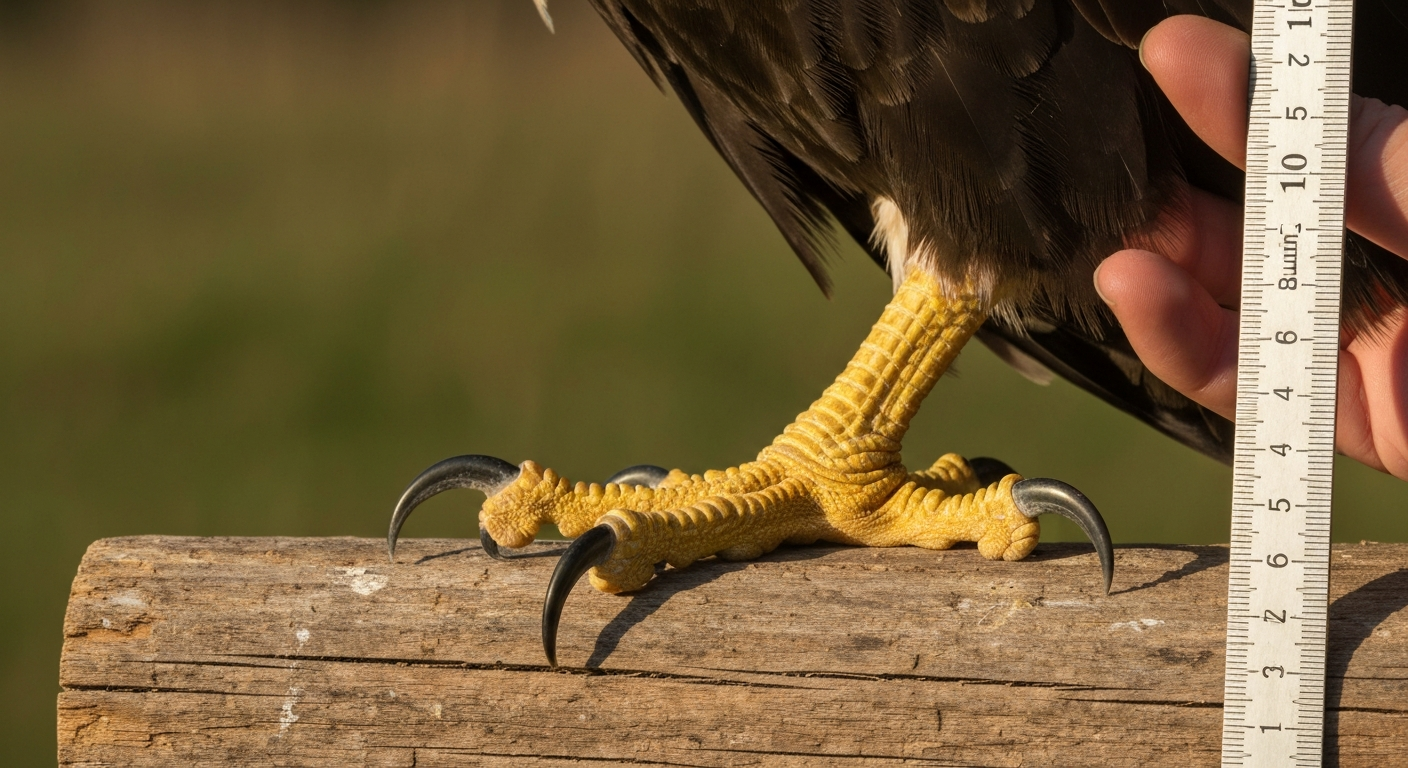
What a talon actually is
The word 'talon' entered English from Old French talon, which traces back to Latin talus, meaning ankle or heel. In modern usage, Merriam-Webster defines it as the hooked, claw-like horny nail at the end of a bird's toe, particularly a bird of prey. Every bird has toes and claws to some degree, but the talon in its functional sense refers specifically to the enlarged, strongly curved, sharply pointed claws that raptors use as weapons rather than simply as perches.
Structurally, a raptor's talon is a keratin sheath over a bony core. The curvature, length, and thickness vary considerably across species, and those differences are not accidental. Peer-reviewed morphological research confirms that talon curvature and interdigital size correlate with how a bird restrains, strikes, or pierces its prey. In other words, you can often infer how a raptor hunts just by looking at the geometry of its foot. That direct link between form and lethal function is worth keeping in mind whenever you encounter talons used symbolically.
Raptors vs. other birds: why talon shape matters for symbolic reading
Not every bird with claws qualifies as having 'talons' in the meaningful sense, and this distinction matters when you are interpreting symbolic imagery. The California Raptor Center at UC Davis lists powerful, long talons as one of the defining diagnostic traits of raptors, the feature that separates them from other carnivorous or predatory birds. Let's look at how talon form differs across bird groups and what that difference carries into symbolism.
| Bird Group | Foot / Talon Type | Primary Function | Symbolic Weight |
|---|---|---|---|
| Bald Eagle (Haliaeetus leucocephalus) | Large, powerful talons; short, thick toes | Grasp and carry fish and prey; grip force for restraint | National power, sovereignty, dominance |
| Great Horned Owl (Bubo virginianus) | Massive talons; rotating outer toe (zygodactyl when needed) | Constriction-style killing; grip force ~28 lb (~12.7 kg) to open when clenched | Silent death, hidden danger, night power |
| Peregrine Falcon (Falco peregrinus) | Long, slender talons; stoop-and-strike hunter | Strike and immobilize after high-speed stoop | Speed, precision, focused aggression |
| Osprey (Pandion haliaetus) | Reversible outer toe; sharp spicules on foot pads | Pierce and grip slippery fish | Targeted skill, mastery of a specific domain |
| Accipiter hawks (e.g., Cooper's Hawk) | Long middle toe; slender curved talons | Restraint-style; hold struggling prey | Persistence, relentless pursuit |
| Great Blue Heron (Ardea herodias) | Long wading toes; no enlarged hooked claw | Balance while wading; no killing-grip function | Patience, stillness — talon imagery rarely applies |
| American Crow (Corvus brachyrhynchos) | Anisodactyl perching foot | Branch grasping, object manipulation | Intelligence, not predation — talon imagery does not apply |
The practical upshot: when a tattoo artist, heraldic designer, or author uses 'talon' imagery, they are almost always drawing on raptor biology, not general bird biology. A heron's foot or a crow's perching claw carries its own rich symbolism (patience and intelligence, respectively), but those meanings derive from entirely different anatomical realities. Conflating generic bird claws with raptor talons muddies both the biology and the symbol.
What talons symbolize: the core associations
Because raptor talons evolved specifically to catch, restrain, and kill, every major symbolic meaning attached to them derives from that biological fact. Here are the primary associations, each with a note on the context where it tends to appear.
| Symbol | One-Line Meaning | Common Context |
|---|---|---|
| Power | Physical dominance; ability to seize what one wants | Heraldry, national emblems, corporate logos |
| Predation | Active hunting; the capacity to take life to sustain oneself | Nature writing, ecological metaphors, myth |
| Control / Grip | Holding something fast; refusal to release | Figurative language: 'in the talons of addiction' |
| Protection | Using strength to defend offspring or territory | Maternal/parental symbolism; protective tattoos |
| Death | Lethal contact; the talon as instrument of ending | Gothic and dark-romantic imagery, folklore |
| Skill / Precision | Exact, practiced ability — especially the falcon strike | Martial arts metaphors, sports branding |
| Vengeance / Justice | Striking back decisively; the avenging claw | Legal emblems, literary villains and heroes alike |
| Maternal care | Eagle carrying prey to feed young; protective clutch | Parenting metaphors, protective tattoos for children |
A quick caution worth noting: these associations are not mutually exclusive or universal. The same talon image can read as protective in one context and menacing in another. A mother eagle gripping a rabbit to feed her chicks is both a death symbol and a nurturing one at the same time. Context, species, posture, what the talon holds, what surrounds it, always governs interpretation.
Talons in heraldry, myth, and cultural tradition
Heraldry: talons as charges and attributes
In European heraldry, a bird's claws or talons (blazoned as 'armed' when referring to the talons of an eagle or other raptor) are standard charges with long-documented meaning. The Oxford Guide to Heraldry, the canonical reference for heraldic conventions, describes how blazons specify a bird as 'armed' of a particular tincture specifically to call out the talons as meaningful elements rather than incidental anatomy. The most recognizable example in everyday life is the Great Seal of the United States: the bald eagle clutches an olive branch in one talon and a bundle of 13 arrows in the other. Official State Department documentation describes this as representing 'the power of peace and war', a rare case where the specific objects held in each talon were assigned precise, recorded meanings by the designer Charles Thomson when Congress adopted the seal on June 20, 1782.
Mythic archetypes
Across mythologies worldwide, divine or semi-divine birds with powerful claws appear as carriers of souls, instruments of divine will, or markers of supreme power. The thunderbird figures in various oral traditions of Indigenous North American peoples; the Garuda appears in Hindu and Buddhist cosmology as a vast eagle-like being often depicted with taloned feet gripping serpents. Zeus's eagle in Greek myth carries and defends divine authority. What these archetypes share is the talon as the mechanism by which an otherworldly bird touches and transforms the mortal world, the grip between heaven and earth.
A necessary note on Indigenous traditions: the Smithsonian's National Museum of the American Indian holds extensive collections of eagle-related objects and documents the cultural significance of eagle imagery across many distinct nations. See the Collections Search, National Museum of the American Indian (Smithsonian) for examples of eagle-related objects and curatorial notes on cultural significance and consultation practices Collections Search — National Museum of the American Indian (Smithsonian). However, specific spiritual meanings, ceremonial uses, and protocols vary enormously from nation to nation and community to community. Generalizing 'Native American eagle talon meaning' as a single tradition is inaccurate and disrespectful to that diversity. The U.S. Fish and Wildlife Service's National Eagle Repository, which distributes eagle feathers and parts to federally recognized tribes under permit (authorized under the Bald and Golden Eagle Protection Act, 50 CFR 22), exists precisely because eagle parts carry protected spiritual and cultural significance within specific communities, not a generic pan-Indigenous symbolism. If you are writing about a specific nation's relationship with eagle talons, consult sources from within that community, not general symbolism guides.
Folk and popular traditions
In Western folk belief and popular horror, talons frequently appear alongside owls and ravens as markers of ill omen or supernatural contact. This is largely a literary inheritance from ancient Rome (where owls near a home were an ill sign) filtered through medieval European tradition. The talon's role as 'death's instrument' in these contexts is more about cultural storytelling convention than documented folk practice, and should be treated as such when writing or designing.
Talons in language, literature, and modern imagery
Idiomatic and figurative phrases
The phrase 'in the talons of' functions as a standard English metaphor for being helplessly controlled by something or someone dangerous. You encounter it in journalism ('in the talons of debt'), literary criticism ('the protagonist falls into the talons of the regime'), and self-help writing ('escaping the talons of addiction'). The logic is direct: you are held by something with a grip that can hurt you and that will not let go easily. Unlike softer grip metaphors ('in the clutches of,' 'in the grip of'), talon specifically implies a living, predatory agent rather than an abstract force, the talons belong to something that chose to seize you. For related queries such as 'titer bird meaning in English', consult the dedicated glossary entry on titer bird meaning in English.
- 'In the talons of' — controlled by a dangerous, predatory force (political, emotional, or physical)
- 'Talon-sharp' — describes precision, acuity, or a cutting wit
- 'Clutched in its talons' — held without hope of easy release; often used for villains, states, or addictions
- 'The talons of fate' — a poetic variant suggesting inescapable predestination
- 'Talons bared' — making an aggressive or threatening stance explicit
Tattoos, logos, and brand imagery
Raptor talons appear widely in tattoo design, military unit insignia, sports team branding, and corporate logos because they compress several desirable associations into a single recognizable image: strength, speed, precision, and dominance. The Philadelphia Eagles, Atlanta Hawks, and Seattle Seahawks all incorporate talon imagery into their visual identity for exactly these reasons. In tattoo culture, a single eagle talon often signals strength or a protective intent; matched talons descending from above frequently represent either a spirit guardian or a personal power symbol. As with any cultural image, the meaning a tattoo holds is ultimately determined by the person wearing it and the tradition they are drawing from.
How to interpret talon imagery: dreams, sightings, and creative work
Whether you are working through what a dream meant, choosing a tattoo, writing a scene, or simply trying to understand a piece of art, the following questions give you a useful framework for reading talon imagery without over-claiming.
- Which species does the talon belong to? An owl talon, an eagle talon, and a falcon talon each carry different biological and cultural histories. Specificity matters.
- What is the talon doing? Striking, clutching, releasing, or holding still each suggest different readings (aggression, control, liberation, or protection).
- What does the talon hold? Empty talons read differently from talons gripping prey, a symbol, a person, or nothing visible.
- Whose tradition are you drawing from? If the imagery comes from a specific cultural tradition — a nation, a religion, a historical period — interpret it within that tradition's own terms, not generic 'universal' symbolism.
- Is the talon threatening or protective relative to the viewer? The same image can be a menace (aimed at you) or a shield (positioned above you).
- What is the emotional register of the surrounding imagery? Gothic darkness, heraldic formality, natural-history realism, and folk-art naivety each frame talon meaning differently.
One specific caution for dream interpretation: standard dream-dictionary entries for talons often default to 'power and control.' That is not wrong, but it is incomplete. Biomechanical research explicitly notes that single morphological features have many-to-one relationships with functional outcomes, meaning a talon shape alone cannot tell you exactly what the symbol means without context. The same applies to dream imagery. Resist the temptation to reach for a single meaning when your emotional response to the dream might be telling you something more specific.
For writers and artists: talon imagery is most effective when grounded in real natural-history detail. The Great Horned Owl's documented grip force of roughly 28 pounds (about 12.7 kg) to open when clenched is the kind of specific, verifiable detail that makes a fictional scene or symbolic passage land with weight. Vague 'eagle talons of destiny' writing does considerably less work than imagery that knows exactly which raptor it is describing and why.
A quick-reference summary
| Category | Key Point |
|---|---|
| Literal meaning | Hooked, curved claw at the tip of a raptor's toe; from Old French talon (ankle/heel) |
| Primary function | Seize, restrain, pierce, and kill prey; grip strength varies by species and hunting strategy |
| Key species | Bald Eagle, Great Horned Owl, Peregrine Falcon, Osprey, Accipiter hawks |
| Non-raptor contrast | Herons and crows have feet adapted for wading/perching — talon symbolism does not meaningfully apply |
| Core symbols | Power, predation, control, protection, death, skill, vengeance, maternal care |
| Heraldic use | Standard charge; 'armed' blazon; U.S. Great Seal (peace + war, adopted 1782) |
| Figurative phrase | 'In the talons of' = helplessly controlled by a dangerous, predatory force |
| Cultural caution | Indigenous traditions vary by nation; consult community sources; eagle parts are federally protected |
| Tattoo / design use | Strength, speed, protection, precision; meaning is shaped by species, posture, and personal context |
| Dream / sighting guidance | Ask: which species, what is it doing, what does it hold, whose tradition frames it |
Suggested images for this article
- Close-up photograph of a raptor talon (ideally a Bald Eagle or Great Horned Owl foot showing curvature and scale against a human hand or ruler). Caption: 'The curved geometry of a raptor's talon is the direct source of its symbolic meaning — built to seize and not release.'
- Scan or photograph of a heraldic eagle from a coat of arms or the U.S. Great Seal, showing talons holding specific objects. Caption: 'In heraldry, what a talon holds is as meaningful as the talon itself — arrows and olive branch on the U.S. Great Seal were deliberately assigned distinct meanings in 1782.'
- A myth illustration or classical artwork depicting Zeus's eagle, Garuda, or a similar mythic raptor figure with visible claws/talons. Caption: 'Mythic birds of divine power are almost universally depicted with prominent talons — the grip between the sacred and the mortal world.'
Takeaways for different readers
If you are here for a quick lookup: a talon is a raptor's hooked killing claw, and symbolically it stands for power, control, and predation. The phrase 'in the talons of' means being helplessly controlled by something dangerous.
If you are doing symbolic research: start with species specificity. Eagle, owl, and falcon talons each have documented natural-history profiles that inform distinct symbolic registers. For species details, see Bald Eagle Overview, All About Birds (Cornell Lab of Ornithology), which notes bald eagles have short, powerful legs with large talons used to grasp fish and other prey blank" rel="noopener noreferrer">Bald Eagle Overview — All About Birds (Cornell Lab of Ornithology). Peer-reviewed morphological work confirms that talon shape predicts hunting strategy, so the symbol is not arbitrary. But always acknowledge cultural and contextual variation, the same talon image can mean protection or threat depending on composition and tradition.
If you are a writer: anchor talon imagery in real biology. Verified details (the Great Horned Owl's grip force, the Peregrine's stoop-and-strike mechanics, the Osprey's reversible toe for gripping fish) give your figurative language weight and credibility. Vague predator-bird imagery is far less effective than imagery that knows its species.
If you are a tattoo client: be specific about species, posture, and personal meaning before your appointment. A single eagle talon pointing downward reads very differently from matched falcon talons descending from above. If you are drawing on a specific cultural tradition, research that tradition directly, and recognize that some eagle imagery is tied to protected and sacred practices within specific Indigenous communities that should be approached with care and respect.
If you are a spiritual seeker: talon symbolism is richest when it is personal and contextualized. The general symbolic layer (power, protection, precision, death) gives you a starting point, but the most meaningful interpretation will come from knowing which bird, from whose tradition, and what the specific image is actually doing. If you are drawn to talons as symbols of protection, you may also find it worthwhile to explore related bird-meaning entries, the titmouse, for example, carries its own distinct meanings around watchfulness and small-scale courage, while the hawk and eagle entries on this site develop the broader raptor symbolic field in more depth. For a related proverbial expression about predator and prey roles, see the entry on 'tiger got to hunt, bird got to fly meaning'. For a regional example, see teetar bird meaning in English for the specific symbolic associations of the teetar. For interpretations of domesticated or hand-reared birds, see the tame bird meaning entry.
FAQ
What is a clear, searchable title and a meta description (≤160 characters) for an article about talon bird meaning?
Title: 'Talon (Bird Talon) Meaning: Literal, Symbolic, Cultural and Interpretive Guide'. Meta description: 'Explore what talons are, species differences, common symbolic meanings, cultural uses, idioms, and how to interpret talon imagery.'
What is the literal definition of a talon and its basic anatomy/function?
A talon is the hooked, claw‑like horny tip of a bird’s toe, especially prominent in birds of prey. Talons are composed of keratin over bone, with retractable or semi‑flexible toes and muscles used for grasping, holding and killing prey; they also aid perching and locomotion depending on foot type.
How do talons differ between raptors and non‑raptors (species examples)?
Raptors (eagles, hawks, owls, falcons, osprey) have large, curved, sharp talons for seizing and killing prey (e.g., Bald Eagle grasps fish; Peregrine Falcon strikes in stoop then uses talons). Non‑raptors (herons, shorebirds) have long toes for wading or perching and smaller claws for balance and manipulation (e.g., Great Blue Heron). Corvids and songbirds have anisodactyl feet for perching and handling objects rather than powerful killing grips.
How does talon morphology relate to feeding ecology and symbolic reading?
Talon size, curvature and interdigital variation correlate with prey‑handling strategy and grip performance; e.g., highly curved, robust talons indicate active prey restraint. For symbolism, linking form to function is useful (power, predation, control), but morphological features can map to multiple functions, so symbolic claims should be hedged and contextualized.
What are common symbolic associations of talons and one‑line context notes?
Power — visible strength and dominance; Protection — talons used defensively for guarding young; Predation — hunting, aggression and survival; Control/Grip — holding, restraint, ownership; Death — instruments of killing or omen imagery; Maternal care — talons used to carry/feed young in raptors; Skill/Precision — hunting accuracy and dexterity (falconry); Vengeance — retributive imagery in literature and myth.
How are talons used in cultural and mythic contexts, and what caveats should readers note?
Talons appear in heraldry (eagles clutching objects symbolizing power), national symbols (U.S. Great Seal: olive branch and arrows), and many myths as attributes of gods, monsters or spirit animals. Caveat: meanings vary by culture and community; avoid attributing specific Indigenous or sacred meanings without consultation and cite sources and legal/ethical rules (e.g., NAGPRA, eagle protection laws).
Next Articles
Titer Bird Meaning in English: Partridge, Quail & Folklore
Titer bird meaning in English: partridge/quail/chukar; spelling variants, symbolism, idioms, translation.
Munster Bird Meaning: Folklore, Symbolism, and How to Verify
Meaning of Munster bird searches: folklore, symbolism, idioms, spelling variants, and quick ways to verify the reference
Martin Bird Meaning: Symbolism, Folklore, and Signs
Learn martin bird meaning with symbolism, folklore, and how to identify the right species for omens and dreams.