
When people search 'iwi bird meaning,' they are almost always looking for one of two things: the symbolic meaning of the Hawaiian bird called 'iwa (the great frigatebird, whose name literally means 'thief'), or the meaning of the Māori word 'iwi' in a bird-related context. These are genuinely different words from different languages that happen to look nearly identical in English spelling, and that overlap causes a lot of confusion online. The most likely answer to what you are looking for: 'iwa' is a Hawaiian word for the great frigatebird (Fregata minor), named for its habit of stealing food from other birds. If you stumbled onto Māori 'iwi,' that word means 'tribe' or 'people,' not a bird at all.
Iwi Bird Meaning: What It Refers to and Symbolism

Marcus Blackwell
11 Jun 2026
What 'iwi' actually means in bird-related searches
The Māori word 'iwi' (pronounced roughly like 'ee-wee') has a clear, documented meaning: it refers to a tribe or large kinship grouping in New Zealand Māori society, typically made up of several hapū (sub-tribes). Stats NZ and the New Zealand government's own glossaries define it simply as 'tribe or grouping of people. In the Tairawhiti Resource Management Plan (Part E Definitions), iwi is defined as a tribe or grouping of people, matching the NZ government glossary usage Stats NZ and the New Zealand government's own glossaries define it simply as 'tribe or grouping of people.. ' Its literal etymological root, as Wiktionary notes, is actually the Māori word for 'bone,' and the extension to 'people' follows a common metaphor across many cultures of bone as lineage and ancestry. None of that is about birds.
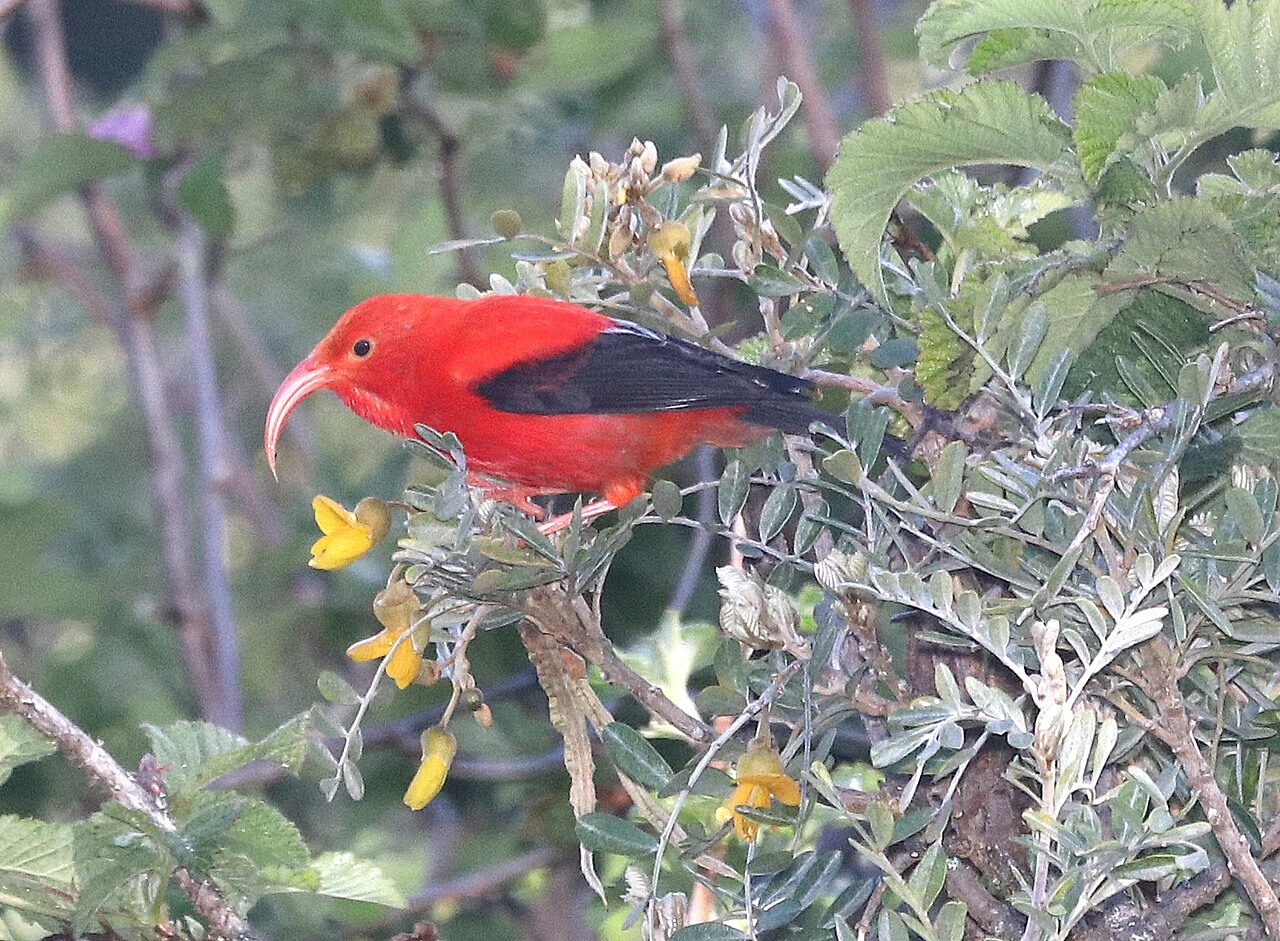
So why does 'iwi' keep appearing in bird searches? Two reasons. First, there is a real bird called the 'i'iwi (Drepanis coccinea), a scarlet Hawaiian honeycreeper that Wikipedia flags as a symbol of Hawaiʻi. Its name looks like 'iwi' when people type it without the glottal stop markers. Second, the Hawaiian word 'iwa (for the great frigatebird) is so close in spelling to 'iwi' that online searches constantly conflate them. When you add the Māori context around birds and wildlife, where iwi groups are deeply involved in managing native species and conservation, the wires get crossed even further. The Wikipedia disambiguation page for 'Iwi' lists both the Māori social units and the 'i'iwi bird species, which tells you everything about how tangled this gets in practice.
Pinning down the specific bird behind 'iwi bird'

If someone says 'iwi bird,' there are three birds they could realistically mean, and figuring out which one they want usually takes about thirty seconds of context-checking.
| Bird name | Language/Origin | What it actually is | Core meaning of the name |
|---|---|---|---|
| 'Iwa | Hawaiian | Great frigatebird (Fregata minor) | Thief (kleptoparasitic behavior) |
| 'I'iwi | Hawaiian | Scarlet honeycreeper (Drepanis coccinea) | Name; symbol of Hawaiʻi |
| Hakawai / Hōkioi | Māori (NZ) | Mythological / possibly Haast's eagle | Sacred, mysterious, rarely seen |
The 'iwa (great frigatebird) is the most common target of 'iwi bird' searches. It is a large seabird in the family Fregatidae, found across Hawaiian waters, and every credible Hawaiian source from the American Bird Conservancy to the U.S. Fish and Wildlife Service to Hawaiʻi's DLNR confirms: the Hawaiian name 'iwa literally means 'thief.' The bird earns it, dive-bombing other seabirds mid-flight to steal their catches. It is also called the 'man-of-war bird,' which captures the same idea in English. If you see 'iwi bird' on a tattoo site or a Hawaiian culture page, this is almost certainly the bird being discussed.
The 'i'iwi is a separate Hawaiian bird entirely, a brilliantly red honeycreeper with a curved bill. It is not a thief and has no stealing symbolism. It shows up in searches because its name (written without diacritical marks) looks like 'iwi.' It is genuinely significant as a Hawaiian cultural symbol, but its meaning context is different from 'iwa.
In a New Zealand Māori context, if someone is asking about a legendary or mythic bird connected to 'iwi,' they may be thinking of the Hakawai or Hōkioi, mythological birds in Māori tradition described as sometimes heard but not usually seen. Some accounts connect Hakawai and Hōkioi to the extinct Haast's eagle. These are spirit-adjacent birds, associated with the sacred and the unseen, and they carry a very different symbolic weight from the Hawaiian frigatebird.
The symbolic meanings: what the 'iwa bird represents
Because the 'iwa (great frigatebird) is the bird most people are actually after, its symbolism is worth covering properly. The name 'thief' is not an insult in Hawaiian cultural framing: it is a recognition of the bird's mastery, cunning, and opportunistic skill. The 'iwa is an apex presence on the water, capable of outmaneuvering every other seabird in the air. That combination of daring, speed, and strategic cleverness gives it symbolic associations with:
- Cunning and resourcefulness: taking what you need through wit rather than brute effort
- Freedom and endurance: the frigatebird spends enormous stretches of time aloft, making it a symbol of freedom and independence in Pacific traditions
- Navigation and guidance: Hawaiian seafarers watched 'iwa to find land, making the bird a practical omen of direction and safe passage
- Boldness: a bird that steals from others in midair carries a certain fearless energy in cultural storytelling
Some online tattoo and symbolism pages have expanded this into broader spiritual narratives about 'iwa as a protector or messenger. These interpretations exist in popular culture and are worth knowing about, but they tend to be modern-era elaborations rather than traditional Hawaiian sources. The documented, historically grounded meanings center on the thief metaphor, navigation, and skilled opportunism. That is already a rich symbolic package without adding layers that credible sources do not clearly support.
In the Māori context, the Hakawai and Hōkioi carry a more overtly spiritual symbolism, associated with omens, the unseen world, and sacred presence. These are birds you hear at night in Māori oral tradition, sounds without a visible source, which is exactly the kind of mythology that invites interpretations about messages from beyond the ordinary world. They are not the same bird as 'iwa, but in Pacific-wide symbolic discussions they sometimes get discussed in the same breath.
Does 'iwi bird' show up in idioms or everyday language?

Not as a fixed idiom, no. You will not find 'iwi bird' in a proverb dictionary the way you would find 'a bird in the hand' or 'early bird gets the worm.' But the name's meaning ('thief') does carry figurative weight in Hawaiian everyday speech and storytelling. Calling someone an 'iwa in Hawaiian carries the implication of someone slippery, clever, and always finding an angle: someone who gets what they want through skill and audacity rather than straightforward effort. It is not quite an insult and not quite a compliment; it is more like calling someone a fox in English.
The 'man-of-war bird' nickname used in English contexts does similar work: it frames the frigatebird as a pirate of the skies, which lines up with how English speakers use pirate metaphors (bold, lawless, free). If you encounter 'iwa in a Hawaiian story or hear someone use it figuratively, the sense of cunning opportunism is almost always what is being invoked. On the Māori side, 'iwi (tribe/people) occasionally shows up in community-organizing language and conservation discussions, where an iwi's relationship to a particular bird species (like the muttonbird/tītī) carries weight about stewardship and belonging, but that is not really the bird being called 'iwi.'
Common mix-ups to watch out for
The spelling overlap between 'iwi,' 'iwa,' and 'i'iwi is the biggest source of confusion, and it is entirely a result of how Hawaiian and Māori diacritical marks get dropped when people type casually online. In proper Hawaiian orthography, the 'okina (the glottal stop, written as ') and the kahakō (macron over a vowel) distinguish words that look identical without them. 'Iwa (frigatebird) and iwi (Māori for tribe) are genuinely different words from different languages that only collide in English search bars. Using the Te Aka Māori Dictionary or the American Bird Conservancy's species pages with diacritical marks intact clears up most of the ambiguity instantly.
A second common mistake is treating any 'iwi-adjacent bird' as carrying Māori spiritual meaning when the bird in question is actually Hawaiian. The cultures are related in the broad Pacific sense, and some linguistic cognates do exist (Wiktionary notes that the Hawaiian 'iwa and Māori 'iwa share cognate roots), but Hawaiian and Māori spiritual traditions are distinct, and symbolism from one should not be casually transplanted to the other. If you are researching Māori bird mythology specifically, you want sources like New Zealand Birds Online (managed by Birds New Zealand, the Department of Conservation, and Te Papa) rather than Hawaiian wildlife pages.
A third pitfall: some tattoo and spiritual-meaning websites describe 'iwa birds as carrying mythical or protective powers that go well beyond what Hawaiian oral tradition and documented sources actually say. That does not make those meanings meaningless if someone has adopted them personally, but it is worth distinguishing between what is historically documented and what is modern creative elaboration. The name meaning 'thief' and the navigation associations are well-documented. Elaborate guardian-spirit narratives around 'iwa tend to have murkier origins.
It is also worth knowing that similar-sounding bird names in Pacific contexts, like iwa in Māori (sometimes used for the Pacific frigatebird), the Hawaiian 'iwa, and the related Hokioi/Hakawai mythology, can get collapsed together in secondary sources and Pacific-wide strategy documents. The underlying birds and traditions are distinct even when the names rhyme.
How to get the exact answer fast

If you landed on 'iwi bird meaning' and still are not sure which bird you actually want, here is how to resolve it in a few minutes:
- Ask: is this Hawaiian or Māori? If the context is Hawaiʻi (islands, Pacific seafaring, Hawaiian culture), you almost certainly want 'iwa (great frigatebird). Search: 'iwa Hawaiian frigatebird meaning' or go directly to the American Bird Conservancy's 'iwa page.
- If you think you are after a scarlet red Hawaiian bird, that is the 'i'iwi (Drepanis coccinea), a separate species. Search: 'i'iwi Hawaiian honeycreeper symbol.
- If the context is New Zealand Māori, and you want a bird associated with Māori mythology or a specific iwi's relationship to a bird, go to New Zealand Birds Online (nzbirdsonline.org.nz) and use the Māori name search. For mythological birds, search 'Hakawai Māori mythology' or 'Hōkioi legend.'
- For Māori language meaning of 'iwi' itself, use Te Aka Māori Dictionary (maoridictionary.co.nz). Type 'iwi' and you will get the tribe/people/bone meanings with example sentences.
- To cross-check symbolism against credible sources, prefer: American Bird Conservancy, Hawaiʻi DLNR, U.S. Fish and Wildlife Service pages for Hawaiian species, and New Zealand Birds Online or Te Ara (the Encyclopedia of New Zealand) for Māori bird names and traditions.
- Treat tattoo symbolism pages and general 'spiritual meaning of birds' sites as a starting point only. Check whether the meaning they cite traces back to a documented Hawaiian or Māori source, or whether it is modern interpretive expansion.
The short version: 'iwi bird' almost always means the Hawaiian 'iwa (great frigatebird), whose name means 'thief' and whose symbolism centers on cunning, freedom, and navigation. In short, the ibis bird meaning depends on the species and the cultural or religious framework you are reading. It is especially common to find explanations of iwa bird meaning that focus on the great frigatebird and its “thief” name. If you are in Māori territory, 'iwi is not a bird at all, it is a people. The bird you might be thinking of in that context is the Hakawai, the Hōkioi, or a specific native species managed by an iwi group. Getting those two languages and two cultural traditions straight solves most of the confusion that 'iwi bird meaning' searches run into.
FAQ
If someone writes “iwi bird” without accents or punctuation, how can I tell whether they mean the great frigatebird or the i'iwi honeycreeper?
Check the spelling clues and the details in the post. “Iwa” and “thief,” “man-of-war,” or “frigatebird” usually point to the great frigatebird. Mentions of a red honeycreeper, a curved bill, or scarlet color usually point to the i'iwi, which loses its glottal stop when typed casually.
Is “iwi bird” a fixed phrase with a dictionary-style meaning?
No, it is not an idiom or standardized proverb. Most uses come from people combining “iwi” (Māori for tribe) or “iwa” (Hawaiian for the great frigatebird) with “bird,” and then adding modern symbolism. When you see it treated like a set phrase, treat it as an interpretation rather than a traditional expression.
Can “iwi bird meaning” refer to Māori “iwi” groups and their conservation roles, not a specific bird?
Yes, sometimes the “bird meaning” intent is actually about stewardship, belonging, or who manages or protects certain native species. In that case, “iwi” refers to the people or tribe, and the bird is whatever species is being discussed (for example, tītī/muttonbird), so the “meaning” is about relationships and responsibility rather than a bird name.
Are there any commonly repeated “protective or messenger” meanings for “iwa” that I should be cautious about?
Be cautious when the claims go far beyond “thief” symbolism, navigation, and cunning opportunism. Modern spiritual-writing sites sometimes attach guardian-spirit roles that are not clearly rooted in traditional Hawaiian explanations. Personal adoption is fine, but you should separate it from what is well-documented.
If “iwi” is Māori for “tribe,” why do some Pacific documents mix “iwi” and frigatebird terminology together?
It is usually the spelling collision amplified by casual typing, where diacritics like the ʻokina and kahakō get dropped. Secondary sources or strategy documents may collapse similarly spelled terms into one explanation, so the safest approach is to look for the original orthography or confirm the bird name used (iwa vs i'iwi) in context.
What is the fastest way to verify the exact word when doing research online?
Search the two targets separately with punctuation kept when possible: try “iwa” with Hawaiian context (frigatebird, ʻokina-style spelling) and “i'iwi” with the glottal stop. If you also see “iwi” paired with words like “tribe,” “hapū,” or “people,” that is almost certainly the Māori term rather than a bird.
If I want Māori bird mythology specifically, should I use Hawaiian bird symbolism sources?
Not as your primary source. Hawaiian explanations for “iwa” belong to Hawaiian tradition, while Māori mythic birds like Hakawai or Hōkioi come from Māori oral and storytelling frameworks. Use New Zealand-focused bird or Māori-language resources when the goal is Māori mythology rather than Hawaiian wildlife symbolism.
Could “iwi” be interpreted as the same thing as “iwa” in meaning or origin?
Usually not in day-to-day interpretation. They are different words from different languages, and while some discussions note broad Pacific linguistic connections, the practical meaning you should use depends on culture and orthography. In Hawaiian context, “iwa” points to the frigatebird and “thief” metaphor; in Māori context, “iwi” points to people or tribe.
What does it mean when someone figuratively calls a person “iwa” in Hawaiian context?
It generally implies cleverness, audacity, and opportunistic skill, similar to the “fox” idea in English. It is not a straightforward compliment or insult, it is a character description tied to the bird’s behavior of outmaneuvering others to get what it needs.
Next Articles

Iwa Bird Hawaii Meaning: i‘wa Spelling, Species, and Culture
Meaning of i‘wa bird in Hawaii: correct spelling, which species it is, and cultural symbolism and verification tips.

Wawa Bird Meaning: Symbolic Traits, Contexts, and What to Do
Meaning of the wawa bird phrase, symbolic traits, context clues, and what to do if you saw or heard it

Ibis Bird Meaning: Spiritual Meaning and White Ibis
Learn ibis bird meaning, especially white ibis spiritual meaning, plus how to reflect on sightings, dreams, and art.