
The "iwa bird" almost certainly refers to the Hawaiian ʻiwa, the Great Frigatebird (Fregata minor). The word ʻiwa literally means "thief" in Hawaiian, a name earned by the bird's most distinctive habit: harassing other seabirds mid-flight until they drop or regurgitate their catch, then swooping in to snatch the meal. If you searched "iwa bird meaning" looking for spiritual symbolism, that etymology is your anchor. Every meaningful theme tied to the ʻiwa, from storm omens to resilience to freedom, flows directly from that name and the bird's observable behavior.
Iwa Bird Meaning Explained: Spiritual Symbolism & How to Use It

Marcus Blackwell
9 Apr 2026
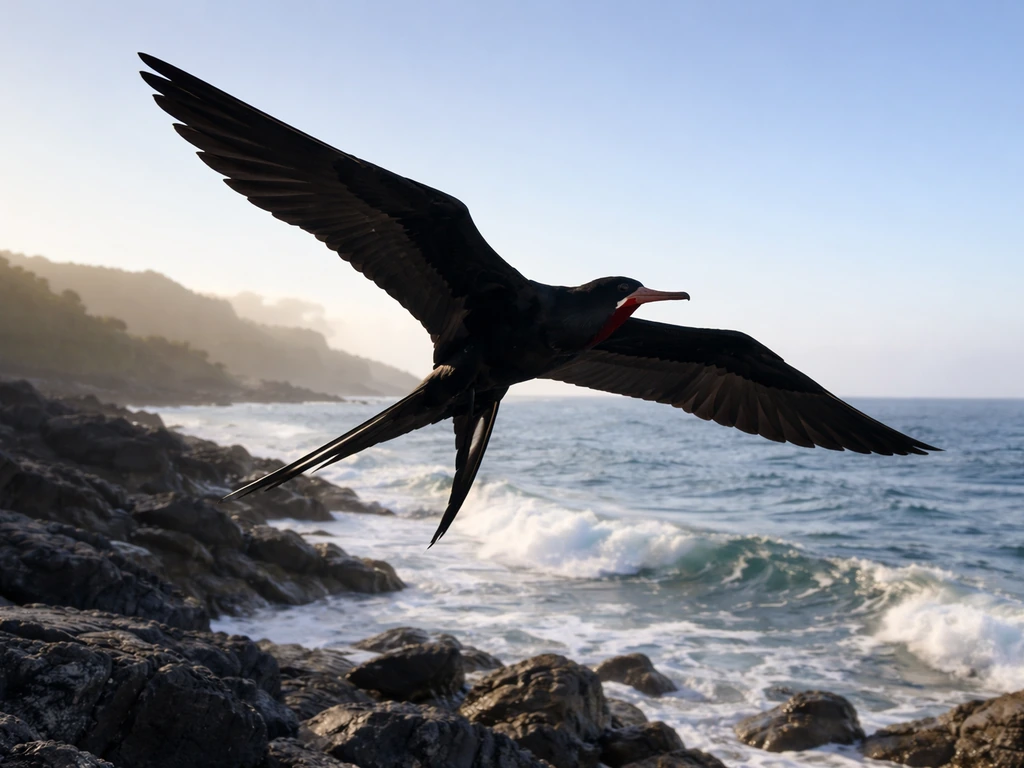
What exactly is the IWA bird?
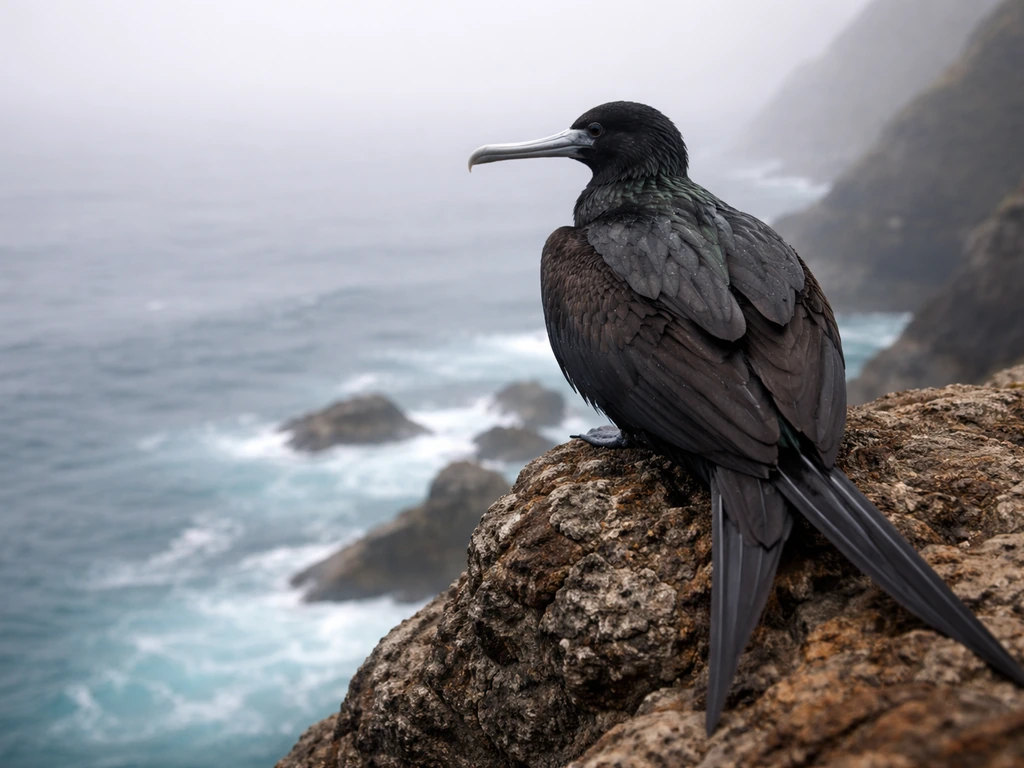
The ʻiwa is a large, glossy-black seabird with a dramatically forked tail and a wingspan that can exceed seven feet.
It does not land on water, cannot take off from the ocean surface, and survives almost entirely by aerial theft and opportunistic hunting. The Hawaiian name is spelled with an ʻokina (ʻiwa), a glottal stop that marks it as a distinct Hawaiian word rather than the English initialism "IWA. " Most people searching without the diacritic simply drop it to "iwa," which is how the phrase "iwa bird meaning" became a common search.
If you want to go deeper into the specifically Hawaiian spiritual layer of this bird, the dedicated article on iwa bird Hawaii meaning covers the island-specific folklore in more detail.
A quick clarification on spelling confusion: "iwi" is not the same as "ʻiwa." The word iwi refers to Māori tribal units in New Zealand, a completely separate cultural concept with no connection to the Hawaiian frigatebird. If you landed here after searching for iwi bird meaning, that search likely reflects a common one-letter typo (swapping the final vowel) rather than a shared tradition. They are different words from different cultures.
The spiritual meaning of the ʻiwa bird
There is no single authoritative spiritual dictionary for the ʻiwa the way there might be for, say, a raven or an owl in Western traditions. What exists instead is a layered set of meanings built from three sources: the literal Hawaiian name ("thief"), the bird's actual behavior (aerial piracy and long soaring flight), and its role as a traditional storm omen in Hawaiian observation. Spirituality sites have since borrowed these themes and expanded them into a broader symbolic vocabulary, which is worth knowing even if the Hawaiian roots are the more grounded starting point.
The thief as a spiritual metaphor

The ʻiwa's name is not a moral condemnation. In Hawaiian culture, the "thief" framing is more nuanced: the bird is resourceful, adaptive, and unapologetically direct about getting what it needs. Spiritually, this translates into themes of reclaiming energy, setting boundaries, and recognizing where you may be giving away too much or where you need to take back what is rightfully yours. The ʻiwa does not wait to be handed a fish. It acts, it moves fast, and it does not apologize. For a lot of people working through questions about self-advocacy or burned-out generosity, that framing lands with real weight.
Freedom, ascension, and the long soar
The ʻiwa spends extraordinary amounts of time airborne, riding thermal currents at altitude for hours without landing. State wildlife sources describe this soaring as a defining behavioral trait, and it is this characteristic that spiritual and tattoo symbolism sites most often convert into "rising above challenges" and "gaining perspective." The metaphor is not forced. A bird that literally cannot rest on water and must stay aloft has a natural association with resilience, independence, and the refusal to be grounded by difficulty. Freedom and self-reliance are consistently the two themes most linked to ʻiwa symbolism beyond the storm omen, and both trace directly back to biology rather than invented mythology.
The storm omen
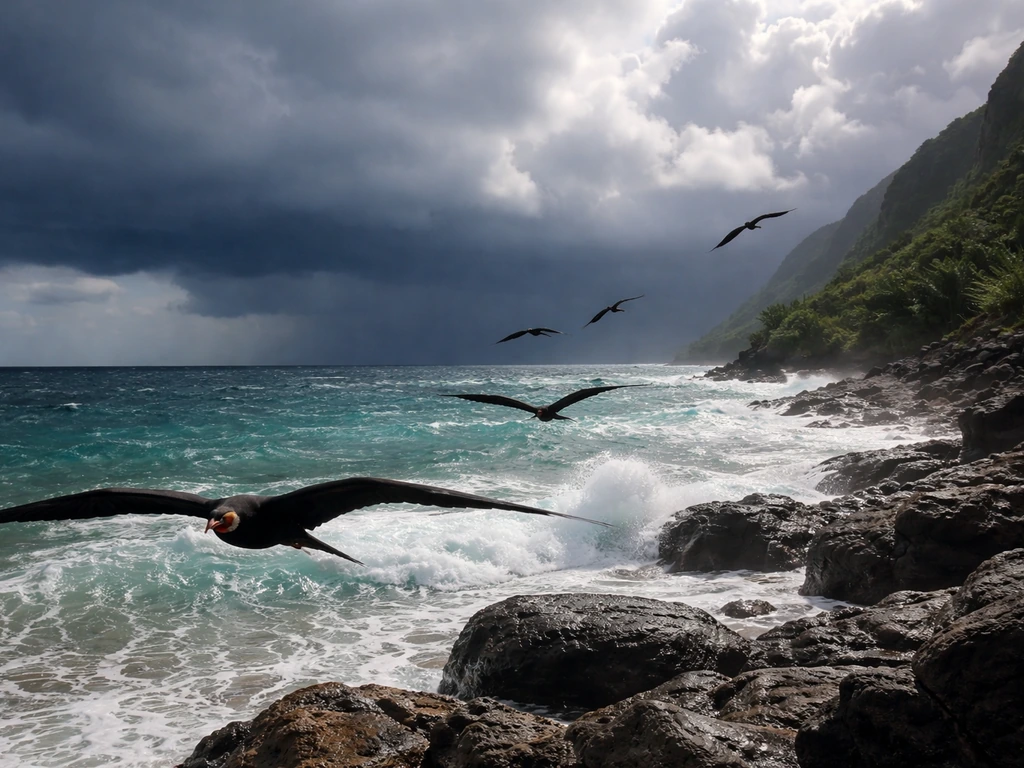
This one has real cultural weight behind it. The Hawaiʻi Birding Trails program, a state-run resource, explicitly states that a group of ʻiwa is an omen of stormy weather approaching. The observation is practical: ʻiwa typically stay far offshore, so when they appear near land in numbers, it often signals an incoming weather system pushing them toward the coast. Local Hawaiian communities noted this pattern and encoded it as a warning sign. Spiritually, the storm omen gets extended into a broader message about turbulence, change, or disruption heading your way, and the wisdom of preparing rather than ignoring the signal.
When and where people encounter the ʻiwa as a symbol
People typically search for ʻiwa bird meaning after one of a few specific triggers. Understanding which category your encounter falls into helps you narrow down which layer of symbolism is most relevant.
- Physical sighting near a coastline, especially in groups or before unusual weather: this maps most directly to the traditional storm-omen reading.
- Dream appearance: dreaming of a soaring black seabird, particularly one that hovers at great height or steals something, is commonly interpreted through the "rising above" and "reclaiming energy" frames.
- Repeated sightings or a feeling that the bird keeps showing up as an image, symbol, or reference: this pattern tends to prompt the "what is this trying to tell me?" search, and the answer usually lives in the thief/resourcefulness theme.
- Encountering the word or image in a tattoo, artwork, or cultural context: here the symbolism is usually strength, freedom, and Hawaiian heritage rather than a personal spiritual message.
- Tarot, oracle, or animal-spirit readings that name a frigatebird or ʻiwa: in these contexts the bird is treated as a spirit animal with the full suite of themes described above.
Cultural roots: where the ʻiwa symbolism actually comes from
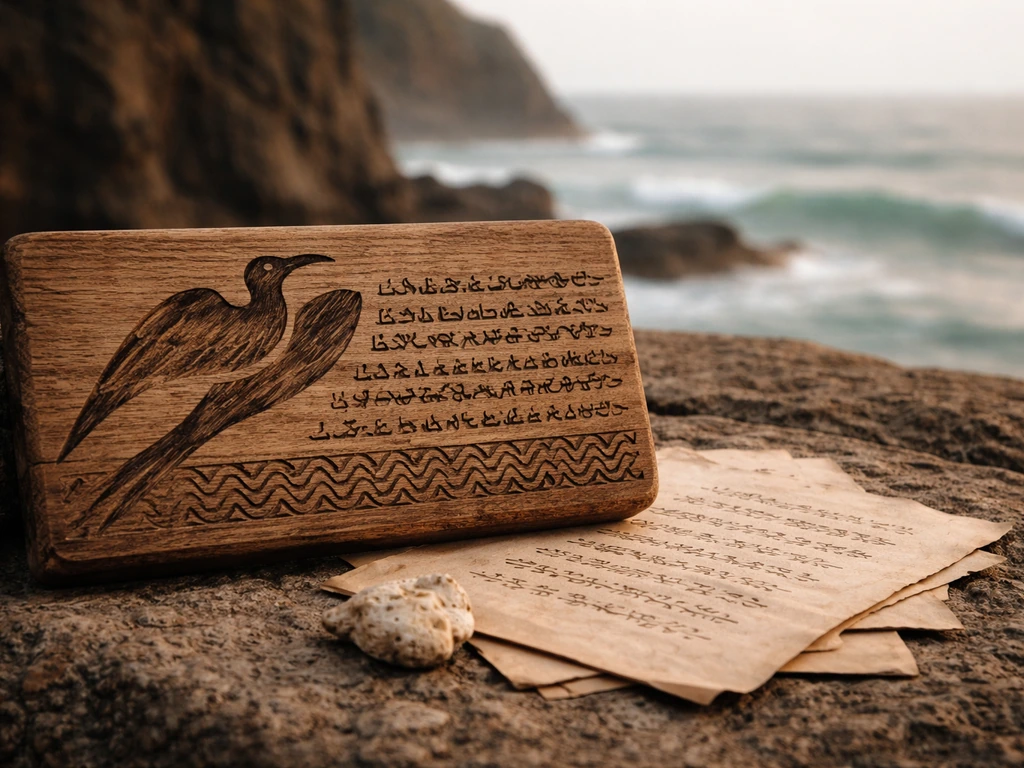
In traditional Hawaiian culture, the ʻiwa was more than a named bird. It appeared in chants and poetic epithets as a figure of power and cunning. One well-documented example is the name Kaʻiwakīloumoku, an epithet associated with Kamehameha the Great, which weaves the ʻiwa (frigatebird) metaphor into a phrase meaning something like "the ʻiwa that hooks the islands together.
" The Hawaiian Cultural Center at Kaʻiwakīloumoku has published analysis showing how Kamehameha's identity was deliberately linked to the man-of-war bird persona: a figure who takes, unifies, and commands through a kind of aerial supremacy. This is the ʻiwa as a metaphor for a chief who bends resources and territories toward a larger purpose. It is a sophisticated cultural use of the bird, far beyond simple omens.
It is worth noting how this compares to other bird symbolism systems. The ibis bird meaning, for instance, draws from Egyptian mythology and carries associations with wisdom and divine writing, a completely different cultural pipeline despite both birds being associated with water and coastal environments. The ʻiwa's symbolism is grounded in Hawaiian oral tradition and direct ecological observation rather than a written religious canon, which makes it more fluid and locally interpreted.
Hawaiian cultural symbolism often compresses multiple meanings into a single figure. A chant or epithet involving the ʻiwa can carry "thief," "storm harbinger," "freedom," and "political power" simultaneously. Treating that as metaphorical and reflective is the right approach, as these are not fortune-telling claims but rather poetic frameworks for thinking about character, timing, and action.
How to interpret the ʻiwa message for your specific situation
The most useful thing you can do is match your encounter type to the symbolic layer it most closely resembles. Here is a practical framework:
| Encounter type | Most relevant symbolic layer | Practical question to ask yourself |
|---|---|---|
| Physical sighting before unusual weather | Storm omen / prepare for turbulence | What change or challenge is approaching that I should prepare for rather than ignore? |
| Dream of soaring or theft | Rising above / reclaiming energy | Where am I giving away more than I should, or what perspective am I avoiding by staying too close to the ground? |
| Repeated appearances as image/symbol | Resourcefulness / resilience | Am I using every available tool and strategy, or waiting passively for something to be handed to me? |
| Spirit animal or reading context | Freedom / independence / self-reliance | Where in my life do I need to move more boldly without asking permission? |
| Cultural or historical reference | Power / unity / strategic cunning | What am I working to bring together, and am I willing to act decisively to do it? |
The key interpretive move is to start with the word itself: ʻiwa means thief. Ask where that word lands for you personally. Are you taking too much from others? Are others taking from you? Are you refusing to take what you legitimately need? The bird does not judge those questions. It just names them.
Putting it to work: journaling prompts and next steps

If you want to actually use this symbolism rather than just absorb it, try working with the following prompts. They are built from the three core ʻiwa themes: the thief, the soarer, and the storm signal.
- Write down exactly how and when the ʻiwa showed up for you. Was it in a dream, a sighting, a conversation? What was happening in your life that day or week? The context often tells you which layer of meaning to apply.
- On the "thief" theme: Where are you currently losing energy, time, or resources to something or someone without getting equivalent value back? Where might you need to "steal back" your own attention or capacity?
- On the "soaring" theme: What problem are you currently too close to? Write about what it would look like from much higher altitude, with fewer emotional details and more structural observation.
- On the "storm" theme: What disruption or difficult change is already visible on the horizon that you have been delaying preparation for? Write one concrete step you could take this week to prepare.
- On the cultural layer: Think about a situation where you need to bring things together rather than tear them apart. What would a decisive, resourceful move look like there?
For next steps beyond journaling: if you encountered the ʻiwa in a dream and want to explore bird symbolism more broadly, you might find it useful to compare this with other birds that carry similar coastal and freedom associations. The wawa bird meaning offers an interesting parallel, as both names carry layered cultural meanings that go beyond simple species identification. Similarly, if you are exploring bird symbolism across different naming traditions and want to see how a name-derived meaning works in another context, the irn bird meaning is another example of a bird whose symbolism is embedded in what it is called rather than just what it looks like.
One practical note for people who encountered the ʻiwa in a real-world sighting, especially near the coast: the traditional storm-omen reading is behaviorally grounded. If you saw a group of ʻiwa moving toward shore, it is worth checking the forecast. That is not superstition, it is pattern recognition that Hawaiian communities refined over centuries of coastal living.
Common mix-ups and quick clarifications
A few frequently confused terms come up alongside "iwa bird meaning," and clearing them up saves time.
ʻIwa vs. iwi: As mentioned earlier, "iwi" refers to Māori tribal groups in New Zealand, not a Hawaiian bird. The confusion is purely orthographic. The two words are not related in meaning or culture. If you are reading about New Zealand traditions and looking for bird symbolism there, the search term to use is not "iwi bird" but rather the specific species name you have in mind.
ʻIwa vs. ibis: These are entirely different birds from different parts of the world. The ibis is a long-billed wading bird connected to Egyptian and African symbolism, while the ʻiwa is a Pacific seabird. People sometimes conflate them when doing general research on "bird omens," but their symbolic traditions do not overlap. If ibis symbolism is what you were actually looking for, the article on ibis bird meaning covers that lineage properly.
ʻIwa vs. ingrid bird or other named-bird meanings: Some searches pair "iwa" with other named-bird queries, likely because they are browsing bird symbolism broadly. The ingrid bird meaning is a separate topic that covers a different symbolic tradition, and the two should not be conflated just because both contain unusual bird names.
Is ʻiwa a spirit animal in the formal sense? Not in the way animals appear in formalized Indigenous North American spirit animal traditions. The ʻiwa operates in Hawaiian cultural symbolism more as a metaphorical figure in chant, observation-based omens, and poetic epithets. Treating it as a personal spirit guide is a modern adaptation that draws from those roots, but it is worth knowing the distinction so you can engage with the symbolism honestly rather than borrowing a framing that does not quite fit.
Finally, the most important practical clarification: "iwa bird meaning" with a lowercase "iwa" almost always refers to the Hawaiian ʻiwa, the Great Frigatebird. The search is not about an acronym, a brand, or an unrelated English word. If you landed here after a dream, a sighting, or a reading, the bird you are interpreting is a real species with a documented name, behavior, and cultural history, and all of the symbolism you are looking for is rooted right there.
FAQ
If I saw an ʻiwa near my home, how can I tell whether it’s the storm-omen layer or a “freedom/self-advocacy” layer?
Use context. A storm link is most likely when you notice multiple frigatebirds moving closer to shore around the same time, especially if they’re active in mid to late afternoon or the air feels unusually shifting. If your encounter felt personal, like in a dream or during a stressful decision, the “thief, boundaries, self-reliance” themes usually fit better than making it about weather.
What’s the safest way to work with the “thief” meaning without turning it into blaming others?
Treat it as a boundary prompt, not a character judgment. Ask where energy is being taken from you, where you are taking what you actually need, and where you feel resentful because you keep giving beyond your capacity. The goal is to identify a behavior change, like saying no, renegotiating help, or reclaiming attention.
Can “iwa bird meaning” apply if I live far from the ocean or never see seabirds?
Yes, but it will lean more metaphorical than observational. If there’s no practical link to weather or bird behavior, frame the meaning through the language and themes (thief as “reclaiming,” soaring as “staying aloft,” storm as “prepare for disruption”) and connect it to something happening in your life rather than literal coastal timing.
Is it wrong to interpret ʻiwa as a spirit guide if I’m not Hawaiian?
It’s not automatically “wrong,” but it helps to be honest about the difference between poetic metaphor and Indigenous spirit-guide frameworks. A respectful approach is to treat ʻiwa as a symbol for reflection and action, not as an authority that assigns destiny or claims spiritual lineage. Keep it grounded in your own choices and experiences.
How do I avoid mixing up ʻiwa with other “bird omen” traditions when I see posts online?
Check what the symbolism is anchored to. If the post doesn’t mention the Hawaiian term (and the specific frigatebird behavior) and instead relies on generic “bird = omen” claims, it’s likely borrowing themes loosely. For your reading, prioritize the three anchors from the name “thief,” the aerial piracy behavior, and the storm-approach observation.
If ʻiwa appears in a dream, should I always interpret it as a coming storm?
No. Dreams often remix symbolism, so focus on the emotional and situational cues. If the dream includes wind, darkness, shoreline movement, or timing that matches real-world weather changes, the storm layer is more plausible. If it’s about power, taking, refusing, or feeling ungrounded, the self-advocacy layer is usually the better fit.
What common spelling mistake should I watch for when searching or reading about the meaning?
The diacritic matters conceptually. “Iwa” most often points to the Hawaiian ʻiwa (frigatebird), while “iwi” refers to Māori tribal units in New Zealand, a different concept. If you’re reading something that blends iwi with Hawaiian bird symbolism, it’s likely conflating unrelated terms.
Are there any practical actions that match the “soarer” theme, not just journal prompts?
Yes. The “soarer” idea pairs well with planning for perspective and continuity. For example, do one concrete action that reduces being pulled into daily turbulence, like scheduling a decision checkpoint, simplifying commitments for a week, or stepping back to reassess priorities before you respond to conflict.
How should I interpret ʻiwa symbolism if I feel both like I’m taking and also being taken from?
That’s a common edge case with the “thief” framing. Try splitting the question into two columns: “where I may be overreaching” and “where I may be under-protecting my energy.” The bird’s theme supports adjusting both, by reclaiming what’s yours while also checking whether your response is driven by scarcity or fear.
Next Article
Munster Bird Meaning: Folklore, Symbolism, and How to Verify
Meaning of Munster bird searches: folklore, symbolism, idioms, spelling variants, and quick ways to verify the reference