
The ibis is a medium-sized wading bird (family Threskiornithidae) most famous in symbolic terms for its deep connection to ancient Egyptian wisdom, knowledge, and the divine. If you're trying to interpret an ibis sighting, dream, or recurring ibis image in your life, the core meanings to work with are wisdom, intellectual clarity, and spiritual guidance. A white ibis specifically layers on themes of purity and truth. But how you actually apply any of that depends entirely on your personal context, and this guide will walk you through exactly how to do that responsibly.
Ibis Bird Meaning: Spiritual Meaning and White Ibis

Marcus Blackwell
1 May 2026

What the ibis actually is (the literal bird)

Before jumping into symbolism, it helps to know what you're actually looking at. Ibises are medium-sized wading birds classified under the family Threskiornithidae, subfamily Threskiornithinae. They have long, curved bills that they use to probe the mud in marshes and wetland areas. The white ibis (Eudocimus albus) is one of the most widely recognized species, with bright white plumage, a curved reddish bill, and a habit of foraging in shallow water for crustaceans, small frogs, and worms. blank" rel="noopener noreferrer">Cornell's All About Birds confirms they're typically found in marshes and coastal wetlands across the southeastern United States and parts of Latin America.
Why does this matter for meaning? Because a lot of people conflate different ibis species or mistake another white wading bird entirely (like an egret) for an ibis, then apply symbolism that may not quite fit. The key ID feature of a white ibis is that distinctive long, downward-curved pinkish-red bill. If the bird you saw or dreamed about had a straight yellow bill, it was probably an egret, not an ibis. Getting the species right is your first step toward a grounded interpretation.
The ibis across cultures: what it has meant throughout history
The ibis has one dominant cultural story, and it runs straight through ancient Egypt. The African sacred ibis was one of the most religiously venerated animals in that civilization, directly associated with the god Thoth (also known as Djehuty). Thoth was the god of the moon, writing, mathematics, measurement, and time. National Geographic has documented how millions of ibis were actually mummified near Hermopolis as offerings to Thoth, making the ibis arguably one of the most ritual-significant birds in human history. In Egyptian temple art, Thoth was regularly depicted as ibis-headed, often carrying emblems like the ankh. The ibis wasn't just a symbol of wisdom in a decorative sense; it was treated as a living incarnation of divine intellect.
Outside of Egypt, the ibis carries lighter but consistent symbolic weight. In general spiritual and metaphysical traditions, the ibis is associated with wisdom, insight, and the ability to access deeper knowledge. Its probing foraging behavior (literally digging into the earth to find what's hidden) maps neatly onto this metaphor: the ibis finds what isn't visible on the surface. That's a consistent throughline across most of the symbolic traditions that reference it.
The spiritual meaning of the ibis: what it's pointing to
Spiritually, the ibis represents wisdom, intellectual and divine guidance, and the keeping of hidden knowledge. If the ibis is showing up in your life as a recurring image, in dreams, in art you're drawn to, or as a sighting that felt significant, the traditional interpretation is that you're being nudged toward deeper inquiry. This might mean a life situation that requires careful thought rather than instinctive reaction, or a period where patience and methodical probing (like the ibis digging through mud) will reveal something important.
The ibis also has a strong association with record-keeping and accuracy, thanks to its Thoth connection. In a practical modern reading, that can translate to themes like: getting your facts straight, seeking knowledge before acting, or recognizing the value of documentation and precision in a current situation. It's not a bird that typically signals raw emotion or change for change's sake. It signals careful, informed movement.
In dreams specifically, the ibis appears as what dream-dictionary.com calls an archetype of "divine intellect" and a "keeper of secrets." That framing is useful because it reminds you the ibis in a dream isn't always announcing something external. Sometimes it's pointing inward, toward knowledge you already have but haven't fully acknowledged.
White ibis spiritual meaning: how white changes the interpretation
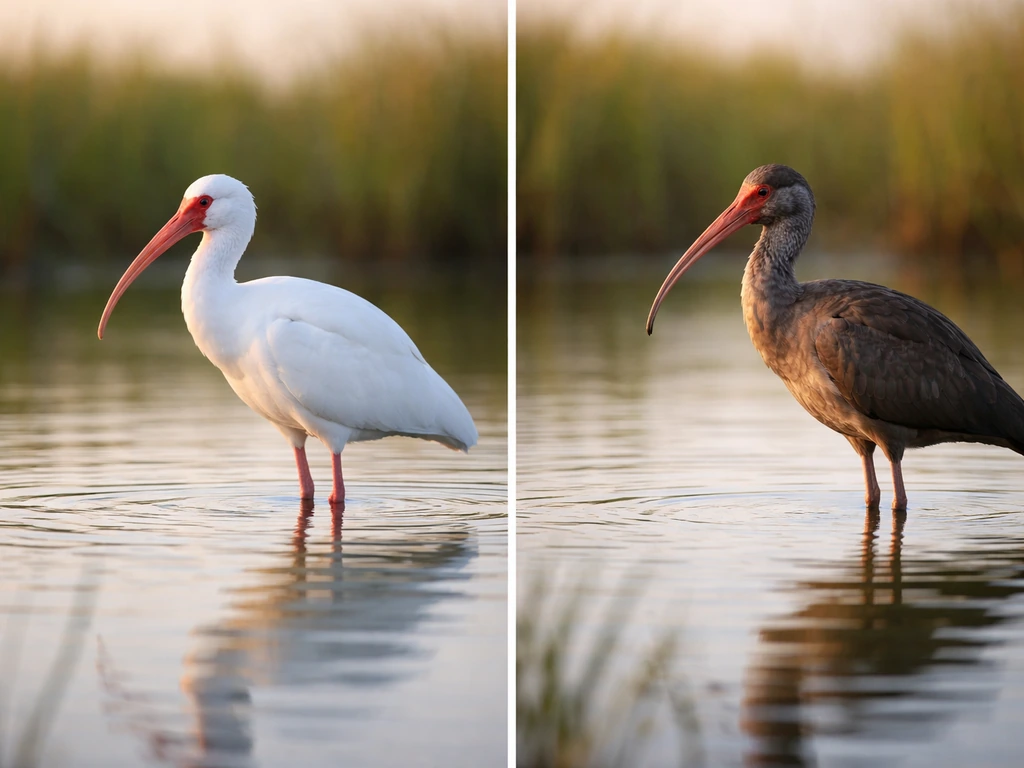
The white ibis carries all of the general ibis symbolism, but the white coloring adds a distinct layer. Across symbolic traditions, white consistently represents purity, clarity, and truth without distortion. When you combine that with the ibis's core meaning of wisdom and insight, you get something more specific: the white ibis points toward unblemished truth, enlightenment, and clarity of understanding. Multiple interpretive sources describe the white ibis as a symbol of being "on the right path" and "purity of thought" rather than just intellect for its own sake.
Where a general ibis sighting or dream might prompt you to seek deeper knowledge, a white ibis often suggests the knowledge is already clean and accessible, that what you're seeing or sensing is reliable and not muddied by ego, fear, or wishful thinking. Sources like dream-meaning.org frame the white ibis dream as indicating you're in alignment and have access to genuine spiritual guidance right now. DreamChrist adds that the white ibis specifically symbolizes "truth and innocence," which reinforces that this isn't about complicated hidden knowledge but rather simple, honest clarity.
| Aspect | General Ibis | White Ibis |
|---|---|---|
| Core meaning | Wisdom, insight, divine intellect | Purity, truth, enlightenment |
| Knowledge type | Hidden, needs to be uncovered | Clear, already accessible |
| Dream tone | Seek deeper understanding | You're on the right path |
| Cultural anchor | Egyptian Thoth (wisdom and record-keeping) | Thoth + universal white = unblemished truth |
| Practical nudge | Dig deeper, be patient | Trust what you already see clearly |
How to actually interpret an ibis sighting or dream today
Here's where most ibis symbolism articles go wrong: they give you the meaning and stop there. But as Carl Jung warned, there is no ready-made symbol dictionary where you look up a bird and get a definitive answer. The symbol interacts with your personal situation. Context is everything. Here's a practical way to work through it.
Step one: confirm what you actually saw or dreamed
If this is a real sighting, make sure it was genuinely an ibis. The white ibis has a long curved reddish bill and probes low in shallow water. The NPS notes that white ibises are found along coastlines of the southeastern United States year-round, including foraging in shallow coastal environments in coastal areas of the southeastern United States year-round. If you're in a non-ibis habitat (say, a mountain or inland forest in a region they don't inhabit), you may have seen a different bird. This isn't pedantry; applying ibis symbolism to an egret encounter will give you a misread. Cornell's All About Birds species guide is the fastest way to confirm identification.
Step two: note the context and your emotional state
For a dream especially, the feeling matters as much as the image. Was the ibis calm and present? Distant? Did you feel awe, unease, or comfort? Dream-dictionary.com is explicit that "context and your feelings in the dream are crucial" for a precise interpretation. A calm white ibis in a peaceful scene reads very differently than an agitated ibis in murky water. Write down as much detail as you can before it fades.
Step three: map it to what's actually happening in your life
Ask yourself: what current situation in my life is calling for careful thought, deeper knowledge, or honest clarity? The ibis isn't a random symbol; it tends to surface when wisdom and precision are called for. If you're facing a decision that requires more information, navigating something that needs intellectual rather than emotional resolution, or feeling uncertain about whether a belief or understanding is trustworthy, the ibis meaning maps cleanly onto those circumstances. The irn bird meaning is often discussed as a sign tied to insight, accuracy, and finding what is not obvious at first glance. The white ibis variation is especially relevant if you're questioning whether what you already know or sense is reliable.
Common misreadings to watch out for
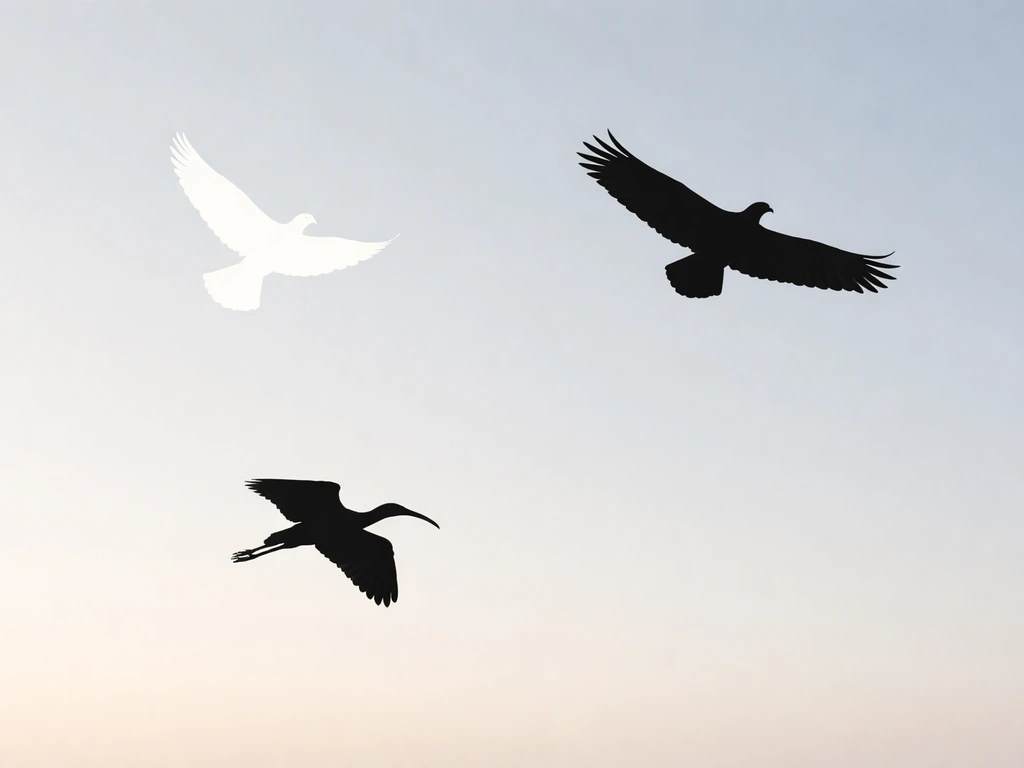
The most common mistake is overgeneralizing. People see a white bird and assume it universally means peace (that's the dove) or freedom (that's often the eagle). The ibis is specifically about knowledge, wisdom, and truth, not serenity or liberation. Mixing those up leads to interpretations that feel spiritually plausible but are actually just generic.
The second mistake is treating any ibis encounter as a major cosmic signal. Sometimes a white ibis is just a white ibis in a marsh, behaving exactly as it should. The meaning becomes relevant when the encounter feels genuinely unusual, recurring, or emotionally resonant to you, not every time you spot one near a waterway in Florida.
Third: don't confuse ibis symbolism with the symbolism of other birds that share some surface-level qualities. If you've come across content about the iwa bird, the iwi bird, or similar names in Pacific or Hawaiian traditions, those are entirely different birds with distinct cultural meanings. The iwa bird in Hawaii has a different background and a meaning that depends on its specific species and cultural context, so it helps to verify what you mean by iwa before linking it to ibis symbolism. If you are looking for iwa bird meaning, it's important to treat it as a different cultural symbol from the ibis. The ibis's symbolic identity is rooted primarily in Egyptian and general spiritual traditions, not in the same cultural ecosystems as Hawaiian or Pacific Island birds.
Putting it all together
The ibis bird meaning, at its core, is wisdom, insight, and the pursuit of hidden or deeper knowledge. It's one of the most intellectually oriented birds in symbolic tradition, anchored by thousands of years of Egyptian religious association with Thoth. The white ibis takes that foundation and intensifies it with clarity and truth: this isn't about searching in the dark, it's about recognizing clean, honest understanding when it's right in front of you. If an ibis has shown up for you in a meaningful way, the most useful question to sit with is: where in my life right now do I need to trust careful knowledge over impulse, or recognize that honest clarity is already available to me? That question, grounded in your actual situation, will take you further than any symbol lookup alone.
FAQ
How do I know if ibis bird meaning applies to my situation or if it’s just a random wildlife sighting?
A good check is to separate “wisdom” from “mood.” The ibis typically points to accurate information, careful thinking, and uncovering what is hidden, not generic feelings like peace or freedom. If your situation is asking for data, documentation, verification, or a disciplined plan, that fits ibis symbolism more than interpreting it as a purely emotional comfort sign.
If I saw a white ibis in a dream, what details should I focus on to interpret it accurately?
For dreams, treat symbolism as a prompt to reflect on your relationship with knowledge. Ask: What did the ibis do (probing, flying, calling) and how did you respond? A probing ibis suggests searching for missing truth, while an unbothered or distant ibis often indicates you already have the resources and should pause, think, and confirm before acting.
Does a white ibis always mean “truth,” or can it indicate confusion that needs clarification?
The white ibis meaning is usually “truth that is already accessible,” but only if the dream or sighting feels clear, calm, or clean. If the scene is chaotic, fearful, or muddy, it can indicate confusion that needs to be clarified, rather than an automatic message that everything you believe is correct.
What is a practical way to act on ibis bird meaning without getting stuck in vague spirituality?
Use a practical test: write down one real decision you are avoiding or one belief you are uncertain about. Then check whether “wisdom and precision” would change your next step. If the ibis meaning leads to concrete actions like researching, asking the right questions, fact-checking, or setting a method, it’s a useful interpretation.
What should I do if I’m not 100 percent sure the bird I saw was actually an ibis?
Species confusion is the main edge case. A white ibis has that long, downward-curved reddish-pink bill and often forages by probing low in shallow wetlands. A straight bill and different posture usually point to an egret or another wading bird, and that can shift the symbolism you attach to the encounter.
What does it mean if I keep noticing ibises (or white ibises) over weeks or months?
If the ibis appears repeatedly, look for a repeated theme in your life, not a repeated cosmic message. For example, recurring sightings might coincide with work tasks that require accuracy, conversations that require honesty, or situations where you keep missing what is “beneath the surface.” The symbolism becomes stronger when it matches a pattern you can observe.
How can I avoid common interpretation mistakes, like mixing up ibis meaning with other birds’ symbolism?
Yes. The article frames ibis meaning as knowledge and truth, so “overgeneralizing” often shows up as assuming every white bird equals peace. A simple rule: if your interpretation could swap in another bird and still make sense, it probably isn’t specific enough to be truly ibis-aligned.
Can ibis bird meaning be used as guidance for verifying information or making a decision?
If you are currently questioning whether something you learned is reliable, ibis bird meaning aligns well with verification. Try documenting what you know, separating facts from assumptions, and identifying what information would change your mind. The ibis is a cue to keep your process accurate, not to trust feelings alone.
Next Articles

Iwa Bird Meaning Explained: Spiritual Symbolism & How to Use It
Decode iwa bird meaning: symbolism, common contexts like dreams, and practical journaling steps to apply guidance.

Munster Bird Meaning: Folklore, Symbolism, and How to Verify
Meaning of Munster bird searches: folklore, symbolism, idioms, spelling variants, and quick ways to verify the reference
Martin Bird Meaning: Symbolism, Folklore, and Signs
Learn martin bird meaning with symbolism, folklore, and how to identify the right species for omens and dreams.