When someone uses the phrase "foul bird," the word "foul" almost always means one of two things: either literally unpleasant, dirty, or offensive-smelling (as in a bird or its droppings that stink or contaminate), or figuratively immoral and corrupt (as in the old English proverb condemning someone who harms their own group).
Foul Meaning Bird: What A Foul Bird Means and Do

Marcus Blackwell
7 Jun 2026
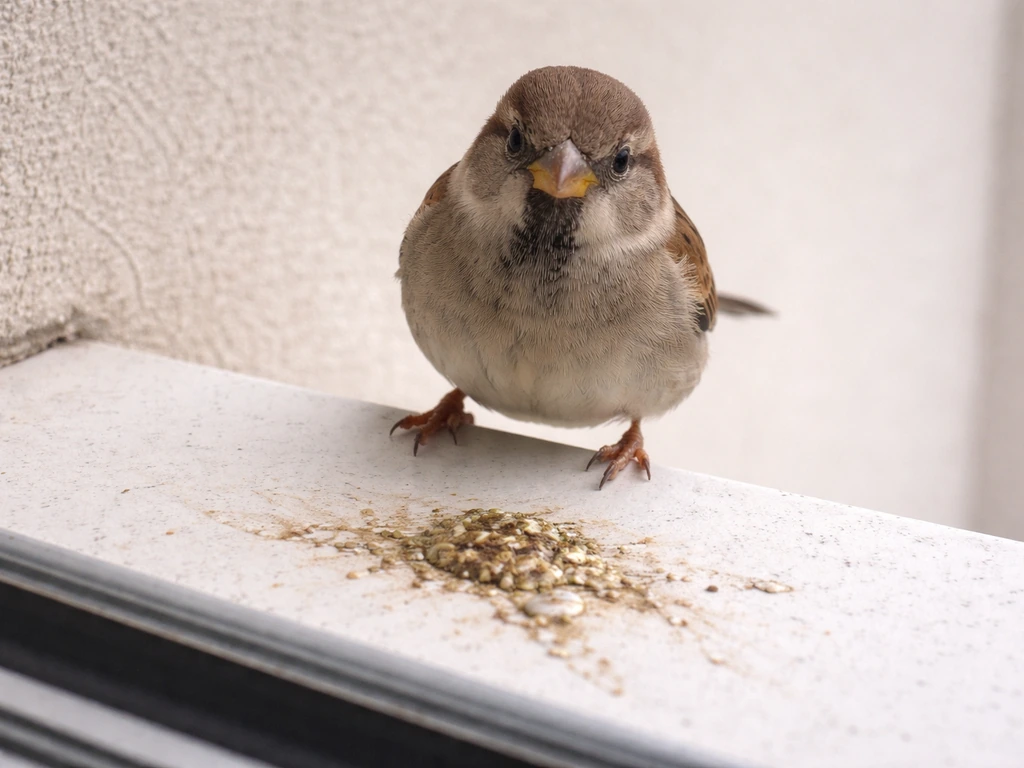
Which meaning applies depends entirely on context, but knowing both lets you decode the phrase whether you spot it in a novel, hear it in conversation, or are staring at a pile of pigeon droppings on your balcony wondering what to do next. The CDC’s guidance on handling droppings emphasizes that birds and bird waste can create an unclean situation and odor risk, so the safest approach is to manage droppings carefully [unclean mess, waste, or odor](https://www. cdc. gov/healthy-pets/about/birds.
html).
What "foul" actually means in plain English
"Foul" as an adjective covers two closely related but distinct ideas. The first is sensory: something that is extremely unpleasant to smell, see, or touch. Think "foul odor," "foul water," or "foul-smelling droppings. " The second is moral: something that is corrupt, offensive, or wrong in character.
Both senses have been part of English for a very long time, tracing back to roots tied to stink, putrescence, and filth. The two meanings bleed into each other easily, which is exactly why "foul bird" is such a versatile phrase. If you want the farrow bird meaning specifically, it helps to treat it as a variant phrase that relies on the same “foul” symbolism and context cues foul bird.
It can describe a physically repulsive bird literally fouling its surroundings, or it can label a person metaphorically as someone rotten in character.
It is also worth noting that "foul" is a completely different word from "fowl," which simply means a domesticated bird like a chicken or turkey. Understanding the fowl bird meaning also helps you notice whether a speaker is talking about a dirty situation or a moral accusation. The two sound identical when spoken, which trips people up constantly. If you are reading about fowl (poultry), the spelling tells you it is about a bird species. If you are reading about something foul (unpleasant or corrupt), you are in entirely different territory.
Literal vs. figurative: what "foul bird" is really saying
In a literal sense, a foul bird is simply a bird that creates an unpleasant, dirty, or smelly situation. This comes up most naturally when describing birds whose droppings accumulate in large quantities, birds that scavenge waste or carrion, or birds living in overcrowded, unsanitary conditions. A rooftop covered in pigeon droppings is textbook "foul" territory. The phrasing shows up in practical contexts: pest control guides, sanitation discussions, and anyone who has ever parked under a starling roost.
In a figurative sense, "foul bird" does something more pointed. It uses the idea of a dirty, contaminating bird as a moral label for a person or behavior. The most famous version of this is the proverb: "It is a foul bird that defiles its own nest." John Ruskin used it. Robert Louis Stevenson used it. Shakespeare's era had already absorbed it into common speech. The proverb condemns someone who betrays or harms their own family, community, or group. The image is visceral and memorable: a bird filthy enough to soil the very place it lives. That moral dimension is what gives the phrase its staying power across centuries of English writing.
How negative bird symbolism works in folklore and language
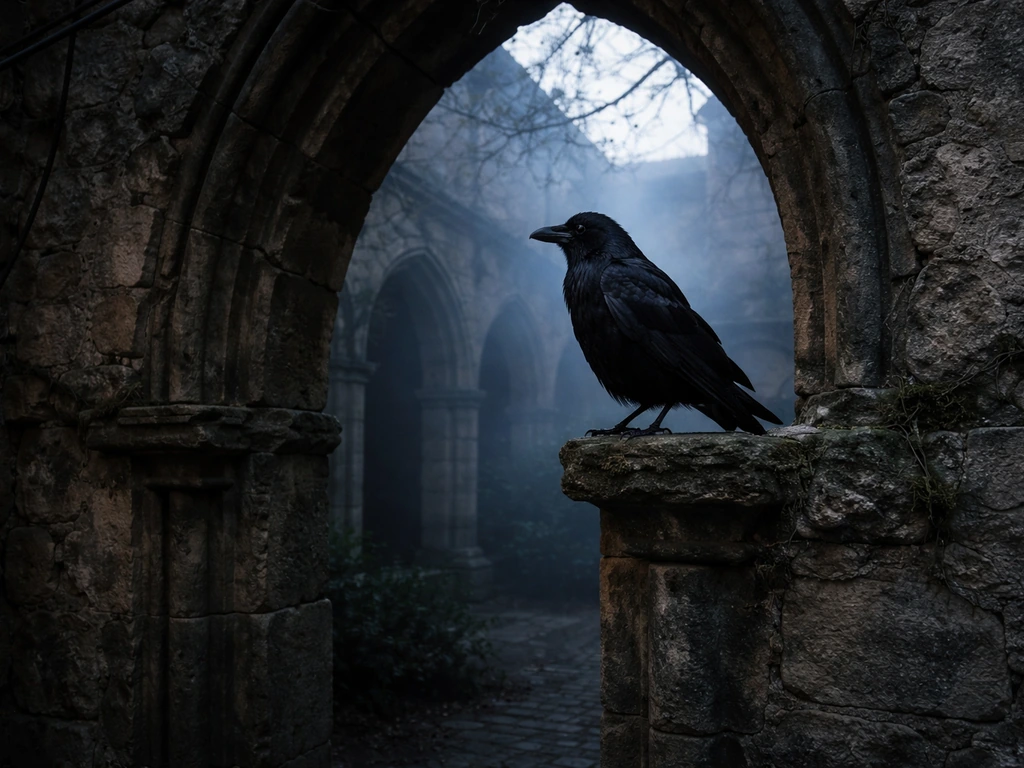
Birds have long carried symbolic weight in human culture, and the negative end of that spectrum is rich. In many folklore traditions, certain birds are associated with bad omens, death, or moral corruption. Ravens, crows, and vultures are the obvious examples in Western traditions, but the "foul" framing is interesting because it is not really about a specific species. It is about the quality of corruption or uncleanness attached to the bird, whatever it happens to be.
The proverb about fouling one's own nest taps into something older: the near-universal cultural respect for the nest as a place of origin, safety, and community. A bird that pollutes that space is not just physically disgusting, it is symbolically monstrous. That is why the proverb works so well as a moral accusation. The language of uncleanliness and contamination transfers directly onto ideas of betrayal and corruption. You can find versions of this framing across English literature, from medieval morality texts to Victorian novels, and it still lands cleanly in modern speech.
This symbolic pairing of birds and moral uncleanliness also shows up in biblical and religious contexts, where certain birds were designated as "unclean" and their presence or behavior carried spiritual meaning. The idea that a bird can be a vessel for something spiritually or morally wrong is ancient and widespread. It connects loosely to the symbolism explored in discussions of feral birds, ill-omened flocks, and the broader cultural habit of reading bird behavior as a sign of something beyond the physical world. That same idea shows up in how people interpret the meaning of feral bird behavior in language and folklore feral birds.
If you are actually dealing with a dirty or smelly bird situation
Sometimes the search for "foul meaning bird" is not about idioms at all. It is about a very real pile of droppings on a window ledge, a car, a patio, or inside a building. That is a legitimate practical concern, and it deserves a straight answer. Bird droppings can carry pathogens including Salmonella, E.
coli, Campylobacter, and Cryptosporidium. Dried droppings can also harbor fungal spores (Histoplasma capsulatum, which causes histoplasmosis) and bacterial particles linked to psittacosis. CDC notes that psittacosis infection can happen when people [breathe dust containing dried bird secretions or droppings](https://www. cdc.
gov/psittacosis/about/index. html), since the droppings and secretions release dust as they dry. The risk comes primarily when dried waste is disturbed and dust becomes airborne, so how you clean matters as much as whether you clean.
For a small amount of fresh droppings on a hard surface, the approach is straightforward: wet the area first, wipe it up with disposable materials, bag it, and wash your hands thoroughly. Do not wipe dry droppings with a dry cloth and consider the job done. That is the one move most likely to aerosolize the very particles you want to avoid.
How to clean bird waste safely
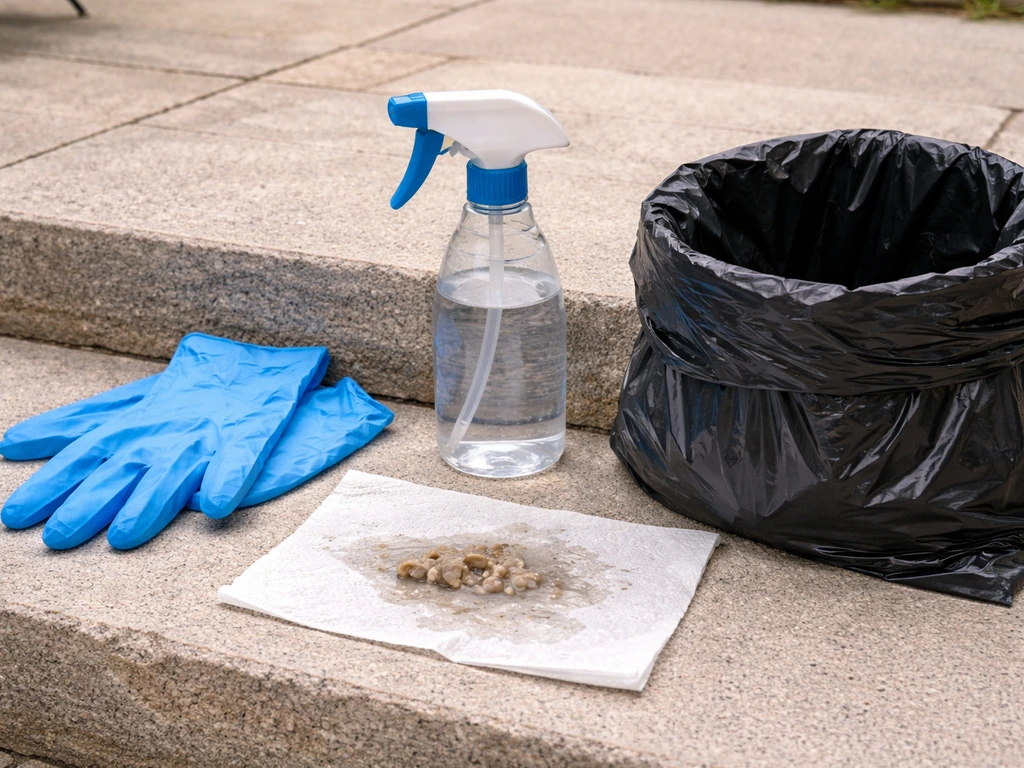
The core rule from both CDC and occupational health guidelines is simple: always wet before you clean. Dry sweeping, dry vacuuming, or dry shoveling droppings is the wrong call every time. The dust that lifts off dried waste is what carries the real health risk. Here is the safe sequence:
- Put on gloves (disposable nitrile or rubber) before touching anything. For larger accumulations, add eye protection and a respirator, at minimum an N95.
- Thoroughly soak the droppings with water or a disinfectant solution. Let it sit long enough to fully wet the material so nothing is dry and loose.
- Clean using a mop, sponge, or rag that is itself soaked in disinfectant. Do not use dry tools.
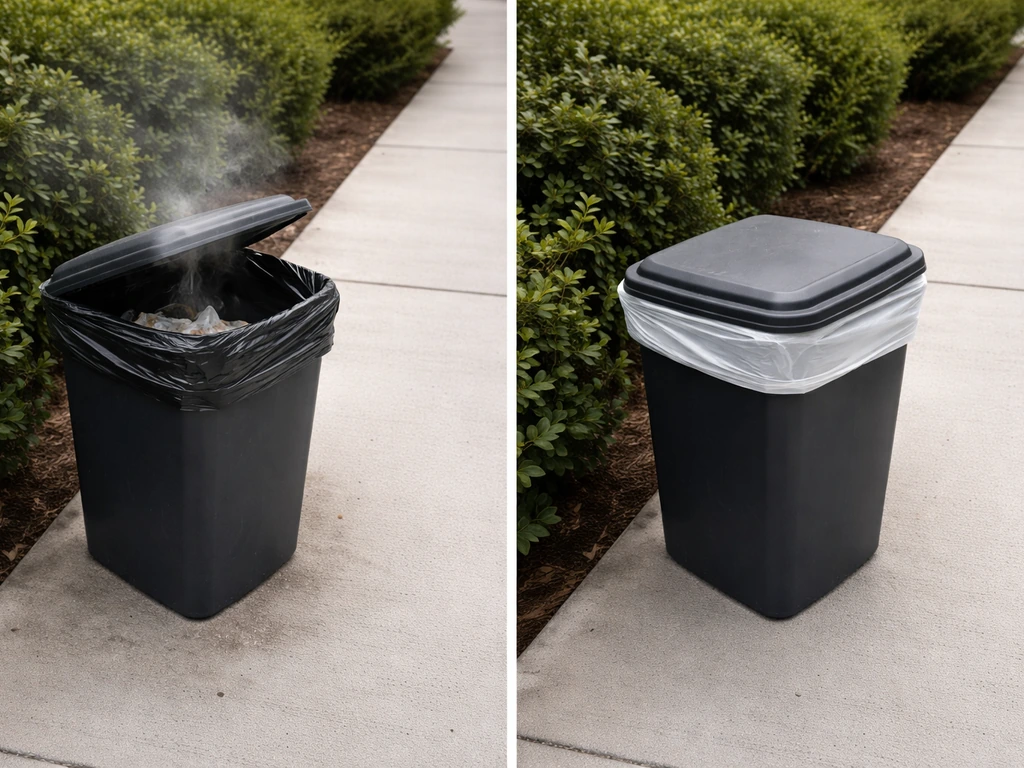
- Collect the waste in a sealed, secure bag or container and dispose of it immediately. Do not leave it open or sitting.
- Wash your hands with soap and water for at least 20 seconds after removing gloves. Do not touch your face during the process.
For heavier accumulations inside buildings, enclosed spaces, attics, or ventilation systems, the PPE requirements go up. CDC and NIOSH guidance for histoplasmosis cleanup calls for gloves, eye protection, and a respirator with HEPA filtration. Coveralls and boot covers are recommended when the contamination is extensive. If you are looking at what appears to be weeks or months of accumulated droppings in a confined indoor space, that is not a solo weekend project. That is a situation requiring proper equipment and ideally professional handling.
Preventing future foul bird problems and knowing when to escalate
The most effective approach to foul bird problems is preventing the accumulation in the first place. CDC and NIOSH frame this as the primary control: if droppings never build up, the cleanup risk never materializes. For outdoor spaces, that means making roosting surfaces less attractive. Bird spikes, sloped ledge coverings, and reflective deterrents can all discourage roosting on specific surfaces. Netting can exclude birds from larger areas like balconies or warehouse loading bays entirely.
Routine cleaning on a short cycle is far safer than occasional major cleanups. Small amounts of fresh droppings are far easier and lower-risk to remove than large dried accumulations. If you own a pet bird, daily cleaning of the cage and bowls reduces both health risk and odor buildup significantly, and CDC guidance on psittacosis prevention specifically endorses this routine approach.
Know when to call in help. Escalate to a professional pest control service or your building's environmental health and safety contact when you see any of the following:
- Large accumulations of droppings inside a building, especially in attics, crawl spaces, or ventilation areas
- A strong, persistent ammonia-like odor coming from an area with suspected droppings
- Evidence of a significant roosting colony (dozens of birds or more) returning repeatedly to the same spot
- Droppings in food preparation or storage areas, which may trigger regulatory requirements
- Any situation where a member of your household has a compromised immune system, since the disease risks from droppings are meaningfully higher for immunocompromised individuals
For protected bird species, contact your local wildlife agency before taking any deterrent or exclusion action. Many migratory birds and their active nests are protected under federal law in the United States, and removing or disturbing them during nesting season can carry legal consequences. Animal control or wildlife management services can advise on what is and is not permitted in your specific situation.
Quick rules for reading "foul" in bird contexts
| Context | What "foul" means | Example |
|---|---|---|
| Everyday speech about smell or mess | Literally unpleasant, dirty, or stinking | "The ledge was covered in foul-smelling droppings" |
| Proverb or moral condemnation | Morally corrupt, betraying one's own group | "It's a foul bird that defiles its own nest" |
| Literature or folklore | Ominous, tainted, or associated with bad outcomes | A foul bird as a symbol of ill omen or moral rot |
| Pest or sanitation context | Contaminating, creating unhygienic conditions | A foul bird problem requiring professional cleanup |
Whether you landed here trying to decode a phrase from a book, parse something someone said to you, or figure out what to do about the birds making a mess of your property, the word "foul" is doing the same basic work in all those cases: pointing at something contaminating, corrupting, or offensive, whether that is a physical smell or a moral failure. If you are also wondering what a flock of bird means in language, context and species details are what will tell you the interpretation flock of bird meaning. The proverb and the practical problem are two sides of the same coin, and now you have both covered.
FAQ
Does “foul bird” always mean the proverb, or can it be used literally?
It can be either. In everyday conversation it is usually literal (smelly or dirty droppings), and in moral criticism it reads like the proverb (a person seen as betraying their own group). If the speaker is discussing behavior, character, or loyalty, expect the figurative meaning, not the bird’s smell.
How can I tell whether someone meant “foul” or “fowl” in a spoken sentence?
Listen for whether the topic is poultry or wrongdoing. “Fowl” will almost always come with food, farming, or cooking terms (chicken, turkey, eggs). “Foul” will pair with smells, contamination, cleanliness, or character language (defiles, corrupt, rotten). If you can’t be sure, ask for the spelling or the surrounding context.
Is “foul bird” ever a specific species name?
Usually no. It is a descriptive phrase, not a formal species label. You might see it applied to pigeons, starlings, or other nuisance birds because they create droppings, but the phrase is about the “foulness” of the situation, not a particular biological group.
What’s the difference between “foul bird” and “foul” used alone?
“Foul” alone can describe either odor/filth or immorality, but “foul bird” adds a bird-image cue. That cue can shift the reader toward droppings, roosting, and sanitation, or toward betrayal symbolism, depending on the sentence’s other details.
If I see droppings outside, is it still a health risk like indoor cleanup is?
Yes, but the risk is typically lower outdoors because dust disperses quickly and enclosed-space fungal buildup is less likely. The same core rule applies, avoid disturbing dried droppings, and wet first if you need to move or scrape material.
Can I use disinfectant right after wetting and wiping, or does it make dust worse?
Wet first, then remove the droppings. After removal, you can disinfect the surface if appropriate. Avoid spraying disinfectant into a dry area before you’ve wetted and collected debris, because over-spraying can spread contamination before you’ve captured it.
What should I do if the droppings are on car paint or a window, not just a flat surface?
Start with gentle wetting to soften residue, then wipe with disposable materials. For car paint, avoid aggressive scrubbing that can scratch clear coat, and consider washing the area afterward with regular car shampoo and water. For windows, wet removal plus standard glass cleaner is usually safer than scraping.
Is it okay to hose droppings into a gutter or drain?
Often it is better than dry disturbance, but be careful. Use water to keep material from aerosolizing, collect what you can, and don’t rely on runoff if it will spread waste into other areas you will later disturb. If the accumulation is heavy, plan for controlled cleanup and proper disposal rather than just flushing.
How do I know when “weeks or months indoors” crosses the line into professional cleanup?
If you suspect extensive, dried buildup in a confined space (attic, ventilation routes, crawl spaces) or you see heavy staining plus dust, treat it as a non-DIY project. Another red flag is if you would need to dry-scrape, vacuum, or work above shoulder level in a tight area, those tasks increase dust generation.
Do bird spikes and nets work immediately, or do I need to clean first?
Clean up before installing controls when possible, but do not disturb active nests. For active nesting season or protected birds, contact wildlife or building management first. After cleanup, deterrents work best when they are installed on specific roost points quickly enough that birds do not re-establish there.
If I’m dealing with a protected bird, what’s the safest first step?
Don’t move nests, eggs, or droppings yourself. Start by contacting your local wildlife agency or building environmental health contact to confirm what is allowed in your location and season, then ask for species-specific exclusion timing.