
blank" rel="noopener noreferrer">A "gallows bird" is an informal, archaic insult for a person considered deserving of hanging. It does not refer to any real bird species. The phrase labels someone as a scoundrel, blank" rel="noopener noreferrer">habitual criminal, or outright villain, essentially saying they belong on the gallows. Every major dictionary, from Merriam-Webster to Collins, lands on the same core definition: a person who deserves to be hanged.
Gallows Bird Meaning: Idiom Origins, Uses, and Examples

Marcus Blackwell
15 Jun 2026
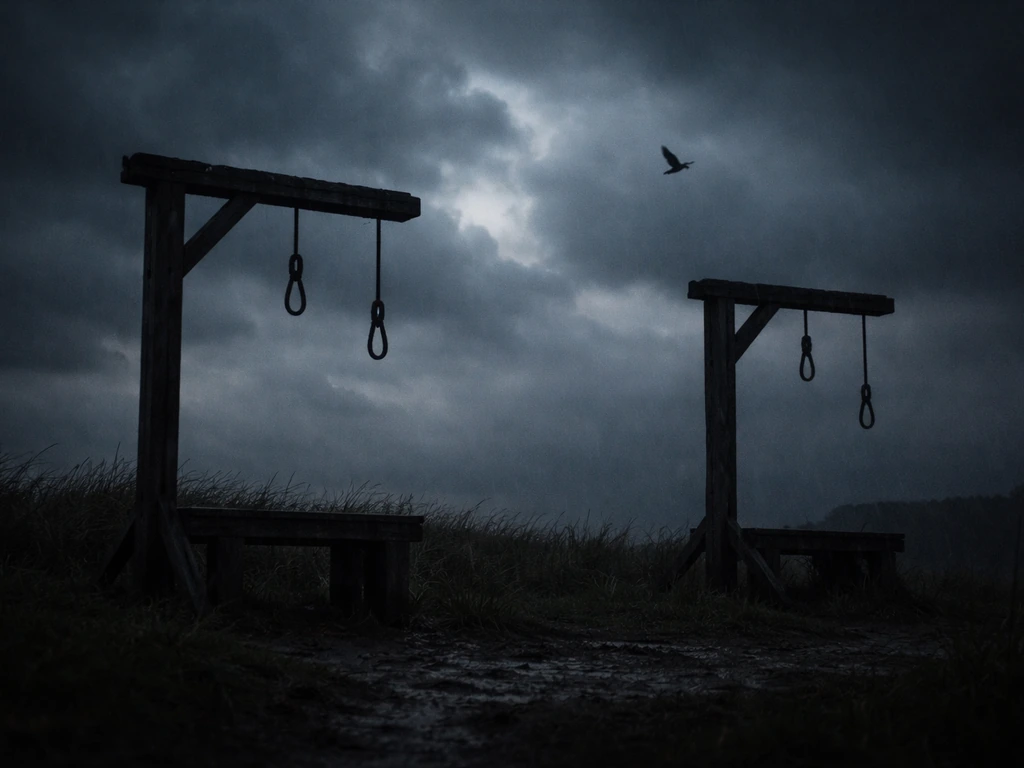
What "gallows bird" actually means and what it implies
The phrase carries a heavy load of condemnation. When someone called you a gallows bird, they were not just insulting you, they were pronouncing a kind of social verdict. The implication is not simply that you did something bad, but that you are the kind of person whose fate is already sealed, someone marked for punishment, destined for the rope.
The 1893 slang dictionary "Slang and Its Analogues" captures this range well. It glosses gallows bird as: a habitual criminal, a vagabond or scoundrel, a "son of the rope," and even, in a grimmer second sense, a corpse hanging from the gallows. The English Dialect Dictionary adds the vivid paraphrase "one ripe for the gallows." Together, these sources show that the phrase spans a spectrum from "troublemaker who ought to be punished" to "condemned person already as good as dead."
In modern thesaurus groupings, Merriam-Webster clusters gallows bird alongside words like villain, sinner, evildoer, and convict. That placement tells you everything about its connotative weight. This is not a neutral description. It is a moral judgment, delivered with theatrical flair.
Where the phrase came from: gallows imagery meets the word "bird"
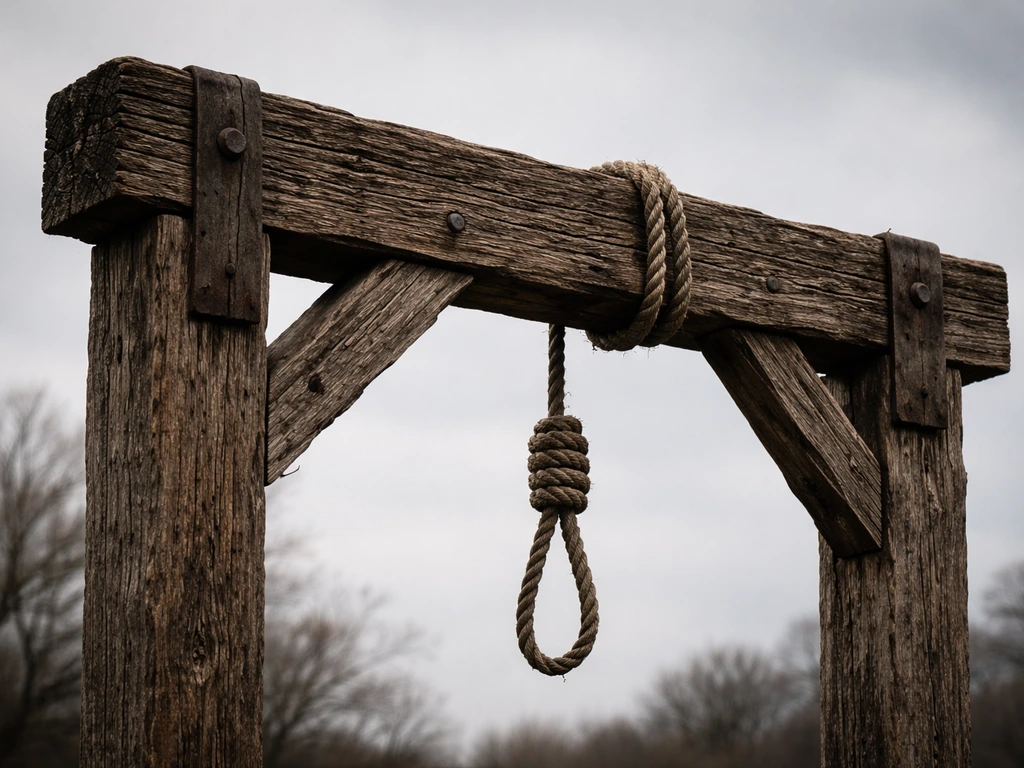
The term first appeared in English between 1775 and 1785, with Merriam-Webster's earliest confirmed use dated to around 1785. That timing matters: it puts the phrase squarely in the era of public hangings, when the gallows was a very real fixture of civic life in Britain and its colonies. Execution by hanging was not just a punishment, it was a public spectacle, and language built around the gallows carried an immediate, visceral resonance that it simply does not carry today.
The word "bird" here is not literal. It is an idiomatic label, a way of categorizing a person the same way you might say someone is a "jailbird" or a "rare bird. You might also be looking for the meaning of the similar-sounding expression “commodore bird,” which is different from this gallows-based insult commodore bird meaning. " In older English slang, "bird" was commonly used to describe a person of a particular type or character. Wiktionary makes this explicit, noting that in "gallows bird," the word bird functions as an idiomatic shorthand inside a fixed phrase rather than as a reference to any actual animal.
The construction also has clear parallels in other European languages, which suggests the idea traveled across cultures. German has "Galgenvogel" (literally gallows-fowl or gallows-bird), and French has "gibier de potence," which translates roughly as "gallows game" or rope-fodder. These equivalents all share the same logic: a metaphorical creature whose natural habitat is the execution site. The phrase was never about birds at all; it was always about the gallows and the people associated with it.
How the phrase is used: idioms, slang, and real sentences
In practice, gallows bird was deployed as a colorful, pointed insult, usually in dialogue or direct address. Think of it as the 18th and 19th century equivalent of calling someone a lowlife. It was theatrical, dramatic, and often appeared when a speaker wanted to condemn someone with a kind of grim finality.
Here are some attested examples from literature and periodicals that show the phrase in action:
- Rafael Sabatini, "Captain Blood": "my fine gallows bird" (used as a theatrical condemnation insult directed at a character)
- Blackwood's Edinburgh Magazine, September 1847: "somewhat of a gallows bird" (used in passing to characterize a morally dubious person)
- Herbert Strang, "In Clive's Command": "What could I expect with a gallows bird like you aboard?" (used in dialogue to label a person as deserving hanging)
- Bernhard Severin Ingemann, "King Eric and the Outlaws": "surely none other than that gallows bird" (used to identify a known criminal or villain)
- Esther Hoskins Forbes, "Johnny Tremain" (1943): cited by Wiktionary as a later literary example of the phrase used as an insult
You could also reasonably use it in a constructed sentence today, though you would be reaching for deliberate archaic flavor: "That gallows bird has been swindling people in this town for years." The phrase still works, but it reads as consciously old-fashioned, which is often exactly why writers reach for it.
Gallows bird in literature and folklore
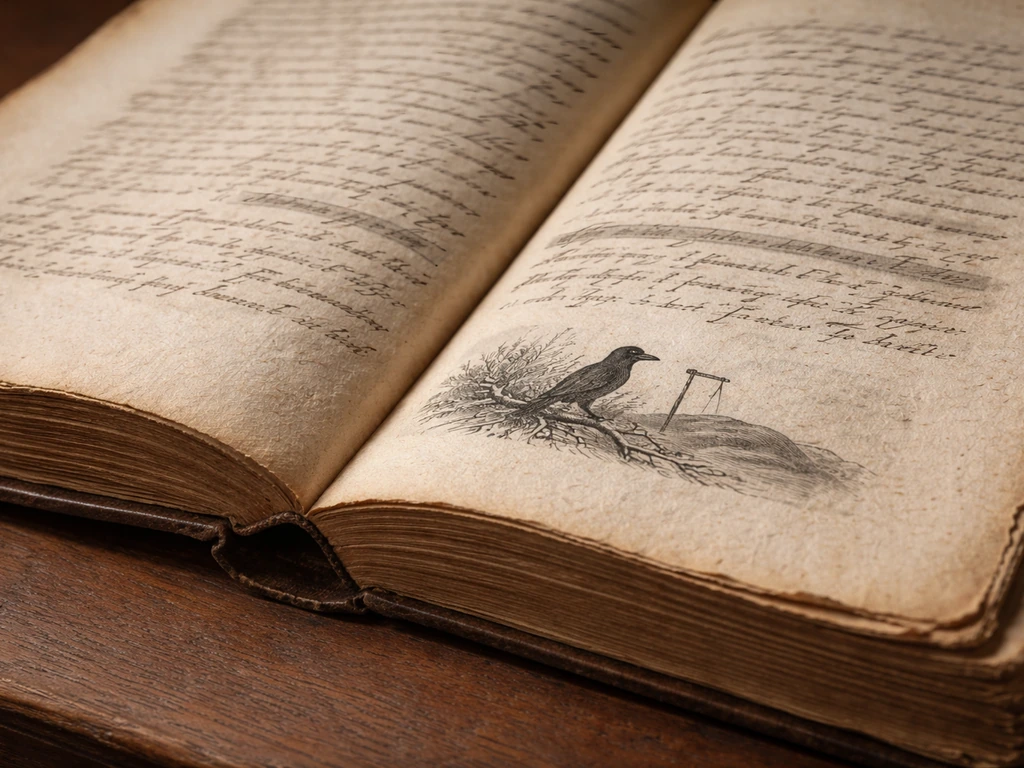
The phrase shows up most naturally in historical fiction and 18th to 19th century literature, which makes sense given its origin window. Authors writing about pirates, highwaymen, outlaws, and criminal underworlds found gallows bird useful precisely because it packed a judgment into two words. Rafael Sabatini's pirate adventure "Captain Blood" is a perfect example: the phrase fits a world where the gallows is never far away and characters regularly size each other up as candidates for the rope.
Beyond prose, there is a cultural-visual dimension worth noting. A 19th-century illustrated work called "The Comic Natural History of the Human Race" included a captioned illustration labeled "Gallows Bird," treating the figure as a recognizable human type, much the way cartoonists might draw a stock villain. This shows the phrase was not just literary slang but had enough cultural currency to become a shorthand character archetype.
The gallows itself carries deep symbolic weight in folklore and cultural history. In English history, places like Newgate and Tyburn were synonymous with public execution, and a related term, "Newgate bird," appears in the same slang dictionaries alongside gallows bird. Both phrases draw on the idea of a person so associated with crime and punishment that they belong to those infamous sites the way birds belong to trees. If you have come across the term "gaol bird" in similar contexts, it works on exactly the same logic: someone so habituated to imprisonment or criminal life that the jail is their natural home.
Common confusions: similar phrases that mean something different
A few phrases look or sound similar to gallows bird but point in different directions. It is worth sorting them out before you interpret something incorrectly.
| Phrase | What it actually means | Key difference |
|---|---|---|
| Gallows bird | A person deserving of hanging; a condemned criminal or villain | Refers to a person, not a real bird; archaic insult |
| Gallows humor | Dark jokes about death or grim situations | About a style of comedy, not a person's character |
| Gaol bird / Jailbird | A person who has spent time in prison; a habitual offender | Emphasizes imprisonment over execution; slightly broader usage |
| Bird of ill omen | A bird (often a raven or owl) associated with bad luck or death in folklore | Can refer to a literal bird; symbolic of misfortune rather than condemnation |
| Gallows tree | The gallows itself as a structure or metaphor | Refers to the object, not a person |
| Gander (figurative) | A look or glance ("take a gander"); or a male goose | Completely unrelated to condemned persons or execution |
The most common mix-up is probably with "bird of ill omen," which does involve an actual bird and carries symbolic meaning, but the symbolism is about foreboding and misfortune rather than personal condemnation. If you are on a site that covers bird symbolism and you encounter these terms side by side, remember: gallows bird is about the human figure, not the bird.
It is also worth noting that some regional terms, like "gale bird" or "gaulin bird," are genuine folk names for specific bird species in Caribbean and regional English traditions. It is also worth noting that some regional terms, like "gale bird" or "gaulin bird," are genuine folk names for specific bird species in Caribbean and regional English traditions gaulin bird meaning.
Gale bird meaning, by contrast, refers to a real folk name for a specific bird species in Caribbean and regional English traditions. People sometimes mix these up with gallows bird, but “gale bird” and similar terms are literal names for actual species. These are entirely literal bird names and have no connection to execution imagery or criminal slang. The word "bird" in those names is always pointing to an actual animal.
How to figure out which meaning applies to what you saw

If you encountered "gallows bird" somewhere and are trying to nail down the exact sense being used, here is how to work through it practically.
- Check the genre and time period. If the phrase appears in historical fiction, 18th or 19th century literature, or anything set in a period when public hangings were common, the primary meaning applies: a person judged deserving of hanging. The phrase is at home in pirate stories, Regency-era novels, and Victorian periodicals.
- Look at who is saying it and to whom. Gallows bird is almost always used as a direct insult or condemnation aimed at a person. If the phrase is being directed at a character, it is calling them a villain or criminal worthy of execution.
- Notice the tone. The phrase tends to appear in contexts with theatrical or melodramatic energy. If the surrounding prose is colorful and dramatic, gallows bird is doing its full insult job. If the context is neutral or descriptive, double-check that you are not misreading a different term.
- Consider whether a literal bird is involved anywhere nearby. If the surrounding text discusses actual birds, their behavior, or ornithology, step back and re-read: gallows bird does not refer to a real species. If there is no literal bird context, you are almost certainly looking at the idiom.
- If you found it in a modern source, check the author's intent. A contemporary writer using gallows bird is almost certainly doing so deliberately, reaching for archaic flavor to evoke a specific era or register. A blog post, historical novel, or period drama script would all use it this way.
- Search the specific author and work. If you saw it in a book, look up that author's era and genre. Rafael Sabatini, for example, wrote swashbuckling historical adventures: gallows bird in his work means exactly what the dictionaries say. Context from the source almost always confirms the meaning within seconds.
One last practical note: if you are not sure whether you saw "gallows bird" or something that sounds similar, try searching the exact phrase with quotation marks in a dictionary database. Collins, Merriam-Webster, and Dictionary.com all have entries for it. The definition is consistent across all of them, which means you can verify quickly. When a phrase has been in continuous use since 1775 and three major dictionaries agree on what it means, the interpretation is not really in doubt, only the specific flavor and context of its use in a given text.
FAQ
Is “gallows bird” ever used in a neutral or humorous way?
Usually no. The phrase is a direct moral condemnation, equivalent in force to calling someone a criminal scoundrel who deserves severe punishment. If it sounds playful in a modern text, that effect is typically coming from the archaic performance style, not from a softened meaning.
Does “gallows bird” literally mean a bird associated with executions?
No. In the insult, “bird” is idiomatic shorthand inside the fixed phrase, like “jailbird” for a person. It does not point to an animal, and there is no real bird species called “gallows bird.”
What’s the difference between “gallows bird” and “Newgate bird” or “gaol bird”?
All three are slang labels built on the same metaphor, but they anchor to different sites. “Newgate bird” connects to the Newgate prison area, while “gaol bird” ties to imprisonment in general. “Gallows bird” is specifically about hanging and the execution verdict.
If I see “bird of ill omen,” is that the same kind of insult?
Not exactly. “Bird of ill omen” is about bad luck or foreboding tied to an omen concept, it is not a statement that a particular person deserves hanging. “Gallows bird” targets a person’s character and fate.
How should I read “gallows bird” when it appears as a description of a dead body?
Some historical slang glosses include a darker second sense, essentially treating a corpse hanging from the gallows as “the gallows bird.” In modern interpretation, you can assume the human-condemnation meaning unless the surrounding text clearly describes the execution aftermath.
Is “gallows bird” appropriate to use in modern speech or writing?
It is understandable as literary, historical, or stylized dialogue, but it is still a harsh, dehumanizing insult. In contemporary casual conversation, it is likely to sound needlessly aggressive or archaic, so if you use it, keep it clearly framed as period voice or characterization.
How can I tell which sense a particular text intends?
Look for execution-stage clues. If the sentence discusses a criminal persona, scoundrel behavior, or deserving punishment, use the standard “person who deserves to be hanged” meaning. If it mentions the body, hanging, or a rope directly, the text may be leaning on that gruesome extended gloss.
What are common mix-ups with similar-sounding “bird” terms?
The biggest mix-ups are with literal bird folk names like “gale bird” or “gaulin bird,” which refer to actual species in Caribbean and regional English traditions. Another common confusion is with omen symbolism terms like “bird of ill omen,” which are about misfortune rather than personal criminal judgment.
What’s a safe way to verify the phrase when I’m unsure I’m reading it correctly?
Search the exact wording with quotation marks (for example, “gallows bird”) in a dictionary database, then compare definitions. When multiple major dictionaries align on the same core meaning, it usually means the intended sense is stable, and any difference is only in tone or historical flavor.
Next Articles
Gaol Bird Meaning: What People Mean and Where It Shows Up
Unpack gaol bird meaning: likely spelling variants, which bird people mean, and its folklore or figurative symbolism.
Munster Bird Meaning: Folklore, Symbolism, and How to Verify
Meaning of Munster bird searches: folklore, symbolism, idioms, spelling variants, and quick ways to verify the reference
Martin Bird Meaning: Symbolism, Folklore, and Signs
Learn martin bird meaning with symbolism, folklore, and how to identify the right species for omens and dreams.