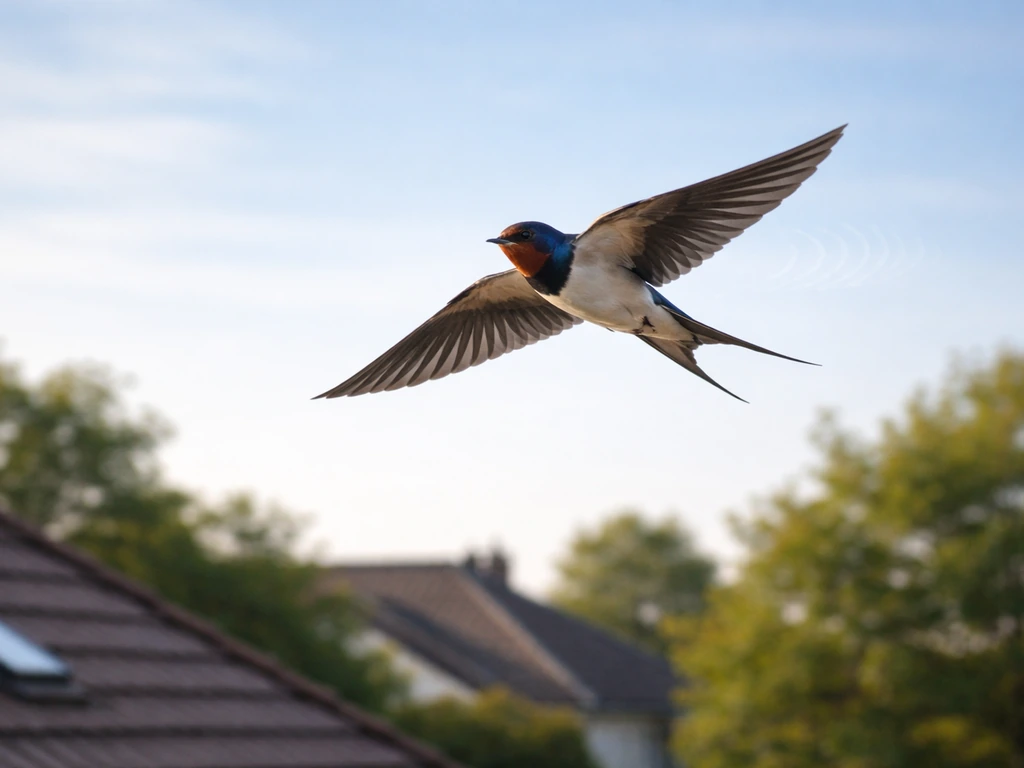
In Chinese, the swallow is called 燕子 (yànzi) and it carries a cluster of positive meanings that have held remarkably steady across two thousand years of poetry, folklore, and daily life: spring's return, homecoming, household luck, fidelity between partners, youth, and family prosperity. Far from being an ominous bird, the swallow in Chinese culture is almost universally welcomed, literally and figuratively.
Swallow Bird Meaning in Chinese: Names, Symbols & Uses Guide

Marcus Blackwell
13 Jul 2026
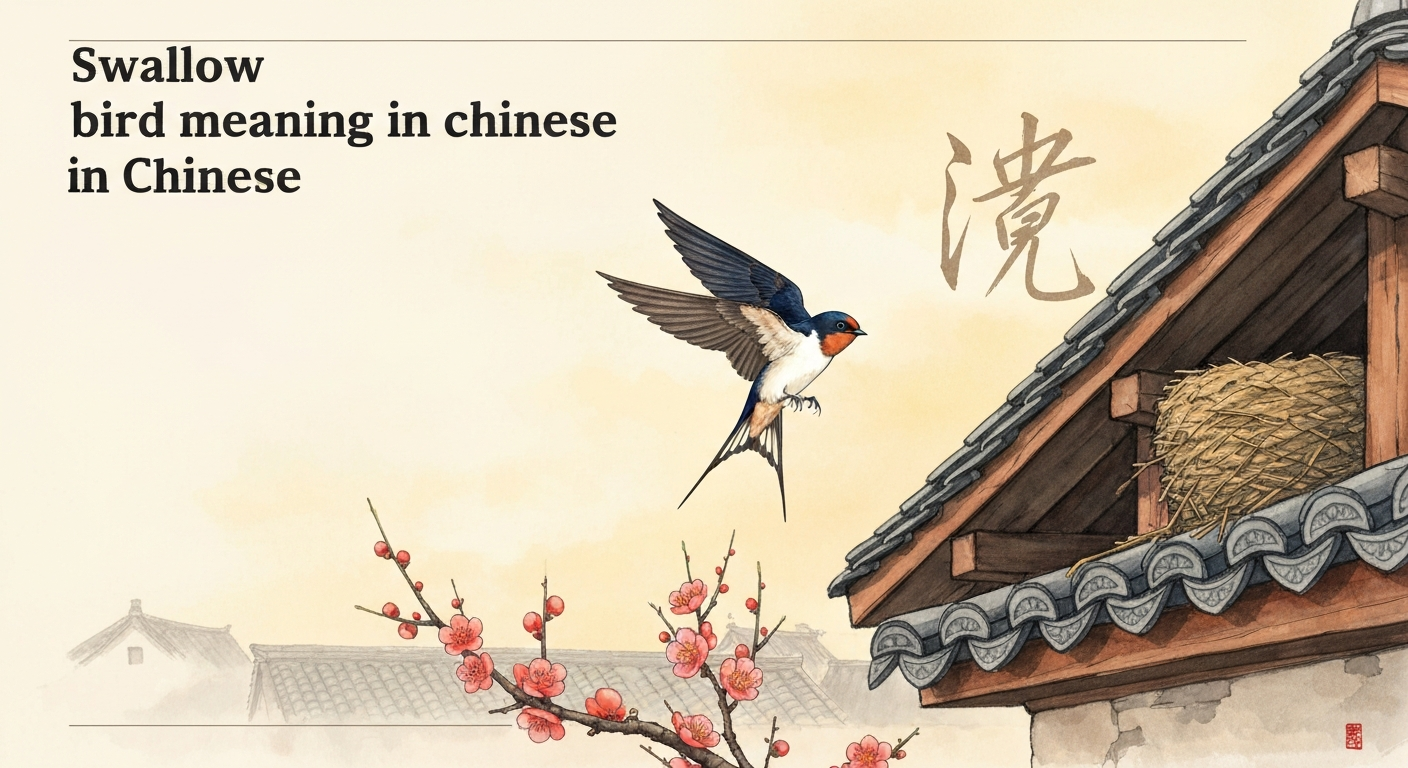
At a glance: what swallows mean in Chinese culture
The swallow occupies a warm, optimistic corner of Chinese symbolic life. When a swallow builds a nest under your eaves, folk tradition reads it as a sign that your household is peaceful and prosperous enough to attract good fortune. When classical poets wanted to signal that spring had arrived, they reached for the swallow. When they wanted to evoke the passage of time, the loyalty of old habits, or the gap between nobility and common life, the swallow was there too. That breadth, from cheerful spring herald to melancholy historical witness, makes the 燕子 one of the most versatile bird symbols in the Chinese literary imagination.
- Standard Mandarin name: 燕子 (yànzi)
- Core symbolic meanings: spring arrival, homecoming, conjugal fidelity, household luck, fertility and prosperity, youth and vitality
- Primary literary register: classical poetry (Tang and Song dynasties), chengyu (set-phrase idioms), and agricultural proverbs
- Household folk belief: nesting swallows are auspicious; disturbing a nest invites misfortune
- Most commonly referenced species: 家燕, the Barn Swallow (Hirundo rustica)
- Tone of symbolism: overwhelmingly positive; associations with death or ill omen are rare and not a mainstream Chinese tradition
Chinese names, characters and pronunciation
The core character is 燕 (yàn). It is a 多音字, meaning it has more than one reading depending on context. When it refers to the bird or bird-related words, it is pronounced yàn (fourth tone). In other uses, as a surname, as a place-name for the ancient state of Yan in northern China, or in the word for a banquet (燕 = yān, first tone), the pronunciation shifts. This is worth knowing if you are a language learner, because the same character can mean a swallow or a feast depending purely on tone and context.
The everyday modern Mandarin word for swallows as a group is 燕子 (yànzi), where 子 carries a neutral tone. Wiktionary, 燕子 (includes Mandarin and Cantonese readings) records Mandarin yànzi (with 子 commonly neutral) and Cantonese jin3 zi2 (Jyutping) Wiktionary — 燕子 (includes Mandarin and Cantonese readings). This is the form you will hear in conversation, see in children's books, and encounter in most modern writing. In formal zoological or field-guide contexts, specific species get their own compound names (see the species section below). In Cantonese the word is pronounced jin3 zi2 (Jyutping romanisation). Regional varieties add further colour: in Minnan/Taiwanese Hokkien, for instance, the bird is often called 燕仔.
| Form | Characters | Pinyin / Pronunciation | Usage context |
|---|---|---|---|
| Standard noun (bird) | 燕子 | yànzi | Everyday Mandarin speech and writing |
| Standalone character (bird sense) | 燕 | yàn (4th tone) | Classical poetry, compounds, species names |
| Standalone character (other senses) | 燕 | yān (1st tone) | Surname, ancient place-name (Yan), banquet |
| Cantonese | 燕子 | jin3 zi2 (Jyutping) | Cantonese speech |
| Minnan / Hokkien colloquial | 燕仔 | ìnn-á (approx.) | Southern Min regional usage |
| Zhuyin (Mandarin phonetic) | 燕子 | ㄧㄢˋ ˙ㄗ | Taiwanese standard pronunciation notation |
Which swallows are actually being talked about
When Chinese texts, classical or modern, say 燕子, they most often have the Barn Swallow in mind. The Barn Swallow (Hirundo rustica) is listed in Chinese bird checklists and field guides as 家燕 (jiā yàn), literally 'house swallow', which already tells you something about its cultural role: this is the bird that nests in rafters, under eaves, and inside barns, living alongside humans through the breeding season. It is widely distributed across China, migratory, and unmistakable with its deep-blue back, rufous-orange throat, and deeply forked tail. Its IUCN status is Least Concern globally, reflecting just how adaptable and numerous it remains.
Two other species frequently appear under the 燕子 umbrella in Chinese life and literature. The Red-rumped Swallow (Cecropis daurica) is called 金腰燕 (jīn yāo yàn), meaning 'golden-waisted swallow', named for its pale rump. It also nests in buildings and was recorded in historical materia medica texts under folk names including 胡燕, where its nests and eggs were noted as separate from those of the 家燕. The Sand Martin or Bank Swallow (Riparia riparia) is known as 灰沙燕 (huī shā yàn) or 崖沙燕, a colonial nester in riverbanks and cliffs. In everyday non-specialist speech, all of these are simply '燕子', the folk taxonomy is loose, the symbolic weight applies to all of them.
The core symbolic meanings and where they come from
Spring and seasonal return
The most fundamental symbolic association is the simplest: swallows arrive in spring. Because Barn Swallows are long-distance migrants, their reappearance each year in the Chinese agricultural heartland was a reliable seasonal signal, noted in the traditional lunisolar calendar. Classical poetry latched on to this with enthusiasm. The Song dynasty poet Yan Shu (晏殊) opens his lyric 破阵子 with the line 燕子来时新社,梨花落后清明, 'The swallows come at the time of the spring sacrifice; the pear blossoms fall after Qingming.' In two images, he anchors the entire emotional texture of early spring: communal ritual, blossoming, and the annual return of the familiar bird. The swallow here is not just decoration; it is the calendar made visible.
Homecoming and loyalty to place
Barn Swallows return not just to the same region but, famously, to the same nest site year after year. Chinese folk culture noticed this and built a rich set of associations around it. The bird's annual return to 'its' household became a metaphor for loyalty, rootedness, and the instinct to come home. This is why swallows appear so often in poetry about parting, exile, and longing: the swallow's guaranteed return throws the human speaker's uncertain absence into painful relief. A migrant worker far from home, a scholar-official exiled to a distant posting, a bride moved to a new family's house, all could find something of their own story in the swallow that always finds its way back.
Household luck, fertility and prosperity
Folk belief across many Chinese regions holds that a pair of swallows choosing to nest in your home is a blessing. The popular saying 燕子不进苦寒门 ('swallows do not enter poor, cold households') or the variant 燕子不进愁家 ('swallows do not enter grieving households') encodes the belief that swallows select peaceful, warm, well-managed homes. Their presence therefore signals, and perhaps reinforces, a family's good standing and good fortune. Nests in the eaves are associated with children, fertility, and continued prosperity. Crucially, harming a swallow's nest is considered very bad luck, a folk caution that has probably done real ecological good for the species.
Conjugal fidelity and paired love
Swallows are socially monogamous, they form pair bonds and raise chicks together, and this visible partnership made them a natural symbol of conjugal fidelity and devoted partnership in Chinese poetry and art. The image of two swallows flying together or sharing a nest appears frequently in love poetry and on traditional decorative arts. It is worth noting, as a scientific aside, that modern ornithological research has found that Barn Swallows, while forming stable social pairs, also engage in extra-pair mating, so the biological reality is more complicated than the symbol suggests. See a PMC / peer‑reviewed synthesis on avian extra‑pair paternity (includes barn swallow studies) documenting that social monogamy often coexists with frequent extra‑pair paternity. The symbol, however, tracks the observed social behaviour: a committed, cooperative pair raising young together.
Youth, vitality and joy
Because swallows arrive with spring and depart before winter, they carry the energy of youth and the peak of the year. In literary usage, swallow imagery often evokes freshness, quickness, and pleasure, the light-bodied, fast-flying bird as an embodiment of vitality. The chengyu 燕語鶯聲 (yàn yǔ yīng shēng), literally 'swallow-speech, oriole-voice', is used to describe melodious, sweet-voiced young women, bundling together the two most celebrated spring songbirds to evoke youthful charm and pleasant sound.
Cultural sources: poetry, folklore, festivals and the farming calendar
The swallow's symbolic weight draws on several distinct cultural streams that reinforce each other. Classical shi and ci poetry (唐诗/宋词) is the most visible: Tang and Song dynasty poets used swallows in hundreds of poems, establishing a set of conventional associations that later writers inherited and varied. The agricultural calendar is the practical substrate: the traditional lunisolar calendar's 节气 (solar terms) system and the seasonal 社祭 (earth deity sacrifices) both coincided with swallow arrival, making the bird a living timekeeping device for farming communities.
Regional festivals and customs add further layers. In some areas, the first sighting of a swallow in spring was noted and treated as a kind of informal forecast for the year's weather and harvests. Local customs around not disturbing swallow nests have been documented in ethnographic accounts from multiple provinces. The bird also appears in traditional decorative arts, embroidery, porcelain, paper-cutting and New Year prints, nearly always in the company of spring flowers (particularly 梅花 plum blossom or 桃花 peach blossom), reinforcing its role as the living emblem of the new season.
Idioms, proverbs and poetic lines featuring swallows
Chinese has a rich inventory of set phrases involving 燕 and the compound 燕雀 (swallows-and-sparrows, used as a collective for small, ordinary birds). Here are the most important ones, with literal translations and the context that gives them meaning.
| Chinese | Pinyin | Literal translation | Actual meaning and source |
|---|---|---|---|
| 燕雀安知鸿鹄之志 | yàn què ān zhī hóng hú zhī zhì | 'How can swallows and sparrows know the ambitions of the great swan?' | Small, ordinary minds cannot understand great aspirations. From Sima Qian's Records of the Grand Historian (史记·陈涉世家), spoken by Chen She before leading the first major rebellion against the Qin dynasty. Still widely quoted today when someone is dismissed by those who cannot see the scale of their vision. |
| 燕雀处堂 | yàn què chǔ táng | 'Swallows and sparrows nest comfortably in the hall' | Being dangerously complacent, unaware of a looming threat. Sourced to the Kongcongzi (孔丛子). The birds are snug in the rafters while the house is about to catch fire — the image of oblivious comfort in the face of real danger. |
| 燕語鶯聲 | yàn yǔ yīng shēng | 'Swallow-speech, oriole-voice' | Describes sweet, melodious voices, typically of young women. A literary compliment invoking the two most celebrated spring birds. |
| 旧时王谢堂前燕,飞入寻常百姓家 | jiù shí wáng xiè táng qián yàn, fēi rù xúncháng bǎixìng jiā | 'The swallows that once graced the halls of Wang and Xie now fly into the homes of ordinary people' | From Liu Yuxi's (刘禹锡) Tang poem 乌衣巷 ('Black Gown Lane'). The swallows that nested in the mansions of two great aristocratic families of the Eastern Jin dynasty now nest in common houses — time has levelled all distinctions. One of the most quoted couplets in Chinese literary history for meditating on the rise and fall of dynasties. |
| 燕子来时新社,梨花落后清明 | yànzi lái shí xīn shè, lí huā luò hòu qīngmíng | 'Swallows come at the spring sacrifice; pear blossoms fall after Qingming' | Opening of Yan Shu's (晏殊) Song lyric 破阵子. Not an idiom per se, but a canonical poetic image linking swallows to the exact ritual and meteorological texture of early spring — widely known and frequently referenced. |
A note on 燕雀安知鸿鹄之志: this phrase is particularly interesting because here the swallow is cast as the small-minded one, not the hero. The 鸿鹄 (wild swan or great goose) is the bird of ambition. Context matters, in this idiom, the swallow represents limitation and provincial thinking, not the positive associations it carries elsewhere. This kind of contextual shifting is common in bird symbolism across all cultures, and Chinese is no exception.
Folk beliefs: nesting omens, migration lore and farming links
The folk belief that swallows choose only good households runs deep. The saying 燕子不进苦寒门 is not just a proverb, it has genuine practical roots. Barn Swallows prefer to nest in dwellings that are regularly occupied, have accessible entry points (open windows, eave gaps), and are not constantly disturbed. A household active enough, warm enough, and calm enough to attract nesting swallows was, in agrarian terms, likely a functioning, stable home. The folk belief maps neatly onto reality, which is probably why it persisted.
Migration itself was a source of agricultural timing. Traditional Chinese farming communities in the temperate zones used the arrival of swallows as a rough-and-ready signal for planting decisions and seasonal preparations, similar in function to the formal 节气 solar-term system, but organic and locally observed. The departure of swallows in late summer or early autumn was noted as a marker of the season's end. Some regional folk beliefs also held that the direction from which swallows first arrived in spring could indicate weather patterns for the coming months, though these specific forecasting traditions varied considerably by region.
One historically important folk-belief note: swallow's nests, specifically the dried salivary nests of certain swift species (often called 燕窝, yàn wō) used in the famous bird's nest soup, are technically not from swallows (Hirundinidae) but from edible-nest swiftlets (Aerodramus species). The confusion of names is ancient, and 燕窝 remains the standard Chinese term. This is a folk-taxonomy overlap worth knowing if you encounter 燕窝 in cultural or culinary contexts: it carries its own prestige associations (luxury, health, prosperity) that are related but distinct from the 燕子 symbolism discussed here.
Practical guidance: tattoos, gifts, names and feng shui
Tattoos
A swallow tattoo in the Chinese symbolic tradition draws primarily on associations with spring, homecoming, luck, and fidelity. If you are choosing swallow imagery with Chinese cultural resonance in mind, a pair of swallows signals conjugal devotion and partnership. A single swallow in flight, particularly shown returning toward a home or nest, evokes the longing for and eventual achievement of homecoming, a meaningful image for anyone with a strong sense of place or family loyalty. Two swallows sharing a nest or perched together on a branch appear frequently in traditional Chinese decorative art and translate well into tattooing.
A caution worth flagging: in Western maritime tradition (explored in our page on swallow bird meaning for sailors), swallow tattoos carry a completely different set of meanings rooted in nautical mileage and safe return from sea. The two traditions are unrelated in origin and overlap only accidentally in the positive value placed on homecoming. If you are working in a Chinese cultural context, the sailor associations will not apply or resonate.
Gifts
Swallow-themed gifts, ceramics, embroidery, prints, jewellery, are unambiguously positive in Chinese cultural terms. They are appropriate for housewarmings (wishing the new home swallow-worthy luck and prosperity), weddings (the fidelity and partnership associations), and spring festivals. A pair of swallows is a particularly strong wedding or anniversary gift symbol. Avoid giving single swallow imagery to someone recently bereaved or going through family difficulties, simply because the homecoming and spring-joy connotations might feel out of step with the occasion, this is a matter of emotional timing rather than any negative meaning in the symbol itself.
Personal names
燕 (Yàn) is a widely used given name character in Chinese, particularly for women, carrying connotations of gracefulness, spring vitality, and warmth. It appears in names both as a standalone character and in combinations (e.g., 燕华, 燕玲, 燕青). As a surname it is less common but exists. If you encounter 燕 in a Chinese personal name, the bird meaning is likely the intended association, refined, graceful, seasonally joyful, rather than the place-name or feast senses.
Feng shui
In feng shui thinking, swallow imagery and the presence of nesting swallows are considered positive. Placing decorative swallow motifs near the entrance of a home or in living spaces is associated with inviting good energy, warmth, and family cohesion. Some feng shui practitioners specify that images of swallows in flight returning toward the house (rather than flying away from it) are the most auspicious orientation, reinforcing the homecoming symbolism. The folk caution against disturbing a real swallow's nest applies here too, if swallows choose your home, that is considered better feng shui evidence than any decorative substitute.
How Chinese swallow symbolism compares to other traditions
Chinese swallow symbolism is almost entirely positive and domestic in character. This contrasts interestingly with some other cultural traditions where the same bird carries more ambiguous or darker meanings. In Biblical contexts, for instance, swallows appear as creatures that find shelter near sacred spaces (notably in the Psalms), carrying associations of spiritual refuge and divine care, a different emotional register from the Chinese emphasis on domestic luck and seasonal joy. Our page on swallow bird meaning in the Bible covers those associations in detail.
Associations between swallows and death are largely absent from mainstream Chinese tradition, though in some folk beliefs connected to the soul returning home (especially in the context of mourning), migratory birds can carry the idea of a spirit finding its way back. This is a minor and context-dependent strand, not a core meaning. The topic is worth reading about separately if it is relevant to your context.
The sailor tattoo tradition, which emerged primarily from European and later global maritime culture, assigns swallow tattoos a meaning based on nautical miles sailed (typically 5,000 miles per swallow) and the hope of safe return home. This is historically unconnected to Chinese symbolism, though the shared homecoming theme is a striking parallel. Similarly, the specific Portuguese tradition around swallows, in which the 'swallow of saudade' carries an emotional weight rooted in Portuguese longing and migration history, is a culturally distinct usage with its own literary roots, our page on swallow bird meaning in Portugal goes into that in full.
The question of what swallow song means, both literally in terms of the bird's vocalisations and figuratively in poetry and music, is another thread that runs through multiple cultures. In Chinese poetry, the sound of swallows (燕語) is invoked as a pleasant spring sound, soft and domestic rather than powerful or prophetic. The chengyu 燕語鶯聲 captures this perfectly: swallow-voices are sweet background music to the season, not omens or messages.
A quick reference: Chinese swallow symbolism at a glance
| Symbolic theme | Chinese expression or source | Meaning in plain English |
|---|---|---|
| Spring arrival | 燕子来时新社 (Yan Shu, 破阵子) | The swallow's return marks the start of spring and the farming year |
| Homecoming and loyalty | 家燕 nesting behaviour / classical poetry | The bird's return to its nest = loyalty, rootedness, the longing for home |
| Household luck and prosperity | 燕子不进苦寒门 (folk proverb) | Nesting swallows signal a peaceful, prosperous household |
| Conjugal fidelity | Paired swallow imagery in decorative arts and poetry | Social pair-bonding behaviour seen as model of devoted partnership |
| Youth and vitality | 燕語鶯聲 (chengyu) | Swallow voices evoke spring freshness, young women's beauty and charm |
| Historical change and time's passage | 旧时王谢堂前燕… (Liu Yuxi, 乌衣巷) | Swallows witness the rise and fall of dynasties; nothing stays the same |
| Small-mindedness (contextual, negative) | 燕雀安知鸿鹄之志 (Sima Qian, 史记) | In this idiom only: swallows represent limited vision vs. great ambition |
| Complacency and obliviousness (negative) | 燕雀处堂 (Kongcongzi) | Swallows comfortable in a burning house: dangerously unaware of threat |
FAQ
What is the correct Chinese word for the bird “swallow” and how do you pronounce it?
The standard modern Mandarin word for a swallow is 燕子 (yànzi; the 子 is often neutral tone). The single character 燕 (yàn) also refers to the bird in compounds and literary contexts. Note: 燕 is a polyphonic character with other readings (e.g., yān) in different meanings (surname, feast), so context determines pronunciation.
Which species are commonly called “swallow” (燕/燕子) in Chinese sources?
The common Barn Swallow (Hirundo rustica) is called 家燕 (jiāyàn) in Chinese and is the archetypal ‘swallow’ in China. Other species sometimes labelled 燕/燕子 include the Red‑rumped/Daurian swallow (金腰燕) and Sand/Bank Swallow (灰沙燕/崖沙燕). Field guides and national bird lists use 家燕 for H. rustica and list regional common names for other Hirundinidae.
What literal meanings and everyday uses does 燕/燕子 have in Chinese?
Literally 燕子 denotes the small, fork‑tailed, insectivorous bird (swallow). It appears in everyday phrases and compounds (e.g., 燕窝, nests used in cuisine/medicine; 燕泥 for nesting material) and in sentences describing migration or nesting (e.g., 家燕在屋檐下筑巢). Dictionaries show both literal and compound usages.
What are the main symbolic associations of swallows in Chinese culture?
Commonly attested symbolic associations: spring and seasonal arrival (swallows mark spring), homecoming and the domestic hearth (nests under eaves), household good fortune/prosperity, fertility and children (nests as auspicious signs), youth and vitality (linked to springtime), and loyalty/domestic fidelity in popular imagery. These meanings come from classical poetry, folk belief and ethnographic summaries.
Which classical poems or lines use swallows symbolically and what do they mean?
Representative examples: (1) Song lyric “燕子来时新社,梨花落后清明” (晏殊) ties swallow arrival to spring festivals and the farming calendar. (2) Liu Yuxi’s line “旧时王谢堂前燕,飞入寻常百姓家” uses swallows to mark historic change and the movement of aristocratic trappings into ordinary households. Such literary uses show swallows as seasonal markers and symbols of domestic continuity or historical shift.
What Chinese idioms (chengyu) involve 燕/燕雀 and how are they used?
Notable idioms: 燕雀安知鸿鹄之志 — ‘How can sparrows and swallows know the ambition of a swan?’ (small minds can’t grasp great aspirations). 燕语莺声 (燕語鶯聲) — a literary phrase for pleasant spring bird‑song, sometimes used metaphorically for youthful or feminine voices. Other classical phrases use 燕/燕雀 metaphorically to indicate smallness, domesticity, or security. Sources: classical texts and idiom dictionaries.
Next Article
Swallow Bird Song Meaning: Calls, Symbolism, and What It Means
Learn swallow bird calls, how to identify the species, and the folklore meanings behind their song and symbolism.