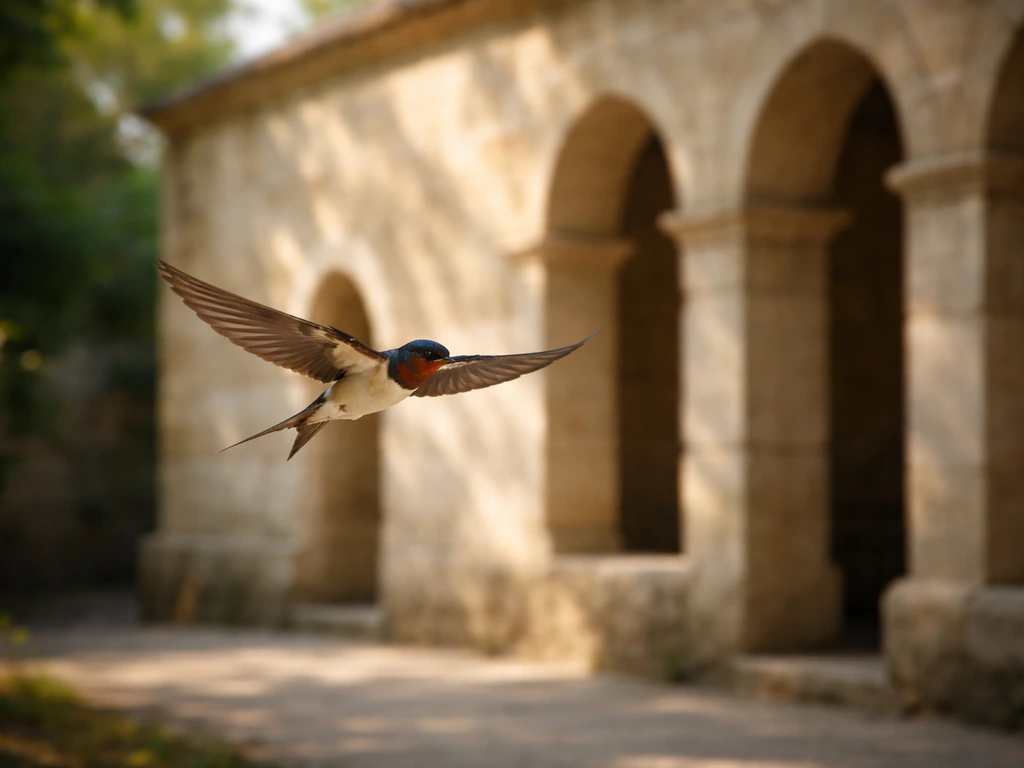
When someone searches 'swallow bird meaning death,' they're almost always asking about the swallow as a symbol, not a literal death omen. In Portugal, people often connect the swallow with meanings of death, but it usually points to symbolism and transition rather than an actual omen swallow bird meaning Portugal. The swallow is connected to death themes through Greek myth, ancient Egyptian transformation texts, and seasonal folklore, but its core symbolic register is closer to transition, grief, and return than to straightforward bad luck or doom. It's a meaningfully different animal from ravens or crows, which carry the heavier death-omen tradition in Western culture. If you saw a swallow, read one in a poem, or came across the phrase somewhere and it unsettled you, there's a reasonable explanation, and it's worth looking at before drawing conclusions.
Swallow Bird Meaning of Death: Symbolism, Omens, and What to Do

First: make sure you're even talking about the bird
The word 'swallow' is one of the more genuinely ambiguous words in English, and it shows up in very different contexts. Before digging into bird symbolism, it helps to rule out the other meanings quickly.
- Swallow (verb): the act of moving food or liquid from your mouth into your throat and down to your stomach. In medical contexts, this is called deglutition, and it's a whole topic in physiology and speech therapy.
- Swallow (medical): 'swallowing difficulties' or 'swallow function' are clinical terms. If you hit this in a medical article or a doctor's note, it has nothing to do with birds or symbolism.
- Swallow (food): in some varieties of English, a 'swallow' refers to a small starch food shaped and eaten whole, without chewing. This is regional and not widely known outside those areas.
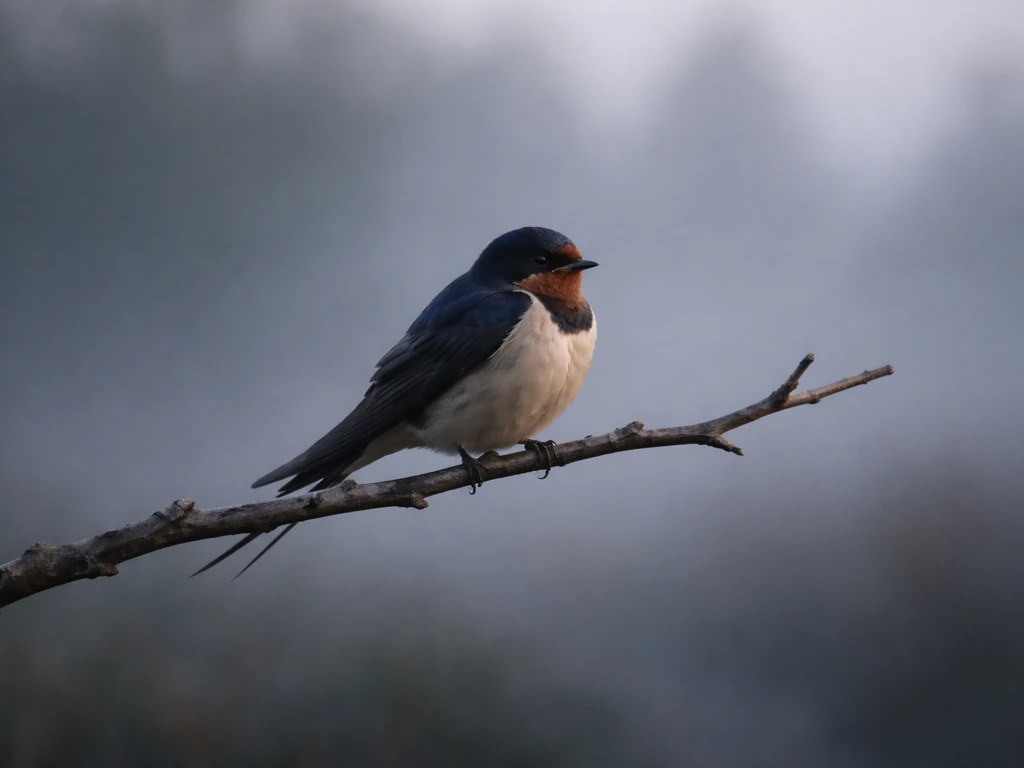
- Swallow (bird): a member of the Hirundinidae family, known for aerial acrobatics, seasonal migration, and nesting near human structures. This is the one tied to mythology, folklore, and symbolic meaning.
If the text around the word includes throat, esophagus, food, ingestion, or any clinical language, you're in a different domain entirely. If it mentions nesting, migration, spring, or appears in a poem or myth, you've got the bird. The surrounding words almost always settle it.
Why swallows end up connected to death at all
The connection isn't random, but it's also not as direct as people sometimes assume. There are a few distinct mechanisms that keep pulling swallows into death-adjacent territory.
The Procne myth

This is the big one. In Greek mythology, Procne is transformed into a swallow after a brutal sequence of events involving the murder of her son Itys. Her mournful cry, the chattering sound of the swallow, is interpreted as perpetual grieving. If you want the meaning behind a swallow's song in that same symbolic language, it is often read as a voice of grief and ongoing remembrance swallow bird song meaning. In some versions of the myth, it is Philomela who becomes the swallow. The details vary across ancient sources, but the core link, that the swallow's song is the voice of a grieving mother, is consistent. This myth influenced how swallows were read in literature and poetry for centuries. When you see a swallow associated with mourning or loss in a poem, this is usually the root.
Ancient Egyptian transformation texts
Egyptian funerary texts include spells for the deceased to transform into a swallow, which allowed the soul to move freely and return to the living world. This gets picked up online and sometimes framed loosely as 'swallows mean death,' but the more precise reading is that the swallow represented transformation and the ability to pass between realms. It's afterlife symbolism, yes, but with an emphasis on movement and return rather than death itself.
Seasonal disappearance and return
Swallows migrate. They vanish every autumn and reappear every spring, which made them natural symbols of cyclical loss and return long before anyone had a satisfying scientific explanation for where they went. Some folklore even speculated that swallows hibernated underwater during winter. This seasonal 'death and rebirth' pattern made them easy to fold into funeral and mourning imagery, even when that wasn't the original intention.
Harm-bringers by proxy
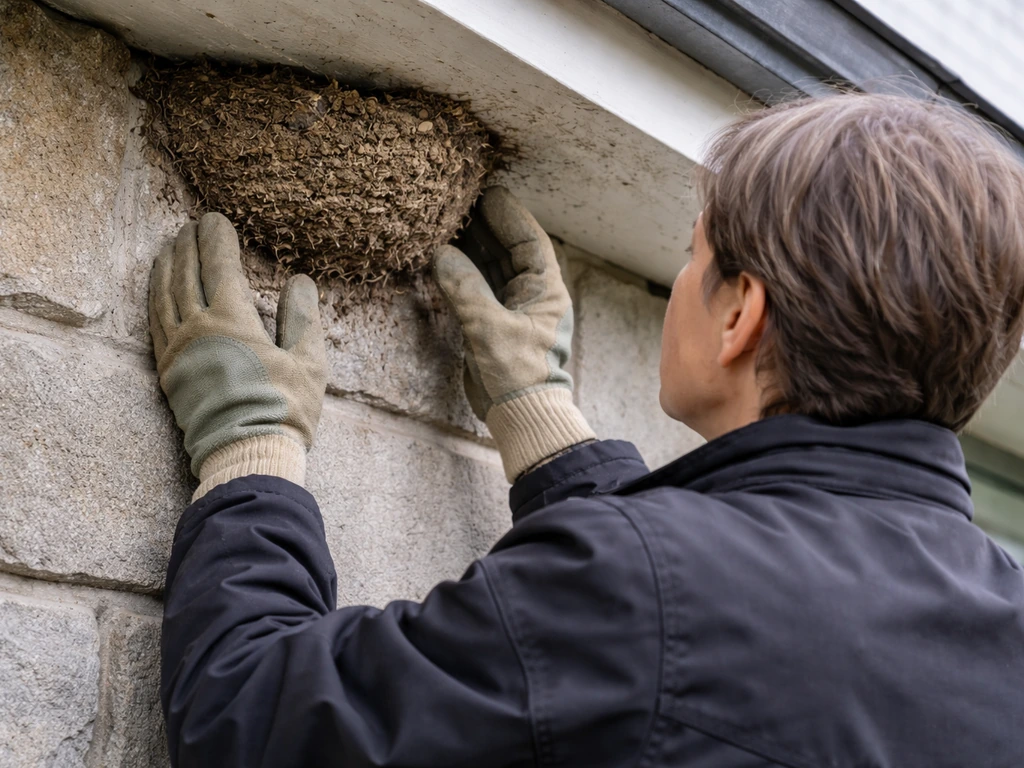
A number of European folk beliefs held that harming a swallow, or destroying its nest, brought bad luck, illness, or death to the household. This isn't the swallow as a death omen in itself; it's more that the swallow was considered a protected, almost sacred bird, and mistreating it invited consequences. The death association here is about what happens if you harm the bird, not what the bird's presence signals.
Cultural meanings across traditions
The swallow's symbolic meaning shifts depending on which tradition you're in. The death connection is real in some, but it's far from the dominant meaning globally. In Irish folklore collections that compile death signs, birds are sometimes included as omens linked to death fears death-sign pages exist that list bird omens.
| Tradition | Primary Swallow Symbolism | Death/Loss Connection? |
|---|---|---|
| Greek/Roman | Mourning, transformation (Procne/Philomela myth) | Yes, directly through the myth |
| Ancient Egyptian | Transformation, soul travel, passage between worlds | Indirectly, through afterlife texts |
| European folk (general) | Spring return, hope, good luck, protection of the home | Only if the bird is harmed |
| Sailor tradition | Safe return, land proximity, hope after long voyages | Rarely; more about survival |
| Chinese tradition | Good fortune, happiness, loyalty, marital harmony | Minimal |
| Irish/Celtic | Listed among bird omens generally, but not a primary death bird | Peripheral |
Worth noting for readers exploring related areas: the swallow carries distinct meanings in specific cultural pockets. If you’re looking specifically for what swallows mean in the Bible, check the passages and symbolism tied to the bird’s broader themes Its role in Biblical texts. Its role in Biblical texts, its symbolism in Portugal (where it's tied to longing and homecoming), and its meaning in Chinese tradition all deserve their own treatment, and those threads diverge considerably from the death-focused readings.
Swallows vs. ravens, crows, and blackbirds: what's actually different
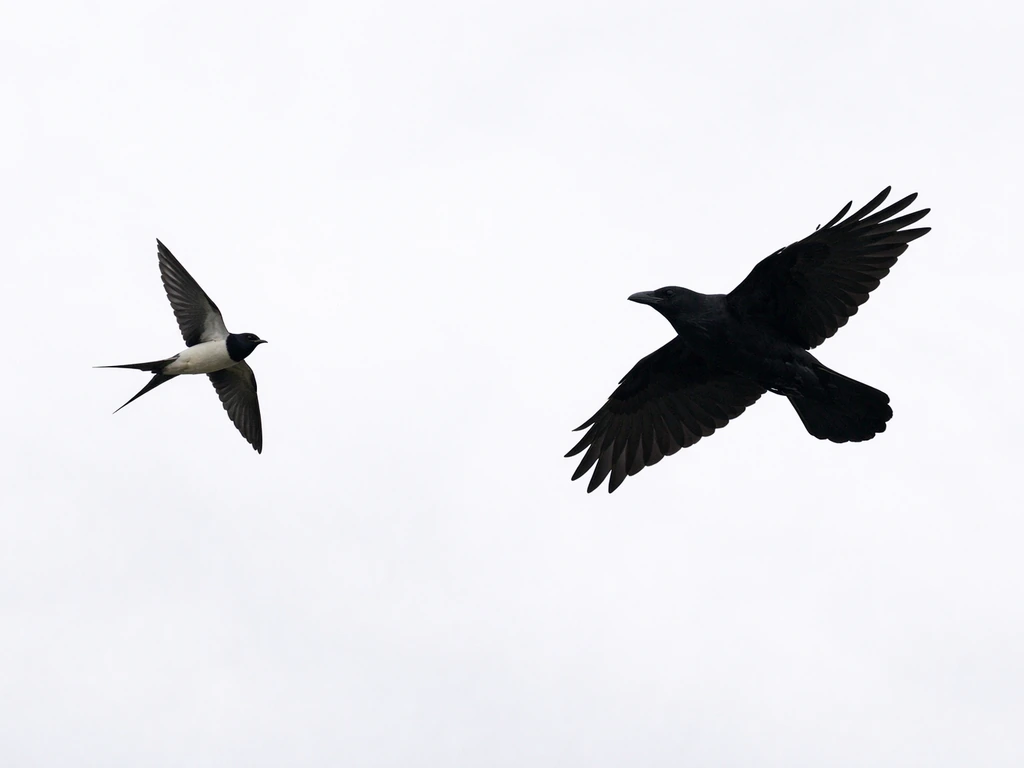
If you're trying to figure out why a swallow feels different from a raven or crow in this context, the distinction is real and it matters.
Ravens and crows carry a much denser, more consistent death-omen tradition in Western and Northern European cultures. Their behavior contributes to this: corvids are scavengers, they appear on battlefields, they're loud in ways that feel intrusive, and their black plumage aligns visually with mourning dress. Multiple folklore traditions explicitly designate them as psychopomps, meaning beings that guide the souls of the dead to the afterlife. Edgar Allan Poe's raven is only the most famous Western literary expression of something that had been building in folklore for a very long time.
Swallows don't have that track record. Their death connections are specific and mythological (Procne, Egyptian transformation) rather than broad and observational. Where a raven's presence might be interpreted as a bad omen across multiple unrelated traditions, a swallow appearing at a window or in a poem is more likely to signal grief, memory, or transition. The emotional register is mourning rather than doom.
| Bird | Primary Death Association | Dominant Symbolic Register | Consistency Across Cultures |
|---|---|---|---|
| Raven | Death omen, psychopomp, ill fortune | Foreboding, darkness, wisdom | High (European, Norse, Indigenous American traditions) |
| Crow | Death omen, scavenging, battle aftermath | Warning, transformation, intelligence | High (European, East Asian traditions) |
| Blackbird | Omens, underworld connections in Celtic tradition | Mystery, liminality | Moderate |
| Swallow | Mourning (myth-specific), soul transformation (Egyptian) | Hope, return, grief, transition | Low (varies significantly by region) |
The short version: if someone in a story sees a raven, brace for bad news. If someone sees a swallow, the story is more likely about grief, memory, or something lost that might return.
Where you'll actually see this in literature and language
The swallow-death or swallow-grief connection surfaces in specific literary contexts, and knowing what to look for makes interpretation much easier.
The Procne and Philomela myth is referenced repeatedly in classical and Renaissance literature, often as shorthand for grief that cannot be spoken directly. Poets invoke the swallow's song as the cry of mourning, sometimes explicitly, sometimes through the single word 'swallow' in a context about loss. If you encounter a swallow in a pre-modern European poem alongside themes of grief or the death of a child, this myth is almost certainly the operating reference.
In modern literature, swallows appear more often as metaphors for transience, things that arrive briefly and leave. The writer Elif Shafak used the image directly: 'Grief is a swallow' captures exactly this quality, the way grief migrates through you, lands, disappears, returns. This is metaphorical rather than folkloric, but it shows how the symbolic vocabulary stays consistent: swallows and grief fit together because of how swallows behave, not because seeing one means someone will die.
Idioms and sayings involving swallows tend to lean optimistic. 'One swallow does not a summer make' (from Aristotle, widely repeated) warns against premature conclusions. The swallow in sailor tradition signals land and safe return. These usages pull against the death reading and remind you that the bird's symbolic field is wide.
How to read this without spiraling

Symbolism research can go sideways fast, especially when the topic involves death. Here's how to stay grounded.
First, recognize what the swallow is actually pointing toward in most contexts: transition, not termination. The symbolic cluster around swallows involves endings that lead somewhere, grief that moves and changes, the hope embedded in return. Even the Egyptian death-text connection is about the soul continuing its journey, not simply ceasing. If you're reading a poem, a novel, or a folk saying that involves a swallow and death themes, the swallow is almost certainly there to represent the emotional experience of loss rather than a prediction of it.
Second, cultural symbols don't transfer into real life on command. A swallow landing on your fence is a bird. Its presence doesn't activate folklore. The symbolic meanings attached to swallows exist in stories, art, and language, not in the bird's behavior in your garden. People have been building elaborate meaning systems around birds for millennia, and those systems are interesting and worth understanding, but they don't operate as literal omens in the contemporary world.
Third, if the swallow image is showing up for you because you're grieving, it might actually be doing its job. The reason these symbols persist is that they give people a way to hold grief: something that migrates, returns, sings a mourning song, and eventually lands somewhere safe. That's not a bad framework for processing loss. The symbol can be useful without being literal.
How to nail down exactly what a swallow reference means in context
When you encounter 'swallow' in a text and want to be sure what it's doing, work through these steps.
- Check the surrounding words first. Medical or anatomical language means you're dealing with swallowing as a physiological act, not a bird. Food-related context might indicate the regional food usage. Bird-related language (migration, nesting, spring, wings, song) confirms you're in symbolic territory.
- Identify the tradition or period. A classical poem invoking a swallow near grief is almost certainly referencing the Procne myth. A sailor's journal mentioning swallows is about navigation and homecoming. A contemporary novel using a swallow metaphor may be doing something entirely original.
- Look for the emotional tone. Is the swallow appearing as a warning, or as a companion to grief? Warnings tend to be crow/raven territory. Grief companions or symbols of transition are more consistent with swallow symbolism.
- Search the specific source, not just the symbol. If you read a line in a poem and can't decode it, look up that specific poem rather than searching for 'swallow death meaning' in isolation. The author's intent matters more than general folklore.
- If the swallow appears in a religious text, check which tradition. The swallow's role in Biblical passages, for instance, is quite different from its role in Greek mythology or Egyptian funerary texts.
When this stops being about symbolism

Searches like 'swallow bird meaning death' sometimes come from a place of real distress, not just intellectual curiosity about bird symbolism. If you're wondering what the swallow bird meaning is in Chinese, look at how Chinese culture and language use the term swallow in symbolism and common phrases swallow bird meaning in Chinese. If you found this article because you're frightened, grieving, or looking for signs connected to a fear about death, the most useful thing isn't more folklore.
If you're in the United States and you're in crisis or struggling with thoughts about death, you can call or text 988 to reach the Suicide and Crisis Lifeline. It's free, confidential, and available around the clock. If you're outside the US, a quick search for 'crisis line' plus your country will find the equivalent service. Talking to a person is genuinely more useful than decoding symbols when the stakes are personal.
For grief that isn't at crisis level but is still heavy, a therapist or grief counselor is the more practical resource than bird folklore. The swallow symbol can be meaningful and even comforting in the context of grief, but it's a metaphor, not a map. Real support from real people is what moves things forward.
FAQ
If I see a swallow near my home, does it predict a death in my family?
In contemporary real life, no. A swallow’s presence is usually about migration and local habitat, not an automatic “sign.” If you feel convinced it predicts a death, treat that as an anxiety response and focus on grounding steps (what else is happening in your life, what you are grieving), rather than acting on the bird as a literal warning.
What’s the safest way to interpret “swallow” when I’m worried after a loss?
Use context triage: check whether the text is describing a nest, migration, springtime, a poem, or a myth. Those cues point to metaphor or mourning themes, not prediction. Also note whether the passage frames grief as moving or returning (transition), which is the dominant symbolic direction for swallows.
How do I tell whether I’m dealing with the bird “swallow” or the word meaning “throat/ingestion”?
Look at the surrounding vocabulary. Clinical or food-related terms (throat, esophagus, swallow medicine, ingestion) indicate the verb or body-related noun, while words about flying, seasons, nesting, or song point to the bird symbolism. If you’re unsure, rewrite the line without the word and see whether the sentence still makes sense literally.
Does the “Egyptian spells” idea mean swallows literally represent death?
Not in the straightforward way modern posts sometimes imply. The clearer takeaway from funerary texts is transformation and the soul’s journey between states, emphasizing movement and return rather than a simple “someone will die” forecast. Treat it as an afterlife transition symbol, not a death omen.
What if I read a swallow in a book or poem and it mentions mourning, should I assume it references the Procne myth?
Often it does, especially in pre-modern European writing, but not always. The Procne/Philomela connection is a common shorthand for grief that cannot be directly spoken, yet authors can also use “swallow” for general transience or emotional return. If the passage includes a child, a mother’s lament, or transformation language, Procne becomes more likely.
Are swallows always “less ominous” than crows and ravens?
Generally, yes in Western/Northern European folklore patterns, where corvids more consistently function as death-associated or soul-guiding figures. But symbolism is not uniform, so if a specific community or text links swallows to threat (for example, harming a nest as taboo), interpret it as a rule about behavior and consequences, not as a universal doom signal.
If folklore says harming a swallow’s nest brings death, what should I do with that belief?
Treat it as cultural storytelling, not an instruction to fear the bird. Practically, do what you can to avoid harming wildlife (keep distance, do not destroy nests, contact local wildlife or animal control if needed). If you find yourself catastrophizing, remember the folk “consequence” is about disrespecting a protected bird, not a guaranteed death prediction.
Can “grief is a swallow” be used as a personal coping tool?
Yes, as metaphor. If the image helps you process loss, use it gently: notice how grief moves through you, then returns, rather than trying to eliminate it instantly. If the metaphor triggers panic or intrusive death thoughts, that’s a sign to switch to direct support from a grief counselor or therapist.
I’m not in the US, and I’m worried about my safety or thinking about suicide. What should I do?
If you are in crisis or at risk, contact your local emergency number or a country-specific crisis line right away. If you tell me your country (and whether you’re in immediate danger), I can help you identify the appropriate type of service to look for and what to say when you call.
What’s a quick checklist I can use before I act on a symbolic interpretation?
Check four things: (1) Is “swallow” clearly the bird (seasons, nesting, migration) versus a literal verb or body reference? (2) Does the text frame transition or return rather than finality? (3) Is the source a story, poem, or folklore quote (symbolic) rather than a current-life event? (4) How is your emotional state (grief/anxiety)? If stakes are personal, prioritize support over decoding symbols.
Swallow Bird Meaning in the Bible: Symbolism and Passages
Biblical swallow symbolism, key passages, and how translations treat birds so you can verify the meaning responsibly.