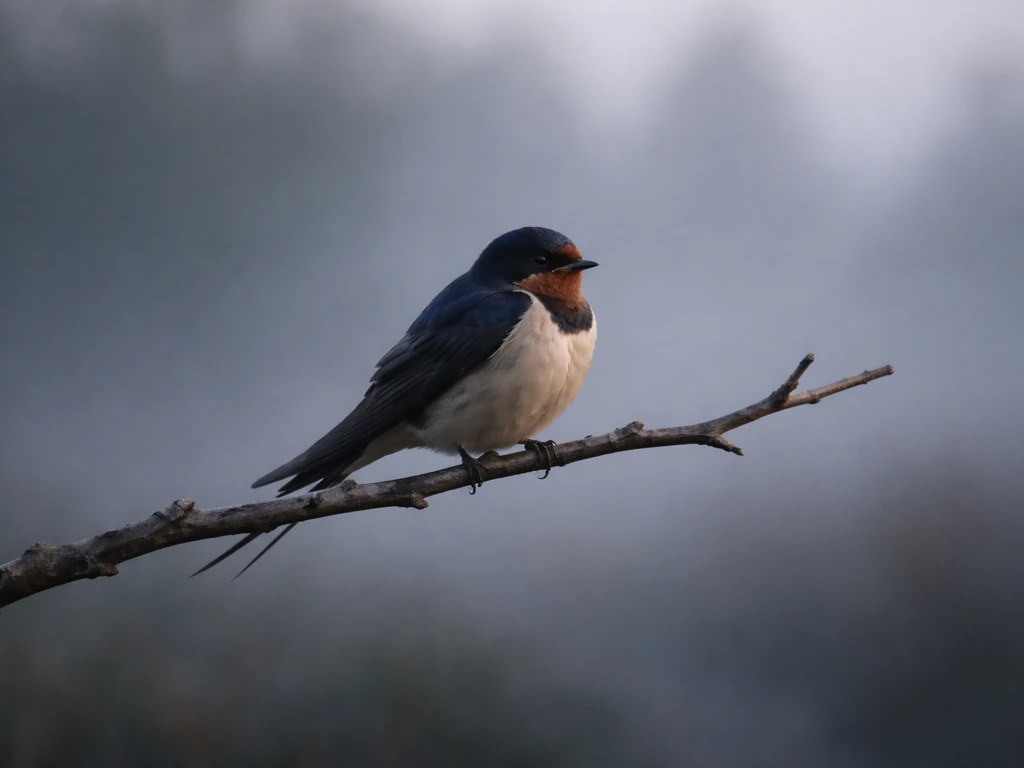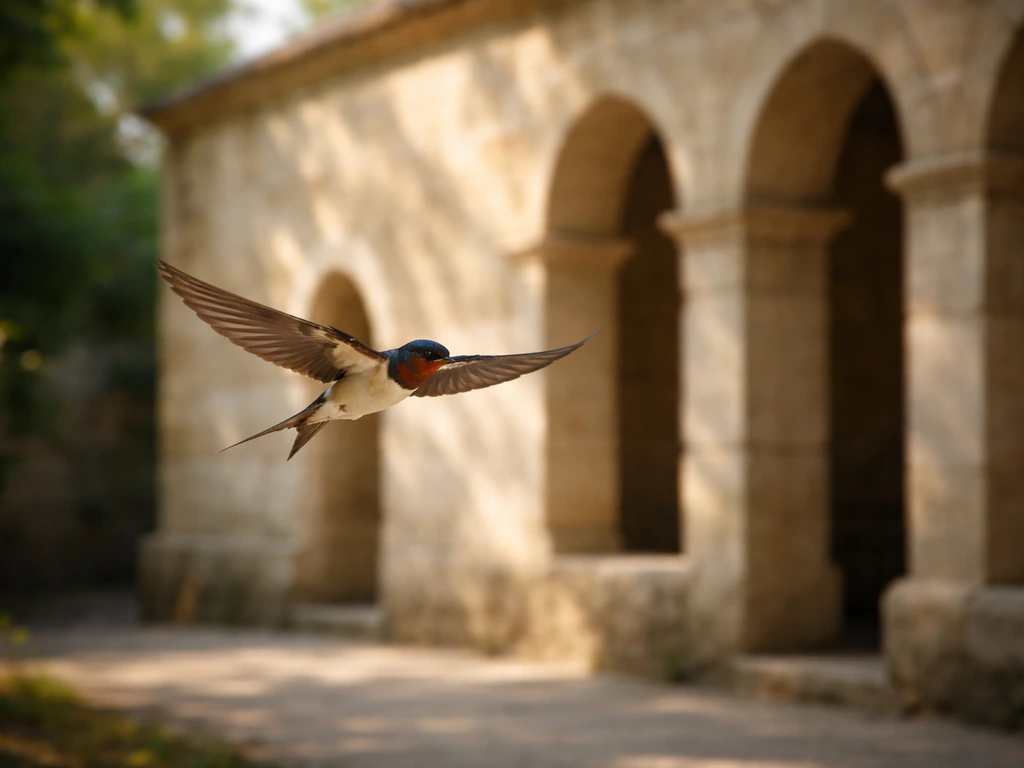
When you hear a swallow's song and wonder what it means, you're actually asking two different questions at once: what is this bird telling me right now in behavioral terms, and what has the swallow traditionally meant as a symbol in human culture? Both are worth answering. In most folklore, a swallow's song signals good fortune, the return of warmer weather, and the nearness of home. In behavioral terms, the specific call you're hearing tells you whether the bird is courting, alarmed, or simply foraging. Getting both layers right starts with making sure the bird you're hearing is actually a swallow.
Swallow Bird Song Meaning: Calls, Symbolism, and What It Means

Marcus Blackwell
10 Jul 2026
Is the 'song' you're hearing actually a swallow song?
The word 'song' gets used loosely in everyday conversation, but birding makes a useful distinction: a song is typically a more complex, sustained vocalization (often linked to courtship or territory), while a call is a shorter, more context-specific sound. Swallows produce both, and knowing which one you're hearing matters for interpretation. The barn swallow, for example, sings a long blank" rel="noopener noreferrer">twitter-warble during courtship and egg-laying: a continuous stream of warbling sounds that ends in a rapid series of mechanical-sounding whirrs. That's the 'song.' Its calls are different: a sharp 'kit-kit' or 'svit-svit' in everyday flight, a 'cheep' when threatened, and a 'churee whistle' that sends the whole group diving at a predator. Wikipedia notes that swallows use many calls and songs for excitement, communication, courtship, and alarm, and that begging calls by young solicit food calls and songs used for communication, courtship, and alarm.
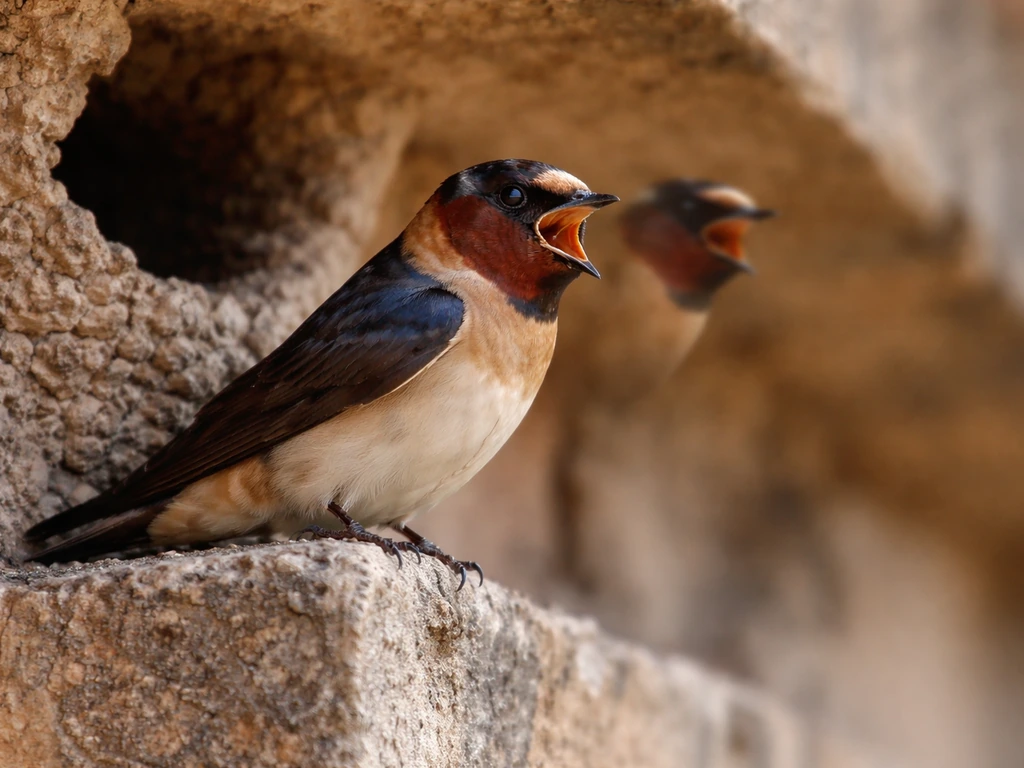
Cliff swallows lean on a soft 'chur' as their most common everyday call, a squeak while foraging, and a purr-like alarm call when something dangerous approaches the colony. Their twitter-squeak 'song' is reserved mostly for courtship and nest establishment. House martins, which are often confused with swallows in the UK and Europe, produce a gentle twittering 'prrit' or 'prrip' call and a more drawn-out warbling song from males during courtship. So if you're somewhere in Europe and you think you're hearing a swallow, there's a real chance it's a house martin.
What the song actually signals: behavior before symbolism
Before jumping to symbolic meaning, it helps to ask what the bird is doing. Swallow vocalizations map fairly cleanly onto specific behaviors, and that context shapes interpretation at every level, literal and figurative.
| Vocalization | Species | Context/Behavior |
|---|---|---|
| Twitter-warble song | Barn swallow | Courtship and egg-laying season |
| Sharp 'kit-kit' / 'svit-svit' | Barn swallow | General flight communication |
| 'Cheep' + churee whistle | Barn swallow | Threat response, alarm diving |
| Soft 'chur' | Cliff swallow | General communication, many contexts |
| Purr call | Cliff swallow | Predator alarm near colony |
| Squeak call | Cliff swallow | Active foraging |
| Twitter-squeak 'song' | Cliff swallow | Courtship and nest establishment |
| Twittering 'prrit'/'prrip' | House martin | General call, flight |
| Prolonged warbling | House martin (male) | Courtship song |
One practical note: cliff swallow research has found no significant effect of time of day on their vocalizations, which means hearing a cliff swallow at dawn versus dusk doesn't carry the same kind of behavioral significance it might for some other birds. Barn swallows, on the other hand, tend to sing most actively during the breeding season, so if you're hearing that full twitter-warble in late spring or early summer, courtship is almost certainly what's driving it.
What swallows and their songs mean in folklore and everyday symbolism

Across most cultures that have encountered swallows, the bird carries a cluster of remarkably consistent meanings: the arrival of good things, safe return, home, loyalty, and hope. The swallow is one of the first birds to reappear after winter in temperate regions, so its song has historically been heard as an announcement that warmth and abundance are coming back. This isn't generic 'birds mean freedom' symbolism. It's specific to the swallow's migratory behavior and its habit of returning to the same nest site year after year.
In Western European tradition, hearing the first swallow song of spring was considered genuinely lucky, a sign that the hardest part of the year was over. The bird's return to last year's nest was read as a symbol of loyalty and continuity. In some traditions, a swallow choosing to nest on your home was seen as a blessing, and disturbing the nest was thought to bring bad luck. These beliefs are old enough to appear in classical Greek and Roman texts and have persisted in various forms into modern folk culture.
The swallow's song in this context isn't just pleasant background noise. It's read as a message: something good is beginning, or something lost is returning. That's a meaningful distinction from a bird like the owl, whose call in many traditions signals danger or transition. The swallow is, symbolically, almost always on the hopeful side of the ledger.
Cultural and spiritual traditions that shape the meaning
In sailor folklore, the swallow carried very specific weight. A sailor who had traveled 5,000 nautical miles might tattoo a swallow on their chest, and seeing a swallow was said to mean land was near. The swallow's song, in that context, was literally a survival signal. This tradition also fed into a broader meaning of safe return: swallows were believed to carry a sailor's soul home if they drowned. The connection between swallow sightings and safe homecoming is probably the single most consistent thread running through Western swallow symbolism.
In Chinese tradition, swallows are associated with happiness, prosperity, and good luck, and their arrival at a home was welcomed as an auspicious sign. The cultural weight placed on swallows in Chinese symbolism is rich and layered, distinct from the Western sailor tradition but pointing toward similar themes of good fortune and domestic blessing. Portuguese culture also holds swallows in high regard, linking them to longing, home, and faithful return, themes deeply embedded in the fado emotional tradition. Biblical references to swallows emphasize finding a home and nesting near a sacred place, reinforcing the bird's association with security and belonging. These regional and religious dimensions are worth exploring in their own right, because the specific meaning of a swallow's song can shift depending on which tradition the listener is standing in.
In many spiritual interpretations, hearing a swallow's song is taken as a message of hope during difficult periods, a reminder that difficult seasons end and that home, in some form, is reachable. The swallow has also been linked to themes of transformation and rebirth, partly because of its dramatic migratory cycle and partly because of ancient beliefs (held in some European cultures) that swallows hibernated underwater in winter and were literally reborn each spring.
Idioms, phrases, and the 'swallow' confusion you need to untangle
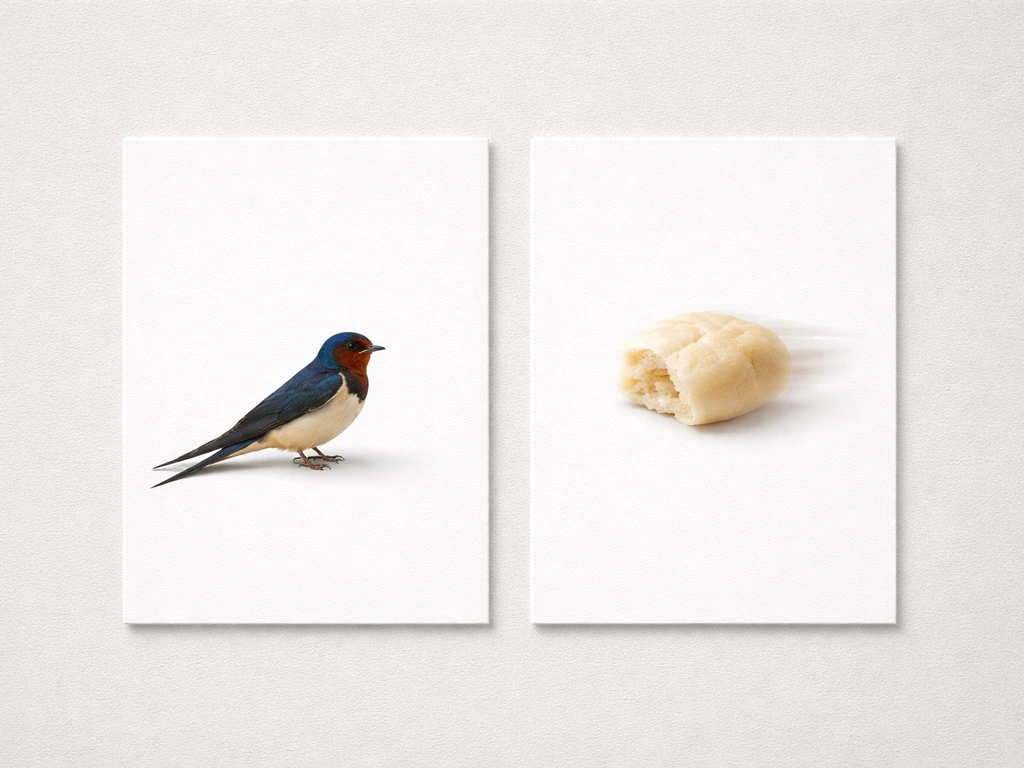
This is where a lot of search confusion happens. In Chinese culture, swallows are also often associated with spring, return, and the idea of homecoming. The word 'swallow' does double duty in English: it's both this bird and a common verb meaning to ingest something. If you've landed on an article about 'swallowing' something whole or 'a hard pill to swallow,' that's the verb, not the bird. The two meanings share nothing symbolically.
The swallow-as-bird does appear in idioms and proverbs, though. The most famous is 'One swallow does not a summer make,' drawn from Aristotle and meaning that a single positive sign doesn't guarantee a good outcome. This proverb is directly tied to the bird's role as a herald of spring: seeing one swallow doesn't mean winter is definitively over. It's a caution against premature optimism, and it's still in common use in British and European English. If someone says this to you, they're referencing the bird, not the verb.
There are also loose associations in poetry and literature where 'swallow song' or 'swallow call' is used as shorthand for the onset of spring, the pang of longing, or the bittersweet feeling of something returning that you thought was gone. Tennyson, for instance, uses the swallow as a recurring symbol of yearning and absent love. So when you encounter 'swallow song' in a literary context, it's almost always drawing on these themes: return, longing, the passage of seasons.
How to make sure you're hearing a swallow and not something else
Misidentifying the bird is the most common reason people end up with confusing or mismatched symbolism. A few practical steps will get you to the right species quickly.
- Open the Merlin Bird ID app (free from Cornell Lab) and use the Sound ID feature. It listens in real time and gives you species suggestions as the bird sings. This is genuinely the fastest way to confirm what you're hearing.
- Note where the bird is: barn swallows favor open country, barns, and bridges; cliff swallows build gourd-shaped mud nests on cliff faces and building eaves in colonies; house martins (in Europe) nest under roof eaves in urban and suburban areas.
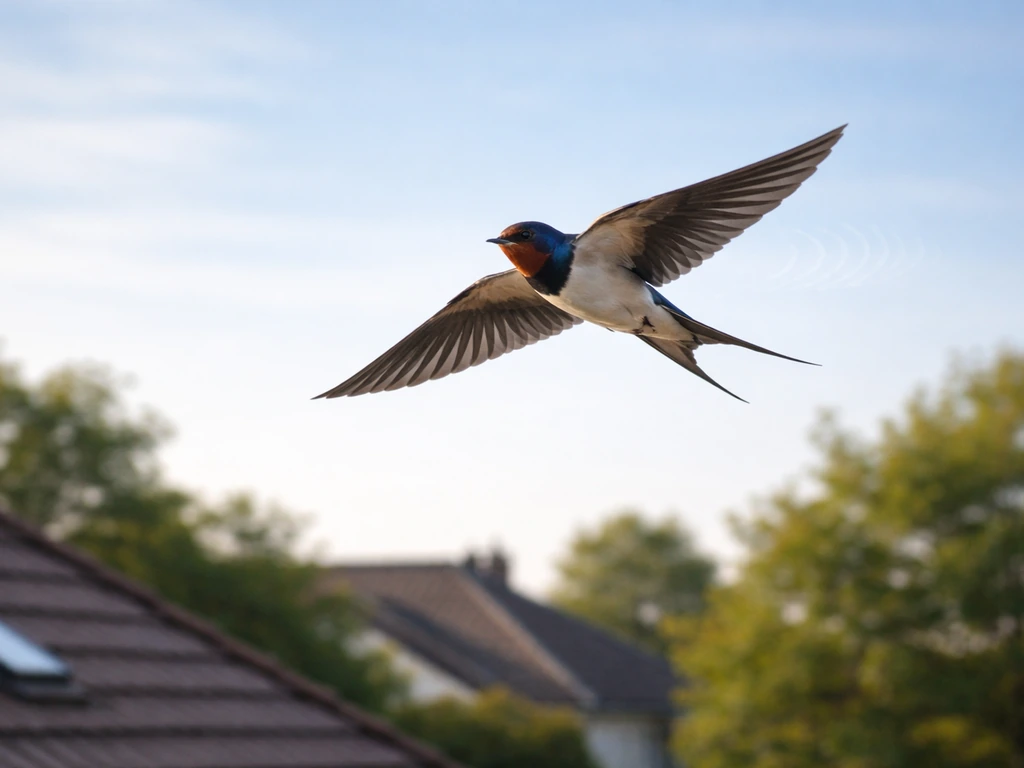
- Watch the flight pattern. Swallows have a distinctive swooping, acrobatic flight over open ground or water while catching insects. If the bird is flitting through dense trees, it's probably something else.
- Check the tail. Barn swallows have a deeply forked tail; cliff swallows have a square tail with a pale rump patch; house martins have a white rump and shorter forked tail.
- Cross-reference with a regional field guide or All About Birds (Cornell) or the BTO BirdFacts pages if you're in the UK. Both sources separate 'song' and 'call' descriptions, making it easier to match what you heard.
Getting the species right matters because the symbolic traditions attached to barn swallows, cliff swallows, and house martins differ in their regional specificity. Most European swallow folklore refers to the barn swallow (Hirundo rustica). Most of the sailor tattoo tradition refers to barn swallows too. If you're in North America and hearing cliff swallows around a highway overpass, the behavioral interpretation is solid, but the cultural symbolism you apply should probably be drawn from that broader pan-cultural swallow tradition rather than hyperlocal sailor lore.
What to do the moment you hear it: practical steps
When you hear a swallow's call or song, taking 60 seconds to document a few things will help you interpret it accurately, whether you care about the biology, the symbolism, or both.
- Note the time of year: swallows are migratory, so a spring song in the Northern Hemisphere (roughly April through June) carries the traditional 'herald of good times' meaning most strongly. A late summer call might signal that the birds are preparing to leave.
- Note the time of day: barn swallow courtship song peaks during breeding activity (roughly May to August in North America and Europe). Cliff swallow calls are not strongly tied to time of day.
- Note what the bird is doing: swooping and twittering? Likely foraging or socializing. Rapid churning alarm call while other birds dive? Something alarmed them, which has no deep symbolic weight.
- Record a short audio clip on your phone if you can. The Merlin Sound ID feature can process a recording you play back to it if you missed the live moment.
- Write down the location, since identifying whether you're near a barn, a cliff face, a suburban roof, or open water will narrow the species quickly.
Once you've confirmed the species, decide which layer of meaning you're after. If you're asking a purely behavioral question (what is this bird doing?), the vocalization table above gives you a working answer. If you're asking a symbolic question (what does this mean for me?), lean on the folklore tradition most relevant to your cultural background or geographic location. The swallow is remarkably consistent across traditions: hope, homecoming, loyalty, and the turning of seasons. If those themes resonate with your situation, the symbolism is pointing somewhere real.
Why the meaning changes depending on when and where you hear it
Season is probably the biggest variable. Hearing a barn swallow's full twitter-warble in May in England is the classic 'spring herald' moment that all the folklore references. Hearing a sharp alarm call from a cliff swallow colony in July is a much more mundane event, probably a hawk passing overhead. The symbolic weight is front-loaded onto spring arrivals, not on summer colony maintenance.
Location also shapes meaning. In Portugal, the swallow is bound up with saudade, that untranslatable feeling of longing for something or someone absent, and the bird's return has an almost melancholy sweetness to it. In Chinese tradition, the swallow arriving at your home is straightforwardly auspicious: prosperity and happiness are coming. In the Bible, the swallow finding a nest near sacred ground carries a message of sanctuary and belonging. A swallow's song doesn't mean the same thing in Lisbon, Shanghai, and rural Nebraska, even if the bird is identical.
Time of day is a lesser factor for swallows than for some birds. Cliff swallows vocalize throughout the day without strong patterns. Barn swallows sing most actively during breeding season courtship, which happens in daylight hours, but the symbolism isn't meaningfully tied to dawn versus dusk the way it is for, say, nocturnal birds associated with omens. If you hear a swallow singing at midday versus early morning, the behavioral interpretation shifts slightly (midday song may reflect active foraging communication rather than pure courtship), but the symbolic interpretation stays largely the same.
The one context where swallow associations take a darker turn is in some death-related folklore, where swallows occasionally appear as carriers of souls or signals of transition rather than pure good fortune. This is a minority reading compared to the overwhelmingly hopeful mainstream of swallow symbolism, but it's worth knowing that it exists. If the swallow's song strikes you as melancholy rather than uplifting in the moment you're experiencing it, you're not misreading the tradition entirely. The bird's connection to journeys, departure, and return gives it a bittersweet edge in certain cultural contexts, and that's a legitimate part of what swallow song can mean.
FAQ
How can I tell whether I’m hearing a swallow’s “song” or its “call” in real life?
If it sounds like a long, continuous twittering warble, you are probably hearing courtship or territory communication (the “song” layer). If it is short and repeated with sharp emphasis, it is more likely a call tied to immediate context, like flock movement or alarm.
What’s the most common mistake people make when interpreting swallow bird song meaning?
In many places, house martins are the most common swap, especially in Europe where they share habitats and flight style. A quick check is the bird’s overall look from the side and whether the sound is a gentle twittering warble, males court-singing, rather than a more aggressive barn-swallow style.
Does swallow bird song meaning change depending on where I am hearing it (even if the bird is the same)?
No, they do not all carry the same cultural “message.” If you are in North America, the same vocalization can be cliff swallow behavior, while the symbolic layer you apply might better fit general swallow themes rather than hyperlocal sailor lore tied specifically to barn swallows.
If I hear the song but the swallow is not near a nest, what does that usually imply?
Yes. A swallow flying and calling over an open area can mean foraging or flock contact, while a swallow singing persistently near a specific structure often points to nest establishment. The closest “meaning for you” usually comes from what the bird is doing right at that moment, not just what the species is.
What should I do if the swallow sounds “off” (agitated, repeated calls) instead of cheerful spring-calling?
Try not to apply symbolic meanings during unusual weather events or disruptions. If a swallow is visibly agitated, repeatedly diving, or calling in quick bursts, the literal alarm or disturbance context is the primary interpretation, and symbolism is secondary until normal behavior returns.
What quick checklist should I use when I want to interpret swallow bird song meaning accurately?
Record the basics first, then interpret. Note date, time, weather, exact location type (overpass, eaves, open field, near cliffs), and whether the bird is alone or part of a group. Those details help separate “seasonal arrival” symbolism from colony-defense behavior.
How do I avoid confusion between “swallow” the bird and “swallow” the verb?
Yes, the “swallow” meaning can be mixed up with the verb “swallow.” If your article or conversation is about ingesting something whole or “a hard pill to swallow,” that is not the bird, and any bird-related symbolism will not apply.
Does “One swallow does not a summer make” change the positive swallow bird song meaning?
The proverb “One swallow does not a summer make” is essentially a caution against overgeneralizing from a single sign. It does not mean the swallow is a bad omen, it means one bird’s appearance is not proof that the full season has arrived.
Can swallow bird song meaning ever be dark or unsettling, and does that mean I misread it?
Some traditions treat swallows as hopeful, but a minority of death-related readings exist. If what you feel is noticeably heavy or melancholy, consider that you might be blending the hopeful “homecoming” theme with a “bittersweet journey and return” interpretation, rather than assuming the bird is signaling something strictly negative.
How do I translate swallow bird song meaning into something practical for my own life right now?
If you are trying to apply symbolism for yourself, match the dominant theme to your current situation. Spring herald energy fits “things are restarting,” while homecoming and loyalty fit “return, reconnection, or continuity,” and longing themes fit “absence and yearning,” especially in cultures where that association is stronger.