
Most of the time, when someone says 'whirly bird,' they mean a helicopter. That's the primary dictionary definition across Merriam-Webster, Cambridge, Collins, and Dictionary.com: whirlybird is a well-established informal English word for helicopter, sitting alongside chopper, copter, and helo as common nicknames. But the phrase doesn't stop there. Depending on where you saw it, 'whirly bird' can also describe actual bird behavior (circling, looping, spiraling flight), function as a playful figurative label for something or someone full of restless, spinning energy, or even appear as a character name or title in a kids' story, game, or creative work. The good news is that context almost always gives it away immediately.
Whirly Bird Meaning: Literal, Figurative, and Slang Uses

Marcus Blackwell
23 Apr 2026
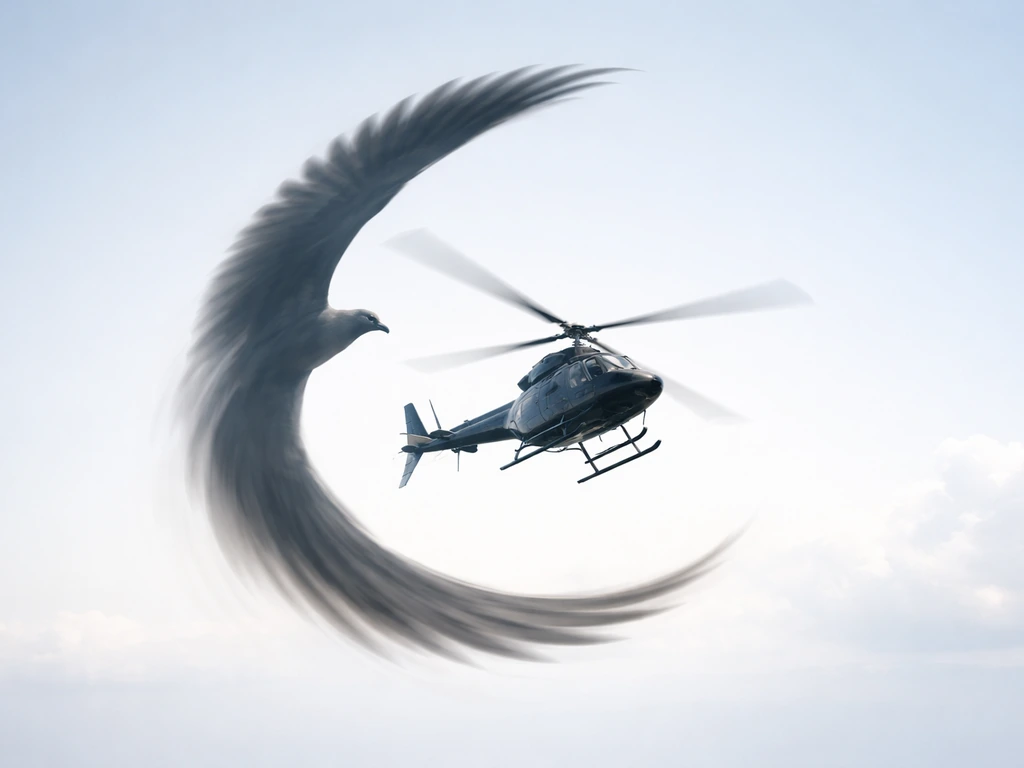
The most common meanings of 'whirly bird'
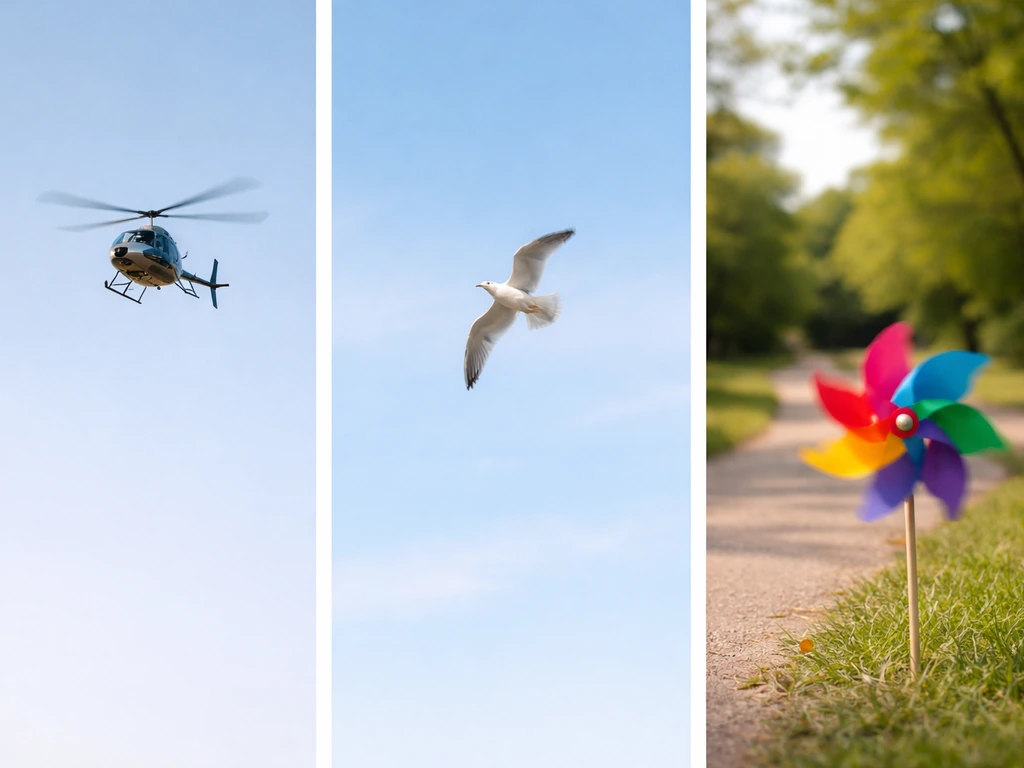
There are three core meanings you'll run into, roughly in order of how often they appear in everyday English. First and most dominant: helicopter. This is the slang sense that shows up in casual speech, news captions, military conversation, and aviation writing. Second: a description of a bird (or bird-like creature) that moves in a whirling, circling, or spinning pattern, which is a more literal, descriptive use of the compound word rather than a fixed term. Third: a figurative or playful label applied to a person, animal, toy, or idea to evoke a sense of constant motion, unpredictability, or joyful chaos.
| Meaning | Type | Where you usually see it |
|---|---|---|
| Helicopter | Slang/informal noun | News, captions, casual speech, military, aviation |
| A bird with circling or spinning flight behavior | Literal/descriptive phrase | Nature writing, birdwatching notes, children's books |
| Playful nickname for something full of spinning energy | Figurative/symbolic label | Stories, character names, toy names, nicknames for children |
How to tell which meaning you saw
The surrounding context is your fastest disambiguation tool. Ask yourself three questions: What kind of source is this? What's the subject of the sentence? And is the word capitalized or used as a proper noun?
If you're reading a news article, a military account, a travel blog, or hearing it in casual adult conversation, it almost certainly means helicopter. If the sentence is about flight, rescue operations, traffic reports, or aviation, lock that in as the answer. If you're reading a nature or birdwatching piece and the phrase is describing what a bird does in the air, it's being used literally and descriptively, not as a fixed slang term. If it appears in a children's book, a toy name, a game, or a nickname for a person who can't sit still, you're looking at the figurative or creative use, where the 'whirl' is the whole point.
- Helicopter context: news caption, aviation, military, rescue, transport, travel writing
- Literal bird behavior context: nature guide, birdwatching journal, wildlife documentary description
- Figurative or nickname context: children's content, character name, toy label, affectionate nickname for a restless person or animal
- Capitalized as a proper noun: likely a character name, product, or title requiring a specific search
The literal side: birds that actually whirl
When 'whirly bird' is used descriptively, it points to real flight behaviors. Several birds are genuinely associated with circling, spiraling, or looping movement. Raptors like hawks and eagles use thermal currents to spiral upward in wide, lazy circles while hunting or migrating. Swifts and swallows perform tight, rapid aerial loops and spirals, sometimes in large flocks that move in almost hypnotic patterns. The whimbrel and certain shorebirds are known for erratic, weaving flight paths. Murmurations of starlings create swirling, wave-like formations that look almost like a single spinning organism. Any of these birds, in the right description, could earn the informal tag 'whirly bird' from a nature writer or birdwatcher capturing that spiraling motion.
There's also a behavioral element beyond just flight. Some ground birds, particularly during courtship displays, spin or pivot repeatedly as part of their ritual. In birdwatching language, 'circling' and 'wheeling' are the more technical terms, but 'whirly bird' captures the same visual impression in everyday speech, especially in casual writing or children's nature content.
What 'whirly bird' means figuratively and symbolically

When the phrase functions as a figurative label, it carries a cluster of meanings tied to the idea of motion itself. To call something or someone a 'whirly bird' in this sense is to say they are restless, constantly moving, unpredictable in a lively rather than threatening way, or full of the kind of chaotic energy that's more playful than dangerous. Think of a toddler who spins constantly, or a puppy that can't stop running in circles. The label is almost always affectionate.
Symbolically, it borrows from the broader language of bird imagery, where birds represent freedom, lightness, and the inability to be pinned down. The 'whirl' element adds a dimension of joy and even slight unpredictability. A whirly bird in a figurative sense isn't soaring purposefully toward a destination the way an eagle might symbolize ambition or a dove might symbolize peace. It's spinning for the sake of spinning, which in the right context is a symbol of pure, uncomplicated delight. In folk and children's traditions, spinning and circling movements in nature (whirlwinds, spinning seeds, birds turning in thermals) have often carried associations with change, transformation, and playful spirit.
If you're drawn to the symbolic side of bird language, it's worth noting that other 'unusual motion' birds carry their own meanings too. The whippoorwill, for instance, is far more associated with night, haunting calls, and liminal symbolism than with spinning movement. The whippoorwill bird meaning is often tied to night symbolism and its haunting call, rather than to playful spinning motion. The whim bird and similar names tie into regional folklore with different emotional registers entirely. If you meant “whim bird meaning” specifically, that phrase is often discussed as a regional name with ties to local folklore. 'Whirly bird' sits on a lighter, more playful shelf in the symbolic language of birds.
How 'whirly bird' actually gets used: example sentences
Seeing the phrase in use is the quickest way to internalize all three meanings at once. Here are examples that show the range:
- "They airlifted him out by whirlybird before the storm hit." (helicopter, informal/slang)
- "A whirly bird hovered over the crash site for nearly an hour." (helicopter, news-style)
- "Watch the red-tailed hawk doing its whirly bird thing over the valley — it's riding the thermals up in a slow spiral." (literal bird behavior, descriptive)
- "My three-year-old is such a whirly bird at the park; she just spins and spins until she falls over laughing." (figurative, affectionate nickname)
- "The teacher named her class mascot Whirly Bird because the painted bunting kept turning in circles at the feeder." (playful character name)
Notice that the helicopter sense drops the space and often runs the two words together as 'whirlybird,' which is how Merriam-Webster and Collins list it. The descriptive and figurative senses are more likely to appear as two separate words. That small spelling difference is actually a useful signal in written text.
How to confirm the meaning quickly
If you still aren't sure after checking the context, here are the fastest practical steps to nail down the right meaning.
- Check the spelling first: 'whirlybird' (one word or hyphenated) almost always means helicopter. 'Whirly bird' (two words) is more often descriptive or figurative.
- Look at the surrounding words: aviation verbs like hovered, landed, airlifted, or flew in point to helicopter. Nature verbs like circled, soared, spiraled, or looped point to literal bird behavior. Personality adjectives like restless, energetic, or spinning wildly point to the figurative nickname sense.
- Check the source type: military, news, or travel content means helicopter. Nature, wildlife, or birdwatching content means literal bird behavior. Children's books, toy descriptions, or affectionate personal writing means figurative.
- If it appears to be a proper noun or title, search the exact phrase plus the source (e.g., 'Whirly Bird book' or 'Whirly Bird character') to identify the specific reference.
- If you're exploring the bird symbolism angle, useful follow-up searches include 'circling bird symbolism,' 'birds that spiral in flight meaning,' or 'whirling in bird mythology' to go deeper into the cultural layer.
The bottom line: 'whirly bird' is mostly helicopter in everyday English, occasionally a vivid description of actual bird flight, and sometimes a warm, playful label for anything (or anyone) that just can't stop spinning. The context will almost never leave you guessing for long. A quick “wacko bird definition” is usually shorthand for the playful, figurative use rather than the literal bird behavior. In legal and news contexts, a whistleblower is a person who reports wrongdoing, and the whistleblower meaning can be clarified with the word bird only when used figuratively.
FAQ
Is “whirly bird” always one word, or can it be written as two words?
Both forms appear. In most dictionaries the informal helicopter nickname is commonly written as one word, “whirlybird,” but in writing you will more often see “whirly bird” as two separate words for the literal bird-flight description or the playful figurative label.
How can I tell if “whirly bird” in a headline means helicopter or something else?
Headlines and news captions usually include an aviation cue (rescue, landing, rotor, airlift, flight crews). If those cues are present, treat it as helicopter, even if the phrase is split into two words.
Does “whirly bird” ever refer to an airplane instead of a helicopter?
Uncommonly. The slang nickname is specifically associated with helicopters, so if the text mentions propellers or fixed wings rather than rotors and hover, you should be cautious and look for a different meaning.
What does it mean when “whirly bird” is used with a person’s nickname?
It usually signals playful, affectionate “can’t sit still” energy. It is generally positive or teasing, not a clinical description, and you can often confirm it by checking for words like “restless,” “spinning,” “zooming,” or “energetic” nearby.
In birdwatching writing, is “whirly bird” a technical term?
Not really. It is everyday descriptive language. If an author is being more precise, they will typically use terms like circling, wheeling, spiraling, or thermal soaring, while “whirly bird” is used for color or a kid-friendly explanation.
Can “whirly bird” be used ironically or negatively?
Yes, but less commonly. If the surrounding wording includes annoyance or risk (for example, “reckless,” “out of control,” “driving circles”), the playful sense may flip into criticism. Context determines whether it is affectionate chaos or pointed complaint.
Is “whirly bird” related to “wacko bird definition” or other “bird” slang?
Only loosely by style. In many contexts, “bird” nicknames are playful (for example, “wacko” suggesting odd behavior), but “whirly bird” has its own core association with helicopter or spinning motion. Don’t assume similar meanings just because the pattern matches.
Could “whirly bird” be a character name, and how should I interpret that?
Yes. In children’s books, games, and brand-like contexts it can be a proper noun or title. If capitalization is used consistently and the sentence treats it like a name (for example, “Whirly Bird flew…”), you should interpret it literally as a character, not as helicopter.
Does capitalization matter for disambiguation?
It helps. “whirly bird” lowercase is more likely the generic phrase (helicopter, descriptive motion, or playful label), while “Whirly Bird” with consistent capitalization across sentences often signals a named entity like a character, product, or title.
What is a quick checklist I can use when I see the phrase?
Check (1) source type, news or aviation writing usually means helicopter, (2) nearby nouns like helicopter, rotor, rescue, bird, or flock, (3) whether it is split as two words or merged as “whirlybird,” and (4) whether it reads like an affectionate nickname for someone.
Next Articles
Whistleblew Bird Meaning: Identify the Bird or Idiom
Find whistleblew meaning: likely bird or idiom, then identify the species and its folklore symbolism.
Huelga Bird Meaning and Huelga Bird Flag Meaning
Decode huelga bird and huelga bird flag meaning using context, bird traits, and location to pinpoint symbolism.
Fowl Bird Meaning: What Fowl Means vs Bird
Clear fowl bird meaning: define fowl vs bird, when fowl includes farmed birds, plus cultural idiom examples.