
There is no standard bird called a 'whim bird.' The phrase does not appear as an established species name or fixed idiom in any major dictionary or ornithological database. What it almost certainly is, depending on context, is one of three things: a mishearing or typo for a real bird (most likely the whimbrel, the whipbird, or the whip-poor-will), a casual figurative label for a flighty or impulsive person built on the word 'whim,' or a creative coinage a writer invented on the spot. Knowing which one your source intended changes everything about how you read or use the phrase.
Whim Bird Meaning: Definition, Mishearings, and Usage

Marcus Blackwell
19 Jul 2026
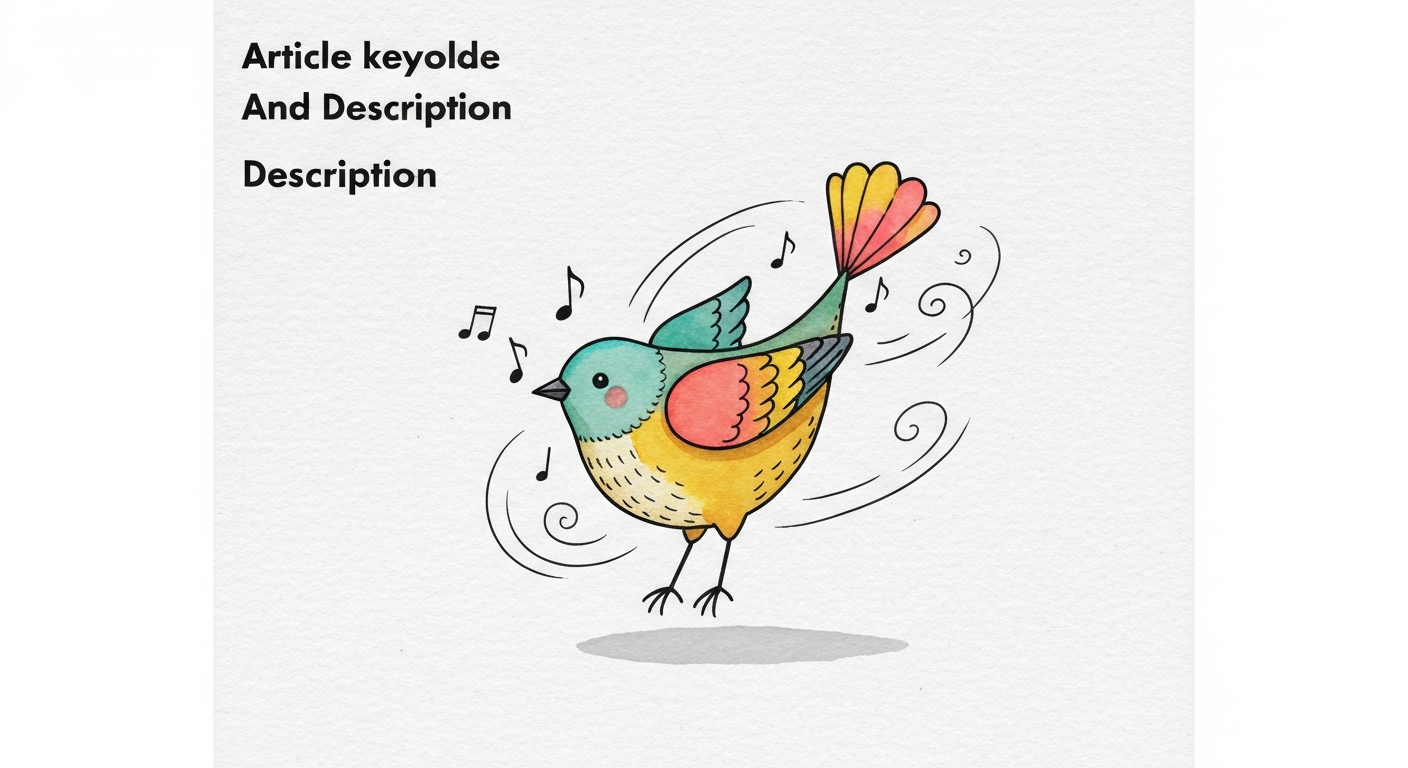
What 'whim bird' most likely means
Because 'whim bird' is not a headword in Merriam-Webster, Cambridge, Collins, or any major ornithological reference, it sits in an interesting gap: common enough as a search term, rare enough as a published phrase that you almost never find it in print. The most defensible reading, and the one that covers most real-world uses, is figurative. A 'whim bird' is an informal, descriptive label for a person (or occasionally a thing) that is capricious, impulsive, or whimsical. The logic is straightforward: birds flit, dart, and change direction without apparent reason, and 'whim' means a sudden, unaccountable impulse. Put them together and you have a compact metaphor for someone who changes their mind as freely as a sparrow changes branches.
That said, the figurative reading is informal and uncodified. If you encountered 'whim bird' in a nature guide, a field report, or a social media post about birdwatching, the speaker almost certainly meant a real species and either mispronounced it, misheard it, or spelled it phonetically. The section below covers the most probable literal targets.
Literal birds you might actually mean
Three species account for the overwhelming majority of cases where 'whim bird' turns up as a search query or casual reference. Each one has a name that sounds close enough to 'whim bird' that a quick mishearing or a phonetic spelling attempt lands you there.
Whimbrel (Numenius phaeopus)
This is the single most likely candidate. The whimbrel is a medium-sized Arctic-breeding shorebird in the curlew family, with a distinctively down-curved bill and a rippling, repetitive flight call that ornithologists describe as a rapid, whinnying whistle often rendered as 'whi-whi-whi-whi-whi. For many recordings of whimbrel calls and to hear the rapid "whi‑whi‑" whistle described, see Whimbrel audio, Macaulay Library (Cornell eBird/Macaulay) Whimbrel audio — Macaulay Library (Cornell eBird/Macaulay). ' That call is almost certainly where the name comes from: 'whimbrel' is considered imitative, a phonetic echo of the bird's own voice. Cornell Lab's All About Birds and the American Bird Conservancy both document the species as widely distributed across North America, Europe, and Asia, which means a lot of birdwatchers encounter it. If someone heard a strange whistling shorebird and typed 'whim bird' into a search box afterward, they almost certainly heard a whimbrel.
Whipbird (Psophodes spp.)
Australia's eastern whipbird (Psophodes olivaceus) and its relatives are named for a call that mimics the crack of a stockwhip, a loud, explosive 'whip-crack' sound followed by a softer chew-chew response from a nearby bird. The Australian Museum and BirdLife Australia document this call as one of the most recognizable sounds in eastern Australian forests. 'Whipbird' and 'whim bird' are phonetically close enough that non-native English speakers, children, or people recalling a sound from memory frequently conflate them. If the context is Australian wildlife, whipbird is your answer.
Whip-poor-will (Antrostomus vociferus)
The whip-poor-will is a North American nightjar that repeats its own name in long, insistent nocturnal sequences. Merriam-Webster gives the pronunciation as 'wip-er-wil,' and the bird's habit of calling hundreds of times in a row made it a fixture in American folklore and literature. Merriam‑Webster lists the entry and gives the pronunciation 'wip-er-wil' (see whip‑poor‑will, Merriam‑Webster (dictionary entry)) whip‑poor‑will — Merriam‑Webster (dictionary entry). The name sounds nothing like 'whim bird' when spoken clearly, but in casual speech, a half-heard 'whip-poor-will' can compress into something that sounds like 'whim-will' or 'whim bird' to an unfamiliar ear. The whip-poor-will carries significant symbolic weight in Native American and Appalachian folklore traditions, which is another reason symbolism-seekers sometimes arrive at this bird via an unexpected search path.
| Bird | Scientific Name | Key Sound | Where Found | Likely Search Trigger |
|---|---|---|---|---|
| Whimbrel | Numenius phaeopus | Rippling 'whi-whi-whi' whistle | Worldwide (Arctic breeder, coastal migrant) | Mishearing or phonetic spelling of 'whimbrel' |
| Eastern Whipbird | Psophodes olivaceus | Sharp whip-crack followed by chew-chew | Eastern Australia | Phonetic similarity of 'whipbird' to 'whim bird' |
| Whip-poor-will | Antrostomus vociferus | Loud repeated 'whip-poor-will' at night | Eastern North America | Compressed or half-heard pronunciation |
The figurative use: calling someone a 'whim bird'
Outside of birdwatching contexts, 'whim bird' works as an informal character label. The word 'whim' has been in English since at least the 17th century, originally as a clipping of 'whim-wham' (itself of probable Scandinavian origin), meaning a capricious fancy or an unaccountable sudden idea. Cambridge Dictionary defines 'whim' as 'a sudden wish or idea, especially one that cannot be reasonably explained,' giving the IPA pronunciation as /wɪm/. Merriam-Webster adds the sense of 'a capricious or eccentric and often sudden idea.' Collins traces the word's etymology back through 'whim-wham' and notes the idiom 'on a whim,' meaning impulsively and without prior planning.
Layering 'bird' onto that foundation follows a well-established English pattern. Calling someone a particular kind of bird is a traditional way to characterize their personality, and the tradition is old enough to appear in Shakespeare. A 'whim bird,' in this figurative sense, is someone who acts purely on impulse, drifts from one idea to the next without settling, or makes decisions the way birds seem to navigate: sudden, unpredictable, and entirely in the moment. It carries a tone that is mildly affectionate rather than harshly critical, closer to 'you free spirit' than 'you fool.' Writers occasionally use it as a creative coinage precisely because it is not established slang, which gives it a fresh, invented quality on the page.
Related slang and idioms worth knowing
Several sibling terms in this space are worth distinguishing, because they overlap in tone and phonetics even when they point to very different meanings.
- Whirlybird: Originally American slang for a helicopter, coined in the 1950s from the image of spinning rotor blades. In informal speech it can also describe a dizzy, scattered person, someone whose thoughts spin without landing anywhere. The helicopter sense remains the dominant one.
- Wacko bird: A political and popular culture label for someone considered eccentric, erratic, or out of touch with mainstream thinking. Senator John McCain used it publicly in 2013 to describe certain political opponents, which cemented its informal currency. It carries more edge than 'whim bird' and implies a degree of irrationality rather than mere impulsiveness.
- Whistleblower (not a bird at all): A person who exposes wrongdoing within an organization. The 'whistle' in the term comes from the referee's whistle blown to stop play, or from the phrase 'to blow the whistle' on someone, meaning to alert others to a foul. It has no ornithological meaning despite the word 'blow' occasionally appearing in bird-related searches.
- Bird (British slang): In British English, 'bird' has long been used informally to mean a young woman. This sense is unrelated to any of the above but occasionally surfaces when readers encounter 'whim bird' and try to parse it through British slang.
- Give someone the bird: An idiom meaning to boo someone off a stage or, in American English, to make a rude hand gesture. Again, unrelated to 'whim bird' in its literal sense but part of the broader figurative life of 'bird' in English idioms.
Common misspellings and search confusions
Search logs and web corpora show a cluster of related queries that land in the same territory as 'whim bird meaning.' Understanding what people actually intended when they typed those queries helps clarify both the term and the broader confusion around bird-related idioms.
- Whistleblew bird: Not a bird species or an established phrase. Almost certainly a phonetic or autocorrect rendering of 'whistleblower,' or possibly a confused memory of 'whistling bird' or 'whip-poor-will.' No major dictionary records 'whistleblew bird' as a headword.
- Whistleblower meaning bird: A search that conflates 'whistleblower' (the legal and political term for an informant) with bird-related idioms. Whistleblower does not derive from any bird species and has no ornithological meaning.
- Whim bird vs. whimbrel: The most common productive confusion. A person who heard a shorebird calling and searched phonetically is almost always looking for 'whimbrel.'
- Whim bird vs. whipbird: Less common but especially frequent among Australian searchers who half-remembered the whipbird's common name.
- Wimbird or wim bird: Pure phonetic spelling, occasionally produced by non-native English speakers or young writers. Always means whimbrel or whipbird.
- Whimbird (one word): Another phonetic consolidation of 'whimbrel,' or occasionally a creative compounding of 'whim' and 'bird' by a writer who wanted to name a fictional creature.
How bird-phrases like this work in folklore and metaphor
Bird metaphors occupy a distinctive place in the English language and in folklore more broadly, and 'whim bird' fits a pattern that goes back centuries. Relatedly, see the entry on "whistleblower meaning bird" for discussion of how bird terms are sometimes applied to people with implied judgment. Birds serve as ideal symbolic vehicles for human qualities precisely because their behavior is visible, relatable, and often exaggerated enough to stand as metaphor. Their flight paths look purposeful but can seem random to observers on the ground. Their songs repeat in ways that feel both intentional and automatic. They appear, vanish, and return according to seasons that seem indifferent to human calendars. All of this makes them natural carriers of meaning about impermanence, freedom, caprice, and unpredictability.
In folklore traditions across cultures, birds are frequently cast as messengers, tricksters, or wanderers. A bird that appears suddenly and leaves without explanation becomes a symbol of chance, fate, or the arbitrariness of fortune. The whim-bird archetype, whether or not the word was ever formalized, taps into that tradition: the bird that follows no path, obeys no schedule, and answers to nothing but its own impulse. In English literature, this idea surfaces in poets from Keats to Ted Hughes, where a bird's sudden flight or unexpected call marks a turn in emotional weather. When a writer coins 'whim bird' as a descriptor today, they are drawing (consciously or not) on a deep well of bird-as-capriciousness symbolism that runs through Western and many non-Western literary traditions.
The whimbrel, interestingly, adds a layer to this: its onomatopoeic name suggests that even the act of naming the bird was itself an act of whimsy, an attempt to capture something fleeting and wind-like in sound. There is something poetic about a bird whose name imitates its call, and whose call became the basis for a word that means randomness. That chain of resemblance, from bird call to bird name to abstract concept, is exactly how folklore and figurative language accrete meaning over time.
How to pronounce 'whim bird,' 'whimbrel,' and related terms
Pronunciation is often the root of the confusion in the first place, so it is worth laying out the phonetics clearly.
| Term | IPA | Simple Guide | Notes |
|---|---|---|---|
| whim | /wɪm/ | wim (rhymes with 'dim') | Cambridge and Merriam-Webster agree on this pronunciation |
| whim bird | /ˈwɪm bɜːrd/ | WIM-burd | Not a standard entry; spoken as two words |
| whimbrel | /ˈwɪm.brəl/ | WIM-brul | Stress on first syllable; second syllable is unstressed |
| whipbird | /ˈwɪp.bɜːrd/ | WIP-burd | Hard stop on the 'p'; clearly two morphemes |
| whip-poor-will | /ˈwɪp.ər.wɪl/ | WIP-er-wil | Merriam-Webster gives this three-syllable pronunciation |
| whirlybird | /ˈwɜːr.li.bɜːrd/ | WUR-lee-burd | Stress on first syllable |
The reason 'whim bird' and 'whimbrel' blend so easily is that 'whimbrel' in fast or casual speech loses its final syllable and contracts toward 'whim-brul,' which can sound like 'whim bird' to a listener who is not familiar with the species name. In British regional accents where the 'r' is not strongly pronounced, the gap narrows further. If you heard the term outdoors, near a wetland or coast, and were not a birder, typing 'whim bird' afterward is an entirely reasonable phonetic guess.
Usage examples across different senses
Seeing a word or phrase used in context is usually the fastest way to confirm which sense applies. The examples below cover the three main ways 'whim bird' appears in actual language.
Figurative (character label)
- "She quit her job, booked a flight to Lisbon, and called it a life reset. Classic whim bird." (Informal speech; the speaker means someone acting on pure impulse.)
- "Don't plan anything around him—he's a total whim bird, shows up when he feels like it and vanishes the same way." (Here it describes unreliability driven by caprice rather than malice.)
- "The character functions as the story's whim bird: she drifts through scenes, catalyzing change, but never committing to any outcome." (Literary analysis; the writer uses it as a deliberate descriptive coinage.)
Mishearing for a literal species
- "Saw a whim bird on the estuary today, big curved bill, made this crazy rippling whistle." (Almost certainly a whimbrel; the description matches perfectly.)
- "There's a whim bird in the rainforest behind the house, sounds like someone cracking a whip." (Australian context plus the sound description points directly to an eastern whipbird.)
- "Kept hearing a whim bird all night, repeating the same phrase over and over." (Nocturnal, repetitive call in North America: whip-poor-will.)
Creative or invented coinage
- "In the mythology she invented for the novel, the whim bird appears at crossroads and leads travelers down the wrong path, not out of malice but out of pure restlessness." (Fictional use; the writer needed a name for a symbolic creature and constructed it from 'whim' and 'bird.')
- "The tarot deck's artist labeled the Fool card's companion animal a 'whim bird,' a small creature that mirrors the Fool's own cheerful recklessness." (Symbolic/artistic context; functions as a coined metaphor rather than a reference to a real species.)
Quick disambiguation guide
If you are still uncertain which sense applies in your situation, the following questions will usually resolve it in under a minute.
- Did you hear the phrase outdoors, near water or coastline, and was there a rippling whistle involved? You almost certainly heard a whimbrel.
- Was the context Australian, and did someone describe a loud whip-crack sound? That is an eastern whipbird.
- Was it nighttime, and did the call repeat insistently for minutes at a stretch? Whip-poor-will.
- Was the phrase applied to a person to describe impulsive or flighty behavior? Figurative use, built on 'whim.'
- Did you see it in a political or satirical context alongside words like 'eccentric' or 'unpredictable'? Compare with 'wacko bird,' which carries sharper critical intent.
- Did the search involve 'whistleblower' or 'whistleblew'? Those terms have no bird meaning; they belong to the political and legal vocabulary of exposing wrongdoing.
If none of those questions resolve it, the safest interpretation is that the writer coined 'whim bird' as a metaphor built on the standard meaning of 'whim,' and you can read it as 'a person or thing characterized by caprice and unpredictability.' That reading will be correct far more often than not when the phrase appears in literary, creative, or informal written contexts. For deeper exploration of related terms, the entries on whirlybird, wacko bird, whip-poor-will, and the broader category of bird idioms in English each add useful context to this one. See the entry on wacko bird definition for a related explanation. For a quick definition and usage notes, see the whirly bird meaning entry. For a related explanation of similar bird-name confusions, see the whistleblew bird meaning entry.
FAQ
What does “whim bird” mean in plain English?
There is no standard dictionary headword “whim bird.” Read literally it would combine whim (a sudden caprice or fanciful idea) + bird, so readers often use it figuratively to label someone flighty, changeable, or whimsical. More commonly, searches for “whim bird” are mishearings, typos, or creative coinages rather than an established species name.
Is “whim” a real word and how is it pronounced?
Yes. “Whim” means a capricious or sudden fancy or idea. Pronunciation: /wɪm/ (rhymes with “him”). Major dictionaries: Merriam‑Webster, Cambridge, and Collins give the same basic sense and pronunciations.
Could someone mean a real bird when they type “whim bird”?
Yes—many users likely misheard or misspelled real bird names that sound similar. The most likely intended species are: whimbrel (Numenius phaeopus) — named for a “whim‑whim” call; whip‑poor‑will (a North American nightjar) — onomatopoeic call; and whipbird (Australian Psophodes spp.) — named for a whip‑crack call. None of these are called “whim bird” in authoritative ornithological sources.
What is a whimbrel and why might it be confused with “whim bird”?
The whimbrel is a migratory shorebird (Numenius phaeopus). Its English name comes from imitating its chattering call (often heard as “whim‑whim”), so listeners hearing that sound may search “whim bird.” Authoritative accounts and many audio recordings (e.g., Cornell Lab resources, Macaulay Library) confirm the call origin and are the best sources for ID and audio.
What about whip‑poor‑will and whipbird—how do they relate to “whim bird”?
Whip‑poor‑will (a North American nightjar) and whipbird (Australian Psophodes) are distinct species whose common names are onomatopoeic. Their calls can be mistaken by ear or recollection for other words; users who heard a repeated, whistle‑like call may recall it as “whim” and search “whim bird.” Check species entries (Merriam‑Webster, Cornell/All About Birds, Australian Museum/BirdLife) for sounds and identification.
Could “whim bird” be a historical or rare literal name for a species?
Older dictionaries and historical texts sometimes record archaic or regionally variant bird names related to “whim/whimbrel” or similar forms, but modern mainstream lexicons and ornithological databases do not list “whim bird” as an established common name. Treat “whim bird” as a likely mishearing/typo unless a primary historical source is cited.
Next Article
Whistleblower Meaning Bird: Symbolism, Idioms, and Definitions
Define whistleblower as a wrongdoing reporter, then decode the bird metaphor in idioms and symbolism.