A 'fire bird' or 'bird on fire' can mean several different things depending on where you encountered it. At its most literal, 'firebird' is a real dictionary word for bright-plumaged birds like the Baltimore oriole. In mythology and folklore, it refers most famously to the Slavic Zhar-ptitsa, a magical glowing bird that represents both enchantment and danger. Symbolically, the image of a bird engulfed in or radiating fire almost always signals transformation, passion, rebirth, or a turning point. In slang and social media, calling something a 'fire bird' is usually just enthusiastic praise. Which meaning fits your situation depends on the context you found it in, and this guide will walk you through exactly that.
Fire Bird Meaning and Bird on Fire Meaning Explained

Marcus Blackwell
12 Jun 2026
Literal vs. figurative: what 'fire bird' actually refers to
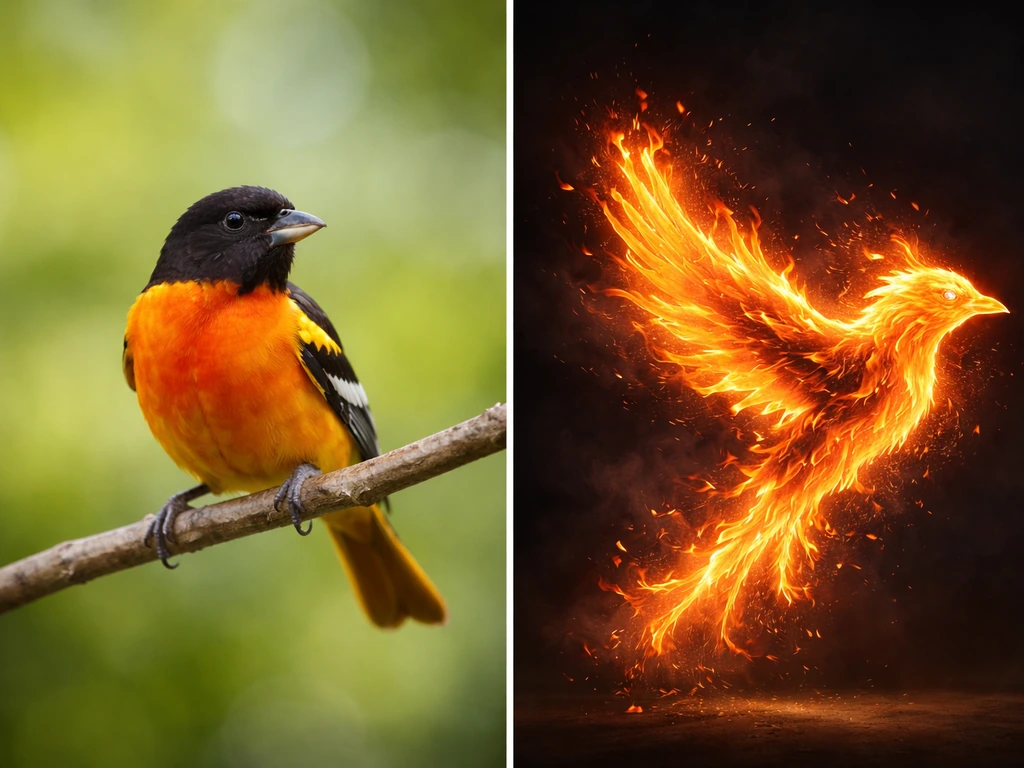
The single-word form 'firebird' has a straightforward dictionary definition: it describes any of several birds known for vivid red or orange plumage, with the Baltimore oriole being the most commonly cited example. The word is literally 'fire + bird,' pointing to the fiery color of the feathers rather than any actual flame. This is the most grounded, everyday use of the term, and it's how ornithologists and birdwatchers use it.
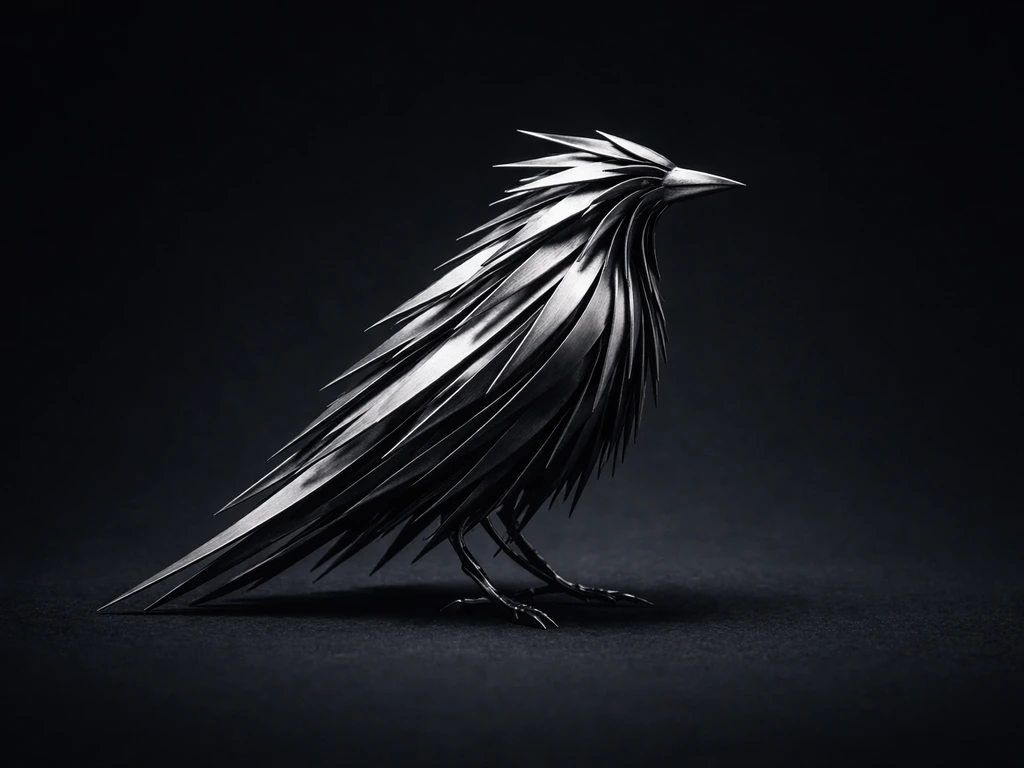
The two-word or hyphenated version, 'bird on fire,' is where things get more figurative. When you see that phrase in a caption, a tattoo description, a dream journal, or a piece of art, it's almost never about a literal bird being set on fire. If you’re wondering about the deeper blade bird meaning, look at the specific symbolism tied to how the bird appears and what it seems to represent in that context bird on fire. Instead, the image is doing symbolic work. The fire transforms the bird from an ordinary creature into something charged with meaning: danger, power, purification, or renewal. That shift from literal color to literal flame is what makes the phrase so loaded.
What a 'bird on fire' usually symbolizes
Across the many places this image shows up, a few core themes keep repeating. The fire rarely just means destruction. More often it means something is being changed, tested, revealed, or reborn. Here are the most consistent symbolic meanings attached to the fire-bird image:
- Transformation and rebirth: the fire consumes the old form so something new can emerge, closely tied to the phoenix idea
- Passion and intensity: a bird 'on fire' can represent someone burning with desire, creative energy, or ambition
- Purification: flames are a classic symbol of burning away impurity, and a bird passing through fire can mean spiritual cleansing
- Danger and warning: in folklore, a glowing or burning bird is often a sign that something consequential is about to happen
- Inspiration and divine spark: the fire marks the bird as otherworldly, a messenger from a higher realm
- Survival against the odds: a bird that survives or rises from fire signals resilience and the capacity to endure
Notice that the same image can point in nearly opposite directions: a fire bird can be a blessing or a harbinger of doom. That duality is actually baked into the oldest folklore versions of the symbol, and it's a useful clue when you're trying to pin down what a specific use of the phrase actually means.
The mythological roots: where the fire-bird idea comes from
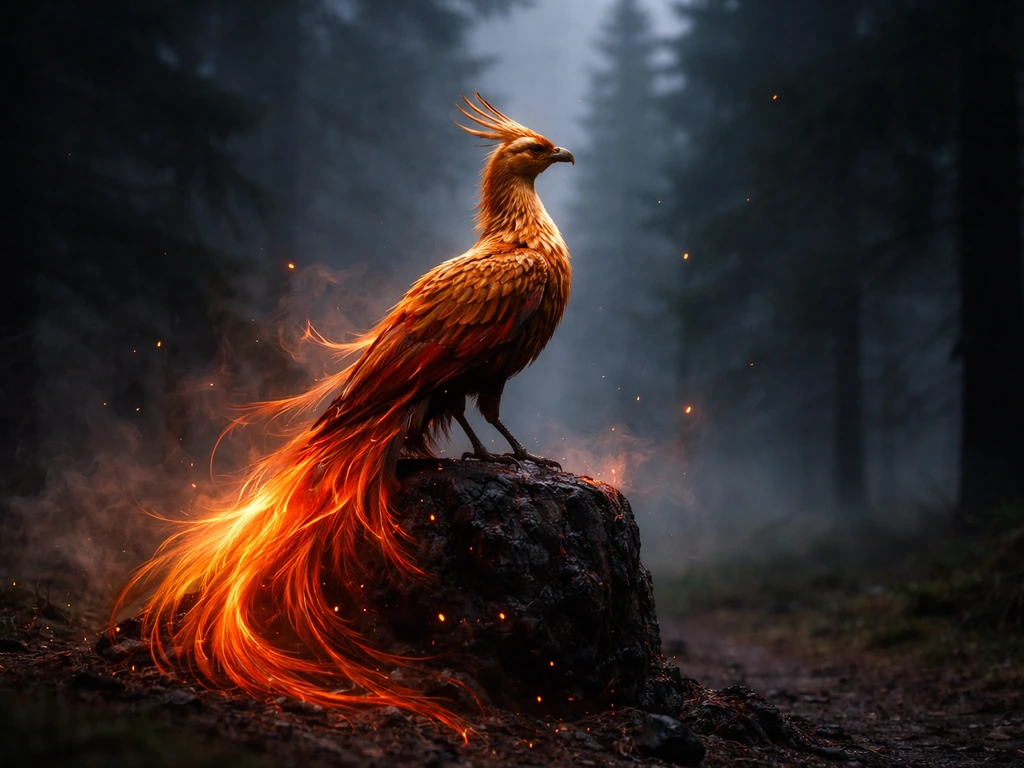
The Slavic Firebird (Zhar-ptitsa)
The most fully developed 'fire bird' in world mythology is the [Slavic Zhar-ptitsa](/mythic-and-heraldic-birds/blade-bird-oklou-meaning), translated directly as 'Firebird.' In Russian and Eastern European folklore, this bird is described as magical and prophetic, with golden feathers that glow like embers and crystal eyes. It doesn't just look like fire; it functions like fire, illuminating everything around it. Crucially, the Firebird is described as both a blessing and a harbinger of doom to whoever captures it. The stories typically begin with the hero spotting a golden feather and being warned not to take it. He takes it anyway, and the rest of the tale is the quest that follows. The fire-bird is the inciting force, the point of no return.
The Phoenix and its global cousins
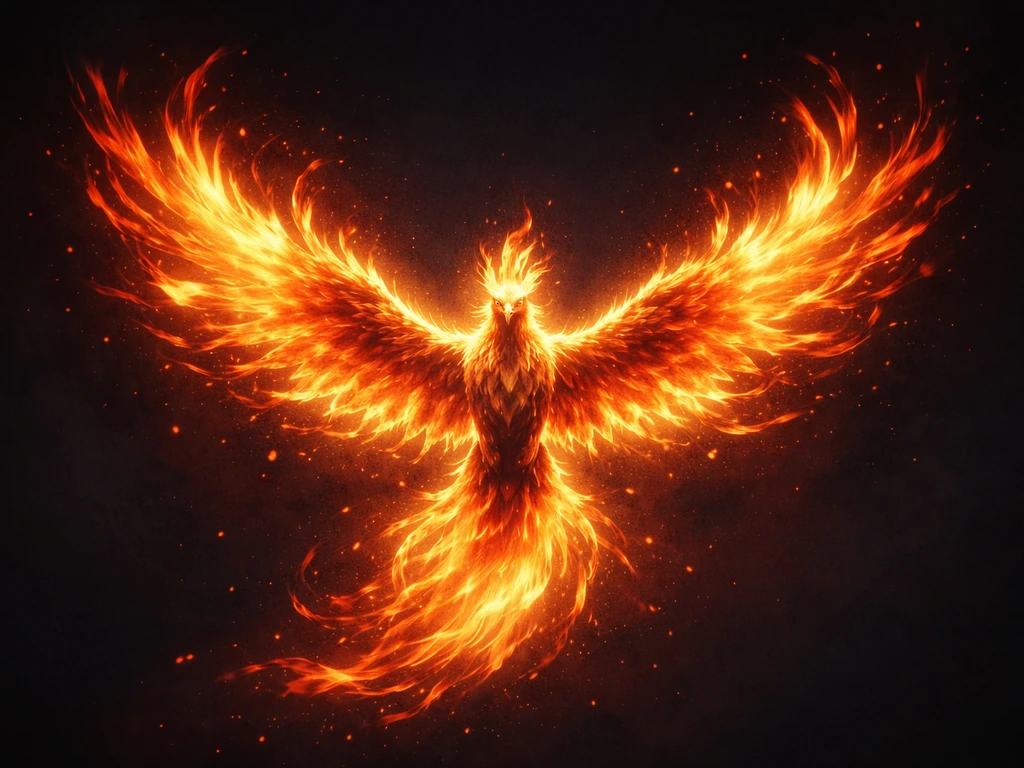
The phoenix is the most globally recognized fire bird, built entirely around the cycle of burning and rebirth. But the phoenix isn't alone. The Egyptian Bennu, the Chinese Fenghuang, and the Arabian Anqa are all fiery, long-lived, or solar birds that share a family resemblance with the phoenix concept. The common thread across all of them is that fire is not their destruction but their mechanism of renewal.
Across many traditions, the phoenix and its “fiery rebirth” cousins share the idea that the bird is destroyed by flame and then renewed the common thread across all of them is that fire is not their destruction but their mechanism of renewal. .
When people use 'bird on fire' in a rebirth or transformation context today, they are almost always drawing on this collective mythological archive, whether they know it or not.
Other powerful bird symbols nearby
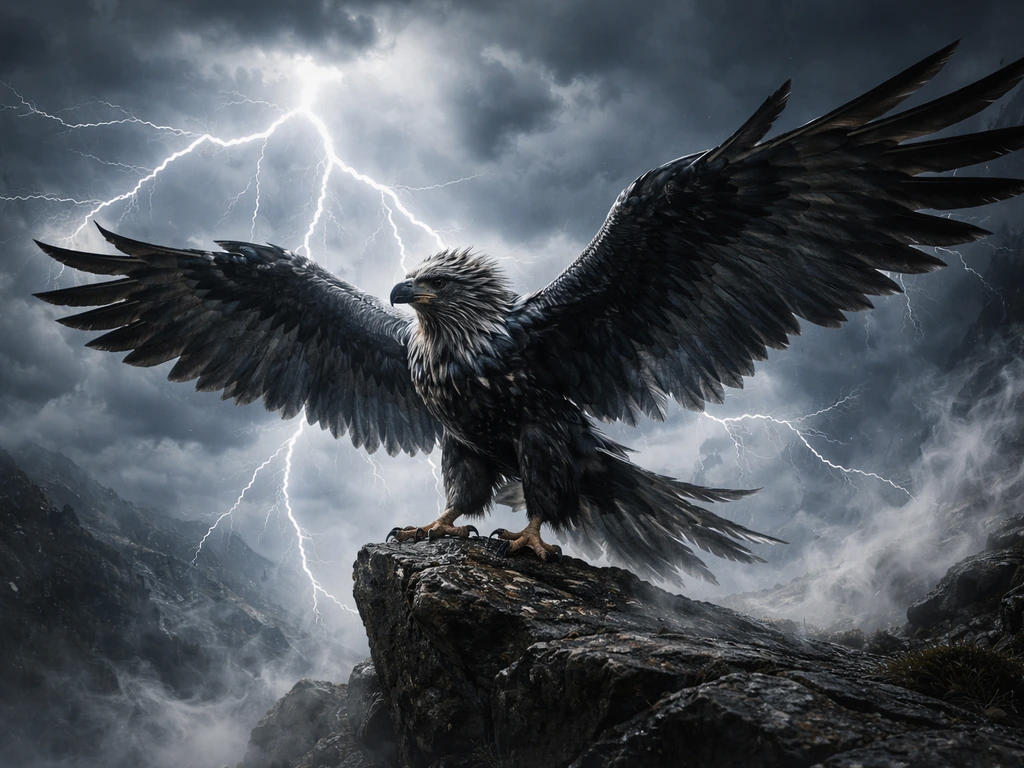
It's worth noting that 'fire bird' sits in a cluster of powerful elemental bird archetypes. blank" rel="noopener noreferrer">The Thunderbird of Native American mythology, for instance, is a sky-spirit whose wingbeats create thunder and whose beak produces lightning. If you are comparing the thunder bird meaning to fire bird symbolism, these elemental bird archetypes often communicate similar ideas through different forces Thunderbird. Like the fire bird, the Thunderbird is elemental, awe-inspiring, and carries both protective and destructive potential. If you're exploring bird symbolism broadly, these figures illuminate how different cultures attach elemental forces to birds to express ideas that go beyond ordinary language.
Slang and everyday usage: how people actually use the phrase
In casual speech and on social media, 'fire bird' has picked up a much looser, more colloquial meaning. 'Fire' on its own has become standard slang for something excellent, exciting, or impressive. So when someone captions a photo 'fire bird,' they often just mean 'this bird (or this shot, or this person) is amazing.' There's no mythological subtext intended. The same logic applies to sports contexts, where a player called a 'fire bird' is usually being praised for speed, aggression, or brilliance on the field.
The phrase also appears in music lyrics and band names, where it tends to carry a slightly more intentional symbolic weight, usually suggesting energy, freedom, or a rebellious spirit. Context and tone are everything here. A comment that says 'bro is a literal fire bird out there' under a basketball highlight is pure slang. The same phrase in a poem or song lyric is almost certainly reaching for something deeper.
What 'bird on fire' means by context
Art and tattoos
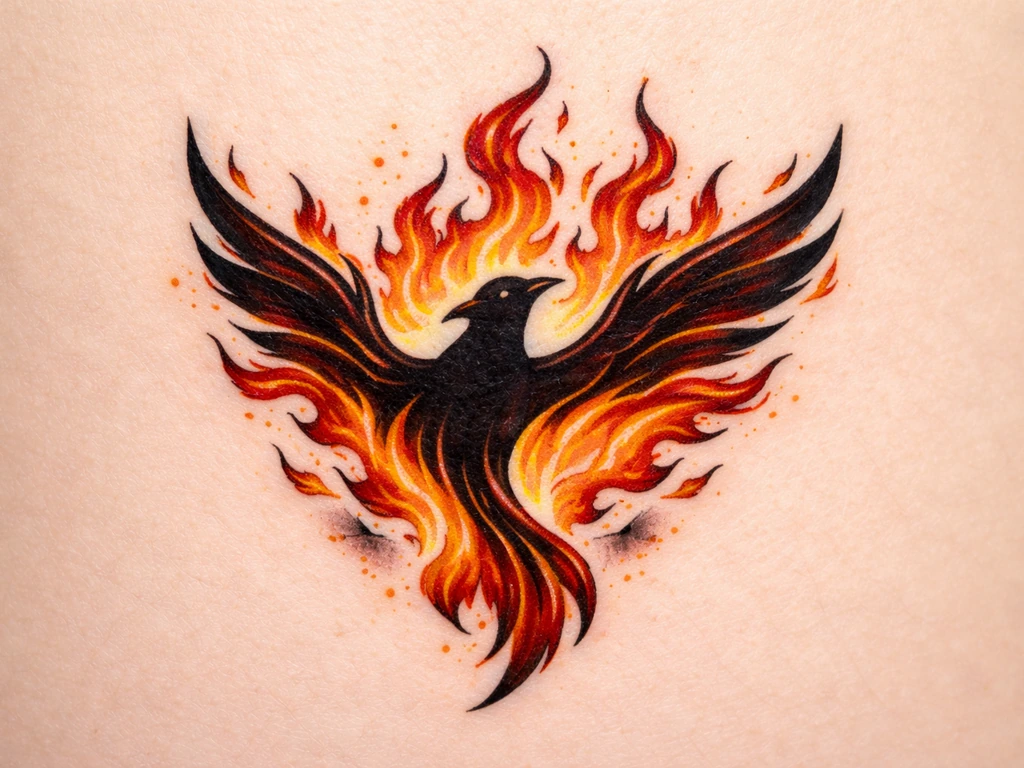
In visual art and tattoo design, a bird on fire is one of the most enduring symbols of personal transformation. People choose it to mark a major life change: surviving illness, leaving a relationship, starting over after loss. The bird species matters here. A phoenix or generic bird in flames almost always points to rebirth. A specific bird, like a raven or eagle engulfed in fire, can layer in the symbolic meanings of that species alongside the fire element. If you're researching the meaning of a tattoo you've seen, look at the bird species closely before assuming the generic 'transformation' reading.
Dreams
Dream interpretation sources suggest that seeing a bird on fire in a dream can point to a feeling that your life or routine has become too repetitive or constrained, and that something needs to change. In a broader symbolic reading, dreaming of fire and birds together often signals an unconscious awareness of a transition underway: something is ending so something else can begin. The emotional tone of the dream matters a lot. If the burning felt terrifying, the emphasis may be on loss or fear of change. If it felt awe-inspiring or even peaceful, the reading leans more toward transformation and renewal.
Spiritual and religious contexts
In spiritual traditions, a bird on fire often represents the soul being tested, purified, or elevated. Fire is a purifying agent in many religious frameworks, and birds frequently serve as messengers between the human and divine realms. Put them together and you get an image of the soul in the process of being refined, much like metal in a forge. If you encountered the phrase in a spiritual reading, meditation description, or religious text, this interpretation of divine purification or spiritual awakening is almost certainly the intended meaning.
Mythology and storytelling
In a narrative or mythological context, the fire bird functions as a catalyst. As with the Slavic Firebird, its appearance sets events in motion. It's the thing that can't be ignored, the omen that demands a response. In modern storytelling, whether in novels, films, or games, a fire bird almost always signals that the story is at a turning point or that the protagonist is about to face their defining test.
Social media and pop culture
On platforms like Instagram, TikTok, or X (formerly Twitter), 'fire bird' or 'bird on fire' in captions and comments is most often pure slang enthusiasm, though the mythological resonance adds a layer of cool that pure slang words lack. When used as an aesthetic or vibe descriptor, it usually implies something vivid, wild, and hard to look away from. The symbolism is more mood than meaning in this context.
How to figure out the exact meaning in your situation
The phrase 'fire bird' is genuinely multi-layered, but the right interpretation almost always becomes clear when you ask a few targeted questions. If you also meant a different kind of symbol, you may want to compare this with metal bird meaning to see how everyday interpretations change by context. Work through these and you'll land on the correct reading:
- Where did you encounter it? A tattoo, a dream, a social media caption, a piece of art, a song lyric, and a mythology text all point to different interpretive frameworks.
- What bird species is involved? A generic bird or phoenix leans toward rebirth. A raven on fire carries different weight than a dove on fire. Species-specific symbolism stacks on top of the fire meaning.
- What is the tone of the surrounding content? Is it celebratory, ominous, spiritual, or casual? Tone is the fastest way to separate slang use from symbolic use.
- Are there other symbols present? Flames rising upward vs. consuming downward, ashes beneath the bird, a sun or moon nearby: these details push the interpretation in specific directions.
- Who made or said it, and for what audience? A tattooist describing their work to a client, a poet writing about grief, and a teenager captioning a sports clip are all using the same phrase in fundamentally different registers.
- What is the cultural or geographic origin of the content? Slavic folk art, Japanese design, and American street art will each bring different symbolic traditions to the fire-bird image.
Related phrases and bird-fire symbolism worth knowing
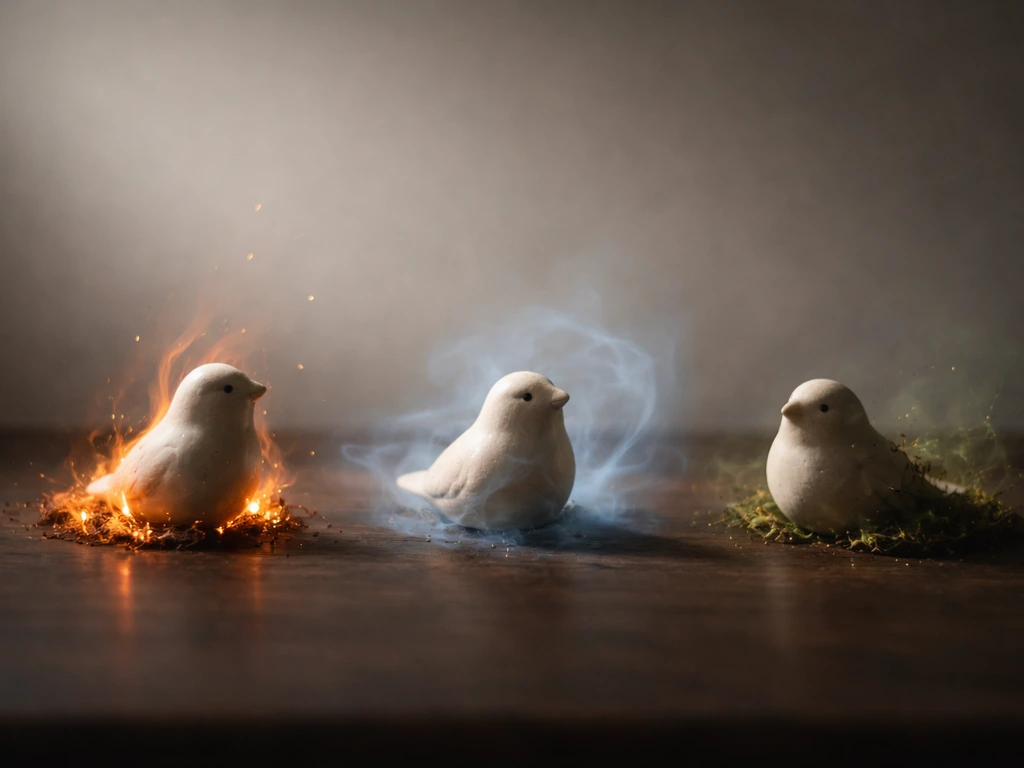
The fire-bird image doesn't exist in isolation. It belongs to a family of elemental bird symbols that work in similar ways. A quick comparison helps sharpen the distinctions:
| Phrase / Symbol | Core meaning | Tone |
|---|---|---|
| Fire bird / bird on fire | Transformation, passion, rebirth, danger, turning point | Dual: can be blessing or warning |
| Phoenix | Cyclical death and rebirth, renewal from destruction | Hopeful, transcendent |
| Thunderbird | Elemental power, sky force, protection and destruction | Awe-inspiring, commanding |
| Metal bird | Strength, durability, modernity, industrial power | Grounded, forceful |
| Blade bird | Sharp precision, edge, cutting through obstacles | Intense, focused |
| Bird on fire (slang) | Exceptional performance, high energy, impressive skill | Casual, enthusiastic |
The fire bird occupies a unique space among these because fire is both the most destructive and the most regenerative element. That's why the symbol keeps appearing across cultures and centuries: it captures something true about how transformation actually feels, both terrifying and necessary at once. Whether you're reading it in a myth, wearing it as a tattoo, or using it in a caption, that tension is always somewhere in the background.
FAQ
Is “fire bird” ever used to describe a real animal that is literally on fire?
Rarely. In most everyday uses, it’s either a dictionary term for a vividly colored bird (firebird) or a symbolic phrase (bird on fire). Literal “burning bird” language is usually metaphor in captions, dreams, lyrics, or art descriptions, not a zoological observation.
What’s the difference between “firebird” and “bird on fire” in meaning?
“Firebird” usually refers to bright red or orange plumage (a fiery color impression). “Bird on fire” is typically figurative and tied to themes like transformation, purification, or a turning point, where the fire is the symbolic engine rather than the bird’s color.
If I see “fire bird” in a tattoo, how do I avoid picking the wrong symbolism?
Look for three things: the bird type (generic bird versus specific species), the fire’s behavior (contained flames, roaring destruction, or gentle glow), and the emotion of the surrounding elements (ashes, stars, rising motion). Phoenix-like designs with clear rebirth cues usually skew more toward renewal than danger.
How can I tell whether the “fire bird” symbol is blessing or warning?
Check the narrative posture in the source. If the image includes invitation, prophecy, or a quest that leads to recovery, it leans positive. If it frames capture as forbidden, includes warnings, or emphasizes immediate harm, it leans toward doom or consequences.
Does “fire bird” mean the same thing in dreams every time?
No. Dream meaning depends heavily on emotion and outcome. Fear during the burning often points to anxiety about change, while awe or calm suggests readiness for transformation. Also note whether the bird escapes, dies, or is reborn, since that commonly shifts the reading toward ending versus renewal.
In spiritual contexts, is the “fire bird” always about purification?
Often, yes, but not exclusively. Many interpretations treat it as refinement or soul elevation, yet if the surrounding text emphasizes sacrifice, trials, or moral testing, it may focus more on endurance and accountability than comfort or cleansing.
When someone says “fire bird” as slang, what are common situations it can fit?
Usually it’s praise for excellence, intensity, or charisma, especially in sports highlights, standout performances, or viral social media posts. If it’s paired with competitive language (dominance, pressure, aggression), the emphasis is more on intensity than mythic rebirth.
Could “fire bird” in lyrics mean something different than in visual art?
Yes. Lyrics often use “fire bird” for energy, rebellion, freedom, or an unleashed spirit, even if the same phrase in a tattoo would signal personal rebirth. The tone of the lyric line (celebratory versus threatening) is the best clue to the intended angle.
What if I’m reading the phrase and I’m not sure which culture or mythology it’s referencing?
Don’t assume one source. The Slavic Firebird, phoenix-like traditions, and other fiery birds share the transformation core but differ in details, like prophetic warnings versus explicit life-death-rebirth cycles. If the text mentions feathers, glowing gold, a forbidden feather, or an inciting quest, it often signals the Slavic-style motif.
What’s a quick checklist to interpret “fire bird meaning” from a specific post or image?
Answer these: What bird (generic, phoenix, specific species)? Is the fire symbolic or literal-looking? Is the mood celebratory or ominous? Is there a rebirth cue (rising, recovery, renewal) or a warning cue (forbidden, quest, consequence)? Your answers usually narrow the meaning fast.