
When someone searches "thunder bird meaning," they are almost always looking for one of three things: the mythological creature from Indigenous North American traditions, a symbolic or spiritual use of thunder/sky power imagery, or a proper-noun reference to something named "Thunderbird" (a car, a movie, a software product, a sports team). The myth creature is the most historically loaded of these, and it is where the deepest meaning lives. This guide will walk through all three angles, show you how to tell which one applies to your situation, and give you the symbolic takeaways that matter most.
Thunder Bird Meaning: Myths, Symbolism, and Disambiguation

Marcus Blackwell
16 Apr 2026
What "Thunder Bird" actually refers to

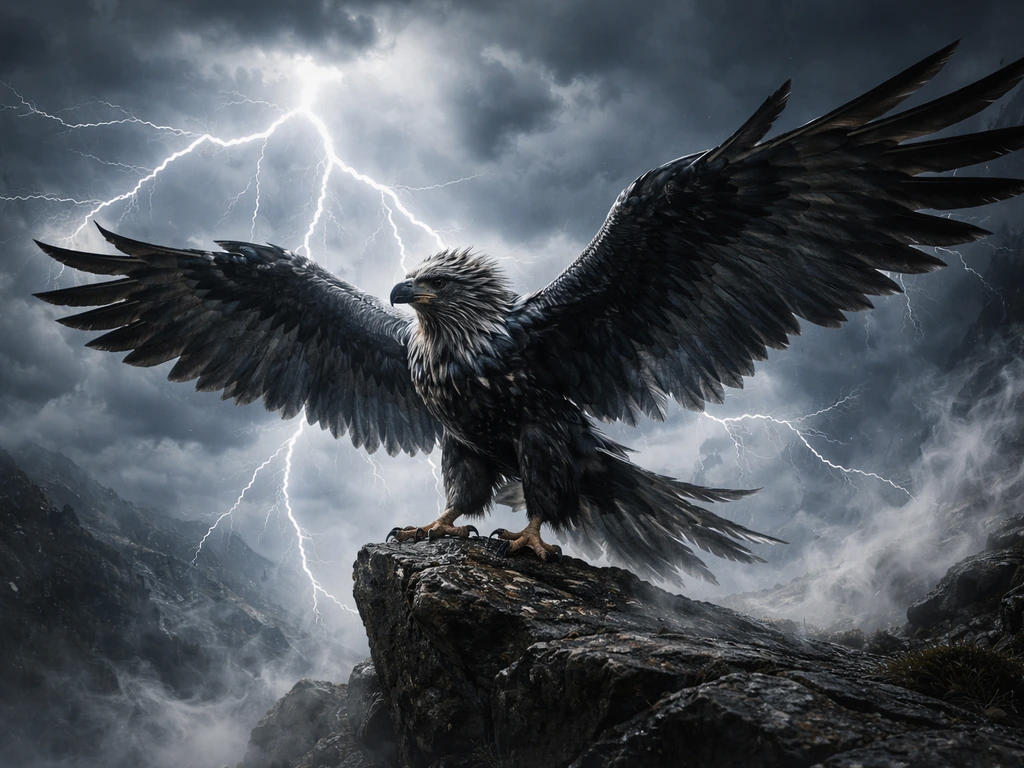
In American English dictionaries, "thunderbird" is defined as a legendary, enormous, eaglelike bird in the mythology of certain Indigenous North American peoples, one that produces thunder, lightning, and rain. Collins English Dictionary defines “thunderbird” as an enormous bird in the mythology of certain Indigenous North American peoples that produces thunder, lightning, and rain Collins defines “thunderbird”. Merriam-Webster pins it down the same way: "a bird that causes lightning and thunder in North American Indigenous myth." Collins traces the word origin simply as "thunder + bird," which tells you that the compound was always descriptive rather than invented as a proper name. So at its core, the phrase points to a powerful sky creature, not a metaphor or a brand, though it has become both of those things over time.
The reason searches for "thunder bird meaning" can feel muddy is that the phrase sits at the intersection of genuine folklore, spiritual symbolism, pop culture titles, and product naming. Wikipedia's Thunderbird disambiguation page lists variants including "thunder bird" and "thunderbirds" and bundles them with arts and entertainment references, fictional characters, and modern proper-noun uses. That overlap is the source of most confusion, and it is worth clearing up before diving into the symbolism itself.
Native American and regional folklore meanings
The Thunderbird appears across a remarkably wide range of Indigenous traditions. Audubon has documented its presence among the Sioux, Ojibwe, Tlingit, Pawnee, and roughly two dozen other tribes, which immediately tells you something important: there is no single, uniform Thunderbird. Each community has its own name, its own story, and its own relationship to the being.
In Anishinaabe and Ojibwe cosmology, the Thunderbird is called Animikii. The Illinois Humanities project connected to Ojibwe cultural storytelling describes Animikii as living in the sky, which positions it not just as a weather phenomenon but as a sky-world inhabitant with agency and purpose. The University of Pennsylvania's Ojibwe archive adds that Animikii is a "powerful spirit being" and that storytelling traditions include accounts of the Thunderbird transforming into an eagle, a detail that ties the creature to the very real, physical world of raptors while keeping one foot in the spiritual.
On the Pacific Northwest coast, the Brooklyn Museum's collection includes a Thunderbird Transformation Mask from the Namgis clan of the Kwakwaka'wakw people, described as representing an "Ancestral Sky Being." The British Museum similarly frames Thunderbird in the context of Kwakwaka'wakw potlatch traditions and transformation masks, with both institutions emphasizing collaboration with Indigenous communities in how those objects and stories are interpreted today. For example, a British Museum collection entry describes a Kwakwaka’wakw transformation mask as a mechanical mask used in dances and connects it to Kwakwaka’wakw beliefs about supernatural beings and associated privileges blank" rel="noopener noreferrer">The British Museum similarly frames Thunderbird in the context of Kwakwaka'wakw potlatch traditions and transformation masks, with both institutions emphasizing collaboration with Indigenous communities in how those objects and stories are interpreted today.. This is a useful reminder that regional clan and community identity is woven into the Thunderbird's meaning in ways that a generic "power and storms" summary cannot fully capture.
One of the more vivid story motifs Audubon describes is the idea that Thunderbirds shoot bolts at trees and that lightning strikes are sometimes explained through a rivalry narrative involving the creature. Different communities interpret the cause-and-effect differently, which is exactly why you cannot flatten "Thunderbird" into a single symbolic meaning and call it done.
Mythology connections and symbolic themes
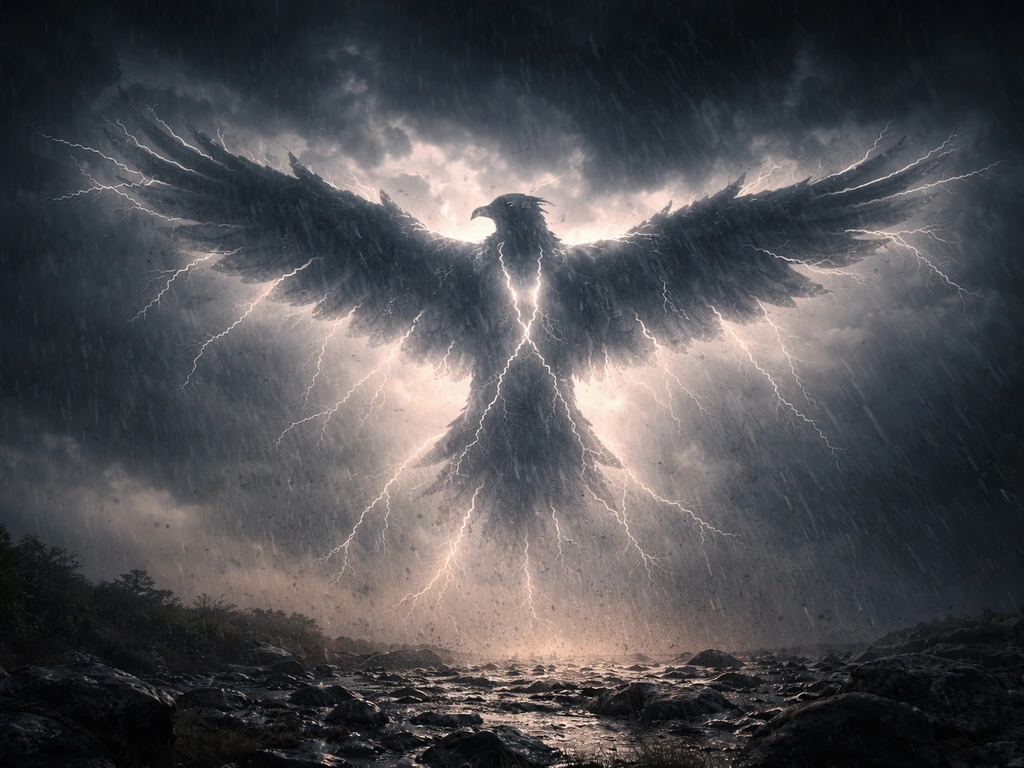
Encyclopedia.com frames the Thunderbird as a figure representing the natural forces of thunder, lightning, and storms, and notes that many cultural groups have their own versions of a comparable storm or sky creature. This is worth sitting with for a moment. The Thunderbird is not a North American oddity. Taiwanese folklore has Lui-kong-tsiau, a thunder-and-lightning raptor-like creature. Southern African tradition has the impundulu, or lightning bird, a being associated with summoning thunder and lightning. These parallels are interesting but they are not the same thing, and conflating them into one global "storm bird archetype" papers over the specific, community-rooted meanings that make each tradition significant. The comparison is useful for understanding why storm-bird symbolism appears widely; it is not useful as a shortcut to defining any one tradition.
That said, the symbolic themes that run through Thunderbird traditions are consistent enough to be worth naming. Power, protection, and the forces of the upper realm are the core. The Thunderbird governs the sky, controls weather, and is often depicted as a protector of people against underwater or earth-bound spiritual antagonists. Transformation is another recurring theme, seen most clearly in the Ojibwe tradition where the being moves between eagle form and spirit form. If you are encountering "thunder bird" as a symbol in a tattoo, a piece of art, or a literary reference, these are the themes most likely intended: raw elemental power, sky sovereignty, and the capacity to transform.
It is also worth noting the connection to what might be called elemental bird symbolism more broadly. Much like how a fire bird meaning draws on flames and rebirth as its symbolic core, the Thunderbird draws on storm and sky, two forces that are simultaneously destructive and life-giving. The pairing of those qualities is where its symbolic weight comes from.
"Thunderbird" vs "Thunder Bird": does the wording matter?
In most practical contexts, the one-word "Thunderbird" and the two-word "Thunder Bird" are treated as the same thing in search results and on reference sites. Collins lists the word origin as "thunder + bird" and treats both forms as pointing to the same mythological being. Wikipedia's disambiguation page groups "thunder bird," "thunderbird," and "thunderbirds" together as variant spellings for the same cluster of references.
Where the spacing does carry a signal is in proper-noun and title usage. Project Gutenberg hosts a novel called "The Thunder Bird" by B. M. Bower, where the two-word, title-case version is clearly a creative naming choice and not a direct reference to the Indigenous myth creature. When you see "Thunder Bird" (spaced, capitalized) in a title, a brand name, or a heading, it is often a stylistic choice that borrows the imagery of the myth without being directly about the myth. The one-word lowercase "thunderbird" in a dictionary or encyclopedia context almost always points to the legendary bird itself.
The biggest practical complication is Mozilla Thunderbird, the free open-source email client that has been around since its 1.0 release. If your search results are full of terms like "logo," "identity guidelines," "mail client," or version numbers, you have landed on the software product, not the myth. Mozilla's visual identity guidelines use "Thunderbird" as a product brand name, and the name was clearly chosen for its connotations of power and speed, not as a direct claim to Indigenous symbolism.
Everyday idioms and slang uses

Outside of mythology and software, "thunder bird" shows up in a few looser everyday contexts. Slang aggregator sites like SlangDefine carry entries for "Thunder Bird" as a standalone phrase, though the definitions tend to be informal and community-contributed rather than standardized. In casual speech, calling something or someone a "thunderbird" often implies force, speed, or unstoppable energy, drawing on the creature's mythological associations without any specific cultural framing.
In literature and entertainment, "Thunderbird" has been used as a character name, a team name, a vehicle name (most famously the Ford Thunderbird), and a title across film, television, and video games. This is the "proper-noun drift" that happens to many mythological names: the original meaning gets borrowed for branding because the imagery is powerful, and over time the brand can eclipse the source in search results. If you encountered "thunder bird" in a piece of creative writing or a game and it felt more like a nickname or a call sign than a mythological reference, that is probably exactly what it is. For contrast, think about how a blade bird meaning in a lyric or story can carry a sharp, cutting symbolic weight that is entirely separate from any traditional folklore.
Spiritual and personal symbol interpretation
If you are exploring the Thunderbird as a personal or spiritual symbol, the themes to work with are power, protection, transformation, and the relationship between sky-world forces and the grounded human world. These are the motifs that run consistently across traditions that feature this type of being. A Thunderbird symbol in a tattoo or a piece of jewelry is most commonly read as an emblem of strength, resilience, and the capacity to weather (literally) intense forces.
Here is where a word of caution is genuinely necessary. Because Thunderbird traditions are living, community-specific, and sacred to the people who hold them, using Thunderbird imagery in a spiritual practice requires more than finding a definition online. The British Museum's work on Thunderbird transformation masks specifically emphasizes collaboration with Indigenous communities, and advocacy perspectives on commodified Indigenous spiritual practices point out the difference between appreciating a symbol and adopting a sacred practice without proper context. If you want to incorporate Thunderbird symbolism into your own spiritual work, the responsible path is to research the specific tradition the symbol comes from, seek out writing or teaching from people within that community, and treat the symbol with the specificity it deserves rather than as a generic "storm power" shorthand.
This connects to a broader pattern you see with powerful bird symbols across cultures. A metal bird meaning in modern symbolic usage, for instance, often draws on ideas of strength and constructed power, and its meaning shifts depending entirely on the context in which it appears. Thunderbird is similar: the core imagery is consistent, but the specific meaning depends heavily on where the symbol comes from and how it is being used.
For personal reflection, the Thunderbird's most transferable symbolic lesson is about transformation through intensity. The creature does not shy away from storms; it generates them. If you are drawn to this symbol, it is worth asking what storms in your own life you are being called to move through rather than around.
How to figure out which meaning you actually mean

The quickest way to pin down what "thunder bird" means in your specific source is to look at the surrounding context clues. Here is a practical checklist:
- Does the text include words like "Animikii," "Anishinaabe," "Ojibwe," "Kwakwaka'wakw," or a specific clan name? If yes, you are looking at a specific Indigenous tradition, not generic symbolism. The Animikii reference in particular signals the Ojibwe/Anishinaabe Thunderbird tradition, where the being transforms into an eagle.
- Does the text use dictionary-style language like "in North American Indigenous myth" or "legendary bird"? That signals the mythological creature definition, the most historically grounded meaning.
- Does the text include words like "logo," "identity guidelines," "email client," "open-source," or version numbers like "1.0"? You are looking at the Mozilla Thunderbird software product, not the myth.
- Is "Thunder Bird" (two words, title case) used as a character name, vehicle name, team name, or creative title? That is a proper-noun borrowing of the myth imagery, not the myth itself.
- Does the text discuss masks, potlatch ceremonies, transformation, or ancestral sky beings in a museum or exhibition context? That is a specific Pacific Northwest Indigenous tradition reference, particularly Kwakwaka'wakw.
- Is the phrase used casually in conversation to mean something is fast, powerful, or unstoppable? That is the informal slang register, drawing on the mythological reputation without any specific cultural framing.
- Does the source appear in a song lyric, poem, or experimental creative piece where the imagery is deliberately ambiguous? Check whether the creator has stated their intent; otherwise, read it through the lens of sky, power, and transformation as your interpretive baseline. Songs like those referenced on sites covering blade bird oklou meaning show how bird phrases in lyrics can carry layered, non-literal meanings that only make sense when you know the artist's context.
Comparing the main meanings at a glance
| Context | What it means | Key signal words |
|---|---|---|
| Indigenous mythology (general) | Enormous, eaglelike spirit being that controls thunder, lightning, and rain | "legendary," "North American Indigenous myth," "myth creature" |
| Ojibwe/Anishinaabe tradition | Animikii: powerful sky spirit being that can transform into an eagle | "Animikii," "Anishinaabe," "Ojibwe," "transforms into eagle" |
| Kwakwaka'wakw/Pacific Northwest | Ancestral Sky Being tied to clan identity, potlatch, and transformation masks | "Namgis clan," "Kwakwaka'wakw," "transformation mask," "potlatch" |
| Spiritual/personal symbolism | Power, protection, transformation, sky sovereignty, and resilience through storms | Tattoo, spiritual reading, general symbolism context |
| Proper noun (creative/title) | A name borrowed from the myth to convey strength, speed, or power | Capitalized title, vehicle name, character name, team name |
| Mozilla Thunderbird (software) | Open-source email and productivity client, no mythological meaning intended | "email," "client," "open-source," version numbers, "logo" |
| Informal slang | Something or someone described as extremely powerful, fast, or forceful | Casual speech, no specific cultural or mythological framing |
The bottom line is this: "thunder bird" most likely refers to the Indigenous mythological creature when it appears in a cultural, literary, spiritual, or symbolic context. The symbol's core meaning, power over storms, transformation, and sky-world authority, is durable and widely recognized. But the specific tradition it comes from matters, and treating all "Thunderbird" references as interchangeable does a disservice to the communities whose stories gave the symbol its weight in the first place. Use the checklist above to narrow down your source, respect the specificity of the tradition you are looking at, and you will have a much clearer answer to what "thunder bird" means in any given context.
FAQ
If someone searches “thunder bird meaning” but means a tattoo, how can they tell whether it is a generic storm symbol or tied to a specific tradition?
Check the artist statement and any accompanying symbols (patterns, clan motifs, placement, and wording). If the design references a particular community or includes specific transformation elements, it is more likely tradition-specific. If it is only a stylized eagle-like lightning bird without cultural markers, it is usually a generalized “storm power” reading.
Does “Thunderbird” always refer to the Indigenous mythological creature, even when capitalization or spacing changes?
Not always. Lowercase “thunderbird” in dictionary-style contexts typically points to the myth creature, while “Thunder Bird” as a title-case, spaced name often signals a creative naming choice (book, car, character) rather than a direct cultural reference. The fastest filter is whether the result looks like a proper noun product, media title, or a myth definition.
How should I interpret “thunder bird” if it appears in a children’s book or modern cartoon?
In many cases it is “myth imagery” used for shorthand (power, protection, speed) rather than an attempt at accurate cultural meaning. Use the storyline elements to judge: if the plot treats it as a sky being with transformative or protective agency, it is likely drawing loosely from the myth; if it is simply a superhero nickname, it is probably only using the vibe.
Is it appropriate to use Thunderbird imagery in a spiritual practice, like meditation or protection rituals?
Be cautious. The article emphasizes that Thunderbird traditions are living and community-specific, so using the symbol for personal practice should be done only with careful context and learning from Indigenous voices. A respectful approach is to avoid “universalizing” it, and instead understand the specific tradition the imagery is connected to and what that tradition permits.
Are the Thunderbird myths the same across tribes, or does “meaning” vary by community?
Meaning varies. Even though the core motifs (sky power, protection, transformation) show up in multiple places, the creature’s name, story details, and role can differ by community. Treat “Thunderbird” as a family of related traditions rather than a single, uniform belief system.
What’s the best way to avoid mixing up Thunderbird with other “storm bird” creatures from other regions?
Use the source first, then the narrative. The safest method is to identify the culture or language the reference comes from, and avoid substituting other thunder-bird legends as equivalents. Similar functions (thunder, lightning, weather) do not automatically mean the meanings or relationships are the same.
If I see “Thunderbird” in tech search results, how can I confirm it is Mozilla and not the myth?
Look for product markers like “email client,” “mail server,” “logo,” “identity guidelines,” or version/release notes. Mozilla Thunderbird branding is explicitly about speed and power as a brand connotation, not about representing Indigenous folklore.
When does “thunder bird” sound like slang or a nickname rather than a myth reference?
If it is used as a descriptor for someone’s energy, speed, or force, and the context reads like casual speech rather than cultural storytelling, it is likely a borrowed nickname. The key clue is whether there is any framing about weather, transformation, sky-world beings, or Indigenous context.