
"Blade bird oklou" is most likely a search for the meaning of "blade bird," a song by the French electronic artist Oklou (real name Marylou Mayniel, pronounced "Okay Lou"). The phrase is not a traditional idiom, proverb, or established slang. It is a poetic song title inspired by "Txoria Txori," a famous 1957 Basque poem by Joxean Artze, and the central image, a blade on a bird, is a metaphor for how love, when it tries to possess or control, ultimately causes harm.
Blade Bird Oklou Meaning: What Oklou Means With Symbolism

Marcus Blackwell
25 Apr 2026

What "blade bird" and "oklou" actually refer to
Let's untangle both parts of the phrase, because they serve very different functions. "Oklou" is the stage name of Marylou Mayniel, a French musician signed to True Panther Records. The name is phonetic shorthand pronounced "Okay Lou," and when you see "blade bird oklou" or "oklou blade bird," you are essentially reading an artist name and track title run together as a search query, not a two-part English expression.
"Blade bird" is the name of the song itself. It was released by Oklou in early 2025 and appears on her Bandcamp page with published lyrics. The title is not a dictionary phrase, a slang term, or a meme. It is a coined poetic image that does the work any good metaphor does: it compresses a complicated feeling into something you can feel without fully explaining.
There is one other place the term "Blade Bird" appears: as a creature name in the Xenoblade video game franchise. That usage has nothing to do with Oklou's song and is purely a coincidence of naming.
How to verify exactly what you saw or heard (a quick checklist for today)

If you encountered "blade bird oklou" somewhere and are not sure you have the right context, here is how to pin it down quickly.
- Search "Oklou blade bird" on Bandcamp directly. The track page includes the full lyrics and writing credits (Marylou Mayniel and collaborators), which confirms the source and spelling.
- Check Pitchfork's coverage of Oklou. Pitchfork has published long-form features and video interviews where she discusses "blade bird" and its inspirations, including her reference to "Txoria Txori."
- Look up "Txoria Txori" (sometimes spelled Txoria Txoria). If the article, post, or video you saw mentioned this Basque poem alongside "blade bird," you have confirmed the inspiration chain.
- If you heard "blade bird" without context and are unsure of the spelling, check whether the source also mentioned "Okay Lou" or "Marylou Mayniel." Either confirms you are looking at Oklou's song.
- If your source was about a game and mentioned "Xenoblade," the "Blade Bird" there is a fictional creature name and is unrelated to bird symbolism or Oklou.
What bird does "blade bird" map to?
The song does not name a specific species. The lyric "My baby is a bird" uses "bird" as a universal symbol of freedom and flight, not as a reference to, say, a swallow or a hawk. However, the poem it draws from, "Txoria Txori," is Basque for "the bird's bird" or simply "a bird" (txori means bird in Basque). The source poem also does not fix on a species. So the intended "bird" here is the archetypal free bird: wild, uncontainable, and harmed the moment someone tries to clip its wings.
If you are mapping this to a real bird for symbolic purposes, the closest match in cultural tradition is a songbird or any small wild bird that is visibly damaged by captivity. Canaries, finches, and sparrows all carry this energy in folklore and literature. The blade-on-the-bird image resonates most with traditions that use a caged or clipped bird as a symbol of lost freedom.
The symbolic meaning of the bird in this context

Mythology and folklore
Across mythology and folklore, birds almost universally represent the soul, freedom, and the ability to move between worlds. In Greek tradition, birds were messengers between humans and gods. In Celtic lore, certain birds carried the souls of the dead. In many Indigenous American traditions, birds are spiritual intermediaries. The common thread is that a bird's value lies in its freedom of movement: a bird that cannot fly has lost its essential nature.
The blade as a threat to that freedom follows naturally. Clipping a bird's wings was a literal agricultural practice, and it became a ready metaphor for any act of control that diminishes someone's essential self. Artze's poem makes this explicit: to possess the bird fully (to keep it from flying) you would have to change what it fundamentally is.
Spiritual traditions
In spiritual traditions ranging from Sufi poetry to Buddhist parables, the bird in a cage or under threat represents a soul constrained by earthly attachment. The Sufi poet Rumi uses the caged bird repeatedly as a symbol of the soul longing to return to its divine origin. In this reading, the blade on the bird is not just harm to a lover: it is a spiritual injury caused by the attachment itself. Oklou's framing aligns closely with this tradition even if unintentionally, because the lyric "I'll be the one who ends up getting hurt" suggests the possessor (not just the possessed) suffers from the dynamic.
The Basque poem at the core: Txoria Txori
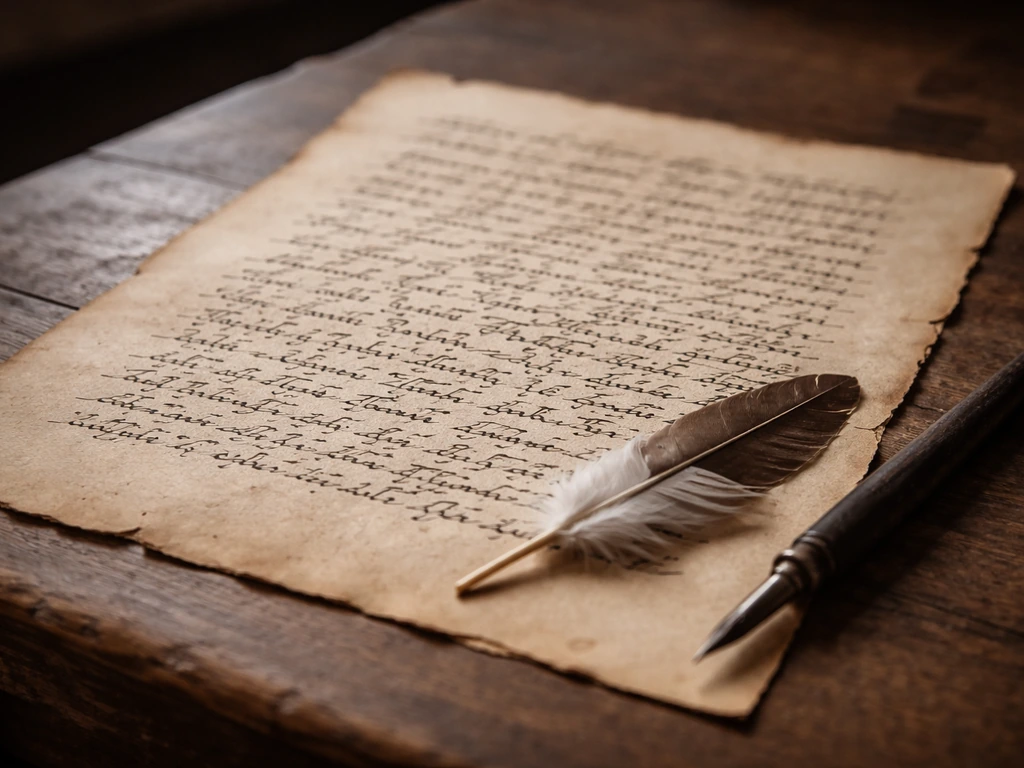
"Txoria Txori" (1957) is the most direct symbolic ancestor of Oklou's song. The poem's core argument is simple and devastating: if you clip the bird's wings so it cannot fly away, it is no longer a bird. You have kept the form but destroyed the thing you loved. The poem frames love as something that must allow freedom or it becomes violence. Radio Nova’s French coverage explicitly frames “Blade Bird” (Oklou) through the idea of whether the bird should be allowed to fly allow freedom or it becomes violence. This is exactly the emotional territory Oklou maps with "blade bird": the blade is the instrument of possession, and placing it on the bird is the moment love becomes harm.
Idioms and figurative expressions connected to the bird-as-freedom image
Even outside Oklou's song, the bird-as-lover and bird-as-freedom metaphor shows up in everyday English and other languages. These expressions share the same symbolic root.
- "Free as a bird": someone unconstrained by obligation or relationship, used positively to describe independence.
- "Clip someone's wings": to restrict a person's freedom or ambitions, often in a relationship or workplace context.
- "A bird in a gilded cage": someone who appears to have everything but is trapped, often used to describe unhappy marriages or constraining wealth.
- "Fly the coop": to escape a confining situation, typically a home, job, or relationship.
- "Let the bird go": an informal way of saying to release attachment and allow someone to be free, used in personal advice contexts.
All of these expressions reinforce the same underlying symbolism: the bird represents someone's essential freedom, and any attempt to hold onto it causes harm. The blade in Oklou's title is simply a more direct, more painful version of "clipping wings. " Related titles in the same symbolic family include songs and phrases built around the thunder bird, fire bird, and metal bird archetypes, each of which extends the bird-as-powerful-force metaphor in a different emotional direction.
“Fire bird meaning” is another bird-archetype phrase used in the same symbolic family to point to power and transformation. Metal bird meaning follows the same idea: an archetypal bird stands in for a powerful force or transformation metal bird archetypes. The thunder bird meaning follows a similar idea, where an archetypal bird represents raw power or transformation.
Multiple interpretations: what the phrase could mean depending on your source
| If you encountered it here | "Blade bird oklou" most likely means | What to do |
|---|---|---|
| Music platform (Spotify, Bandcamp, Apple Music) | A 2025 song by Oklou; the title is a metaphor for love and possession based on "Txoria Txori" | Read the lyrics on Bandcamp and look up Pitchfork's Oklou coverage for full context |
| Music review or "best of 2025" list (e.g., The Fader) | Same song; the phrase signals the strained relationship between love and freedom | The review itself likely explains the Basque poem connection — re-read it with that frame in mind |
| A video or interview (e.g., Pitchfork Talks) | Oklou discussing her songwriting process and the inspiration from "Txoria Txori" | Search the specific video on YouTube; she discusses the poem directly |
| A gaming forum or wiki | A creature called "Blade Bird" in the Xenoblade franchise, unrelated to Oklou | Check the Xenoblade Wiki — this is a fictional game entity, not a bird symbol |
| No clear source — you just heard the phrase | Most likely the Oklou song, given how recently it circulated (2025) | Start with Oklou's Bandcamp page to confirm spelling and lyrics |
The direct answer and your next steps
The most plausible meaning of "blade bird oklou" is: you are looking at the song "blade bird" by Oklou, a French artist, and the phrase means something like "a blade placed on something free. " Specifically, the song uses the bird as a symbol for a loved one who is free by nature, and the blade as a symbol for the harm caused by trying to possess or control that person.
The song draws directly from the 1957 Basque poem "Txoria Txori" by Joxean Artze, which argues that to truly possess a bird you must destroy its essential bird-ness. Spanish Wikipedia states that “Txoria txori” is a Basque poem written by Joxean Artze in 1957 the 1957 Basque poem "Txoria Txori" by Joxean Artze.
The lyric "blade is on the bird" captures exactly that: control as a form of violence.
If you meant the Xenoblade game creature: that is a separate, fictional entity and carries no traditional bird symbolism. If you meant a general phrase or idiom: it is not a standard English expression, but it slots naturally into the long tradition of bird-as-freedom metaphors described above. And if you were looking for broader bird symbolism connected to blades or danger, the closest classical reference is the harmed or clipped bird across Sufi, Celtic, and Greek traditions, all of which use the bird's loss of flight as a marker of spiritual or emotional damage. If you are also curious about thunder bird meaning, it fits the same pattern of a bird archetype standing for a bigger force or transformation.
To confirm exactly what you are looking for: start with Oklou's Bandcamp page for the lyrics, then read The Fader's 2025 best-songs entry for cultural framing, and finally look up "Txoria Txori" to see the poem that started it all. That three-step path will give you everything you need.
FAQ
Is “blade bird oklou meaning” an idiom or slang phrase? If not, how should I interpret it?
No, it is not a standard English idiom. It works best as a “song title + artist name” search string, so the meaning comes from the track “Blade Bird” and how Oklou uses the blade-bird image in her lyrics and in the Basque poem she draws from.
What kind of bird is “Blade Bird,” like a swallow or hawk? Or is it general symbolism?
The “bird” is primarily symbolic, not taxonomic. The lyric “My baby is a bird” is meant to evoke an archetypal free creature, so trying to force it into one real species usually misses the point.
Does the “blade” represent literal violence, or is it mainly a metaphor for love and control?
It is best read as a metaphor for control that hurts the person you love. If you treat “blade” as literal, you miss the psychological move the song makes, which is that possession changes the loved one by damaging their essential freedom.
Where exactly does the symbolism in “Blade Bird” come from, and what is the relationship to “Txoria Txori”?
The strongest ancestor is “Txoria Txori” (1957) by Joxean Artze, because it supplies the central logic (a bird loses its bird-ness when you clip its wings to keep it from flying). Oklou’s title image maps onto that argument.
How can I tell if the phrase I saw is about Oklou’s song or about the Xenoblade creature?“
Yes, context can flip how you interpret it. If you saw it as a Xenoblade creature name, that reference is unrelated to Oklou’s song symbolism, so the “blade on a bird” meaning should not be assumed in that gaming context.
What search or formatting clues can help me confirm whether I’m looking at Oklou’s track or a different “Blade Bird” use?
A good quick check is to search for the exact formatting you saw. “blade bird oklou” usually implies the artist is part of the query, while something like “blade bird” alone is more likely to refer to the song title by itself, not the Basque poem.
Is the message simply that love is bad, or is there a more specific theme in the song?
Avoid reading it as “love is always possessive and harmful” in a one-note way. The lyrical emphasis is more specific: the harm is linked to trying to control someone’s nature or movement, which is why the bird’s freedom (flight, uncontainability) is essential to the metaphor.
If I want to map the symbolism to folklore or spirituality, what motif should I anchor on?
If you are trying to connect it to a specific cultural tradition, focus on “caged or clipped bird” symbolism. That motif shows up across traditions, but the practical decision aid is to look for the shared feature, loss of freedom, rather than matching the bird to one culture’s species list.
Who is harmed in “blade bird,” the loved one only, or the person trying to control them too?
People sometimes miss the viewpoint shift, where both the possessor and the possessed can be harmed. The song hints at the idea that the person attempting control also becomes the one who gets hurt, which adds emotional complexity beyond “the victim suffers.”
What is the quickest way to verify the meaning without relying on speculation?
If you want the most accurate meaning fast, prioritize primary lyrics first, then trace the Basque poem’s argument. If you do it in the reverse order, you might over-focus on the poem’s phrasing instead of how Oklou re-frames it in her own emotional context.
Next Articles
Thunder Bird Meaning: Myths, Symbolism, and Disambiguation
Thunder bird meaning: disambiguate thunderbird lore and symbolism, from storm power to protection and transformation.
Munster Bird Meaning: Folklore, Symbolism, and How to Verify
Meaning of Munster bird searches: folklore, symbolism, idioms, spelling variants, and quick ways to verify the reference
Martin Bird Meaning: Symbolism, Folklore, and Signs
Learn martin bird meaning with symbolism, folklore, and how to identify the right species for omens and dreams.