
A passerine bird is simply a member of the order Passeriformes, the single largest group of birds on Earth, accounting for more than half of all living bird species. What ties them together is a specialized foot: three toes pointing forward and one pointing backward (called anisodactyl), which locks around a perch and lets the bird grip branches, wires, and reeds without effort. If you've ever watched a sparrow, robin, or swallow sit perfectly still on a telephone wire, you've watched that foot doing its job. In everyday search language, 'passerine' often gets used interchangeably with 'songbird' or 'perching bird,' and while those terms overlap significantly, they're not exactly the same thing.
Passerine Bird Meaning: Definition, ID, and Symbolism

Marcus Blackwell
8 Jun 2026
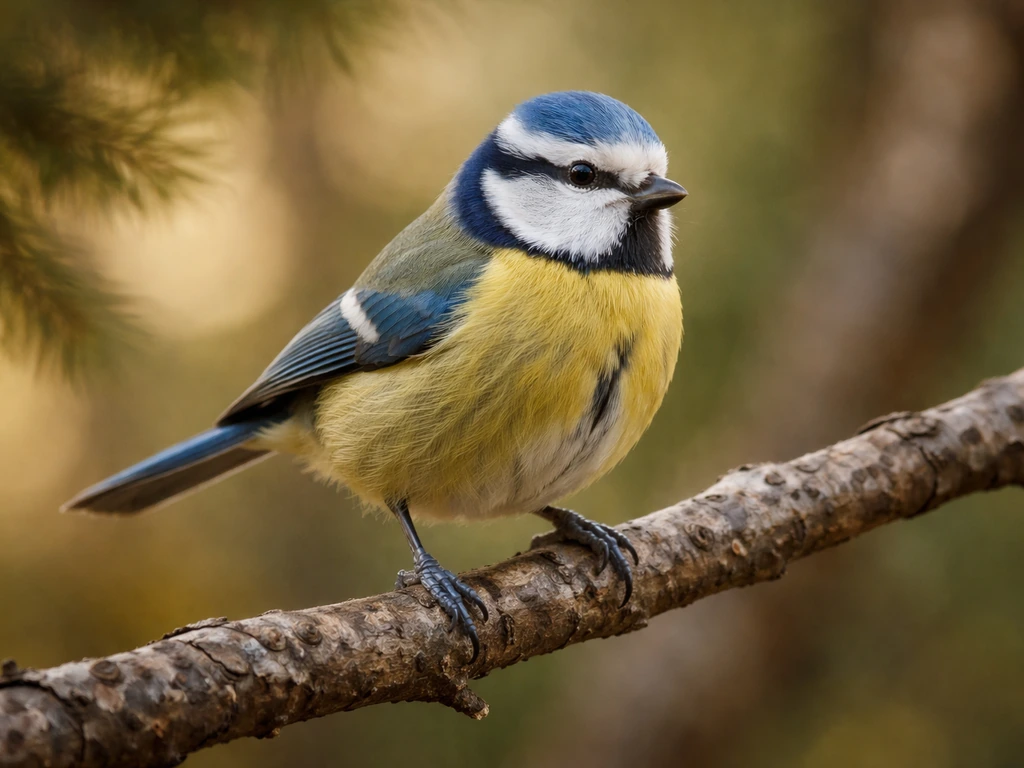
The passerine definition, stripped down
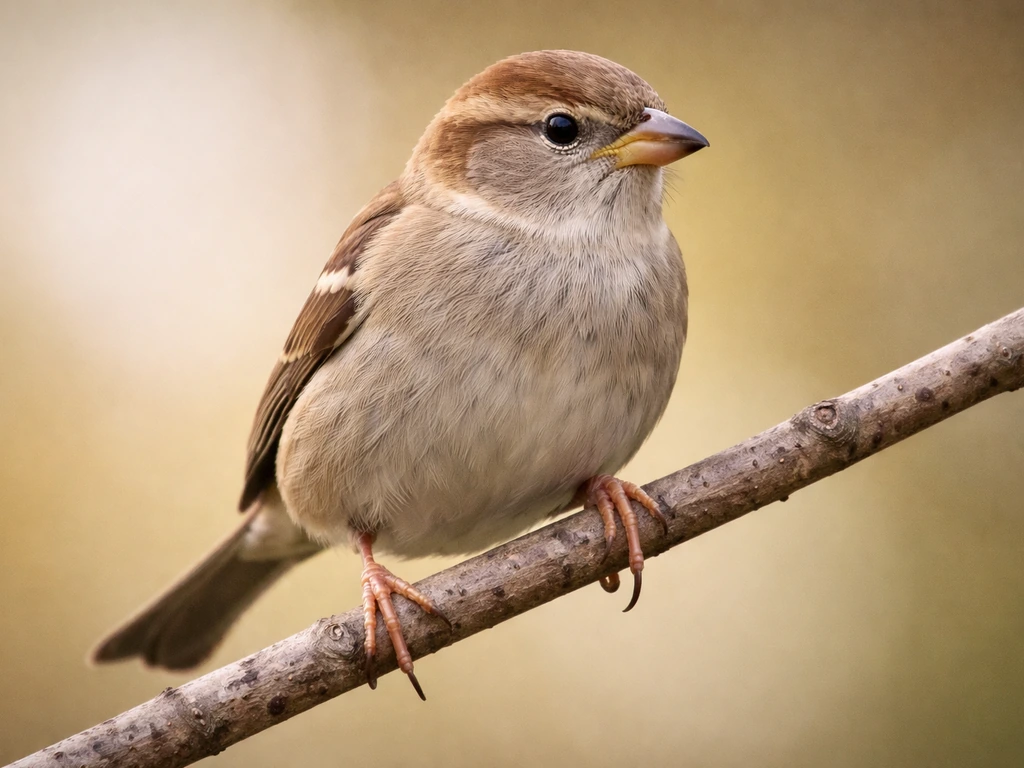
The word comes from the Latin passer, meaning sparrow, and the order Passeriformes was formally named around that archetype. Merriam-Webster defines 'passerine' as relating to the largest order of birds, consisting chiefly of altricial songbirds of perching habits. 'Altricial' just means the chicks hatch helpless and need extended parental care, which is another quiet but important trait the group shares.
The defining physical feature, per Britannica, is that specialized perching foot. The U.S. National Park Service describes the arrangement precisely: three toes directed forward, one directed backward, all at the same level. When a passerine lands on a branch, the tendons in that foot tighten automatically under the bird's own weight, so it can sleep on a perch without falling off. It's a genuinely elegant piece of anatomy. There is one documented exception worth knowing: the three-toed parrotbill (Paradoxornis paradoxus) has a reduced outer toe fused to the middle one, making it an odd outlier within the group. But for every other passerine you'll realistically encounter, the anisodactyl foot is the rule.
What 'passerine' actually means when people search for it
Most people who type 'passerine bird meaning' into a search engine aren't birding taxonomists. They've encountered the word somewhere and want to know what it signals. If you're specifically looking for go-away bird meaning, the message will depend on the bird the phrase points to and the folklore or context it comes from. That usually means one of three things: they want the straightforward dictionary definition, they're trying to figure out if the bird they just saw in the garden counts as a 'passerine,' or they're looking for the symbolic or cultural meaning of a specific bird that someone described as a passerine.
The confusion between 'passerine,' 'songbird,' and 'perching bird' is extremely common and worth sorting out directly. PBS explains that a songbird is technically a perching bird in the suborder Passeri (also called oscines), which is a subset of the full passerine order. Audubon puts it plainly: all songbirds are perching birds, but the reverse isn't perfectly clean in everyday speech. The practical takeaway is that when someone says 'songbird' in casual conversation, they almost always mean a passerine, but not every passerine is a 'songbird' in the strict suborder sense. For most symbolic or cultural research purposes, treating the three terms as rough synonyms is workable, as long as you ultimately pin down the specific species.
Where passerines show up in symbolism and folklore
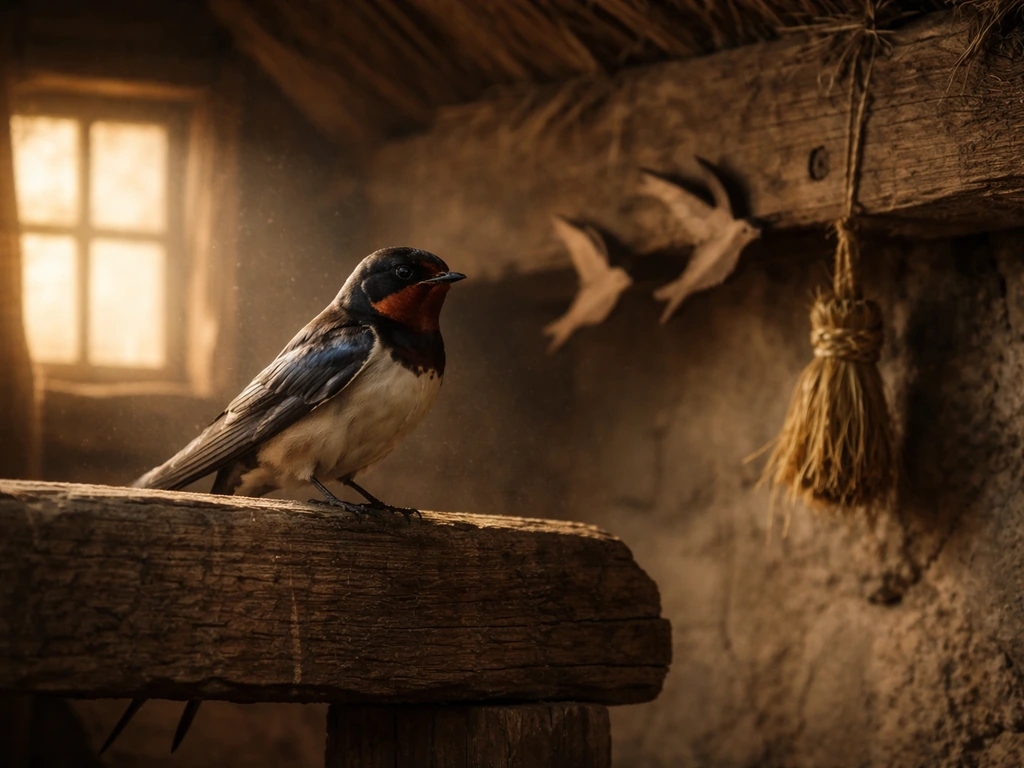
Because passerines make up such a huge slice of the bird world, they appear constantly in mythology, religious tradition, and folk belief. But here's the key thing to understand: almost none of that symbolism attaches to the category 'passerine' as a whole. It attaches to specific species. The order is too vast and too diverse for a single unified meaning. What folklore cares about is the robin, the swallow, the bluebird, the sparrow, not the order Passeriformes.
The barn swallow, for instance, has carried symbolism tied to love and the return of spring since at least the late Latin poem Pervigilium Veneris. Wikipedia traces explicit cultural myth-making around conspicuous swallow species across multiple traditions, typically linking them to journeys and omens. [The European robin has a well-documented Christian legend](https://www. worldbirds.
org/robin-symbolism/) explaining its red breast as a mark earned while trying to remove thorns from Christ's crown, a story still widely referenced in British folklore today. The bluebird's meaning is culturally variable in a different way: Native traditions in North America (including Navajo ceremonial associations) treat it as a symbol of light and positivity, but those attributions differ across specific peoples and shouldn't be generalized into a single 'Native American bluebird meaning. '
General 'bird' spiritual meaning content (the kind that frames any bird sighting as a universal message or omen) circulates widely online, and a lot of it gets applied to passerines simply because passerines are the birds most people encounter. That's worth being aware of: a generic 'birds as messengers' interpretation is not the same as the specific cultural significance that a robin or a swallow has earned across centuries of folklore. If you're trying to decode real symbolic meaning, you need the species, not just the order.
Idioms and expressions involving passerine birds
English is full of bird idioms, but very few of them use the word 'passerine' itself. If you've ever wondered why people say “go away bird,” it helps to look at how bird expressions work and what specific birds or situations they originally referred to bird idioms. The category is a scientific term, not a folk one. Idioms tend to name the specific bird (robin, sparrow, swallow) or use the generic word 'bird.
' The phrase 'a bird in the hand is worth two in the bush' traces back to medieval proverb traditions, with John Ray's 17th-century collection being a commonly cited early English source. The 'bird' there is figurative and general, with no passerine taxonomy intended. Similarly, 'the early bird catches the worm' (documented in Merriam-Webster and Cambridge as a standard English idiom) is about proactive timing, not ornithology.
Where passerine species do show up in idioms and folk expressions, it's usually under their common names. The robin appears in 'Who Killed Cock Robin,' a nursery rhyme with roots in English folk tradition that functions as a kind of symbolic morality tale. The swallow features in the proverb 'one swallow does not make a summer,' which dates to ancient Greek sources and warns against drawing premature conclusions from a single sign. These are expressions where knowing the species adds genuine meaning, because the bird's specific traits (the robin's familiarity and approachability, the swallow's role as a harbinger of warm weather) feed directly into the idiom.
One adjacent term worth flagging here is 'bird of passage,' which refers to a migratory bird and has developed a separate figurative meaning (a person who is only temporarily present somewhere). Many passerines are migratory, so the literal biology and the figurative idiom overlap in interesting ways. That's a topic with its own depth, and the same goes for what's sometimes called a 'migratory bird' in cultural and idiomatic usage.
How to recognize a passerine when you see one
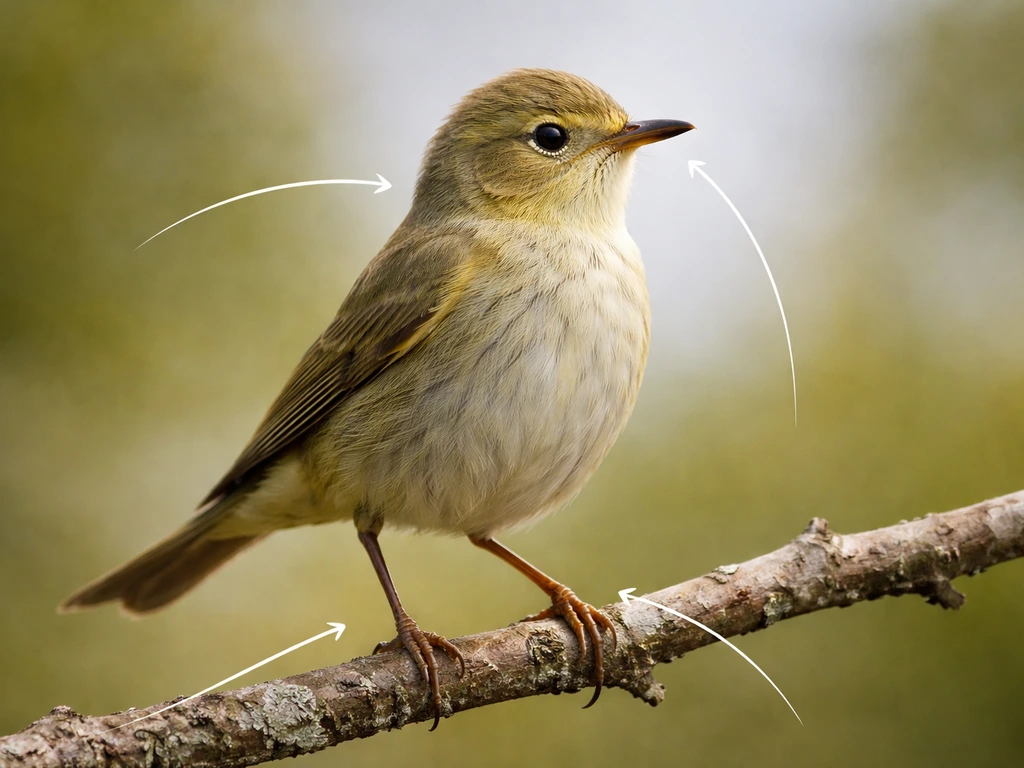
You don't need to memorize taxonomy to spot a passerine. The easiest at-a-glance indicators are size, posture, and behavior. Most passerines are small to medium-sized birds (sparrow to crow range), and they spend a lot of time perching upright on thin branches, fences, and wires. Their feet grip naturally and visibly, and they tend to be active and vocal.
Cornell Lab's All About Birds is excellent for beginners. Take the Field Sparrow as a concrete example: Cornell lists its field marks as a pink conical bill, a white eyering, and a rusty crown and eyeline. Size comparison helps too (smaller than a Song Sparrow, larger than a chickadee). That kind of comparative sizing is one of the most reliable beginner tools for passerine ID.
The NPS groups some of the trickier small passerines together for beginners: chickadees, kinglets, and wrens are all small, often hard to see clearly, and easy to confuse. Audubon's identification guidance recommends noting four things systematically: overall size and shape, bill structure, plumage markings, and what the bird is actually doing (its behavior). In flight, passerine ID gets harder; Audubon specifically flags warblers and sparrows as among the most challenging to identify on the wing.
| Common Passerine | Key Field Marks | Common Symbolic Association |
|---|---|---|
| Barn Swallow | Deeply forked tail, rusty throat, blue-black back | Spring, love, safe return from journeys |
| European Robin | Orange-red breast, round body, alert posture | Christmas, Christian folklore, renewal |
| Bluebird (Eastern) | Vivid blue back, rusty-orange breast | Happiness, positivity, good omens (varies by culture) |
| Field Sparrow | Pink bill, white eyering, rusty crown | Humility, everyday life, community |
| Wren | Very small, cocked tail, loud song for its size | Royalty in some European folk traditions, despite tiny size |
Where people get confused: passerines vs other bird groups
The most common misunderstanding is treating 'passerine,' 'songbird,' and 'perching bird' as perfectly interchangeable. They're close but not identical. As Cornell Lab's Bird Academy distinguishes, 'true songbirds' refers specifically to the oscine suborder within Passeriformes, while 'passerine' covers the full order including suboscines (like flycatchers and antbirds), which have less developed vocal learning. In practice, when someone casually says 'songbird,' they usually mean a passerine, and specifically an oscine, but the terms have different technical ranges.
Another common confusion: anisodactyl feet (the perching arrangement) are actually the most common foot type across all birds, not unique to passerines. Wikipedia confirms this. So 'perching bird' as a common name for the order is slightly misleading, because many non-passerines also perch. What makes a passerine is the full combination of that foot type plus a cluster of other anatomical features, not the foot alone. Kingfishers, for instance, also perch on branches but are emphatically not passerines.
Also worth noting: bill shape is not a reliable single-feature identifier for passerine families. Britannica explicitly cautions against it, pointing out that bill shape reflects food preference and ecology, which cuts across family lines in complex ways. A conical seed-cracker bill might belong to a sparrow (passerine) or a crossbill (also passerine), but broad claims based on beak shape alone will regularly mislead you.
Finally, some passerines are mostly terrestrial, like pipits and larks, which surprises people who associate the order primarily with tree-perching birds. The 'perching bird' label is accurate as a general tendency but doesn't mean every passerine spends its time on branches.
How to look up the specific passerine you're thinking about
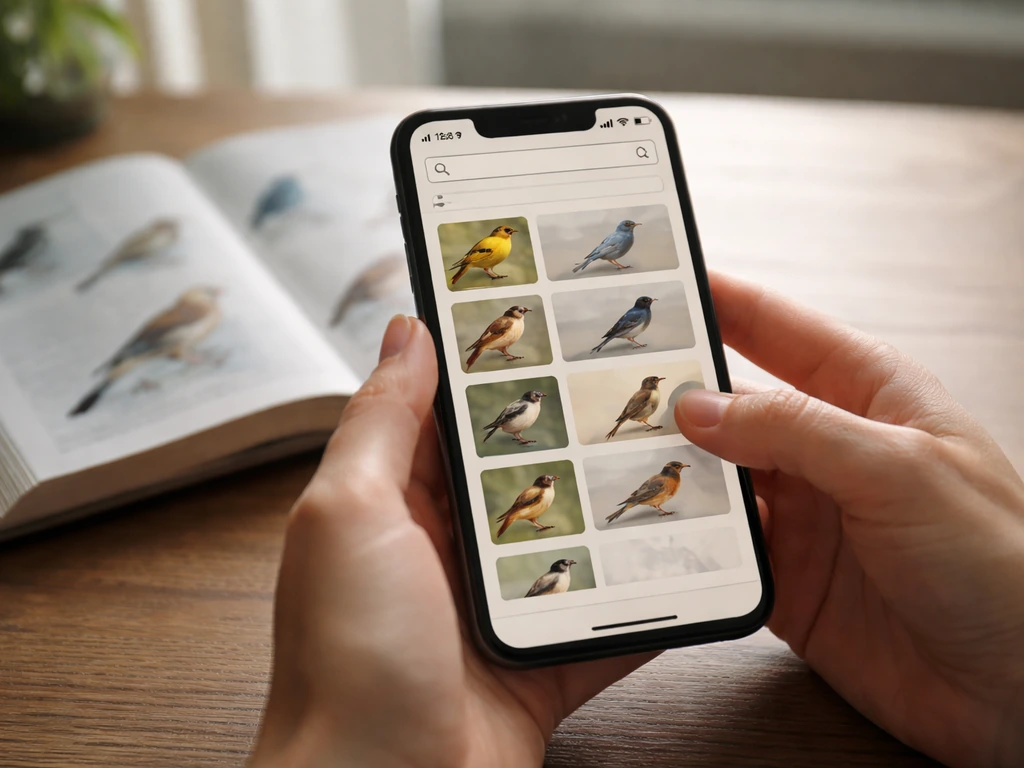
If you're here because you saw a bird, heard one, or encountered a passerine mentioned somewhere and want its specific meaning, here's the most efficient path forward.
- Get the species name, not just the order. 'Passerine' is too broad to carry a specific symbolic meaning. You need to know whether you're dealing with a robin, a wren, a swallow, a bluebird, and so on. If you don't have the species name yet, that's step one.
- Use Cornell Lab's All About Birds (allaboutbirds.org) or eBird for identification. Enter your location and describe what you saw using the four Audubon markers: size, shape, bill, markings, and behavior. Both tools let you browse by family (e.g., Passeridae, Turdidae) once you have a shortlist.
- Once you have the species, search for its symbolic or folkloric meaning specifically. On this site, you can look up species like robin, swallow, or wren directly to get their cultural and idiomatic significance. Don't search for 'passerine symbolism' expecting useful results; it's too broad a category.
- Check cultural context. As the bluebird example shows, symbolism varies significantly by region and tradition. A meaning attached to the robin in British Christian folklore may differ from how the robin is understood in North American storytelling. Look for sources that name the tradition they're drawing from.
- If you encountered 'passerine' in a text or conversation rather than in the field, treat it as a signpost pointing to the group of small perching birds, and ask which specific species the writer was describing. Context usually narrows it down quickly.
The broader category of passerines also connects naturally to questions about migration and movement. If the bird you're researching is a seasonal visitor or is described as 'passing through,' the cultural meaning of a migratory bird or the idiom around a 'bird of passage' may be as relevant as any species-specific symbolism. That way, you can interpret the migratory bird meaning you’re seeing in context rather than assuming it matches the species-based symbolism.
The bird of passage meaning is often about someone or something that is only temporarily present, even if the literal bird is migratory. Those are distinct threads worth following separately, because the idea of a bird that doesn't stay has generated its own rich figurative language across many cultures.
FAQ
Is every passerine the same thing as a songbird?
Not necessarily. “Passerine” is the order Passeriformes, but “songbird” usually points to the oscines (a vocal-learning suborder). Many passerines sing, but some are not the classic oscine “songbird,” so the term you heard may not be taxonomically precise.
If anisodactyl feet are common in birds, how can I tell a passerine from the foot alone?
Use the clue combination, not just the toes. An anisodactyl (three forward, one back) grip is common across many birds, so a perching foot alone does not prove “passerine.” The overall anatomy, plus matching field marks and behavior for the species, is what supports the ID.
Do passerines always perch in trees or on wires?
Look for habitat and posture exceptions before assuming. Some passerines are mostly ground-feeding (for example larks and pipits), so a passerine may walk or forage on the ground more than it perches upright. “Perching bird” describes a tendency, not a rule.
If I find “passerine” in folklore, does it have a single universal meaning?
For symbolism, treat “passerine” as a category label, not the message. Cultural meaning typically attaches to a specific species (like robin or swallow) and often varies by region and tradition, so an omen you find online may not apply to the order as a whole.
How can I tell whether “passerine” is being used scientifically or just as a general term?
It depends on what part of the word your source is using. Some writers use “passerine” loosely as a synonym for “small perching bird” in everyday contexts, while others use the scientific order. If the context mentions toes, perching anatomy, or chick development, assume the author means the taxonomy.
What’s the quickest way to check whether “songbird” claims are actually about oscines?
A bird can be passerine and still be a poor match for “songbird” in strict usage. If the bird is described as part of Passeri, oscines, or “true songbirds,” that narrows it. If it is simply described as “perching” or “small vocal bird” without that suborder detail, assume broader passerine meaning.
Are there any passerines that don’t have the typical perching toe pattern?
Yes, one well-known outlier is the three-toed parrotbill, which has a reduced outer toe fused to the middle toe. If you are analyzing feet closely, that kind of exception is a good reminder not to rely on one anatomical feature without corroboration.
Is bill shape a reliable way to identify a passerine family?
Bill shape can mislead. Use bill structure alongside other field marks, because bill form reflects diet and ecology across families. A conical or broad bill can occur in multiple passerines with different feeding strategies, so confirm with plumage and behavior.
If a passerine is described as “passing through,” should I look at migratory symbolism instead of species symbolism?
Migration language can change the interpretation. If the bird is described as “passing through” or “seasonal,” the cultural meaning may relate to “bird of passage” or migratory themes rather than the species symbolism you would use for a resident bird.
What’s the best next step if I want the meaning of a specific passerine I saw, but I only know it’s “passerine”?
If you are doing species-level symbolism, start by pinning the exact bird first. “Passerine meaning” is too broad to be actionable, so identify the species name or at least a tight match (size, bill, markings, and behavior), then research symbolism for that species rather than the order.