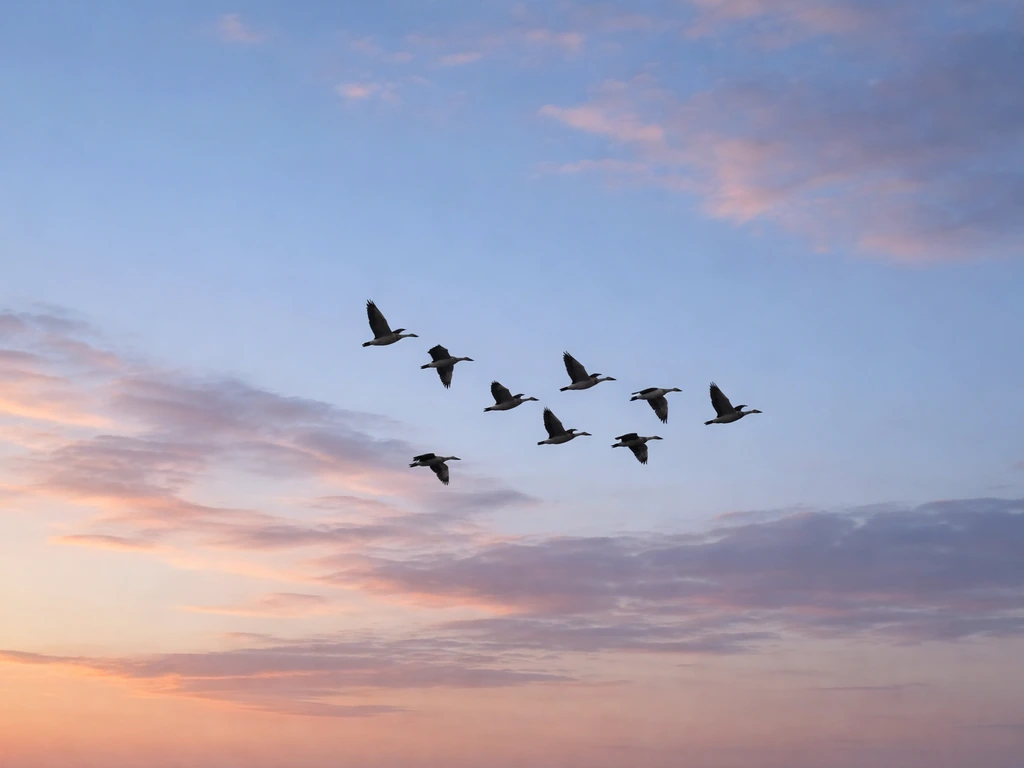
A migratory bird is any bird species that regularly travels between two distinct locations depending on the season, typically moving to a breeding ground in spring and returning to a wintering area in autumn. The Cambridge dictionary puts it simply: a migratory bird is one that migrates, meaning it moves to a different place when the season changes. That movement is not random wandering. It follows predictable annual cycles, often across hundreds or thousands of miles, along established routes called flyways.
Migratory Bird Meaning: Definition, Symbolism, Examples

Marcus Blackwell
3 May 2026

What counts as a migratory bird, exactly
The straightforward definition is behavioral: a bird is migratory if it makes regular, seasonal movements between regions. The Smithsonian describes migration as 'regular annual movements between regions where they breed and locations where they spend the rest of the year.' That regularity is key. A bird that occasionally shows up somewhere new is not necessarily migratory in the formal sense. A migratory bird does it every year, on a schedule, as part of a fixed life cycle.
In U.S. federal law, the definition gets more specific. Under 16 U.S.C. § 4402(5), 'migratory birds' refers to all wild birds native to North America that are in an unconfined state and protected under the Migratory Bird Treaty Act. This covers groups like ducks, geese, swallows, and many threatened or nongame species. The legal definition matters because it shapes conservation protections, but for everyday use, the behavioral definition is what most people mean: a bird that travels seasonally and returns.
It's worth distinguishing migratory birds from birds of passage, a related but slightly different concept. A bird of passage technically refers to a species spotted briefly while in transit between its breeding and wintering grounds, not necessarily one that stays at either end for long. The phrase has also taken on a rich idiomatic life of its own as a way to describe a person who never settles anywhere.
What migration actually looks like: patterns, timing, and routes

Migration follows a reliable annual cycle: breed, migrate, overwinter, migrate back. The timing is driven primarily by day length (photoperiod), which triggers hormonal changes that prompt birds to fatten up, shift their behavior, and eventually take flight. Most Northern Hemisphere migrants head south in late summer through autumn and return north in late winter through spring. But the timing varies considerably by species. Some Arctic-breeding shorebirds begin their southward journey as early as July, while certain warblers don't arrive on their North American breeding grounds until May.
Routes are not random either. Birds concentrate along major flyways, which follow geographic features like coastlines, mountain ridges, and river valleys that provide food and shelter. In North America, there are four main flyways: the Atlantic, Mississippi, Central, and Pacific. In Europe, birds funnel through narrow land bridges like Gibraltar and the Bosphorus. Some species, like the bar-tailed godwit, fly non-stop for over 7,000 miles across open ocean, relying on stored fat as fuel. Others travel in short hops, feeding as they go.
Not all migration is north-south. Some species move altitudinally, breeding at high elevations in summer and descending to lower valleys in winter. Others migrate east-west, or in loop patterns where the outbound and return routes differ. The broad point is that migration is an organized, repeating behavior, not a casual drift.
Common migratory birds you probably already know
Migratory birds are not exotic or rare. Many of the most familiar backyard and park birds are migrants. Recognizing a few common examples makes the concept click immediately.
- American Robin: Often seen as a sign of spring in North America, robins migrate south in winter and return to northern breeding grounds in early spring.
- Barn Swallow: One of the most widely distributed migrants on Earth, swallows summer across Europe, Asia, and North America and winter in South America or Sub-Saharan Africa.
- Ruby-throated Hummingbird: This tiny bird travels from Central America to eastern North America each spring, crossing the Gulf of Mexico in a single non-stop flight.
- Arctic Tern: Holds the record for the longest migration of any animal, traveling from the Arctic to the Antarctic and back each year, a round trip of roughly 44,000 miles.
- Canada Goose: Iconic in North America, they breed in Canada and the northern U.S. and move south in V-formation flocks as temperatures drop.
- European Swallow (Barn Swallow): Famously heralded as a sign of summer in Britain, it winters in southern Africa and gave rise to the classic idiom 'one swallow doesn't make a summer.'
- Blackpoll Warbler: A small songbird that flies non-stop over the Atlantic Ocean from New England to South America, a journey of up to 72 hours.
These examples span continents and highlight an important point: migration is one of the most common behavioral strategies in the bird world. Roughly 40% of all bird species migrate to some degree. You don't have to go to a wildlife reserve to see a migratory bird. Chances are you've been watching them from your window for years.
Why birds migrate in the first place
The short version: food, breeding, and climate. These three drivers are deeply intertwined, and migration is the evolutionary solution birds developed to exploit the best conditions for each at the right time of year.
Food availability
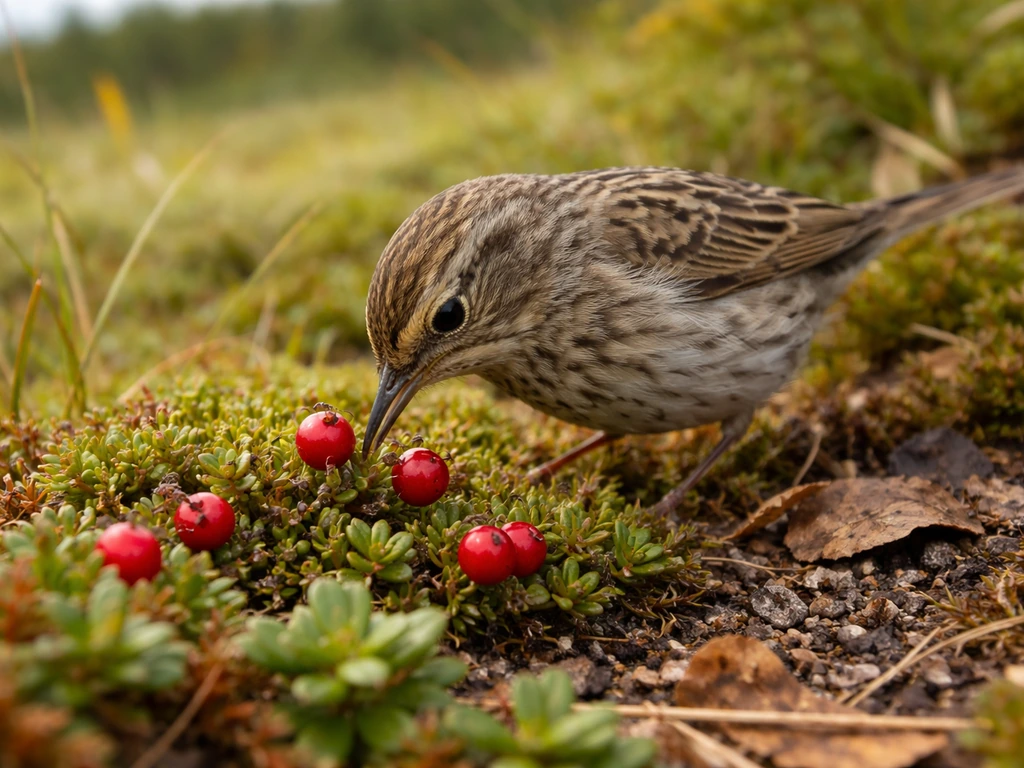
High-latitude environments like the Arctic tundra or temperate forests explode with insects, berries, and plant life in summer. Birds that migrate there can take advantage of this seasonal abundance. But in winter, those same environments become nearly barren. Rather than starving, migratory birds follow the food by moving to warmer regions where resources remain available year-round.
Breeding conditions
Long summer days at high latitudes give breeding birds more hours of daylight to gather food for their chicks. There's also the benefit of reduced predator pressure in remote northern breeding grounds, and less competition for nesting sites compared to crowded tropical environments where many species reside year-round. The tradeoff is the need to migrate, but for many species it's clearly worth the energy cost.
Climate and temperature
Cold itself isn't always the direct problem. Many birds can tolerate low temperatures if there's enough food. The issue is that cold weather eliminates food sources: insects disappear, water freezes, plants stop fruiting. Migration is essentially a way to track the climate conditions that keep food accessible. As global temperatures shift, scientists are already documenting changes in migration timing, with some species arriving weeks earlier than they did just a few decades ago.
The symbolic meaning of migratory birds across cultures

Migratory birds have been carrying symbolic weight for thousands of years, and it's not hard to see why. Their arrivals and departures mark time in a way that feels almost ceremonial. Before calendars and weather forecasts, people watched the birds. When the swallows came back, it was time to plant. When the geese flew south, winter was coming. That practical reliance on bird movement translated naturally into deeper symbolic meaning.
Change, seasons, and the passage of time
The most universal symbolic meaning of migratory birds is transition. Their arrival signals a shift from one season to another, and by extension, from one life phase to another. In many European traditions, the first swallow of spring was considered extraordinarily lucky. Spotting it meant winter's hardship was over. In Japanese poetry and art, the wild goose (kari) is a recurring symbol of autumn's melancholy arrival and the longing that comes with change. The bird doesn't just represent the season: it is the season, arriving with it and carrying its emotional weight.
Journey, wandering, and restlessness
Because migratory birds are always in motion between two worlds, they have become a natural symbol for the wanderer, the traveler, and anyone who doesn't stay in one place. That’s why people sometimes ask, “why is it called go away bird,” when they’re hearing a bird that seems to vanish after a season. The phrase 'bird of passage' draws directly on this idea, describing a person who moves through life without putting down roots. The connection to the concept of a bird of passage idiom is strong here: just as the bird passes through without staying, so does a certain kind of person. This association with restlessness and impermanence runs through Romantic poetry, folk songs, and modern literature alike.
Homecoming and return
Interestingly, migratory birds carry the opposite meaning too. Because they always return, they symbolize faithfulness, homecoming, and renewal. The swallow that comes back to the same eaves each year, the geese that follow the same flyway generation after generation, these are images of constancy amid change. In many spiritual traditions, the return of migratory birds is understood as a sign of divine order, proof that the world is cycling through its proper rhythms. In Celtic and Germanic folklore, migrating birds were sometimes believed to carry souls or messages between the living and the dead.
Freedom and the pull of elsewhere
There's a reason the image of birds in flight resonates so deeply with human longing. Migratory birds in particular embody a kind of freedom that feels both aspirational and a little melancholy: they can go, and they do. In literature from Homer to Chekhov, birds flying south have been used to evoke the ache of wanting to leave, of being tied to a place while something inside you is already somewhere else. The crane, the wild goose, the swallow: these birds appear again and again as projections of human restlessness.
Migratory birds in common language and idiom
The most famous English idiom tied to migration is 'one swallow doesn't make a summer,' meaning that a single positive sign doesn't guarantee that good times have arrived. If you are wondering about the phrase “go-away bird meaning,” it helps to understand how names and stories for migratory birds vary by region and tradition. It comes directly from observing the swallow's arrival as a seasonal indicator: one bird sighting means nothing; the real shift requires many more. The expression appears in Aristotle and has survived into modern usage precisely because the underlying observation is so universally understood. Similarly, 'fly south for the winter' has entered casual speech as a way to describe anyone escaping cold weather, whether a bird or a retired couple heading to Florida.
How to tell if a bird you're seeing is probably migratory
Here's the practical part. If you've just seen a bird and you're wondering whether it's a migrant, you don't need to be an expert. You just need to apply a few quick filters.
Check the season and your location

This is the fastest clue. If you're in a temperate region and you're seeing a species that you've never noticed before, and it's spring or autumn, there's a good chance it's a migrant passing through or just arriving. Many migrants appear suddenly in large numbers during peak migration windows (April-May and August-October in North America, roughly similar in Europe). If you're seeing it in summer or winter, it's more likely either a resident breeder or a wintering bird that has settled in for the season.
Use a free birding app
Apps like Merlin Bird ID (from the Cornell Lab of Ornithology) or eBird let you enter your location and the current date, then show you which birds are expected in your area right now and whether they are year-round residents, seasonal breeders, or migrants. If you photograph the bird, Merlin's photo ID feature can identify the species in seconds. This is genuinely the fastest way to confirm what you're looking at and whether it's passing through.
Look at the bird's behavior
Migrants often behave differently from resident birds. They tend to be more restless, feeding intensely and moving frequently. During migration season, a normally shy species might appear in an unusual location (like a shorebird in an inland park) because it was blown off course or is stopping to refuel. Large, mixed flocks of unfamiliar birds moving in a directional pattern are a classic sign of active migration. Nocturnal migration is also common among songbirds, so if you hear unusual calls at night in spring or autumn, that's birds passing overhead. Nocturnal migration is also common among songbirds, so if you hear unusual calls at night in spring or autumn, that can be a passerine bird meaning moment, since many passerines migrate after dark.
A quick reference for assessing whether a bird is migratory
| Clue | Suggests Migratory | Suggests Resident |
|---|---|---|
| Season | Spring or autumn sighting | Present consistently year-round |
| Familiarity | Species you've never seen before locally | Species you see regularly all year |
| Behavior | Feeding intensely, moving frequently, restless | Territorial, nesting, or settled feeding routine |
| Location | Unusual habitat for the species (e.g., shorebird inland) | Species found in its typical preferred habitat |
| Flock behavior | Large mixed flock moving directionally | Small stable group or solitary individual holding territory |
| Time of day | Active movement at night (audible calls overhead) | Diurnal activity with established home range |
Cross-check with a field guide or range map
Once you have a species name, look up its range map in any field guide or on eBird's species pages. Range maps typically show breeding range (summer), wintering range, and year-round range in different colors. If your location falls in the 'migration only' corridor or the seasonal range, you're looking at a migrant. If it falls in the year-round range, the bird likely lives there permanently regardless of season.
The bottom line is that identifying a migratory bird in real life comes down to three things: timing, location, and behavior. Get those three factors pointing in the same direction, and you can be reasonably confident you're watching a bird in transit, living out the same seasonal journey that has shaped human culture, language, and symbolism for thousands of years.
FAQ
Does “migratory bird meaning” change depending on whether you mean biology or the law?
Yes. “Migratory bird” can mean the bird species makes regular seasonal movements, but in U.S. law it refers to wild birds protected under the Migratory Bird Treaty Act and defined for enforcement purposes. So a bird can behave like a migrant yet not fit the legal category unless it is among the covered, protected wild birds in an unconfined state.
If a species is called migratory, does every individual migrate the same way?
Not automatically. Some species are partly migratory, meaning a portion of the population travels while others stay put, or they may shift only short distances. If you are trying to judge whether a single sighting counts, check whether your specific location is within the species’ seasonal range rather than assuming the species is fully migratory everywhere.
How can I tell the difference between a migrant and a rare stray (vagrant) bird?
A “vagrant” is an uncommon bird seen outside its normal range, often due to storms, wind drift, or disorientation, and it is not necessarily a migrant in the formal sense. Migration implies the pattern is regular and seasonal, while vagrancy can be a one-off event.
Why might I feel like “no birds are migrating,” even during peak season?
Some birds migrate but you will rarely see the movement during the day because they travel at night (especially many songbirds). If you notice sudden, unusual calls in spring or autumn, or you see fewer birds in your trees yet more calls overhead, that is a strong hint that migration may be happening even without obvious daytime flocks.
What if I see a bird at the wrong time, could it still be a migratory bird?
Yes, many birds can appear to “skip a year” due to unusual weather, breeding failures, food shortages, or age and experience differences. Instead of expecting perfect timing, look for whether the species’ typical seasonal window overlaps your date and whether the bird’s behavior matches migration (refueling, directional movement).
What’s the most reliable way to confirm “migration only” versus “year-round” where I live?
Use the species’ range categories on a checklist style tool. If your location is within the “migration only” seasonal band, that supports the migrant idea. If the bird is inside the “year-round” band, it is more likely a resident, even if it changes behavior with seasons.
Can a bird travel seasonally without being considered a long-distance migratory bird?
Not always. Some birds disperse after breeding (young birds moving outward) or make local seasonal movements that are substantial but not part of a long-distance, regular route. That kind of movement can be regular for the local population but may not match what people mean by classic long-distance migration.
Does putting out bird feeders affect whether the birds seem to migrate normally?
Yes. If you keep backyard feeders, you may see “early” or “late” birds because food availability can alter their schedule, especially for partly migratory species or those that use your area as a stopover. For interpretation, treat feeder activity as a variable and rely more on species identity and regional seasonal range timing.
What details should I record when I think I spotted a migratory bird?
Your observation can still be useful. Note date, time, location, and what the bird is doing (feeding, resting, moving directionally, calling at night). Photos plus a timestamp help identification apps match the bird to expected seasonal status for your area.
Next Article
Bird of Passage Meaning: Definition, Examples, and Usage
Meaning of bird of passage: a temporary visitor or traveler, with definitions, examples, synonyms, and usage tips.