
When someone says 'pirate bird,' they almost always mean the magnificent frigatebird (Fregata magnificens), a large seabird notorious for stealing food mid-air from other birds rather than catching its own. The nickname is well-documented, appears in wildlife guides, dictionaries, and nature documentaries, and refers to a specific behavior called kleptoparasitism. If you saw it in a nature article, birdwatching context, or travel piece about the Galapagos, that's your answer right there.
Pirate Bird Meaning: How to Identify the Right Definition

Marcus Blackwell
27 Jun 2026
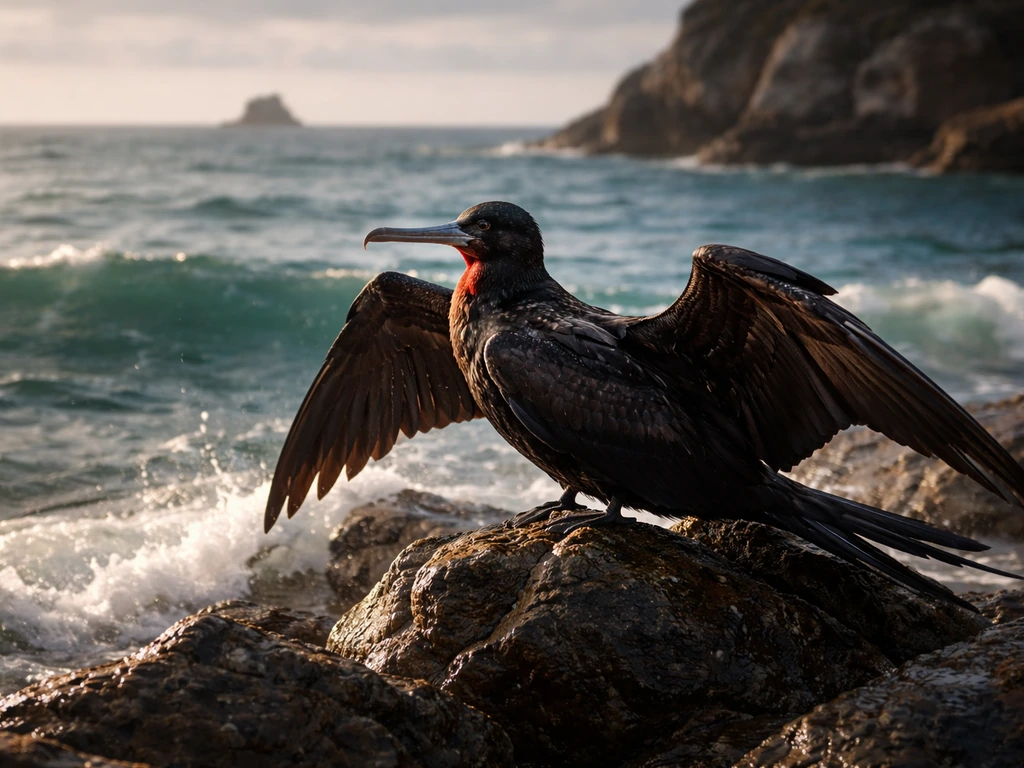
What 'pirate bird' actually means in most contexts
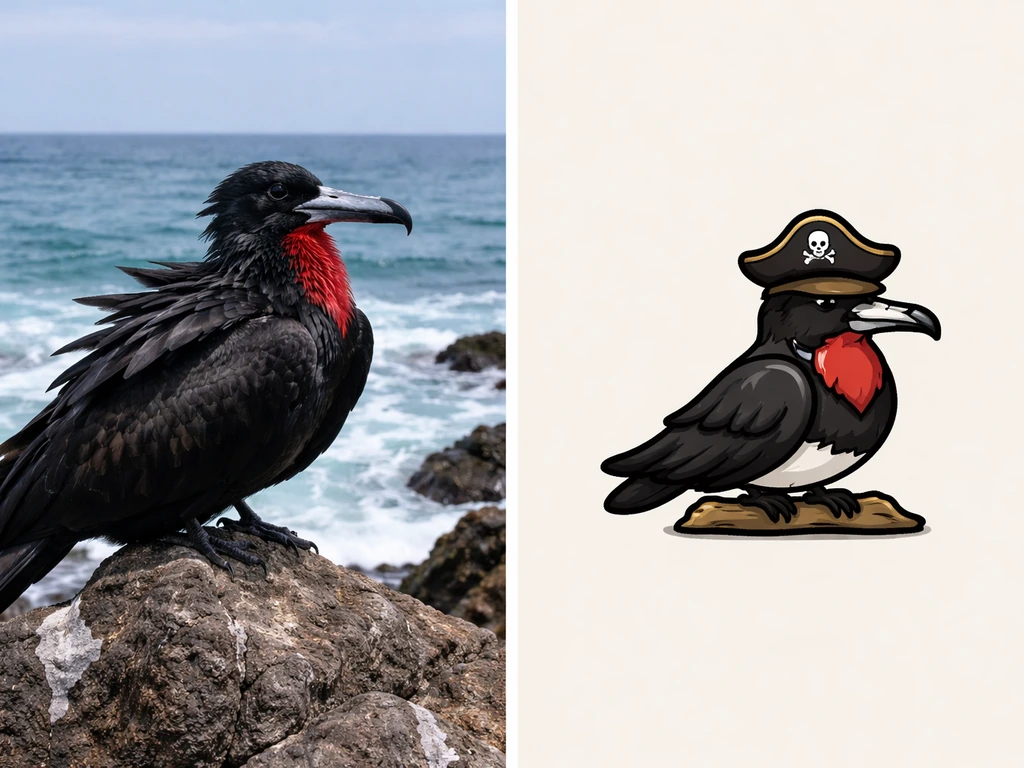
The phrase functions as a popular nickname, not a formal species name. You'll see it used interchangeably with 'man o' war bird,' which is the frigatebird's other well-known alias. Both nicknames come from the same source: the bird's aggressive, predatory behavior toward other seabirds. It harasses boobies, terns, and gulls in mid-flight until they regurgitate their recently caught fish, then swoops in to snatch the food before it hits the water. BBC Learning Hub describes this directly as behaving 'like a pirate would.' The Galapagos Conservation Trust, Wiktionary's frigatebird entry, and multiple ornithology publications all list 'pirate bird' as an established alternate name for the species.
That said, 'pirate bird' does show up in a few other places: as a meme tag on GIF platforms like Tenor, as costumed-parrot stock imagery on sites like Pixabay, and in at least one fandom wiki (Ninja Sage) where it names a specific in-world creature. If you meant the name in One Piece, the luffy meaning bird refers to a similar idea, but tied to the character’s context pirate bird. Those uses are the minority. The default meaning, the one with documented linguistic and ecological backing, is the frigatebird. Context tells you which one you're looking at, and the disambiguation steps below make that fast.
Which birds could fit the 'pirate' label, and which one wins
A few birds carry pirate-adjacent reputations. Skuas and jaegers also practice kleptoparasitism. Ravens steal. Magpies pilfer shiny objects. Parrots are the pop-culture shorthand for pirate companions thanks to Long John Silver. Each has some claim to the pirate metaphor, which is why disambiguation matters. But only one bird has 'pirate bird' as a recorded, widely circulated nickname: the frigatebird.
| Bird | Pirate-like behavior | Has 'pirate bird' as a documented nickname? | Other pirate nickname |
|---|---|---|---|
| Magnificent frigatebird | Kleptoparasitism: forces other birds to drop food, catches it mid-air | Yes, widely documented | Man o' war bird |
| Great frigatebird | Same kleptoparasitic behavior as magnificent frigatebird | Referenced informally (including in Pokemon fan discussions) | Man o' war bird |
| Skua / jaeger | Chases and harasses other seabirds to steal food | No formal nickname | None recorded |
| Parrot (various) | No actual theft behavior; associated with pirates culturally | No | Pirate's parrot (cultural) |
| Raven | Steals food opportunistically | No | None recorded |
The magnificent frigatebird is the clear winner. It performs the most dramatic, visually striking version of food theft, it does it consistently as a survival strategy (not just occasionally), and it has the documented nickname to match. The great frigatebird shares the same family and behavior, and it occasionally gets tagged 'pirate bird' too, especially in fan communities discussing bird-inspired character designs. But when you see the phrase without further qualification, the magnificent frigatebird is the intended bird.
Where the nickname came from
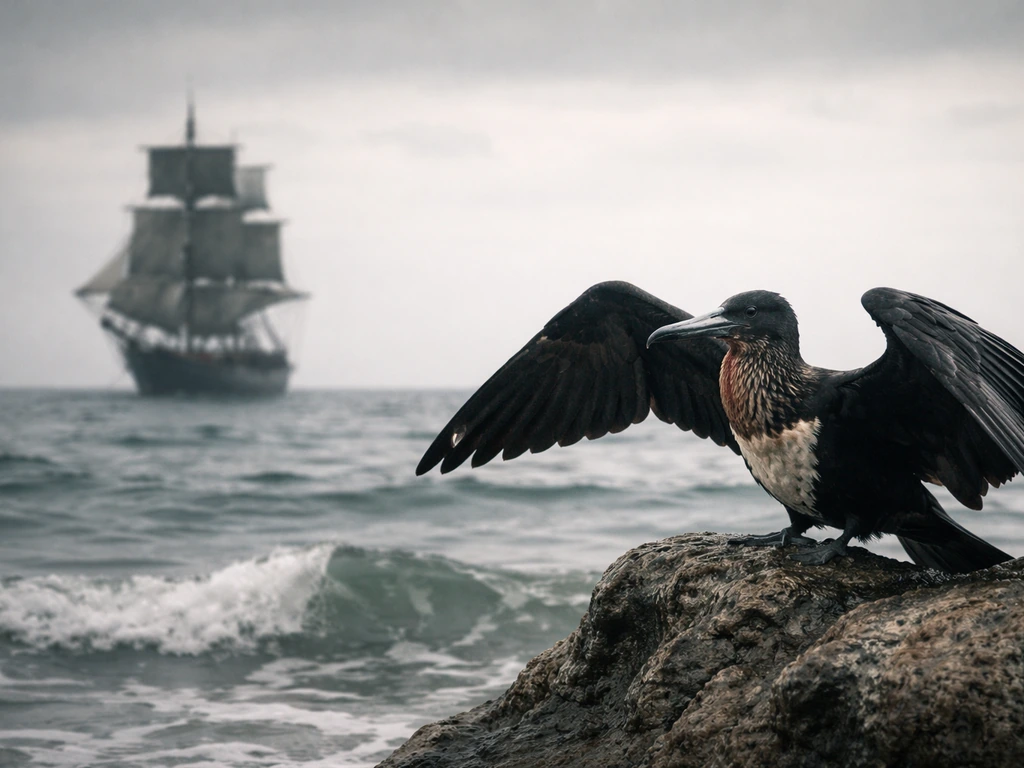
The etymology runs through two parallel tracks: the bird's behavior and the boat names sailors gave it. On the behavior side, the frigatebird's harassment of other seabirds was observed and documented by sailors centuries ago. English sailors settled on 'man-of-war bird' (a man-of-war being a powerful warship) while the 1911 Encyclopaedia Britannica records 'frigate-bird' as a name 'commonly given by English sailors' based on exactly that daring pursuit behavior. 'Pirate bird' followed the same logic, leaning into the theft framing rather than the warship framing.
On the etymology side, the formal English name 'frigatebird' actually comes from French mariners, who called it 'la frégate' after their nimble, fast warship. The frigate was the kind of fast, maneuverable vessel that pirates famously favored, which is why the 'pirate' metaphor slides so easily alongside the 'frigate' name. Spanish sailors in the Galapagos region also used 'pirate bird' (and 'man-o'-war') as nicknames, which is why the phrase crops up frequently in Galapagos travel writing. The behavior earned the nickname; the boat etymology made it stick.
What the 'pirate bird' label actually symbolizes
The pirate metaphor here carries a specific cluster of meanings. It isn't just 'thief. ' Calling a bird a pirate implies cunning over brute force, the ability to get what you need without doing the conventional work, and a certain audacity in pursuing a target that could fight back. The frigatebird doesn't overpower its victims; it out-maneuvers them.
It applies just enough pressure and persistence until the other bird gives up. That's a very specific kind of power, and it maps almost perfectly onto the cultural archetype of the pirate: someone who operates outside the rules, exploits the labor of others, and does it with style. In Liverpool FC discussions, “bird meaning” often refers to how fans interpret specific references tied to the club.
In symbolic terms, the pirate bird represents opportunistic intelligence, aerial dominance, and the willingness to work against the system rather than within it. There's also a freedom dimension: frigatebirds spend most of their lives airborne over the open ocean, landing only to roost and breed. They're deeply associated with wild, uncontrolled spaces. Across cultures, birds that master those liminal zones between land, sea, and sky often carry symbolic weight around independence and freedom. The pirate framing adds transgression to that freedom, which is a potent combination. It's a different symbolic register than, say, the frigate bird's more clinical ecological description, which you can explore in more depth if you want a strictly ornithological angle.
How 'pirate bird' shows up in culture
The phrase moves across several different cultural zones, and the meaning shifts slightly depending on which one you're in.
Wildlife writing and nature education
This is the original and most common usage. Birdwatching blogs, conservation sites, nature documentaries, and wildlife guides use 'pirate bird' as a vivid nickname to explain frigatebird behavior to general audiences. If you meant a different “pirate bird” phrase you saw online, check the liver bird meaning too to avoid mixing up similar-sounding terms. The BBC, Galapagos Conservation Trust, and ornithology publications all use it this way. In this context, it's a teaching tool: it immediately communicates the kleptoparasitic behavior without needing to explain the term 'kleptoparasite.' If you saw the phrase on a nature site or in a travel article, this is almost certainly what you were reading.
Gaming and fandom
The phrase also appears in game wikis and fan communities. There's a 'Pirate Bird' page on the Ninja Sage Fandom wiki, where it names a specific in-game creature rather than the real bird. In the same sort of fan-and-fandom context, people also ask what the "Luffy meaning bird" is on Reddit and what it refers to Pirate Bird. In Pokemon communities, the great frigatebird's 'pirate bird' nickname has been cited in discussions about bird-inspired character designs, notably around Kilowattrel. These uses borrow the cultural weight of the pirate-bird association but apply it to fictional entities. The symbolic thread is the same (theft, aggression, aerial power), but the reference is not the real bird.
Memes and image culture
On platforms like Tenor and Pixabay, 'pirate bird' is used as a search tag for GIFs and stock images of birds in pirate costumes or pirate-themed artwork, usually parrots. Pixabay also uses “pirate bird” as a stock-image search tag, which can lead to false matches when people assume it always means the frigatebird nickname Tenor and Pixabay. This is the weakest semantic connection: the tag is applied visually and loosely, with no real relationship to the frigatebird or its behavior. If you found the phrase in a meme or image context, you're in this category, and the symbolic meaning is almost purely aesthetic: 'bird that looks like a pirate,' not 'bird that acts like one.'
How to figure out which meaning applies to your situation

The fastest disambiguation method is to look at the surrounding words and the platform where you encountered the phrase. Here's how to check quickly:
- Check for 'frigatebird' or 'frigate bird' nearby. If either appears in the same sentence or article, you're in the wildlife/ornithology meaning with certainty.
- Look for kleptoparasitism language. Words like 'steals food,' 'forces regurgitation,' 'harasses other birds,' or 'mid-air theft' are dead giveaways that it's the frigatebird nickname.
- Check the platform. Nature sites, birdwatching blogs, conservation pages, or Galapagos travel content: bird species. Game wiki or fandom page: fictional creature. GIF platform or stock image site: visual/costume usage.
- Look for 'man o' war bird' as a co-occurring nickname. If the text uses both 'pirate bird' and 'man o' war bird' together, it's almost always the frigatebird. The two nicknames travel as a pair.
- Look for Galapagos, Caribbean, or Pacific Ocean context. The magnificent frigatebird's range is coastal and tropical; if the piece mentions those regions, that confirms the bird meaning.
- If it's a fandom or game context without any wildlife framing, search the specific game or series name alongside 'pirate bird' to find the in-world definition.
One more practical check: if you search 'pirate bird' and land on a page that lists it under frigatebird alternative names (the way Wiktionary does), you can treat the wildlife meaning as confirmed. In that wildlife sense, the term points you to the bird’s common meaning as the frigatebird, not a literal species name search 'pirate bird'. If you land on a wiki page for a specific game or show, the in-world creature definition applies. The two don't really overlap in practice.
Your symbolic takeaway once you've confirmed the meaning
If you've confirmed it's the frigatebird: the 'pirate bird' label encodes a specific kind of predatory intelligence. It's about getting results through disruption and persistence rather than direct effort, operating in open, uncontrolled spaces, and projecting enough threat to make others comply without necessarily overpowering them. As a symbol, the pirate bird sits at the intersection of freedom, cunning, and transgression. It's not a malevolent symbol, the way a vulture can be, or a sacred one, the way an eagle often is. It occupies a more chaotic, mischief-forward register.
If you're using it in writing, a name, or a symbolic context, the 'pirate bird' label suggests someone who works the margins, bends the rules, and has mastered a specific kind of leverage over others. That's a character archetype with real narrative power: think of the trickster figures in folklore, the clever operator who wins without playing by conventional rules. The frigatebird earns that label through behavior, which makes it one of the more honest bird metaphors out there.
It's worth noting that the frigate bird's deeper symbolic profile and ecology connects naturally to these themes, and the lifer bird concept, about rare, significant sightings that carry personal meaning, is a useful frame if you're approaching this from a birdwatching angle. The lifer bird meaning is similar in that it centers on memorable, personal sightings that carry weight for birdwatchers.
If you've confirmed it's a game creature or meme usage: the symbolic takeaway is narrower and context-specific. The pirate flavor is still there, but it's borrowing from the real bird's reputation rather than embodying it. In those contexts, 'pirate bird' is essentially shorthand for 'aggressive, swashbuckling, bird-shaped thing. If you're looking up a term like scouse bird meaning, make sure you identify whether you're dealing with a meme tag, a nickname, or something tied to local usage. ' Useful for flavor, lighter on symbolic depth.
FAQ
How can I tell if “pirate bird meaning” is referring to the real frigatebird or just a pirate-themed image tag?
If you saw “pirate bird” on a wildlife page, it almost always means the magnificent frigatebird (the kleptoparasitic one). For a quick check, look for words like “steals fish,” “takes from other birds,” “regurgitates,” or “kleptoparasitism.” Those cues point to the real-bird meaning, not a literal pirate costume or a fandom creature.
Does “pirate bird” ever refer to birds other than the magnificent frigatebird?
Yes, the label can drift to the great frigatebird in some fan or design discussions, even though the default meaning is the magnificent frigatebird. If the page mentions “great frigatebird,” “more general family nickname,” or compares two frigatebirds, you may be seeing a broadened usage.
Is “pirate bird” an official scientific name, or just a nickname?
Common mistake: treating it as an official species name. “Pirate bird” is a nickname, so scientific identification should use “magnificent frigatebird” or “Fregata magnificens” (and for the other species, “great frigatebird”). If a source does not give a species name or Latin name, assume it is informal.
What context clues reliably disambiguate “pirate bird” on the internet?
Watch for context like “Galapagos travel,” “seabird behavior,” or “wildlife guide,” which usually confirms the nickname meaning. If instead you see plot details, character rosters, or in-game creature stats, that likely indicates a game or fandom “Pirate Bird” entity rather than the real bird.
What does “pirate bird” mean if it shows up as a search tag on GIF or stock image sites?
On meme and image platforms, the term is usually a search tag for pirate-looking birds, most often parrots. In that setting, the “meaning” is aesthetic shorthand (bird that looks piratey), not the real frigatebird theft behavior.
How should I interpret “Luffy meaning bird” when it’s mentioned near “pirate bird”?
If “pirate bird meaning” appears alongside “luffy meaning bird” or “luffy,” it is likely about a One Piece character context rather than the frigatebird. The article suggests these are minority uses, so treat them as pop-culture-specific unless the page clearly links to frigatebird behavior or alternative-name lists.
What symbolic nuance should I keep (and avoid) when using “pirate bird” in writing?
If you are writing and want the vibe to match the real meaning, use phrasing that evokes pursuit and leverage rather than literal “burglary.” The frigatebird metaphor is about aerial audacity and forcing others to give up food, often described as theft or kleptoparasitism.
What’s the fastest method to confirm the intended “pirate bird” definition? (real bird vs fandom vs image tag)
If you’re trying to find the correct meaning fast, use a two-step approach: (1) search for “pirate bird” plus “frigatebird” or “Fregata,” then (2) confirm the page lists alternate names or describes food theft behavior. If the page is purely a fandom wiki or an image tag page, switch to that domain’s definition.
How does “pirate bird meaning” translate to an actual birdwatching observation?
If you want to connect it to birdwatching without getting lost in symbolism, pair the term with a concrete behavior question: “Is this about kleptoparasitism?” and “Where is the bird commonly seen (open ocean, airborne most of the time)?” That grounds the metaphor in observable ecology rather than broad pirate-themed comparisons.
Next Articles

Lifer Bird Meaning: Slang and Birding Life List Use
Meaning of lifer bird in birding slang, how to spot literal vs figurative use, plus quick examples for life list goals.
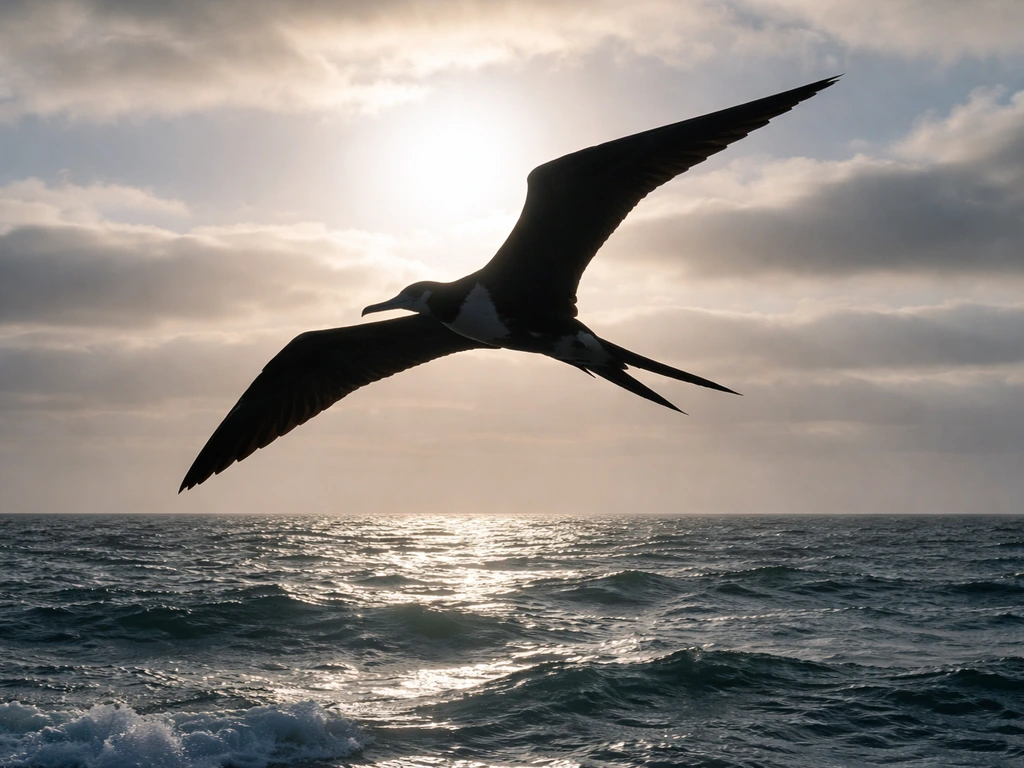
Frigate Bird Meaning: Definition, Symbolism, and How to Identify
Frigate bird meaning: definition, how to identify this seabird, symbolism, and why it is not the naval frigate ship.

Luffy Meaning Bird: What Bird Represents Monkey D. Luffy
Luffy meaning bird in One Piece, the bird tied to Monkey D. Luffy, plus Japanese term and symbolism.