
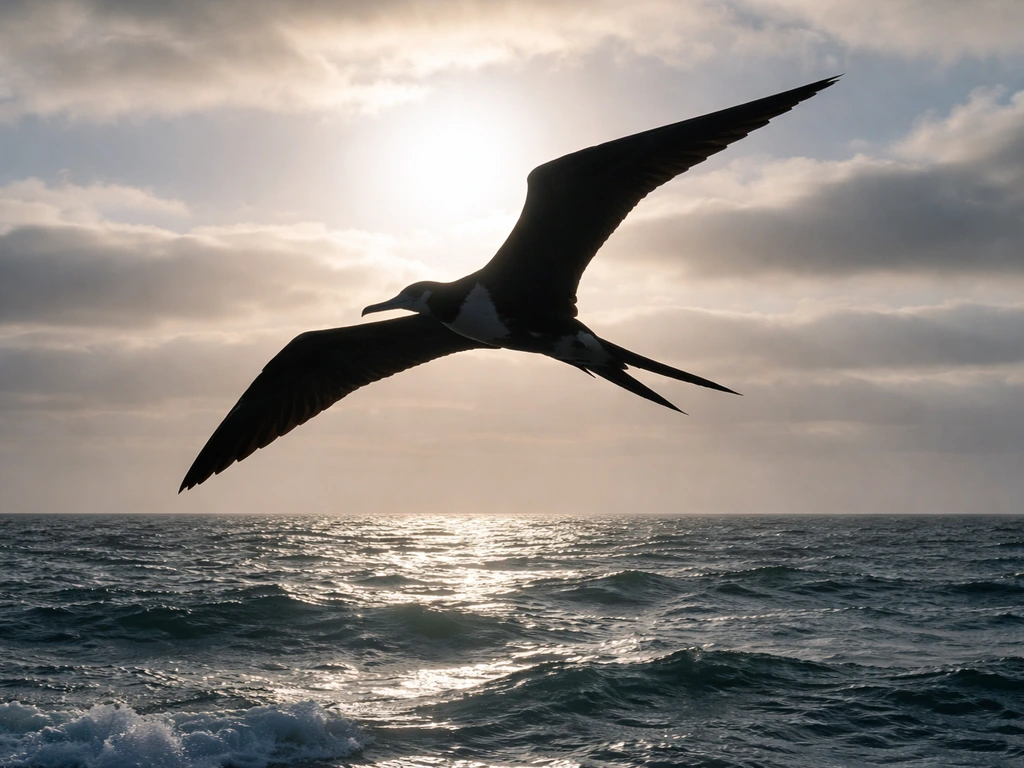
A frigate bird is a large tropical seabird belonging to the family Fregatidae, made up of a single genus (Fregata) and five species. It's famous for its enormous wingspan, deeply forked tail, long hooked bill, and a habit of stealing food from other birds mid-air rather than catching its own. Symbolically, the frigate bird carries meanings of cunning, freedom, mastery of wind and sky, and predatory opportunism, qualities that show up in Pacific Island mythology, sailors' lore, and even the occasional idiom. If you landed here wondering what 'frigate bird' means in a literal, symbolic, or idiomatic sense, you're in the right place.
Frigate Bird Meaning: Definition, Symbolism, and How to Identify

Marcus Blackwell
29 Apr 2026
What a frigate bird actually is
Frigate birds (sometimes written as one word, 'frigatebirds') are tropical seabirds classified in the family Fregatidae. According to Britannica, the family contains five species, all within the single genus Fregata. You'll find them around tropical and subtropical oceans, the Atlantic, Pacific, and Indian Oceans, typically near coastlines, islands, and coral atolls where other seabirds congregate. They don't really land on water (their feathers aren't waterproof enough), so they spend almost all their time either soaring or perched on trees and shrubs near the shore.
The bird that most people picture when they hear 'frigate bird' is the magnificent frigatebird (Fregata magnificens), which is the most widespread species and the one most likely to turn up in cultural references, bird-watching guides, and symbolic imagery. The other four species are the great frigatebird, lesser frigatebird, Christmas Island frigatebird, and Ascension frigatebird. For most symbolic and idiomatic purposes, the differences between the species don't matter much, the meaning travels with the whole family.
Quick identification: how to spot one
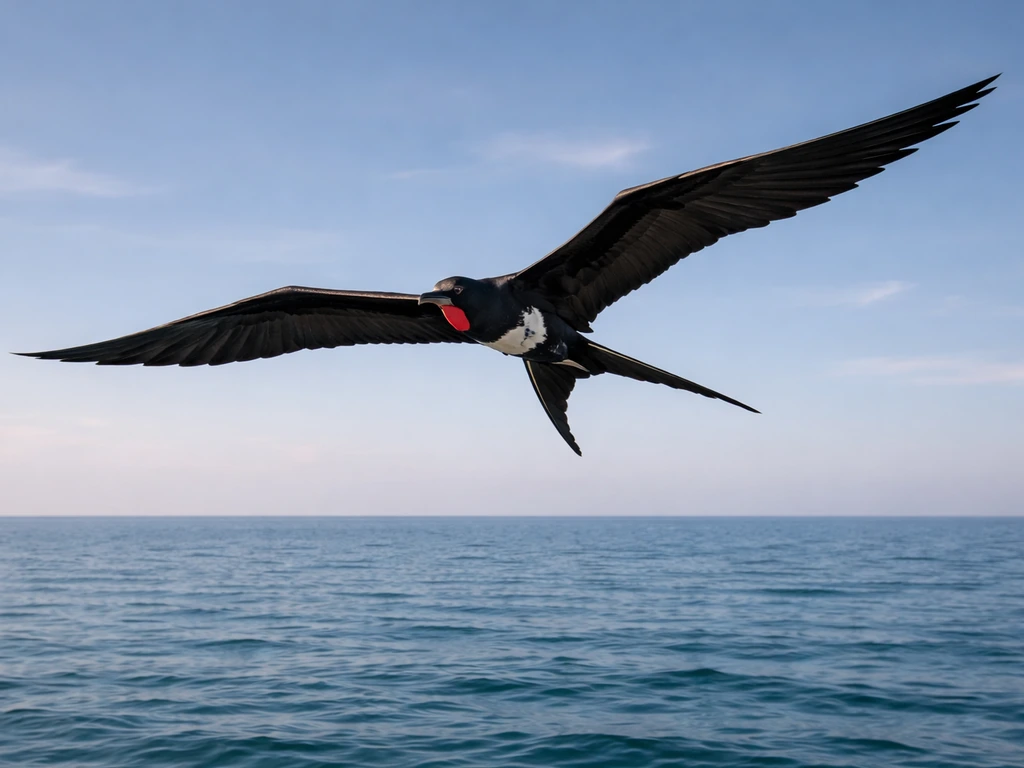
Frigate birds are genuinely hard to confuse once you know what to look for. They're large, the magnificent frigatebird has a wingspan reaching up to 2. The Audubon Field Guide for the magnificent frigatebird notes it can reach wingspans of about 2.1 to 2.3 m (6 ft 10 in to 7 ft 6 in) and highlights a long hooked bill and a forked or long tail as key identification features. 3 meters (about 7.5 feet), and they soar effortlessly with a distinctive silhouette. Dictionary.com summarizes the key physical traits well: a long bill with a downturned tip, a wide wingspan, and a deeply forked tail that looks almost like a pair of scissors in flight. The Oxford Learner's Dictionary adds that they have dark feathers and live near tropical seas.
- Deeply forked ('scissor') tail — one of the most distinctive features in flight
- Enormous wingspan relative to body size, allowing near-effortless soaring
- Long, hooked bill with a downturned tip
- Predominantly dark (black or dark brown) plumage in most species
- Males of many species have a bright red throat pouch (gular sac) that inflates during courtship displays
- Almost never lands on water — watches from above and swoops on prey or steals from other birds
That kleptoparasitic behavior, harassing and robbing other seabirds of their catch, is the single most culturally significant trait the bird has. It defines how people have named it, talked about it, and used it symbolically across cultures and centuries.
Why it's called a 'frigate' bird
The name comes directly from the frigate warship, and that connection is worth understanding because it shapes every symbolic meaning the bird carries. In the age of sail, frigates were fast, agile naval vessels used for raiding, scouting, and intercepting other ships, not the heavy-duty line-of-battle ships, but the swift, opportunistic hunters of the sea. Early European sailors watching these birds harry and rob other seabirds saw the same pattern: fast, maneuverable, aggressive, taking what others earned. In the 1911 Encyclopaedia Britannica entry for “Frigate-bird” (via Wikisource), English sailors are described as naming the bird “frigate-bird” because of its swiftness and its habit of pursuing other birds near the surface Early European sailors watching these birds harry and rob other seabirds. The comparison was obvious enough that the name stuck.
So when you look up 'frigate bird meaning,' you're dealing with a name that was always already metaphorical. If you also meant Luffy from One Piece, people sometimes connect the name to ideas of freedom and sky energy, which overlaps with the frigate bird’s “freedom” symbolism. The bird was named for a ship, and the ship was a symbol of speed, predatory cunning, and piratical opportunism long before the bird received the label. This layering of metaphors is part of what makes the frigate bird such a rich symbol in maritime cultures, and why it's occasionally compared to what some traditions call the 'pirate bird,' a label applied to several kleptoparasitic seabirds including frigatebirds themselves.
What the frigate bird symbolizes
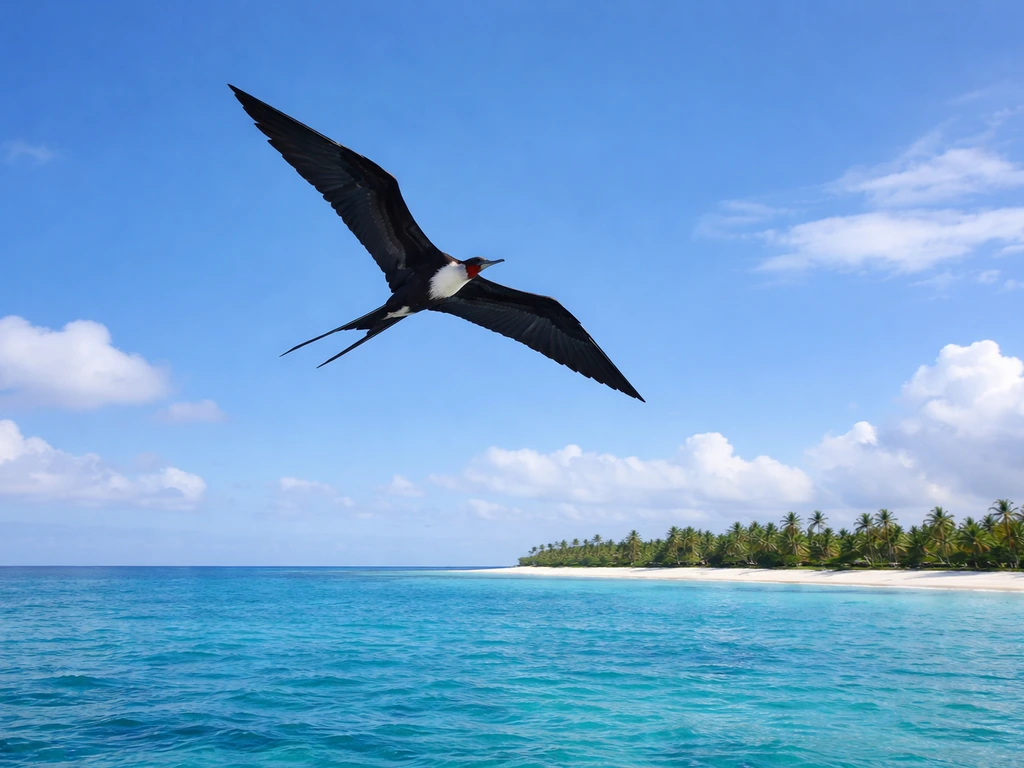
Across Pacific Island cultures, the frigate bird carries serious symbolic weight. In Polynesian and Micronesian traditions, it's associated with the sky, with the ability to travel between worlds, and with ancestral spirits. In some island communities in Kiribati (the Gilbert Islands), trained frigatebirds were historically used to carry messages between islands, a practice that gave the bird a role as a messenger and intermediary between the human and spiritual realms. That messenger quality connects it to other birds with liminal, sky-dwelling symbolism, like the albatross in European sailors' lore.
In a broader spiritual or totem context, the frigate bird tends to represent mastery of one's environment, particularly the ability to soar above difficulty rather than being pulled down by it. Its physical relationship with the wind, it can stay aloft for weeks, riding thermals across thousands of miles without flapping much, makes it a natural symbol for effortless skill, freedom from constraint, and long-range vision. Some traditions also read its kleptoparasitic behavior as a lesson in resourcefulness rather than pure trickery: working smarter, not harder.
On the shadow side of that symbolism, the frigate bird also represents opportunism, theft, and the pirate archetype. It takes what it wants and moves on. In cultures that value communal effort, that quality can carry a negative moral charge. Whether the bird is a hero or a villain in a given cultural context depends heavily on what the tradition values, individual cunning or collective labor.
| Symbolic meaning | Cultural or contextual source | Positive or negative charge |
|---|---|---|
| Sky mastery and freedom | Polynesian and Micronesian traditions | Positive |
| Messenger between worlds | Kiribati (Gilbert Islands) lore | Positive/sacred |
| Cunning opportunism | Maritime and sailor lore | Ambiguous |
| Piracy and theft | European colonial-era observation | Negative |
| Effortless skill | General bird symbolism and spirituality | Positive |
| Ancestral spirit or guide | Pacific Island traditions | Positive/sacred |
Frigate birds in idioms, sayings, and everyday language
The frigate bird doesn't have the same dense idiom tradition that more familiar birds do, it's not embedded in everyday English the way 'early bird gets the worm' or 'a bird in hand' are. But it does appear in a few specific contexts worth knowing about.
In maritime slang, calling someone a 'frigate bird' historically implied they were a freeloader or opportunist, someone who let others do the work and then swooped in to take the reward. This usage is uncommon in modern everyday speech, but it shows up in older seafaring literature and remains a recognizable metaphor among birders and naturalists who write about the bird's behavior.
More commonly in contemporary language, the frigate bird appears as a metaphor in nature writing, spiritual contexts, and motivational language. You'll see phrases like 'soaring like a frigatebird' used to describe effortless achievement or rising above chaos. If you meant Liverpool FC specifically, the “bird meaning” you are looking for will usually be tied to the club’s birds, mascots, or local nickname symbolism rather than frigate-bird symbolism soaring like a frigatebird. In some Pacific Island poetry and oral tradition, the bird is invoked as a symbol of ancestral guidance and navigation, fitting given that Pacific Islander navigators famously used seabird behavior (including frigatebird flight patterns) to detect land and guide canoes across open ocean.
If you're researching the phrase because you came across it in a text, story, or conversation, the most likely meanings are: the literal tropical seabird, a metaphor for cunning opportunism, or a symbol of sky-mastery and freedom. If you’re looking for the “scouse bird” usage specifically, it’s a separate term with its own meaning in regional slang frigate meaning. If you're asking what lifer bird meaning is in practice, it usually refers to a birdlist context where a sighting marks a personal first frigate bird meaning. Context usually tells you which one applies.
Frigate bird vs. naval frigate: clearing up the confusion
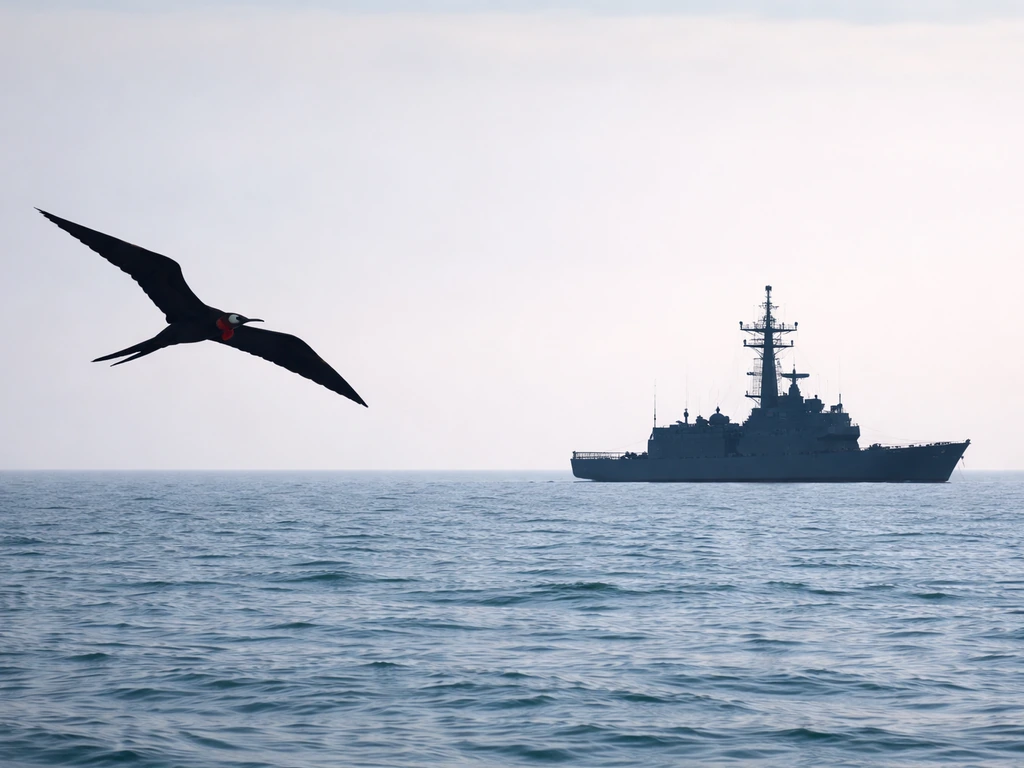
This confusion comes up more than you'd expect, especially when people search for 'frigate meaning' and end up reading about 18th-century warships instead of seabirds. To put it simply: a frigate (no 'bird') is a type of naval warship, historically a fast, medium-sized sailing ship used for raiding and patrol, and in modern navies, a multi-role warship smaller than a destroyer. A frigate bird is a completely separate thing: the tropical seabird described throughout this article. The only connection between the two is etymology, the bird was named after the ship because early observers thought its behavior mirrored the ship's raiding style.
If you've been searching 'frigate definition bird' or 'frigate bird definition' specifically, that's a good sign you already suspected the distinction and were trying to confirm it. The answer is: yes, they're separate. The naval frigate belongs to military history and naval terminology. The frigate bird belongs to ornithology, symbolism, and Pacific Island cultural traditions. When you see 'frigate bird' as a compound noun or hyphenated term ('frigate-bird'), it always refers to the seabird.
It's also worth briefly noting that the frigate bird is sometimes called the 'man-o'-war bird' (or man-of-war bird), which is another naval reference using a different type of warship. This alternate name appears in older texts and some regional usages, so if you spot 'man-o'-war bird' in a historical or literary source, it's almost certainly the same bird, just a different naval metaphor attached to the same animal.
The bigger picture: what kind of symbol is the frigate bird?
If you're exploring bird symbolism more broadly, the frigate bird sits in an interesting category alongside other birds associated with trickery, freedom, and maritime culture, think of how the pirate bird label gets applied to several kleptoparasitic seabirds, or how some traditions treat certain birds as trickster figures the way others treat the raven or the crow. The frigate bird is the ocean's version of that archetype: supremely capable, not bound by the same rules as the birds around it, and carrying a reputation that splits neatly between admiration and moral skepticism depending on who's telling the story.
Whether you're here for the literal definition, the symbolic reading, or just trying to settle an argument about whether 'frigate' means a ship or a bird, the short version is: it started as a ship, became a bird's name, and turned into a rich cluster of meanings about freedom, cunning, and the sky. If you also saw the phrase “luffy meaning bird reddit,” that’s a separate internet reference that people use to ask what a name like Luffy has to do with bird symbolism ship. That's a pretty respectable symbolic journey for a seabird.
FAQ
Is “frigate bird” the same thing as “frigatebird” (one word)?
Yes. It usually refers to the same tropical seabird group, just written with different spacing. In modern birding and wildlife writing you’ll often see “frigatebird(s),” while older nautical and some casual sources may use “frigate bird.”
How can I tell if someone is using “frigate bird meaning” as a literal bird reference or a metaphor?
Check what the sentence is describing. If it mentions wing shape, long hooked bill, stealing from other birds, or where it lives, it is literal. If it describes a person’s strategy (swooping in for rewards), “sky mastery,” “freedom,” or “opportunism,” it is symbolic. If it discusses birds “carrying messages” or “between worlds,” it is likely cultural or spiritual symbolism.
Does the meaning change depending on which species it is (magnificent, great, lesser, etc.)?
Usually not for symbolism. The article’s themes follow the frigate bird family and the overall kleptoparasitic reputation. Species matter most for identification in field guides, like relative size or local range.
What is the clearest identifying feature if I see one from far away?
Look for the combination of very large wingspan, a strongly forked tail, and a long down-curved or hooked bill. Many people also rely on silhouette in flight, since they often stay aloft rather than landing on the water.
Why do frigate birds look “blackish” or dark in photos, and does that affect symbolism?
Their typical dark body coloration makes them visually associated with sharpness and predatory energy in artwork and writing, which can reinforce the opportunism and predation symbolism. However, color perception varies with lighting and distance, so identification should rely on shape (tail and bill) more than exact shade.
Are frigate birds actually predators, or is “theft” the main behavior people should remember?
They are best described as kleptoparasites rather than hunters. They often harass other seabirds to make them drop fish, so if a text claims they routinely “hunt” like raptors, that is usually a simplification. The symbolic “predatory opportunism” comes from that feeding strategy, not from active pursuit every time.
What if I see “frigate bird” in an old story, does it always mean the seabird?
Not always. Older texts can mix naval language and animal metaphor. If the context involves raids, ships, or sailors comparing tactics, the writer may be using “frigate” as warship imagery or implying the bird’s name origin. If the context mentions islands, shorelines, sky, or bird flight, it is more likely the seabird.
Is “man-o’-war bird” definitely the same animal as “frigate bird”?
In most cases, yes. “Man-of-war bird” is an alternate naval metaphor attached to the same frigate bird idea in older or regional usage. If the passage also talks about long wings, forked tail silhouette, or stealing food from other birds, it is confirming the match.
Is there any connection between “frigate bird meaning” and “pirate bird” or “pirate archetype”?
There is a conceptual link, because “pirate bird” is often used as a label for kleptoparasitic seabirds, and the frigate bird is frequently included in that archetype. Still, different cultures can flip the moral reading (admiration for cleverness versus condemnation for freeloading), so the specific tradition or narrator matters.
If I’m researching for birdwatching, what should I do if the phrase causes confusion with the naval word “frigate”?
Use disambiguation keywords in your search and confirm with biology terms. Add “seabird,” “Fregata,” “kleptoparasite,” or “forked tail” to separate it from naval frigates. Also watch for whether “frigate” appears with ship/warship terms, which indicates the naval meaning.
Does “frigate bird meaning” ever refer to something unrelated, like a club mascot or anime character?
Yes, occasionally. The article notes that some internet searches attach “bird meaning” to teams or characters, and that can override the seabird symbolism. If you see proper nouns like sports teams, anime names, or local nicknames, treat the result as separate from the frigate bird definition unless seabird traits are explicitly described.
What does it mean if someone says they had a “first frigate bird” sighting?
In practice, it usually refers to a personal birdlist milestone, meaning it was the person’s first sighting recorded for that list. It is not a separate dictionary definition, so the intended meaning is “personal first” rather than symbolic interpretation.
Next Article
Luffy Meaning Bird: What Bird Represents Monkey D. Luffy
Luffy meaning bird in One Piece, the bird tied to Monkey D. Luffy, plus Japanese term and symbolism.